电商平台

Search documents
淘宝联手顺丰推“次日达”,618电商加码时效竞速
Di Yi Cai Jing· 2025-06-05 10:38
Group 1 - The core focus of the article is the increasing competition in logistics efficiency among e-commerce platforms during the 618 shopping festival, with a specific emphasis on the collaboration between Taobao Tmall and SF Express to enhance delivery speed [1][2] - Taobao Tmall has launched a high-quality logistics service brand called "Jisu Shangmen," which aims to provide next-day delivery for participating products, enhancing consumer choice and recognition [1][2] - The initial phase of the "Jisu Shangmen" service involves a pilot program with select merchants, and after successful testing, it will be opened to all merchants on the platform [1][2] Group 2 - The logistics experience manager at Taobao Tmall highlighted that superior logistics capabilities will become a crucial competitive metric for merchants, with those meeting standards receiving more platform resources [2] - The article notes that consumers can now filter products by "next-day delivery" on Taobao, indicating a shift towards more immediate delivery options [2][3] - JD Logistics has also announced its own initiatives to enhance delivery efficiency during the 618 festival, indicating a broader trend in the industry towards improving logistics capabilities [3] Group 3 - The CEO of iiMedia Consulting emphasized that quality logistics services can significantly boost merchant visibility and sales during the 618 festival, as consumer expectations for delivery speed continue to rise [3] - The demand for faster delivery options, such as next-day, same-day, and hourly delivery, is increasing, prompting merchants to optimize their logistics processes while managing costs [3] - The competition in the logistics sector is expected to intensify as e-commerce platforms expand their demand for timely deliveries, leading to new challenges for logistics companies in optimizing processes and enhancing efficiency [3]



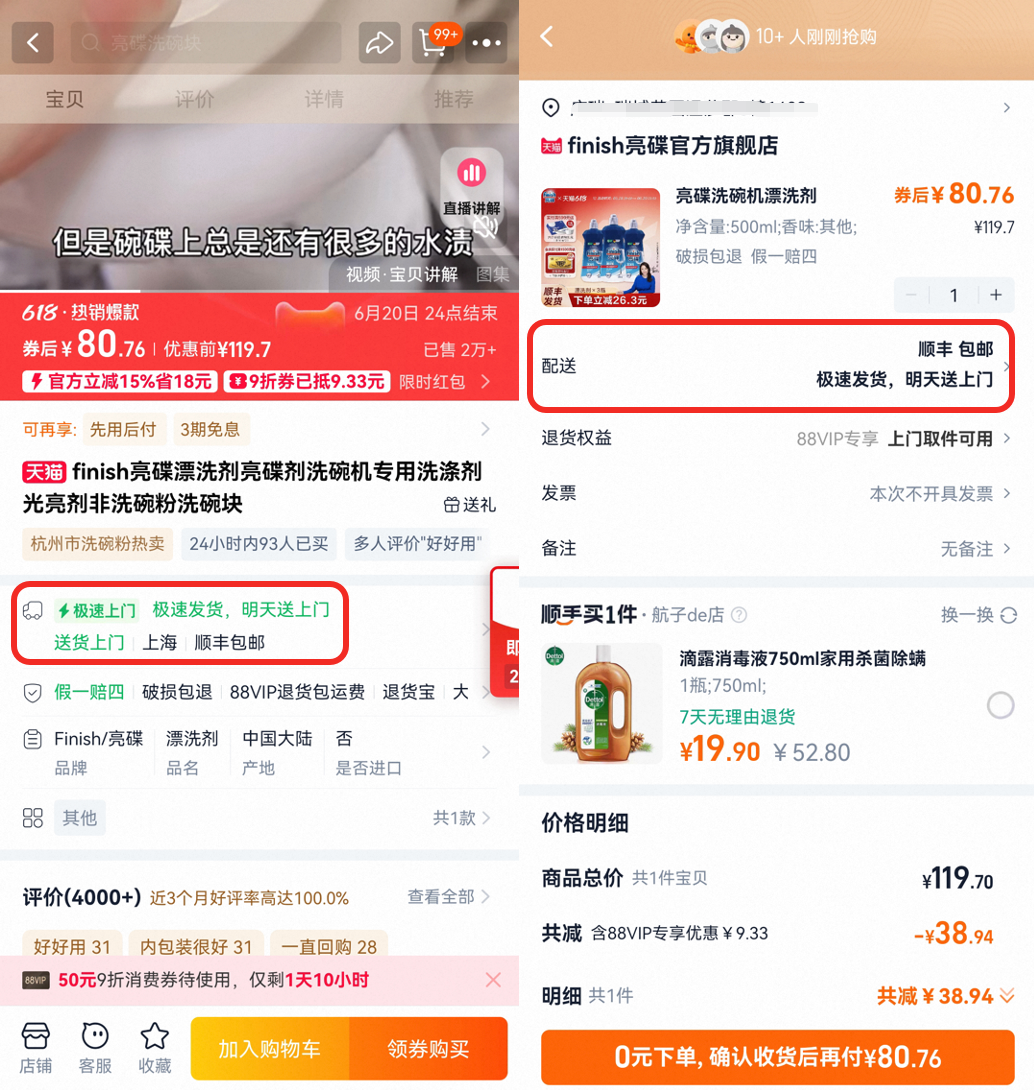
淘宝天猫正式推出官方物流品牌“极速上门”,联合顺丰开启首期服务公测
Xin Lang Ke Ji· 2025-06-05 03:31
Core Points - Taobao Tmall has launched a high-quality logistics service brand "Express Door-to-Door" in collaboration with SF Express during the Tmall 618 shopping festival [1][2] - The service aims to enhance consumer experience by providing next-day delivery and showcasing a dedicated brand logo for eligible products [1] - The platform plans to expand the service by inviting other logistics partners to join, thereby increasing the coverage of premium services [2] Summary by Sections Service Launch and Features - "Express Door-to-Door" service has been introduced with SF Express as the initial logistics partner, allowing products to display the service logo when they meet the next-day delivery standard [1] - Merchants who commit to using SF Express will have their products highlighted with messages like "Free Shipping with SF Express" to improve consumer recognition [1] Merchant Participation and Benefits - The service is currently in a pilot phase with select merchants, and after successful testing, it will be opened to all eligible merchants, allowing them to benefit from the service branding and commitments [1][2] - The logistics experience manager at Taobao Tmall emphasized that quality logistics capabilities will become a key competitive metric for merchants, leading to increased platform resource support for those meeting the standards [2] Integration with Evaluation System - Taobao has announced a new store evaluation system called "Real Experience Score," which will directly link scores to core areas such as product quality, logistics speed, and service assurance [2] - Logistics speed, particularly "logistics delivery time," will be a critical evaluation metric, allowing high-quality logistics service providers to gain more traffic and resource support [2]
淘宝天猫推出官方物流品牌“极速上门”,联合顺丰开启首期服务公测
news flash· 2025-06-05 03:18
Core Insights - Taobao Tmall has launched a significant upgrade in logistics services with the introduction of the high-quality logistics service brand "Jisu Shangmen" during the Tmall 618 shopping festival [1] - The first phase of this initiative partners with SF Express, allowing products that meet next-day delivery standards to display the "Jisu Shangmen" brand logo [1] - All merchants who commit to using SF Express for delivery will showcase messages like "SF Free Shipping, Door-to-Door Delivery," enhancing the express service's visibility [1] - This move follows a series of measures aimed at improving the merchant environment, including combating fraudulent activities and optimizing service quality [1]
今年618大促平台求变 “种草”模式、即时零售“出圈”
Guang Zhou Ri Bao· 2025-06-04 15:46
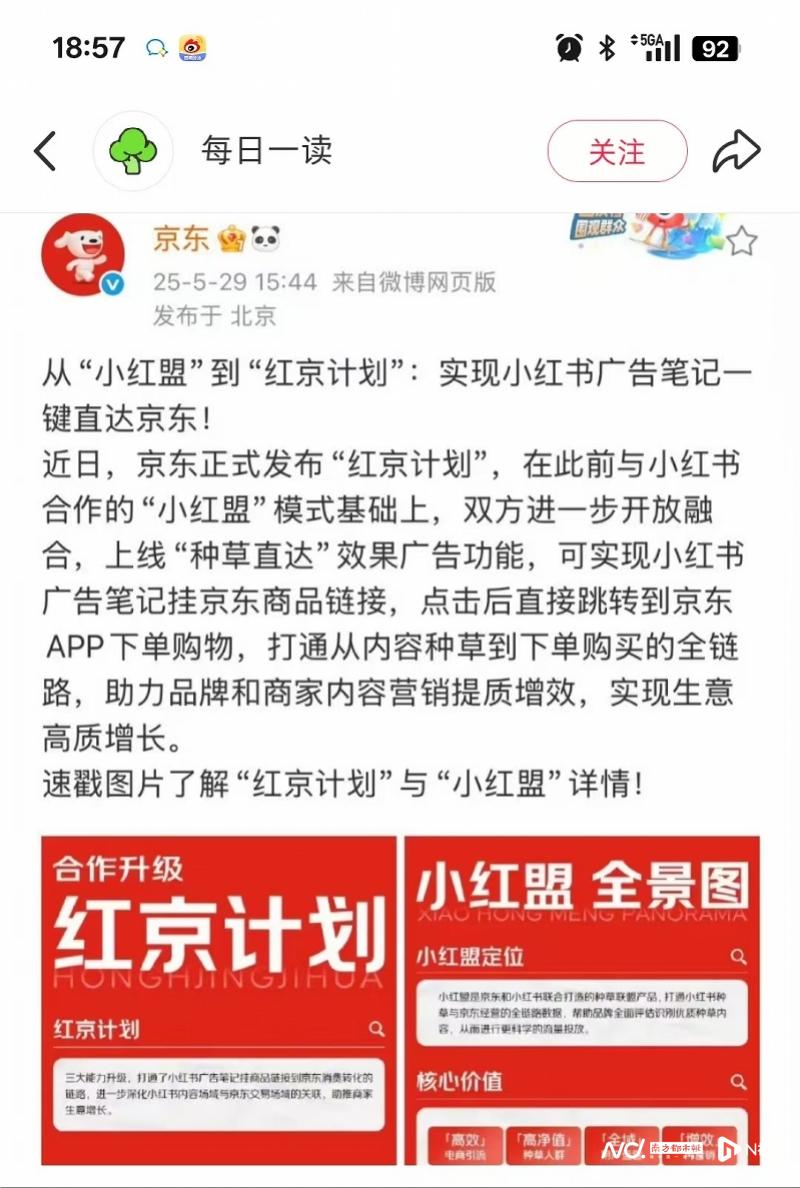
为了进一步抢夺新流量,以往只是细分赛道之一的即时零售在今年618成为"主战场"。就在端午假期结 束不久,美团闪购就披露618首周期消费数据,3C家电、运动用品、美妆护肤、母婴奶粉、儿童玩具等 类目的超过800个品牌商、零售商成交额翻倍增长。 京东外卖与淘宝闪购也不示弱。本月1日,京东外卖公布全职骑手规模已突破10万人,比原计划提前近2 个月达成,外卖日订单量已突破2500万单。5月底,距离上线不到一个月,淘宝闪购联合饿了么公布日 订单数已超4000万。 开放合作巨头携"小弟"开启"种草"之路 面对流量增量越来越难获得的当下,今年618,京东与阿里两家电商巨头主动"破壁",相继宣布与小红 书"跨界"合作,通过"种草"机制触发更多的消费者在两家平台上的消费。据了解,618前夕,淘宝天猫 与小红书签订战略合作,打造"红猫计划",消费者在小红书"种草"笔记可直接跳转至淘宝App。 在5月底,京东也高调宣布与小红书战略合作升级,推出"红京计划"。"在小红书投放广告可添加京东购 物链接,用户点击广告可直接跳转至京东App。"京东如此介绍。 近年来,小红书在电商领域积极"跑马圈地",京东、阿里选择在上半年关键大促时间,与前 ...

监管自然人网店要兼顾保民生
经济观察报· 2025-06-04 10:45
Core Viewpoint - The regulation of individual online stores should prioritize the protection of livelihoods and development to achieve a win-win situation for regulators, platforms, store owners, and consumers [6] Group 1: Background and Importance - Individual online stores, despite their small transaction scale, constitute about 60% of the total operators on e-commerce platforms, making them a crucial part of China's e-commerce ecosystem [2] - In 2024, consumer complaints against individual online stores accounted for 56.6% of total complaints, highlighting the need for better regulation [2] Group 2: Regulatory Framework - The "Regulations on the Management of Individual Online Stores" was implemented on June 1, 2024, to fill the regulatory gap and standardize the management of individual online stores [3] - This regulation is the third in a series of recent regulatory updates aimed at improving platform governance and enhancing the scientific and standardized level of online transaction regulation [3] Group 3: Key Features of the Regulations - The regulations establish unified standards for entry, operation, exit, and data reporting for individual online stores, ensuring that platforms take on management responsibilities [4][5] - The entry standards are set based on the "minimum necessity" principle, and the regulations include measures for credit incentives and support to balance regulation with the encouragement of small businesses [5] Group 4: Economic Impact - Individual online stores play a vital role in the platform economy, contributing to economic growth, consumer spending, job creation, and overall livelihood [5][6] - The existence of these stores is essential for some families, making effective regulation crucial for maintaining their economic stability [6]

拼多多Q1利润下跌4成背后:大规模减免商家服务费,百亿费用补贴新质商家
Zhong Jin Zai Xian· 2025-06-02 07:40
Core Viewpoint - Pinduoduo's Q1 2025 financial report shows total revenue of 95.672 billion yuan, a 10% increase, but net profit dropped 47% to 14.7 billion yuan, both figures falling short of market expectations [1] Group 1: Financial Performance - Pinduoduo's Q1 total revenue reached 95.672 billion yuan, growing only 10% year-on-year [1] - Net profit attributable to ordinary shareholders was 14.7 billion yuan, a significant decline of 47% compared to the previous year [1] - Transaction service revenue grew by just 5.8% to 47 billion yuan, below the expected 56 billion yuan, indicating aggressive merchant support and commission reductions [2] Group 2: Merchant Support Initiatives - Pinduoduo has implemented various initiatives such as "100 billion reduction" and "new quality merchant support plan" to alleviate costs for small and medium-sized merchants [1][2] - The platform has reduced technical service fees, allowing merchants to save significant amounts; for example, a merchant in Shaanxi reported saving over 10,000 yuan monthly due to fee reductions [2][3] - The introduction of promotional software service fee refunds has also benefited merchants, with some reporting annual savings of up to 100,000 yuan [3] Group 3: Marketing and Subsidies - Sales and marketing expenses surged by 43% to 33.4 billion yuan, driven by increased promotional and advertising spending [4] - Pinduoduo's first-quarter GMV growth reached 16%, totaling 1.07 trillion yuan, indicating effective consumer stimulation through subsidies [4] - The "100 billion subsidy" plan for new quality merchants has led to significant price reductions for consumers, with some products seeing subsidies of nearly 30% [5] Group 4: Future Plans - Pinduoduo plans to continue exploring further commission reduction measures and expand support to small and medium-sized merchants [6] - The company has launched a "1 trillion support" plan to invest in merchant transformation over the next three years, including various consumer subsidy initiatives [5]

拉长的618正在酝酿一场新大促
Sou Hu Cai Jing· 2025-05-31 16:59
Core Insights - The 618 shopping festival has evolved into a longer event, lasting over a month, emphasizing discounts and subsidies, leading to a more diverse consumer experience [1][3] - The new promotional strategies are shifting from bulk purchasing to understanding real consumer needs, creating opportunities for various product categories [3][4] - Small and medium-sized businesses (SMBs) are benefiting from this change, leveraging the festive atmosphere to enhance their unique product offerings and capture new market opportunities [1][6] Group 1: Changes in Promotional Strategies - The traditional model focused on major brands and high-volume sales is transitioning to a model that emphasizes consumer engagement and diverse purchasing motivations [4][5] - New promotional tactics include creating a festive atmosphere that combines shopping with celebratory experiences, moving away from mere discount calculations [5][6] - The extended duration of the promotion allows for multiple consumer engagement points, enabling businesses to cater to varied consumer needs [6][13] Group 2: Opportunities for Small and Medium-Sized Businesses - SMBs are increasingly important in meeting the diverse demands of consumers during the new promotional period, offering unique and differentiated products [11][19] - The longer promotional cycle allows SMBs to spread out their marketing efforts, reducing competition for traffic and enabling them to find their own rhythm [13][24] - Successful SMBs are utilizing platform marketing tools and seasonal events to enhance their visibility and sales, as seen in various case studies [15][21] Group 3: Consumer Behavior and Market Trends - The new promotional landscape is characterized by a shift towards more personalized and emotionally driven purchasing decisions, with consumers seeking unique value beyond just price [9][20] - Specific consumer needs are emerging around various cultural and festive events, allowing businesses to tailor their offerings accordingly [6][19] - The integration of content-driven marketing strategies is proving effective in attracting consumer attention and driving sales during the promotional period [18][20]
主动减速,拼多多进入“全面惠商”新阶段
Guan Cha Zhe Wang· 2025-05-31 11:02
Core Viewpoint - Pinduoduo's Q1 2025 financial report reveals a significant decline in profit and a slowdown in revenue growth, leading to a sharp drop in its stock price, indicating a strategic shift towards long-term investments over short-term profits [1][21][25] Revenue and Profit Summary - Pinduoduo reported Q1 2025 revenue of 95.7 billion RMB, a 10% year-on-year increase, but net profit fell to 14.7 billion RMB, down 47% year-on-year [1][10] - Adjusted net profit was 16.9 billion RMB, reflecting a 45% decline compared to the previous year [1][10] - Advertising revenue grew by 14.8%, exceeding market expectations, while commission revenue dropped significantly, contributing to the overall revenue slowdown [3][6][7] Strategic Decisions and Investments - The company has increased marketing expenses to 33.4 billion RMB, a rise of nearly 100 billion RMB from the previous year, indicating a commitment to support merchants and enhance user experience [8][11] - Pinduoduo's management emphasized the importance of sacrificing short-term profits to foster a healthier ecosystem for merchants, which is seen as essential for long-term growth [5][20][21] - The "thousand billion support" strategy aims to provide substantial assistance to merchants, reflecting a shift in focus from immediate financial returns to sustainable development [5][12][22] Market Position and Future Outlook - Pinduoduo is positioning itself as a platform that prioritizes merchant support and ecosystem development, which may lead to a more resilient business model in the face of market fluctuations [6][21][24] - The company's proactive approach to reducing revenue growth in favor of long-term investments is viewed as a strategic pivot that could redefine its competitive edge in the e-commerce sector [21][24][25] - The ongoing transformation within Pinduoduo is expected to contribute to the overall upgrade of China's industrial supply chains, benefiting both merchants and consumers [22][24]
千合直播电商天猫618首战告捷,大批商家爆单,43个品牌破亿
Sou Hu Cai Jing· 2025-05-31 03:54
Group 1 - Tmall's 618 shopping festival saw over 13,000 brands double their sales in the first hour, with 43 brands including Apple, Midea, and Nike surpassing 100 million yuan in sales, marking a 50% increase in the number of brands in the "billion yuan club" compared to last year [1][4][9] - Beauty brands such as Proya, Lancôme, and L'Oréal achieved over 100 million yuan in sales within the first hour, while 32 products exceeded 10 million yuan in sales within 30 minutes [4][5] - High-end and light luxury sports brands experienced significant growth, with brands like lululemon and Hoka one one seeing sales increases of over 160% and 400% respectively [5][9] Group 2 - Tmall's adjustments to promotional rules, such as eliminating cross-store discounts and lowering coupon usage thresholds, contributed to a better shopping experience, leading to increased brand sales [9][10] - The focus of this year's 618 festival shifted from price wars to high cost-performance competition, emphasizing product quality and service rather than just the lowest prices [10][18] - Tmall's president emphasized the importance of supporting quality brands that can create innovative products and retain customer loyalty [13][20] Group 3 - Major e-commerce platforms, including Tmall and Pinduoduo, are investing heavily in supporting quality merchants, indicating a shift in competition from traffic acquisition to quality enhancement [18][22] - Alibaba plans to invest 2 billion yuan in cash subsidies for brands and merchants during the 618 festival, while Pinduoduo announced a 100 billion yuan support plan over the next three years [20][21] - The simplification of promotional rules is expected to help merchants better plan their sales activities and focus on providing quality products [20][22]

6月5日上线!小红书种草笔记可一键购买京东商品
Nan Fang Du Shi Bao· 2025-05-30 12:27
Core Viewpoint - JD.com and Xiaohongshu have upgraded their strategic partnership by launching the "Hongjing Plan," allowing brands on JD.com to use Xiaohongshu's "grass planting direct" feature for advertising, enabling direct links to JD.com for seamless shopping experiences [1][2][6]. Group 1: Partnership Details - The "Hongjing Plan" builds on the previous "Xiaohongmeng" model, enhancing integration between Xiaohongshu and JD.com, allowing for direct links from Xiaohongshu ads to JD.com for immediate purchases [2][6]. - This collaboration aims to create a closed-loop from content marketing to transaction, improving the efficiency of brand and merchant marketing efforts [6]. Group 2: Performance Metrics - Data indicates that the conversion rate for products viewed on Xiaohongshu can increase by an average of 45% through the "Xiaohongmeng" model, with add-to-cart conversion rates improving by an average of 28% [6]. Group 3: Future Collaborations - Xiaohongshu is exploring further collaborations with other e-commerce platforms, raising questions about potential partnerships with platforms like Pinduoduo [7].