文娱

Search documents
00后,还有什么时代红利吗?
虎嗅APP· 2025-08-28 00:25
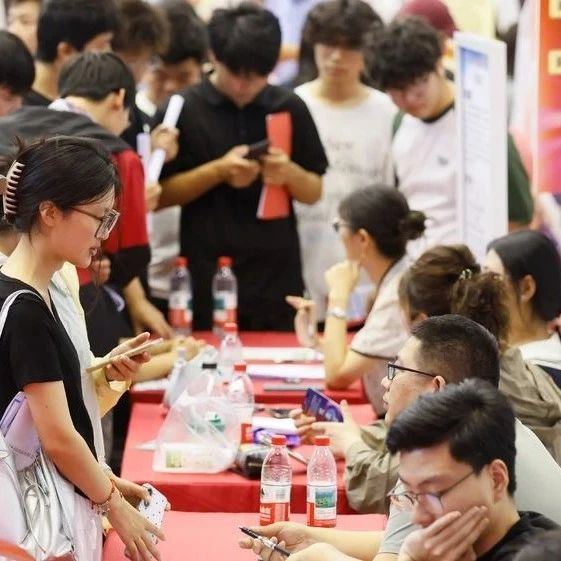
Core Viewpoint - The article discusses the concept of "era dividends" and emphasizes that while there are development opportunities, one must also consider the challenges and limitations faced by the younger generation, particularly the post-2000s cohort in China [6][12]. Group 1: The Context of Development Opportunities - The notion of "era dividends" is often equated with "development opportunities," but it is crucial to recognize that survival and quality of life are also significant factors [6][12]. - The past was not without its difficulties, as evidenced by the low acceptance rates in higher education during the 1980s and 1990s, which were around 30% [9]. - Today's job market offers more options for employment, such as delivery services, compared to the past when job loss could lead to dire circumstances [11][12]. Group 2: The Challenges Faced by the Post-2000s Generation - The post-2000s generation is characterized by a material abundance but also faces a significant reduction in development space compared to previous generations [36]. - The pressure on this generation is reflected in their increased participation in extracurricular classes, which is three times that of the 1990s generation [26]. - The high costs of tutoring classes, often hundreds to thousands of yuan per session, reflect the intense competition and expectations placed on students [27]. Group 3: Employment and Economic Realities - Many graduates from prestigious universities are struggling to find suitable employment, with some resorting to further education or low-paying jobs [27][29]. - The oversupply of graduates in the job market has led to a decrease in job opportunities, making it challenging for young people to achieve their aspirations [29][31]. - The traditional pathway of education leading to stable employment is becoming less viable for the post-2000s generation, leading to a reevaluation of their life choices [36][37]. Group 4: Shifts in Consumer Behavior and Values - The post-2000s generation is likely to prioritize experiences and personal fulfillment over traditional milestones like homeownership and marriage [42][43]. - This generation is expected to influence various industries, particularly those related to entertainment, lifestyle, and consumer goods, as they seek joy and satisfaction in their purchases [44]. - The shift in values indicates a departure from the previous generations' focus on material success and stability, suggesting a new approach to life and consumption [41][44].

00后,还有什么时代红利吗?
Hu Xiu· 2025-08-27 11:17
Group 1 - The article discusses the concept of "era dividends" and emphasizes that it is often equated with "development opportunities" [2][4] - It highlights the importance of survival in society before discussing development opportunities, indicating that one must consider the potential downsides of not seizing these opportunities [3][4] - The article reflects on the past, noting that while many believe there was more development space in previous decades, those times also had significant challenges [5][6] Group 2 - The article draws parallels between the experiences of young people in the 1950s America and the current generation in China, particularly the 00s, highlighting the disillusionment with traditional success paths [22][40] - It points out that the 00s generation faces a significant reduction in development space compared to previous generations, making upward mobility through personal effort increasingly difficult [42][43] - The article notes that the 00s generation is burdened with high expectations from their families, which adds to their stress despite living in a materially rich environment [24][26] Group 3 - The article discusses the rise of tutoring classes for the 00s generation, indicating that they spend significantly more time in extracurricular activities compared to previous generations [28][30] - It mentions the financial burden of these tutoring classes and the pressure from both parents and societal expectations, leading to a heavy academic load [30][31] - The article highlights the disconnect between educational achievements and job market realities, with many graduates struggling to find suitable employment despite their qualifications [31][35] Group 4 - The article suggests that the 00s generation is redefining their values and priorities, moving away from traditional paths of home ownership and marriage towards more personal fulfillment [45][50] - It notes that this generation is likely to influence various industries, particularly those related to leisure and lifestyle, as they prioritize experiences over material possessions [54][57] - The article concludes that while the era presents challenges, it also offers opportunities for the 00s generation to explore non-traditional life paths [58][63]
《歌手》大热,芒果超媒仍需提高变现效率丨消费参考
2 1 Shi Ji Jing Ji Bao Dao· 2025-08-27 01:20
Core Viewpoint - Mango TV's performance continues to decline despite popular shows like "Singer 2025" and "Riding the Wind 2025" [1] Financial Performance - In the first half of 2025, Mango TV's revenue decreased by 14.31% to 5.964 billion yuan, while net profit attributable to shareholders fell by 28.31% to 763 million yuan [2] - Membership revenue increased slightly by 0.40% to 2.496 billion yuan, with monthly active users growing by 14.24% [3] - Advertising revenue dropped significantly by 7.79% to 1.587 billion yuan, despite some improvement in Q2 compared to Q1 [3][5] - The operator business revenue grew by 6.67% to 800 million yuan [4] Market Position and Challenges - Mango TV maintains a leading position in variety show viewership, with effective play volume ranking first in the industry [5] - The company faces challenges in monetizing its content effectively, as the commercial value of its variety shows appears limited [8] - In contrast, Bilibili's advertising revenue grew by 20.0% to 4.45 billion yuan, highlighting a more favorable market position for Bilibili [6][7] Strategic Focus - The company needs to enhance its monetization efficiency while maintaining its content advantages [9] - This challenge is not unique to Mango TV but is a broader issue within the long-video industry [10]

如是可观:完成千万级融资,开发文娱新赛道
Zhong Guo Jing Ji Wang· 2025-08-26 03:41
Core Insights - The company, Shanghai Rusi Keguan Cultural Technology Co., Ltd., has completed a Pre-A round financing of several tens of millions of RMB, led by United Capital Financial Holdings Group (Hong Kong) [1] - The focus of the company is on Location-Based Entertainment (LBE), aiming to create differentiated competitive advantages in the immersive entertainment sector [1] Company Overview - Rusi Keguan is positioned as a technology-driven entertainment company within the metaverse industry, specializing in web3, artificial intelligence, and AR/VR applications [1] - The company has launched the "FuntasyVR Super Sensory Theater," which is recognized as a leading VR/XR immersive content entertainment method, establishing a preliminary competitive edge in the industry [1] Future Plans - The recent financing is viewed as a significant milestone that will support the company's strategic goals, including increased R&D investment and continuous optimization of products, content, and services to enhance user experience [1] - The company plans to actively expand into key domestic regions and international markets, seeking partnerships with outstanding players across the industry chain to promote the digital and intelligent upgrade of metaverse VR large spaces [1] Industry Perspective - United Capital expresses strong confidence in the immense growth potential and long-term trends of China's cultural technology industry, aiming to leverage its international vision, industry resources, and capital operations to support Rusi Keguan in becoming a leading enterprise in the cultural technology sector [1]
公共资源真被娱乐新闻占用了么?
Hu Xiu· 2025-08-25 07:11
Group 1 - The core viewpoint of the articles discusses the shift in media focus towards entertainment news, with traditional media and feature magazines increasingly covering entertainment topics, leading to a decline in dedicated entertainment media [1][2][5] - The commercialization of media has led many magazines to rely on celebrity soft articles for advertising and sales, as fan engagement drives sales [3] - Official media has begun to utilize entertainment products as vehicles for nationalism and public discourse, indicating a merging of entertainment and public issues [4][10] Group 2 - The trend of mainstream media and feature magazines covering entertainment news has resulted in a significant reduction in the scale of dedicated entertainment media, which struggles to generate revenue [5][8] - Cultural reporting is increasingly used to discuss public issues, with entertainment products becoming a medium for broader societal discussions [8][9] - The public's engagement with entertainment content reflects a shift in how societal issues are perceived and discussed, with films and shows often serving as substitutes for traditional media [11][20] Group 3 - The fragmentation of reading habits has created a demand for entertainment news, as audiences prefer shorter, more engaging content during their limited free time [12] - Social media platforms have transformed the landscape of public discourse, with entertainment news dominating trending topics and public attention [15][16] - The concept of "occupying public resources" has emerged, highlighting the competition for public attention between entertainment news and traditional news [16][17] Group 4 - The role of celebrities has evolved, as they now serve as public resources themselves, influencing public discourse and marketing efforts [18] - The media landscape has shifted, with platforms like Weibo and Douyin taking precedence over traditional media in setting public agendas [17][20] - The audience's desire for public discussion remains, but the format and medium through which these discussions occur have changed significantly [19][21]
早盘必读丨美股三大指数涨跌不一,大型科技股涨跌不一,热门中概股多数上涨
Sou Hu Cai Jing· 2025-08-19 07:04
Group 1 - The US stock market showed mixed results with major tech stocks fluctuating, while popular Chinese concept stocks mostly rose, suggesting a strategy of buying on dips [2] - The Shanghai Composite Index reached a ten-year high, with significant trading volume, indicating a bullish market sentiment and opportunities for active participation [2] - The focus on the ChiNext and STAR Market reflects a trend towards high volatility stocks, which are seen as the fastest route to profit in the current bull market [2] Group 2 - A significant breakthrough in star-ground communication technology was achieved by a Chinese research team, doubling the transmission rate to 4200 Mbps using dual-channel X-band [3] - The micro-short drama industry is rapidly expanding, with over 2300 vertical screen micro-short drama crews received in the first seven months of the year, surpassing the total for 2024 [4] - The global DRAM market reached a historical quarterly high of $32.101 billion in Q2 2025, driven by AI demand and rising prices for traditional DDR4/LPDDR4X [5] - China's manned lunar exploration program made a significant milestone with the successful ignition test of the Long March 10 series rocket, following previous successful tests [6] - The launch of multiple models by Zhiyuan Robotics aims to enhance online sales channels and broaden brand coverage, with products set to be available on major e-commerce platforms [8]

轻工制造行业周报(25年第33周):箱板瓦楞纸延续涨势,7月美国家具零售额同比+5.1%-20250819
Guoxin Securities· 2025-08-19 05:07
Investment Rating - The report maintains an "Outperform" rating for the light industry manufacturing sector [6][8]. Core Views - The report highlights that the domestic price of broadleaf pulp has recently increased, while cultural paper and white card paper remain under pressure due to supply and demand factors. However, the waste paper sector shows a strong willingness to raise prices, continuing its upward trend. In July, China's furniture exports increased by 3.0% year-on-year, and U.S. furniture sales rose by 5.1% year-on-year. The extension of reciprocal tariffs and countermeasures between China and the U.S. for another 90 days, along with the approaching U.S. interest rate cuts and overseas promotional stocking demands, suggests a potential recovery in the export chain [17][25]. Summary by Sections 1. Recent Research Tracking and Investment Thoughts - The domestic price of broadleaf pulp has risen slightly, while cultural paper and white card paper prices are still under pressure. The waste paper sector continues to show strong price increase intentions, maintaining an upward trend. In July, China's furniture exports increased by 3.0% year-on-year, and U.S. furniture sales rose by 5.1% year-on-year. The extension of reciprocal tariffs and countermeasures between China and the U.S. for another 90 days, along with the approaching U.S. interest rate cuts and overseas promotional stocking demands, suggests a potential recovery in the export chain [17][25]. 2. Key Data Tracking - In July, China's furniture retail sales increased by 20.6% year-on-year, while sales in building materials and home furnishing markets decreased by 12.9% year-on-year. The total retail sales of social consumer goods in July reached 38,780 billion yuan, with a year-on-year increase of 3.7% [39]. - The domestic price of broadleaf pulp has increased by 109 yuan/ton compared to July, influenced by international production cuts and price increases. The waste paper sector has also seen price increases, with waste paper prices rising by 21 yuan/ton for old books and 100 yuan/ton for old yellow board paper [18][22]. - In July, the U.S. furniture and home decor store sales increased by 5.1% year-on-year, maintaining a single-digit growth for 11 consecutive months. The inventory turnover ratios for U.S. furniture wholesalers and retailers indicate stable conditions, suggesting resilience in overseas demand [25][26]. 3. Company Announcements and Industry Dynamics - The report recommends focusing on leading companies in the home furnishing sector, such as Oppein Home, Sophia, and Gujia Home, which are expected to benefit from the recovery in home consumption. In the paper and packaging sector, it highlights Sun Paper as a key player benefiting from new capacity releases [5][14][15].


a2以12亿元收购蒙牛海外工厂:光明或受影响丨消费参考
2 1 Shi Ji Jing Ji Bao Dao· 2025-08-19 00:45
Group 1 - A2 Milk Company plans to increase investment in China by acquiring a milk powder factory in Pokeno, New Zealand for approximately NZD 282 million (around RMB 1.2 billion) from Yashili International, a subsidiary of Mengniu Dairy [1] - The factory has the capacity to produce up to 52,000 tons of infant formula annually and will allow A2 to register two Chinese label infant formula products [1] - A2 Milk's revenue in China and other Asian regions grew by 13.9% to NZD 1.302 billion for the fiscal year ending June 30, 2025, with its market share in China increasing from 7.1% to 8.0% [2][3] Group 2 - The acquisition may impact the contract manufacturing business of Bright Dairy, which previously produced A2's Chinese label milk powder through its subsidiary New Light [4] - New Light reported a loss of NZD 450 million in 2024, and Bright Dairy holds a 65.3% stake in New Light [4] - A2 Milk is optimistic about its expansion in the Chinese market, indicating a strong confidence in future growth [6]
茶饮料不好卖了?康师傅茶饮少卖7亿元丨消费参考
2 1 Shi Ji Jing Ji Bao Dao· 2025-08-12 23:37
Group 1 - The tea beverage market is reaching a turning point, with Master Kong's tea beverage revenue declining by 6.3% year-on-year to 10.67 billion yuan in the first half of 2025, resulting in a drop of 722 million yuan [1] - Master Kong's overall beverage revenue decreased by 2.6% to 26.359 billion yuan, with water sales down 6.0% to 2.377 billion yuan and juice sales down 13.0% to 2.956 billion yuan [1] - In contrast, carbonated and other beverages saw a revenue increase of 6.3% to 10.256 billion yuan [1] Group 2 - Nongfu Spring's tea beverage business has shown significant growth, with revenue growth rates of 48%, 51%, 83%, and 32% from 2021 to 2024, reaching 16.7 billion yuan in 2024 [1] - Tea beverages now account for 39% of Nongfu Spring's revenue, surpassing packaged water to become the largest product category [1] - Despite Master Kong's decline, Uni-President's tea beverage revenue increased by 9.1% to 5.068 billion yuan in the same period [1] Group 3 - The decline in Master Kong's tea beverage sales may indicate changes in demand for sugary tea, as the company has a strong position in this segment while Nongfu Spring's sugar-free tea dominates the market [2][3] - Master Kong's distribution channels are shrinking, with the number of marketing merchants decreasing from 67,215 to 63,806 and direct retailers from 220,623 to 219,124 [2] - Master Kong aims to build a diverse product matrix for ready-to-drink tea to maintain brand loyalty among young consumers and adapt to industry trends towards health and premiumization [2]
繁荣“夜”态 不止深夜食堂
Sou Hu Cai Jing· 2025-08-12 21:26
Group 1 - The core viewpoint highlights the rising popularity of the night economy in Beijing, particularly during the summer, with many restaurants transforming into "midnight canteens" to attract customers [1] - The night economy is becoming a significant driver of economic growth, with 60% of urban consumption occurring at night and the market size exceeding 50 trillion yuan [1] - The shift in consumer behavior from merely eating late-night snacks to seeking diverse experiences, such as entertainment and ambiance, is a key trend in the evolving night economy [1] Group 2 - The development of the night economy is closely linked to the growth of the tertiary industry, necessitating improvements in service and infrastructure to support various business formats [2] - There is potential for expanding the night economy beyond dining, with suggestions for more cultural and entertainment events to enhance the experience [2] - Innovative activities, such as music festivals and themed events, are attracting visitors and contributing to the vibrancy of urban life in Beijing [2]