
饮料

Search documents
农夫山泉(09633)短線分析:技術指標現買入信號,42.2元支持位成關鍵
Ge Long Hui· 2026-03-21 13:52
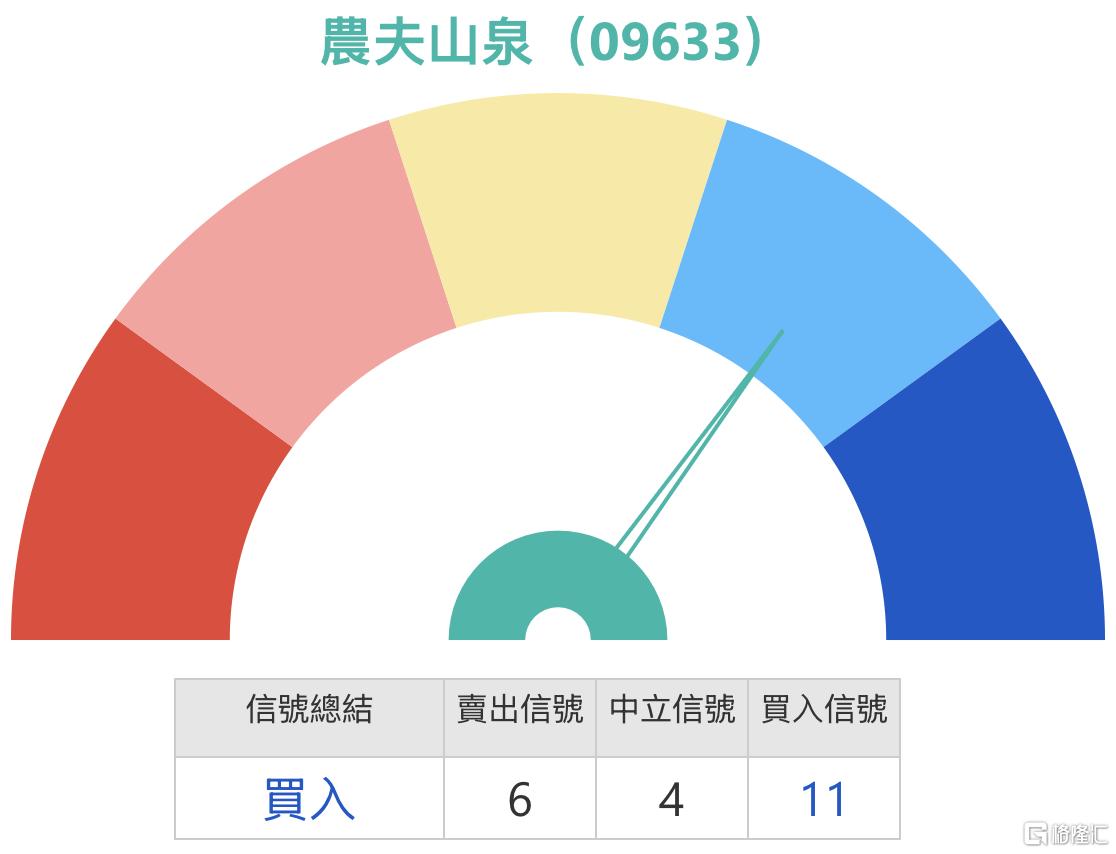
Core Viewpoint - Nongfu Spring (09633) shows a short-term buy signal with a critical support level at 42.2 HKD, indicating potential for upward movement in stock price [1][2]. Group 1: Stock Performance and Analyst Ratings - As of March 20, 2026, Nongfu Spring's stock price is 43.12 HKD, reflecting a slight increase of 0.37% with a trading volume of approximately 67.95 million HKD [1]. - Citi upgraded Nongfu Spring's rating from "Outperform" to "Highly Confident Outperform" and raised the target price from 35 HKD to 45.4 HKD, citing strong growth in the water business as a key catalyst for the next three months [1]. - The water business is expected to see a year-on-year revenue growth of 10% in March due to a low base effect [1]. Group 2: Technical Analysis - Technical indicators suggest that Nongfu Spring is forming a bottom, with the first support level at 42.2 HKD and a second support level at 40.9 HKD [2]. - The first resistance level is at 44.6 HKD, with a significant technical barrier at the 20-day moving average of approximately 45.2 HKD; a successful breakout could target 47.0 HKD [2]. - Overall technical indicators show a strong buy signal, with a signal strength of 11 and a relative strength index (RSI) of 35, indicating a relatively low position [2]. Group 3: Market Sentiment and Trading Strategies - Despite a reduction of 573,000 shares by southbound funds on March 19, there has been a net increase of 3.066 million shares over the past five trading days, indicating sustained interest from investors [1]. - The podcast analysis on March 19 noted that the stock price had been on a downward trend since reaching a high of 51.85 HKD, with initial support forming around 42.6 HKD [5]. - The current price of 43.16 HKD is above the support level of 42.2 HKD, suggesting improved short-term buying strength [5]. Group 4: Warrant Market Analysis - The warrant market is heavily concentrated with all call options, primarily with exercise prices ranging from 44 to 50 HKD, indicating that market products are designed with the assumption of a significant price increase [6]. - Three recommended call warrant products are available for investors, each with different leverage and premium rates, suitable for varying investment strategies [7][8].


速递|GLP-1卷到饮料货架:补水,正成为下一个爆点
GLP1减重宝典· 2026-03-21 09:07
Core Insights - The emergence of GLP-1 weight loss drugs is reshaping consumer behavior, particularly in the beverage industry, as users experience reduced appetite and altered thirst perception, leading to a new demand for hydration solutions [4][5][13] Group 1: Changes in Consumer Behavior - GLP-1 users are not only eating less but may also be drinking less due to decreased food-derived water intake and reduced thirst perception, potentially leading to mild dehydration [5][7] - The side effects of GLP-1 drugs, such as nausea and vomiting, can further exacerbate dehydration, creating a new consumer need for hydration products [5][7] Group 2: New Opportunities for Beverage Companies - The demand for hydration opens up opportunities for electrolyte drinks, as GLP-1 users may experience not just dehydration but also the loss of essential electrolytes like sodium and potassium [7][8] - Traditional electrolyte drinks, previously targeted at athletes, are now appealing to a new demographic of GLP-1 users, creating a functional demand that brands can capitalize on [7][8] Group 3: Product Development Considerations - Beverage products targeting GLP-1 users must prioritize low-calorie formulations, as high-sugar or high-energy drinks are less appealing to this demographic [8][9] - The taste preferences of GLP-1 users may shift towards lighter, less intense flavors, necessitating a reevaluation of product development strategies in the beverage industry [9][10] Group 4: Packaging and Consumption Trends - Smaller, portable packaging may become more popular among GLP-1 users, who prefer to consume beverages in smaller quantities throughout the day rather than in large volumes [10][11] - This trend aligns with broader movements in the food industry towards smaller packaging, facilitating easier integration into daily routines [10][11] Group 5: Integration of Technology - The digitalization of hydration management through health apps and smart devices presents an opportunity for beverage brands to integrate their products into users' daily health routines [12][13] - Brands can explore ways to embed reminders and personalized recommendations into users' health management systems, enhancing the overall consumer experience [12][13] Group 6: Broader Industry Implications - The impact of GLP-1 drugs extends beyond the pharmaceutical sector, influencing the entire food and beverage supply chain as companies reassess their product offerings in light of changing consumer needs [4][13] - The beverage industry must adapt to new consumer expectations regarding hydration, flavor, and product functionality to capture the emerging market created by GLP-1 users [4][13]

统一企业中国(00220):营收稳定增长,分红优势仍足:统一企业中国(00220):
Shenwan Hongyuan Securities· 2026-03-20 11:19
Investment Rating - The investment rating for the company is "Buy" (Maintain) [2] Core Insights - The company reported a stable revenue growth with a proposed cash dividend of RMB 0.4747 per share, totaling approximately RMB 2.05 billion, resulting in a dividend payout ratio of 100% [7] - The company’s revenue for 2025 was RMB 31.71 billion, a year-on-year increase of 4.6%, while the net profit attributable to shareholders was RMB 2.05 billion, up 10.9% year-on-year [7] - The company is expected to achieve net profits of RMB 2.21 billion, RMB 2.31 billion, and RMB 2.47 billion for the years 2026, 2027, and 2028, respectively, with growth rates of 7.6%, 4.7%, and 7.0% [7] Financial Data and Profit Forecast - Revenue projections for the company are as follows: - 2024: RMB 30.33 billion - 2025: RMB 31.71 billion - 2026E: RMB 33.22 billion - 2027E: RMB 34.61 billion - 2028E: RMB 36.03 billion - The net profit attributable to ordinary shareholders is projected as follows: - 2024: RMB 1.85 billion - 2025: RMB 2.05 billion - 2026E: RMB 2.21 billion - 2027E: RMB 2.31 billion - 2028E: RMB 2.47 billion - The company’s return on equity (ROE) is expected to improve from 13.80% in 2024 to 17.62% in 2028 [6][8]
华泰证券今日早参-20260320
HTSC· 2026-03-20 06:17
Group 1: Macroeconomic Insights - The fiscal data for January-February indicates a positive start to the year, with broad fiscal expenditure showing a year-on-year increase of 6.1%, recovering from a decline of 0.7% in December [2] - The broad fiscal revenue decline narrowed significantly from 18.5% in December to just 1.4% in January-February, indicating a recovery in nominal growth driven by improving prices [2] - The Japanese central bank maintained its policy rate at 0.75% while signaling a cautious approach to potential rate hikes due to geopolitical tensions affecting oil prices [3] Group 2: Oil and Gas Sector - The oil and gas sector is facing a significant supply gap due to restrictions in the Strait of Hormuz, with WTI and Brent prices rising by 43.7% and 48.2% respectively since late February [4] - A projected short-term supply gap of 2 million barrels per day is anticipated, driven by geopolitical tensions and operational constraints in the region [4] - The forecast for Brent crude oil prices has been revised upward to an average of $90 per barrel for 2026, reflecting the ongoing supply challenges and the need for strategic reserves [4] Group 3: Electronic Gases Market - The global electronic gases market is expected to grow by 8% year-on-year to reach $6.8 billion in 2026, driven by advancements in chip manufacturing and supply constraints from geopolitical issues [5] - Domestic companies currently hold a 40% market share in the electronic gases sector, with an anticipated increase in localization due to rising self-sufficiency requirements [5] Group 4: Hydrogen Energy Sector - Recent policy announcements from Chinese authorities are expected to catalyze the hydrogen energy sector, marking 2026 as a potential turning point for green hydrogen projects [6] - The focus has shifted from vehicle subsidies to broader applications, indicating a more comprehensive approach to hydrogen utilization [6] Group 5: Capital Markets in the Middle East - The capital markets in the Middle East are experiencing increased uncertainty due to geopolitical tensions, with a combined market size of approximately $4.9 trillion, comparable to Hong Kong's market [8] - The market structure is characterized by fragmentation, with most countries having independent exchanges, but lacking a dominant financial center like New York or London [8] Group 6: Company-Specific Insights - Dongpeng Beverage has been initiated with a "Buy" rating, targeting a price of HKD 290.85, reflecting its strong market position in the functional beverage sector [9] - Weibo's Q4 performance showed a revenue increase of 3.6% to $473 million, with a focus on AI and video business strategies to enhance profitability [9] - Huazhu Group reported a Q4 revenue of CNY 6.525 billion, exceeding guidance, driven by successful asset-light transformation and operational improvements [11] - ZhongAn Online's net profit for 2025 reached CNY 1.1 billion, a significant increase of 82.5%, supported by strong underwriting and investment performance [12] - Leaping Automotive achieved a historic turnaround with a revenue of CNY 64.73 billion in 2025, marking a 101.3% increase and a net profit of CNY 540 million [14]
泰国富二代狂赚中国钱,这下摊上大事了
创业家· 2026-03-19 10:15
Core Viewpoint - The article discusses the trust crisis faced by IFBH, a coconut water company founded by Thai entrepreneur Pongsakorn Pongsak, following a report that questioned the authenticity of its "100% coconut water" claim, leading to significant stock price fluctuations and concerns about its business model and reliance on the Chinese market [4][6][7][11]. Group 1: Company Overview - Pongsakorn Pongsak, the founder of IFBH, is the son of a textile tycoon and has built a successful coconut water brand, "if," which generated approximately $158 million in revenue for 2024 [5][19]. - IFBH operates with a remarkably lean workforce of only 46 employees, yet it has achieved high revenue, showcasing an extreme light-asset operational model [19][21]. - The company has a significant market presence, holding a 34% market share in mainland China and 60% in Hong Kong, making it the leading coconut water brand in these regions [15][20]. Group 2: Trust Crisis and Market Reaction - A report by the Beijing News raised concerns about the authenticity of IFBH's products, indicating the presence of external water and sugar in their coconut water, which led to a trust crisis for the brand [6][11]. - Following the report, IFBH's stock price dropped by 22.81% over a few days, despite the company issuing statements to reaffirm the purity of its products [11][12]. - The company's market capitalization has significantly decreased from a peak of approximately HKD 130 billion to around HKD 30 billion, reflecting investor concerns [12][17]. Group 3: Business Model and Market Dynamics - IFBH's business model relies heavily on outsourcing, with no in-house production or warehousing, which allows for high profit margins despite potential risks associated with supplier concentration [22][23]. - The coconut water market in China is rapidly growing, with projections indicating a compound annual growth rate of 13%-19% from 2025 to 2030, intensifying competition from both international and local brands [29]. - The company's marketing strategy has effectively targeted younger consumers through collaborations with popular influencers and celebrities, enhancing brand visibility [25][26]. Group 4: Challenges and Future Strategies - The heavy reliance on the Chinese market poses risks for IFBH, as any market fluctuations could significantly impact its business [28]. - The company is beginning to localize its operations in China by expanding its distributor network and establishing a local subsidiary to enhance sales execution and distribution management [32][33]. - Despite plans for local production and increased operational investment, the transition from a light-asset to a heavier asset model may strain profitability, as evidenced by a 31.7% decline in net profit despite revenue growth [34].

价值股与周期股的辩证关系:从更长的时间尺度看投资
雪球· 2026-03-18 09:13
Group 1 - The article argues that the distinction between value stocks and cyclical stocks is misleading, as all stocks operate within cycles over a longer time frame [2][3] - Value stocks are typically seen as stable companies with consistent dividends and low valuations, while cyclical stocks are those whose performance fluctuates with economic cycles [3] - The historical performance of Coca-Cola, held by Warren Buffett, illustrates that even perceived value stocks are influenced by broader economic cycles, particularly the decline of American hegemony [3] Group 2 - Zijin Mining, once considered a typical cyclical stock, has seen its price rise significantly from around 2-3 yuan to approximately 37 yuan, reflecting a shift in market conditions and the end of a tightening monetary policy [4][5] - The article emphasizes that all industries experience cycles, and the labels of value and cyclical stocks are assigned by the market rather than inherent characteristics of the companies [5][6] - The Kondratiev wave theory suggests that all industries follow a cycle of growth, prosperity, decline, and recession, with the current global economy entering a recession phase expected to last until around 2030 [6] Group 3 - The article highlights the importance of understanding the relationship between value and cyclical stocks, focusing on timing rather than labeling, as all stocks are subject to cyclical influences [7] - It notes that the U.S. economy is in decline while China's economy is on the rise, with projections indicating significant GDP growth for China compared to the U.S. over the next several years [7][8] - The potential for the Chinese yuan to appreciate against the U.S. dollar is discussed, with expectations of a long-term devaluation of the dollar, which could lead to a revaluation of Chinese assets [8] Group 4 - The article concludes that investors should not be confined by labels like "value stock" but should instead focus on the cyclical nature of industries and adapt their strategies accordingly [9] - It advocates for a dynamic approach to tracking industry trends and emphasizes the importance of establishing a trading plan to navigate market fluctuations effectively [10] - The significance of long-term trends over short-term volatility is underscored, suggesting that investors should maintain focus on broader cycles rather than being swayed by immediate market movements [10]


泰国富二代在中国狂赚钱,这下摊上大事了
创业邦· 2026-03-17 10:13
Core Viewpoint - The article discusses the trust crisis faced by IFBH, a Thai beverage company known for its "if coconut water," following a report that questioned the authenticity of its product claims [5][6][7]. Company Overview - IFBH, founded by Pongsakorn Pongsak, is a Hong Kong-listed company that generated revenue of approximately $158 million (about 1.16 billion RMB) in 2024, with a net profit of $33.3 million (about 245 million RMB) [5][17]. - The company operates with a lean workforce of only 46 employees, primarily relying on external partnerships for production and distribution [17][19]. Market Position - IFBH has dominated the coconut water market in China, holding a market share of about 34% in 2024, significantly surpassing its nearest competitor [12]. - The company is the second-largest coconut water brand globally, following Vita Coco [13]. Trust Crisis - A report by the Beijing News raised concerns about the authenticity of IFBH's "100% coconut water" claim, leading to a significant drop in stock price, with a decline of 22.81% over a few days [6][9][27]. - Despite IFBH's attempts to reassure the market through public statements and data supporting their product claims, confidence has not fully recovered [9][14]. Business Model - IFBH employs a light asset model, outsourcing production and logistics, which allows for high efficiency but also creates dependency on suppliers and distributors [19][20]. - The company maintains a gross margin of around 35% and a net margin of approximately 20% [20]. Market Growth - The coconut water market in China is rapidly expanding, projected to grow from $49.7 million in 2019 to $1.2 billion by 2025, with a compound annual growth rate (CAGR) significantly higher than the overall beverage industry [22]. - IFBH has effectively utilized influencer marketing to maintain a strong presence among younger consumers [25]. Challenges and Strategic Adjustments - The heavy reliance on the Chinese market poses risks, as any negative publicity can severely impact the company's performance [27]. - In response to recent challenges, IFBH is increasing its local operations in China, expanding its distributor network, and exploring local production options [33][35][36].

中信证券:目前饮料企业成本端整体可控,建议把握板块回调后龙头企业的布局机会
3 6 Ke· 2026-03-15 23:38
Core Insights - Recent significant increase in PET prices has raised market concerns, leading to notable stock price corrections among beverage companies [1] - Historical analysis of oil prices and PET price surges indicates that the overall cost pressure on beverage companies is manageable at present [1] - If PET prices remain elevated, industry competition may slow down, allowing companies to mitigate negative impacts from raw material costs by reducing expenditure on investments [1] - There are opportunities to invest in leading companies within the sector following the recent market pullback [1]

中信证券:目前饮料企业成本端整体可控 建议把握板块回调后龙头企业布局机会
Jin Rong Jie· 2026-03-15 11:22
Core Viewpoint - Recent significant increase in PET prices has drawn market attention, leading to notable stock price corrections for beverage companies [1] Group 1: Industry Analysis - The historical correlation between oil prices and PET price surges indicates that the current cost pressures on beverage companies are manageable [1] - If PET prices remain elevated, it may result in reduced industry competition, allowing companies to mitigate negative impacts from raw material costs by cutting back on expenditures [1] Group 2: Investment Opportunities - There is a recommendation to seize opportunities in leading companies within the sector following the recent market corrections [1]
中信证券:PET涨价影响可控 饮料企业有望缩减费投对冲成本
Zhi Tong Cai Jing· 2026-03-15 11:07
Core Viewpoint - Recent significant increase in PET prices has raised market concerns, leading to notable stock price corrections for beverage companies [1] Group 1: PET Price Dynamics - PET prices are closely linked to oil prices, with recent geopolitical tensions causing a substantial rise in oil prices, reaching $100.5 per barrel, a 47% increase compared to the average in 2025 [1] - As of March 11, PET spot prices have risen to 7910 yuan per ton, reflecting a 32% increase compared to the average in 2025 [1] - Historical trends indicate a lag in PET price increases following oil price hikes, with PET typically rising less than oil prices; for instance, in 2022, oil prices increased by 40% while PET prices rose by 26% [1] Group 2: Cost Sensitivity Analysis - A 10% increase in PET procurement prices is estimated to impact beverage companies' gross margins by 0.6-1.4 percentage points [3] - The same 10% increase in PET prices is projected to affect net margins by 0.5-1 percentage points, with a net profit impact ranging from 3% to 11% [3] - Variability in the impact is noted due to different PET pricing and inventory strategies among beverage companies [3] Group 3: Historical Context and Industry Response - In 2022, beverage companies mitigated the adverse effects of raw material price increases by locking in prices, resulting in a gross margin decline of 1-4 percentage points [4] - The rise in raw material prices led to a slowdown in industry competition, with many companies reducing sales expense ratios to offset the negative impact on net margins, keeping net margin changes within 2 percentage points [4] - If current high PET prices persist, companies may continue to reduce expenditure to partially counteract negative impacts on net profits [4]