电动汽车

Search documents
一个创新强国的绿色崛起
Ren Min Ri Bao Hai Wai Ban· 2025-12-15 06:10
近日,法国总统马克龙访华之际,《回声报》、《费加罗报》、法新社等法国媒体均聚焦中国,其中, 中国在科技创新和绿色发展领域取得的成就成为关注焦点。事实上,最近,《金融时报》《经济学人》 等多家外媒关注中国成为创新强国,并纷纷探究其中原因。报道称,中国已从"世界工厂"变身,西方国 家需要在竞争中迎头赶上。 中国作为技术强国的崛起已无可置疑 "创新"已成为中国经济社会发展的关键词。不久前党的二十届四中全会通过的"十五五"规划建议中,有 61次提及"创新"。近年来,中国重大科创成果密集涌现,全球创新指数排名从2012年的第34位升至2025 年的第10位。 "中国几乎在所有领域都占据优势地位"。这是法国外交及中国问题专家伊曼纽尔·林科特近日接受《费 加罗报》专访时做出的判断。文章指出,在当前全球技术格局中,特别是在电动汽车、人工智能等关键 领域,中国作为技术强国的崛起已无可置疑。中国近年来主动引导全球标准设定、技术创新推进,已进 入价值链高端。 澳大利亚广播公司12月8日文章引用澳大利亚智库最新发布的一份报告指出,中国在8个人工智能类别中 的7个,全部13个先进材料和制造技术类别,所有7个国防、太空、机器人和交通类别 ...
世界经济论坛发布全球绿色经济报告
Xin Lang Cai Jing· 2025-12-15 01:49
Core Insights - The report by the World Economic Forum highlights that the green economy has reached a multi-trillion dollar market size and is expected to continue its rapid growth, becoming a key driver of global economic expansion [1][6]. Market Size and Growth - The global green economy is projected to exceed $5 trillion in market size by 2024 and is expected to grow to over $7 trillion by 2030, making it one of the most dynamic growth sectors, second only to the technology industry [2][7]. - The emissions reduction sector, which includes renewable energy, energy infrastructure, storage, electric vehicles, and carbon capture technologies, has a market size of $4.6 trillion [2][7]. - The adaptation and resilience sector, which encompasses water management, climate-resilient infrastructure, and agricultural technologies, is estimated at $1.1 trillion but is considered significantly underestimated [2][7]. Investment and Opportunities - The report emphasizes the importance of green revenue flowing into businesses and markets, suggesting that this metric better reflects market size and opportunities from the perspectives of companies and investors [3][8]. - As technology costs decline and industrial policies accelerate capital allocation, the green economy is becoming industrialized and scalable, presenting significant opportunities for both businesses and governments [3][8]. China's Role in Green Economy - China is identified as a major driver of global green economy expansion, leading in investment, innovation, and deployment across nearly all key dimensions [4][9]. - China's clean energy investment is projected to rise from $372 billion in 2019 to $659 billion in 2024, with a compound annual growth rate of 12%, significantly outpacing Europe [4][9]. - The country has seen a fourfold increase in solar power capacity and a doubling of wind power capacity since 2020, contributing over 60% of the global new installations in these sectors [4][9]. - By 2025, China's carbon emissions are expected to decline for the first time while economic activity continues to grow, reflecting the impact of two decades of strategic industrial policies [4][9].
“特斯拉劲敌”推出首款AI芯片,将在电动车型中取代英伟达?
Zhong Guo Qi Che Bao Wang· 2025-12-15 01:17
Core Viewpoint - Rivian has launched its first custom AI chip, the Rivian Autonomy Processor 1 (RAP1), which aims to replace Nvidia products in future models, boasting performance four times that of previous Nvidia systems [2][3] Group 1: Rivian's AI Chip Development - Rivian's RAP1 chip is designed to be integrated into the upcoming R2 SUV, marking a strategic shift towards in-house chip development to enhance its autonomous driving capabilities [3] - The RAP1 chip utilizes TSMC's 5nm process and features a memory bandwidth of 205GB per second, with two RAP1 chips capable of processing 5 billion pixels per second [3] - Rivian claims that the self-developed chip is a critical turning point for achieving Level 4 autonomous driving, moving beyond the Level 2 capabilities previously supported by Nvidia [3] Group 2: Competitive Landscape - Tesla is also advancing its chip development with the AI5 chip, set for mass production in 2027, which will utilize a 3nm process and offer 2000-2500 TOPS of computing power, five times that of the current HW4 chip [4] - The global automotive industry is witnessing a surge in self-developed chip initiatives, driven by the need for supply chain security, cost efficiency, and differentiated competition [5][6] - American automakers, particularly Tesla, are leading in chip development, with Tesla's FSD chip achieving a computing power of 1000 TOPS, enhancing its autonomous driving capabilities [5] Group 3: Strategic Implications - The shift towards self-developed chips is seen as a necessary strategy for automakers to maintain competitive advantages in the evolving automotive landscape [6][7] - Rivian's approach aims to create a highly integrated smart ecosystem where the chip serves as the core, processing data from sensors to enhance vehicle intelligence [8] - The introduction of the Autonomy Plus subscription service represents a new revenue stream for Rivian, aligning with the trend of combining hardware sales with software profitability [8] Group 4: Industry Transformation - The automotive industry is transitioning from a reliance on Tier 1 suppliers to a model that integrates hardware and software, with self-developed chips being a key breakthrough [7] - The competitive landscape is shifting towards a focus on technological capabilities and strategic safety, making self-developed chips a survival necessity for automakers [9] - The ongoing "chip war" among automakers is expected to shape the profitability and market positioning of companies in the smart vehicle era [9]


一个创新强国的绿色崛起(国际论道)
Ren Min Ri Bao Hai Wai Ban· 2025-12-14 22:57
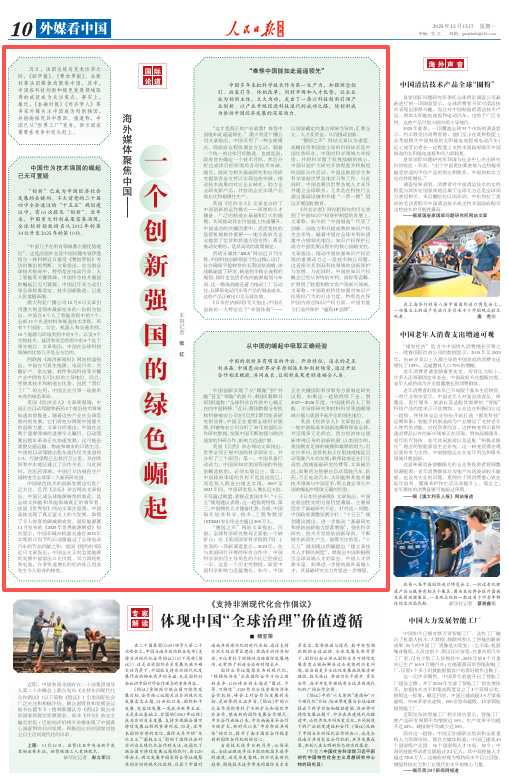
近日,法国总统马克龙访华之际,《回声报》、《费加罗报》、法新社等法国媒体均聚焦中国,其 中,中国在科技创新和绿色发展领域取得的成就成为关注焦点。事实上,最近,《金融时报》《经济学 人》等多家外媒关注中国成为创新强国,并纷纷探究其中原因。报道称,中国已从"世界工厂"变身,西 方国家需要在竞争中迎头赶上。 中国作为技术强国的崛起已无可置疑 "创新"已成为中国经济社会发展的关键词。不久前党的二十届四中全会通过的"十五五"规划建议 中,有61次提及"创新"。近年来,中国重大科创成果密集涌现,全球创新指数排名从2012年的第34位升 至2025年的第10位。 "中国几乎在所有领域都占据优势地位"。这是法国外交及中国问题专家伊曼纽尔·林科特近日接受 《费加罗报》专访时做出的判断。文章指出,在当前全球技术格局中,特别是在电动汽车、人工智能等 关键领域,中国作为技术强国的崛起已无可置疑。中国近年来主动引导全球标准设定、技术创新推进, 已进入价值链高端。 澳大利亚广播公司12月8日文章引用澳大利亚智库最新发布的一份报告指出,中国在8个人工智能类 别中的7个,全部13个先进材料和制造技术类别,所有7个国防、太空、机器人和交通类别 ...
美学者撰文:对中国电动汽车与其筑墙,不如学习
Huan Qiu Wang Zi Xun· 2025-12-14 22:50
Core Insights - Chinese electric vehicle manufacturers are significantly outpacing their American counterparts, with Ford's CEO expressing admiration for Xiaomi's SU7, which offers a range of approximately 600 kilometers per charge at a price of around $30,000, a segment currently lacking in the U.S. market [1] - In 2024, over 40% of new car sales in China are expected to be electric vehicles, while the U.S. is projected to be below 10% [1] - The U.S. response to China's dominance has been to impose high tariffs and restrict Chinese companies from entering the U.S. electric vehicle supply chain, which is seen as counterproductive to innovation [1] Industry Analysis - The article suggests that a more strategic approach for the U.S. would involve collaboration with Chinese companies and welcoming Chinese investments in U.S. manufacturing facilities, which could create jobs and enhance skills for American workers [2] - The U.S. automotive industry supports 10 million jobs and generates approximately $730 billion in revenue annually, indicating the importance of maintaining competitiveness in the global market [2] - Historical context is provided, noting that past fears regarding foreign competition, such as Japanese automakers in the 1980s, ultimately led to technological advancements and improved competitiveness in the U.S. automotive sector [1][2]
获8000亿美元估值,或面临更多“拷问”,SpaceX筹划全球最大规模IPO
Huan Qiu Shi Bao· 2025-12-14 22:36
美国CNBC网站称,SpaceX的IPO计划正发生在2025年全球IPO市场回暖的大背景之下——在经历了长 达3年的低迷期后,全球新股发行市场正重新焕发生机,投资者普遍欢迎有关SpaceX可能上市的消息。 面临巨额资本支出挑战 【环球时报驻美国特约记者 冯亚仁】"世界首富埃隆·马斯克的财富可能很快就会再次大幅增长。"彭博 社报道称,马斯克旗下的商业火箭公司SpaceX计划于2026年开启首次公开募股(IPO)。美国《纽约时 报》14日报道称,SpaceX估值有望攀升至约8000亿美元,成为全球估值最高的未上市公司,而SpaceX 的上市也有望令马斯克的净资产大幅攀升。 助推马斯克成为万亿级富豪? 据《纽约时报》报道,SpaceX在12日向员工通报,公司将回购部分内部人士持有的股份。该笔交易将 使SpaceX的整体估值达到约8000亿美元,同时公司也在为可能于明年进行的上市做准备。在一封致员 工及其他股东的信中,SpaceX首席财务官布雷特·约翰森表示,公司及其投资者计划以每股421美元的价 格,从股东手中回购总计25.6亿美元的股份,这一价格几乎是此前内部定价的两倍。此次向员工回购股 份的计划将使SpaceX ...
印尼前驻华大使答21:关键矿产遇上中国技术,两国合作前景广阔
2 1 Shi Ji Jing Ji Bao Dao· 2025-12-13 14:15
Group 1 - Indonesia is rich in mineral resources, while China has strong technological capabilities, indicating a high potential for economic cooperation between the two countries [1] - The former Indonesian ambassador to China emphasized the need to upgrade the partnership from a traditional supply chain relationship to a more equal innovation partnership focused on high-end product production in Indonesia [1] - The 75th anniversary of diplomatic relations between China and Indonesia was marked by a forum discussing the achievements and future of bilateral relations, highlighting the importance of the "One China" principle as a political foundation [1] Group 2 - The ambassador expressed satisfaction with the experience of using a Chinese-made electric vehicle, suggesting that such positive experiences should symbolize the shared benefits of cooperation between the two nations [1] - Indonesia and China are encouraged to strengthen coordination and cooperation in trade, climate change, technology transfer, and global development agendas, with significant prospects in electric vehicles, green energy, digital economy, and critical mineral development [1] - China has officially taken over the role of host for the 2026 APEC, which is expected to deepen regional cooperation and promote peace and development in the Asia-Pacific region [2]
马克龙回国后,中欧谈判重启,中方提前打预防针,这次能否破局?
Sou Hu Cai Jing· 2025-12-13 07:12
Group 1 - European leaders, including French President Macron, German Foreign Minister Baerbock, and UK Prime Minister Starmer, are visiting China to address long-standing trade disputes, particularly regarding tariffs on Chinese electric vehicles [1] - Negotiations between China and the EU on tariffs for electric vehicles have been reinitiated, with China warning the EU against direct communication with individual companies, which could undermine mutual trust and slow down progress [2][4] - The EU aims to divide Chinese companies by imposing varying tariff rates, such as 17% for BYD and 35.3% for SAIC, to leverage negotiations and potentially force concessions from companies facing higher tariffs [4] Group 2 - The EU seeks to strengthen its negotiating position by engaging with individual Chinese companies, which could allow it to extract more benefits due to its market leverage [5] - The trade friction reflects the EU's protectionist stance amid industrial stagnation, not only in the electric vehicle sector but also in infrastructure, green energy, and artificial intelligence [6] - To resolve disputes, it is essential to clarify differences between China and the EU, emphasizing that cooperation can benefit European industries, while discriminatory policies could exacerbate tensions and hinder growth [8] Group 3 - The EU should not be viewed as a monolithic entity, as there are competitive dynamics between older and newer member states, leading to divergent policies towards China [10] - A dual strategy is recommended for negotiations, engaging both the EU as a whole and individual member states to foster a pragmatic understanding of China [10] - Successful cooperation examples, such as Hungary attracting Chinese investments, can demonstrate the benefits of collaboration to other EU members, potentially easing negotiations [11]

美股全线下跌!英伟达跌超3%
Zhong Guo Zheng Quan Bao· 2025-12-13 00:55
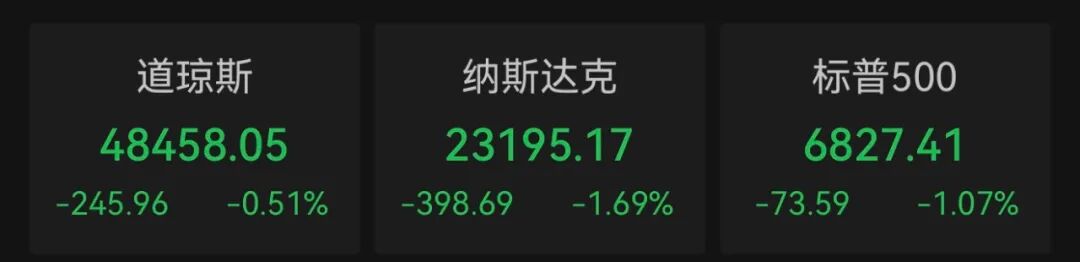
当地时间12月12日,美股三大股指集体收跌,道指跌0.51%,纳指跌1.69%,标普500指数跌1.07%。美股科技股多数下跌,英伟达跌超3%。 美股三大股指收跌 特朗普称泰柬同意全面停火 当地时间12月12日,Wind数据显示,道指跌0.51%,纳指跌1.69%,标普500指数跌1.07%。 央视新闻消息,当地时间12月12日,美国总统特朗普在社交媒体平台"真实社交"上表示,他当天早上分别与泰国总理阿努廷和柬埔寨首相洪玛奈通话,讨 论两国边境冲突的最新情况。特朗普称,两国领导人已同意从当晚开始停止所有交火,并回到此前在其参与下达成的原始和平协议。 特朗普同时感谢马来西亚总理安瓦尔在促成停火中的协助。 美股大型科技股多数下跌,万得美国科技七巨头指数下跌1.12%。个股方面,特斯拉上涨2.7%,英伟达跌超3%。 消息面上,谷歌宣布将Gemini的翻译功能整合至其文本翻译服务,并推出支持实时语音转语音翻译的耳机测试版体验。此次更新旨在提升多语言交互效 率,覆盖文本与语音场景。新功能目前处于测试阶段,部分用户可率先体验。 泰国和柬埔寨边境地区7日爆发激烈冲突,多地响起密集炮火。双方均指责对方"先开火"。 纳斯达克中 ...
央行:前11个月人民币存款增加24.73万亿元 全球电动汽车销量增速放缓
Sou Hu Cai Jing· 2025-12-13 00:12
江苏 Jiang Su 据南京海关统计,今年前11个月,江苏省外贸进出口总值5.4万亿元,规模创历史同期新高,较去年同期(下同)增长6.2%,增幅较全国高2.6个百 分点,占同期我国进出口总值的13.1%,提升0.3个百分点。其中,出口3.6万亿元,增长9.4%;进口1.8万亿元,增长0.3%。 为让每一笔财政资金都用在刀刃上,江苏省财政厅近日出台《江苏省省级预算单位非财政拨款资金集中收付管理办法》(以下简称《办法》),包 括总则、收入管理、支出管理、结余结转资金管理、监督管理和附则共36条,全面深化省级单位账户资金管理改革。《办法》将于2026年1月1日起 正式实施。 商务部消息,前11个月,我国货物进出口总值同比增长3.6%,实现量稳质升。 Equity Market 12月12日,市场探底回升,三大指数全线收红,创业板指涨近1%。沪深两市成交额达2.09万亿元,较上一个交易日放量2351亿元。盘面上,市场热 点快速轮动,全市场涨跌家数接近持平。可控核聚变、贵金属、电网设备、商业航天等板块涨幅居前,零售、房地产、海南等板块跌幅居前。截至 收盘,沪指涨0.41%,深成指涨0.84%,创业板指涨0.97%。 ...