化工

Search documents
化工板块观点汇报及近况更新
2026-02-24 14:16
2025 年 7 月份是化工行业行情的起点,这一时间点具有必然性和偶然性。首 先,从供给端来看,2025 年整个化工行业的新增产能基本落地或进入产能消 化阶段,各子行业的产能增速大幅下降,甚至未来几年可能出现供给收缩。这 种边际变化在报表上暂时未显现,但对市场影响深远。其次,2025 年 7 月中 央财经会议上,习近平总书记特别强调反内卷政策,这一政策导向对市场情绪 产生了积极影响。此外,当时化工板块股票位置、盈利和估值均较低,机构配 化工行业产能过剩问题若仅依靠市场化出清,要么不可行,要么代价过 大。需要通过提高标准和双碳政策引导来逐步实现反内卷,而不是像过 去那样一刀切地进行供给侧改革。 炼化和煤化工板块表现最佳的原因在于其产品种类丰富且体量大,具备 显著的成本优势,是双碳政策和反内卷政策的最先受益者,且在化工 ETF 中的权重较高,受政策影响的概率更大。 预计这波化工行情将持续两到三年甚至更长时间,由于反内卷及双碳政 策等慢变量因素影响,将使得整个过程更加持久。从供给端优化开始, 到盈利修复,再到需求迸发式增长,各个子行业将逐步迎来供不应求局 面。 化工行业产能增速大幅下降,未来几年可能出现供给收缩,但 ...
广东推动超5万家规模以上工业企业数字化转型
Zhong Guo Xin Wen Wang· 2026-02-24 13:41
Group 1 - Guangdong aims to promote digital transformation for over 50,000 large-scale industrial enterprises by the end of 2025, exceeding the "14th Five-Year Plan" targets [1] - Key metrics include a digital R&D design tool penetration rate of 93%, a CNC rate of 74% for critical processes, and an 88% digital management penetration rate, all ranking among the best in the country [1] - The province supports leading enterprises in key industries such as electronics, advanced equipment, and food and pharmaceuticals to implement digital transformation through typical application scenarios and integrated hardware and software deployments [1] Group 2 - Guangdong has initiated 14 provincial pilot cities for small and medium-sized enterprises (SMEs) digital transformation, focusing on 38 key sub-sectors including smart terminals and textiles, with over 4,000 SMEs undergoing digital upgrades [1] - The province is leveraging new opportunities in artificial intelligence to upgrade its manufacturing sector, targeting a core AI industry scale of over 300 billion yuan by 2025, accounting for about one-quarter of the national total [1] - In the "AI + manufacturing" integration, Guangdong is developing industrial models and creating innovative platforms to enhance smart manufacturing capabilities [2] Group 3 - Guangdong is advancing intelligent manufacturing by constructing 22 national-level excellent smart factories and 132 provincial-level advanced smart factories, with plans for a national leading smart factory [2] - The province's industrial robot production is projected to reach 336,000 units by 2025, representing a year-on-year growth of 31.2% and accounting for over 40% of the national total [2] - A "chain-based transformation" approach is being explored to enhance the industrial and supply chain, promoting digital supply chains and collaborative manufacturing among upstream and downstream enterprises [2]
美国还有一招,可能对我国造成重大打击,我国已经提前防范
Sou Hu Cai Jing· 2026-02-24 12:47
Group 1 - The energy crisis in Europe, exacerbated by the Russia-Ukraine conflict, has led to skyrocketing natural gas prices and significant economic losses for industrial nations like Germany, France, and Italy, with direct losses exceeding 150 billion euros and indirect losses potentially reaching trillions [1][4] - The cost of electricity in Germany surged to 0.5 euros per kilowatt-hour, significantly higher than other regions, causing many factories to shut down or relocate to countries with cheaper energy, such as the US and China [1] - The EU's reliance on Russian natural gas has drastically decreased from 40% to 10%, leading to increased imports of liquefied natural gas from the US at elevated prices, with benchmark prices rising from 30 euros to 48 euros in 2023 [4] Group 2 - The manufacturing sector in Europe is facing severe challenges, with steel production dropping by 10% and aluminum plants shutting down, which hampers the green transition efforts [4] - The US is strategically learning from Europe's energy shortages to raise prices and impact manufacturing, indicating a potential risk for industries reliant on stable energy supplies [6] - The geopolitical tensions in the Middle East, particularly involving Iran and Yemen, pose a threat to oil supply routes, which could lead to increased manufacturing costs and disruptions in production [9][11] Group 3 - The US is focusing on controlling key maritime routes such as the Panama Canal and the Strait of Malacca to secure its energy interests, which could impact global supply chains and manufacturing costs [11] - The potential collaboration between Russia and China on energy projects, such as the "Power of Siberia 2" pipeline, could further complicate the energy landscape for other countries, particularly if Russia restricts gas supplies [13][14] - The US is enhancing its military presence in strategic regions to safeguard its energy routes, which may lead to increased tensions and further disruptions in global energy supplies [16][20] Group 4 - The transition to renewable energy sources is being prioritized, with plans to increase the share of wind and solar power in the energy mix, aiming for over 51% of total installed capacity by 2025 [14][16] - The establishment of military and naval bases in key regions is part of a broader strategy to ensure energy security and maintain stable supply chains, which is crucial for the manufacturing sector [16][20] - The ongoing energy crisis serves as a reminder of the vulnerabilities in the industrial landscape, highlighting the need for diversification and resilience in energy sourcing to mitigate future risks [20]

东材科技(601208.SH):暂无向电子级树脂下游产业链延伸的计划和收购意向
Ge Long Hui· 2026-02-24 12:44
Core Viewpoint - The company, Dongcai Technology (601208.SH), has no plans or intentions to extend into the downstream electronic-grade resin industry [1] Group 1: Company Strategy - The company will focus on the development of its main business [1] - It aims to continuously enhance the technological advantages and product competitiveness of advanced electronic materials [1] - The company is committed to providing high-quality products and solutions for the industry chain [1]

A股迎马年“开门红”!春季行情“下半场”即将启动?
Sou Hu Cai Jing· 2026-02-24 12:33
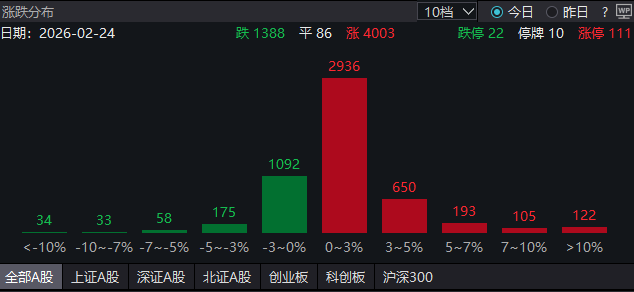
Core Viewpoint - The A-share market experienced a strong opening on the first trading day after the Spring Festival, with over 4,000 stocks rising and more than 100 stocks hitting the daily limit up [1][3]. Market Performance - On February 24, the A-share market opened high and fluctuated throughout the day, with the Shanghai Composite Index closing up 0.87% at 4,117.41 points, while the Shenzhen Component Index rose 1.36% to 14,291.57 points. The ChiNext Index increased by 0.99% to 3,308.26 points [3][5]. - The total trading volume in the Shanghai and Shenzhen markets reached 2.2 trillion yuan, an increase of 219.4 billion yuan compared to the previous trading day [5]. Sector Performance - Resource stocks, particularly in oil and gas, surged due to geopolitical events, with multiple stocks hitting the daily limit up, including Tongyuan Petroleum and China National Offshore Oil Corporation [5]. - The chemical sector also saw significant gains, with stocks like Meibang Co. and Hongbao Li hitting the daily limit up [5]. - AI-driven demand led to strong performance in optical fiber and related hardware stocks, with Tianfu Communication rising over 10% and Changfei Optical Fiber hitting a new historical high [6]. Declining Sectors - The film and cinema sector faced declines, with stocks like Light Media and China Film hitting the daily limit down [7]. - AI application stocks also saw significant drops, with companies like ZhiYue Technology and Jingli Media experiencing substantial losses [7][9]. Future Outlook - Analysts from Zhonghang Securities suggest that the A-share market may have entered a phase of stabilization after recent fluctuations, with expectations for a gradual upward trend [9]. - Guotai Haitong Securities highlights that the upcoming policy window and the potential visit of a U.S. leader to China could bolster market confidence [10]. - Huatai Securities anticipates a continued spring market rally, driven by domestic consumption data and AI industry catalysts, despite external uncertainties [11].
和讯投顾余兴栋:全线上涨,反弹能否延续?
Sou Hu Cai Jing· 2026-02-24 12:17
和讯投顾余兴栋表示,先看一组数据,啊非常的有意思,今天4000多家个股在涨,但同时有21家个股在 跌停,跌停的都是谁?全是春节前AI热门方向,那这里面就有点意思了,如果市场情绪真的挺好,那 这些龙头按理说应该强者恒强,结果他们带头还往下,这就说明啥?说明资金他的底气不足,他在打退 堂鼓,再看这个成交额,它是放量接近2,200亿,但整个板块连板最高才4连板,有量没高度,那就说明 没有人敢格局。所以咱们得有一个清晰的结论,也就是说今天的红盘它是虚的,是谨慎的红,但光说虚 还不够,咱们得搞明白这些钱到底去了哪里,今天最扎眼的就是石油板块,13家个股涨停,化工板块有 21家个股涨停,很多人都懵了,但涨的都是些啥玩意儿,凭啥涨?其实也很简单,美在中东这边搞事 儿,那石油就飙,其实期货市场像黄金白银在春节期间他是提前都在涨,也能从这里面感受的到这种地 缘紧张的氛围。 今天这个开门红大家拿着是不是有点烫手,指数是红的,4000多家个股在涨,但你要是看着整个盘面, 心里8成有点嘀咕,春晚的人形机器人 AI应用影都没有,今天涨停板排排坐的全是什么?石油、化工、 化肥,这些你做梦都想不到,春节前最大的赢家居然都是这些傻大黑,我们 ...
2月24日晚间公告 | 长芯博创拟3.75亿收购光通信上游公司;中科曙光2025年净利润超21亿
Xuan Gu Bao· 2026-02-24 12:12
Mergers and Acquisitions - Tongwei Co., Ltd. is planning to acquire 100% equity of Lihau Qingneng, resulting in a stock suspension [1] - Dongyangguang is planning to acquire control of Dongshu No. 1, which is controlled by its wholly-owned subsidiary Yichang Dongshu No. 3 Investment Co., Ltd. [1] - Changxin Bochuang intends to acquire 93.8108% equity of Shanghai Honghui Guanglian Communication Technology Co., Ltd. for 375 million, aiming to expand its product line in the upstream of the optical communication industry and enhance profitability and sustainability [1] Share Buybacks - Conch Cement's controlling shareholder, Conch Group, plans to increase its stake in the company by 700 million to 1.4 billion [2] Foreign Investment and Daily Operations - Dazhu Laser plans to establish an overseas operation center in Southeast Asia with an investment of 150 million [3] - Yida Co., Ltd.'s subsidiary, Taixing Yida, has obtained a project filing certificate for an annual production of 200,000 tons of epoxy propylene (ethylene) derivative products [4] - Light Media reported that as of February 23, 2026, the cumulative box office revenue of the film "Fast Life 3" is approximately 2.926 billion, with the company's revenue from this film estimated between 43 million to 53 million. The film "Silent Awakening" has a box office revenue of approximately 867 million, with company revenue estimated between 5.2 million to 6.6 million [4] - Happiness Blue Sea reported a total revenue of approximately 790,000 to 1.02 million from the films "Fast Life 3" and "Boon Year" [4] Performance Changes - Zhongke Shuguang expects total operating revenue of 14.97 billion in 2025, a year-on-year increase of 13.86%, with net profit attributable to shareholders of the listed company at 2.113 billion, a year-on-year increase of 10.54% [5]

“顶配团”随行,默茨新春访华有看点
Zhong Guo Xin Wen Wang· 2026-02-24 12:03
Group 1 - German Chancellor Merz will visit China from February 25 to 26, marking his first visit since taking office and making him the first foreign leader to visit China in the Year of the Horse [1] - The visit aims to strengthen bilateral relations, with discussions planned between Merz and Chinese President Xi Jinping, as well as Premier Li Qiang [1] - A high-level economic delegation of about 30 executives from leading German companies in sectors such as automotive, chemicals, biopharmaceuticals, and machinery will accompany Merz [1][2] Group 2 - The visit underscores Germany's commitment to deepening economic ties with China, despite some EU officials advocating for "de-risking" [2] - China has surpassed the United States to become Germany's largest trading partner, while Germany remains China's largest trading partner and source of foreign investment in Europe [2] - The itinerary includes a visit to a Chinese robotics company, highlighting Germany's recognition of China's technological competitiveness and industrial advantages [3] Group 3 - The stable relationship between China and Germany is crucial not only for their mutual interests but also serves as a model for EU-China cooperation [3] - Germany's policy towards China is influential within Europe, especially as the continent faces economic transformation pressures [3] - Merz's visit is seen as an opportunity to seek consensus and cooperation between two major global powers amidst changing global dynamics [3]
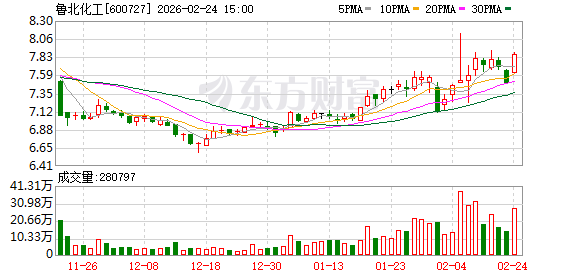
鲁北化工:截至2026年2月13日公司股东总人数为46869户
Zheng Quan Ri Bao· 2026-02-24 11:37
Core Viewpoint - As of February 13, 2026, the total number of shareholders for Lubei Chemical is reported to be 46,869 [2] Company Summary - Lubei Chemical has engaged with investors through an interactive platform, providing transparency regarding its shareholder count [2]

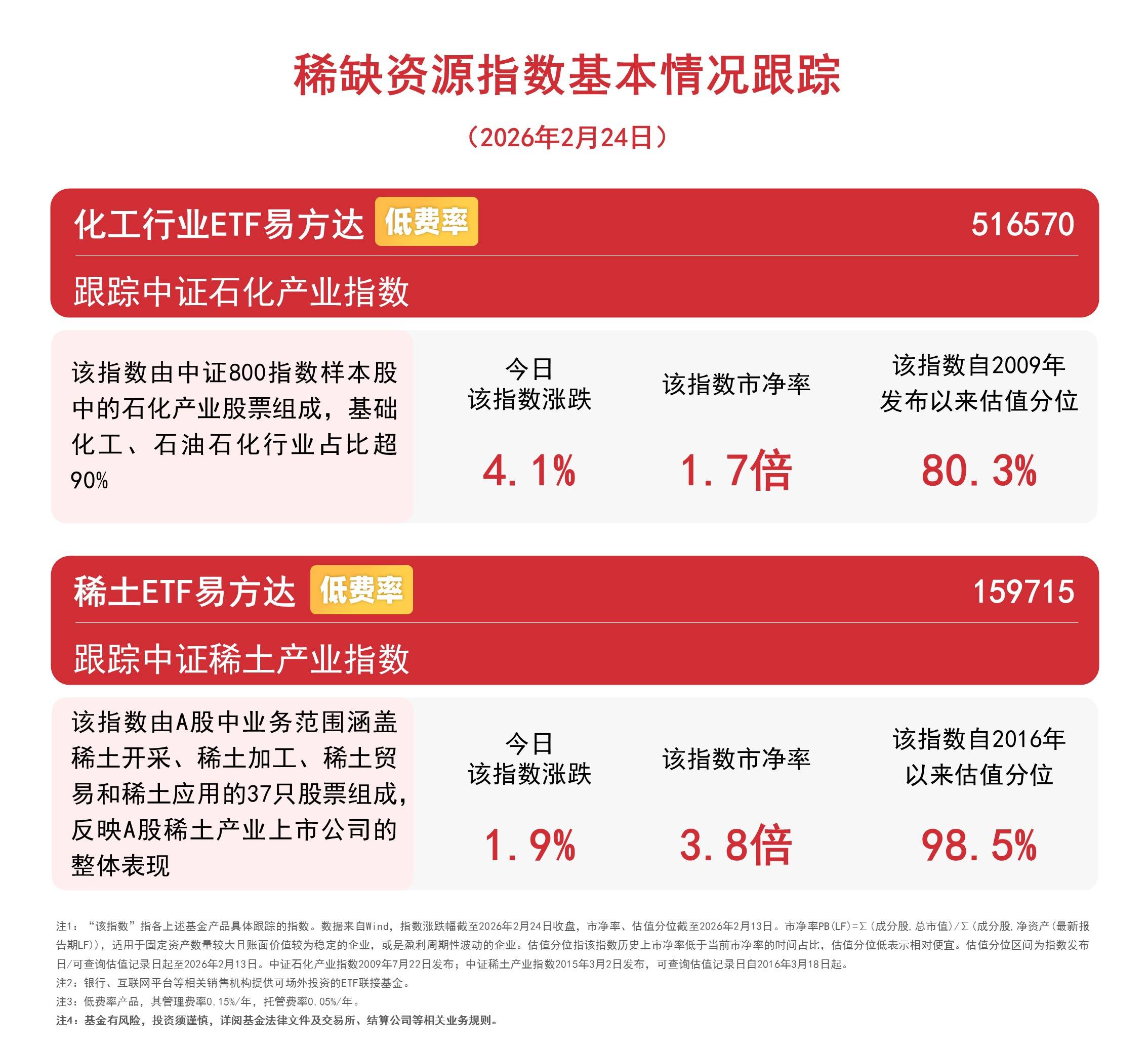
资源类板块集体走强,化工行业ETF易方达(516570)、稀土ETF易方达(159715)助力布局板块龙头
Sou Hu Cai Jing· 2026-02-24 11:33
Group 1 - The article discusses the recent financial performance of a leading technology company, highlighting a revenue increase of 15% year-over-year, reaching $50 billion in the last quarter [5] - The company has successfully expanded its market share in the cloud computing sector, now holding a 25% share, which is a 5% increase from the previous year [5] - The article notes that the company's net profit margin improved to 20%, up from 18% in the same quarter last year, indicating better cost management and operational efficiency [5] Group 2 - The technology industry is experiencing a significant shift towards artificial intelligence, with investments in AI technologies increasing by 30% across the sector [5] - Analysts predict that the overall market for AI solutions will reach $200 billion by 2025, driven by demand from various industries including healthcare and finance [5] - The article emphasizes the competitive landscape, with several emerging startups challenging established players, which could lead to increased innovation and potential disruptions [5]