
新能源

Search documents
港股收评:恒指跌1.21%、科指跌1.11%,黄金、加密货币及AI应用股普跌,科网股走势分化,新能源车股普涨
Jin Rong Jie· 2026-02-06 08:28
Market Overview - The Hong Kong stock market experienced a significant decline on February 6, with the Hang Seng Index falling by 1.21% to 26,559.95 points, the Hang Seng Tech Index down 1.11% to 5,346.2 points, and the National Enterprises Index decreasing by 0.68% to 9,031.38 points [1] - Major technology stocks mostly declined, with Alibaba down 2.88%, Tencent down 1.97%, and JD Group down 1.75%. In contrast, NIO saw an increase of nearly 7% [1] Individual Stock Performance - West China Cement (02233) continued to decline, dropping nearly 10%, with a cumulative drop of over 22% for the month. The company announced a $300 million issuance of 10.5% senior notes due in 2029 to manage existing debt [2] - Yujian Xiaomian (02408) rose over 4%, with a year-to-date increase of over 20%, supported by a share buyback announcement [2] - Nobikang (02635) reached a new high, increasing over 9% to 514.5 HKD, driven by its focus on AI technology and significant applications in various sectors [2] - Colorful New Energy (01986) saw its stock rise over 5% after announcing a profit forecast of at least 25 million RMB for the year ending December 31, 2025, a significant improvement from a loss the previous year [3] Institutional Ratings - Morgan Stanley expressed optimism about NetEase (09999), citing its attractive valuation with a current P/E ratio of 13 times, which is a 25% discount compared to its five-year average. The target price is set at 295 HKD [5] - Guohai Securities is optimistic about Leap Motor (09863), projecting revenues of 66.27 billion, 104.12 billion, and 135.41 billion RMB for 2025-2027, with significant profit growth expected [6] - Morgan Stanley also favored Laoputang Gold (06181), extending its valuation period to December 2026 and maintaining a target price of 1,296 HKD, citing potential short-term catalysts [6] Industry Insights - The macro strategy department of Bosera Fund noted that the Hong Kong stock market is currently influenced by liquidity benefits and fundamental uncertainties, with the improvement of price levels in 2026 being a key variable for market direction [8] - The fund manager of the Rongtong CSI Hong Kong Stock Connect Technology Index highlighted the potential for valuation recovery in the Hong Kong tech sector, driven by technological breakthroughs and sustained inflows of southbound capital [9]






20cm速递|科创200ETF国泰(589220)盘中涨超0.5%,制造业与科技产业景气获关注
Mei Ri Jing Ji Xin Wen· 2026-02-06 08:27
Core Viewpoint - The manufacturing and technology sectors are experiencing increased attention due to rising profitability forecasts in AI hardware and price increase chains, with a notable impact on the industry chain [1] Group 1: Industry Insights - The average year-on-year growth rate of net profit forecasts for AI hardware (semiconductors, components, communication network equipment, etc.) and price increase chains (industrial metals, energy metals, agrochemicals, etc.) for Q4 2025 is expected to improve compared to Q3 2025 [1] - Recent price increases have been observed in electronic components and minor metals, indicating a spillover effect from the upstream price hikes [1] - Concerns have emerged regarding potential declines in profit growth for certain midstream manufacturing products in Q4 2025, with expectations of continued challenges into Q1 2026 [1] Group 2: Investment Opportunities - The current market environment suggests that investors may consider sectors with good growth logic that have not yet fully realized their potential gains during the recent spring market rally, such as electronics (components/semiconductors) and communications [1] - The Guotai Science and Technology 200 ETF (589220) tracks the Science and Technology 200 Index (000699), which includes 200 stocks selected from the Sci-Tech Innovation Board, reflecting the overall performance of the market [1] - The index samples cover multiple high-tech and strategic emerging industries, including information technology, biomedicine, and new energy, showcasing strong innovation and growth characteristics [1]
普华永道:2025 年中国并购市场交易额同比增长47%
Zhong Guo Jing Ji Wang· 2026-02-06 07:56
Group 1 - The core viewpoint of the report indicates a significant recovery in China's M&A market in 2025, with total disclosed transaction value exceeding $400 billion, a year-on-year increase of 47%, marking the first rebound in five years [1] - The total number of transactions surpassed 12,000, reflecting a nearly 20% increase, indicating enhanced overall market activity [1] - The strong recovery in the M&A market is primarily driven by domestic strategic investments, with 3,639 transactions amounting to $239 billion, representing an 83% year-on-year increase [1] Group 2 - The report highlights that over half of the 34 large-scale transactions in the domestic strategic investment sector were led by state-owned enterprises, focusing on national strategic industries such as semiconductors, artificial intelligence, and new energy [1] - The resurgence in the domestic M&A market is attributed to capital market valuation recovery and a revitalized IPO market, providing a solid pricing foundation for transactions [1] - The financial investor segment also saw a continuous recovery, with private equity fund transactions reaching 1,189, totaling $139.4 billion, marking year-on-year growth of 14% and 16% respectively [2] Group 3 - The venture capital market performed exceptionally well, driven by investment trends in artificial intelligence and robotics, with a record high of 7,382 transactions, where over 3,000 transactions were in the high-tech sector, accounting for 42% [2] - The report anticipates that in 2026, sectors such as high-tech (semiconductors, AI), industrial products, new energy, biomedicine, and consumer goods will become core areas for M&A transactions, with steady growth expected in overall transaction value and volume [2]
普华永道:2025年中国并购交易额同比增长47%
Jing Ji Guan Cha Wang· 2026-02-06 07:47
Core Insights - The report by PwC indicates a significant recovery in China's M&A market in 2025, with total disclosed transaction value exceeding $400 billion, marking a 47% year-on-year increase, the first rise in five years [1] - The number of transactions surpassed 12,000, reflecting a nearly 20% increase, indicating enhanced overall market activity [1] Domestic M&A Activity - The strong recovery in the M&A market was primarily driven by domestic strategic investments, with 3,639 transactions amounting to $239 billion, representing an 83% year-on-year increase [1] - Over half of the 34 large-scale transactions in the domestic strategic investment sector were led by state-owned enterprises, focusing on national strategic industries such as semiconductors, artificial intelligence, and new energy [1] Market Dynamics - Factors contributing to the explosive growth in the domestic M&A market include capital market valuation recovery, a revitalized IPO market providing a solid pricing foundation, deepening industry consolidation, accelerated technological breakthroughs, and increased exit demands from financial investors [1] - Continued policy support for large M&A transactions has injected clear growth momentum into the market [1] Overseas M&A Activity - Chinese enterprises showed a notable rebound in overseas M&A in 2025, with 272 announced transactions, a 5% year-on-year increase, and total transaction value reaching $23 billion, an 88% increase [1] - Although the overall scale remains low, the recovery momentum is strong, with seven large-scale overseas M&A transactions, doubling from 2024, particularly concentrated in the European consumer goods sector, reflecting domestic consumer demand for high-quality imported products [1]
2026,投资人把“卡脖子”清单,变成投资清单
Sou Hu Cai Jing· 2026-02-06 07:07
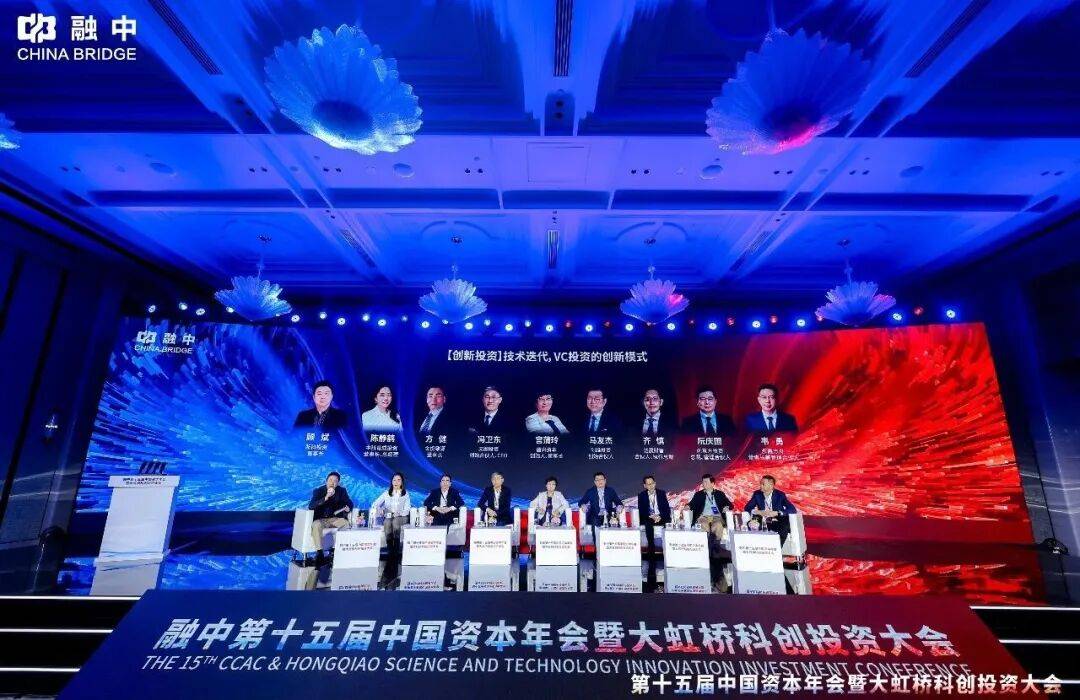
Group 1 - The equity investment industry is entering a period of cognitive return and capability reshaping, with a focus on hard technology and strategic emerging industries [2][3] - The 15th China Capital Annual Conference and the Hongqiao Sci-Tech Investment Conference aims to create an efficient ecosystem that integrates investors and enterprises [2] - The conference theme "Refinement" reflects the current stage of venture capital, highlighting the emergence of unicorns and billion-dollar companies [3] Group 2 - Investment institutions are increasingly focusing on early-stage investments in technology innovation, with government guidance funds acting as stabilizers and boosters for industrial development [2][3] - The discussion at the conference emphasized the need for investment strategies that adapt to rapid technological iterations and the challenges of project evaluation [4][9] - Various investment firms shared their strategies, focusing on sectors like semiconductors, new energy, and biotechnology, while emphasizing the importance of team capabilities and market demand [6][12][18] Group 3 - Investment strategies discussed include broad investments in leading companies within identified sectors and significant investments in high-potential projects after thorough evaluation [9][11] - The importance of understanding market demand and the efficiency of execution teams was highlighted as critical for successful investments [12][14] - The need for investment institutions to provide value through product definition, resource integration, and strategic clarity was emphasized [35][34] Group 4 - The conference underscored the necessity for investment firms to maintain a forward-looking approach, particularly in emerging technologies and industries [15][21] - The role of deep industry research and the importance of building a supportive ecosystem for high-tech enterprises were discussed as essential for investment success [27][33] - The need for investment institutions to adapt their strategies in response to changing market dynamics and technological advancements was a recurring theme [22][24]

南方基金旗下新能源ETF(516160)上涨2.57%,协鑫集成再度涨停,机构:2026年国内储能装机有望高速增长
Xin Lang Cai Jing· 2026-02-06 06:50
Core Viewpoint - The establishment of an independent new energy storage capacity pricing mechanism by the National Development and Reform Commission and the Energy Administration is expected to stabilize revenue expectations in the energy storage sector and stimulate investment enthusiasm among owners, particularly benefiting state-owned enterprises [1][2]. Group 1: Market Performance - The Southern Fund's New Energy ETF (516160) rose by 2.57%, with a turnover of 3.35% and a transaction volume of 227 million yuan [1]. - Key stocks in the index, such as Zhiyu Technology, Laplace, and GCL-Poly, saw significant increases of 12.79%, 10.41%, and 10.10% respectively [1]. Group 2: Policy Impact - The implementation of the capacity pricing policy is expected to shift the energy storage industry from cost competition to value creation, revealing investment value [1]. - The cancellation of mandatory storage requirements is anticipated to further enhance the investment landscape in the energy storage sector [1]. Group 3: Industry Growth Projections - The domestic energy storage installation is expected to experience rapid growth by 2026, with a focus on leading companies in the energy storage supply chain [1]. - Global energy storage installations are projected to increase significantly, with estimates of 279 GWh, 423 GWh, and 563 GWh for the years 2025, 2026, and 2027 respectively, reflecting year-on-year growth rates of 44%, 52%, and 33% [2]. Group 4: ETF Composition - The New Energy ETF closely tracks the CSI New Energy Index, which includes companies involved in renewable energy production, application, storage, and related devices [2]. - The top ten weighted stocks in the index include CATL, Sungrow Power, TBEA, and others, reflecting a diverse representation of the new energy sector [2].

港股异动 | 彩客新能源(01986)涨超5% 预计去年扭亏为盈赚不少于2500万元
智通财经网· 2026-02-06 06:46
Core Viewpoint - Caike New Energy (01986) has announced a positive earnings forecast, expecting a significant profit increase for the fiscal year ending December 31, 2025, driven by growing market demand and improved revenue from its pigment intermediates and new materials segments [1] Group 1 - Caike New Energy's stock rose over 5%, reaching a price of 0.96 HKD with a trading volume of 2.715 million HKD [1] - The company anticipates a net profit of no less than 25 million RMB for the fiscal year ending December 31, 2025, a substantial increase of at least 26.5 million RMB compared to a net loss of approximately 1.5 million RMB for the fiscal year ending December 31, 2024 [1] - The expected profit growth is primarily attributed to sustained demand in the downstream terminal market, which positively impacts the company's revenue and profitability in the pigment intermediates and new materials sectors [1]
彩客新能源涨超5% 预计去年扭亏为盈赚不少于2500万元
Zhi Tong Cai Jing· 2026-02-06 06:45
Core Viewpoint - Caike New Energy (01986) has announced a positive earnings forecast, expecting a significant profit increase for the fiscal year ending December 31, 2025, driven by growing demand in the downstream market [1] Group 1: Financial Performance - The company anticipates a net profit of no less than RMB 25 million for the fiscal year ending December 31, 2025, marking an increase of at least RMB 26.5 million compared to a net loss of approximately RMB 1.5 million for the fiscal year ending December 31, 2024 [1] - The expected profit growth is attributed to the revenue and profit enhancement in the pigment intermediates and new materials segments [1] Group 2: Market Demand - The growth in profit is primarily driven by the sustained increase in demand from the downstream terminal market [1]
深圳经济总量居首 梅州GDP增速第一
Nan Fang Du Shi Bao· 2026-02-06 06:00
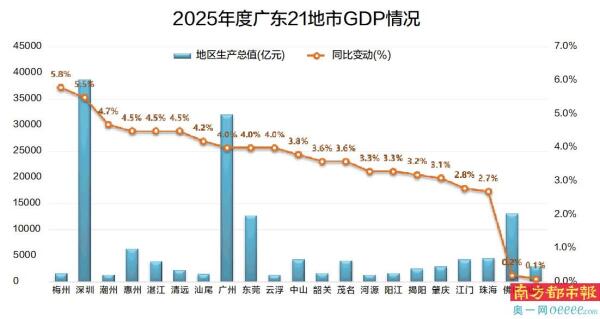
Economic Overview - As of February 5, 2025, all economic data for 21 cities in Guangdong has been released, with Shenzhen leading the province with a GDP of 3.87 trillion yuan [3] - The overall GDP growth rate for Guangdong is 3.9%, with Meizhou leading at 5.8%, followed by Shenzhen at 5.5% and Chaozhou at 4.7% [3] Industrial Growth - Zhanjiang leads the province in industrial added value growth at 10.7%, with Huizhou and Meizhou both at 8.6% [4] - Zhanjiang's industrial sector contributes over 40% to its economic growth, with significant increases in communication equipment and computer manufacturing [4] - Meizhou's industrial added value growth is 8.6%, with notable increases in non-ferrous metal smelting and electronic equipment manufacturing [5] Investment and Consumption - Industrial technological transformation investment in Yangjiang exceeds 60%, with several cities maintaining high investment levels in key and high-tech industries [7] - Guangzhou's retail sales of consumer goods show significant growth, particularly in furniture and communication equipment [8] - The consumption policies, such as trade-in programs, have positively impacted the consumer market across various cities [8] Foreign Trade - Shenzhen's total import and export volume reaches a record high of 4.55 trillion yuan, with exports at 2.74 trillion yuan [9] - Zhaoqing leads the province in export growth at 21.1%, with significant contributions from electromechanical products [10] - Guangzhou's foreign trade also shows strong performance, with a total volume of 1.2 trillion yuan and a 10.4% year-on-year growth [11] Agriculture - Agricultural production remains strong, with cities like Maoming and Zhanjiang exceeding 110 billion yuan in total agricultural output [13] - Zhuhai's agricultural output grows by 6.6%, leading the province, particularly in fisheries [13] - Yangjiang's agricultural output also shows positive growth, with a 6.4% increase [13]
马斯克究竟想干什么?
Guan Cha Zhe Wang· 2026-02-06 05:20
Core Insights - The recent resurgence of interest in space photovoltaic concepts is linked to Elon Musk's activities, particularly his exploration of the Chinese photovoltaic industry and ambitious plans for solar energy in space [1][2][3]. Group 1: SpaceX and Solar Energy Ambitions - SpaceX aims to deploy solar-powered AI data centers in low Earth orbit and has set a target to build 200 GW of solar capacity in the U.S. within three years, which is ten times the current solar capacity [3]. - Musk's strategy is not merely about creating a company or technology but about establishing a new operational system for civilization that transcends Earth's physical limitations [3][5]. Group 2: Energy and AI Demand - The exponential growth of AI has led to a significant increase in power demand, with predictions that AI could require up to 100 terawatts of power in the next decade, while current global power generation capacity is only 3 terawatts [4][5]. - The current solutions to energy supply issues are insufficient, as they remain within the constraints of Earth's closed system, highlighting the need for innovative approaches like Musk's [5][6]. Group 3: Technological Innovations - Near-Earth orbit offers a solar energy intensity over 1.4 times that of the Earth's surface, allowing for nearly continuous power generation without the limitations of weather or day-night cycles [6]. - The Starship rocket is crucial for reducing launch costs to below $10 per kilogram, enabling the deployment of large-scale infrastructure in space at a lower cost than traditional data centers [7]. Group 4: Integration of xAI and SpaceX - The integration of xAI into SpaceX's framework is strategic, as xAI's goal is to explore universal intelligence, which requires stable and abundant power that can be achieved in space [9]. - The Gigafactory model used by Tesla is seen as a precursor to the space industry, where ground-based solar production can be adapted for orbital deployment [9]. Group 5: Challenges and Criticisms - There are significant challenges to the feasibility of space solar power, including low energy transmission efficiency and the complexities of deploying and maintaining solar arrays in orbit [10][11]. - Critics raise concerns about the potential for increased space debris and the implications of energy transmission methods, but Musk's approach focuses on creating a self-sufficient orbital ecosystem rather than a traditional power grid [11][12]. Group 6: Vision for the Future - Musk's long-term vision is to "liberate Earth" by moving high-energy computing tasks to space, allowing Earth to focus on life and ecological balance [14][15]. - This shift is seen as a historical precedent, akin to previous industrial and technological revolutions, with the potential for significant geopolitical implications regarding control over space-based energy and computing resources [18][20].