
生物医药

Search documents
河南国家级和省级企业技术中心分别达102家、1436家 科技强引领企业强产业强
He Nan Ri Bao· 2026-02-01 23:31
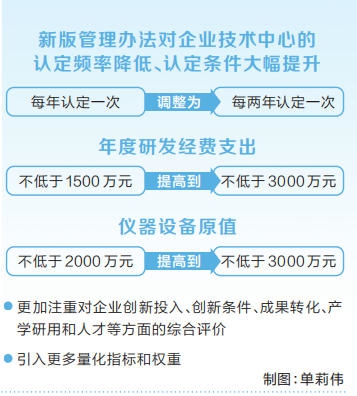
Core Viewpoint - The implementation of the new "Management Measures for the Recognition of Enterprise Technology Centers" aims to enhance the technological innovation capabilities of enterprises and strengthen their role as the main body of technological innovation, promoting the deep integration of technological and industrial innovation [2] Group 1: Policy Changes - The new management measures reduce the frequency of recognition for enterprise technology centers from annually to every two years, and significantly raise the criteria for recognition, such as increasing annual R&D expenditure from no less than 15 million to no less than 30 million yuan [2] - The original value of instruments and equipment required for recognition has been increased from no less than 20 million to no less than 30 million yuan, emphasizing a comprehensive evaluation of innovation investment, conditions, results transformation, and talent [2] Group 2: Industry Support and Development - The provincial government supports leading enterprises like Super Fusion and Zhongchuang Zhiling to enhance their industrial technological innovation capabilities and encourages the formation of innovation alliances among major enterprises [3] - By the end of 2025, the province aims to cultivate 102 national-level and 1,436 provincial-level enterprise technology centers, with a focus on sectors such as equipment manufacturing, chemicals and new materials, electronic information, and biomedicine [3] Group 3: Resource Aggregation - The province has gathered over 200,000 research and development personnel through national and provincial enterprise technology centers, accounting for approximately 16% of total enterprise employees, and holds over 40,000 valid invention patents [4] - More than 3,400 international, national, and industry standards have been developed in the last three years, and over 500 laboratories and testing institutions have received national or international certification [4] Group 4: Innovation Outcomes - Enterprises are successfully transitioning innovations from laboratories to industrial applications, with Zhongchuang Zhiling developing the first fully autonomous intelligent mining equipment in China, achieving over 40% market share [5] - Multi Fluor has iterated its lithium hexafluorophosphate technology to the 3.5 generation, maintaining a purity level of 99.999%, while Zhonggang Luonai has developed efficient waste incineration power generation equipment, breaking foreign technology monopolies [5] - The provincial development and reform commission plans to optimize recognition standards for enterprise technology centers and enhance support for those with strong innovation capabilities and demonstrable results [5]


民营企业“量体选才” 让一线“长”出更多技术骨干
Xin Lang Cai Jing· 2026-02-01 22:24
内江"4+2" 主导产业 大传统优势产业 "页岩气+"产业 "钢钛+"产业 "甜味+"产业 "装备+"产业 HZ 电子信息产业 生物医药产业 □张啸 四川日报全媒体记者 田珊 积极破解产业人才"引育留"方面的难题,民营企业职称自主评审权限下放被内江视为抓手之一。 2024年8月,内江市向川威集团下放工程技术中初级职称自主评审权,成为全省较早向民营企业下放职称评审权限 的市州之一。 此后,内江陆续出台《内江市关于优化民营企业职称评审服务工作的八条措施》《内江市民营企业职称评审委员 会管理办法(试行)》等政策,在全省率先尝试打破户籍、地域、身份、档案等限制,不拘一格"评"人才。 近日,一场中初级职称评审会在四川恒通动保生物科技有限公司会议室内举行。"这次评审由我们企业自主开展, 共收到11名员工的申报材料,所有申报人员都来自研发、生产、技术服务等核心岗位。"该公司负责人介绍。 此前,四川恒通动保生物科技有限公司与四川省川威集团有限公司一起,成为内江市首批获得中初级职称评审权 限的民营企业。在1月上旬举行的内江市推进民营企业专业技术人才队伍建设座谈会上,内江金鸿曲轴有限公司等 3家公司新增入列。至此,内江累计向5家 ...
2025年十大财经事件
Xin Lang Cai Jing· 2026-02-01 21:21
Economic Growth - Jiangsu's GDP is projected to exceed 14 trillion yuan by 2025, achieving a year-on-year growth of 5.3% [1] - The province's economic total has increased from 10.5 trillion yuan in 2020 to 14.2 trillion yuan in 2025, crossing four trillion-level milestones in five years [1] Corporate Landscape - The number of listed companies in Jiangsu has surpassed 700, with over 70% being private enterprises, highlighting a focus on innovation in hard technology sectors like integrated circuits and biomedicine [2] - Jiangsu added 29 new A-share listed companies in 2025, accounting for one-fourth of the national total [2] Biopharmaceutical Sector - Jiangsu became the first province in China to be approved for a pilot program in the biopharmaceutical sector, with a comprehensive development plan for the entire industry chain [3] - The province's biopharmaceutical industry accounts for one-eighth of the national scale, with innovative drug approvals representing one-third of the national total [3] Foreign Trade - The number of foreign trade enterprises in Jiangsu has exceeded 100,000 for the first time, reaching 103,200, marking a historical high [4] - The export structure is improving, with electromechanical products accounting for over 70% of exports, and new categories like artificial intelligence products emerging [4] Legislative Developments - The Jiangsu Provincial People's Congress passed the draft of the Jiangsu Provincial Private Economy Promotion Regulations, aimed at optimizing support mechanisms for private enterprises [5] Consumer Market - Jiangsu's retail sales of consumer goods reached 4.6 trillion yuan in 2025, marking a year-on-year growth of 3.3% and positioning the province first in the nation [6] Data Economy - The Jiangsu Data Exchange officially launched, offering 380 data products and marking a new phase in the market-oriented allocation of data elements [7] Artificial Intelligence - The Chinese Academy of Sciences' Industrial Artificial Intelligence Research Institute was established in Jiangsu, focusing on key technologies in industrial AI [8] Investment Initiatives - The Jiangsu Social Security Science and Technology Innovation Fund was established with an initial scale of 50 billion yuan, aimed at supporting the development of modern industrial systems [9] Network Infrastructure - The Future Network Test Facility in Nanjing passed national acceptance and began operations, enhancing network capabilities across 40 cities [10]
诺泰生物:持续深耕生物制药新质生产力赛道
Xin Hua Ri Bao· 2026-02-01 20:45
Core Insights - Jiangsu Nuotai Aosaino Biopharmaceutical Co., Ltd. has been selected as a "National Intellectual Property Demonstration Enterprise" by the National Intellectual Property Administration [1] - The company has made significant breakthroughs in multiple fields, including peptide drugs and oligonucleotides, establishing itself as a representative of new productive forces in biopharmaceuticals [1] Group 1: Company Achievements - As a national-level specialized and innovative "little giant" enterprise, Nuotai Biopharmaceutical adheres to a research-driven strategy, having applied for a total of 230 patents, including 191 invention patents, with 72 already granted [1] - The company has developed a large-scale production technology platform for long-chain peptide drugs, achieving single-batch production of over 10 kilograms for drugs like Semaglutide and Teriparatide [1] Group 2: Production Capacity and Market Expansion - Nuotai Biopharmaceutical is set to complete the construction of its oligonucleotide commercial production workshop by 2025, with an annual capacity of 1,000 kilograms for oligonucleotides, 100 kilograms for PMO, and 200 kilograms for PEG-conjugated cyclic peptides [1] - The company has established solid partnerships with leading generic and innovative pharmaceutical companies, with a significant contract worth approximately $20 million for 2025, exceeding the initial procurement guidance [2] Group 3: Future Vision - The company aims to contribute to the high-quality development of the pharmaceutical industry and the construction of a healthy China, with a commitment to becoming a century-old enterprise [2]

广州打通国企资源优势与民企创新活力衔接通道
Xin Lang Cai Jing· 2026-02-01 20:19
Group 1 - The event "Unveiling the Banner and Leading the Integration of National and Private Enterprises" aims to enhance cooperation between state-owned and private enterprises in Guangzhou, aligning with the city's economic goals for 2026 [1][3] - The initiative focuses on 12 key projects from 10 major state-owned enterprises, facilitating direct communication and collaboration with private enterprises in sectors such as biomedicine, high-end equipment manufacturing, construction technology, and artificial intelligence [1][2] - The event serves as a platform for mutual empowerment between state-owned and private economies, promoting a collaborative ecosystem where state-owned enterprises provide structure while private enterprises contribute innovation [2][3] Group 2 - Private enterprises like Guangzhou Lido Robot Intelligent Technology Group and Guangdong Yushun Digital Technology showcased customized solutions, demonstrating their technological capabilities and practical applications in response to state-owned enterprises' needs [2] - The event included a free exchange segment where representatives from both sectors engaged in detailed discussions, fostering a consensus for collaboration and enhancing the integration of resources [2] - The organizers plan to establish a long-term mechanism for "demand release - precise matching - project implementation - follow-up service" to ensure continuous and effective cooperation between state-owned and private enterprises [2][3]

科技行情进入验证期 指数化参与更具优势
Xin Lang Cai Jing· 2026-02-01 19:22
Core Viewpoint - The investment value of Hong Kong stocks, particularly in the context of new economy and technology assets, is being re-evaluated as a significant market for long-term investment strategies [1][2]. Group 1: Investment Value of Hong Kong Stocks - Hong Kong stocks have accumulated a large number of new economy enterprises, including internet platforms, biomedicine, and high-end manufacturing, which share common characteristics in business models, growth stages, and financing needs [2]. - The market structure of Hong Kong stocks is more aligned with serving medium to long-term capital rather than short-term trading, emphasizing the importance of asset structure and long-term allocation [2][5]. - As the Chinese technology industry matures, Hong Kong has become a key market for observing and participating in Chinese technology assets, attracting global funds seeking growth and scarcity [2]. Group 2: Changes in Technology Investment - The technology sector remains a long-term focus, but the investment approach is shifting from emotion-driven to fundamental verification, necessitating participation through representative indices and tools [1][3]. - The Hang Seng Tech Index is highlighted as a representative index for Hong Kong technology assets, reflecting the overall structure of the sector and maintaining a balance between thematic focus and broad-based characteristics [3][4]. - Current technology investments emphasize valuation and fundamental alignment, with a noticeable differentiation within the tech sector as funds favor companies with performance support or clear industrial progress [3][4]. Group 3: Diversification and Asset Allocation - The role of overseas assets, including Hong Kong stocks, is increasingly seen as a "low correlation supplement" to address the rising correlation among domestic assets, which diminishes the effectiveness of traditional diversification [5][6]. - Institutional investors, particularly long-term funds like insurance, prioritize duration matching, certainty, and long-term returns, leading to a preference for assets that do not move in sync with domestic asset prices [5][6]. - The diminishing role of real estate as a non-correlated asset has prompted investors to seek new structural solutions in asset allocation, with Hong Kong QDII products viewed as tools to enhance asset structure and provide diversified income sources [6].

第三批市属国企将适时启动搬迁
Xin Lang Cai Jing· 2026-02-01 19:21
Group 1: Core Objectives of the "15th Five-Year Plan" - The urban sub-center of Beijing is entering a new phase of functional enhancement and comprehensive development, aiming for a leap in economic capacity, urban functions, governance efficiency, and quality of life [1] - The plan focuses on the construction of five demonstration zones and includes 31 key indicators across six areas: innovation, coordination, green development, openness, sharing, and security [1] Group 2: Transportation and Connectivity - The urban sub-center will enhance transportation infrastructure, aiming to create a well-connected "transportation skeleton" with improved rail and road networks, including the M101 and M102 lines [5][6] - The completion of the Pinggu Line is expected by the end of this year, which will facilitate better connectivity between the urban sub-center and surrounding areas [6] - The plan includes optimizing public transport systems around rail stations and enhancing multi-modal transport options to meet diverse travel needs [7] Group 3: Economic Development and Industry - The urban sub-center aims to build a modern industrial system characterized by high-quality development, focusing on advanced manufacturing sectors such as new energy vehicles, biomedicine, and integrated circuits [3][4] - The initiative includes the establishment of a blue economic belt along the Grand Canal, promoting tourism and leisure activities to enhance urban living experiences [4] - The plan emphasizes the importance of creating attractive industrial spaces and improving the overall business environment to attract and retain enterprises [4]
医药行业要答好“出海”与“创新”两道题
Zheng Quan Ri Bao· 2026-02-01 16:11
■张敏 2025年度业绩预告正密集披露,医药板块上市公司的经营成绩单逐渐浮出水面,并呈现出鲜明的"冰火 两重天"现象:一端是部分依赖传统模式的企业,受市场竞争加剧等因素影响,增长明显承压;另一端 是一批在创新与"出海"方面取得突破的企业,展现出强劲的增长动能与发展韧性。这一分化在生物制 品、医疗器械、化学制药等多个细分板块均有所体现。 笔者认为,这种业绩分化并非短期市场波动所致,而是医药行业增长引擎加速切换的必然结果:行业正 从过去依赖国内市场红利与仿制跟随模式,加速转向以全球化发展与创新驱动为核心的模式。面向未 来,行业必须深刻意识到,"出海"与"创新"已成为必答题,从业者必须加快转型步伐。 面向未来,能否答好"创新"与"出海"这两道核心考题,关乎每一家企业乃至整个中国医药产业在未来全 球生物医药版图上的坐标。动能转换的进程已然加速,唯有主动拥抱变革、锻造核心能力者,方能赢得 下一个黄金发展期的入场券。 一是创新药的"授权出海"与"自主出海"双轮驱动。去年,我国创新药海外授权交易总额突破1300亿美 元。今年以来,多家生物科技公司与大型药企将更多具有国际竞争力的原创产品,通过授权合作或自主 推进国际多中心临 ...
开年险资调研忙 医药人工智能领域受关注
Bei Jing Shang Bao· 2026-02-01 15:55
Core Viewpoint - The insurance capital is actively seeking investment opportunities in the stock market as it enters 2026, with a significant increase in company research activities, indicating a bullish sentiment towards various sectors [1][2]. Group 1: Investment Trends - As of February 1, 2026, insurance companies and their asset management firms conducted a total of 751 company research activities, reflecting a strong interest in identifying investment opportunities across hundreds of listed companies [1]. - The total investment balance of insurance companies reached 37.46 trillion yuan by the end of Q3 2025, marking a 3.39% increase from the previous quarter [1]. - Insurance capital is focusing on high-dividend stocks, particularly in the banking sector, while also expanding interest in emerging sectors such as artificial intelligence and biomedicine [2][3]. Group 2: Sector Focus - The primary sectors of interest for insurance capital include banking, computer science, artificial intelligence, biomedicine, and aerospace, with a focus on high-end manufacturing and new productivity drivers [2]. - Notable companies attracting attention from insurance capital include Haitai Ruisheng, Entropy Technology, and Aladdin, which are involved in AI data, biometric technology, and new materials, respectively [2]. - The banking sector remains a hotspot for insurance capital, with banks like Shanghai Bank and Nanjing Bank receiving significant attention due to their stable dividends, which align with the cash flow needs of insurance companies [3]. Group 3: Investment Strategy - Insurance capital is expected to maintain a cautious investment approach, focusing on high-dividend sectors while gradually increasing allocations to new productivity-related fields [4]. - The strategy includes a continued emphasis on bonds as a stable investment, while also exploring long-term local and cross-border bonds, and increasing equity allocations through private securities funds and strategic stakes [3][4]. - The investment pace of insurance capital is characterized by a careful wait for reasonable valuation levels and a cooling market sentiment before making gradual allocations, indicating a long-term investment perspective [4].
开年险资调研忙 生物医药、人工智能等热门领域受关注
Bei Jing Shang Bao· 2026-02-01 15:51
进入2026年,股市实现"开门红",保险资金调研热情高涨,马不停蹄地寻找市场投资机会。东方财富 Choice数据显示,截至2月1日,保险公司、保险资管公司自2026开年来合计调研上市公司751次,涉及 数百家上市公司。险资动向一直是市场投资风向标,新的一年,险资看好哪些板块投资机会,又将有怎 样的布局? 人工智能、生物医药仍是重点 随着险资规模持续壮大,其投资和调研动向也被视为风向标。金融监管总局数据显示,截至2025年三季 度末,保险公司资金运用余额达37.46万亿元,相较于二季度末的36.23万亿元增长3.39%。 北京商报记者通过东方财富Choice数据梳理发现,2026开年以来,保险公司、保险资管公司合计调研上 市公司751次,无论是大型险资机构还是中小型险资机构,都在积极参与调研,寻找投资机会。其中, 专业养老险公司调研最积极,一些头部寿险公司和银行系寿险公司调研也较为频繁。 2025年,险资机构持续加码红利策略投资,青睐以银行股为代表的高股息标的。2026年,险资在关注高 股息股票的基础上,加强了对人工智能、医药等热门板块的关注。从险资调研所关注的领域来看,险资 机构主要关注银行、计算机、人工智能 ...