
零售业

Search documents
加拿大6月零售销售环比增长1.5%
Xin Lang Cai Jing· 2025-08-22 12:46
Group 1 - Canadian retail sales in June increased by 1.5%, matching the forecast of 1.5% [1] - The previous value was revised from -1.10% to -1.2% [1]
丽尚国潮: 丽尚国潮2025年半年度报告
Zheng Quan Zhi Xing· 2025-08-22 12:10
Core Viewpoint - The report highlights the financial performance and operational strategies of Lanzhou Lishang Guochao Industrial Group Co., Ltd. for the first half of 2025, indicating a decline in revenue but an increase in net profit, alongside ongoing efforts in market management and retail transformation [1][2]. Financial Performance - The company reported a total revenue of approximately 323.40 million yuan, a decrease of 9.07% compared to the same period last year [2][6]. - The total profit reached approximately 116.56 million yuan, reflecting a growth of 10.57% year-on-year [2][6]. - The net profit attributable to shareholders was approximately 79.73 million yuan, an increase of 9.46% compared to the previous year [2][6]. - The company's total assets decreased by 7.74% to approximately 3.22 billion yuan, while net assets increased by 3.56% to approximately 2.00 billion yuan [2][6]. Business Overview - The company operates primarily in the retail and wholesale industry, focusing on professional market management and new retail business [3][4]. - The professional market management includes significant operations in Hangzhou and Nanjing, with a focus on fashion and textile products [3][4]. - The retail business is centered around the Euro-Asian Shopping Mall, which integrates retail, dining, and hotel services, and has been operational since 1994 [4][5]. Industry Context - The retail sector in China is experiencing a transformation, with a focus on quality, technology, and service innovation, moving away from traditional price competition [3][4]. - The overall retail market showed a growth of 5.0% in the first half of 2025, with specific categories like clothing and textiles seeing a 3.1% increase in retail sales [3][4]. - The company is adapting to market changes by enhancing digital transformation and integrating online and offline sales channels [5][6]. Strategic Initiatives - The company is implementing a stable dividend policy, distributing cash dividends to enhance investor confidence [7]. - An employee stock ownership plan has been initiated to align employee interests with company performance, fostering a culture of shared success [7][8]. - The company is focusing on upgrading its operational capabilities through digital platforms and improved logistics services to enhance market competitiveness [6][8].

欧亚集团: 长春欧亚集团股份有限公司第十一届董事会2025年第二次临时会议决议公告
Zheng Quan Zhi Xing· 2025-08-22 10:21
Core Points - The company held its second temporary board meeting of 2025, where all 9 participating directors voted unanimously in favor of the proposed resolutions [1]. - The board approved the 2025 semi-annual report and summary, which had been reviewed and pre-approved by the audit committee [1]. - The company plans to apply for a total credit limit of 1.75 billion RMB from various banks to support its operational needs and to replace expired credit lines [1][2]. Summary by Sections Semi-Annual Report - The board approved the 2025 semi-annual report and summary, which will be published in major financial newspapers and on the Shanghai Stock Exchange website [1]. Bank Credit Application - The company will apply for a total credit limit of 1.75 billion RMB, with specific allocations for different subsidiaries: - 200 million RMB for the company's headquarters, secured by credit [1]. - 200 million RMB for Eurasia Mall, also secured by credit [1]. - 100 million RMB for the supermarket chain, secured by a joint liability guarantee from the company [1]. - Additional credit facilities for specific operational needs, including short-term loans and domestic letters of credit [2].

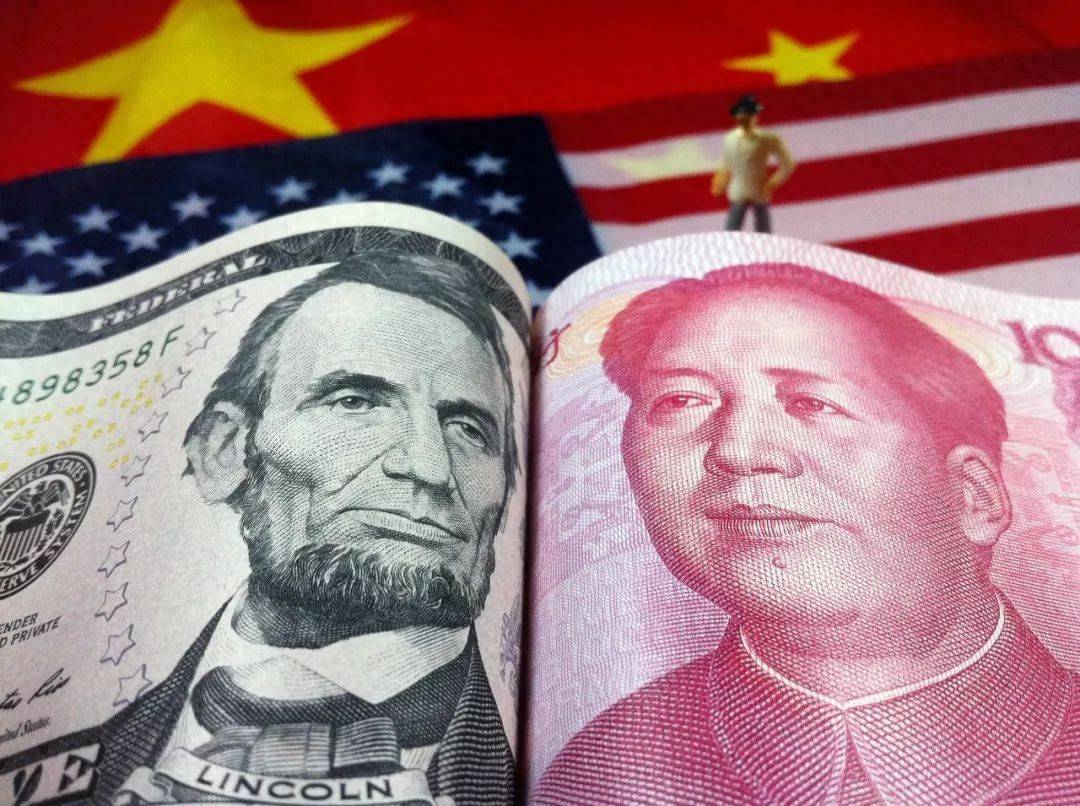
货币战又要来了,欧美逼人民币升值!金融战回旋镖重创美国制造业
Sou Hu Cai Jing· 2025-08-22 09:29
Group 1 - The core argument of the articles revolves around the failure of Trump's tariff strategy, which aimed to pressure China into a currency agreement similar to the Plaza Accord, resulting in a significant increase in electric vehicle prices in the U.S. by 23% [2][9] - The U.S. retail giants, including Walmart and Target, have shifted their stance, now willing to absorb tariffs to maintain supply chains, indicating a backlash against the tariff strategy [9] - The financial implications of the tariff war have led to a surge in U.S. debt costs, with the Treasury Department expressing concern over rising interest rates and the potential loss of dollar credibility [12] Group 2 - The articles highlight the contrast between the current U.S.-China trade dynamics and the historical context of Japan's Plaza Accord, emphasizing that China is less likely to concede financial sovereignty due to its strong manufacturing base and foreign reserves [6][10] - The impact of the tariffs has been felt in the semiconductor industry, where China's exports have reached $160 billion, and the rising costs have pressured U.S. automotive and chip manufacturers [4][9] - The emergence of alternative financial systems, such as the digital yuan and regional trade agreements, is seen as a challenge to the dominance of the U.S. dollar, with increasing use of local currencies in trade [12]

开开实业(600272) - 2025年半年度主要经营数据公告
2025-08-22 08:31
| 股票代码:600272 | 股票简称:开开实业 | | | 编号:2025—054 | | --- | --- | --- | --- | --- | | 900943 | | 开开 | 股 B | | 上海开开实业股份有限公司 2025 年半年度主要经营数据公告 本公司董事会及全体董事保证本公告内容不存在任何虚假记载、误导性陈述 或者重大遗漏,并对其内容的真实性、准确性和完整性依法承担法律责任。 上海开开实业股份有限公司(以下简称"公司")根据《上海证 券交易所上市公司自律监管指引第 3 号—行业信息披露》附件《第四 号—零售》《关于做好主板上市公司 2025 年半年度报告披露工作的 重要提醒》等有关规定的要求,现将公司 2025 年半年度主要经营数 据披露如下: 一、报告期内门店变动情况 2) 服装板块 3) 其他 2、主营业务分地区 单位:万元 币种:人民币 分行业 营业收入 营业收入比 同期增减(%) 营业成本 营业成本比 同期增减(%) 毛利率 (%) 毛利率比同期增减 (%) 批发业 40,297.08 25.11 34,674.66 31.81 13.95 减少 4.38 个百分点 零售业 ...

东百集团: 东百集团关于2025年半年度利润分配方案公告
Zheng Quan Zhi Xing· 2025-08-22 08:13
Core Viewpoint - Fujian Dongbai Group Co., Ltd. plans to distribute a cash dividend of 0.05 yuan per share (including tax) to all shareholders for the first half of 2025, without issuing new shares or capital reserve transfers [1][2]. Group 1: Profit Distribution Plan - The company intends to distribute a cash dividend of 0.05 yuan per share based on the total share capital on the record date for the rights distribution, with no new shares or capital reserve transfers [1]. - The profit distribution plan is based on the company's net profit attributable to shareholders for the first half of 2025, which is 60.78% of the total share capital as of June 30, 2025 [1]. - The plan does not require approval from the shareholders' meeting [1][2]. Group 2: Decision-Making Process - The board of directors has been authorized by the shareholders' meeting to decide on the mid-term profit distribution plan, including the total cash dividend not exceeding the net profit attributable to shareholders for the period [2]. - The board's decision aligns with the company's profit distribution policy and the three-year shareholder return plan for 2025-2027 [2]. - The supervisory board has confirmed that the profit distribution proposal and decision-making process comply with relevant regulations and do not harm the interests of shareholders, especially minority shareholders [2].

美联储 大消息!今晚 投资者屏息以待!美国宣布 15%关税!
Qi Huo Ri Bao· 2025-08-22 00:14
Federal Reserve Developments - The U.S. Department of Justice plans to investigate Federal Reserve Governor Lisa Cook, urging Chairman Powell to remove her from the board due to concerns over her financial history [2] - Cleveland Fed President Loretta Mester stated she would not support a rate cut if a policy decision were made immediately, citing persistent high inflation [2][3] - Atlanta Fed President Raphael Bostic believes only one rate cut this year is appropriate, while Boston Fed President Susan Collins is open to cuts if employment prospects worsen [3][4] Jackson Hole Economic Symposium - Market focus is on the upcoming speech by Fed Chairman Powell at the Jackson Hole symposium, with investors looking for clues on the interest rate path [7] - Current market sentiment is bearish, with concerns that the Fed may not shift to a dovish stance as implied by the rate markets [7] - CME FedWatch Tool indicates a 25% probability of maintaining rates in September and a 75% probability of a 25 basis point cut [4] U.S.-EU Trade Agreement - The U.S. and EU have reached a framework agreement on trade, covering various sectors including agriculture, automobiles, and semiconductors [9] - The agreement stipulates that the U.S. will apply either the Most Favored Nation (MFN) tariff rate or a 15% tariff rate on EU goods, with specific products to be subject to MFN tariffs starting September 2025 [9][10] - The agreement is seen as a positive development for European automakers, potentially reducing the current 27.5% tariffs on cars and parts [9][11]
银座股份: 银座股份2025年第二季度经营情况简报
Zheng Quan Zhi Xing· 2025-08-21 16:58
Core Viewpoint - The company, Yinzou Group Co., Ltd., has disclosed its key operational data for the second quarter of 2025, highlighting store openings, closures, and retail performance metrics across various regions and business formats [1]. Group 1: Store Changes - The company closed two stores in Heilongjiang province in April 2025, with the Daqing store having an area of 1,000 square meters and the Heihe store having an area of 80 square meters [1]. - The company plans to open a new large-scale comprehensive supermarket in Jinan, with the exact opening date and area not specified [1]. Group 2: Retail Performance Data - The total operating revenue for the second quarter of 2025 reached 1,011.58 million yuan, representing a year-on-year increase of 26.17% [1]. - The gross profit margin for the overall business decreased by 2.31% compared to the previous year, standing at 2.24% [1]. - Revenue by region showed significant variation, with Jinan generating 427.57 million yuan, a decrease of 3.12% in gross profit margin [1]. - The department store format generated 416.88 million yuan in revenue, with a gross profit margin decrease of 7.90% [1]. - The large-scale comprehensive supermarket format achieved 492.61 million yuan in revenue, with a gross profit margin of 17.75% [1].

银座股份:2025年上半年净利润1.04亿元,同比下降8.33%
Xin Lang Cai Jing· 2025-08-21 14:04
银座股份公告,2025年上半年营业收入29.72亿元,同比下降0.87%。净利润1.04亿元,同比下降 8.33%。公司拟向全体股东每10股派发现金红利0.15元(含税),合计拟派发现金红利780.1万元(含 税)。 ...
尚晋国际控股(02528.HK)预计中期净利润不少于700万港元
Ge Long Hui· 2025-08-21 13:13
Core Viewpoint - The company expects a significant turnaround in financial performance, projecting a net profit of at least 7 million HKD for the six months ending June 30, 2025, compared to a net loss of approximately 54.7 million HKD for the same period ending June 30, 2024 [1] Financial Performance - The anticipated improvement in net profit is attributed to the closure of underperforming stores and strict cost control measures [1] - The company is closely monitoring market trends to adjust its operational strategies accordingly [1] Industry Context - The retail industry remains challenging, prompting the company to continuously track market developments and adapt its strategies to align with changing economic conditions [1]