
餐饮

Search documents
越夜越湘味,长沙这些餐厅,春节不打烊!
Xin Lang Cai Jing· 2026-02-14 05:05
Core Viewpoint - The article emphasizes that restaurants in Changsha will remain open during the Spring Festival, showcasing the city's vibrant food culture and culinary offerings [2]. Group 1: Restaurant Operations - Popular food spots in Changsha, including traditional and modern eateries, will continue to serve customers throughout the Spring Festival [2]. - The article lists various restaurants that will remain open, ensuring that visitors can enjoy local delicacies [3][4][5][6][7][8][9][10][11]. Group 2: Featured Restaurants - Notable restaurants mentioned include: - Nan Jing Restaurant (Meixi Lake Store) [3] - Tai Bai Restaurant [3] - Sheng Xiang Ting [3][4] - Da Mi Xian Sheng [4][5] - Fei Da Chu Spicy Pork [4][5][6] - The list includes multiple locations for each restaurant, indicating a wide availability across Changsha [3][4][5][6][7][8][9][10][11].

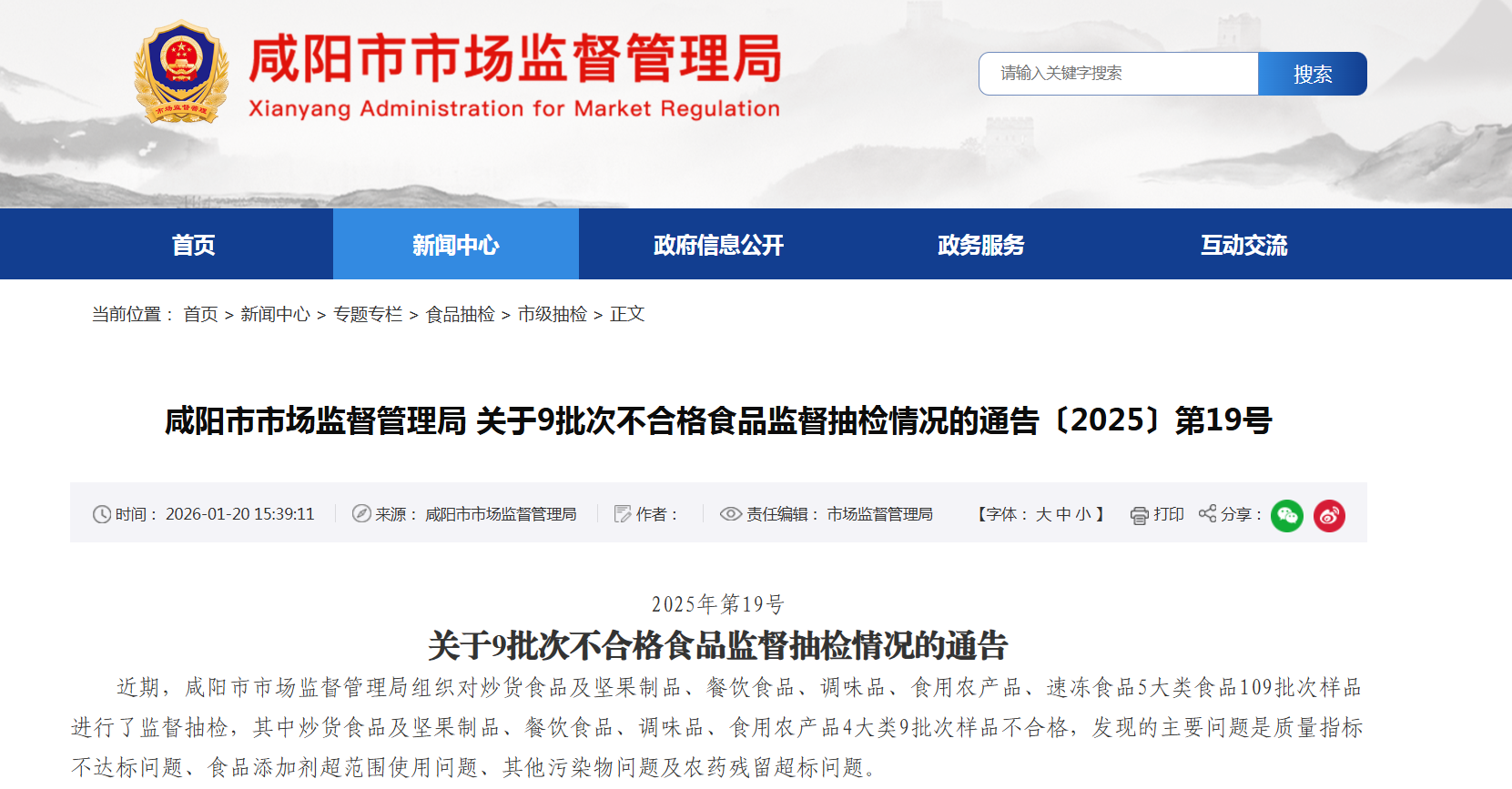
陕西省咸阳市市场监督管理局关于9批次不合格食品监督抽检情况的通告〔2025〕第19号
Zhong Guo Zhi Liang Xin Wen Wang· 2026-02-14 04:48
Core Viewpoint - The recent food safety inspection in Xianyang revealed that out of 109 food samples tested, 9 were found to be non-compliant with national food safety standards, highlighting significant issues related to quality indicators, excessive use of food additives, contamination, and pesticide residue exceeding limits [4][5][6]. Group 1: Inspection Results - A total of 109 food samples were inspected, covering categories such as snack foods, restaurant foods, condiments, agricultural products, and frozen foods [6]. - 9 out of the 109 samples failed to meet safety standards, indicating a non-compliance rate of approximately 8.26% [6]. - The main issues identified included: - Quality indicators not meeting standards [4]. - Excessive use of food additives [5]. - Presence of other contaminants [4]. - Pesticide residues exceeding permissible limits [5]. Group 2: Specific Non-Compliant Products - Non-compliant products included: - Sunflower seeds from Xianping City Kecai Trading Co., with an acid value exceeding the standard [4]. - Dried ginger from Qian County North Yinxia Dried Vegetable Oil Store, with sulfur dioxide residue exceeding limits [5]. - Bone dishes from Xianyang Hongjian Bufan Catering Co., with anionic synthetic detergent levels not meeting standards [4]. - Green onions and peppers from various retailers, with pesticide residues (e.g., thiamethoxam and imidacloprid) exceeding the allowed limits [5]. Group 3: Regulatory Actions - The Xianyang Market Supervision Administration has mandated immediate actions to address the non-compliant products, including product recalls and investigations into the distribution channels [5]. - Consumers are encouraged to report any non-compliant products found in the market to the complaint hotline [5].
小南国闭店风波
Jing Ji Guan Cha Wang· 2026-02-14 04:11
Core Viewpoint - Shanghai Xiaonan Guo has temporarily closed all its restaurants in Shanghai as part of a strategic restructuring, with the company facing significant financial difficulties and operational challenges [1][6][7]. Group 1: Company Operations - On February 6, 2025, all Shanghai Xiaonan Guo locations in Shanghai ceased operations without prior notice to staff, who learned about the closure through news reports [1]. - The company announced on February 10, 2025, that it would refund deposits and prepaid card balances to customers, contradicting earlier reports that stated these funds were non-refundable [2][6]. - As of February 2025, all Shanghai Xiaonan Guo restaurants are either closed or temporarily suspended, with only two franchise locations in Wuxi still operating independently [1][8]. Group 2: Financial Performance - The company reported a revenue of approximately 3 billion yuan for 2024, with a net loss of about 85 million yuan, and an additional loss of 18.25 million yuan in the first half of 2025 [6][7]. - In 2015, the company reached a revenue peak of over 2 billion yuan, but has since experienced a continuous decline in revenue and an increase in store closures [6][7]. Group 3: Market Position and Strategy - Shanghai Xiaonan Guo was once a popular choice for dining in Shanghai, known for its authentic local cuisine and high-quality service, but has struggled to adapt to changing consumer preferences and increased competition in the restaurant industry [3][5][6]. - The company plans to modernize its restaurant designs and introduce new menu items to attract a broader customer base, focusing on family gatherings and business dining [7][8]. - The company is in the process of selling its Hong Kong operations for approximately 100,000 USD, which includes the core restaurant and delivery business that accounted for over 70% of total revenue in recent years [7][8].
多措并举守底线 全程监管护食安——许庄街道抓实春节前食品安全工作
Xin Lang Cai Jing· 2026-02-14 04:04
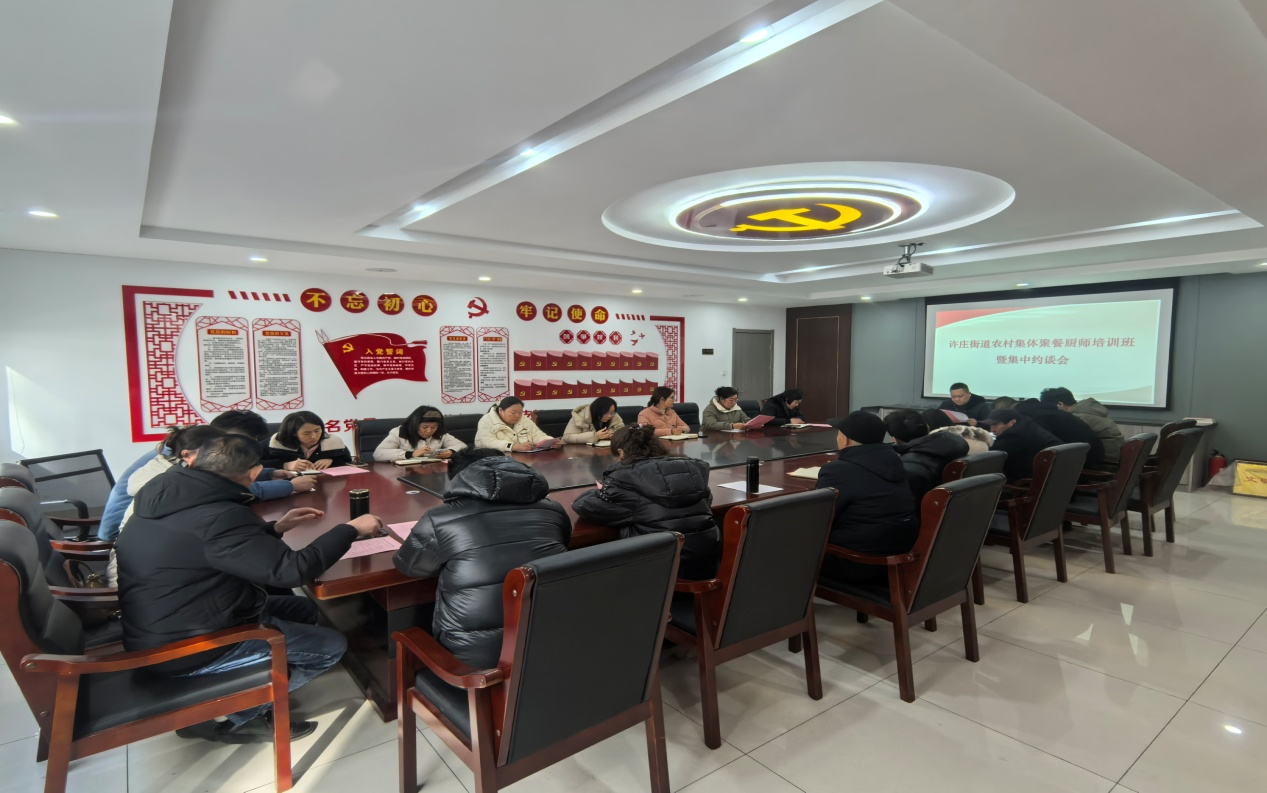
Core Viewpoint - The article emphasizes the importance of ensuring food safety during the upcoming Spring Festival by implementing comprehensive measures to mitigate food safety risks associated with rural collective dining events [1][3][5]. Group 1: Training and Responsibility - The street's food safety office has organized a concentrated training session for chefs involved in rural collective dining, focusing on reporting requirements, ingredient verification, processing standards, and emergency response to food poisoning [1]. - Community food safety coordinators are also being trained to clarify the reporting process and methods for identifying potential hazards, thereby enhancing grassroots supervision [1][3]. Group 2: Public Awareness and Commitment - Coordinators are conducting door-to-door campaigns in villages to promote food safety awareness, distributing materials and explaining the collective dining reporting system and safety precautions [3]. - A "Food Safety Commitment Letter" is signed on-site by the event organizers, chefs, and coordinators, clearly defining responsibilities and ensuring accountability throughout the dining process [3]. Group 3: Strict Inspections - A comprehensive inspection is being carried out in key locations such as supermarkets, farmers' markets, and dining establishments, focusing on essential food categories like grains, meats, dairy, and beverages [5]. - The inspections aim to identify issues such as unlicensed operations, expired products, and improper labeling, while also verifying critical processes like food storage and sanitation [5]. Group 4: Future Actions - The street will increase inspection frequency during the festival, maintaining a focus on critical aspects of rural collective dining and establishing a routine for supervision, training, and public awareness [7].
品土菜、看民俗、体验乡土年味 年夜饭新吃法点燃新春消费新热点
Yang Shi Wang· 2026-02-14 03:44
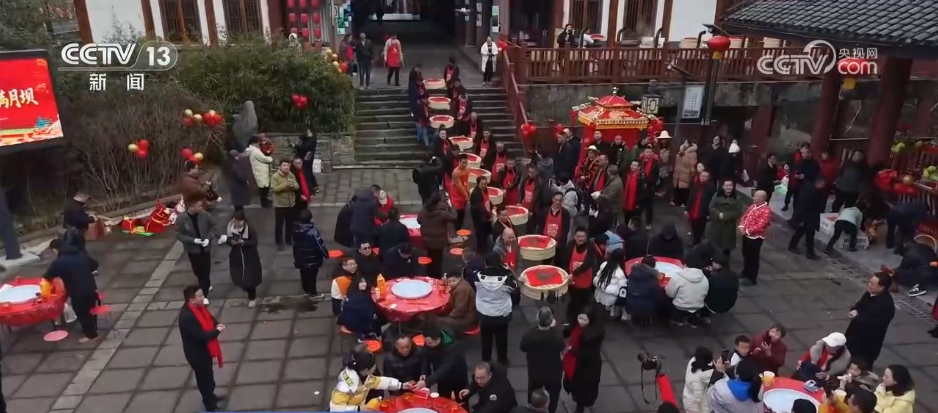
Core Viewpoint - The upcoming Lunar New Year is driving a shift in consumer behavior, with many opting for rural experiences and traditional meals, igniting new consumption trends for the holiday [1] Group 1: Rural Dining Experiences - In Guangyuan City, Sichuan, a village shared reunion dinner attracted nearly 300 tourists, showcasing local customs and food [3] - In Enshi Tujia and Miao Autonomous Prefecture, the "Chopping Soup Feast" is gaining popularity, with one event hosting nearly 1,600 guests, significantly increasing bookings compared to previous years [5][7] - Enshi County expects to receive 3 million tourists during the Spring Festival, with local authorities implementing measures to ensure smooth operations for rural dining projects [9] Group 2: Urban Dining Trends - Many consumers are choosing to dine out in county restaurants for their reunion dinners, boosting the local dining economy [11] - In Lingying County, Henan, restaurant packages range from 198 to 498 yuan, incorporating local specialties that are well-received by consumers [13] - The dining market in Shaoyang City, Hunan, is also thriving, with many consumers inquiring about reunion dinner options [15] Group 3: Delivery and Takeout Trends - The return home for the holiday has activated significant consumption potential in lower-tier markets, with county dining consumption growing 4 percentage points higher than non-county areas [17] - The search volume for "reunion dinner delivered to home" increased over 600% from the first week of January to the first week of February [17] - A restaurant in Hangzhou fully booked its reunion dinner seats by January and introduced takeout services, with free delivery within 5 kilometers [19] - The search volume for "takeout reunion dinner" surged over 900%, while "reunion dinner packages" saw a 357% increase [21]
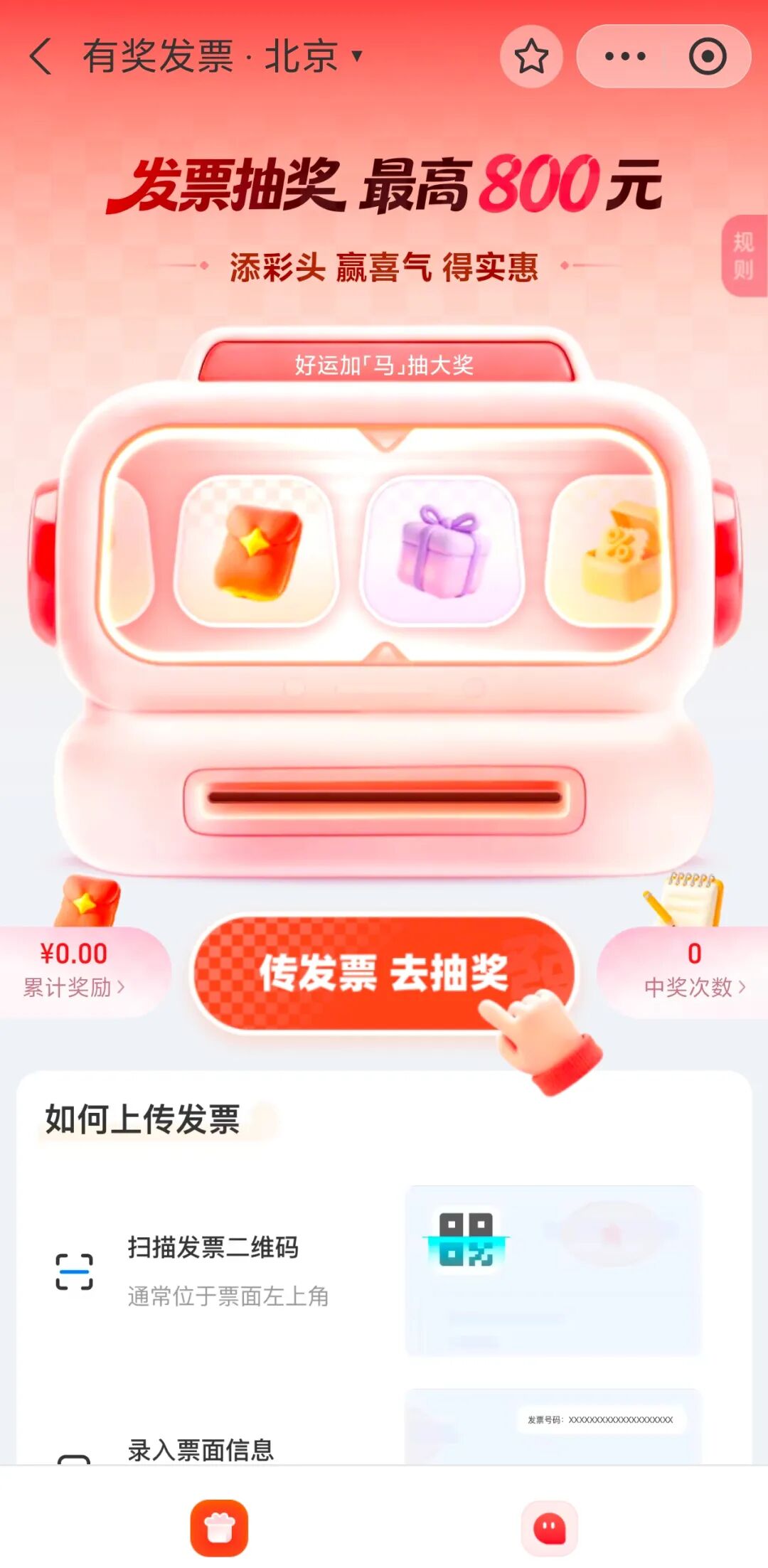
超10亿元,人人都有机会领现金!有奖发票怎么参与?
Jin Rong Shi Bao· 2026-02-14 03:07
Core Viewpoint - The "Happy Shopping Spring Festival" special event organized by the Ministry of Commerce and nine other departments will take place from February 15 to 23, featuring a notable lottery for consumers who obtain invoices during the holiday period [1][2]. Group 1: Prize Invoice Overview - The prize invoice is a lottery system for consumers who receive invoices for their purchases, with a total of 10 billion yuan in prizes available during the Spring Festival [2]. - The pilot program will be implemented in 50 cities over a six-month period, with a total of 100 billion yuan allocated for prize funds [2]. Group 2: Participation Requirements - Consumers must obtain a regular invoice with a face value of over 100 yuan in the pilot cities to participate in the lottery [3][4]. - Participants must complete real-name authentication on the activity platform before uploading their invoices [3]. Group 3: Eligible Consumption Categories - The pilot program covers eight major consumer sectors closely related to daily life, including retail, dining, accommodation, cultural arts, entertainment, tourism, sports, and residential services [6]. Group 4: Prize Distribution - Each pilot city will determine the minimum invoice amount for winning, with prizes potentially reaching up to 800 yuan per invoice [7]. - For example, in Guangzhou, prizes are categorized into seven tiers, with the highest being 800 yuan, alongside other amounts such as 500 yuan, 200 yuan, and more [7]. Group 5: Participation Limits - Each city sets its own rules for participation, with consumers allowed to upload a limited number of invoices per day and month [8]. - In Guangzhou, for instance, consumers can upload up to five valid invoices daily and a maximum of 30 per month [8]. Group 6: Invoice Submission Platforms - Major platforms for participation include UnionPay, Douyin, JD.com, and Alipay, with most cities supporting the UnionPay app for invoice uploads [9]. Group 7: Pilot Cities - The pilot program includes four direct-controlled municipalities: Beijing, Tianjin, Shanghai, and Chongqing, along with 50 other cities across various provinces [12].
内蒙古乌兰察布市集宁区:“暖经济”活力足
Jing Ji Ri Bao· 2026-02-14 02:54
Group 1 - The "warm economy" in Ulanqab City, Inner Mongolia, is thriving this winter, injecting vitality into the city as cold air arrives [1] - The Jining International Fur City has seen a continuous increase in foot traffic, with daily visitor numbers exceeding 10,000 during holidays, driven by both online and offline promotional activities [1] - The average daily foot traffic at Yongliang Hot Spring Water World is approximately 300 visitors, with many tourists from Mongolia enjoying the warmer winter climate compared to Ulaanbaatar [1] Group 2 - The cultural and tourism industry in Ulanqab City is experiencing robust growth, with a steady increase in visitor numbers who enjoy local attractions and cuisine [2] - The ongoing New Year Goods Festival in Jining District is providing a platform for local residents to purchase various specialty products, enhancing the festive atmosphere [2] - The Jining District Commerce Bureau is focusing on creating diverse consumption scenarios to enhance the winter experience for residents and tourists, aiming to optimize the consumption environment and enrich supply [2]
全聚德2025年业绩预告净利润下滑超77%,战略转型应对行业挑战
Jing Ji Guan Cha Wang· 2026-02-14 02:34
Core Viewpoint - Company Quanjude (002186) anticipates a significant decline in net profit for 2025, driven by weak recovery in the restaurant industry and cost pressures, while implementing strategic initiatives such as store upgrades and menu innovation to adapt to market conditions [1][2]. Financial Performance - The company forecasts a net profit attributable to shareholders ranging from 6 million to 7.8 million yuan for 2025, representing a decrease of 77.15% to 82.42% compared to the previous year [2]. - The decline in performance is attributed to weak recovery in the restaurant sector, fluctuations in store visitor numbers, fixed cost pressures, and reduced joint investment income, although non-recurring income from asset disposals and government subsidies is expected to positively impact net profit [2]. Strategic Initiatives - The company continues to implement a "restaurant + food" dual-driven strategy, focusing on store scene upgrades, menu innovation, and online business expansion to align with new consumer trends [3]. - Specific initiatives include the thematic restaurant "Jingmeng Wangfujing: Four Seasons Fireworks" and seasonal product iterations, aimed at enhancing brand youthfulness and diversification [3]. Stock Performance - As of February 12, 2026, the company's stock price experienced volatility, declining by 2.00% with a net outflow of 14.1256 million yuan in principal funds [4]. - The third quarter report for 2025 indicated an 11.62% year-on-year decline in revenue, putting pressure on net profit, highlighting the need to monitor the impact of subsequent consumer recovery on performance [4].

年夜饭预订火爆,北京老字号数字化转型激发消费新活力|新春消费青观察
Sou Hu Cai Jing· 2026-02-14 02:26
Core Insights - The article highlights the booming demand for traditional Beijing restaurants, particularly during the upcoming Spring Festival, with many restaurants fully booked for New Year's Eve dinners well in advance [1][3] - Traditional brands are successfully attracting younger consumers by embracing digital transformation, AI integration, and cultural innovation, with 48.5% of searches related to these brands coming from consumers aged 35 and under [1][9] Group 1: Reservation Trends - Many traditional restaurants in Beijing have reported that their New Year's Eve dinner reservations are sold out, with some locations fully booked as early as two months prior [3] - Prices for New Year's Eve dinners range from hundreds to thousands of yuan, with specific packages offered by various restaurants, such as Quanjude's 400 yuan per person package and Bianyifang's 1,000 yuan for 6-8 people [3][4] - The revenue generated from a single New Year's Eve dinner can equal ten days of a restaurant's typical earnings, indicating the significance of this event for restaurant operators [3] Group 2: Digital Transformation - Traditional restaurants are increasingly adopting digital solutions, such as online ordering, VR room previews, and smart dining features, to enhance customer experience and operational efficiency [6][4] - Data shows that 206 traditional restaurant brands and 6,027 locations have completed their online transformation, covering 234 cities nationwide, with search volume on platforms like Meituan increasing nearly ninefold and order volume rising by 34% [6] - The introduction of AI-driven systems has allowed restaurants to automate data collection and customer inquiries, significantly reducing labor costs and improving service efficiency [6][7] Group 3: Product Innovation - Traditional restaurants are focusing on health-oriented and culturally innovative products to appeal to younger consumers, with an emphasis on quality-to-price ratio [9][8] - Innovations include healthier menu options and creative cultural products, such as plush toys representing traditional dishes, which enhance customer engagement and emotional value [9][8] - The shift from merely selling products to offering experiences is evident, as traditional brands adapt to modern consumer preferences while maintaining their cultural heritage [9][7]
“小发票”里的大文章丨市场“净化器”——从“不开票”到“抢着开”的深层博弈
Sou Hu Cai Jing· 2026-02-14 02:09
Core Viewpoint - The implementation of the "prize invoice" pilot program in 50 cities aims to encourage consumers to request invoices, thereby promoting compliance among businesses and enhancing tax revenue collection [1][2][3] Group 1: Industry Practices - The practice of "not issuing invoices and offering drinks" has been a common unspoken rule in industries closely related to personal consumption, such as dining and retail, allowing businesses to hide income and evade taxes [1] - This behavior creates an unfair competitive advantage for non-compliant businesses, leading to a situation where law-abiding companies suffer from price pressures [1][2] Group 2: Impact of Prize Invoices - The "prize invoice" initiative allows consumers to participate in a lottery for invoices over 100 yuan, with potential rewards up to 800 yuan, thereby increasing the incentive to request invoices [2] - Early trials in some provinces showed significant increases in invoice issuance rates and amounts, particularly in the furniture and home improvement sectors, with invoice counts up over 70% and amounts up over 90% [3] Group 3: Tax Revenue and Compliance - The program is expected to enhance tax compliance and improve the overall tax environment by encouraging consumers to demand invoices, which in turn pressures businesses to operate legally [2][3] - The initiative leverages small fiscal expenditures to stimulate large-scale social oversight, improving tax administration efficiency and fostering a sense of fairness in tax burdens across industries [3]