
公募基金

Search documents
文化建设铸就行业灵魂 浦银安盛探索公募基金特色文化建设之路
Jin Rong Jie· 2025-12-30 10:10
Core Viewpoint - The public fund industry is embarking on a new journey of high-quality development, emphasizing the importance of industry culture and responsibility in achieving this goal [1][9]. Group 1: Industry Culture and Development - The public fund industry is guided by the "Five Musts and Five Must Nots" of Chinese financial culture to foster a positive industry ecosystem [1]. - The company is actively exploring a cultural construction model that reflects its banking background, focusing on areas such as party building, compliance, talent development, and corporate social responsibility [1]. Group 2: Party Building and Governance - The company prioritizes party building as a key element of its development strategy, aligning with the spirit of the 20th National Congress and promoting high-quality development [2]. - Various educational activities are conducted to deepen understanding of red history and enhance party discipline among employees [2][3]. Group 3: Compliance and Risk Management - Compliance is viewed as a fundamental principle for the company's sustainable development, with a focus on establishing a robust compliance and risk control system [4]. - The company has implemented a three-tier internal control system and developed various regulations to ensure compliance and risk management are integral to its culture [4]. Group 4: Digitalization and Risk Management - The company is enhancing its risk management capabilities through digitalization, developing an information platform for effective risk identification and analysis [5]. - The "Puyin Ansheng Smart Space" project, recognized with the 2024 Financial Technology Development Award, exemplifies the company's innovative approach to risk management [5]. Group 5: Talent Development - The company adheres to a "long-termism" approach in talent development, establishing a professional talent selection and training system to enhance employee capabilities [7]. - In 2025, the company plans to conduct nearly 100 training sessions, covering various topics to improve employee skills and align with regulatory requirements [7]. Group 6: Corporate Social Responsibility - The company is committed to social responsibility, focusing on investor education and community support initiatives [8]. - Notable projects include the "Zero Carbon Home" initiative and various educational and agricultural support programs aimed at benefiting local communities [8]. Group 7: Future Directions - The company aims to continue innovating in cultural construction and contribute to the high-quality development of the industry and the Shanghai International Financial Center [9].
文化建设铸就行业灵魂 浦银安盛基金探索公募特色文化建设之路
Sou Hu Cai Jing· 2025-12-30 09:20
Group 1: Core Perspectives - The public fund industry is embarking on a new journey of high-quality development, with industry culture construction being a crucial element [2] - The company emphasizes the integration of party building into its development strategy, aiming for high-quality development through strong governance [3][4] Group 2: Compliance and Risk Management - The company regards compliance as a fundamental principle for sustainable development, establishing a robust internal compliance and risk management system [5] - A three-tier internal control system has been developed to enhance compliance awareness and risk prevention capabilities among employees [5] Group 3: Talent Development - The company adheres to a "long-termism" approach in talent development, focusing on professional training and creating a culture that emphasizes sustainable value creation [7] - In 2025, the company plans to conduct nearly 100 training sessions, with 3,400 participants covering various fields including risk compliance and investment education [7] Group 4: Social Responsibility - The company is committed to social responsibility, prioritizing investor education and engaging in various charitable initiatives [8] - Recent projects include the "Zero Carbon Home" initiative and the "Community Restaurant" project, aimed at supporting local communities and enhancing awareness of fraud among the elderly [8] Group 5: Future Directions - The company plans to continue innovating in corporate culture construction, contributing to the high-quality development of the industry and the Shanghai International Financial Center [9]


四大证券报精华摘要:12月30日
Xin Hua Cai Jing· 2025-12-30 06:14
Group 1: Digital Currency and Financial Infrastructure - The digital renminbi will officially implement an interest payment feature starting January 1, 2026, transitioning from a digital cash era to a digital deposit currency era [1][8] - The People's Bank of China has released an action plan to enhance the management service system and related financial infrastructure for digital renminbi [1][8] Group 2: Consumer Sector Outlook - The consumer sector is gaining attention due to multiple factors, including ongoing consumption policies, the closure of Hainan Free Trade Port, and the upcoming holiday season [2] - Analysts suggest focusing on high-end consumption and sectors with improving supply-demand dynamics as potential investment opportunities for 2026 [2] Group 3: New Quality Productivity Investment - The importance of new quality productivity sectors, such as commercial aerospace and embodied intelligence, is increasing, with electric equipment, electronics, military industry, and AI supply chains being favored for investment in 2026 [3] Group 4: Foreign Investment Perspectives - Foreign institutions express positive expectations for the Chinese market in 2026, with consumption expected to remain a key growth driver [4] - Chinese stocks are anticipated to perform well in Asia (excluding Japan) due to improved corporate governance and policy support for technological innovation [4] Group 5: Lithium Iron Phosphate Industry Dynamics - Several lithium iron phosphate companies have announced production cuts of 35% to 50% in January 2026, impacting a significant market share [5] - The industry faces challenges with raw material price increases and the uncertain impact of new production expansions [5] Group 6: Public Fund Growth - The total net asset value of public funds in China has reached 37.02 trillion yuan, marking a historical high and a growth of over 4 trillion yuan since the beginning of the year [6][7] - The average annual growth rate of public fund assets has been approximately 16% since 2016, indicating a strong customer base [7] Group 7: Humanoid Robot Industry Developments - The establishment of a standardization committee for humanoid robots is expected to enhance the industry's growth, with significant financing inflows into related stocks [9] - Humanoid robots are transitioning from experimental phases to practical applications in factories and commercial settings [9] Group 8: AI Computing Power and Solid-State Transformer Demand - The rapid expansion of AI computing power is driving increased demand for solid-state transformers, with a projected compound annual growth rate of 25% to 35% in the global market [12][13] - The AI market is expected to grow significantly, from 1.1879 trillion yuan in 2023 to 11.4554 trillion yuan by 2030, indicating a robust growth trajectory [12][13]
公募战略:新秩序下的格局重塑
HTSC· 2025-12-30 05:10
Investment Rating - The report maintains an "Increase" rating for the diversified financial sector [2] Core Insights - The public fund industry is undergoing a systematic and high-quality transformation, shifting from a scale-oriented approach to a focus on long-term returns, driven by regulatory reforms and market dynamics [4][13] - By 2030, the total AUM (Assets Under Management) in the industry is expected to exceed 50 trillion yuan, with growth primarily fueled by deeper financial asset allocation by residents and the acceleration of long-term capital inflows [8][16] Summary by Sections Industry Overview - The public fund industry has seen a significant transformation since 2023, with reforms focusing on fee reductions, performance benchmarks, and management practices, leading to a restructuring of the operational logic from scale to long-term returns [4][5] Reform Progress - The reforms initiated in 2023 have transitioned from cost constraints to a comprehensive restructuring of the investment research, sales, assessment, and product logic, with a focus on investor returns [5][17] Revenue and Profitability - The total revenue of the public fund industry decreased from 262.5 billion yuan in 2021 to approximately 200 billion yuan in 2024, reflecting a 21% decline due to fee reductions and changes in trading behavior [6][27] - The average management fee and trading commission rates have significantly declined, with management fees remaining the core revenue source but showing a decreasing contribution from actively managed equity funds [6][15] Asset Growth and Structure - As of Q3 2025, the total net asset value of public funds reached 36.09 trillion yuan, a 12% increase from the beginning of the year, with the proportion of public funds to GDP rising from 7% in 2014 to 27% in 2025 [7][36] - The growth in the industry is primarily driven by equity and money market funds, with a notable increase in the share of industry and thematic ETFs [7][14] Future Outlook - The report anticipates that passive investment, particularly through ETFs, will continue to dominate the industry, while active management will focus on boutique strategies to achieve sustainable alpha [8][16] - The integration of AI technology across the investment research, trading, sales, and risk control processes is expected to enhance the competitive advantages of leading firms [8][16]
汇丰晋信基金总经理李选进,最新发声!
Zhong Guo Ji Jin Bao· 2025-12-30 02:13
【导读】汇丰晋信基金总经理李选进:坚守长期主义,让投资更简单 "让投资更简单"——汇丰晋信基金总经理李选进指着公司成立时的牌匾说。回顾二十年发展历程,他感 慨万千。 "公司创立时,就确立了'让投资更简单'的初心。"李选进介绍道,这一理念背后,承载着公司对提升投 资者体验的追求。要实现这一目标,仅凭短期业绩远远不够,必须着眼于投资者的长期需求,并致力于 构建一套持久、可持续的投资体系。 二十年的公司发展,让李选进愈发笃信"长期坚持"才是正途。行业浪潮翻涌不息,有时为了坚守理念, 必须有所取舍,有所为、有所不为。对于汇丰晋信基金来说,"坚持"不仅是一句口号,而是深深融入公 司产品体系、投研方法与投资者服务之中的具体实践。 作为行业发展的亲历者,李选进也分享了他对公募基金行业未来发展的思考。他认为,资产管理行业必 须清楚认识到,这是场比耐力的"马拉松"。无论是投资还是服务,都应该看得更长远。基金从业者必须 明确自身的价值所在——为投资者创造价值,为他们实现人生目标提供财富管理"解决方案"。 守正不移廿载路 行稳致远长期心 谈及汇丰晋信基金过去二十年的发展历程,李选进将其总结为一个关键词——坚持。在他眼中,这 份"坚 ...
追光与避险:六位资管大咖纵论财富守护之道
Zheng Quan Ri Bao· 2025-12-28 16:14
Core Insights - The forum discussed the theme "Wealth Protection Strategies for Asset Management Institutions" with industry experts sharing insights on investment opportunities and risk management in the current financial landscape [1] Group 1: Investment Opportunities - The equity market has shown significant recovery this year, prompting market participants to evaluate future investment opportunities [2] - "Certainty" is a key focus for institutional investors like insurance and banks, with an emphasis on prioritizing winning probabilities before seeking higher returns [2] - The growth sector may become a "deciding factor" for profitability in the equity market next year, supported by economic recovery and corporate profit restoration [2] - Market opportunities in 2026 are expected to arise more from structural insights rather than directional predictions, with a focus on "new productive forces" and multi-asset portfolio stability [2] - Investment opportunities are identified in AI-related technology, overseas industries, turnaround sectors, and dividend assets [2][3] Group 2: Asset Management Challenges - The asset management industry faces challenges, including the need for public funds to embrace active management despite the rise of index investing [4] - There is a persistent issue of aligning investor expectations with actual returns, which complicates wealth management [4] - The industry must address the cyclical nature of investor behavior, which often leads to a focus on short-term performance rather than long-term stability [4] - The insurance asset management sector must balance safety, liquidity, and profitability, with a proposed separation of assessments for different insurance products and investment strategies [5] Group 3: Risk Factors - Key risk points in the industry include low-interest rate environments leading to spread risks, cross-regional and cross-sector investment risks, and complexities in alternative asset management compliance [5]
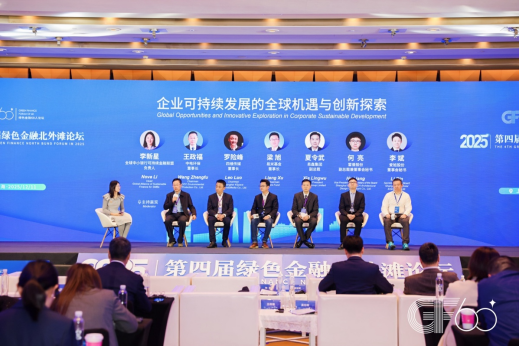
2025绿金论坛|聚焦全球机遇与创新实践,共探企业高质量发展新路径
Zhong Guo Jin Rong Xin Xi Wang· 2025-12-26 13:23
Core Viewpoint - The forum highlighted the importance of sustainable development and the integration of green finance, technology, and industry, emphasizing that green development is now a critical dimension of global competition [1][21]. Group 1: Company Insights - China Electric Environmental Protection (CEEP) focuses on large-scale industrial water treatment and municipal water environment governance, emphasizing the importance of water conservation and environmental technology innovation [5][6]. - Four Dimensions Media has integrated green and sustainable development into its operations, achieving over 70% of its business in the European and American markets, and is preparing for the EU's upcoming "Zero Deforestation Regulation" [8]. - Easy Money Fund emphasizes active equity investment based on industry chain research, aiming to inject financial capital directly into industries to enhance the marginal value of the real economy [10][11]. - Easy Car Group, as an AI-driven automotive financial service provider, has increased its new energy vehicle financing from 27% in 2023 to 58%, focusing on inclusive and green finance [13][14]. - Hope Co., Ltd. has transitioned from traditional building design to green zero-carbon services, focusing on community, factory, and park scenarios, and aims to provide comprehensive zero-carbon solutions [16]. - Aishuo Co., Ltd. has achieved a battery production efficiency of over 27.3% and is the first company to scale produce silver-free photovoltaic products, addressing raw material price volatility [19][20]. Group 2: Industry Trends - The integration of finance, technology, and the real economy is crucial for achieving sustainable development, requiring long-term commitment and systematic innovation breakthroughs [21]. - The forum featured discussions on the role of financial institutions in providing foundational financing services for green industries and optimizing costs for green technologies [11].


银河基金:深入贯彻全会精神 为金融强国建设贡献银河力量
Zhong Guo Zheng Quan Bao· 2025-12-26 00:10
党的二十届四中全会审议通过的《中共中央关于制定国民经济和社会发展第十五个五年规划的建议》, 明确了"十五五"时期经济社会发展的指导方针和主要目标,擘画了未来五年发展的宏伟蓝图,为深入推 进中国式现代化指明了前进方向。 银河基金认真学习贯彻党的二十届四中全会精神,深刻领会金融强国建设的理论内涵和实践要求。 以"十五五"战略规划为指引,聚焦公募基金主责主业,努力推动公司高质量发展取得新成效。 强化功能发挥 在服务国家大局中彰显作为 "十五五"规划建议把坚持党的全面领导作为"十五五"时期经济社会发展必须遵循的首要原则,强调坚持 和加强党的全面领导是推进中国式现代化的根本保证。银河基金表示,公募基金要深刻领悟"两个确 立"的决定性意义,坚持党中央对金融工作的集中统一领导,确保始终沿着正确方向前进,以高质量党 建引领高质量发展。 "十五五"规划建议把大力发展金融"五篇大文章"摆在更加突出的位置,以"五篇大文章"勾画出未来五年 金融资源优化配置、服务国家战略和实体经济的系统性"施工图"。银河基金表示,公募基金作为重要的 机构投资者,在服务国家战略和实体经济方面发挥重要作用,要进一步加大对国家重大战略、重点领域 和薄弱环节 ...
2025年公募基金十大新闻来了
券商中国· 2025-12-25 15:31
编者按: 回望2025,公募基金行业奋楫前行,在时代变革的浪潮中焕发蓬勃生机。历经27载耕耘的公募行业,正以持续改 革之姿迎来蝶变时刻。 值得一提的是,近两年前两阶段费率改革已平稳落地,切实降低了投资者的投资成本。此次销售费率改革方案 的发布,意味着公募基金费率改革第三阶段工作全面启动,这也是分阶段推进费率改革的"最后关键一步"。 今年是公募基金行业从"粗放发展"向"高质量发展"转型的关键节点。一系列标志性政策法规陆续落地见效,公募行 业生态体系迎来系统性重构;费率改革稳步推进,行业竞争格局重塑;科技资产异军突起,成为配置新主线;债 券基金震荡加剧,考验机构风险管控能力;公募REITs家族持续扩容,丰富基础设施投资版图;多元资产配置重要 性愈发凸显,公募基金以源源不断的创新产品,诠释普惠金融的初心与本色。 临近岁末,证券时报 ·券商中国 特推出"公募基金十大新闻",全景回溯2025年行业的发展脉络。 1.改革重塑行业生态 2025年,我国公募基金行业迈入改革深水区,一系列改革举措不断向前推进,精准回应了市场关切与社会期 待。引导公募行业高质量发展的政策法规密集出台,这些政策法规通过优化收费模式、强化利益绑定、 ...

成立六载业绩领跑!国泰研究精选解锁浮动费率基金成长密码
Jin Rong Jie· 2025-12-24 10:50
Core Insights - The article highlights the successful establishment and performance of Guotai Research Select Fund, which has achieved a cumulative return of 164.70% since its inception, outperforming its peers in the floating management fee fund category [1] - The year 2025 is identified as a pivotal year for floating fee rate funds, with regulatory support encouraging the adoption of this model in the public fund industry [1] Fund Performance - Guotai Research Select Fund has a management fee of 0.8% per year, which is lower than the average for mainstream actively managed equity products [1] - The fund ranks in the top 8% among its peers over the past year and in the top 10% over the past five years, demonstrating the effectiveness of its floating fee rate mechanism combined with quality research capabilities [1] Investment Strategy - The fund manager, Xu Zhibiao, employs a bottom-up approach focusing on long-term, high-growth companies that are often overlooked by the market, emphasizing a strategy of contrarian investing and long-term value [2][3] - The fund's investment principles include selecting high-quality sectors, leading companies, and ensuring strong financial metrics, with a particular emphasis on the qualities of the entrepreneur [3] Risk Management - Guotai Research Select Fund employs strict risk control measures, including careful stock selection based on company qualifications and valuation, as well as balanced industry allocation to mitigate risks from sector volatility [3] - The fund's design includes a two-year holding period to encourage long-term investment and stabilize the fund's capital structure, which aids in pursuing excess returns [3] Market Outlook - Xu Zhibiao anticipates that the current slow bull market in A-shares will continue, with a positive outlook on technology growth sectors, particularly companies that have established localized operations abroad [4] - The transition to floating fee rate mechanisms in the active equity fund sector is expected to lead to the emergence of more high-quality products like Guotai Research Select, enhancing investor satisfaction and promoting healthy development in the public fund industry [4]