
航空航天

Search documents
2026年政府工作报告学习:务实筑基,向新图强
KAIYUAN SECURITIES· 2026-03-06 02:25
Economic Outlook - China's economy shows strong resilience despite increasing internal and external uncertainties, with challenges such as geopolitical risks and weak global economic momentum[3] - The GDP growth target for 2026 is set at 4.5%-5%, which aligns with the long-term goal of achieving an average annual growth rate of 4.17% from 2026 to 2035[4][15] Inflation and Employment - The Consumer Price Index (CPI) target for 2026 is approximately 2%, indicating a more optimistic outlook for price stabilization and a gradual recovery in consumer prices[4][18] - The urban survey unemployment rate target remains around 5.5%, reflecting a commitment to employment stability[15][19] Fiscal Policy - The broad fiscal deficit is projected at approximately 11.89 trillion yuan, with a deficit rate of about 8.1%, maintaining a relatively active fiscal stance[5][26] - Special bonds are allocated at 4.4 trillion yuan, with an additional 1.3 trillion yuan for ultra-long-term special bonds, indicating a focus on major projects and debt replacement[5][26] Monetary Policy - Monetary policy is expected to remain "appropriately accommodative," with potential room for a 50-100 basis point reduction in reserve requirements and a 10 basis point interest rate cut[6][30] - The report emphasizes the need for flexible use of various monetary policy tools to support domestic demand and innovation[6][30] Investment and Consumption - Strategies to stimulate consumption include increasing income, promoting new consumption scenarios, and enhancing service consumption, with a focus on cultural tourism and wellness[6][32] - Investment will target new productivity, urbanization, and human development, with a budget of 7.55 billion yuan and 8 billion yuan in policy financial tools to leverage more social capital[6][33] Innovation and Industry - The report highlights the importance of fostering new industries and future sectors, including integrated circuits, aerospace, and biotechnology, with a focus on enhancing the role of private enterprises in innovation[6][35] - Emphasis is placed on the application of AI and the development of smart economies, with significant investments in infrastructure and technology upgrades[6][36] Reforms and Market Development - The report prioritizes the establishment of a unified market and the implementation of anti-involution policies to regulate local government incentives and subsidies[7][39] - Rural economic development and urban-rural integration are expected to benefit lower-tier cities and enhance consumer upgrades[7][40] Real Estate and Social Stability - The approach to stabilizing the real estate market is characterized by moderate measures, focusing on quality rather than quantity in urban renewal projects[7][41] - Multiple initiatives are proposed to ensure social stability and safeguard livelihoods, including employment support and enhanced social services for vulnerable populations[7][42] Governance and Performance - The report stresses the importance of establishing a correct view of performance, emphasizing practical and realistic growth without engaging in superficial achievements[8][43] - There are risks associated with economic growth not meeting expectations and potential shortcomings in policy implementation[8][45]
未知机构:天风通信航空航天首次明确为支柱产业坚定看好产业提速-20260306
未知机构· 2026-03-06 02:15
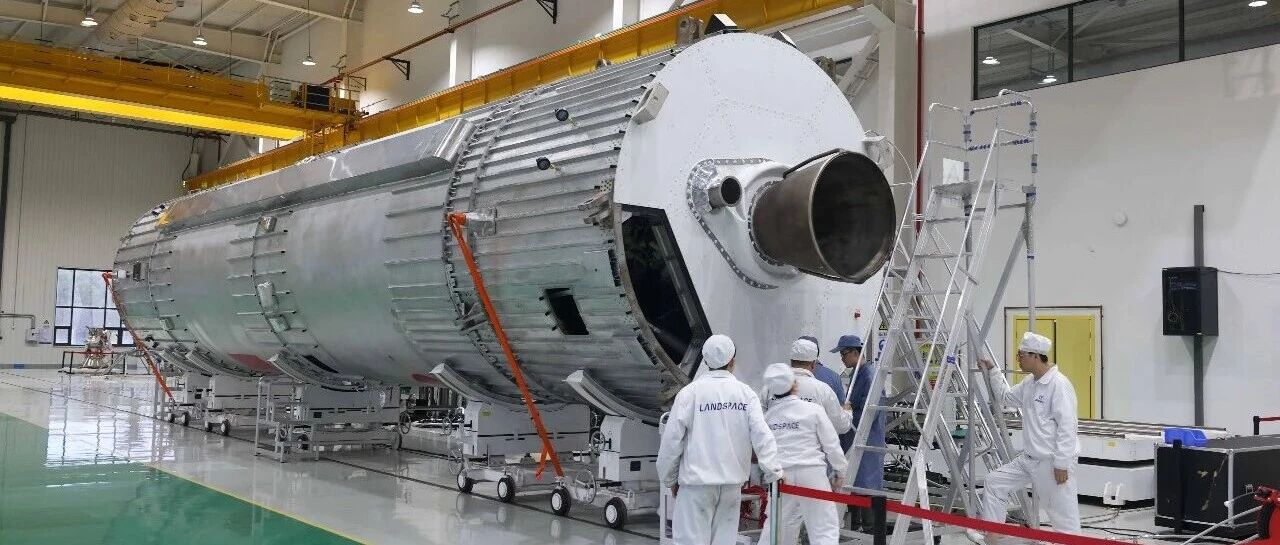
Summary of Key Points from Conference Call Records Industry Overview - The aerospace industry has been explicitly identified as a "pillar industry" in the government work report dated March 5, marking a significant recognition of its importance in the national economic strategy [1] - The report emphasizes the acceleration of satellite internet development, further solidifying aerospace and satellite internet as key focus areas during the 14th Five-Year Plan period [1] Core Insights and Arguments - The government report highlights the need for high-level technological self-reliance and strength, indicating a strategic shift towards enhancing domestic capabilities in critical technology sectors [1] - A "green channel" mechanism for listing financing and mergers and acquisitions for key technology enterprises is proposed, which could facilitate faster capital access and growth for companies in the aerospace sector [1] Investment Opportunities - The commercial aerospace sector is experiencing accelerated growth, with a focus on reusable rockets and other catalysts driving industry momentum [2] - Key industry players and investment targets have been identified across various segments of the aerospace supply chain: - **Rocket Launch**: Guojijiang Engineering, Chaojie Co., Gaohua Technology - **Baseband Routers**: Zhenlei Technology, Xinke Mobile, Fenghuo Communication, Shanghai Hantong, Fudan Microelectronics (FPGA), Nanjing Panda - **Phased Array and RF**: Zhenlei Technology, Chengchang Technology, Tongyu Communication, Canqin Technology, Aerospace Huanyu, Guobo Electronics - **Satellite Platforms**: Guojijiang Engineering, Aerospace Zhizhuang, Qianzhao Optoelectronics, Tianyin Electromechanical, Zhimingda - **Information Encoding**: Jiayuan Technology - **Ground Stations**: Zhenyou Technology, Xinke Mobile - **Satellite Terminals**: Haige Communication, Xinwei Communication, Mengsheng Electronics - **Satellite Testing**: Xice Testing, Sikrui [2] Additional Important Insights - The emphasis on the aerospace industry as a pillar suggests potential government support and funding, which could lead to increased investment and innovation in this sector [1] - The identification of specific companies within the supply chain indicates a strategic approach to investment, focusing on firms that are likely to benefit from government initiatives and industry growth [2]


亿航智能20260305
2026-03-06 02:02
Summary of EHang Intelligent Conference Call Company Overview - **Company**: EHang Intelligent - **Core Product**: EH216-S, a multi-rotor eVTOL aircraft, is the flagship model, suitable for flexible deployment in scenic areas. [2][3] Key Points and Arguments Product Development and Certification - EHang has achieved "four certifications" for the EH216-S, including TC (obtained in October 2023), AC (December 2023), PC (April 2024), and OC (March 2025). [2][3] - The company plans to launch the VT35, a long-range eVTOL, with a guide price of 6.5 million RMB in March 2025. [2][3] Sales and Delivery Projections - EHang expects to deliver 216 units in 2024 and 121 units in the first three quarters of 2025, with an annualized delivery rate of approximately 200 units. [2][5] - The company has over 1,000 orders, primarily from local governments and tourism enterprises. [2][5] Financial Performance - Revenue is projected to reach 460 million RMB in 2024 and 500 million RMB in 2025, with a stable gross margin above 60%. [2][5] - The company anticipates a 30% revenue growth in 2026 and a 50% growth in 2027, with net profit expected to reach 200 million RMB in 2027. [2][14] Market Demand and Opportunities - The "low-altitude + cultural tourism" market is identified as a core scenario, with a potential demand for 5,000 to 10,000 eVTOLs in 4A-level scenic spots. [2][7] - EHang is focusing on international markets, particularly a sandbox project in Thailand, which could expand to airport shuttles and inter-island transport by 2026. [2][8][9] Competitive Positioning - EHang is the only company capable of mass-producing and delivering manned eVTOLs, holding a leading position in both manufacturing and operational capabilities. [4][5] Strategic Collaborations - EHang is collaborating with Yingboer for production and with Guoxuan High-Tech and Minshi Group for power and cabin ecosystems. [2][11] Government and Policy Engagement - EHang has established partnerships with local governments, including a strategic agreement with Hefei City to accelerate operational deployment. [12] - The company is preparing for the 2026 low-altitude economic policy acceleration, which is expected to be included in government work reports. [12][13] Long-term Market Potential - The largest growth potential is seen in urban and intercity transportation, with a 1% penetration rate in domestic taxi services corresponding to a demand for approximately 13,000 eVTOLs. [10] Future Financial Outlook - EHang maintains a revenue guidance of approximately 500 million RMB for 2025, with expectations of returning to profitability in 2026 and achieving a net profit of around 200 million RMB in 2027. [14]

2026年政府工作报告精神学习:积极谋势,务实奋进
EBSCN· 2026-03-06 01:49
Economic Outlook - The 2026 economic growth target is set at 4.5%-5%, slightly down from the previous year's target of around 5%[3] - The urban unemployment rate is projected to be around 5.5%, with over 12 million new urban jobs expected to be created[3] - The nominal GDP growth rate may rebound, with an implied economic total of approximately 147.25 trillion yuan, corresponding to a GDP growth of about 5%[4] Fiscal Policy - A fiscal expansion is planned, with a deficit rate of around 4%, translating to a deficit scale of 5.89 trillion yuan, an increase of 2.3 trillion yuan from the previous year[9] - New policy financial tools will expand by 3 trillion yuan, with a total of 8 trillion yuan allocated for these tools in 2026[10] - The focus of fiscal expansion will be on "two heavy" projects and consumer sectors, with 8 trillion yuan allocated for "two heavy" construction projects, remaining consistent with the previous year[12] Monetary Policy - The monetary policy will maintain a stance of "appropriate easing," with a focus on ensuring liquidity remains ample while matching the growth of social financing and money supply with economic growth targets[14] - The M2 growth rate is expected to be around 9%, and the social financing stock growth rate is projected at 8.2%, both exceeding nominal economic growth targets[14] Structural Reforms - Emphasis on deepening reforms in key areas to enhance economic resilience, including the establishment of a unified national market and adjustments to consumption tax policies[6] - The report highlights the need to accelerate the development of new pillar industries such as integrated circuits, aerospace, and biomedicine[6] Consumer and Investment Strategies - The government aims to stimulate consumer spending through measures like a 1 trillion yuan special fund for financial collaboration to boost domestic demand[10] - Investment strategies will focus on effective investment rather than quantity, with an emphasis on enhancing investment efficiency and directing private investment towards high-tech and modern service sectors[25]
政府工作报告里的微妙转折
吴晓波频道· 2026-03-06 00:29
Economic Growth Target - The economic growth target for 2026 is set at a range of 4.5% to 5%, marking a shift from fixed values to a more flexible approach [5][19][20] - This range reflects the challenges posed by a high base from previous years and aligns with the long-term average growth target of approximately 4.6% during the 14th Five-Year Plan [19][20] - The emphasis on quality over quantity in growth reflects a broader strategic shift towards high-quality development, moving away from a strict focus on GDP growth [9][21] Investment in Human Capital - The term "investment in people" has gained prominence, indicating a focus on enhancing public welfare and social security, which includes increasing coverage and levels of social security [12][13] - This shift suggests a prioritization of human capital investment over traditional infrastructure projects, aiming to create a healthier and more educated population as a core asset for the future [34] New Industry Focus - The report introduces "emerging pillar industries," including integrated circuits, aerospace, biomedicine, and low-altitude economy, indicating a strategic pivot towards sectors that can drive future growth [13][63] - The concept of "intelligent economy" is highlighted, emphasizing the integration of data, computing power, and industry, which is expected to revolutionize production and business models [15][60] Fiscal and Monetary Policy - The fiscal deficit for 2026 is projected to reach 5.89 trillion, with a deficit rate maintained at 4%, reflecting a significant increase in public spending, particularly in social welfare and innovation [29][34] - Monetary policy is expected to focus on structural tools rather than traditional methods, with potential for limited interest rate cuts and reserve requirement reductions to address external shocks [32][36] Real Estate and Capital Markets - The report emphasizes the importance of real estate in stabilizing growth and managing risks, with a focus on high-quality development and improving living conditions [39][41] - Capital markets are encouraged to shift towards direct financing, with an emphasis on institutional reforms rather than short-term market stabilization [39] Consumer and Social Policies - Policies aimed at increasing consumer spending include enhancing income for low-income groups and optimizing consumption structures, with a focus on both goods and services [48][51] - The introduction of support for initial marriage and childbearing families reflects a response to demographic challenges, aiming to improve housing security for these groups [54][57]

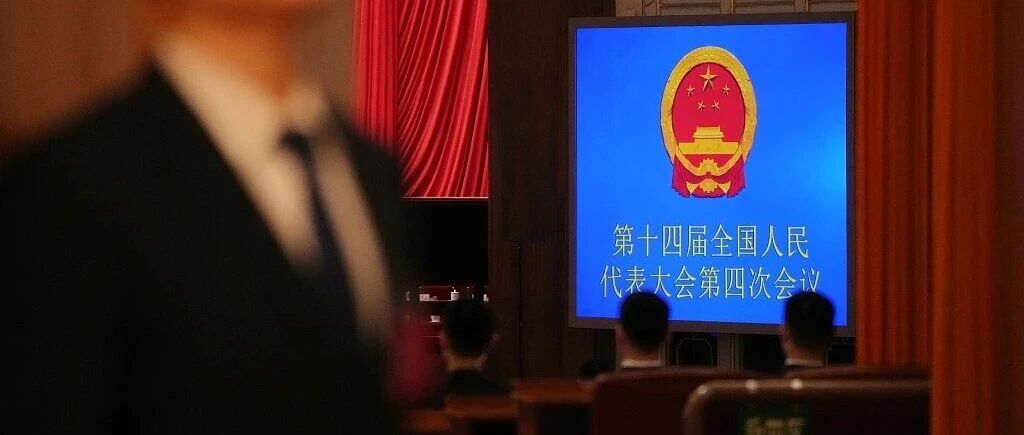
2026全国两会跟踪第一期:首日要点及后续关注
一瑜中的· 2026-03-05 16:23
Core Viewpoint - The article discusses the key points from the opening of the 14th National People's Congress (NPC) and the government's work report, emphasizing the focus on high-quality development, innovation, and strategic investments in infrastructure and emerging industries [1][2][3]. Group 1: Key Points from the NPC Opening - The NPC opened on March 5, with significant activities including a government work report briefing and the first "Ministerial Channel" interview session [1][2]. - The General Secretary highlighted the importance of a correct view of performance and the development of new productive forces, with specific goals set for 2023 to 2025 [1][2][3]. - The first "Ministerial Channel" featured representatives from the Ministry of Science and Technology, Ministry of Industry and Information Technology, and the State-owned Assets Supervision and Administration Commission [1][2]. Group 2: Fiscal Policy and Investment Plans - The budget report emphasizes an active fiscal policy, urging early planning and execution of policies to gain proactive work momentum [2][3]. - Investment plans include accelerating the approval of major projects, with a focus on infrastructure such as the Sichuan-Tibet Railway and coastal highways, aiming for completion of project lists by June [2][3]. - The plan encourages new industries to maintain appropriate capacity redundancy and promote competition and innovation [2][3]. Group 3: "14th Five-Year Plan" Highlights - The draft outline of the "14th Five-Year Plan" includes new chapters on advancing digital China and improving population development strategies [2][3]. - The plan aims to enhance the level of intelligent development and promote high-quality population growth [2][3]. Group 4: Upcoming Activities - Important upcoming events include the second plenary session on March 9, which will review reports from the NPC Standing Committee, Supreme Court, and Supreme Procuratorate [3][4]. - The conference will conclude on March 12, followed by additional ministerial interviews [3][4].

三位部长诠释经济增长底气何在
第一财经· 2026-03-05 15:36
Core Viewpoint - The article emphasizes the importance of technological innovation and the construction of a modern industrial system as essential for China's economic growth and development, highlighting the government's commitment to fostering new industries and enhancing traditional sectors [3][4][7]. Group 1: Modern Industrial System - The construction of a modern industrial system is a strategic priority, with a focus on advanced manufacturing as its backbone, aiming to solidify China's position as the world's leading manufacturing power by 2025 [7]. - In 2025, the industrial added value is projected to reach 41.7 trillion yuan, contributing 35% to economic growth, showcasing the comprehensive advantages of China's industrial system [7]. - The industrial development is characterized by four key trends: moving towards new, superior, intelligent, and green manufacturing [7]. Group 2: Policy and Governance - The government plans to implement a "combination punch" of policies to stabilize growth, support industrial provinces, and enhance consumption, investment, and exports [9]. - There is a strong emphasis on governance, with a focus on eliminating "involution" in competition and improving the market environment through legal governance and industry self-discipline [9][10]. - The 2026 policy will enhance government behavior constraints and cross-departmental enforcement to support the construction of a unified national market [10]. Group 3: Innovation and Emerging Industries - The government aims to optimize traditional industries while nurturing emerging and future industries, with a focus on technological innovation to drive new productive forces [12]. - Central enterprises have invested 7.4 trillion yuan in emerging industries over the past three years, accounting for 42% of total investments, with revenue from these sectors reaching 12.3 trillion yuan [13]. - Key areas for development include renewable energy, aerospace, and new materials, with a focus on leading, catching up, and nurturing strategic emerging industries [15]. Group 4: Talent and Incentives - The establishment of effective incentive mechanisms in central enterprises is being researched to enhance basic research investment and motivate scientific personnel [18]. - In 2022, central enterprises' investment in basic research exceeded 102.4 billion yuan, representing 9.4% of their total investment, which is higher than the national average [18]. - The reform of state-owned enterprises will focus on deepening the "three systems" reform to create a diverse and effective incentive system, optimizing the innovation environment and accelerating the application of research results [18].
【中国银河宏观】立足实际,打牢基础——2026年政府工作报告解读
Xin Lang Cai Jing· 2026-03-05 13:21
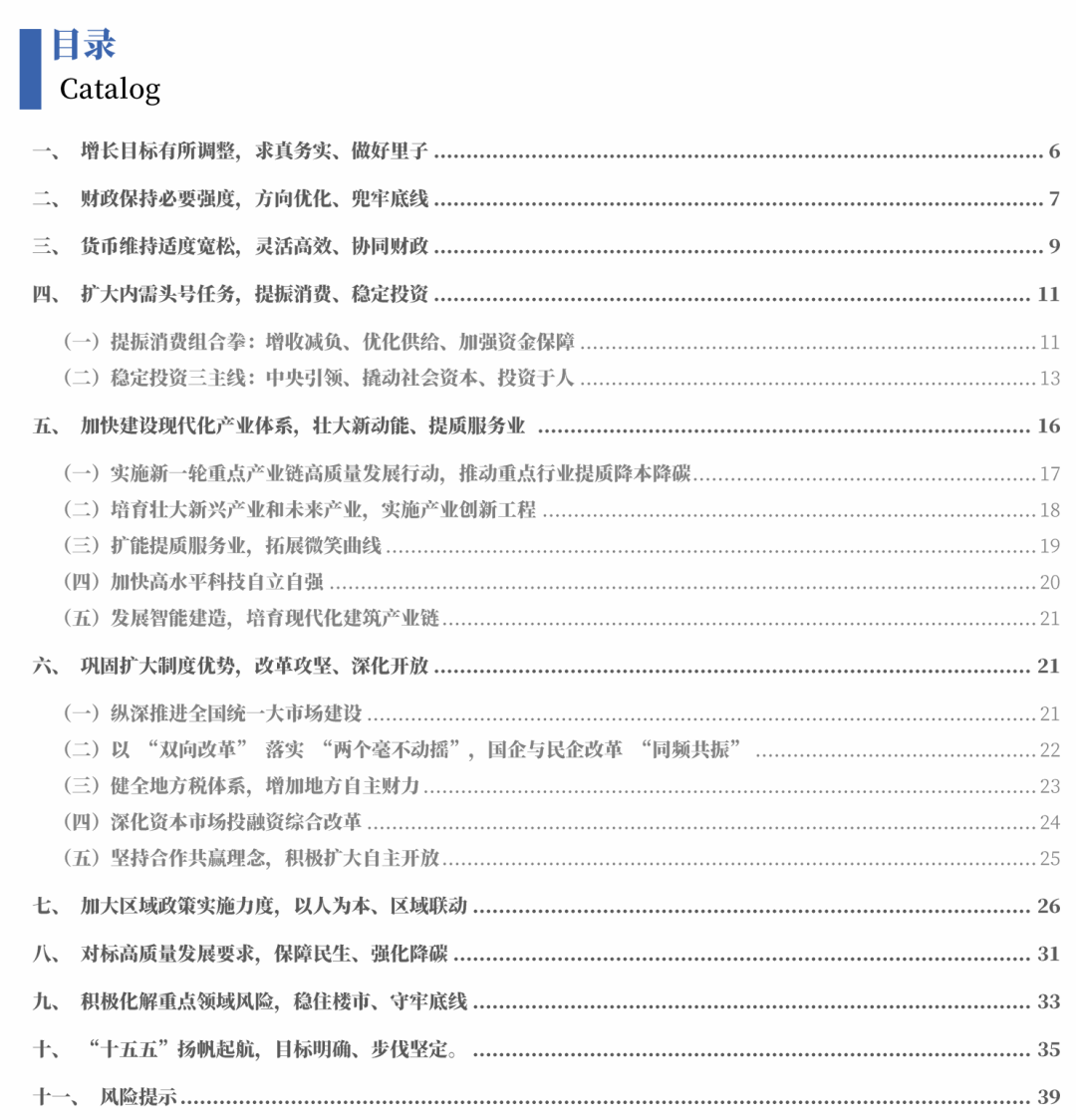
Group 1 - The GDP growth target for 2026 is set in the range of 4.5% to 5%, reflecting a pragmatic approach and a focus on quality improvement rather than merely speed [1][13][19] - The CPI target remains around 2%, consistent with the previous year, indicating a cautious stance on inflation management [1][14] - The urban unemployment rate target is maintained at approximately 5.5%, emphasizing the importance of employment stability in macroeconomic policy [1][14] Group 2 - The overall fiscal expenditure for 2026 is projected to increase, with a deficit rate of 4% and a new deficit scale of 5.89 trillion yuan [2][19] - The general public budget expenditure is expected to reach 30 trillion yuan for the first time, with a growth rate of 4.4% [2][19] - The issuance of special bonds is planned to support infrastructure and new projects, with a total of 11.89 trillion yuan in budgetary deficits, slightly up from the previous year [2][19] Group 3 - The monetary policy will maintain a moderately loose stance, with an emphasis on flexible and efficient use of tools such as interest rate cuts and reserve requirement ratio adjustments [3][29] - Structural monetary policy tools will be prioritized to enhance the effectiveness of monetary policy, particularly in supporting key sectors like technology and small enterprises [3][33] - The central bank is expected to maintain liquidity and coordinate with fiscal policies to support economic stability [3][34] Group 4 - Expanding domestic demand is identified as a top priority, with measures to boost consumption and stabilize investment [4][25] - A combination of policies will be implemented to enhance consumer income and optimize supply, including fiscal support for consumption initiatives [4][25] - Investment strategies will focus on central leadership, leveraging social capital, and prioritizing human investment [4][25] Group 5 - The government aims to accelerate the construction of a modern industrial system, emphasizing the development of new productive forces and enhancing service quality [5][11] - Key actions include promoting high-quality development of traditional industries and fostering emerging industries through innovation initiatives [5][11] - The focus will also be on integrating advanced manufacturing with modern services to create a more complete and high-value industrial system [5][11] Group 6 - The report emphasizes the need to deepen reforms and expand openness, particularly in establishing a unified national market [6][11] - Reforms will focus on enhancing the role of both state-owned and private enterprises, ensuring they work in tandem to drive economic growth [6][11] - The fiscal system will be improved to increase local financial autonomy, with a focus on consumption tax reforms and merging local additional taxes [6][11] Group 7 - Regional policies will be implemented with a focus on human-centered development and regional collaboration [8][11] - The government will promote urbanization and enhance infrastructure and public services to support high-quality development in rural areas [8][11] - Efforts will be made to strengthen the economic capabilities of major urban clusters and improve overall regional economic integration [8][11] Group 8 - The report highlights the importance of ensuring people's livelihoods and enhancing social security systems [9][11] - Employment stability will be prioritized through various measures, including increasing investment in public services and expanding social insurance coverage [9][11] - The government will also focus on promoting green transformation and achieving carbon peak and neutrality goals [9][11] Group 9 - The report outlines strategies for risk mitigation in key sectors, particularly in stabilizing the real estate market [10][11] - Policies will be tailored to local conditions to manage inventory and supply in the real estate sector [10][11] - There will be increased support for resolving risks in small financial institutions and addressing non-performing assets [10][11] Group 10 - The "15th Five-Year Plan" sets clear goals and a determined approach towards achieving modernization by 2035, focusing on quality and structural optimization [11][12] - The plan emphasizes the importance of developing new productive forces and building a modern industrial system to drive high-quality growth [11][12] - Key tasks include enhancing domestic circulation, improving social welfare, and ensuring food and energy security [11][12]

2026年政府工作报告学习体会:财政发力,扩大内需,科技创新,绿色转型
Ping An Securities· 2026-03-05 11:31
Core Insights - The report outlines the Chinese government's economic growth target for 2026 at 4.5%-5%, with a focus on reducing carbon emissions per unit of GDP by approximately 3.8% [2] - The fiscal policy is set to be more proactive, with a deficit rate of 4% and a budget expenditure reaching 30 trillion yuan, marking a significant increase from the previous year [2] - Monetary policy will remain moderately loose, aiming to support consumption and technological innovation, with new financial tools introduced to enhance investment [2] Fiscal and Real Estate Policy - The government plans to implement a more aggressive fiscal policy, maintaining a deficit of 5.89 trillion yuan, which is an increase of 230 billion yuan from the previous year [2] - Special government bonds will be issued to support long-term projects, with 1.6 trillion yuan allocated for various initiatives, including capital supplementation for state-owned banks [2] - The focus on stabilizing the real estate market will shift towards promoting quality housing and new development models [2] Monetary and Financial Policy - The monetary policy will continue to be moderately loose, utilizing various tools such as interest rate cuts to support key sectors like consumption and technology [2] - A new 100 billion yuan fund will be established to promote domestic demand through financial collaboration [2] - The report emphasizes the importance of enhancing financial services for technological innovation and supporting small and medium enterprises [2] Industrial Policy - The report highlights the need to build a strong domestic market and foster new growth drivers, with a focus on emerging industries such as integrated circuits and aerospace [3][4] - Investment in consumer goods and infrastructure will be prioritized, with 755 billion yuan allocated for central government investments [3] - The government aims to eliminate unreasonable restrictions in the consumption sector to boost spending in areas like tourism and healthcare [3] Green Transition - The report emphasizes the acceleration of green transformation, with the establishment of a national low-carbon transition fund to support new energy sources [5] - There will be a strong focus on controlling high-energy consumption projects and promoting the application of green technologies [5] - The construction of a new power system and smart grid will be prioritized to facilitate the transition to a low-carbon economy [5] Social Welfare - The report outlines measures to improve healthcare services and develop commercial health insurance, alongside initiatives to support the aging population [6] - There is a commitment to enhancing cultural and recreational services to meet the spiritual and cultural needs of the population [6] Market Impact - The combination of expansive fiscal measures and industrial reforms is expected to create positive market conditions, particularly in sectors supported by government policies [6] - The report suggests that technology-driven sectors and green energy industries will present significant investment opportunities [6] - Traditional industries are anticipated to improve due to the government's efforts to address "involution" and promote green and intelligent upgrades [6]
全国两会释放重要产业政策信号:重实体、夯根基、谋创新、强担当
Western Securities· 2026-03-05 10:52
Policy Highlights - The government emphasizes the importance of the real economy, stating that the focus should be on developing the real economy and modern industrial systems[1] - Traditional industry policies are prioritized over emerging and future industries, with a commitment of 200 billion yuan in special bonds for equipment upgrades[1] - New industries such as "future energy" and "brain-machine interfaces" are highlighted for the first time in the government report, indicating a shift towards innovative sectors[2] Innovation and Investment - State-owned enterprises are encouraged to lead in opening application scenarios and establishing investment growth mechanisms for future industries[2] - The report emphasizes the importance of an innovation ecosystem, promoting venture capital and angel investment to support startups[2] - The concept of "smart economy" is introduced, focusing on the commercialization of AI and the development of new infrastructure like satellite internet and 5G[2] Service Sector Development - The report calls for deeper integration of advanced manufacturing and modern service industries, with a specific mention of the financial sector's role[3] - The government aims to enhance the value of software services and expand the technology service market[3] Risk Considerations - There are warnings about the long policy implementation cycles and potential market risks exceeding expectations[5]