
软件

Search documents
AI冲击之下,新一轮“次贷危机”来了?
美股IPO· 2026-02-28 08:04
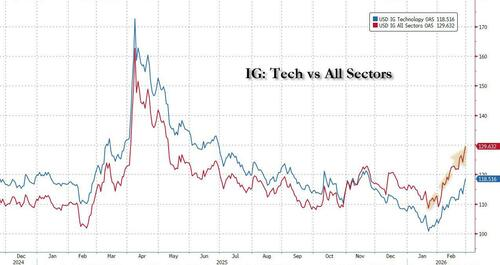
Core Viewpoint - The impact of AI is causing turmoil in the credit bond market, with risks reminiscent of the subprime mortgage crisis emerging, particularly affecting the software industry and leading to significant declines in leveraged loan indices and CLO assets [1][3][5] Group 1: Market Dynamics - Concerns over AI disruption are rapidly spreading to the global credit bond market, leading to asset sell-offs in leveraged loans and CLOs, raising investor awareness of systemic credit cycle risks [3][5] - The Bloomberg index indicates that the yield premium on comparable global debt has widened by nearly 4 basis points, marking the largest increase since November of the previous year [3] - Investment-grade bonds, once considered safe havens, are showing signs of pressure, with the spread of tech investment-grade bonds rapidly expanding [7][10] Group 2: Sector-Specific Impacts - The software and services sector has seen a significant decline in leveraged loans, contributing to a 1.34% drop in the Bloomberg U.S. leveraged loan index, the largest monthly decline since September 2022 [5][18] - Approximately 14% of the investment-grade index is now comprised of AI-related companies, with related debt ballooning to $1.2 trillion, surpassing the U.S. banking sector [7][9] - The high-yield bond market is under pressure, with U.S. junk bond funds experiencing continuous outflows in recent weeks [10][12] Group 3: Systemic Risk Concerns - UBS warns that the interconnectedness between private credit and leveraged loan markets poses a systemic contagion risk, particularly as borrowers frequently engage in dual financing [13][15] - The top 20 direct lending institutions dominate private credit asset management and hold significant positions in leveraged loans and high-yield bonds, indicating a potential rapid spread of default risks if the software sector is hit hard [15][17] - The refinancing risks in the software sector are escalating, with approximately $51 billion of software debt rated B- or below maturing by 2028, and another $50 billion by 2029 [19][20] Group 4: CLO and Asset Management - The underlying asset risks of leveraged loans are directly impacting structured products, with CLO managers urgently reassessing their exposure to AI-related industries [20] - Morgan Stanley estimates that between $40 billion and $150 billion of CLO assets are at risk due to their association with industries vulnerable to AI disruption [20]


AI冲击之下,新一轮“次贷危机”来了?
华尔街见闻· 2026-02-28 04:47
Group 1 - Concerns about the disruption caused by artificial intelligence (AI) are rapidly spreading to the global credit bond market, leading to asset sell-offs across various segments, including leveraged loans and collateralized loan obligations (CLOs) [1] - The yield premium on comparable global debt has recently widened by nearly 4 basis points, marking the largest increase since early November last year, indicating pressure on the investment-grade bond market [2] - High-yield bond funds in the U.S. have experienced continuous outflows in recent weeks, reflecting investor anxiety over default risks in the software industry [3][12] Group 2 - The private credit market is highly interconnected with the public market, suggesting that any shock to core industries like technology could quickly spread default risks throughout the broader credit bond sector [4] - The Bloomberg U.S. Leveraged Loan Index saw an average price drop of 1.34% in February, the largest monthly decline since September 2022, primarily due to loans in the software and services sector [6] - Morgan Stanley has warned that CLO asset pools, ranging from $40 billion to $150 billion, are facing disruption risks related to AI [7][28] Group 3 - The investment-grade bond market, once considered a safe haven, is showing signs of strain, with technology-related companies now accounting for 14% of the investment-grade index, and their debt ballooning to $1.2 trillion [8] - The recent failures of companies like Market Financial Solutions and First Brands Group have heightened concerns about loose underwriting standards in the credit bond market [15] - UBS has raised alarms about systemic contagion risks from private credit markets, as borrowers often finance through both private and syndicated loan markets, leading to significant overlap in issuer and industry exposure [17] Group 4 - The leveraged loan market is experiencing significant pressure due to concerns over traditional business models being disrupted by AI, resulting in a sharp decline in new loan issuance to the lowest level since May of last year [25] - Approximately $51 billion of software debt rated B- or below is set to mature by 2028, with another $50 billion maturing in 2029, posing serious refinancing challenges [26] - The interconnectedness of private credit and leveraged loans means that rising default rates in software and related sectors could quickly impact public markets, leading to wider spreads and liquidity issues [20][30]

2020-2025年全国软件业务收入统计分析:2025年累计值为154830.5亿元,累计增长13.2%
Chan Ye Xin Xi Wang· 2026-02-28 04:00
Core Insights - The total software business revenue in China for the year 2025 reached 15,483.05 billion yuan, reflecting a cumulative growth of 13.2% [1] - In December 2025, the software business revenue for the month was 1,505.31 billion yuan, showing a year-on-year consistency and a month-on-month increase of 2.6% [1] Revenue Growth - The cumulative software business revenue from 2020 to 2025 indicates a significant upward trend in the industry [1] - The monthly revenue in December 2025 demonstrates stability in the software sector, maintaining the same level as the previous year while also experiencing a positive month-on-month growth [1]

AI冲击之下,新一轮“次贷危机”来了?
Hua Er Jie Jian Wen· 2026-02-28 03:32
Core Insights - Concerns over the disruption caused by artificial intelligence (AI) are rapidly spreading to the global credit bond market, leading to asset sell-offs and heightened investor vigilance regarding systemic credit cycles [1] - The yield premium on comparable global debt has widened by nearly 4 basis points, marking the largest increase since early November last year [1] - The investment-grade bond market, traditionally seen as a safe haven, is showing signs of pressure, particularly in the technology sector, where spreads have widened significantly [1][4] Group 1: Market Performance - In February, the Bloomberg U.S. leveraged loan index saw an average price drop of 1.34%, the largest monthly decline since September 2022, primarily due to software and services loans [3] - The technology sector now accounts for 14% of the investment-grade index, with related debt ballooning to $1.2 trillion, surpassing the U.S. banking sector as the largest segment [4] - Asian investment-grade dollar bonds have also experienced the largest weekly yield premium increase since November last year, indicating synchronized tightening with the U.S. market [6] Group 2: Credit Risk and Defaults - High-yield bonds and leveraged loans are under pressure, with significant sell-offs occurring in the junk bond market as investor concerns about default risks in the software industry escalate [7] - The leveraged loan market is showing weakness, with declines exceeding broader indices in the U.S. and Europe, exacerbated by recent bankruptcies in the sector [8] - UBS warns of systemic contagion risks from private credit bonds, as borrowers frequently engage in dual financing in both private and syndicated loan markets, leading to high overlap in issuer and industry exposure [10] Group 3: Future Outlook and Challenges - The refinancing risk in the software sector is increasing, with approximately $51 billion of software debt rated B- or below maturing by 2028, and another $50 billion by 2029 [16] - The CLO asset pools are facing significant risks due to their exposure to industries highly correlated with AI disruption, with estimates of $40 billion to $150 billion in CLO loans at risk [17] - The interconnectedness of private credit markets and public markets raises concerns about liquidity and credit spreads, particularly if default rates rise in key sectors like software [12][14]
央行出手稳汇率;“沪七条”再松绑丨一周热点回顾
Di Yi Cai Jing· 2026-02-28 03:26
Group 1: Silver Economy and Elderly Care - The State Council meeting on February 24 emphasized the potential of the silver economy and the need for supportive measures to promote elderly care services and industries [2][3] - By the end of 2025, the population aged 60 and above in China is expected to reach 320 million, with projections indicating it will exceed 400 million by 2035, leading to a silver economy scale surpassing 30 trillion yuan [2] Group 2: Currency and Foreign Exchange - The People's Bank of China announced a reduction in the foreign exchange risk reserve ratio for forward foreign exchange sales from 20% to 0%, marking the first use of this tool in nearly three and a half years [4] - The renminbi exchange rate saw significant appreciation, with onshore and offshore rates surpassing 6.87 and 6.84 respectively, reaching a new high since April 2023 [4] Group 3: Real Estate Policy Adjustments - Shanghai's new real estate policies, known as "Shanghai Seven," include easing restrictions for non-local residents on purchasing homes and increasing the maximum public housing loan limit from 1.6 million yuan to 2.4 million yuan [5][6] - The policies aim to activate the local housing market and attract eligible non-local buyers, potentially leading to a "small spring" in the real estate market [6] Group 4: Food Safety Regulations - New regulations for online food delivery and sales were introduced, requiring merchants to have real physical stores and adhere to strict food safety standards, with penalties for violations increased significantly [7][8] - The regulations aim to address rampant issues in the online food market, including false advertising and substandard products, promoting a more regulated and safe industry environment [8] Group 5: Software Industry Concerns - The software sector faced significant sell-offs, highlighted by IBM's stock dropping over 13%, the largest single-day decline in 25 years, due to fears surrounding AI's impact on traditional software business models [10][11] - A report predicting a potential "intelligent crisis" by 2028 raised concerns about mass unemployment and economic collapse, further fueling market anxiety [11] Group 6: U.S. Tariff Proposals - The U.S. government is considering new tariffs on approximately six industries, including large batteries and industrial chemicals, citing national security concerns [12] - This move follows a recent Supreme Court ruling against previous large-scale tariffs, with the Trump administration planning to implement transitional tariffs while exploring more permanent measures [12]
帮主郑重:美股又跌,这次是三股力量同时砸盘
Sou Hu Cai Jing· 2026-02-28 03:17
Group 1 - The core point of the article is that the U.S. stock market experienced a significant decline due to three simultaneous pressures: Nvidia's stock correction, unexpected inflation data, and UBS downgrading U.S. stock ratings [1][4][5] - Nvidia's stock dropped nearly 10% in two days despite strong earnings and guidance, indicating that the market is in a "prove it" mode where high expectations lead to corrections [3][4] - Inflation data exceeded expectations, with January PPI rising 0.5% month-over-month and core PPI rising 0.8%, pushing back interest rate cut expectations [4][5] Group 2 - UBS downgraded U.S. stock ratings to "neutral," citing structural risks to the dollar and high valuations, which historically correlate with underperformance in U.S. stocks when the dollar declines [4][5] - Despite the market downturn, funds are not fleeing entirely; instead, they are shifting towards overseas markets, with the MSCI World Index excluding the U.S. up 8% this year [5][6] - The article suggests that while short-term caution is advised, long-term perspectives should remain optimistic, particularly regarding A-shares, which may benefit from capital inflows [7][8]


未知机构:上证综合指数SHCOMP017-20260228
未知机构· 2026-02-28 02:45
Summary of Key Points from Conference Call Records Industry Overview - The conference call discusses the performance of various stock indices in the Chinese market, including the Shanghai Composite Index (SHCOMP), SSE 50, CSI 300, STAR50, ChiNext, and CSI 500, indicating a mixed performance with the ChiNext index down by 1.46% and CSI 500 up by 0.19% [1][1][1]. Core Insights and Arguments - The overall market showed volatility with the SHCOMP hovering around the flat line before slightly declining near midday [1]. - The semiconductor sector underperformed in the morning session, although specific stocks like Cambrian (688256.SH) and Weir (688521.SZ) managed to gain, with increases of 1.17% and 5.63% respectively [1]. - The optical module (CPO) and PCB sectors experienced a pullback influenced by the weakness in US tech stocks, with companies like Zhongji Xuchuang (300308.SZ) and Shenghong Technology (300476.SZ) declining by 6.4% and 5.41% respectively [2]. - The rare earth sector gained attention due to reports of supply shortages affecting US aerospace and semiconductor suppliers, resulting in an approximate 6% increase in this sector [2]. - The software sector saw significant capital inflow, particularly benefiting cloud computing stocks [2]. - The electric power sector remains in focus, especially following reports of demands from Trump for tech giants to self-power AI data centers [2]. - Conversely, the beverage sector faced setbacks after Bloomberg reported potential higher taxes on high-sugar drinks, leading to a decline of 5.96% for Dongpeng Beverage (605499.SH) [2]. Additional Important Content - The overall selling pressure in the market was noted to be 1.4 times greater than buying pressure, indicating a bearish sentiment [3]. - Investment strategies were outlined, with a focus on buying in the electrical equipment, consumer electronics, and gaming sectors, while selling was recommended in AI data centers, semiconductors, and beverages [3].
未知机构:一个不容忽视的事实是标普软件ETF的估值出现大幅下调-20260228
未知机构· 2026-02-28 02:30
我接到了大量愤怒的来电,均针对市场的过度反应问题(可参考 AXF、KRE相关标的表现)。 一个不容忽视的事实是,,标普软件 ETF 的估值出现大幅下调。 在最贴近人工智能技术本身的软件行业,市场对最新一代自主智能体人工智能的颠覆性影响抱有强烈的警惕 情绪。 若代码能够实现越来越高的自主编写程度,软件开发领域的行业准入壁垒将彻底崩塌,软件即服务模式中固 有的租金提取逻辑也将面临结构性挑战。 市场情绪探讨:过度自信还是恐慌? 一个不容忽视的事实是,,标普软件 ETF 的估值出现大幅下调。 在最贴近人工智能技术本身的软件行业,市场对最新一代自主智能体人工智能的颠覆性影响抱有强烈的警惕 情绪。 若代码能够实现越来越高的自主编写程度,软件开发领域的行业准入壁垒将彻底崩塌,软件即服务模式中固 有的租金提取逻辑也将面临结构性挑战。 市场情绪探讨:过度自信还是恐慌? 市场资本正呈现出从轻资产领域向重资产领域转移的趋势(超大规模云服务商除外)。 我的结论是,要么软件板块的定价存在严重偏差,要么我们必须接受一个事实 ——。 过去数周,我一直关注的核心投资主题是 **"护城河检验"**。 当下市场的核心矛盾,并非价值股与成长股、动 ...
市场开始担忧经济前景!10年期美债收益率跌破4%创四个月新低
Zhi Tong Cai Jing· 2026-02-28 01:06
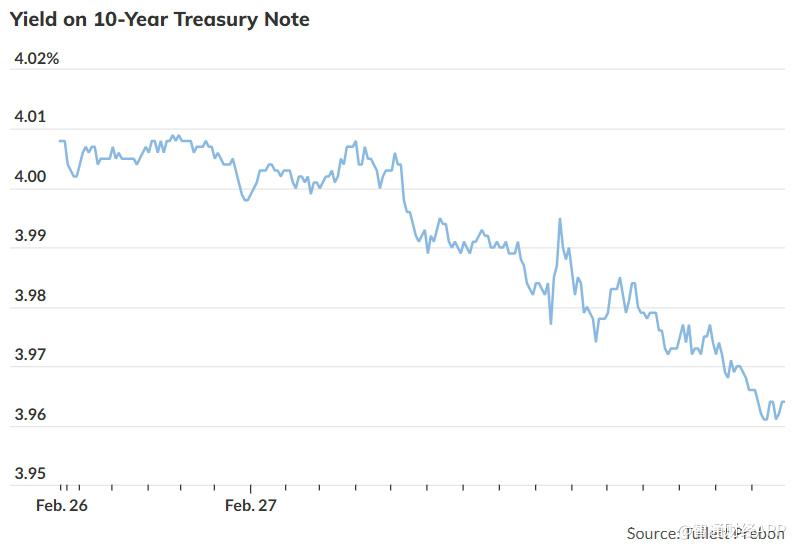
Group 1 - The core point of the articles indicates a significant shift in market sentiment, with the 10-year U.S. Treasury yield dropping below 4%, reflecting concerns over economic growth rather than inflation [1][3] - The decline in bond yields is beneficial for financing costs for consumers, businesses, and governments, with the average rate for new 30-year fixed mortgages falling below 6% for the first time in over three years [3] - The discussion around the impact of AI on the economy is intensifying, with predictions suggesting that AI could lead to a recession in the U.S. by 2027 and a potential 38% drop in the S&P 500 by 2028 [4] Group 2 - Market participants are increasingly worried about the implications of AI on employment and economic growth, with a shift in logic where AI impacts jobs first before affecting the economy [5] - The current market dynamics suggest that if the 10-year yield remains between 4% and 4.5%, it indicates a stable economic outlook; however, a drop below 4% signals a potential imbalance in this outlook [5] - The technology sector has experienced significant stock price declines, with companies like Salesforce, Workday, and ServiceNow facing pressure, reflecting broader market concerns [4]
AI冲击“未来现金流”,华尔街量化策略的“传统因子”失效了
Hua Er Jie Jian Wen· 2026-02-28 01:03
Group 1 - The development of artificial intelligence (AI) is disrupting the investment toolbox of professional fund managers on Wall Street, challenging traditional quantitative strategies that support trillions of dollars in asset allocation [1] - A report by Citrini on Substack outlined a dystopian future where AI rapidly eliminates white-collar jobs, leading to significant market turmoil, including IBM's stock experiencing its largest drop in 25 years [1] - Investors are losing confidence in long-term cash flows and are shifting towards stocks with immediate fundamentals and low valuations, or companies that can provide AI infrastructure support [1] Group 2 - The "quality" factor, which typically represents companies with high profit margins and stable earnings, is being punished in the current AI disruption, with high-quality stocks underperforming compared to value stocks [2] - In February, high-quality stocks in the Russell 1000 index lagged behind value stocks by over 5 percentage points, marking the worst performance since 2021 [2] - The "momentum" factor is also showing internal contradictions, as recent stock price increases are less correlated with fundamental improvements reflected in analyst earnings upgrades [3] Group 3 - Investors are no longer willing to bet on cash flows that may not exist in five years due to the rapid disruption caused by AI across multiple industries [4] - Companies that can provide the necessary infrastructure for AI, such as utilities and semiconductor manufacturers, are becoming popular investments, referred to as "heavy asset, low obsolescence" (HALO) stocks [4] - There is a growing demand for stocks with current fundamentals and low prices, with significant inflows into ETFs focused on high dividends and stock buybacks [4] Group 4 - AI is a specific force driving changes in factor relationships, and typical factor relationships are expected to continue breaking down over the next year [5] - If the disruptive impact of AI proves narrower than expected, or if an economic slowdown allows for a return to quality-focused trading, traditional quantitative strategies may quickly recover [5]