半导体

Search documents
上海傅里叶半导体股份有限公司(03625) - 整体协调人公告-委任
2026-03-14 16:00
香港聯合交易所有限公司及證券及期貨事務監察委員會對本公告的內容概不負責,對其準確 性或完整性亦不發表任何聲明,並明確表示概不就因本公告全部或任何部分內容而產生或因 依賴該等內容而引致的任何損失承擔任何責任。 Shanghai FourSemi Semiconductor Co., Ltd. 上海傅里葉半導體股份有限公司 (於中華人民共和國註冊成立的股份有限公司) 警告 香港聯合交易所有限公司(「聯交所」)及證券及期貨事務監察委員會(「證監會」) 規定刊發本公告僅為向香港公眾人士提供資料。透過閱覽本公告, 閣下確認、 接納及同意本公司、其聯席保薦人、保薦人-整體協調人、整體協調人、顧問 或包銷團成員: – 1 – (a) 於聯交所網站刊發本公告並無導致本公司、其聯席保薦人、保薦人-整體 協調人、整體協調人、顧問或包銷團成員須於香港或任何其他司法管轄區 進行發售或配售的任何責任。概不保證本公司將進行發售或配售; (b) 本公告所涉及的申請未獲批准上市,而聯交所及證監會可接納、退回或拒 絕有關公開發售及╱或上市的申請; (c) 本公告不得被視為勸誘認購或購買任何證券,且並無勸誘意圖; (d) 本公司或其任何聯屬人士 ...
上海傅里叶半导体股份有限公司(03625) - 聆讯后资料集(第一次呈交)
2026-03-14 16:00
香港交易及結算所有限公司、香港聯合交易所有限公司與證券及期貨事務監察委員會對本聆訊後資料集的內容 概不負責,對其準確性或完整性亦不發表任何意見,並明確表示概不就因本聆訊後資料集全部或任何部分內容 而產生或因依賴該等內容而引致的任何損失承擔任何責任。 Shanghai FourSemi Semiconductor Co., Ltd. 上海傅里葉半導體股份有限公司 (「本公司」) (於中華人民共和國註冊成立的股份有限公司) 的聆訊後資料集 警告 本聆訊後資料集乃根據香港聯合交易所有限公司(「聯交所」)及證券及期貨事務監察委員會(「證監會」) 的要求而刊發,僅用作提供資訊予香港公眾人士。 本聆訊後資料集為草擬本,其內所載資料並不完整,亦可能會作出重大變動。 閣下閱覽本文件, 即代表 閣下知悉、接納並向本公司、本公司的聯席保薦人、聯席保薦人兼整體協調人、整體協調人、 顧問或承銷團成員表示同意: 本公司招股章程根據香港法例第32章公司(清盤及雜項條文)條例送呈香港公司註冊處處長登記前, 本公司不會向香港公眾人士提出要約或邀請。倘於適當時候向香港公眾人士提出要約或邀請,準投 資者務請僅依據與香港公司註冊處處長註冊的本公司 ...
资讯日报:伊朗新领袖释放强硬信号
Guoxin Securities· 2026-03-14 10:45
Market Overview - The Hang Seng Index closed at 25,717, down 0.70% for the day and up 0.34% year-to-date[3] - The S&P 500 index closed at 6,776, down 1.52% for the day and down 2.53% year-to-date[3] - Brent crude oil prices surged to nearly $100 per barrel, raising inflation concerns[9] Sector Performance - The coal sector showed strength, with Feishang Anthracite rising over 18% and Nanshan Resources up over 12% due to rising oil and gas prices[9] - Renewable energy stocks also gained, with Datang New Energy up over 8% and Goldwind Technology up over 7% following the UK’s announcement to eliminate import tariffs on wind power components[9] - AI application stocks faced declines, with Zhizhu falling nearly 9% and MINIMAX down 5% due to regulatory concerns[9] Geopolitical Impact - Iran's new Supreme Leader, Mujtaba Khamenei, signaled a continuation of aggressive strategies, including the potential blockade of the Strait of Hormuz, impacting oil supply expectations[9] - The market's expectation for a quick resolution to Middle Eastern conflicts diminished, leading to widespread sell-offs in U.S. markets[9] Economic Indicators - The Federal Reserve is expected to maintain interest rates during the upcoming meeting, despite rising inflation pressures from geopolitical tensions[9] - The U.S. trade deficit narrowed more than expected in January, indicating some resilience in the economy[12]
指数那么多,到底该怎么选?一文带你搞懂最常见的指数
雪球· 2026-03-14 04:46
Core Viewpoint - The article discusses various types of investment indices, their characteristics, and suitability for different types of investors, emphasizing the importance of asset allocation for stable returns [2][3]. Group 1: Types of Indices - High Dividend Index: Composed of companies with high and stable cash dividends, providing relatively high dividend income even during market fluctuations [6][7]. - Low Volatility Index: Offers a smoother net value curve during market downturns, suitable for investors seeking stability [11]. - Industry Index: Represents specific industries by selecting the most representative companies based on market capitalization and liquidity, directly investing in the future of that industry [15][19]. - Thematic Index: Targets specific trends and identifies quality assets across industries, acting as a "weather vane" for investment opportunities [21][30]. Group 2: Specific Indices - Hang Seng Tech Index: Comprises 30 major Hong Kong tech companies, covering sectors like internet, e-commerce, and fintech, with high growth potential but also higher risk compared to broader indices [23][24]. - Nasdaq 100 Index: Includes the largest 100 non-financial companies listed on the Nasdaq, primarily global tech giants, with high growth potential and associated risks [27][29]. Group 3: Bond and Commodity Indices - Bond Index: Composed of various bonds, with the China Bond Index reflecting the overall performance of the domestic bond market, offering stable returns and low volatility [36][40]. - Commodity Index: Tracks the price performance of major commodities like gold and oil, often moving independently from stock and bond markets, useful for inflation hedging [41][43].


投资大家谈 | 长城基金“科技+”:看好有估值和基本面支撑的科技股
点拾投资· 2026-03-14 03:41
Core Viewpoint - The article emphasizes the importance of technology innovation, particularly in the context of AI, as a key focus area during the upcoming Two Sessions in March. It highlights the need for investment strategies that can capitalize on structural opportunities within the technology sector driven by AI advancements [1]. Group 1: Investment Opportunities in AI - Chen Liangdong sees potential in AI-driven sectors, particularly those experiencing rapid demand growth, and suggests that industries benefiting from the government's "anti-involution" policies may present favorable risk-reward investment opportunities [1]. - Shu Wenyu focuses on the AI computing hardware sector, indicating that despite recent market volatility, the long-term trend remains intact. The emphasis is on companies with high earnings visibility and positive fundamental trends, while caution is advised for overvalued stocks [2]. - Zhao Fengfei identifies opportunities in AI infrastructure and applications, including partnerships with major AI model developers and sectors like semiconductors that have both domestic production and price increase logic [4]. Group 2: Market Trends and Risks - You Guoliang notes that geopolitical tensions, such as the US-Iran conflict, have impacted market risk appetite, but he anticipates that defensive assets may outperform in the short term. He remains optimistic about the commercial aerospace sector, expecting significant catalysts in the second quarter [3]. - Han Lin discusses the impact of Middle Eastern conflicts on global financial assets, suggesting that the market may quickly price in risks before returning to focus on domestic policy expectations and risk appetite recovery [6]. - Yang Weiwei highlights the semiconductor expansion opportunities, particularly in AI applications and domestic computing power, suggesting that the sector may see upward momentum due to solid industry fundamentals [7]. Group 3: Focus on Growth Sectors - Yu Huan emphasizes the importance of investing in growth sectors, particularly those benefiting from AI price increases and industries experiencing supply-demand mismatches [5]. - Liu Jiang expresses a positive outlook on emerging technology sectors and resource commodities, suggesting that recent market adjustments could enhance the sustainability of upward trends [8][9].

AI芯片荒:当算力成为比电力更稀缺的资源
傅里叶的猫· 2026-03-14 02:04
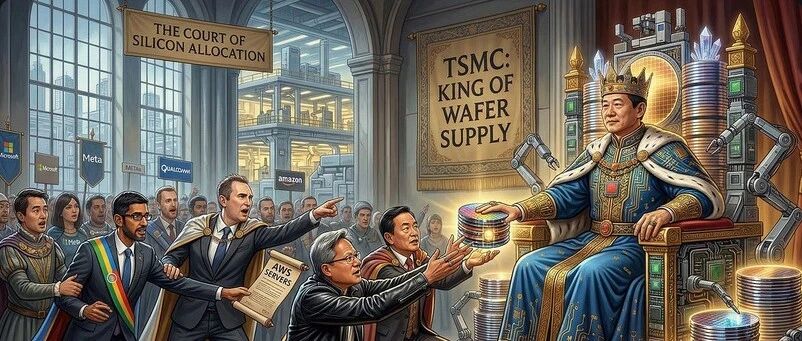
Core Viewpoint - The AI industry is entering a "chip shortage era," which is expected to last until at least 2027, highlighting the importance of supply chain management alongside technological capabilities [37]. Group 1: AI Chip Demand and Supply - Anthropic generated an additional $6 billion in annual recurring revenue in just one month, primarily through its AI programming tool, Claude Code [4]. - The demand for AI chips, particularly those using TSMC's 3nm process, is expected to consume nearly 60% of TSMC's 3nm capacity this year, rising to 86% next year, squeezing out traditional mobile chip customers [11][12]. - TSMC's 3nm capacity is under pressure as major AI chip manufacturers like NVIDIA, AMD, Google, and AWS are all vying for this advanced process technology [8][9]. Group 2: Supply Chain Dynamics - NVIDIA has strategically locked in supplies of logic wafers and memory components, positioning itself as a major beneficiary in the ongoing supply chain competition [33][34]. - The shift in focus from power supply to silicon wafer availability indicates that while data centers and power supply have expanded, the chip supply has not kept pace [28][32]. - The production of high-bandwidth memory (HBM) is also facing challenges, as HBM consumes 3 to 4 times the wafer capacity compared to standard DDR memory, exacerbating the supply constraints [17][22]. Group 3: Market Implications - The competition for chip resources is leading to a "reallocation of bits," where AI applications are prioritized over consumer electronics, potentially resulting in higher prices and slower product cycles for smartphones and PCs [23][38]. - The pricing dynamics for HBM are shifting, with DDR memory prices rising, which may reduce the incentive for manufacturers to shift production capacity from DDR to HBM [22]. - The AI industry's rapid growth is outpacing hardware supply capabilities, leading to a scenario where access to chips becomes a critical factor for success in AI deployment [38]. Group 4: Future Outlook - TSMC's role has become increasingly pivotal, as its capacity allocation decisions directly impact the competitiveness of major players like NVIDIA, Google, and AMD [38]. - The ongoing competition for silicon resources may lead to a significant transformation in the AI landscape, where the ability to secure chips becomes more crucial than algorithmic advancements [38]. - The consumer electronics sector may face significant challenges as AI demand continues to dominate chip production, potentially leading to a decline in smartphone demand and increased costs for consumers [38].


苹果、英伟达、特斯拉,集体下跌
财联社· 2026-03-14 01:12
Market Overview - The U.S. stock market indices collectively declined, ending a volatile week, with significant fluctuations in oil prices impacting the market as investors assess the effects of the Iran conflict on global oil supply [1][2] - The major U.S. indices recorded both daily and weekly losses, with the Russell 2000 index hitting its lowest level of the year [2] Oil Market Dynamics - Oil prices experienced high volatility, with WTI crude oil futures settling at $98.71 per barrel, up 3.11%, and Brent crude rising 2.67% to $103.14 per barrel [3] - President Trump vowed to impose severe strikes on Iran, and reports indicated the conflict has spread to multiple countries, diminishing hopes for a resolution [3] Economic Data and Federal Reserve Outlook - The U.S. Commerce Department significantly revised down the fourth-quarter GDP growth rate, highlighting a series of disappointing economic indicators, including weak durable goods demand [4] - Despite the weak economic data, the Federal Reserve is expected to maintain key interest rates, with rising oil prices exacerbating inflation concerns [4] Sector Performance - The Dow Jones Industrial Average fell by 119.38 points (0.26%) to 46,558.47, the Nasdaq dropped by 206.62 points (0.93%) to 22,105.36, and the S&P 500 decreased by 40.43 points (0.61%) to 6,632.19 [4] - Among the 11 major sectors in the S&P 500, the technology sector saw the largest decline, while the utilities sector experienced the most significant gain [4] ETF and Stock Performance - In the ETF market, global technology stock indices fell by 0.87%, while energy and utilities ETFs saw gains of 0.33% and 0.99%, respectively [5] - Major tech stocks experienced declines, with Apple down 2.21%, Nvidia down 1.58%, and Microsoft down 1.57% [6] Company News - Amazon announced a partnership with AI chip startup Cerebras Systems to integrate their computing chips into a new service aimed at accelerating AI applications [8] - Elon Musk publicly apologized for issues at his AI company xAI, which faced significant talent departures, and confirmed that the "Digital Optimus" will be ready for user experience in about six months [9]




美国突然撤回AI芯片出口规则
半导体行业观察· 2026-03-14 01:08
公众号记得加星标⭐️,第一时间看推送不会错过。 据美国政府网站消息,美国商务部周五撤回了一项关于人工智能芯片出口的计划规则。 该规则草案旨在规范全球人工智能芯片的获取,已于2月下旬发送给其他机构征求意见。此次撤回并 未说明原因。 美国商务部发言人尚未对此事作出回应。 此次撤回标志着特朗普政府在撤销和取代拜登政府于 2025 年 1 月发布的用于出口人工智能芯片的框 架方面,又一次退缩。 去年春天,商务部表示将用一项更简单的规则取代该规则,以确保美国人工智能的主导地位。 该规则名为"人工智能行动计划实施",于 2 月 26 日发布在信息和监管事务办公室网站上,当时显 示"待审查",之后被撤回。 据路透社看到的一份文件显示,该计划考虑要求外国投资美国数据中心或提供安全保证,作为允许出 口 20 万枚或更多芯片的条件。 该计划与拜登的方案截然不同,拜登的方案豁免了美国亲密盟友对珍贵芯片出口的大部分限制,并将 世界划分为三个等级。拜登的这项规定标志着其政府四年来旨在限制中国获取先进芯片、同时维护美 国在人工智能领域领先地位的努力达到了顶峰。 一位前官员周五表示,撤回最新计划规则可能反映出政府内部在如何实现全球人工智能 ...

日本选定物理AI等61项产品和技术实施集中扶持
日经中文网· 2026-03-14 00:33
Core Viewpoint - Japan is focusing on 61 selected products and technologies across 17 strategic fields, including AI, semiconductors, quantum technology, and shipbuilding, to drive economic growth and reduce domestic risks [2][4]. Group 1: Strategic Focus - The Japanese government has prioritized 27 technologies and products for immediate advancement, including physical AI and next-generation shipbuilding technologies using ammonia and hydrogen as fuel [4][5]. - The selection of these 61 products and technologies is based on the necessity to lower domestic risks, the potential for accessing overseas markets, and the innovation of related technologies [4]. Group 2: Economic Goals - The government aims to increase domestic semiconductor sales to 40 trillion yen by 2040 as part of its strategic roadmap [5]. - A budget mechanism will be established for crisis management and growth investment, with a roadmap to be developed by summer 2026 [4].

突发!美国,大举增兵中东!原油大涨,欧美股市全线跳水
券商中国· 2026-03-14 00:29
Market Overview - The U.S. stock market experienced a significant sell-off, with all three major indices closing down after an initial rise, reflecting a broader trend in European markets where major indices also fell [1][2] - Concerns over escalating tensions in the Middle East, particularly regarding U.S. military actions against Iran, have contributed to market volatility and uncertainty [1][3] Oil Prices and Inflation Concerns - International oil prices surged, with WTI crude oil futures rising by 3.11% to $98.71 per barrel, and Brent crude up 2.67% to $103.14 per barrel, indicating a cumulative increase of over 8.59% and 11.27% respectively for the week [3] - The rise in oil prices is raising inflation concerns, as high energy costs could exacerbate existing inflationary pressures in the U.S. economy [3][8] Economic Data and Federal Reserve Outlook - The U.S. Commerce Department revised down its GDP growth forecast for Q4 2025, heightening fears of a slowdown in economic growth [1] - The latest Personal Consumption Expenditures (PCE) data showed a year-on-year increase of 3.1%, indicating persistent price pressures, while the overall PCE index rose 2.8% year-on-year, below expectations [6][7] - Analysts suggest that the current inflation data limits the Federal Reserve's ability to shift towards a more accommodative monetary policy, with expectations of maintaining interest rates unchanged in the upcoming meeting [7][8] Geopolitical Tensions - U.S. military actions in the Middle East are intensifying, with President Trump announcing plans for significant military strikes against Iran, further complicating the geopolitical landscape [3][4] - The deployment of additional U.S. military forces to the region, including a marine expeditionary unit, underscores the seriousness of the situation and its potential impact on global markets [4][5]