电商

Search documents
美股全线下跌,芯片概念逆势走强,中概股普跌,A股今天跟不跟?
Sou Hu Cai Jing· 2026-01-15 14:39
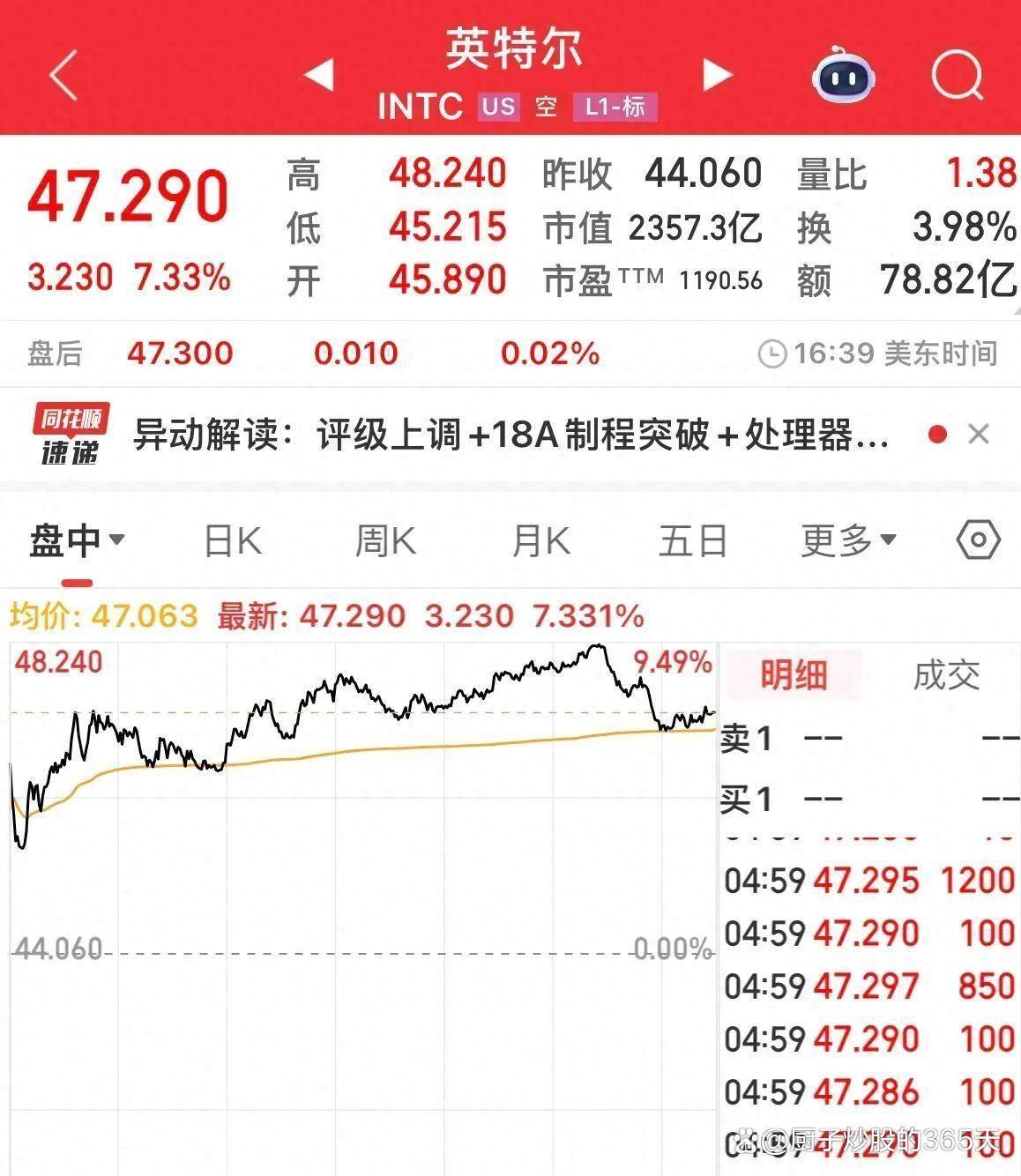
Market Overview - The U.S. stock market experienced a divergence, with the Dow Jones down 0.80%, S&P 500 down 0.19%, and Nasdaq down 0.10% [1] - Despite the overall decline, the semiconductor sector showed strength, with Intel's stock rising 7.31% to $47.280, marking a new yearly high, and AMD increasing by 6.37% to $220.910 [3] - Other sectors, such as mobile payments and education stocks, saw declines exceeding 3% [4] Sector Performance - The chip sector's performance was driven by strong demand for AI-related computing power, leading to a structural shortage in memory chips like DDR4 [9] - Conversely, Chinese concept stocks faced a broad decline, with the Nasdaq Golden Dragon China Index down 1.57%, and individual stocks like Pinduoduo and NIO dropping significantly [6][10] - A-shares also saw a decline after a record 17 consecutive days of gains, but trading volume remained high at nearly 3.7 trillion RMB, indicating strong market participation [7][10] Investment Sentiment - The market is undergoing significant sector rotation, with previously high-performing sectors adjusting while lagging sectors begin to catch up [7] - The strong performance of U.S. chip stocks is expected to influence A-shares in the semiconductor and computing sectors positively [13] - The current market environment is characterized by high liquidity and active participation from domestic institutions, with a focus on technology innovation and industrial upgrades [12] Future Outlook - The potential for a structural rebound in A-shares is supported by the resilience shown in the semiconductor sector and the high trading volume [13] - The sustainability of any rebound will depend on the ability of technology stocks to attract capital and maintain active trading volumes [14]

京东集团-SW(9618.HK)25Q4前瞻:Q4国补退坡影响带电增速 外卖单量稳健亏损环比改善
Ge Long Hui· 2026-01-15 14:28
Core Viewpoint - The company expects a slight year-on-year increase in total revenue for Q4 2025, with a Non-GAAP net profit of approximately 480 million yuan, despite challenges in the electric product category due to subsidy reductions and high base effects [1][3]. Revenue Summary - Q4 revenue growth is pressured by the decline in subsidies for electric products, leading to a double-digit year-on-year decrease in this category, particularly affecting home appliances and digital products [2][3]. - Daily necessities and third-party (3P) revenue are expected to maintain double-digit growth in Q4, supported by healthy performance in supermarkets, fashion home goods, and health categories [2][3]. Profitability Summary - The company's Non-GAAP net profit for Q4 is projected to be around 480 million yuan, with a decline in retail operating profit attributed to subsidy reductions, changes in product mix, and increased costs from staff salary raises [3]. - Profitability is expected to improve in 2026, aided by continued government subsidies for appliance replacements and an expanded scope for digital product subsidies [2][3]. New Business Performance - The new business segment is expected to reduce losses in Q4, with improvements in delivery volume and user engagement (UE) for the takeaway service, indicating a stable overall performance [3]. Investment Recommendation - Given the impact of subsidy reductions on revenue and profit, the company has adjusted its Non-GAAP net profit forecasts for 2025-2027 to 26.4 billion, 32.7 billion, and 51 billion yuan respectively, with a target price of 125-150 HKD per share based on a 10-12x PE for 2026 [3].

阿里千问接入电商 巨头抢滩超级消费入口
Bei Jing Shang Bao· 2026-01-15 13:22
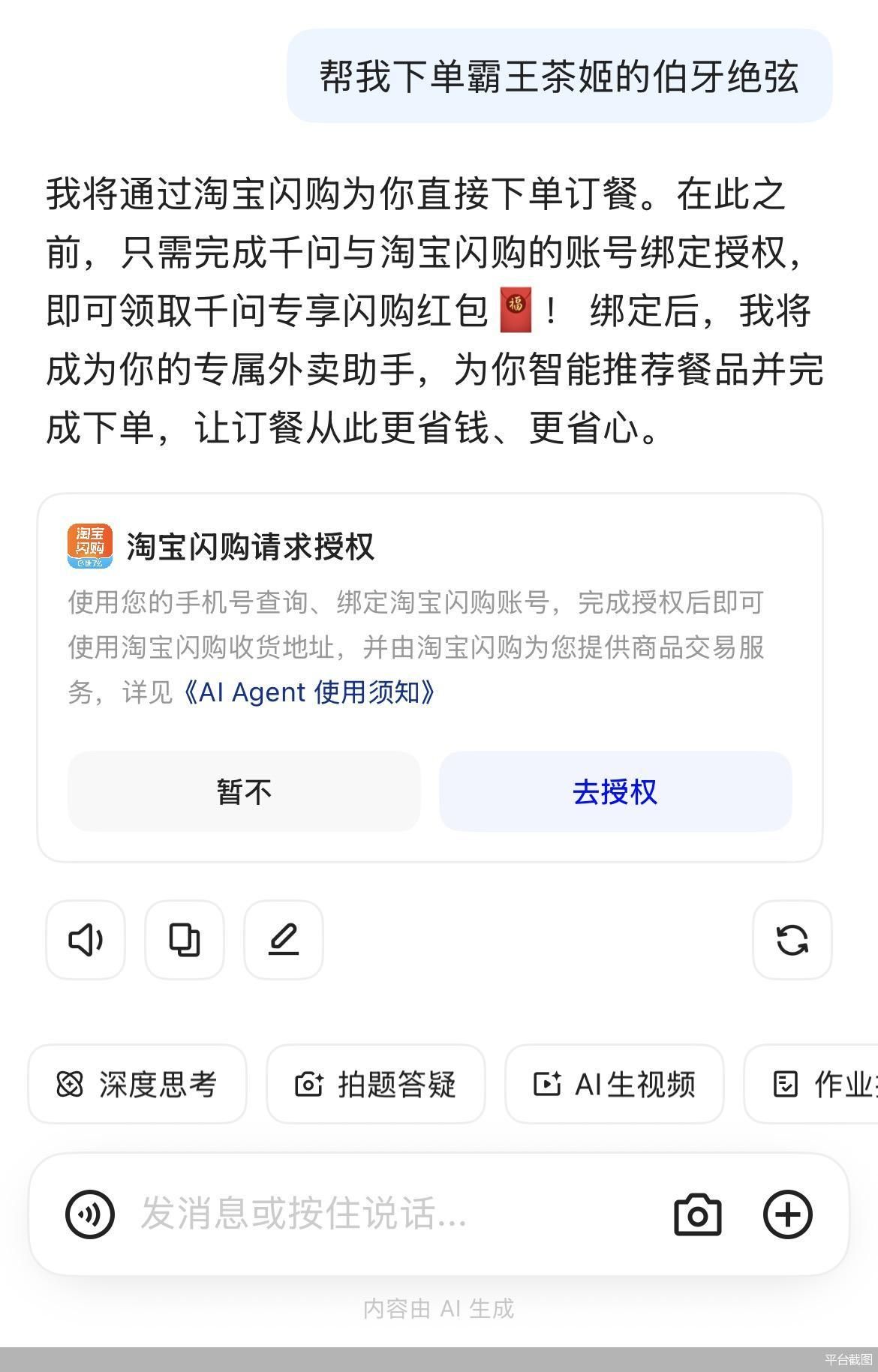
Core Insights - Qianwen App has fully integrated with Alibaba's ecosystem, including Taobao and other services, launching AI shopping features for various consumer needs [1][5] - The market reaction to Alibaba's move has been lukewarm, with Alibaba's stock price dropping by 2.6% to HKD 164.6 per share [1] - The widespread adoption of AI in the consumer sector requires gradual user and merchant education, focusing on future e-commerce paradigms rather than immediate commercial conversion rates [1] Group 1: Business Integration and Functionality - Qianwen App now connects with multiple Alibaba services, including Taobao, Hema, and Alipay, offering over 400 AI functionalities to enhance consumer experience [5][6] - The app aims to create a comprehensive consumer experience by facilitating decision-making and transactions within a single platform, thus closing the consumption loop [5][6] - For complex decisions, Qianwen App can generate detailed shopping lists and recommend products, allowing users to make purchases directly within the app [6] Group 2: Consumer Behavior and Trust Issues - The introduction of AI in consumer shopping presents a potential shift in how consumers make purchasing decisions, reducing the need to navigate multiple platforms [7][9] - Building consumer trust in AI-generated recommendations remains a challenge, especially as users are accustomed to traditional platforms for product research [8][9] - Concerns about AI recommendations being biased towards specific platforms could undermine consumer confidence in the technology [8][10] Group 3: Market Dynamics and Competition - The integration of AI into e-commerce platforms may disrupt existing traffic distribution and merchant ecosystems, shifting focus from advertising to product quality and user feedback [10][11] - AI's role in enhancing user experience could lead to a clearer distinction in merchant visibility, favoring high-quality products over lower-rated options [10][11] - The competition among e-commerce giants to establish AI as a primary consumer interface is intensifying, with companies like Walmart and Google also entering the space [12][13] Group 4: Future Outlook and Strategic Implications - Alibaba's strategy with Qianwen App is seen as a long-term investment in customer relationship management and value extraction in the AI era [13] - The success of AI in e-commerce will depend on the ability to offer a wide range of products that can be accurately identified and recommended by AI systems [13]
1500元乔丹鞋穿一小时脱胶 得物以“超质保期”拒赔遭买家质疑
Xin Lang Cai Jing· 2026-01-15 13:17
Core Viewpoint - The article highlights a consumer complaint regarding a defective product purchased through the Dewu app, emphasizing issues related to warranty policies and product quality assurance [1] Group 1: Consumer Complaint - A consumer reported purchasing a pair of Jordan shoes for over 1500 yuan, which showed defects after only one hour of use [1] - The platform refused to accept returns or repairs, citing a warranty period of over three months [1] - The consumer argued that the warranty policy was not prominently displayed at the time of purchase [1] Group 2: Product Quality and Responsibility - The shoes in question were produced in 2017, raising concerns about potential oxidation risks due to their age [1] - The platform's customer service stated that they are responsible for verifying the authenticity and appearance of products, while quality control is the responsibility of the brand [1] - The platform offered a compensation of 200 yuan, which the consumer found unsatisfactory [1]
谷歌开启AI购物意向截流战,电商格局要变天?
格隆汇APP· 2026-01-15 11:15
Core Viewpoint - Google has launched the Universal Commercial Protocol (UCP) to standardize interactions between AI agents and retailers, aiming to transform AI shopping from a niche experience into a fundamental industry standard, akin to the HTTP protocol for the internet [4][9][10]. Group 1: UCP Overview - UCP is an open-source protocol that provides a unified standard for product discovery, ordering, payment, and after-sales service, allowing different platforms and merchants to be accessed by a common AI agent [5]. - The protocol enables consumers to complete shopping through natural language across various platforms, moving the decision-making process from individual platforms to AI agents [5][11]. Group 2: Comparison with Previous Protocols - UCP builds on the earlier Agent Commerce Protocol (ACP) introduced by OpenAI, which had limitations in its closed ecosystem, restricting access to specific merchants [7][9]. - UCP aims to democratize AI shopping by breaking down entry points and leveraging Google's vast user base of 3 billion, allowing purchases across multiple interfaces like Gemini, Android, and YouTube [13][19]. Group 3: Enhanced Capabilities - UCP connects to Google's Shopping Graph, which contains 50 billion data points, enabling AI agents to understand dynamic inventory, size recommendations, and trending accessories, thus enhancing the shopping experience [14][15]. - The protocol also improves after-sales service by allowing AI agents to handle returns, delivery modifications, and logistics tracking, evolving from a temporary guide to a personal shopping assistant [18]. Group 4: Market Implications - In the short term, UCP is expected to drive significant traffic to participating merchants by utilizing Google's ecosystem, potentially leading to a surge in sales [20][22]. - However, there is a concern that this could lead to the dilution of brand identity, as AI agents prioritize hard metrics over emotional connections, reducing brands to mere data points in a comparison list [24][25]. Group 5: Competitive Landscape - Amazon is identified as the most affected competitor, facing challenges from Google's strategy to intercept traffic before it reaches Amazon, leveraging partnerships with traditional retailers [28][30]. - In response, Amazon is enhancing its AI shopping capabilities through Alexa, aiming to secure user engagement at the initial shopping thought stage [34][35]. Group 6: Domestic Market Dynamics - In the domestic market, Alibaba is actively pursuing AI shopping integration across its ecosystem, while ByteDance faces strategic challenges due to conflicting business models between content-driven commerce and efficiency-focused AI shopping [39][41]. - Alibaba's recent app updates have led to rapid user growth, while ByteDance's hesitation reflects the complexities of balancing its existing content ecosystem with emerging AI shopping trends [43][45]. Group 7: Future Outlook - Both Google and OpenAI are in the early stages of implementing their shopping experiences, with full functionality expected to roll out in the near future [47]. - The true commercial potential will be realized once these technologies are fully operational and consumer acceptance is established, indicating a significant market opportunity in the evolving landscape of AI-driven commerce [48].



抖音电商:2025年逾8万新商家直播成交额破百万元
Bei Ke Cai Jing· 2026-01-15 11:12
Core Insights - Douyin e-commerce is experiencing steady growth, with a projected 49% year-on-year increase in transaction volume from August 2024 to August 2025, surpassing 5.36 million new merchants and 5.11 million new influencers achieving stable income [1] Group 1: Merchant Growth - The number of merchants achieving revenue growth through live streaming is expected to increase by 45% in 2025, with over 80,000 new merchants reaching transaction volumes exceeding 1 million [2] Group 2: Impact on Small and Medium Enterprises (SMEs) - Live streaming e-commerce demonstrates significant inclusive value for SMEs, with nearly 70% of participating SMEs achieving product sales through live streaming, and over 10,000 SMEs surpassing 10 million in transaction volume [3] - Influencers with fewer than 1 million followers account for over 85% of transaction volume in influencer-led sales, highlighting their crucial role in the sustained growth of live streaming e-commerce [3] Group 3: Economic Development - Live streaming e-commerce is becoming a key driver for industrial belts and regional economic development, with Douyin e-commerce platform merchants selling 18.8 billion units of source goods in 2025, and the number of industrial belt merchants engaging in live streaming increasing by 83% [3] - The number of industrial belt SMEs achieving transaction volumes exceeding 1 million has grown by 49%, with nearly 400 industrial belts recording order volumes exceeding 10 million [3]
《2025抖音电商发展数据报告》:直播电商刺激行业新消费 产业带商家年累计销售188亿单
智通财经网· 2026-01-15 11:07
Core Insights - Douyin E-commerce's report indicates a significant growth trajectory, with a 49% year-on-year increase in transaction volume from August 2024 to August 2025, alongside over 536 million new merchants and 511 million new influencers earning stable incomes [1][5][6] Group 1: E-commerce Growth - The platform's shelf scene transaction volume increased by 49% year-on-year [5] - Over 536 million new merchants and 511 million new influencers achieved income through the platform [5][6] - The number of merchants achieving revenue growth through live streaming increased by 45% year-on-year, with over 80,000 new merchants surpassing 1 million in live streaming transaction volume [6][7] Group 2: Market Expansion - Live streaming e-commerce is driving market expansion, with small and medium-sized influencers accounting for over 85% of transaction volume in influencer-driven sales [7] - The number of merchants selling agricultural products through live streaming increased by 51%, with a total of 102 billion agricultural products sold [8][11] - The number of merchants from industrial belts engaging in live streaming increased by 83%, with nearly 400 industrial belt merchants achieving over 10 million orders [9] Group 3: Cultural and Domestic Brand Growth - The number of merchants selling products related to intangible cultural heritage increased by 43%, while sales of time-honored brands grew by 70% [11][12] - The number of domestic brands engaging in sales doubled, with a 51% increase in users purchasing domestic products [12] - Nearly 10,000 domestic brands achieved over 1 million in live streaming transaction volume [12] Group 4: Book Sales and Niche Markets - The platform sold over 300 million books daily, with more than 60 publishers doubling their transaction volume [2][12] - Niche book categories also saw significant growth, contributing to the revitalization of the book retail market [12]

谷歌开启AI购物意向截流战,电商格局要变天?
Sou Hu Cai Jing· 2026-01-15 10:41
Core Insights - Google launched the Universal Commercial Protocol (UCP) to standardize interactions between AI agents and retailers, aiming to automate the entire shopping process from product discovery to post-purchase support [1][3][4] Group 1: UCP Overview - UCP is an open-source protocol that allows AI shopping agents to interact with various platforms and merchants, providing a unified standard for product discovery, ordering, payment, and after-sales service [1][3] - The protocol aims to redefine AI shopping from a limited experience to a comprehensive industry standard, similar to how the HTTP protocol defined the internet [3][4] Group 2: Advantages of UCP - UCP enables seamless shopping experiences across multiple platforms, allowing users to make purchases through various Google services, including Gemini chat, Android search, and YouTube [4][6] - The protocol connects to Google's Shopping Graph, which contains 50 billion data points, allowing AI agents to understand dynamic inventory, size recommendations, and trending accessories, enhancing the shopping experience [4][6] Group 3: Impact on Retailers - UCP provides a dual-edged sword for retailers, offering increased sales through Google's vast user base while simultaneously risking brand dilution as AI agents take over the decision-making process [7][9] - Retailers, especially mid-sized ones, may experience a surge in traffic and sales due to UCP, but they could also face challenges in maintaining brand identity as AI agents prioritize efficiency over emotional connections [10][12] Group 4: Competitive Landscape - Amazon is positioned as a significant competitor, facing challenges from Google's strategy to redirect traffic before it reaches Amazon, effectively disrupting the traditional shopping flow [15][17] - In response, Amazon is enhancing its Alexa AI shopping capabilities to retain user engagement and ensure that customers turn to its platform first for shopping inquiries [17][18] Group 5: Domestic Market Dynamics - In the domestic market, Alibaba is aggressively pursuing AI shopping integration, aiming to establish itself as the first to implement a comprehensive AI shopping interface [19] - Conversely, ByteDance faces strategic challenges due to its content-driven business model conflicting with the efficiency-driven nature of AI shopping, leading to hesitance in adopting similar protocols [20][21] Group 6: Future Outlook - Both Google and GPT are in the early stages of implementing their shopping experiences, with significant user growth and functionality expected in the near future [22][23] - The true commercial potential of AI shopping will only be realized once these technologies are fully operational and consumer acceptance is established, indicating a transformative shift in the retail landscape [25]

银发人群洞察报告:3.51亿活跃人群带来三大变化,商机持续涌现……
Tai Mei Ti A P P· 2026-01-15 10:18
Core Insights - The active user base of the silver-haired population in China reached 351 million by November 2025, marking a year-on-year growth of 5.8% [2][12] - This demographic is transitioning from passive internet users to deeply engaged participants, with average monthly usage time increasing to 135 hours and usage frequency to 1,345 times, reflecting growth rates of 11.1% and 6.5% respectively [15][14] Group 1: User Engagement and Behavior - The silver-haired population's engagement has led to a shift in active usage patterns, with a peak activity rate of 75.4% around 4 PM, indicating a preference for off-peak usage times [17] - There is a notable change in application usage across different sectors, with online video consumption rising by 63.5% year-on-year, while short video usage declined by 2% [2] - The adoption of AIGC and smart living applications is increasing, showcasing a growing acceptance of technology among this demographic [2] Group 2: Consumption Patterns - The proportion of silver-haired individuals with moderate online consumption willingness has reached 48.9%, an increase of 2.1% year-on-year [3] - Key areas of growth in active user numbers include mobile gaming (16%), travel services (15.4%), smart devices (13.5%), life services (13.1%), and office business applications (10.4%) [3] - Major e-commerce platforms like Taobao, Pinduoduo, and JD.com have seen significant user engagement from this demographic, with Taobao's active user count reaching 205 million [3] Group 3: Health and Lifestyle - The silver-haired population is increasingly focusing on health management, utilizing health management apps for monitoring key health indicators like blood sugar and blood pressure [37] - There is a growing interest in health and wellness products, with a shift towards proactive health management rather than reactive medical care [37] Group 4: Digital and Technological Adoption - The silver-haired demographic is embracing higher-end smartphones, with 46.6% of users opting for devices priced above 3,000 yuan, reflecting a 9.1% increase [23] - This group is also becoming content creators, leveraging platforms like Douyin and Kuaishou, with active user numbers reaching 214.58 million and 106.74 million respectively [56] Group 5: Emotional and Social Engagement - The silver-haired population is increasingly engaging in social and emotional consumption, with a strong preference for nostalgic and light social gaming experiences [46] - Travel services tailored for this demographic are on the rise, with platforms like Ctrip and Tongcheng Travel seeing significant growth in user engagement [43]

中国消费走出新赛道,跳出日本低欲望陷阱,升级逻辑藏惊喜
Sou Hu Cai Jing· 2026-01-15 09:53
Core Insights - The recent discussions around the book "In the Light of Day" highlight concerns about whether China's consumption will fall into a "low-desire" trap similar to Japan's "lost thirty years" [1] Group 1: Consumption Trends - The China Online Consumption Brand Index (CBI) reached 62.65 in Q3 2025, marking a 4.4% increase from the same period in 2023 and a 0.92% increase from 2024, indicating a consistent quarterly growth since 2023 [4] - The CBI focuses on the proportion of high-quality brand purchases, reflecting a shift in consumer preferences towards quality over mere availability [4] - Japanese consumers, often labeled as "low-desire," are also exhibiting similar trends, with a notable presence of new local brands in the fashion market, indicating a preference for design and craftsmanship [6] Group 2: Consumer Behavior - Consumers are becoming more discerning, comparing prices for necessities while being willing to spend on items that provide emotional value [8] - In China, brands like DJI and Pop Mart have entered the top 10 of the CBI 500 list without engaging in price wars, demonstrating a focus on quality and brand value [9] - The Z generation is prioritizing experiential purchases, with travel-related spending accounting for 36.9% of emotional consumption, surpassing traditional material goods [13] Group 3: Market Dynamics - The consumption upgrade in China is supported by strong supply chains and platforms, allowing for rapid product iteration and innovation [16] - Major e-commerce platforms like Taobao and JD.com are shifting their focus towards quality content and brand value, facilitating the entry of new brands and innovative products [18] - The CBI index's characteristics of "month-on-month decline, year-on-year increase" suggest a stable brand foundation, with consumers concentrating on high-value brands during promotional periods [20]