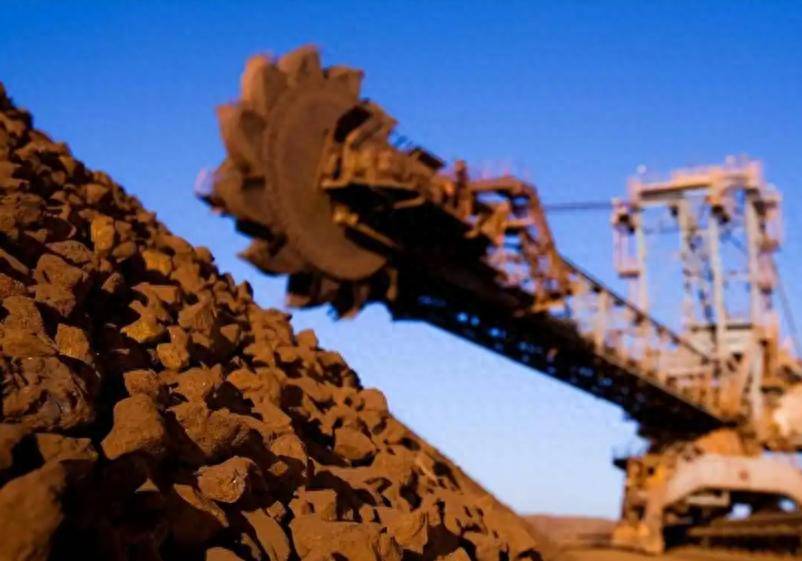
稀土

Search documents
北方稀土磁性材料订单饱和,轻稀土价格重回55万元/吨高位,稀土ETF易方达(159715)低费率投资工具备受关注
Xin Lang Cai Jing· 2025-11-21 08:03
Core Insights - The price of praseodymium and neodymium oxide has risen to 555,000 yuan per ton as of November 20, with a weekly increase of 10,000 yuan and a monthly increase of 50,000 yuan, reflecting a 10% growth [1] - The domestic rare earth price is expected to continue rising due to improved demand and supply dynamics, driven by factors such as the recovery of China-US relations and strong downstream inventory replenishment [1] - The domestic rare earth industry is showing significant strategic value amid international trade tensions, with expectations for sustained high performance in the second half of the year [1] Price Performance - As of November 20, the price of praseodymium and neodymium oxide reached 555,000 yuan per ton, with a weekly increase of 10,000 yuan and a monthly increase of 50,000 yuan, indicating a 10% rise [1] - The strong demand from downstream industries is contributing to the upward price trend, with companies like Northern Rare Earth reporting full order books and good execution [1] Index Valuation - The China Securities Rare Earth Industry Index PETTM stood at 38.5 as of November 20, 2025, placing it at the 46.1% valuation percentile over the past decade, indicating a return to the long-term valuation mean [1] Industry Trends - China's rare earth industry chain is demonstrating significant strategic value in the context of international trade conflicts, with expectations for continued price increases due to improved supply-demand dynamics [1] - The supply side is expected to remain stable due to the implementation of total control measures for rare earth mining and separation, while demand is driven by sectors such as robotics, low-altitude economy, and military applications [1] - The high cost of overseas refining supports price differentials, and the U.S. acquisition base price is raising price expectations, leading to a re-evaluation of the strategic value of rare earths [1] Related Products - The E Fund Rare Earth ETF (159715) focuses on national strategic resources and global competitive industry chains, with a management and custody fee rate of 0.15% + 0.05% per year, significantly lower than similar products linked to the China Securities Rare Earth Industry Index [2] - As of October 31, 2025, the cumulative return of the E Fund Rare Earth ETF has been 76.43%, outperforming the benchmark index by 13.83%, making it a valuable tool for capturing opportunities in the rare earth industry [2]

突发特讯!中国通告全球:中国稀土研究有新突破,引发美西方高度关注
Sou Hu Cai Jing· 2025-11-21 07:55
Core Insights - A significant breakthrough in the field of rare earth nanocrystals has been achieved by a research team from Tsinghua University, allowing these materials to be effectively energized by electric current, which opens the door for their industrial application in optoelectronic technologies [1][3]. Group 1: Breakthrough in Rare Earth Materials - The research addresses a long-standing issue where rare earth nanocrystals, known for their potential in light-emitting applications, were unable to conduct electricity, limiting their use in various high-tech fields [3]. - The team developed an organic-inorganic hybrid interface layer that enables efficient energy transfer from electric current to rare earth ions, achieving high-purity and tunable electroluminescence [3]. Group 2: Strategic Value and Global Attention - The breakthrough has garnered significant attention from the international academic and industrial communities, particularly in the West, as it directly impacts the core of the global high-tech industry [5]. - This advancement enhances the strategic value of China's rare earth resources, transitioning from exporting raw materials to leveraging advanced technology, thus increasing economic and security advantages [5]. Group 3: Implications for Innovation and Technology Leadership - The research exemplifies the importance of mastering key core technologies domestically, showcasing a new path for innovation that diverges from traditional Western methodologies [7]. - It signals a shift in China's technological landscape, with potential applications in flexible displays, biosensing, and agricultural lighting, indicating a move from following to leading in certain technological domains [7].


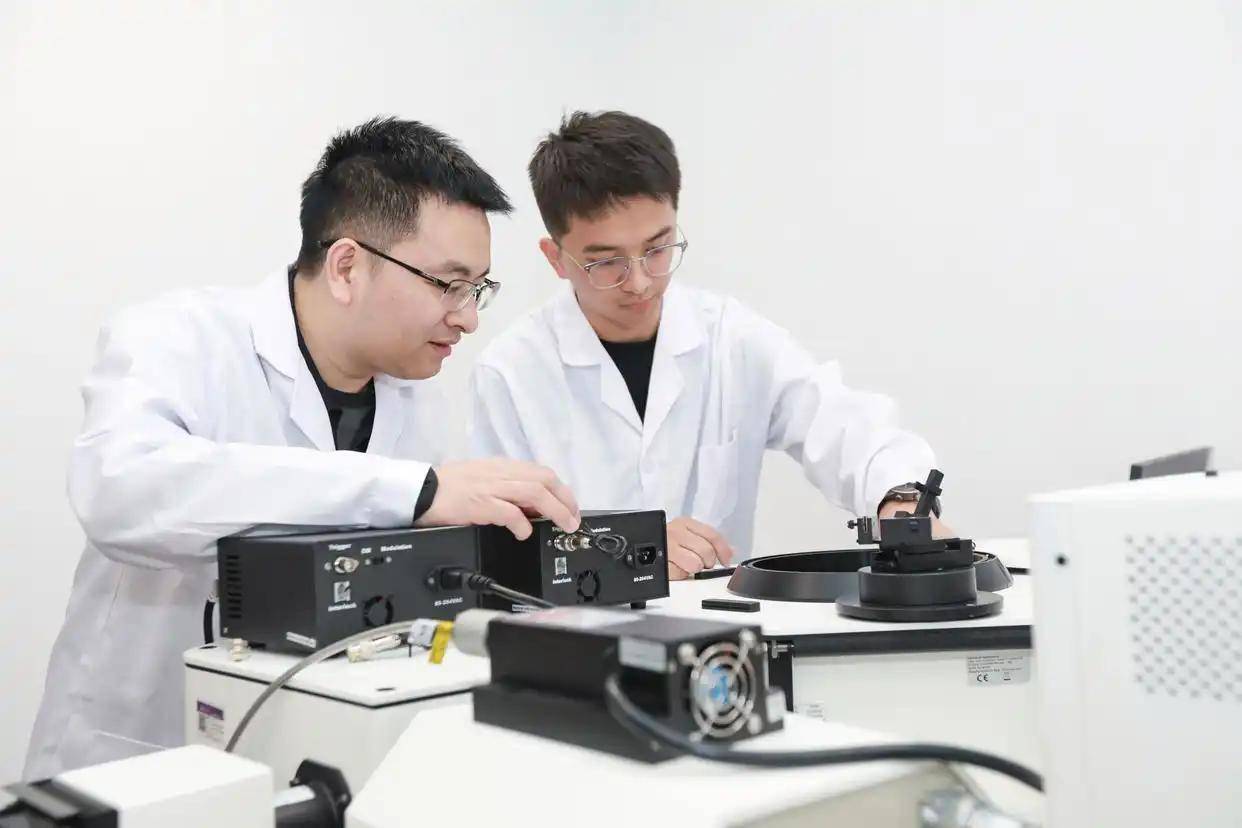
外媒紧盯中国稀土出口:对美出口量9个月来最高,有人替日本担心
Guan Cha Zhe Wang· 2025-11-21 07:23
Core Insights - China's rare earth magnet exports in October decreased by 5.2% month-on-month, marking the second consecutive month of decline, but exports to the U.S. surged to the highest level in nine months [1] - The total export volume of rare earth magnets from China reached 5,473 tons in October, down from 5,774 tons in September, but up 15.8% compared to 4,725 tons in the same month last year [1] - Exports to the U.S. saw a significant month-on-month increase of 56.1%, reaching 656 tons, the highest since January of this year [2] Export Data Summary - The cumulative export volume of rare earth magnets from China for the year reached 45,290 tons, reflecting a year-on-year decline of 5.2% [1] - The largest export destinations for China's rare earth magnets in October were Germany, the U.S., South Korea, Vietnam, and India [1] - Exports to Germany increased by 55.9% year-on-year, totaling 1,118 tons, while exports to South Korea reached 569 tons, up 31.3% year-on-year [2] Market Dynamics - Amidst stalled negotiations between China and the U.S., China's rare earth magnet exports to the U.S. dropped to 46 tons in May but rebounded to 619 tons in July before declining again in August and September [2] - Exports to Japan in October increased by 30.2% year-on-year, reaching 226 tons, although when including semi-finished products, the total saw an 18.3% year-on-year decline to 538 tons [2][3] - Experts noted that the export of heavy rare earths to the U.S. and Japan remains limited despite China's dominant position in global rare earth production [4]
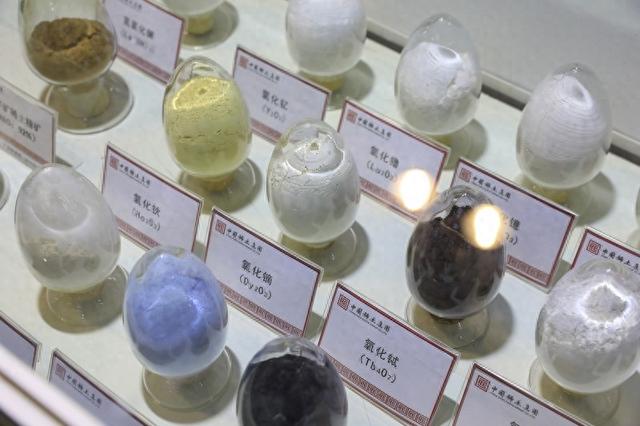
中方对日本摊牌后,特朗普钦点核心盟友访华,100%关税按下暂缓键
Sou Hu Cai Jing· 2025-11-21 06:28
Group 1 - The article discusses the recent developments in US-China relations, highlighting that despite tensions between China and Japan, the US is moving forward with plans to engage China through a delegation led by Senator Steve Daines [3][6] - Daines, a close ally of Trump, has significant experience in China and is expected to discuss not only US-China relations but also economic cooperation during his visit [5][6] - The timing of Daines' visit is strategic, as it precedes Trump's planned visit to China in April, indicating a preparation for key discussions [6] Group 2 - The article emphasizes the US's cautious approach towards imposing semiconductor tariffs, as there are concerns about reigniting trade tensions and the potential disruption of rare earth supplies from China [8][12] - The US's reliance on China for rare earth elements, crucial for high-tech industries, poses a significant challenge, as alternatives to establish a new supply chain would take at least five years [10] - The previous trade confrontations have shown that tariffs primarily harm the US economy, leading to higher costs for American businesses and consumers, which influences the decision to pause the semiconductor tariff plans [12]
盛和资源股价跌5.04%,华泰柏瑞基金旗下1只基金重仓,持有651.83万股浮亏损失697.46万元
Xin Lang Cai Jing· 2025-11-21 03:04
Group 1 - The core point of the news is that Shenghe Resources experienced a decline of 5.04% in its stock price, reaching 20.14 CNY per share, with a trading volume of 614 million CNY and a turnover rate of 1.72%, resulting in a total market capitalization of 35.302 billion CNY [1] - Shenghe Resources Holdings Co., Ltd. is located in Chengdu, Sichuan Province, and was established on July 1, 1998, with its listing date on May 29, 2003. The company's main business involves rare earth smelting, separation, deep processing, and trading, as well as zirconium-titanium mining and processing [1] Group 2 - From the perspective of major fund holdings, data shows that one fund under Huatai-PB has heavily invested in Shenghe Resources. The Rare Earth ETF (516780) increased its holdings by 3.2257 million shares in the third quarter, bringing the total to 6.5183 million shares, which accounts for 4.56% of the fund's net value, making it the fifth-largest holding [2] - The Rare Earth ETF (516780) was established on February 26, 2021, with a current scale of 3.298 billion CNY. Year-to-date, it has achieved a return of 70.84%, ranking 120 out of 4208 in its category; over the past year, it has returned 59%, ranking 162 out of 3972; and since inception, it has returned 68.72% [2] - The fund manager of the Rare Earth ETF is Tan Hongxiang, who has been in the position for 4 years and 258 days, with the total asset scale of 35.161 billion CNY. During his tenure, the best fund return was 88.09%, while the worst was -37.2% [2]

中国稀土股价跌5.02%
Xin Lang Cai Jing· 2025-11-21 02:03
Group 1 - The core point of the news is that China Rare Earth's stock price has dropped by 5.02%, currently trading at 46.59 yuan per share, with a total market capitalization of 49.442 billion yuan [1] - China Rare Earth Group Resources Technology Co., Ltd. is located in Ganzhou, Jiangxi Province, and was established on June 17, 1998, with its main business involving rare earth smelting separation and technology research and development [1] - The company's main business revenue composition includes rare earth oxides at 63.51%, rare earth metals and alloys at 35.95%, and other services at 0.35% [1] Group 2 - Three funds under ICBC Credit Suisse have heavily invested in China Rare Earth stocks, holding a total of 440,500 shares, resulting in a floating loss of approximately 1.0836 million yuan based on the current stock price [2] - The Rare Metal ETF fund reduced its holdings by 116,800 shares in the third quarter, now holding 379,500 shares, which constitutes 3.46% of the fund's net value [2] - The ICBC Smart Progress Stock (FOF-LOF) A fund holds 33,500 shares, representing 0.97% of the fund's net value, with a floating loss of about 82,400 yuan [2]
中国稀土出口量差距:22年4.87万吨,23年5.23万吨,24年多少?
Sou Hu Cai Jing· 2025-11-20 13:40
Core Viewpoint - The article discusses China's dominance in the rare earth market, highlighting its significant control over production and export, which impacts the global supply chain and pricing dynamics. Group 1: Export Data and Trends - In 2022, China exported 48,728 tons of rare earths, a slight decrease of 0.4% from 2021, as the country tightened quotas to retain high-purity products for domestic use [4] - In 2023, exports surged to 52,307 tons, an increase of nearly 3,600 tons, driven by high demand for electric vehicles, with a record monthly export of 6,217 tons in May [6] - For 2024, exports are projected to reach 55,431 tons, a 6% increase, despite a 35% drop in export value due to falling prices [8] Group 2: Market Dynamics and Control - China's export strategy involves controlling who, what, and how much is sold, with a focus on maintaining pricing power and ensuring domestic supply [18] - The article emphasizes that China's rare earth production is not just about volume but also about strategic management of resources and technology [22] - The U.S. and other countries face significant challenges in reducing reliance on Chinese rare earths, as their production capabilities are limited and lag behind China's technological advancements [20] Group 3: Technological Advancements - China's rare earth processing technology has evolved significantly since the 1970s, achieving high purity levels and cost reductions, which have established a competitive edge [12] - The latest advancements include a fifth-generation extraction process that utilizes AI to optimize efficiency and reduce costs by an additional 30% [22] - The article suggests that China's technological superiority has created barriers for foreign competitors, making it difficult for them to catch up [22] Group 4: Future Outlook - The export volume is expected to stabilize around 50,000 tons in 2025, with potential adjustments based on market conditions and strategic decisions [24] - The article concludes that China's control over rare earth exports positions it favorably in the global market, with the ability to dictate terms to other countries reliant on its resources [24]
氪星晚报|空客启动第二阶段股票回购计划;我国首台套绿氢煤化工项目全面投运;印度尼西亚正与新加坡、马来西亚洽谈数据中心合作事宜
3 6 Ke· 2025-11-20 10:20
Group 1 - GAC Toyota's sales vice president denied rumors about discontinuing multiple fuel vehicle models, stating the information is false [1] - The company is reportedly facing market speculation regarding the potential discontinuation of two main fuel vehicle models by 2026 [1] Group 2 - Ant Group's AI assistant "Lingguang" achieved over 500,000 downloads within three days of its launch, ranking seventh on the App Store overall chart and first in the free tools category [2] Group 3 - Airbus announced the initiation of the second phase of its share buyback program, which aims to support future employee stock ownership and incentive plans, with a maximum buyback limit of 4.14 million shares [3] Group 4 - Yann LeCun, Meta's chief scientist, announced his departure to start a new company focused on Advanced Machine Intelligence, aiming to revolutionize AI capabilities [4] Group 5 - Xiaomi's automotive division announced the production of its 500,000th vehicle, with expectations to exceed 400,000 deliveries in 2025 [5] Group 6 - The U.S. government plans to launch an initiative called "Genesis Mission" to enhance AI development, emphasizing its importance comparable to historical projects like the Manhattan Project [6] Group 7 - Google plans to invest $2 billion in building a data center in Turkey, as announced by the Turkish Vice President [7] Group 8 - Singapore-based fintech company RockFlow completed a new funding round of several million dollars, led by Ant Group [9] Group 9 - The Thai Ministry of Finance is considering increasing the VAT rate from 7% to 8.5% in 2028, contingent on economic recovery [10] Group 10 - The Chinese Chemical and Physical Power Industry Association is set to issue a notice to regulate pricing in the lithium iron phosphate industry, aiming to combat ongoing losses and price competition [11] Group 11 - The Ministry of Finance and the Ministry of Industry and Information Technology in China are seeking public opinions on the draft standards for government procurement of new energy vehicles [12] Group 12 - Indonesia is in discussions with Singapore and Malaysia to establish a trilateral data center collaboration [13] Group 13 - China's first green hydrogen coal chemical project has commenced market operations, showcasing a successful model for the green transformation of the coal chemical industry [14]
美媒突然发现:中方虽已恢复稀土供应,但又狠狠将了美国一军
Sou Hu Cai Jing· 2025-11-20 07:55
Core Viewpoint - The ongoing trade dispute between the US and China has intensified around rare earth elements, with China controlling over 70% of global production and significantly impacting US military and high-tech industries [1][9][20] Group 1: Trade Regulations and Impact - In late 2024, China's Ministry of Commerce introduced new regulations requiring export licenses for certain rare earth elements, leading to global supply chain disruptions [3][9] - By early 2025, China suspended exports of seven critical rare earth elements essential for military applications, directly affecting US defense contractors like Lockheed Martin [3][5] - Despite temporary agreements to ease tensions, China maintained strict controls on military-related rare earth exports, complicating US supply efforts [5][11] Group 2: US Response and Challenges - The US Department of Defense reported that rare earth shortages could delay missile production, with current inventory levels only sufficient for a few months [9][13] - The US government is pushing for domestic rare earth development, but establishing a complete supply chain from mining to processing will take years [9][13] - US companies are facing difficulties in obtaining rare earth licenses, with only half of applications being approved, leading to tight inventories in critical sectors like semiconductors and AI [15][18] Group 3: Strategic Implications - The rare earth conflict reflects broader geopolitical tensions, with the US attempting to pressure China through tariffs while China uses supply chain control as a countermeasure [13][20] - China's export control measures are seen as a strategic move to ensure resource security and market stability, while the US struggles to diversify its supply sources [20] - The long-term outlook suggests that the US must adapt to a multipolar world and rethink its position in global supply chains, particularly in critical resources like rare earths [16][20]
精心布局13年,惨遭印度杀猪盘:日本的稀土独立梦为何失败
Sou Hu Cai Jing· 2025-11-20 07:43
Core Insights - Japan's ambition for rare earth independence has proven to be a strategic miscalculation, underestimating China's dominance in the global rare earth market and overestimating its own technological capabilities [1][14] Group 1: Historical Context - In 2010, China imposed rare earth export restrictions on Japan, reducing exports from 50,000 tons in 2009 to approximately 30,000 tons in 2011, resulting in a 40% supply shortfall [3] - This led to significant disruptions in Japan's manufacturing sector, particularly affecting the automotive industry, which faced production halts due to insufficient rare earth supplies [3] Group 2: Japan's Response and Actions - Following the 2010 crisis, Japan initiated a rare earth breakthrough plan, investing heavily to reduce reliance on Chinese supplies, but this effort was ultimately disrupted by India's export halt in June 2025 [4][5] - Japan engaged in various partnerships, including with Mongolia and Australia, and invested in rare earth recycling in France, spending over 100 billion yen on these initiatives [4] Group 3: Challenges Faced - Japan's agreement with India to source rare earths turned out to be ineffective, as India lacked the technological capacity to provide sufficient raw materials, leading to Japan purchasing rare earths that were originally sourced from China [4][5] - Attempts to develop alternative technologies, such as Sony's effort to recycle rare earths from old PS4 consoles, yielded minimal results, recovering only 200 kg from 100,000 units [7] Group 4: Resource Exploration and Limitations - Japan identified significant rare earth deposits near Minami-Torishima in 2013, but the high costs and technical challenges of deep-sea mining have hindered extraction efforts [9] - The projected cost for initial deep-sea mining trials in 2025 is estimated at 12 billion yen (approximately 83 million USD), with extraction rates being economically unfeasible [9] Group 5: China's Dominance - China's rare earth advantage is not solely based on resource control but on a comprehensive industrial ecosystem that includes mining, refining, and production of downstream materials, maintaining over 60% of the global market share in 2023 [11] - The systemic advantages China has developed over the years ensure its continued leadership in the rare earth sector, making it a challenging competitor for other nations seeking to disrupt this order [13][14]