制造业

Search documents
大业股份1月8日龙虎榜数据
Zheng Quan Shi Bao Wang· 2026-01-08 10:07
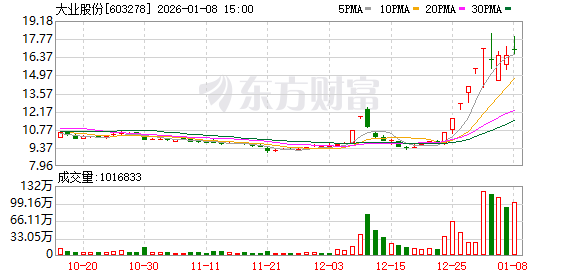
大业股份(603278)今日上涨2.42%,全天换手率29.75%,成交额17.29亿元,振幅9.03%。龙虎榜数据显 示,营业部席位合计净卖出8557.60万元。 上交所公开信息显示,当日该股因日换手率达29.75%上榜,营业部席位合计净卖出8557.60万元。 证券时报·数据宝统计显示,上榜的前五大买卖营业部合计成交2.54亿元,其中,买入成交额为8397.94 万元,卖出成交额为1.70亿元,合计净卖出8557.60万元。 具体来看,今日上榜营业部中,第一大买入营业部为国信证券股份有限公司浙江互联网分公司,买入金 额为1869.74万元,第一大卖出营业部为国泰海通证券股份有限公司总部,卖出金额为4633.35万元。 近半年该股累计上榜龙虎榜9次,上榜次日股价平均涨2.77%,上榜后5日平均涨8.18%。 资金流向方面,今日该股主力资金净流出3321.30万元,其中,特大单净流入2080.15万元,大单资金净 流出5401.44万元。近5日主力资金净流出3.81亿元。 2025年10月30日公司发布的三季报数据显示,前三季度公司共实现营业收入37.78亿元,同比下降 1.60%,实现净利润2337.52万 ...


邦达亚洲:美元走高油价下挫 美元加元刷新20日高位
Xin Lang Cai Jing· 2026-01-08 08:50
Group 1: Employment Data - The US private sector added 41,000 jobs in December, following a decline in November, which was below the Bloomberg economists' median estimate of 50,000 [1][6] - The report indicates a gradual cooling of the labor market without a sharp deterioration, with recent hiring activity being subdued and an increase in the unemployment rate affecting economic expectations for the new year [1][6] - Job growth was primarily driven by the education, healthcare, and leisure and hospitality sectors, while professional services and manufacturing saw declines [1][6] - Small businesses have resumed hiring after several months of layoffs, recovering from job losses experienced in November [1][6] Group 2: Federal Reserve Regulatory Changes - The Federal Reserve is reassessing its bank rating approach, continuing a broader effort initiated during the Trump administration to refocus regulatory attention on significant risks posed by banks [7] - The CAMELS rating framework, which scores banks on capital adequacy, asset quality, management, profitability, liquidity, and market risk sensitivity, is being adjusted to better reflect a bank's risk characteristics and financial condition [7] - The "management" category of the CAMELS framework is suggested to be evaluated based on measurable factors, responding to calls from banking groups for a review of the assessment standards [7]
国务院暂不允许贷款利息抵税
第一财经· 2026-01-08 06:59
Core Viewpoint - The recent implementation of the VAT law in China has confirmed that interest expenses on loans and related fees cannot be deducted from VAT, although the use of the term "temporarily" suggests potential future changes in this policy [3][5][6]. Group 1: VAT Law Implementation - The new VAT law specifies that taxpayers cannot deduct interest expenses on loans and related fees from their VAT payable [3]. - The inclusion of the word "temporarily" in the final regulation indicates that the government may reassess this policy in the future [3][5]. - The VAT system in China generates over 6 trillion yuan annually, covering all goods and services [3]. Group 2: Impact on Businesses - The inability to deduct loan interest increases the cost of borrowing for businesses and disrupts the VAT deduction chain, leading to a situation of double taxation [4][5]. - The current VAT system creates an uneven tax burden across different industries due to varying loan demands [5]. - Businesses had hoped for the inclusion of loan interest in the VAT deduction list, but the final regulation dashed these expectations [5]. Group 3: Future Considerations - Experts suggest that the government may explore options to allow deductions for loan interest in the future, depending on the evaluation of the current policy's impact [6][7]. - A gradual approach to reforming the VAT deduction for loan interest is recommended, potentially starting with key industries [7]. - The government has the flexibility to amend the VAT law implementation regulations without needing to revise the law itself, allowing for timely reforms [7].

八部门启动“人工智能+制造”专项行动,费率低的A500ETF易方达(159361)聚焦A股优质核心企业,锚定新质生产力长期价值
Sou Hu Cai Jing· 2026-01-08 03:19
华金证券指出,当前来看,今年元旦后A股春季行情进行中,可能震荡偏强。(1)节后短期积极的政 策可能持续落地实施,外部风险可能有限。一是节后短期积极的政策可能进一步出台落实:首先,2026 年设备更新和以旧换新政策实施细则落地;其次,年初地方两会可能密集召开;最后,年初各地刺激消 费的政策可能进一步出台和落实。二是节后短期外部风险可能有限:首先,1月美联储大概率降息;其 次,地缘冲突可能缓和。(2)节后短期流动性可能进一步宽松。一是节后宏观流动性可能进一步宽 松:首先,1月美联储降息是大概率;其次,元旦后国内央行可能进一步降息降准。二是节后短期股市 资金可能加速流入。(3)元旦假期期间港股表现偏强,可能对节后A股表现有一定提振作用。(4)节 后短期经济和盈利仍在弱修复。 相关产品: A500ETF易方达:159361 截至2026年1月8日 10:45,A500ETF易方达(159361)盘中换手9.13%,成交32.14亿元。拉长时间看,截 至1月7日,A500ETF易方达(159361)近21个交易日合计"吸金"98.25亿元。 A500ETF易方达(159361)紧密跟踪中证A500指数,中证A500指数 ...
2025年全球制造业PMI均值为49.6% 亚洲、非洲制造业有所回升
Zheng Quan Ri Bao Wang· 2026-01-08 02:42
Group 1: Global Manufacturing PMI Overview - In December 2025, the global manufacturing PMI was 49.5%, a slight decrease of 0.1 percentage points from November 2025, remaining within the 49% to 50% range for ten consecutive months [1] - The average global manufacturing PMI for 2025 was 49.6%, an increase of 0.3 percentage points compared to 2024, indicating a weak recovery in the global economy [1] - Analysts suggest that the recovery momentum is slowing, and further efforts are needed to strengthen the recovery, particularly in light of tariff policies and geopolitical conflicts [1] Group 2: Regional Manufacturing Performance - In December 2025, Asia's manufacturing PMI was 51.1%, up 0.4 percentage points from the previous month, indicating continued expansion and a key support role for the global economy [2] - Africa's manufacturing PMI rose to 50.7% in December 2025, an increase of 1.3 percentage points, suggesting a strengthening recovery in the African economy [3] - In contrast, Europe’s manufacturing PMI was 49.3%, down 0.3 percentage points, reflecting a weak recovery with ongoing uncertainties affecting the region [4] Group 3: Specific Country Insights - The IMF and World Bank have raised China's economic growth forecasts for 2025 and 2026, with the IMF projecting growth rates of 5.0% and 4.5%, respectively [3] - The U.S. manufacturing PMI was reported at 47.9% in December 2025, a decline of 0.3 percentage points, indicating a worsening trend in the U.S. manufacturing sector [5] - Analysts predict that the U.S. economy will maintain a growth rate around 2% by the end of 2026, but inflation pressures and labor market slowdowns may complicate future monetary policy decisions [5]
南京、苏州、常州,人工智能占C位
Guo Ji Jin Rong Bao· 2026-01-08 02:21
当下,人工智能正以前所未有的速度,融入城市发展主基调中。2026年伊始,南京、苏州、常州三座江苏万亿GDP城市同步召开"新年第一会",将发展 蓝图锁定AI人工智能这个科技创新领域,既紧扣人工智能产业发展主线,又立足自身禀赋明确差异化路径,体现江苏人工智能产业"多点支撑、全域协同"的 发展格局。 科创引领,南京锚定"AI+6G"双赛道 作为连续三年在"新年第一会"锁定新型工业化的城市,苏州今年将"AI+制造"推向核心位置,而常州则以"智能体+场景应用"为抓手,用"12345"发展体 系搭建了人工智能产业生态。在业界看来,两座城市的精准布局,为传统制造业智能化升级提供了鲜活样本。 1月4日,苏州市新型工业化推进会议暨"AI+制造"创新发展大会上,"5万亿元"的目标格外引人注目。这座2025年规上工业总产值预计达4.89万亿元的制 造业重镇,明确提出2026年突破5万亿元,有望成为继深圳之后第二个五万亿工业城市。 "向AI要增长、向AI要未来",在1月4日召开的科技创新与产业创新深度融合发展大会上,南京市委书记周红波的表态,传递出这座科教名城抢占创新制 高点的决心。 作为江苏唯一获批创建国家人工智能创新应用先导区的 ...

美股存在调整风险 A股向上基础牢固
Qi Huo Ri Bao Wang· 2026-01-08 02:00
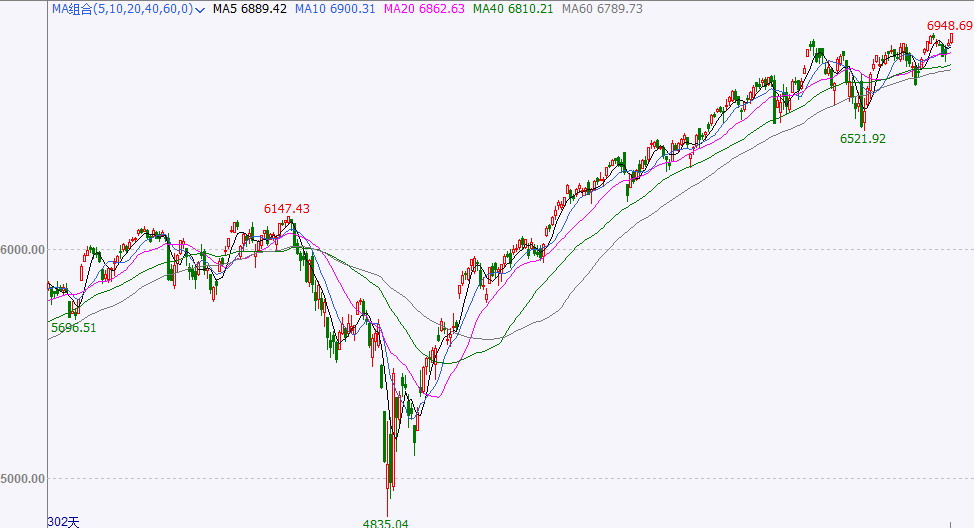
Group 1: Market Overview - Global stock markets started 2026 positively, with the technology sector and small-cap stocks driving gains, leading to new historical highs for the Dow Jones Industrial Average and S&P 500 [1] - The upward trend in US and Chinese stock markets may continue, but there are concerns about a potential bubble in the US market due to weakening factors that previously supported its rise [1][2] - The Chinese economy is currently in a phase of growth, particularly in new technologies like AI, which is expected to improve corporate profits and stabilize prices [1] Group 2: US Market Risks - The US stock market has seen two-digit growth for three consecutive years from 2023 to 2025, which is historically rare, and many large-cap stocks are now highly valued [2] - Potential issues are accumulating in the US market, and if the Federal Reserve's easing measures fall short of expectations, significant negative impacts could occur [2][4] - The current expected price-to-earnings (PE) ratio for the S&P 500 is 22, above the 10-year average of 19, indicating high valuations that could lead to substantial corrections [6] Group 3: Economic Conditions - The US economy is exhibiting a K-shaped recovery, with structural issues such as a struggling traditional manufacturing sector and real estate market [7] - Small businesses, which employ 43% of the private sector workforce, are lagging in recovery, impacting overall labor market improvement [7] - The liquidity situation remains uncertain, with potential tightening that could lead to sharp declines in the stock market [7] Group 4: AI and Technological Investment - The AI investment trend in the US is expected to be a significant driver of economic growth in 2026, but its effectiveness will depend on widespread adoption across industries [8] - Currently, only about 15% of manufacturing and 10% of service sector companies in the US have integrated AI into their production processes [8] Group 5: Chinese Market Potential - A-shares and Hong Kong stocks are currently undervalued compared to US stocks, with A-share valuations expected to rise due to improved profitability from AI applications [9] - The Chinese government is expected to implement supportive fiscal and monetary policies in 2026, focusing on boosting domestic demand and technology [9][10] - Historical trends suggest that stable earnings growth and rising valuation levels are key drivers for stock market performance during economic transitions [10] Group 6: Conclusion - The US stock market faces significant adjustment risks due to high valuations and policy uncertainties, while the Chinese market shows relative advantages in valuation and growth potential [12]
超439万辆次澳门单牌车进出境!“澳车北上”三年带来了什么?
Zhong Guo Qi Che Bao Wang· 2026-01-08 01:59
Core Insights - The "Northbound Vehicle Policy" has significantly enhanced cross-border travel and commerce between Macau and mainland China, marking three years of successful implementation with impressive growth in vehicle traffic and integration within the Greater Bay Area [4][8][14] Group 1: Policy Impact - The policy has led to a remarkable increase in vehicle crossings, with 4.393 million crossings recorded in 2025, a year-on-year growth of 14.1% [4] - The average daily vehicle traffic at the Zhuhai port has surged, with peak daily crossings exceeding 28,000 vehicles [7] - The total number of vehicles crossing the bridge in 2025 is projected to reach 6.808 million, representing a 22.5% increase year-on-year [8] Group 2: Changes in Lifestyle - The policy has transformed the lifestyle of Macau residents, making cross-border travel a regular part of daily life, with many now frequently visiting cities like Zhuhai and Guangzhou for shopping and leisure [6][9] - The convenience of crossing has led to a rise in cross-border consumption, with families regularly traveling for various activities, thus enriching their experiences [10] Group 3: Economic Opportunities - The policy has opened new avenues for small and medium-sized enterprises in Macau, allowing them to expand their market reach and optimize resource allocation [12] - Entrepreneurs have leveraged the policy to enhance operational efficiency, with some relocating their businesses to Zhuhai to benefit from lower costs and better access to resources [11] - Traditional industries, such as local specialty shops, have successfully entered the mainland market, achieving significant sales growth through improved logistics and distribution [11] Group 4: Future Prospects - The ongoing development of the "Northbound Vehicle Policy" is expected to further enhance the integration of the Greater Bay Area, promoting high-quality economic collaboration and cultural exchange [13][14] - Future initiatives will focus on technological advancements to streamline customs processes, aiming for even more efficient and seamless cross-border travel experiences [13]

新年伊始 这些小变化传递积极信号
Ren Min Ri Bao· 2026-01-08 01:34
Group 1: Consumer Policies - A new round of "national subsidies" has been launched, covering a range of products including smart glasses, home appliances, and vehicle updates, with subsidies up to 15% for digital and home appliances [2] - The Hainan duty-free policy has been adjusted, expanding the number of duty-free items from 45 to 47 and allowing residents with departure records to purchase certain items multiple times within a year, leading to a significant increase in shopping activity [2] Group 2: Transportation and Services - The introduction of a new railway tourism ticket in Northeast China allows travelers to visit multiple destinations with a single ticket, enhancing convenience for tourists [3] - New regulations promoting green consumption have been implemented, aiming to facilitate the transition to a low-carbon economy across various sectors [3] Group 3: Housing Market - The VAT rate for individuals selling homes purchased for less than two years has been reduced from 5% to 3%, significantly lowering transaction costs and stimulating the real estate market [7] Group 4: Credit Repair - A one-time credit repair policy has been implemented, allowing individuals to remove certain overdue records from their credit reports if debts are repaid by March 31, 2026, reflecting a shift towards a more supportive credit management approach [8] Group 5: Taxation and Business Environment - The new VAT law has come into effect, providing clearer legal guidelines for businesses and enhancing the certainty of tax policies, which is expected to invigorate business operations [10]
新华财经早报:1月8日
Zhong Guo Jin Rong Xin Xi Wang· 2026-01-07 23:53
•人民银行公告,为保持银行体系流动性充裕,2026年1月8日,中国人民银行将以固定数量、利率招标、多重价位中标方式开展11000亿元买断式逆回购操 作,期限为3个月(90天)。(新华财经) •人民银行数据显示,截至2025年12月末,黄金储备报7415万盎司(约2306.323吨),环比增加3万盎司(约0.93吨),为连续第14个月增持。国家外汇管理 局数据显示,截至2025年12月末,我国外汇储备规模为33579亿美元,较11月末上升115亿美元,升幅为0.34%。至此,我国外汇储备规模已连续5个月上 升,且全年始终稳定在3.2万亿美元上方。(新华财经) •市场监管总局网监司司长朱剑桥7日表示,市场监管总局和国家网信办近日联合发布了《直播电商监督管理办法》。办法针对直播电商行业特点,强化监管 手段,将流量管控纳入监管工具箱;将数字人主播等人工智能生成内容纳入监管,避免新技术成为生成或传播虚假信息的"挡箭牌",促进人工智能技术在直 播电商领域的规范应用。此外,办法将私域直播纳入调整范围,要求其他网络服务提供者根据具体服务内容依法履行相应的平台经营者义务。(新华财经) 转自:新华财经 •八部门聚力推出"人工智能 ...