
零售

Search documents
2026年,钱从哪挣?
创业家· 2026-02-10 10:15
Core Insights - The article discusses the importance of exploring international markets as a solution to domestic demand shortages faced by many companies in 2025 [5][6][8] - It emphasizes the need for companies to adapt their strategies, including moving entire value chains overseas, collaborating with industry leaders, and leveraging unique advantages to succeed in global markets [11][14][23] Group 1: Value Chain Expansion - Companies are encouraged to move their entire value chain overseas, not just export products, as exemplified by Miniso's approach [10][11] - Engaging with private users to understand their preferences can lead to rapid product development and brand establishment in foreign markets [12][13] Group 2: Collaboration with Industry Leaders - Many industry leaders are beginning to expand internationally, but successful expansion requires integrating complex supply chain systems [14][15] - Tesla's operations in Shanghai illustrate the importance of local supply chain collaboration, which is essential for efficient production and scaling [18][20][21] Group 3: Leveraging Unique Advantages - Companies can find success by utilizing their unique advantages, such as cost benefits or product innovation [24][25][27] - For instance, a factory owner in Yiwu can double their product prices on cross-border platforms, showcasing a cost advantage [26] Group 4: Building Long-term Trust - Establishing long-term trust with customers is crucial, as demonstrated by the story of a local entrepreneur who prioritizes employee welfare and customer service [31][34][36] - This trust leads to repeat business and a strong brand reputation in the community [35][36] Group 5: Meeting Evolving Consumer Needs - The article highlights a shift in consumer behavior towards valuing experiences and quality, indicating opportunities for businesses to innovate and meet these demands [38][39][46] - Companies should focus on creating engaging experiences that resonate with consumers' aspirations for a better life [45][46]



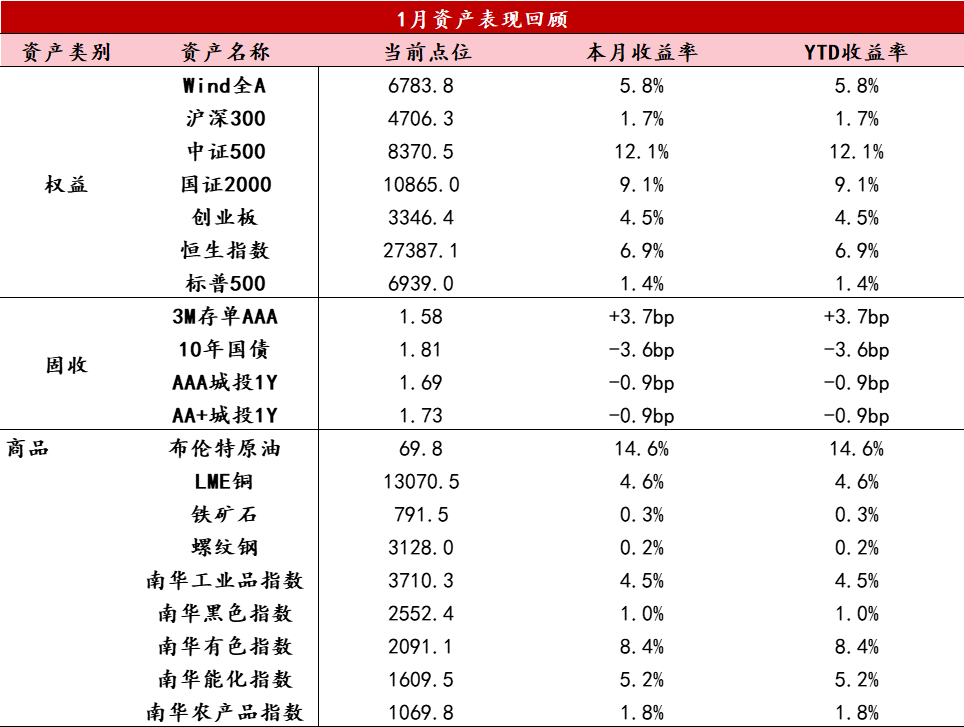
2026年2月资产配置月报:全球风险资产波动加剧,宏观政策定调提质增效
Jin Rong Jie· 2026-02-10 10:12
Asset Overview - In January, global risk assets experienced increased volatility due to changes in Federal Reserve interest rate expectations and geopolitical conflicts, with US stocks showing a strong upward trend [1] - The domestic market saw a return of funds, with equity assets continuing the upward trend from the end of last year, although regulatory measures led to a slowdown in growth [1] - The Wind All A index rose by 5.83% for the month, with the CSI 500 and CSI 1000 indices increasing by 12.12% and 8.68% respectively [1] - 80% of the Shenwan first-level industries saw gains, with strong performances in non-ferrous metals (+22.59%) and oil and petrochemicals (+16.31%) [1] - The Hang Seng Index rose by 6.85% in January, with a net inflow of 61.7 billion HKD from southbound funds [1] Bond Market Review - The bond market saw a downward adjustment followed by recovery, with most yield rates declining [2] - The 10-year government bond yield fell by 3.6 basis points to 1.81% during January [2] Commodity Market Review - The commodity market was generally bullish in January, with precious metals leading the gains; London gold prices rose by 13.01% to $4,880 per ounce [3] - Brent crude oil prices increased by 14.64% to $69.83 per barrel, while copper prices also saw gains [3] Macroeconomic Performance - The macroeconomic data for December indicated resilience in production, supported by external demand, while internal demand remained weak [5] - Industrial enterprises' profit margins showed positive growth for several months, with a 5.2% year-on-year increase in industrial value added [5] - Exports continued to exceed expectations, with a 6.6% year-on-year increase in December, driven by strong performance in machinery and high-tech products [6] Policy Outlook - Local government meetings have emphasized a "steady progress" approach, with an average GDP growth target of 5.0% for 2026 [10] - The focus of macroeconomic policy has shifted towards enhancing the quality of internal growth rather than merely expanding scale [10] Asset Allocation Analysis - The current economic environment is characterized by "strong supply, weak demand, and price stabilization," indicating an early recovery phase [24] - The asset performance ranking is expected to be bonds, stocks > commodities in the current phase [24]
18位消费创始人和投资人这样观测潮水的方向丨2026前瞻
36氪· 2026-02-10 09:40
Core Viewpoint - The consumption sector is expected to rebound in 2025 after a period of stagnation, with significant activity in the consumer IP, offline retail, and AI integration sectors [5][9]. Group 1: Consumer IP - The consumer IP sector is highlighted as a focal point, with companies like Pop Mart achieving a market value of 400 billion, igniting interest in the industry [5][11]. - The shift towards self-owned IP is emphasized, with companies like Miniso planning to split its TOP TOY brand for independent listing, indicating a trend towards brand ownership and innovation [5][11]. - The market is moving towards original design as a core driver, with a paradigm shift from reliance on licensing and channels to creating unique IP that resonates emotionally with consumers [13][14]. Group 2: Offline Retail - The offline retail landscape is undergoing significant transformation, with traditional supermarkets like Yonghui implementing "fat reform" to adapt to changing consumer needs [6][18]. - The competition is evolving from product-centric to full-chain operational capabilities, with a focus on building trust and efficiency in supply chains [21][22]. - Community-based retail models are emerging as key players, with companies like Mingming Hen Mang achieving a market value nearing 100 billion, indicating a shift towards localized and efficient retail solutions [6][19]. Group 3: Consumption + AI - 2025 is identified as the "year of AI in consumption," with a convergence of technology maturity, user acceptance, and commercial imagination pointing towards a potential explosion in AI-driven consumer products [28][29]. - The focus is on creating emotionally engaging experiences through AI, with various product forms expected to emerge, including AI companions and immersive gaming experiences [28][30]. - The integration of AI into consumer products is anticipated to redefine user interactions, emphasizing the importance of understanding specific scenarios to enhance the value of technology [28][31]. Group 4: Consumer Brands - The competition among consumer brands is shifting towards depth in consumer engagement rather than breadth, with a focus on hard innovation and visible quality improvements [33]. - Brands are expected to adapt to channel-specific demands, moving away from a one-size-fits-all approach to tailored offerings that resonate with distinct consumer segments [34]. - The trend of Chinese dining brands expanding overseas is gaining momentum, with an emphasis on local integration and community responsibility as critical factors for success in foreign markets [35].

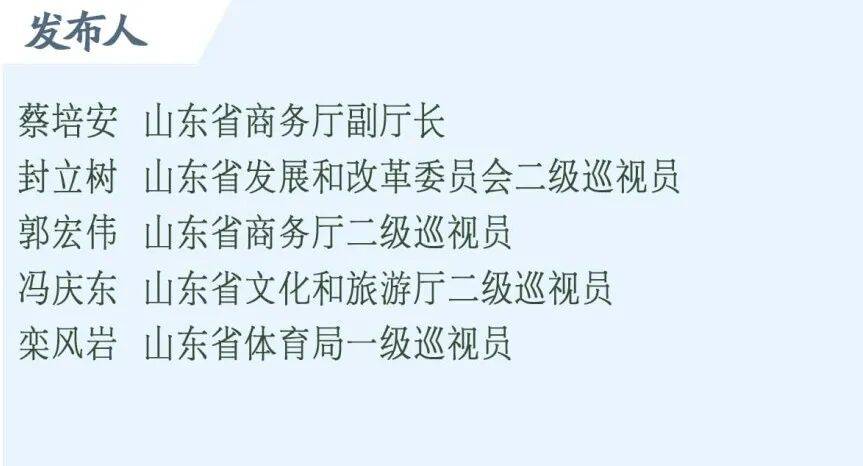
权威发布|山东2026年重点抓好消费领域六件民生实事
Sou Hu Cai Jing· 2026-02-10 09:17
Core Viewpoint - The Shandong Provincial Government is focusing on promoting consumption, stabilizing the market, and benefiting people's livelihoods during the 2026 Spring Festival holiday, emphasizing the importance of consumer demand for economic growth [4][5]. Group 1: Consumption Promotion Strategies - In 2025, Shandong implemented a comprehensive consumption promotion plan, including a subsidy program for replacing old goods, which provided nearly 25 billion yuan in subsidies and generated over 185 billion yuan in sales, benefiting 20 million consumers [4]. - Over 6,000 promotional events were held throughout the year, leading to sales exceeding 100 billion yuan [4]. - The province introduced new consumption models and experiences, establishing national-level pilot projects for new consumption formats and international consumption environments, along with 10 "Good Products Shandong" e-commerce centers and 16 live-streaming centers [4]. Group 2: Key Initiatives for 2026 - The Shandong Provincial Commerce Department plans to focus on six key initiatives to enhance consumer welfare, including brand promotion activities, service consumption enhancement, new consumption cultivation, e-commerce development, integration of domestic and foreign trade, and improvement of commercial circulation networks [5]. - Specific actions include optimizing the old-for-new policy, hosting over 500 service consumption events, and promoting new consumption trends such as IP consumption and AI integration [5]. Group 3: Spring Festival Activities - The 2026 Spring Festival will feature the "Happy Shopping New Year - Fortune Fills Qilu" theme, with six categories of activities designed to enhance the festive atmosphere and stimulate consumer spending [7]. - Activities will focus on food, accommodation, transportation, tourism, shopping, and entertainment, aiming to provide a warm and enjoyable experience for residents and visitors alike [7][8]. - The government is committed to ensuring the supply and price stability of essential goods during the holiday, with measures in place to monitor and respond to market conditions [6].
多地发放新春消费券:玩法上新,有省份拿出75亿专项资金
第一财经· 2026-02-10 08:54
Core Insights - The article discusses the launch of various consumer vouchers across different regions in China to stimulate spending during the upcoming Spring Festival, highlighting a shift in focus towards diverse categories and innovative distribution methods [3][4]. Group 1: Consumer Voucher Initiatives - Wuhan has introduced a new Spring Festival accommodation voucher program, with discounts based on spending thresholds, running from February 10 to March 15 [3]. - Other regions, such as Henan, Heilongjiang, and Shandong, have allocated significant funds for consumer vouchers, with Shandong offering 7.5 billion yuan for discounts and vouchers [3][4]. - The distribution methods for these vouchers have evolved, with some areas implementing online registration and lottery systems to ensure fairness and increase participation [3]. Group 2: Economic Impact and Trends - The consumer voucher programs are designed to address essential needs, with a focus on sectors like beauty, home services, and green travel, aligning with the rigid demands of the Spring Festival [4]. - A notable model in Yunnan combines government subsidies with bank support, achieving a leverage ratio of 1:21, where 700 million yuan in fiscal input generated over 14.5 billion yuan in consumption [4]. - Economic expert Pan Helin identifies three key trends in the issuance of consumer vouchers: a focus on essential subsidies, guidance towards consumption upgrades, and integration with local economic characteristics [4]. Group 3: Consumer Behavior Insights - In 2022, the growth rate of disposable income for residents was 5.0%, while consumption expenditure grew by only 4.4%, indicating a trend where consumption growth lags behind income growth [4]. - During the recent National Day holiday, despite a record 888 million domestic travelers, the average daily spending per person decreased by approximately 13% compared to the previous year, reflecting a trend of higher visitor numbers but lower spending per capita [4]. Group 4: Recommendations for Future Initiatives - To effectively stimulate consumer demand during the extended Spring Festival holiday, targeted distribution of vouchers and expansion of distribution channels are recommended [5]. - There is a suggestion to provide subsidies for high-value cultural and tourism products to encourage consumers to seek quality experiences [5]. - Local business and tourism departments are encouraged to enhance and diversify consumption scenarios and products to attract public spending [5].

宝胜国际(03813.HK):1月综合经营收益净额17.48亿元 同比下跌32.5%
Ge Long Hui· 2026-02-10 08:53
Group 1 - The core point of the article is that Baoshan International (03813.HK) reported a significant decline in its net operating revenue for January 2026, amounting to approximately RMB 1.748 billion, which represents a 32.5% decrease compared to the same month last year [1] Group 2 - The company's net operating revenue is calculated as total sales minus sales discounts and sales returns [1] - The reported revenue figure indicates a substantial drop, highlighting potential challenges the company may face in maintaining sales performance [1] - The year-on-year comparison emphasizes the severity of the decline, suggesting a need for strategic reassessment [1]
湖南工程机械巨头、优衣库母公司、汇丰控股……80只股票创出历史新高丨港股收盘
Mei Ri Jing Ji Xin Wen· 2026-02-10 08:52
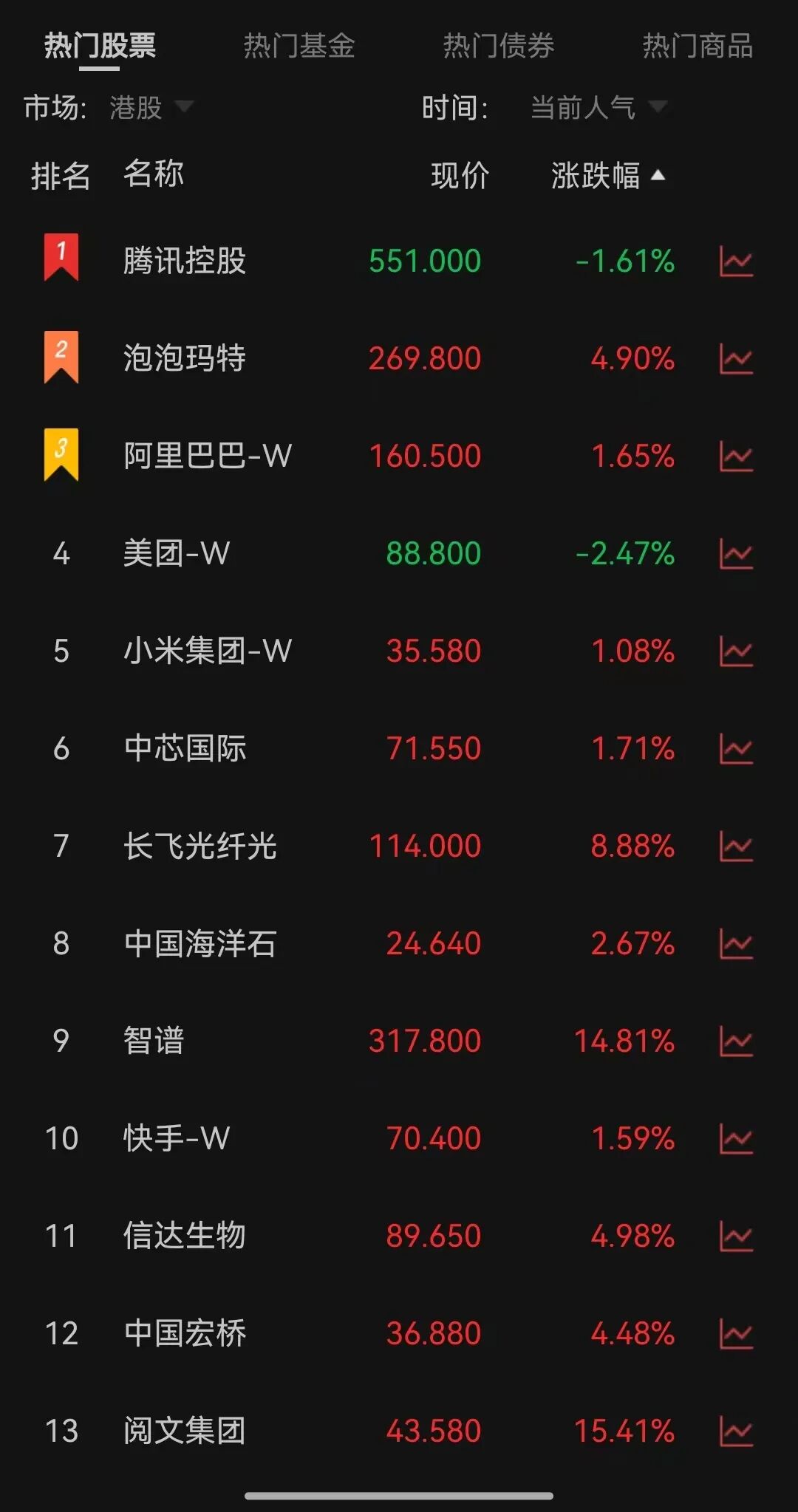
Market Performance - The Hang Seng Index closed up 0.58% and the Hang Seng Tech Index rose 0.62% on February 10 [1] - Notable gainers in the Hang Seng Index included CSPC Pharmaceutical Group and Innovent Biologics, while New Oriental Education and Haidilao saw significant declines [1] - In the Hang Seng Tech Index, Horizon Robotics and SenseTime were among the top gainers, while Meituan and Alibaba Health experienced losses [1] Sector Highlights - The optical communication sector led the market, with Longi Green Energy rising 8.8% and Dongfang Electric increasing over 7% [1] - Biopharmaceutical stocks also performed well, with WuXi AppTec up over 4% and Rongchang Bio rising 3.64% [1] Notable Stock Movements - Zhiyuan Technology surged 14.81% and Reading Group increased by 15.41% [1] - A total of 80 stocks in the Hong Kong market reached new historical highs, including major companies like Zoomlion Heavy Industry and HSBC Holdings [3] New Listings - AI perception and edge computing chip company Aixin Yuan Zhi Semiconductor officially listed on the Hong Kong Stock Exchange with a market capitalization of HKD 16.7 billion, becoming the first edge computing AI chip company to do so [10] Economic Indicators - The Hong Kong government plans to raise the statutory minimum wage from HKD 42.1 to HKD 43.1 per hour, an increase of 2.38%, effective May 1 [10] Market Outlook - Analysts from Galaxy Securities noted a clear "Spring Festival effect" in the Hong Kong market, with optimistic sentiment and early capital positioning [11] - Bank of China International indicated that the market sentiment is at a low point, with potential rebounds expected in the AI multi-modal industry chain [11]

年轻人成为“春节主理人”,年货消费呈现新趋势
Bei Ke Cai Jing· 2026-02-10 08:36
Core Insights - The trend of purchasing New Year goods has shifted from being a necessity to a means of personal expression, particularly among young consumers who prioritize aesthetics and personal preferences [1][4]. Group 1: Consumer Behavior Trends - Young consumers are increasingly making autonomous decisions about New Year purchases based on their interests and lifestyles, with a notable rise in orders for trendy items like DIY crafts and modern couplets [1]. - The search volume for intangible cultural heritage (ICH) items has surged, with a 212% increase in "ICH" searches and a 790% increase in "ICH handmade" searches, indicating a strong interest among the younger generation [1]. - Health considerations have become a primary factor in gift-giving during the Spring Festival, with 58% of consumers prioritizing health over appearance [2]. Group 2: Product Innovations - The market is witnessing a shift towards personalized New Year goods, with significant growth in categories like pet apparel and DIY materials, reflecting the smaller average household size [3]. - Traditional gift boxes are undergoing a lightweight transformation, with smaller, aesthetically pleasing items becoming the preferred choice, such as single-serving pre-made dishes and small-packaged nuts [3]. - The food industry is innovating with low-sugar and low-GI products, as well as health-oriented gift boxes, aligning with the trend of consumers seeking a balance between enjoyment and health [2]. Group 3: Purchasing Channels - The integration of online and offline shopping experiences is becoming more prevalent, with traditional items like couplets and flowers increasingly being purchased online [3]. - Instant retail is emerging as a significant channel for New Year purchases, facilitating cross-province gifting and making the shopping experience more efficient [3]. - Data from Meituan indicates a substantial increase in sales across various categories during holiday periods, suggesting a trend that may continue into the upcoming Spring Festival [3].
社服零售行业周报:泡泡玛特年会出圈,春节出行人次预计高增-20260210
HUAXI Securities· 2026-02-10 08:36
Investment Rating - The industry rating is "Recommended" [3] Core Insights - The report highlights the strong growth potential in the emotional consumption era, particularly for leading companies with strong innovation and operational capabilities [1] - The Spring Festival travel volume is expected to reach 10.68 billion trips in 2026, a significant increase of 11.7% compared to 9.56 billion trips in 2025, indicating robust travel demand [2] - The report suggests focusing on high-growth sectors supported by policy and technology, including service consumption, new consumption trends, retail innovation, and AI applications [2][64] Summary by Sections Industry & Company Dynamics - Pop Mart's annual meeting showcased its achievements, including over 10,000 global employees, 100 million registered members, and sales of over 400 million products across more than 100 countries [1] - Anta Group is acquiring Puma, enhancing its multi-brand strategy and global competitiveness, despite Puma's recent performance challenges [16][17] Investment Recommendations - The report recommends focusing on sectors with high growth potential, including service consumption, new consumption trends, and retail innovation, with specific beneficiary companies listed [2][64] Macro & Industry Data - In November, retail sales grew by 1.3% year-on-year, with online retail sales accounting for 25.9% of total retail sales [36][41] - The gold consumption in Q3 2025 was 177.53 tons, a decrease of 18.56% year-on-year, with jewelry demand significantly impacted [54][56]

顶级分析师警告:消费、就业双“熄火”,美股涨势失真
Xin Lang Cai Jing· 2026-02-10 08:19
Core Viewpoint - The article highlights a significant disconnect between the stock market's performance and the underlying economic realities faced by ordinary Americans, as emphasized by David Kelly, Chief Global Strategist at Morgan Asset Management [1][5]. Economic Conditions - The current economic environment is characterized by weak consumer spending, sluggish job growth, and low public sentiment, which contradicts the optimism surrounding the stock market driven by technology stocks [1][5]. - Consumer activity has notably declined at the start of the first quarter, with retail and service sectors showing concerning trends, including a drop in light vehicle sales to an annualized rate of 14.9 million, the lowest in over three years [2][7]. - The housing market is particularly troubling, with the National Association of Home Builders reporting a builder sentiment index of 23, indicating weak buyer traffic, and rental vacancy rates rising to 7.2%, the highest since 2017 [2][7]. Employment Trends - Job vacancies have fallen to a five-year low, decreasing from 6.9 million in November to 6.5 million in December, indicating a stagnation in job creation despite limited layoffs [3][8]. - The labor force is shrinking, with a monthly decrease of 20,000 in the working-age population (ages 18-64), exacerbated by a slowdown in net immigration [3][8]. Income Inequality - There is a growing disparity in income, with the average income expected to exceed the median income by 45% in 2024, leading to a decline in consumer confidence to a ten-year low [3][8]. - Actual household income has stagnated for about six months, with a year-on-year growth rate dropping to 1%, while the household savings rate has plummeted to 3.5%, the lowest level since before the 2008 financial crisis [4][9]. Political Implications - Economic dissatisfaction may have direct political consequences for the Trump administration, with historical trends suggesting that the ruling party typically loses seats in midterm elections [4][10]. - Predictions indicate that the House of Representatives may revert to Democratic control, potentially leading to legislative gridlock and stalling further fiscal stimulus before the 2028 presidential election [4][10].