微软云业务

Search documents
微软资本支出创历史新高
Shang Hai Zheng Quan Bao· 2026-01-29 08:56
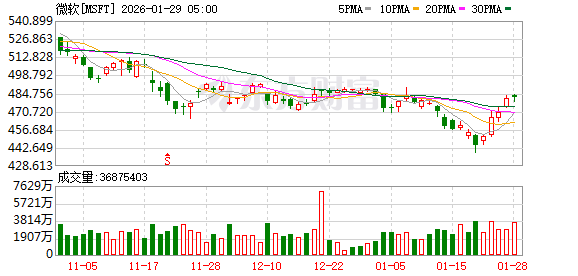
Core Insights - Microsoft reported strong financial results for Q2 of FY2026, with revenue of $81.3 billion, a 17% year-over-year increase, and net income of $38.5 billion, reflecting a 60% increase [2] - The cloud business revenue surpassed $50 billion, indicating robust demand for Microsoft's service offerings [2][4] - Despite exceeding expectations, Microsoft's stock price fell approximately 7% post-earnings release [2] Financial Performance - Revenue: $81.3 billion, up 17% year-over-year [2] - Operating Income: $38.3 billion, up 21% year-over-year [2] - GAAP Net Income: $38.5 billion, up 60% year-over-year [2] - Non-GAAP Net Income: $30.9 billion, up 23% year-over-year [2] - Earnings per Share: $5.16, with $1.02 attributed to OpenAI-related earnings [6] Cloud Business Insights - Cloud revenue reached $51.5 billion, a 26% year-over-year increase, with Azure and other cloud services growing by 39% [4][6] - The backlog of cloud contracts doubled year-over-year to $625 billion, with 45% of this attributed to OpenAI [7] - The growth rate of cloud business has slightly slowed, down about 1% from the previous quarter [4] AI and OpenAI Impact - Microsoft's performance is significantly influenced by its partnership with OpenAI, with $7.6 billion of net income derived from OpenAI-related earnings [6] - The company is integrating AI tools powered by OpenAI into its products, aiming to enhance productivity software and cloud service sales [6] - The future sales potential is bolstered by a new $250 billion agreement with OpenAI, reflecting a strong reliance on AI for growth [7]


微软:云业务利润率是即将到来的第二财季财报的 “绊脚索”
美股研究社· 2026-01-23 10:55
Core Viewpoint - Analysts have downgraded Microsoft (MSFT) to "Hold" ahead of the Q2 FY2026 earnings report due to external pressures affecting the tech sector and concerns over cloud business margins [2][3]. Group 1: Analyst Downgrade Reasons - The downgrade is primarily driven by external pressures impacting the tech sector, particularly the software infrastructure industry, which has seen significant selling since October 2022 [3]. - Analysts express concerns over the declining gross margin for cloud services, which is expected to drop from 68% in the previous quarter to 66% in Q2 FY2026, indicating potential further downside risks [3][28]. - Increased capital expenditures (CapEx) are also a concern, as analysts believe that rising costs will negatively impact profit margins, making it unwise to buy before the earnings report [3][34]. Group 2: Market Performance and Expectations - Despite a 20% drop in Microsoft's stock since the last earnings report, analysts note that revenue forecasts have remained stable, indicating that the fundamentals of the company have not significantly changed [5][24]. - The technology sector has been underperforming, with application software and infrastructure software being the worst-performing industries [18][24]. - Analysts are closely monitoring key indicators such as profit margins and capital expenditures, particularly the guidance for cloud business margins in the upcoming earnings report [27][34]. Group 3: Financial Metrics and Valuation - The expected gross margin for Microsoft's cloud business is projected to decline, with historical margins showing a consistent downward trend [28][29]. - Capital expenditures for Q1 FY2026 were reported at $34.9 billion, with a significant portion attributed to short-term assets like GPUs and CPUs [31]. - Microsoft's forward P/E ratio stands at 28, making it one of the cheaper options among major tech companies, second only to Meta [33].

美股屡创新高,A股能从中汲取哪些养分(一)
Sou Hu Cai Jing· 2025-12-25 00:57
Group 1 - The core viewpoint of the article highlights the sustained strength of the US stock market, with major indices like the Dow Jones and S&P 500 reaching new historical closing records, driven by a combination of factors including the onset of a rate-cutting cycle by the Federal Reserve in 2024 [1] - The current market rally is characterized by a strong performance from technology stocks, with major players like Apple, Microsoft, Meta, and Amazon showing steady gains, indicating that the rise is supported by solid earnings rather than speculative trading [2] - The article emphasizes that the robust performance of the stock market is underpinned by loose liquidity and favorable policy expectations, with significant inflows into equity markets, particularly technology ETFs, contributing to the upward momentum [3] Group 2 - The performance of Chinese concept stocks in the US market shows a divergence, with some stocks like Zai Lab experiencing significant gains while others like Alibaba and Baidu face slight declines, reflecting a more rational pricing mechanism based on fundamental performance [4] - The article notes that the current market dynamics, characterized by strong technology fundamentals, loose liquidity, and a stable economy, are unlikely to change in the short term, although there are concerns about high valuation levels in the S&P 500 [5] - Investors are advised to focus on high-quality stocks with core competitive advantages rather than chasing index gains, as the differentiation in Chinese concept stocks may continue, with performance certainty and growth potential becoming key drivers for future valuation adjustments [5]

20个省份进入中度老龄化,英伟达市值达5万亿美元 | 财经日日评
吴晓波频道· 2025-10-31 00:29
Group 1: Aging Population in China - 20 provinces in China have entered a moderate aging stage, with Liaoning having the highest elderly population ratio at 31.17% [2] - The number of provinces in moderate aging has more than doubled from 6 in 2018 to 20 in 2024, indicating a rapid demographic shift [2] - The aging population is leading to increased labor costs and pushing labor-intensive industries towards automation, posing re-employment challenges for unskilled workers [2] Group 2: Silver Economy - The silver economy is gaining traction, with a focus on improving elderly care facilities, although the average consumption power of the elderly is lower than that of younger generations [3] - The financial burden of public spending on healthcare and elderly care is expected to increase significantly due to the aging population [3] Group 3: Federal Reserve Interest Rate Decision - The Federal Reserve has lowered the federal funds rate by 25 basis points to a target range of 3.75% to 4.00%, marking the second consecutive rate cut this year [4] - There is a 91% probability that the Fed will continue to cut rates by another 25 basis points in December [4] - The Fed is facing challenges in assessing the macroeconomic situation due to the government shutdown and is balancing concerns over inflation and potential economic resilience [4] Group 4: Healthcare Insurance Negotiations - The 2025 National Medical Insurance negotiations have begun, introducing a new commercial insurance innovative drug directory alongside the basic medical insurance directory [5][6] - The new directory focuses on high-innovation drugs that provide significant clinical value but are not included in the basic insurance due to cost [5][6] Group 5: Nvidia's Market Milestone - Nvidia's market capitalization has surpassed $5 trillion, making it the first company to reach this milestone, driven by strong performance in AI and computing infrastructure [7] - The company's CEO announced plans to expand into quantum computing, autonomous driving, and communication, indicating a broadening of its operational scope [7] Group 6: Earnings Reports from Tech Giants - Microsoft reported Q3 revenue of $77.67 billion, a year-on-year increase of approximately 18%, while Alphabet's revenue was $102.35 billion, up about 16% [8] - Meta's Q3 revenue was $51.24 billion, but its net profit plummeted 83% to $2.71 billion due to a one-time tax expense [8] - The cloud businesses of Microsoft and Alphabet continue to show strong growth, with Microsoft’s commercial cloud revenue reaching $49.1 billion, up 26% [8] Group 7: OpenAI's IPO Plans - OpenAI is considering an IPO with a valuation of up to $1 trillion, potentially submitting its application as early as the second half of 2026 [9][10] - The company aims to raise at least $60 billion through the IPO to address a significant funding gap, as it anticipates consuming $115 billion by 2029 [10] Group 8: Starbucks' Performance in China - Starbucks reported a 6% year-on-year increase in net revenue in China for Q4, marking the fourth consecutive quarter of growth [11] - The company opened 183 new stores in Q4, expanding its presence in 47 new county-level markets [11] - Despite revenue growth, Starbucks faces challenges with profit margins due to competitive pricing strategies and increased operational costs [12] Group 9: Market Overview - The stock market experienced fluctuations, with the Shanghai Composite Index falling 0.73% and the ChiNext Index dropping nearly 2% [13] - Market sentiment was affected by mixed signals despite the Fed's rate cut and positive developments in US-China trade talks [13]

美国经济危机四伏:通胀、就业、降息、AI泡沫全亮红灯
Sou Hu Cai Jing· 2025-09-02 01:47
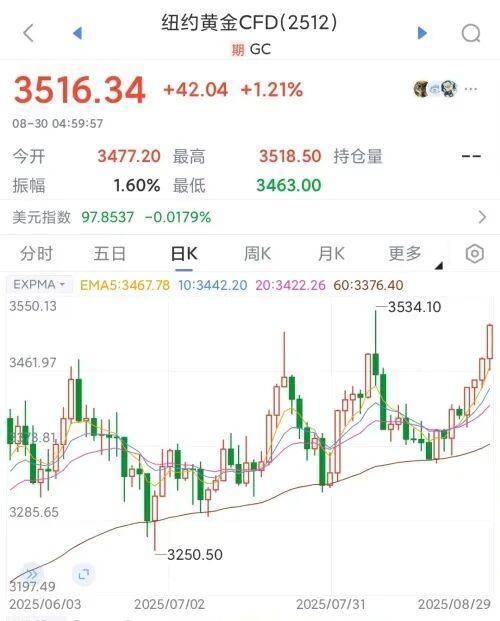
Group 1 - The core inflation indicator, the core PCE price index, rose by 2.9% year-on-year in August, marking a five-month high, indicating that inflation is becoming entrenched in the economy [3] - The Biden administration's tariffs on Chinese goods have not yet fully manifested, suggesting that consumers will soon face a "China-made price surge," potentially leading to a dual inflation scenario [3] - The employment data, previously seen as a shield for the economy, has been called into question after a significant downward revision of June's job additions by 90%, reducing the reported 200,000 new jobs to just 20,000 [4][5] Group 2 - The market is currently focused on the extent of potential interest rate cuts, with a 25 basis point cut in September being almost certain, while some speculate a 50 basis point cut [6] - Gold prices have surged above $3,500 for the first time, reflecting fears of a financial storm, as prominent investors warn of impending market turmoil [6] - The AI sector, which has been a major driver of the stock market, is showing signs of weakness, with a recent MIT study revealing that 95% of companies find AI unhelpful for their business [7][9] Group 3 - The U.S. economy is facing multiple challenges, including tariffs igniting inflation, questionable employment data, erratic interest rate policies, the potential collapse of the AI bubble, and warnings from the gold market, reminiscent of the pre-2008 financial crisis [8]
海外AI产业链业绩及资本开支超预期,AI算力硬件需求持续强劲 | 投研报告
Zhong Guo Neng Yuan Wang· 2025-08-04 08:30
Group 1 - The core viewpoint is that the overseas AI industry chain's performance and capital expenditure have exceeded expectations, with strong demand for AI computing hardware [1][2] - Meta reported Q2 2025 revenue of $47.516 billion, a year-on-year increase of 22%, surpassing market expectations of $44.8 billion, and net profit grew by 36% to $18.337 billion, significantly above market forecasts [2] - Microsoft achieved Q2 2025 revenue of $76.441 billion, an 18% year-on-year increase, with net profit of $27.233 billion, up 24% [2] Group 2 - Meta raised its full-year capital expenditure (CAPEX) guidance from a minimum of $64 billion to $66 billion, with a range of $66 billion to $72 billion [2] - Microsoft’s Q2 2025 CAPEX was $24.2 billion, a 27% year-on-year increase, and it is expected to exceed $30 billion in Q3 2025, representing a 50% year-on-year growth [2] - The demand for AI-related hardware is expected to remain strong, with significant growth in the number of ASIC chips from companies like Google, Amazon, and Meta projected to exceed 7 million by 2026 [2][4] Group 3 - The industry outlook indicates a robust growth trajectory for sectors such as consumer electronics, PCB, semiconductor chips, and semiconductor manufacturing, with a stable upward trend [4] - Companies in the AI-PCB and computing hardware sectors are expected to benefit significantly from the rapid development and deployment of AI technologies [3][4] - The overall demand for AI computing hardware is anticipated to continue its strong momentum, driven by advancements in technologies like NVIDIA's Blackwell and ASIC chip development [2][3]


华夏基金周策略:进入混沌期,保持宏观审慎与产业趋势的平衡
Sou Hu Cai Jing· 2025-05-13 04:17
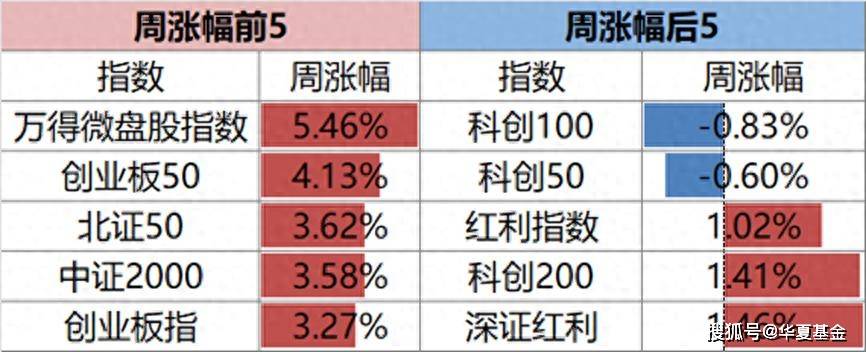
Group 1 - The A-share market experienced significant gains from May 7 to May 9, driven by a recovery in external markets and a shift in narrative from recession to "AI supply shortage" due to Microsoft's cloud business exceeding expectations [1] - The overall trading volume in the A-share market did not show significant expansion, indicating a short-term focus on speculative trading with a decline in risk appetite [1] - The top-performing indices included the Wind Microplate Index with a weekly increase of 5.46%, while the Sci-Tech Innovation 100 Index saw a decline of 0.83% [1] Group 2 - Current assessments of the macroeconomic environment are becoming ambiguous, with global trade activities potentially cooling due to high tariffs [2] - Analysts suggest distinguishing between beta and alpha risks related to global tariffs, with beta risk stemming from U.S. tariff impacts on global demand and alpha risk arising from higher tariffs on China compared to other regions [2] - The A-share market indices have largely filled previous gaps, but are expected to face fundamental challenges in the future [2] Group 3 - The macro-prudential approach and trends in the AI technology industry are not aligned, necessitating strategies for total control of equity positions and structural optimization [3] Group 4 - Bonds and gold remain effective tools for reducing volatility, while U.S. stocks are in a wait-and-see phase amid recession pressures and policy challenges [4] - The focus on equity allocation is becoming more cautious, with dividend and AI sectors being prioritized due to their strong cash flow and low correlation with external demand [4] Group 5 - Relevant ETFs for the AI industry include the Hang Seng Technology Index ETF (513180) and the Artificial Intelligence AI ETF (515070) [5] - ETFs aimed at reducing volatility include the Gold ETF Huaxia (518850) and the Hong Kong Central Enterprise Dividend ETF (513910) [6]