无人出租车

Search documents
无人出租赛道再现百亿融资!微软英伟达奔驰齐投
Sou Hu Cai Jing· 2026-02-26 10:30
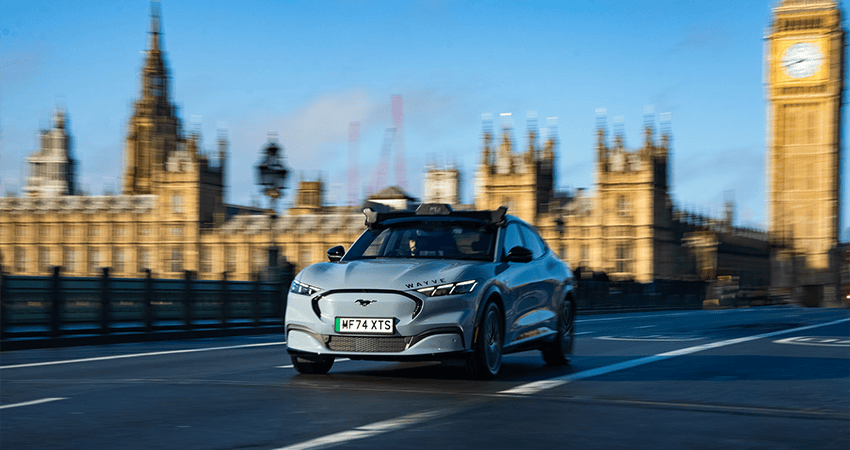
Group 1 - Wayve, a UK-based autonomous taxi company, has completed a $1.2 billion (approximately 83.19 billion RMB) Series D funding round, bringing its valuation to $8.6 billion (approximately 596.16 billion RMB) [2][4] - The funding round saw participation from major tech companies including Microsoft and Nvidia, as well as automotive giants like Mercedes-Benz, Nissan, and Stellantis [2][4] - Uber has committed an additional up to $300 million (approximately 20.80 billion RMB) as part of this funding, contingent on Wayve meeting certain technical milestones [4] Group 2 - Wayve's autonomous taxis are set to begin trial operations in London this year, leveraging the city's increasingly favorable regulatory environment for autonomous vehicle testing [3][4] - The company focuses on an "end-to-end AI" technology approach, allowing vehicles to operate without relying heavily on high-definition maps, which differentiates it from traditional autonomous driving solutions [6][8] - Wayve has successfully conducted "mapless" road tests in over 500 cities worldwide, showcasing its technology's adaptability to complex driving conditions [8] Group 3 - Wayve adopts a light-asset model, avoiding heavy investments in vehicle manufacturing and fleet operations, and instead positioning itself as a software supplier for autonomous driving [9] - The company is collaborating closely with Nissan to develop the next-generation ProPilot intelligent driving system, expected to launch in 2027 [9] - Despite its technological advancements, Wayve faces significant competition and funding challenges, particularly from industry leaders like Waymo, which recently secured $16 billion (approximately 1109.14 billion RMB) in funding [11] Group 4 - The recent funding round for Wayve indicates strong market confidence in its technology and reflects the accelerating commercialization of the global autonomous driving industry [12] - Wayve's strategy of partnering with automotive manufacturers and ride-hailing platforms highlights a shift in the competitive landscape, where success may depend more on cost efficiency and adaptability than on sheer financial resources [12] - The upcoming competition among companies in London will serve as a critical observation point for the future of transportation [13]

湖北黄石打造新能源与智能网联汽车产业集群
Zhong Guo Jing Ji Wang· 2026-02-02 06:14
Core Insights - The automotive industry in Hubei Province is projected to exceed 1.1 trillion yuan by 2025, with the city of Huangshi achieving a remarkable output value of 31.508 billion yuan in the previous year, marking a year-on-year growth of 79.3% [1] - Huangshi aims to transform its automotive sector by focusing on end-product manufacturing, leveraging its existing component production capabilities, and integrating with major players like Great Wall Motors [1][2] Group 1 - Huangshi has 53 automotive industry chain enterprises, with 38 being large-scale companies, and a localization rate of 43% for components [2] - The city is establishing a comprehensive testing area for intelligent connected vehicles and hydrogen vehicles within a 22 square kilometer ecological zone, which will include various autonomous vehicles [2] - A total of 20 related industrial projects have been signed, with a planned total investment exceeding 35 billion yuan [2] Group 2 - Huangshi's strategy includes promoting the synergy of the new energy and intelligent connected vehicle industry to form a robust industrial cluster worth hundreds of billions [2]
新技术影响力有限,日本产业界反思
Huan Qiu Shi Bao· 2026-01-08 22:40
Group 1 - The core viewpoint of the articles is that by 2025, Chinese automotive manufacturers are expected to surpass Japan in global sales, reaching approximately 27 million units, marking a 17% year-on-year growth [1][2] - Japanese media has extensively reported on this development, highlighting the competitive edge of Chinese companies in the automotive sector, particularly in production equipment, supply chains, and technology systems [1] - Chinese enterprises have established advantages in large integrated casting equipment for vehicle body manufacturing, which enhances production efficiency and reduces the number of components, becoming crucial in electric vehicle manufacturing [1] Group 2 - In terms of technology, Chinese companies are making significant advancements in autonomous driving and related software, with some cities already operating unmanned taxis and buses, which contrasts with Japan's limited international influence in these new fields [1] - The current situation in the Japanese automotive industry is attributed to multiple factors, including Japan's continued competitiveness in hybrid technology, while the global market shifts towards electrification and software integration [2] - Chinese automotive firms have made notable progress in sales scale, overseas expansion, and the application of new technologies, while Japan lacks competitiveness in areas such as power batteries and autonomous driving [2]
中信里昂:首予小马智行美股“跑赢大市”评级 目标价22美元
Ge Long Hui· 2026-01-06 03:25
Group 1 - The report from Citic Securities initiates coverage on Pony.ai (PONY.US) with an "outperform" rating and sets a target price of $22 for its U.S. stock [1] - The company is expected to achieve adjusted operating profit breakeven by 2029, with short-term stock price drivers focusing on commercialization progress [1] - From 2026 onwards, the commercialization of autonomous taxis is anticipated to experience exponential growth, driven by the maturity of Level 4 technology, economic feasibility of vehicle and hardware costs, and increased user acceptance [1]
股价连跌六日收官2025!特斯拉(TSLA.US)Q4交付数据公布在即 市场更关注无人出租车进展
智通财经网· 2025-12-31 23:50
Core Viewpoint - Tesla's upcoming fourth-quarter delivery data for 2025 is highly anticipated, with a focus not only on vehicle sales but also on the progress of its autonomous taxi business, which is expected to be updated alongside the delivery figures on January 2 [1]. Group 1: Delivery Expectations - Market expectations for Tesla's fourth-quarter delivery are set at approximately 422,900 vehicles, with consensus estimates from FactSet around 440,000, down from nearly 460,000 a few weeks prior [1]. - In comparison, Tesla delivered about 497,000 vehicles in the third quarter of 2025 and approximately 496,000 in the fourth quarter of 2024 [1]. - The decline in delivery volume is attributed to the U.S. federal government's cancellation of the $7,500 electric vehicle tax credit in late September, which increased purchase costs and led to a surge in deliveries in the previous quarter [1]. Group 2: Stock Performance - Tesla's stock has experienced a six-day decline, closing at $449.72, down 1%, with a total drop of about 8% over this period, although it remains up approximately 11% for the year [2]. - Some investors believe the current stock price reflects a certain level of pessimism, with expectations that if deliveries are around 415,000, the stock price may stabilize [2]. - The market is particularly focused on the potential removal of human safety monitors from Tesla's autonomous taxis in Austin, which could mark a significant milestone in the commercialization of autonomous driving [2]. Group 3: Valuation and Future Outlook - Despite declining vehicle sales, Tesla's stock has risen about 13% this year, with the company's market capitalization around $1.6 trillion and a projected price-to-earnings ratio of about 220 for 2026 [3]. - The anticipated decline in vehicle sales to below 1.7 million in 2025 for the second consecutive year is overshadowed by market expectations regarding Tesla's applications in artificial intelligence, particularly in autonomous taxi services [3].

大摩闭门会::2026年展望,我们与市场有何不同
2025-12-01 16:03
Summary of Conference Call Company/Industry Involved - The conference call primarily discusses the macroeconomic outlook for China and the global market, with a focus on investment strategies for 2026 and 2027. It involves insights from Morgan Stanley's macro strategy team and industry analysts. Core Points and Arguments 1. **Economic Outlook for 2026 and 2027** The team anticipates that 2026 will be a challenging year for China as it continues to navigate deflationary pressures, with a more optimistic outlook expected in 2027. The consensus is that the economy will still be in a transition phase in 2026, with gradual improvements expected in 2027 [5][7][14]. 2. **Investment Sentiment and Market Divergence** There is a notable divergence in market sentiment regarding investment strategies for 2026. Some investors are optimistic about a bull market similar to the one seen since September 2024, while others are cautious, preferring safer assets like bonds [6][10]. 3. **GDP Growth Projections** The projected nominal GDP growth for 2026 is slightly above 4%, indicating that the economy will still be experiencing deflationary conditions. This is more conservative than market expectations [7][14]. 4. **External and Internal Demand Concerns** The outlook for external demand is relatively stable, particularly due to the U.S. market's growth driven by the Inflation Reduction Act and AI investments. However, internal demand, especially in real estate and traditional consumption, remains a concern [9][10]. 5. **Real Estate Policy Expectations** The call discusses potential stimulus measures for the real estate sector, including the issuance of local and central government bonds to support infrastructure projects. There is speculation about mortgage interest subsidies to support the housing market [10][11][12]. 6. **Consumer Spending and Fiscal Policy** The team expects continued fiscal support for consumer spending, particularly in sectors like home appliances and automobiles. However, significant expansion into service sector support may not occur until the second half of the year [12][14]. 7. **Market Valuation and Investment Opportunities** The valuation of the Minsheng China Index has increased from a P/E ratio of 9 to around 13, which is seen as sustainable. The team believes that while there are challenges, the market has transitioned from a value trap to a growth-oriented valuation [28][29]. 8. **U.S. Market Dynamics** The U.S. market is expected to see a broad-based recovery, not solely driven by large-cap tech stocks. The anticipated impact of the Inflation Reduction Act and AI applications across various sectors is expected to support overall market growth [19][20][24]. 9. **Risks and Monitoring Indicators** The team emphasizes the importance of monitoring specific indicators, such as corporate earnings expectations and the Federal Reserve's interest rate decisions, to adjust their investment strategies accordingly [22][24]. 10. **Sector-Specific Insights** The automotive industry is highlighted as a sector undergoing transformation, with ongoing discussions about the impact of policy changes and competition on investment dynamics [64][65]. Other Important but Possibly Overlooked Content - The call highlights the importance of understanding the underlying economic data discrepancies, such as the divergence between fixed asset investment and GDP growth, which may indicate underlying economic pressures [42][44]. - The discussion on the potential for a "deep tech moment" in China, similar to past technological breakthroughs, suggests that significant advancements could positively impact market sentiment and valuations [34][32]. - The cautious approach towards the "反内卷" (anti-involution) movement indicates a belief that while it may lead to long-term improvements, short-term impacts on investment demand and overall economic activity may be limited [52][54].
大摩闭门会::2026年展望,我们与市场有何不同 _AI 纪要
2025-12-01 16:03
Summary of Key Points from Conference Call Records Industry Overview - **China's Economic Outlook**: Morgan Stanley projects China's nominal GDP growth rate for 2026 to be around 4%, lower than market expectations, citing ongoing deflationary pressures and a declining real estate market, although infrastructure investment and consumption stimulus policies may alleviate some economic stress [1][3][22]. - **US Stock Market Outlook**: Morgan Stanley maintains an optimistic view on the US stock market for 2026, driven not by large-cap tech stocks but by tax benefits from the "Big and Beautiful" act and increased corporate capital expenditures, alongside the application of artificial intelligence in businesses [1][4][9][19]. Key Insights on Specific Sectors - **Automotive Industry**: The Chinese automotive market is expected to see a decline in passenger car sales by 6-8% in 2026 due to the phasing out of purchase tax incentives. However, high-quality innovation competition is anticipated to replace price wars, with Chinese brands expected to double their global market share [1][25][26]. - **Real Estate Market**: The real estate sector in China is projected to continue facing downward pressure, with potential support measures including accelerated local and central debt issuance to bolster infrastructure [6][24]. - **AI Investment**: There is a debate on whether AI investments have entered a bubble phase. Morgan Stanley believes that while AI narratives have driven large-cap tech stocks, the optimism for the US stock market is based on fiscal policies and AI applications rather than a continuation of a tech stock bull market [4][19]. Financial Projections - **US Federal Reserve Interest Rates**: The expectation is for three rate cuts in 2026, but delays or reductions in the scale of these cuts could tighten credit markets, impacting corporate credit [11][19]. - **Corporate Earnings**: US corporate earnings are expected to grow by 17% in 2026, surpassing the market consensus of 14%, driven by fiscal benefits from the "Big and Beautiful" act and AI applications [12][13]. Market Dynamics - **Foreign Investment in China**: There is an expectation for foreign capital to gradually increase its allocation to Chinese stocks, with continued inflows into the Hong Kong market providing liquidity support [18]. - **Valuation Changes**: China's market valuation has shifted from a value trap to a growth-oriented level, with improvements in US-China relations and breakthroughs in technology likely to further enhance valuations [1][15][20]. Challenges and Opportunities - **Investment Downturn**: The Chinese economy faces significant investment downturn pressures, including manufacturing deflation and tight financing for infrastructure, with a cautious outlook on the effectiveness of anti-involution policies [22][23]. - **Emerging Trends in Robotics**: The humanoid robot market is expected to see demand between 15,000 to 20,000 units in 2026, with a focus on industrial and service sector applications for other types of intelligent robots, which may present better growth opportunities than humanoid robots [30][31][32][35]. Conclusion - The overall sentiment from Morgan Stanley indicates a cautious yet strategic approach to investment in both the Chinese and US markets, with a focus on innovation, fiscal policies, and the evolving landscape of technology and consumer behavior.
大行评级丨摩根大通:重申速腾聚创“增持”评级 认为目前为良好入场时机
Ge Long Hui· 2025-11-28 06:24
Core Viewpoint - Morgan Stanley reports that Suoteng Juchuang's LiDAR total delivery volume exceeded 120,000 units in October, marking a historical high, with mass production of its digital platform design now underway [1] Group 1: Company Performance - The management anticipates strong future orders for ADAS LiDAR due to an increasing number of design solutions from a broader customer base [1] - The company has made significant progress in the robotics sector, with large-scale production for robotic lawnmower customers set to begin in Q4 2025 [1] - Suoteng Juchuang is collaborating with Didi to develop a new generation of autonomous taxis, each equipped with 10 sets of LiDAR [1] Group 2: Financial Projections - The firm forecasts that the company's LiDAR shipment volumes will reach 455,000 units in Q4 this year and 2.26 million units for the entire year of 2026, with year-on-year revenue growth of 58% and 68% respectively [1] - The company is expected to turn profitable in Q4 of this year [1] - Morgan Stanley believes this is a good entry point and reiterates an "overweight" rating with a target price of HKD 53 [1]
小马智行香港IPO认购结束 公开发售超购10.7倍
Xin Lang Cai Jing· 2025-11-03 10:28
Group 1 - The core viewpoint of the article is that Pony.ai has successfully completed its IPO subscription in Hong Kong, with significant oversubscription and participation from major investors [1] - Pony.ai plans to price its shares at HKD 139, aiming to raise HKD 6.706 billion, with a listing date set for November 6 [1] - The company has issued 41.956 million shares, with a maximum price of HKD 180 per share, and the entry fee for investors is approximately HKD 18,200 [1] Group 2 - Major investors include Prudential's Eastspring and four other institutions, collectively subscribing for USD 120 million [1] - If the 15% over-allotment option is exercised, the proportion of cornerstone investors will decrease to 9.33% [1] - Currently, Pony.ai operates 720 autonomous taxis and 170 autonomous delivery vehicles in China [2]
特斯拉提出万亿薪酬方案,沪指重新站上4000点 | 财经日日评
吴晓波频道· 2025-10-30 00:20
Group 1: State-Owned Enterprises Performance - In the first nine months, the total profit of state-owned enterprises decreased by 1.6%, while total operating revenue increased by 0.9% to 6,132.905 billion yuan [2] - The tax and fee payable by state-owned enterprises reached 44,145.4 billion yuan, a year-on-year increase of 0.5% [2] - The asset-liability ratio of state-owned enterprises was 65.2%, up 0.2 percentage points year-on-year, indicating a slight increase in financial leverage [2] Group 2: Shanghai's Millisecond Computing Network Initiative - Shanghai plans to establish a citywide "millisecond computing" network by 2027, aiming for low-latency computing resources across the city [3] - The initiative focuses on achieving millisecond-level interconnectivity for computing centers and applications, which is crucial for real-time applications like industrial internet and telemedicine [3][4] Group 3: Tesla's Compensation Plan for Musk - Tesla proposed a challenging compensation plan for Elon Musk, with performance targets including expanding the autonomous taxi business and increasing the company's market value from approximately 1 trillion to at least 8.5 trillion dollars over ten years [5] - If Musk meets all performance goals, the stock value could reach around 1 trillion dollars, highlighting the ambitious nature of the plan [5][6] Group 4: OpenAI's Transition to Profitability - OpenAI has reached a significant agreement with Microsoft, which will hold about 30% of the for-profit OpenAI organization, facilitating its transition to a profit-driven entity [7] - OpenAI committed to purchasing 250 billion dollars worth of Azure cloud services from Microsoft, further solidifying their partnership [7] Group 5: Apple's Market Milestone - Apple's market capitalization briefly surpassed 4 trillion dollars, making it the third company to reach this milestone, following Nvidia and Microsoft [8] - The strong sales performance of the iPhone 17 series, particularly in China, has contributed to investor optimism ahead of the upcoming quarterly earnings report [8] Group 6: AI Application Market Dynamics - ByteDance's AI application "Doubao" has surpassed DeepSeek in both monthly active users and downloads, indicating a shift in the competitive landscape of AI applications [10] - The market for independent AI applications is shrinking as major tech companies integrate AI into their ecosystems, making it difficult for smaller players to compete [11] Group 7: Fund Investment Trends - Public funds are rapidly shifting investments from consumer and financial sectors to hard tech areas like AI computing and communications, reflecting a significant change in market focus [12] - The top three holdings in funds have shifted to companies like CATL, Tencent, and NewEase, indicating a preference for technology-related investments [12] Group 8: Market Overview - On October 29, the stock market saw a rally, with the Shanghai Composite Index rising 0.7% and the ChiNext Index increasing nearly 3%, indicating positive market sentiment [14] - Despite the index gains, individual stock performance remains mixed, with certain sectors like energy and metals performing well while others like banking and liquor faced declines [14]