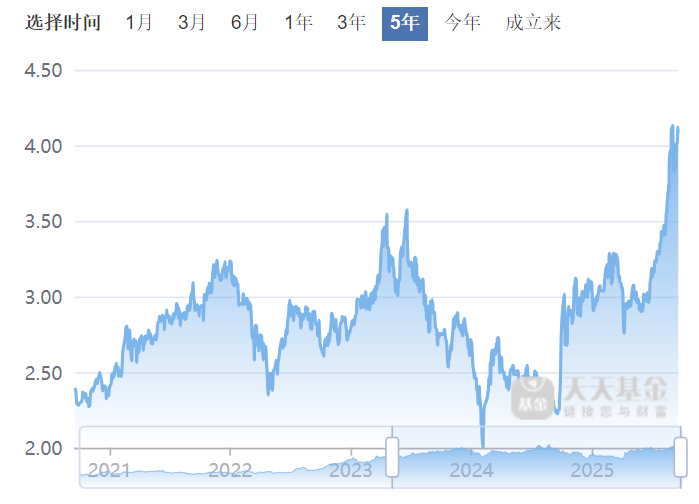
易方达科翔

Search documents
“顶流”基金经理大起底
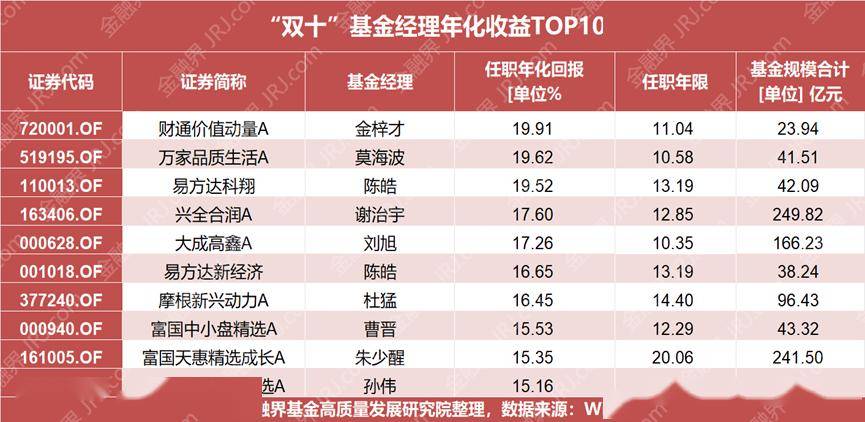
Zhong Guo Ji Jin Bao· 2026-02-08 03:13
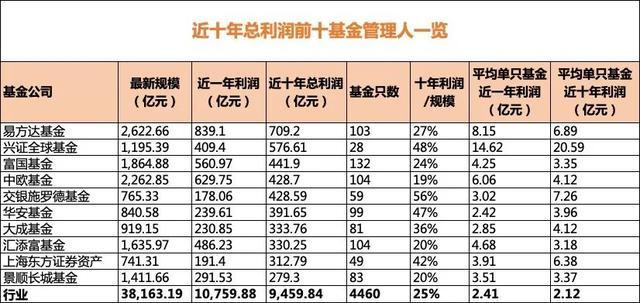
Core Insights - The active equity fund industry in China has generated nearly 1 trillion yuan in profits over the past decade, with significant contributions from leading fund companies [2][4] - Among 29 fund managers managing over 20 billion yuan, only 11 have consistently outperformed benchmarks over 1, 3, and 5 years, indicating a notable divergence in management capabilities [1][6] Industry Performance - The total profit generated by active equity funds in the last ten years reached 9,459.84 billion yuan, with an annual profit of 10,759.88 billion yuan in 2025 [2][4] - The top ten fund management companies contributed nearly 40% of the total profits, with E Fund, Xingzheng Global Fund, and Fortune Fund leading the profit rankings [3][4] Fund Manager Analysis - E Fund achieved the highest total profit of 709.20 billion yuan over ten years, while Xingzheng Global Fund demonstrated high profitability relative to its size, with a profit-to-scale ratio of 48% [4][6] - A select group of fund managers, including Yang Dong and Liu Jianwei, have shown exceptional performance, with some achieving over 100% excess returns over various time frames [7][8] Future Industry Trends - The industry is entering a new phase where the focus is shifting from mere scale growth to long-term value creation efficiency and the ability to manage large funds effectively [9] - Developing a robust investment research system that is resilient to market style changes and nurturing talent capable of managing large-scale funds will be crucial for high-quality development in the future [9]

【干货】一图看懂2025年4季报,投顾组合基金背后的投资秘诀
银行螺丝钉· 2026-01-29 14:04
Core Viewpoint - The article provides an overview of the updated active fund manager pool information for the 2025 Q4 reports, highlighting key metrics such as investment style, stock ratio, industry preference, turnover rate, valuation of major holdings, concentration of holdings, and fund size [1][2][3]. Summary by Sections Fund Manager Information - The article includes a comprehensive list of fund managers categorized by investment style, such as deep value, growth, and balanced strategies, along with their respective fund names and codes [4][5][10][11]. Investment Style - Investment styles are crucial as they reflect the types of stocks held by the funds. The article notes that different styles have their strong and weak phases, with historical data showing a rotation between value and growth styles over the years [36][40]. Industry Preference - Fund managers typically focus on specific industries where they have expertise. The article emphasizes the importance of understanding these preferences to gauge potential performance [48][50]. Stock Ratio - The article discusses the stock ratio, indicating that active funds usually maintain a stock ratio around 85% to 90%, which affects the fund's volatility [45][46]. Concentration of Holdings - The concentration of holdings, defined as the proportion of the top ten stocks in the fund's net assets, is highlighted as a significant factor influencing fund volatility [53]. Valuation of Major Holdings - The article mentions that the valuation of major holdings is assessed based on the top ten stocks disclosed in the fund's reports, which may not always reflect real-time adjustments made by fund managers [56][58]. Turnover Rate - The turnover rate, which indicates how frequently stocks are bought and sold within the fund, is discussed. A turnover rate below 200% is considered low for active funds [59][60]. Fund Size - The size of the fund is noted as a critical factor, with larger funds potentially facing challenges in achieving excess returns due to management complexities [62][64]. Fund Manager's Perspective - The article emphasizes the importance of the fund manager's insights, which can provide valuable context regarding past performance and future market outlooks [70][74].

我们基金经理榜单是如何筛选的?有哪些基金经理今年值得关注?
Sou Hu Cai Jing· 2026-01-08 13:06
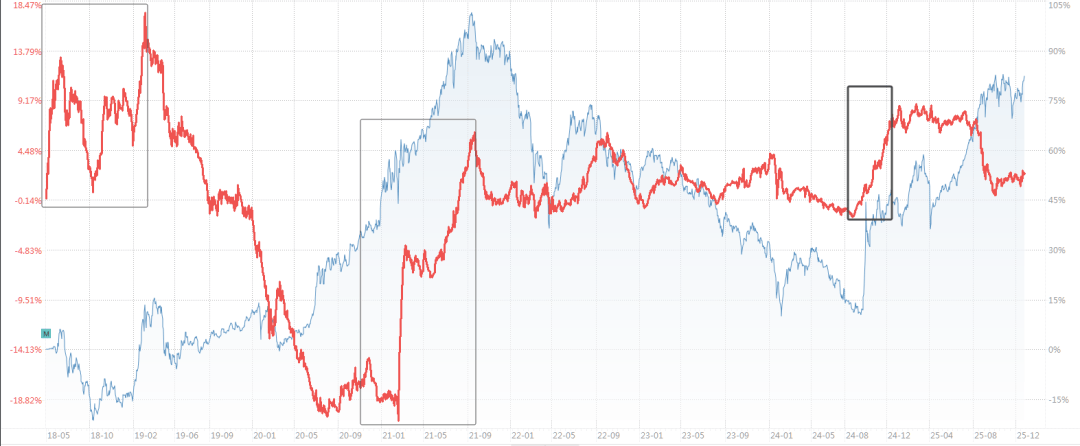
Core Viewpoint - The article emphasizes the importance of "long-term excess return stability" as the primary criterion for selecting fund managers, highlighting the significance of consistent performance over time rather than short-term gains [2][11]. Group 1: Key Metrics for Fund Selection - The main indicator for selecting fund managers is "long-term excess return stability," which reflects three key dimensions: stable fund manager style, sustained alpha capability, and large strategy capacity [2]. - The observation method involves comparing fund performance against corresponding style beta indices, with a stable line indicating stable excess returns [2]. - A preference is shown for funds with consistent excess returns rather than those with sporadic high performance, which may be influenced by luck [2]. Group 2: Notable Fund Managers - Several fund managers from E Fund are highlighted for their stable excess returns, including Yang Zhenshao, Chen Hao, Wang Xiaocheng, Qi He, and Zhang Qinghua, all of whom have demonstrated strong performance over extended periods [4][5][7][8][9]. - Zheng Xi, a veteran fund manager with 19 years of experience, is noted for his consistent performance in the technology sector, achieving significant returns in 2025 [12]. - Wu Yang is recognized for his ability to adapt investment strategies in response to market changes, showcasing flexibility in portfolio management [18][21]. Group 3: Market Insights - The article discusses the current underperformance of quality style investments, suggesting that the market may soon favor these strategies as economic conditions improve [24][27]. - The article indicates that the consumer index is currently undervalued, with a PE ratio of 19.5, suggesting potential for future growth as market conditions stabilize [26][27]. - The overall strength of E Fund's investment team is highlighted, suggesting that a strong research platform and talent development contribute to the consistent performance of its fund managers [28].
低利率遇见高股息,红利基金凭什么成为最稳“现金牛”?
Mei Ri Jing Ji Xin Wen· 2025-12-25 14:51
Core Insights - The investment strategy of dividend investing is regaining prominence as a stable investment approach in 2025, contrasting with previous years focused on growth and resilience [1] - Dividend funds are highlighted as a key investment tool for 2025, offering steady returns and enhancing overall yield through dividends [1] Group 1: Dividend Fund Performance - Since the beginning of 2025, public funds have distributed over 220 billion yuan in dividends, with a total of 3,492 funds implementing dividend distributions, marking a year-on-year increase of approximately 13.5% [2] - Leading fund companies like E Fund and Huaxia Fund have demonstrated significant dividend capabilities, each surpassing 10 billion yuan in annual dividends [2] - Equity funds are increasingly contributing to the total dividend pool, with their share rising as bond funds' contribution declines, indicating a shift in investor preference [2][3] Group 2: Specific Fund Highlights - The top five funds in terms of dividend payouts in 2025 are all ETFs, with the Huatai-PB CSI 300 ETF leading at 8.39 billion yuan [3] - Funds with a high frequency of dividends, particularly those focused on dividend strategies, have shown strong performance, with some funds achieving over 10 distributions in 2025 [3] - The highest-performing dividend fund in 2025 is E Fund Kexiang, with a return of 66.37%, significantly outperforming others in the same category [3] Group 3: Fee Structure and Growth - Dividend funds are characterized by lower management and custody fees compared to actively managed equity funds, making them more attractive in a low-fee environment [4] - As of mid-2025, the asset management scale of dividend funds reached approximately 240 billion yuan, reflecting a significant increase driven by low fees and improved dividend mechanisms [5] - The growth of dividend funds is attributed to a combination of low-fee environments, enhanced dividend mechanisms, and rising demand for stable returns amid market uncertainties [5] Group 4: Future Outlook - Industry experts believe that dividend funds will continue to be a favored asset class due to ongoing policy support for dividend distributions from both funds and listed companies [6] - Key areas of focus for 2026 include traditional industry leaders with stable earnings and clear dividend policies, as well as emerging dividend stocks with strong payout intentions [7] - The long-term value of Hong Kong dividend assets is also highlighted, particularly for investors seeking cash flow returns in a low-interest-rate environment [7]
2025大事件:巴菲特退休,他的投资理念给人留下什么启示?
Xin Lang Cai Jing· 2025-12-24 10:15
Core Insights - Warren Buffett's retirement marks the end of an era in investment, emphasizing the enduring value of his investment philosophy [3] - The article highlights the importance of maintaining composure and a long-term perspective in the face of market volatility, as demonstrated by Buffett's investment strategies [6][12] Group 1: Investment Philosophy - Buffett's approach to investing is rooted in the belief that market fluctuations should be viewed as opportunities rather than threats, advocating for a long-term investment horizon [6] - The principle of "ability circle" is emphasized, where investors should only engage in sectors they fully understand to mitigate unknown risks [12][13] Group 2: Fund Management and Performance - The article discusses the challenges faced by public fund managers who may chase short-term performance at the expense of value investing principles, leading to significant performance gaps [8] - The China Securities Regulatory Commission's new guidelines aim to promote long-term performance evaluation for public funds, enhancing the importance of fund ratings [8][9] - Top-performing fund companies, such as E Fund and ICBC Credit Suisse, demonstrate strong long-term performance, with several funds achieving annualized returns exceeding 15% and 20% [9][11] Group 3: Industry Trends and Future Outlook - The public fund industry in China has surpassed 35 trillion yuan, playing a crucial role in supporting the real economy and enhancing investor returns [15] - The shift towards prioritizing investor returns over mere scale is highlighted as a key trend in the ongoing reform of the public fund industry [15]

易方达基金:以长期主义穿越周期
Zhong Guo Zheng Quan Bao· 2025-12-14 20:19
Core Viewpoint - Long-termism is emphasized as a core principle for navigating market cycles, with E Fund adhering to the mission of "discovering value and creating the future" since its inception [1] Group 1: Long-term Performance and Investment Philosophy - E Fund's investment philosophy is centered on deep research and a long-term perspective, believing that the essence of investment is value discovery [1][2] - The company has cultivated a group of experienced fund managers, with five managers having over 10 years of tenure and annualized returns exceeding 10% as of November 2025 [1] - E Fund's flagship fund, E Fund Kexiang, has achieved a net value growth rate of 1180.4% and an annualized return of 16.1% since its transformation into an open-end fund in 2008 [2] Group 2: Research and Management Innovation - The active equity team at E Fund emphasizes in-depth research and has established multiple research groups covering various sectors, including pharmaceuticals, TMT, and ESG [3] - E Fund has adopted an innovative "big platform, small team" management model to enhance resource integration and professional focus [4] - The platform supports investment teams by providing comprehensive back-office functions, allowing them to concentrate on research and investment [4] Group 3: Talent Development and Cultural Transmission - E Fund prioritizes talent development through a structured training system, focusing on aligning new hires with the company's culture [5][6] - The company employs a mentorship system where experienced researchers guide newcomers, ensuring research aligns with investment needs [6] - E Fund promotes a culture of long-term, value, and responsible investing, fostering a collaborative environment among team members [6][7] Group 4: Future Outlook - E Fund aims to continue its commitment to long-termism, enhance its talent pipeline, and leverage technology to improve investment management and client services [7]
绩优基金纷纷限购 多只产品进入紧申购模式
Zheng Quan Shi Bao· 2025-12-03 22:18
Group 1 - Multiple high-performing funds have recently reduced their subscription limits, indicating a new wave of "purchase restrictions" aimed at managing inflows and protecting existing investors' interests [1][2] - For example, funds managed by Lan Xiaokang, including China Europe Dividend Enjoyment A, have lowered their daily subscription limit to 10,000 yuan, following previous reductions from 1 million yuan to 500,000 yuan [1] - The strong performance of these funds, with year-to-date returns of 42.93%, 32.18%, and 45.79%, has attracted significant investor interest, prompting fund companies to balance scale management with investment stability [1] Group 2 - The trend of imposing purchase limits is not isolated, as other funds like Guangfa Carbon Neutrality and E Fund Kexiang have also suspended large subscriptions due to their impressive year-to-date returns of 65.03% and 61.49%, respectively [2] - In the QDII sector, Guangfa Global Select has set a subscription limit of 10,000 yuan for institutional investors, reflecting a broader trend of limiting large inflows in high-performing products [2] - This phenomenon highlights a shift in the public fund industry towards prioritizing refined operations over mere scale expansion, as evidenced by multiple funds implementing purchase restrictions [3] Group 3 - The recent wave of purchase restrictions reflects several industry trends, including the tendency for high-performing funds to attract significant capital, which can pressure fund managers' strategies and increase costs [3] - Fund managers are seeking to control the pace of capital inflows to avoid forced adjustments in their portfolios due to sudden surges in subscriptions [3] - This shift indicates a transition in the public fund industry from a focus on scale-driven growth to a more quality-oriented approach centered on risk control, investment discipline, and long-term returns [3]
熊市不慌,牛市能涨!十年‘双十’基金经理名单曝光
Sou Hu Cai Jing· 2025-12-02 11:22
Core Insights - The Shanghai Composite Index has reached the 4000-point mark for the first time in ten years, indicating a resurgence in market enthusiasm and a rise in the net value of many actively managed equity funds [1] - The "Double Ten" fund managers, defined as those with over ten years of management experience and an annualized return exceeding 10%, have proven to be resilient in various market conditions [1] Fund Manager Performance - The top ten "Double Ten" fund managers include notable figures from mid-sized fund companies, such as Jin Zicai from Caitong Fund and Mo Haibo from Wanji Fund, showcasing their strong performance over the years [1][2] - Jin Zicai's Caitong Value Momentum Fund and Mo Haibo's Wanji Quality Life Fund have demonstrated strong offensive capabilities during bull markets while maintaining a maximum drawdown of around 20% during market corrections, reflecting good risk management [2][3] Annualized Returns - The annualized returns for the top fund managers in 2025 show Caitong Value Momentum A at 63.10% and Wanji Quality Life A at 61.63%, indicating robust performance in the current year [3] - Historical performance data reveals significant fluctuations, with Caitong Value Momentum A achieving a return of 70.96% in 2019 and a decline of -23.09% in 2023, while Wanji Quality Life A had a peak return of 35.04% in 2021 [3] Long-Term Management - Zhu Shaoxing from Fortune Fund exemplifies long-term management, having managed the Fortune Tianhui Growth Mixed Fund since 2005, maintaining an annualized return of over 15% [4]
主动权益基金罕见分红,释放什么信号?
Guo Ji Jin Rong Bao· 2025-11-14 05:37
Core Viewpoint - A rare occurrence of dividend distribution among growth-style active equity funds has been observed, with several funds announcing their first dividends of the year, indicating a shift in strategy and market conditions [1][2][3] Group 1: Dividend Announcements - Multiple active equity funds, including those from E Fund, have announced their first dividends of the year, allowing investors to choose between reinvestment or cash dividends [1][2] - The recent dividend distributions are notable as they come from growth-style funds, which typically focus on capital appreciation rather than income generation [3][5] - Funds like E Fund Kexun and Wanjiabj North Exchange Selection have reported significant year-to-date returns, with E Fund Kexun exceeding 100% [2][5] Group 2: Market Context - The decision to distribute dividends is attributed to the strong performance of growth sectors, particularly technology, which has led to substantial gains for fund managers [6] - The current market environment has seen a notable increase in the valuation of technology stocks, with the ChiNext 50 Index PE ratio reaching 157 times, indicating a high valuation compared to historical averages [6][7] - Analysts suggest that the distribution of dividends may serve as a strategy for fund managers to lock in profits and optimize portfolio structures amid high valuations and concentrated holdings in technology stocks [6][7]
公募顶流,艰难回本
Hu Xiu· 2025-09-19 11:21
Group 1 - The core viewpoint of the articles highlights the contrasting fortunes of top fund managers in the current market, particularly those focused on technology and growth sectors, compared to those heavily invested in traditional sectors like consumption and renewable energy [1][22][25] - Fund manager Liu Gesong, who previously achieved significant returns, has seen his products struggle, with some still 30% below their peak net value [1][13] - In contrast, technology-focused fund managers like Hu Yibin and Chen Hao have seen their products recover significantly, with some nearing or surpassing their 2021 highs [2][5][6] Group 2 - The current market is characterized as a "technology bull," with growth-oriented funds performing well, particularly in sectors like AI, robotics, and innovative pharmaceuticals [2][19] - Hu Yibin's performance stands out, with his flagship fund showing a 25% increase compared to its 2021 peak [2][4] - Chen Hao's fund has also performed well, achieving a 48.65% return year-to-date, with net values exceeding 2021 highs [6][8] Group 3 - Many former top fund managers who relied heavily on sectors like renewable energy are facing significant challenges, with some still far from recovering their previous highs [15][18] - The article notes that while some managers have adapted to new trends, others remain stuck in their previous strategies, leading to poor performance [28][30] - The medical sector has shown resilience, with top managers like Zhao Bei achieving substantial returns due to the innovative drug market, although they still face challenges in recovering from past losses [25][27] Group 4 - The articles emphasize the importance of adapting investment strategies to current market trends, with successful managers demonstrating the ability to pivot between sectors [28][31] - The long-term outlook for technology and medical sectors appears promising, driven by demographic trends and innovation, while traditional consumption sectors face more uncertainty [29][32] - The performance of fund managers is increasingly scrutinized based on their ability to help investors recover from previous losses, highlighting the need for effective strategy adjustments [28][30]