机械器具

Search documents
财政部 海关总署 税务总局关于中国国际服务贸易交易会展期内销售的进口展品税收优惠政策的通知财关税〔2026〕22号
蓝色柳林财税室· 2026-03-07 14:42
Core Viewpoint - The article outlines the tax exemption policy for imported exhibits sold during the China International Service Trade Fair, aimed at supporting the event and promoting international trade [2][3]. Tax Exemption Policy - Each exhibitor is allowed to sell imported exhibits within a specified tax-free quota, exempting them from import duties, VAT, and consumption tax [2]. - The policy excludes certain categories of goods, including prohibited items, endangered species products, tobacco, alcohol, automobiles, and items listed in the "Major Technical Equipment and Products Not Eligible for Tax Exemption" directory [2][4]. Sales Quotas for Exhibitors - Specific sales limits for different categories of imported exhibits are established, such as: - 10 units for machinery and electrical equipment (excluding medical instruments) [4] - 2 units for special-purpose vehicles [4] - 3 units for ships and floating structures [4] - 5 units for optical and precision instruments [4] - 24 units for medical instruments [4] - A monetary limit of $20,000 for other categories [4]. Reporting and Compliance - The Beijing International Service Trade Affairs Center is responsible for reporting the list of exhibitors and their sales to the Beijing Customs [3]. - After the fair, the center must report the implementation status of the policy to relevant government departments within three months [3]. Applicability - This notification applies to the service trade fairs held from 2026 to 2027 [3].

美国对俄制裁放大招,500%关税逼全球选边,中国直面三重冲击
Sou Hu Cai Jing· 2026-01-13 06:05
Core Viewpoint - The "Sanctioning Russia Act of 2025" aims to fundamentally reshape global sanctions logic, transitioning from targeted punishments to forcing countries to choose sides, with severe penalties for those continuing to engage with Russian energy products [1][3]. Summary by Sections Section 1: Direct Sanctions on Russia - The act imposes punitive tariffs of no less than 500% on nearly all Russian imports, including previously exempt essential goods like agricultural fertilizers, with a goal to fully ban Russian uranium by 2028 [1]. - It includes stringent measures against the Russian Central Bank, freezing its assets in the U.S. and prohibiting transactions with U.S. entities, while also targeting major Russian banks and financial institutions to cut off their access to capital and the dollar system [1]. - The sanctions list has been expanded to include key figures in the Russian government, military, and energy sectors, employing asset freezes and transaction bans to enhance accountability [1]. Section 2: Secondary Sanctions on Third Countries - The act's most threatening aspect is the secondary sanctions clause, which imposes a 500% tax on all goods and services exported to the U.S. from countries that knowingly purchase Russian energy products [3]. - This clause applies indiscriminately, effectively acting as a trade embargo on countries reliant on exports to the U.S., which could devastate their economies [3]. - The vague definition of "knowingly" allows the U.S. to interpret and expand the sanctions scope, potentially penalizing countries that indirectly engage with Russian energy through third parties [3]. - China is explicitly excluded from any exemptions, facing heightened tariff threats despite the act's national security waiver provisions [3]. Section 3: Risks for China - China faces significant risks across trade, finance, and energy sectors due to the act, as it attempts to draw China into a geopolitical conflict between the U.S. and Russia [5]. - The potential implementation of 500% tariffs could drastically reduce China's exports to the U.S., which reached $540 billion in 2024, affecting key sectors like electrical equipment and textiles [7]. - Anticipated tariffs may lead U.S. importers to shift orders to other regions, increasing costs and extending settlement periods for Chinese exporters, creating long-term negative effects [7]. - Financially, Chinese banks may need to limit dealings with Russia to avoid U.S. sanctions, complicating trade financing and cross-border transactions, which could slow down trade growth with Russia [7]. - In the energy sector, China must navigate a dilemma between reducing Russian energy imports to maintain access to the U.S. market or continuing its current procurement levels and facing severe tariffs [7]. - The act represents a strategic tool for the U.S. to bind global energy trade to geopolitical objectives, compelling countries to comply with U.S. strategic arrangements [7].

数据印证海南对全球资本“磁吸力” 解读海南自由贸易港全岛封关“含金量”
Yang Shi Wang· 2025-12-19 02:36
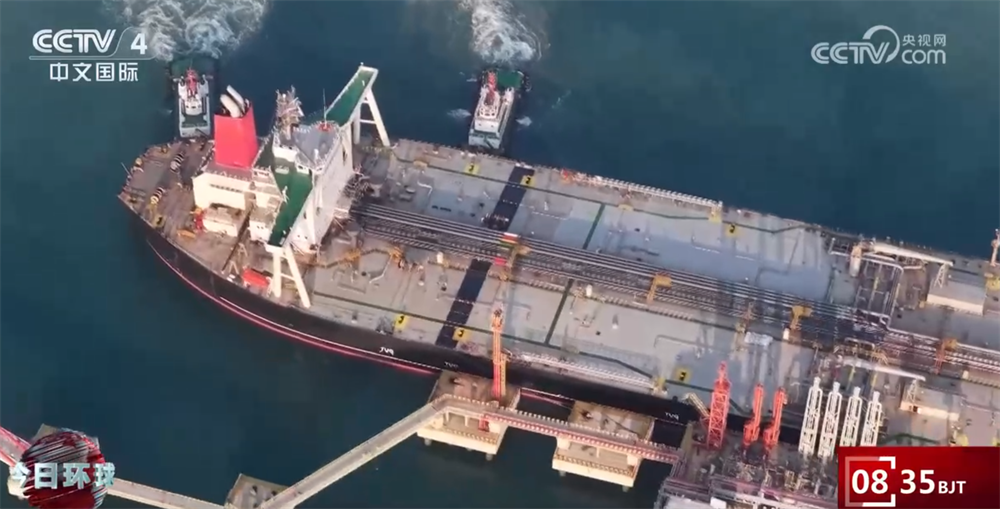
Core Viewpoint - The official launch of the Hainan Free Trade Port's full island closure marks a significant step in China's commitment to high-level opening-up and the construction of an open world economy [1][5]. Group 1: Policy Implementation - Hainan has become a special customs supervision area, implementing a policy characterized by "one line" opening, "two lines" management, and free movement within the island [1][5]. - The first batch of "zero tariff" imported products, including 179,000 tons of petrochemical raw materials, has arrived at Yangpu Port, demonstrating the efficiency of customs clearance with a time saving of nearly 4 hours [1][3]. Group 2: Tax and Trade Benefits - The list of "zero tariff" goods has expanded to approximately 6,600 tax items, with a significant broadening of the beneficiaries [3][11]. - The processing and value-added goods for domestic sales are exempt from tariffs, with lowered thresholds for policy benefits [3][11]. - Companies in Hainan can benefit from a 30% value-added processing exemption for goods sold to the mainland [11]. Group 3: Economic Impact - Over the past five years, Hainan has attracted foreign investment from 176 countries and regions, with actual foreign capital utilization reaching 102.5 billion RMB, growing at an annual rate of 14.6% [16]. - The establishment of foreign enterprises in Hainan has averaged 8,098 annually, with a growth rate of 43.7% [16]. - The annual growth rate of foreign direct investment has reached 97%, indicating Hainan's increasing attractiveness to global capital [16]. Group 4: Local Benefits - Travelers from the mainland to Hainan will not need additional documentation, and the duty-free shopping options have increased, with an annual limit of 100,000 RMB per person for duty-free purchases [9]. - Residents of Hainan can purchase duty-free items without limits if they have a record of leaving the island within the year [9]. - High-demand talent working in Hainan may benefit from personal income tax exemptions on amounts exceeding a 15% effective tax rate [15].
视频丨什么是海南自贸港全岛封关运作?一文解答
Yang Shi Xin Wen Ke Hu Duan· 2025-11-19 07:08
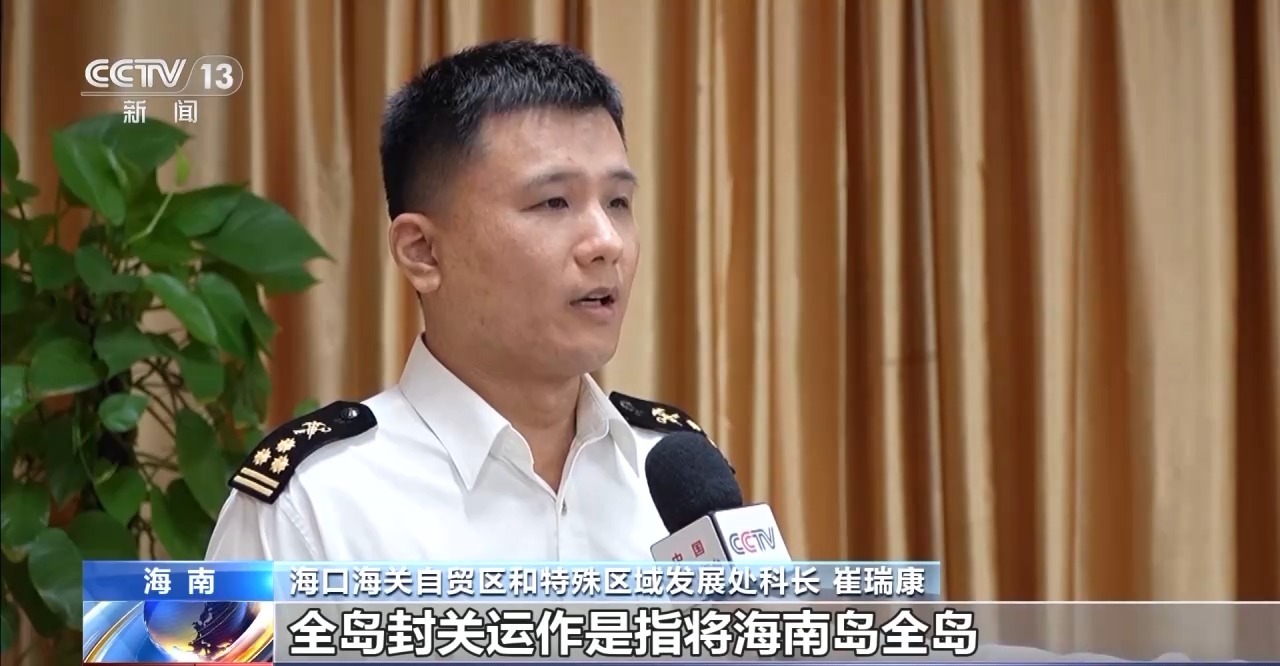
Group 1 - The core concept of the "full island closure operation" is to establish Hainan Island as a customs supervision special area, implementing a policy characterized by "open on the first line, controlled on the second line, and free within the island" [4] - The "first line" refers to the open trade between Hainan Free Trade Port and other countries, while the "second line" involves precise management of trade between Hainan and mainland China [4][6] - The "zero tariff" policy means that imported goods are exempt from import duties, value-added tax, and consumption tax, with the scope of zero-tariff goods expanding from over 1,900 to more than 6,600 items, covering approximately 74% of all tariff items [8][10] Group 2 - The zero-tariff goods mainly include production materials such as traditional Chinese medicine, textile raw materials, non-ferrous metal products, and machinery, while personal consumer goods like meat, seafood, cosmetics, clothing, mobile phones, and home appliances will still be subject to import taxes [10] - The beneficiaries of the zero-tariff policy are eligible enterprises, institutions, and certain non-profit educational organizations, while individuals do not qualify for zero-tariff benefits and must pay import taxes on goods processed from zero-tariff items [13]
全省外贸企业享惠超120亿元
Mei Ri Shang Bao· 2025-10-30 22:15
Core Insights - The signing of the upgraded China-ASEAN Free Trade Area 3.0 agreement in Malaysia is expected to inject new momentum into Zhejiang's foreign trade, with significant growth in trade volumes and benefits for enterprises [1] Group 1: Trade Performance - In the first three quarters, Hangzhou Customs issued 488,000 certificates of origin under the China-ASEAN Free Trade Agreement, with a total value of 142.92 billion yuan, representing year-on-year increases of 17.6% and 7.5% respectively, and is expected to benefit enterprises by approximately 12.8 billion yuan [1] - Zhejiang's exports of electromechanical products to ASEAN reached 188.52 billion yuan, a year-on-year increase of 21.7%, with "new three items" (new energy vehicles, lithium batteries, and photovoltaic products) exports amounting to 9.27 billion yuan, up 49.5% [2] - The export of automotive parts and ships from Zhejiang also saw significant growth, with values of 8.32 billion yuan and 4.34 billion yuan, reflecting year-on-year increases of 28.0% and 28.6% respectively [2] Group 2: Import Dynamics - ASEAN continues to enrich Zhejiang's consumer market with a variety of livelihood goods, including a notable increase in the import of aquatic products, which totaled 142 tons in the first three quarters, a 3.32-fold increase compared to the same period last year [2] - Key imports from ASEAN include agricultural products, basic organic chemicals, natural and synthetic rubber, and coal, which are crucial for stabilizing the local industrial supply chain [2] Group 3: Policy Support and Services - Hangzhou Customs has implemented a series of targeted service measures to ensure enterprises fully benefit from the free trade agreement, including the extension of "e-printing" for certificates of origin and the promotion of a one-stop consultation platform for preferential tax rates [3] - The customs authority is utilizing big data to identify enterprises that have not yet applied for benefits and is providing point-to-point guidance to facilitate policy implementation [3] - The most concentrated benefits from the agreement are observed in trade with Indonesia, Vietnam, and Thailand, with respective values of 44.19 billion yuan, 32.06 billion yuan, and 27.33 billion yuan in the first three quarters [3]
北大汇丰智库发布二季度经济研判:中国经济全年增速预计达5%
Sou Hu Cai Jing· 2025-07-04 11:20
Group 1 - The macroeconomic analysis conference hosted by Peking University HSBC Business School focused on China's economic cooperation opportunities with Southeast Asia and the Middle East in 2025 [1] - The conference gathered over 160 experts from various sectors to discuss the economic situation of China and the Guangdong-Hong Kong-Macao Greater Bay Area in the second quarter of 2025 [1] Group 2 - Southeast Asia is projected to be the fifth-largest economy globally, with a GDP growth rate of 4.8% and export growth of 6.8% in 2024, alongside a 10% increase in foreign direct investment [4] - The Middle East accounts for 5.2% of global GDP and is a significant source of energy imports for China, with strong growth in imports of machinery and vehicles [4] - There is substantial cooperation potential between China and Southeast Asia/Middle Eastern countries in supply chain collaboration, digital economy, artificial intelligence, and energy transition [4] Group 3 - China's economic growth is expected to show a pattern of high growth in the first half and lower growth in the second half of 2025, with an overall target of around 5% for the year [5] - The use of targeted consumption vouchers is aimed at temporarily boosting consumption by increasing disposable income, but long-term strategies should focus on increasing income and reducing leverage [5] - There remains a demand for housing, with current policies favoring the second-hand housing market due to its advantages in availability and cost-effectiveness [5] Group 4 - The Guangdong-Hong Kong-Macao Greater Bay Area is experiencing growth supported by consumption, although there is a need to boost corporate investment confidence [6] - From January to May, consumer policies in Guangdong have shown significant effects, with a 6.79% increase in exports of machinery and electrical equipment [6] - The GDP growth for the Greater Bay Area in the second quarter is projected to be 4.3% [6] Group 5 - Key investment opportunities in the Middle East include agriculture, digital products in service trade, the second-hand car market, and manufacturing enterprises with advanced technology [8] - The population of the UAE is 12.5 million, with over 80% being expatriates, indicating significant opportunities due to the influx of people and capital [8] Group 6 - The global industrial transfer process has accelerated, with a decrease in China's share of U.S. imports and an increase in emerging economies like Bangladesh and India [9] - Strategies for China include focusing on trade negotiations, encouraging companies to explore overseas markets, and developing service trade to reduce trade deficits [9] Group 7 - The relationship between macro and microeconomic factors is crucial, with a focus on how weak private investment can lead to reduced employment opportunities and slower income growth [13] - The balance between domestic market development and international expansion is essential for sustainable growth, as seen in developed economies [13]

波黑今年1-5月进出口总额超200亿马克
Shang Wu Bu Wang Zhan· 2025-06-11 15:57
Group 1 - Bosnia's total imports in the first five months of this year reached approximately 13 billion marks, an increase from 12.44 billion marks in the same period last year [1] - Exports during the same period amounted to 7.31 billion marks, up from 6.9 billion marks year-on-year, resulting in a trade deficit of 5.69 billion marks [1] - The total trade volume exceeded 20 billion marks, indicating significant growth in both imports and exports [1] Group 2 - The main imported goods included mineral fuels, oils, and distillation products (1.52 billion marks), machinery and parts (1.14 billion marks), and railway vehicles and parts (1.08 billion marks) [1] - The highest export categories were machinery and parts (590 million marks), furniture and related products (504.4 million marks), and mineral fuels and oils (489.6 million marks) [1] - Major import sources were Croatia, Serbia, Germany, Slovenia, Italy, and Austria, while key export destinations included Croatia, Germany, Serbia, Austria, Italy, and Montenegro [1] Group 3 - The growth in trade volume is attributed to inflation increasing the value of imports and exports, along with rising disposable income and consumption due to wage and remittance increases [2] - The first growth in EU industrial production in two years has also contributed to increased export demand [2] - This growth trend is expected to continue until the end of the year, barring any significant impacts from potential trade wars [2]
深度 | 特朗普怎样对医药“动刀”?—— “特朗普经济学”系列之十四【陈兴团队·财通宏观】
陈兴宏观研究· 2025-04-21 14:24
Core Viewpoint - Trump's new healthcare policy continues the idea of reducing government intervention, with recent expressions of imposing tariffs on the pharmaceutical industry, raising questions about the impact on the global healthcare sector and challenges for Chinese pharmaceutical companies [1][3]. Historical Development of the US Healthcare System - The evolution of the US healthcare system can be divided into four stages, focusing on the dual goals of expanding coverage and controlling costs: 1. Emphasis on drug regulation and insurance expansion [5]. 2. Reform of payment methods and increased regulatory flexibility [6]. 3. Strengthened cost control and comprehensive regulation [7]. 4. Promotion of insurance expansion and regulatory informatization [7][14]. Comparison of Healthcare Policies Under Trump and Biden - Trump's administration focused on reducing government intervention, while Biden's administration aimed to strengthen government involvement in healthcare [19][22]. - During Trump's term, healthcare insurance spending remained stable, while Biden's term saw a gradual increase in the proportion of insurance spending [25]. - Employment in the healthcare sector improved under Biden, attributed to the expansion of the Affordable Care Act (ACA) and increased healthcare investment [25]. Future Direction of the US Pharmaceutical Industry - Trump's new term is expected to continue reducing government intervention and promote the return of pharmaceutical manufacturing to the US, impacting the global pharmaceutical landscape [33]. - Domestic implications include potential reductions in insurance coverage and increased out-of-pocket costs for patients, which may lead to decreased pharmaceutical consumption in the short term [33][35]. - Regulatory relaxation may benefit US biotech and generic drug companies, while tariffs on pharmaceutical products could significantly affect imports, particularly from China [3][42]. Impact of Tariffs on Chinese Pharmaceutical Industry - Trump's tariffs aim to protect domestic pharmaceutical manufacturers and suppress the development of Chinese companies, with significant implications for Chinese pharmaceutical exports to the US and Europe [3][45]. - The Chinese pharmaceutical industry primarily exports to the US and Europe, making it vulnerable to tariff increases, especially in the medical device sector [3][45][49]. - The overall export scale of China's pharmaceutical industry is relatively small, with exports to the US and Europe accounting for over 20% [45][46].

中信证券:关税余波尚存,聚焦核心资产
券商中国· 2025-04-06 09:09
Core Views - The uncertainty surrounding tariff developments persists, but the market is accelerating its shift towards recession trading as expectations of a downturn rise. The synchronization of the economic cycles between China and the U.S. may occur sooner than anticipated [1][5] Tariff Policy and Market Impact - The current tariff policy is seen as a negotiation tactic by the U.S., applying extreme pressure on other countries to achieve a 10% tariff increase while potentially allowing for exemptions in certain industries. This strategy may lead to a reduction in actual tariffs imposed by many countries [3] - China's retaliatory tariff measures are expected to drive domestic substitution in high-end manufacturing and consumer sectors, particularly for products heavily reliant on U.S. imports [3][4] Market Sentiment and Investment Strategy - Investors are likely to lower their risk appetite in the short term, maintaining a framework focused on recession expectations. The uncertainty from the broad and high tariffs is expected to increase market volatility [4][6] - The transition from recession expectations to actual recession trading is becoming more probable, with key indicators such as U.S. corporate earnings per share (EPS) showing signs of decline [6][8] Economic Synchronization and Policy Response - The synchronization of economic cycles between China and the U.S. may lead to an earlier implementation of stimulus policies in China, with significant impacts on GDP growth and exports due to increased tariffs [7][8] - The anticipated window for investment opportunities may also arrive sooner, coinciding with external shocks and policy responses [8] Core Asset Investment Outlook - Core assets are expected to gain an advantage as the economic policy cycles align, with a focus on companies exhibiting strong operational resilience and growth potential. The GARP (Growth at a Reasonable Price) strategy is projected to outperform [9][10] - Short-term investment recommendations include sectors with pricing power and resilience to geopolitical disruptions, such as AI, precision optics, and innovative pharmaceuticals [11][12] Long-term Investment Trends - Long-term focus should be on global manufacturing demand recovery and the trend of Chinese technology going abroad, as geopolitical uncertainties drive countries to invest in energy, defense, and technology sectors [13]