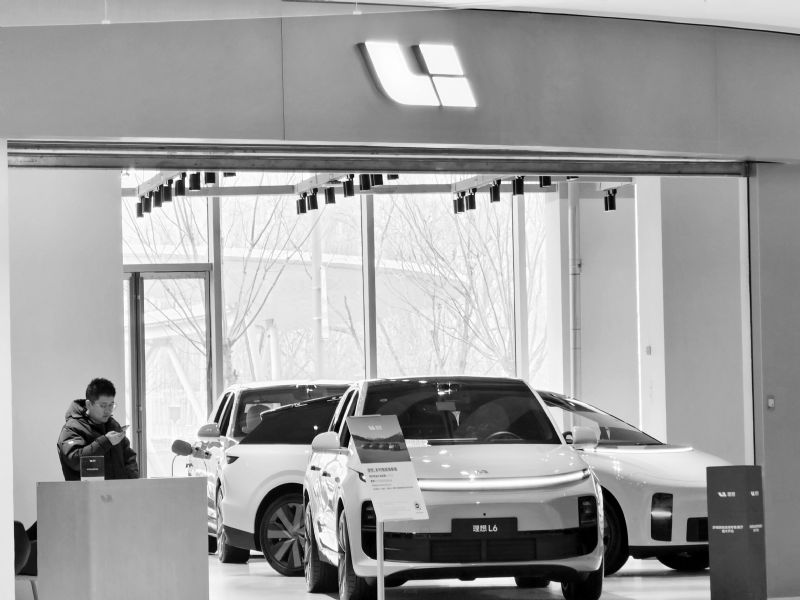
理想i9

Search documents
理想汽车-W(02015):25Q4毛利率略高于预期,具身智能、L9发布后或迎新周期
Western Securities· 2026-03-23 06:38
Investment Rating - The investment rating for the company is "Buy" [3][6]. Core Insights - The company reported a revenue of 112.3 billion yuan for 2025, a year-on-year decrease of 22%, and a net profit of 1.14 billion yuan, down 86% year-on-year. In Q4 2025, the revenue was 28.8 billion yuan, with a quarter-on-quarter decrease of 35% but an increase of 5% compared to the previous quarter. The Q4 net profit was 0.2 billion yuan, with a Non-GAAP net profit of 2.74 billion yuan, aligning with expectations. The vehicle sales revenue in Q4 was 27.3 billion yuan, with a vehicle gross margin of 16.8%, slightly above expectations, primarily due to supplier rebates [1][2][3]. Summary by Sections Financial Performance - For 2025, the company achieved a revenue of 112.3 billion yuan, down 22% year-on-year, and a net profit of 1.14 billion yuan, down 86% year-on-year. The Q4 revenue was 28.8 billion yuan, with a gross margin of 16.8% [1][5][6]. Future Outlook - The company expects Q1 2026 delivery volumes to be between 85,000 and 90,000 units, with a total revenue forecast of 20.4 to 21.6 billion yuan. The target for 2026 is a 20% increase in sales volume and a gross margin of over 15% [2][3]. Product Development - The launch of the new L9 model and advancements in embodied intelligence products are anticipated to drive new growth. The i6 model has achieved stable deliveries, and the i8 orders increased by 180% month-on-month. The new L9 will feature self-developed chips and a complete drive-by-wire chassis [2][3]. Valuation Projections - Revenue projections for 2026 to 2028 are 131.2 billion yuan, 169.2 billion yuan, and 195.7 billion yuan, respectively. The net profit estimates for the same period are 1.2 billion yuan, 5.1 billion yuan, and 9.1 billion yuan, respectively [3][5].

理想汽车-W(02015.HK)2025年四季报点评:25Q4净利转正 后续新车型及管理改善有望迎来底部反转
Ge Long Hui· 2026-03-20 13:23
Core Viewpoint - Li Auto's Q4 2025 financial results show a significant decline in revenue and net profit year-on-year, but a slight improvement quarter-on-quarter, indicating potential recovery driven by new model launches and improved delivery capabilities [1][4]. Financial Performance - Q4 2025 revenue reached 28.8 billion yuan, down 35% year-on-year but up 5.2% quarter-on-quarter; full-year revenue for 2025 was 112.3 billion yuan, a 22% decrease [1]. - Q4 2025 net profit was 0.2 billion yuan, a decrease of 3.5 billion yuan year-on-year, but an increase of 0.64 billion yuan quarter-on-quarter; full-year net profit was 1.1 billion yuan, down 6.9 billion yuan [1]. - Q4 2025 vehicle sales were 109,000 units, down 31% year-on-year but up 17% quarter-on-quarter [1]. Product Development and Sales Strategy - The company plans to launch the next-generation L9 and L9 Livis in Q2 2026, with the L9 Livis priced at 559,800 yuan, featuring advanced technology and upgrades [2]. - The i6 model has entered stable delivery, with supply chain bottlenecks resolved, and monthly delivery capacity expected to increase to 20,000 units, contributing significantly to 2026 sales [2]. Organizational Changes - In January 2026, the company restructured its R&D organization to enhance collaboration and efficiency, reducing the iteration cycle for autonomous driving models from two weeks to one day [3]. - A new "store partner program" will be launched in March 2026 to improve terminal operation quality and enhance the efficiency of the direct sales system [3]. Investment Outlook - Despite facing pressures from rising raw material costs and model transitions, the company's management and R&D capabilities remain strong, with expectations for a sales and profit rebound starting in Q2 2026 [4]. - Sales forecasts for 2026-2027 have been adjusted downwards to 500,000 and 520,000 units, with revenue expectations revised to 131.3 billion and 140.2 billion yuan, and net profit estimates lowered to 0.96 billion and 3.81 billion yuan [4].
【2025年四季报点评/理想汽车】业绩符合预期,构建具身智能完整AI系统
东吴汽车黄细里团队· 2026-03-19 14:15
Core Viewpoint - The article discusses the financial performance and strategic adjustments of Li Auto, highlighting short-term revenue pressures and ongoing organizational and technological innovations aimed at enhancing its core competitiveness in embodied intelligence [3][4][5]. Financial Performance - In Q4 2025, Li Auto achieved revenue of 28.78 billion yuan, with a year-over-year decline of 35.0% and a quarter-over-quarter increase of 5.2%. The automotive sales revenue was 27.25 billion yuan, down 36.1% year-over-year but up 5.4% quarter-over-quarter [3]. - The total vehicle deliveries in Q4 2025 reached 109,000 units, reflecting a year-over-year decrease of 31.2% but a quarter-over-quarter increase of 17.1%. The average selling price (ASP) per vehicle was 250,000 yuan, down 7.1% year-over-year and 10.1% quarter-over-quarter, primarily due to an increased sales proportion of lower-priced models [3]. - The net profit attributable to the parent company was 20 million yuan, returning to profitability quarter-over-quarter, while the Non-GAAP net profit was 270 million yuan, with a per-vehicle profit of 300 yuan, down 90% year-over-year due to changes in product structure [3]. Profitability and Cost Management - The company's gross margin in Q4 2025 was 17.8%, down 2.5 percentage points year-over-year but up 1.5 percentage points quarter-over-quarter. The gross margin for vehicle sales was 16.8%, down 2.9 percentage points year-over-year but up 1.3 percentage points quarter-over-quarter, mainly due to declining sales and an increased proportion of lower-priced models [4]. - In terms of cost control, the R&D expense ratio and SG&A expense ratio for Q4 2025 were 10.5% and 9.2%, respectively, with year-over-year increases of 5.0 and 2.2 percentage points, while remaining stable quarter-over-quarter [4]. Strategic Initiatives - The company is committed to deepening organizational innovation and technological self-research to solidify its core competitiveness in embodied intelligence. Key initiatives include a major restructuring of the R&D system by January 2026, integrating various functions into four major systems [5][6]. - The talent strategy involves promoting younger employees to key positions and implementing profit-sharing mechanisms, with a goal of seeing significant improvements by Q3 2026 [6]. - Technological advancements include breakthroughs in the M100 chip, which has improved operational parameters and computational capacity significantly, leading to cost reductions of over 1,000 yuan per vehicle [6]. Revenue and Profit Forecast - The company maintains a revenue forecast of 138.1 billion yuan for 2026, representing a year-over-year increase of 23%. However, the revenue forecast for 2027 has been revised down to 173.7 billion yuan from the previous 191.2 billion yuan, reflecting a year-over-year increase of 26% [7]. - The net profit forecasts for 2026 and 2027 have been adjusted down to 30 million yuan and 2.8 billion yuan, respectively, with the 2028 net profit forecast set at 5.3 billion yuan, indicating a year-over-year increase of 86% [7].


【券商聚焦】兴业证券予理想汽车-W(02015)\"增持\"评级 预计公司交付量有望同比增长
Xin Lang Cai Jing· 2026-03-19 12:01
Core Viewpoint - The report from Industrial Securities indicates that Li Auto's vehicle deliveries and sales revenue have decreased significantly in Q4 2025, but there are expectations for recovery and growth in 2026 with new product launches and improved supply chains [1][3][4] Group 1: Q4 2025 Performance - Li Auto delivered 109,194 vehicles in Q4 2025, a year-on-year decrease of 31.2% but a quarter-on-quarter increase of 17.1% [1][3] - The automotive sales revenue for Q4 2025 was 27.25 billion RMB, down 36.1% year-on-year but up 5.4% quarter-on-quarter [1][3] - The company's automotive gross margin was 16.8%, a decline of 2.9 percentage points year-on-year but an increase of 1.3 percentage points quarter-on-quarter, primarily affected by the increased proportion of the i6 model and discounts on the L series [1][3] Group 2: Financial Metrics - Li Auto reported a GAAP net profit of 20 million RMB and a Non-GAAP net profit of 270 million RMB for Q4 2025 [1][3] - The company achieved positive free cash flow of 2.47 billion RMB [1][3] - As of December 31, 2025, Li Auto had cash and cash equivalents amounting to 101.2 billion RMB, indicating a strong cash reserve [1][3] Group 3: Q1 2026 Guidance - For Q1 2026, Li Auto projects vehicle deliveries between 85,000 and 90,000 units, representing a year-on-year decrease of 8.5% to 3.1% [1][3] - The total revenue forecast for Q1 2026 is between 20.4 billion and 21.6 billion RMB, reflecting a year-on-year decline of 21.3% to 16.7% [1][3] Group 4: 2026 Outlook - The launch of the new L series and pure electric models is expected to drive sales growth in 2026, with the new Li L9 set to debut in Q2 2026 [2][4] - The L9 will feature advanced technology, including the self-developed Mach 100 chip and an 800V active suspension system, aiming to regain leadership in the flagship SUV market [2][4] - The company anticipates achieving sales revenues of 110.6 billion, 129.3 billion, and 162.9 billion RMB for the years 2026, 2027, and 2028 respectively, with a rating of "Buy" from analysts [2][4]

理想汽车-W(02015):2025年四季报点评:25Q4净利转正,后续新车型及管理改善有望迎来底部反转
Huachuang Securities· 2026-03-19 08:05
Investment Rating - The report maintains a "Recommendation" rating for Li Auto-W (02015.HK) [1] Core Views - Li Auto reported a net profit of 0.2 billion yuan in Q4 2025, marking a year-on-year decline of 35 billion yuan but a quarter-on-quarter increase of 6.4 billion yuan. The total revenue for Q4 2025 was 28.8 billion yuan, down 35% year-on-year but up 5.2% quarter-on-quarter. For the full year 2025, revenue was 112.3 billion yuan, a 22% decline year-on-year, with a net profit of 1.1 billion yuan, down 69 billion yuan year-on-year [1][7] Financial Performance Summary - **Revenue and Profitability**: - Q4 2025 revenue was 28.8 billion yuan, with a year-on-year decrease of 35% and a quarter-on-quarter increase of 5.2%. The full-year revenue for 2025 was 112.3 billion yuan, down 22% year-on-year. The net profit for Q4 2025 was 0.2 billion yuan, a decrease of 35 billion yuan year-on-year but an increase of 6.4 billion yuan quarter-on-quarter [1][7] - **Sales Volume**: - In Q4 2025, the sales volume was 109,000 vehicles, down 31% year-on-year but up 17% quarter-on-quarter. The average selling price (ASP) for vehicles was 250,000 yuan, down 19,000 yuan year-on-year and 28,000 yuan quarter-on-quarter [1][7] - **Gross Margin**: - The gross margin for Q4 2025 was 17.8%, a decrease of 2.4 percentage points year-on-year but an increase of 1.5 percentage points quarter-on-quarter. The vehicle gross margin was 16.8%, down 2.9 percentage points year-on-year but up 1.3 percentage points quarter-on-quarter [1][7] - **Cost and Expenses**: - R&D expense ratio was 10.5%, up 5.0 percentage points year-on-year, while SG&A expense ratio was 9.2%, up 2.2 percentage points year-on-year [1][7] Future Outlook - **New Model Launches**: - The company plans to launch a new generation of L9 and a new version of L9 Livis in Q2 2026, with the L9 Livis priced at 559,800 yuan. The i6 model is expected to contribute significantly to sales in 2026, with monthly delivery capacity projected to reach 20,000 units [1][7] - **Organizational Improvements**: - Li Auto has restructured its R&D organization to enhance efficiency and reduce the iteration cycle for AI model training from two weeks to one day. Sales channel reforms are also underway to improve operational quality [1][7] - **Sales and Revenue Forecasts**: - The sales forecasts for 2026-2027 have been adjusted down to 500,000 and 520,000 vehicles, respectively. Revenue forecasts for the same period have been revised to 131.3 billion and 140.2 billion yuan. Net profit forecasts have also been adjusted to 0.96 billion and 3.81 billion yuan for 2026 and 2027, respectively [1][7]
为实现同比20%的增长 理想汽车的三大选择
2 1 Shi Ji Jing Ji Bao Dao· 2026-03-16 13:57
Core Insights - Li Auto reported a revenue of 112.3 billion yuan and a net profit of 1.1 billion yuan for the year 2025, marking it as the only new energy vehicle company in China to achieve over 100 billion yuan in revenue and profitability for three consecutive years [2] - The company aims for a sales target of 480,000 vehicles in 2026, representing a 20% year-on-year growth, which is considered a pragmatic approach compared to previous high-growth targets [2][4] Financial Performance - In 2025, Li Auto's cash reserves reached 101.2 billion yuan, leading among domestic new energy vehicle companies [2] - The company delivered 406,300 vehicles in 2025, setting a foundation for the 2026 sales target of 480,000 vehicles [2] Sales Strategy - Li Auto is focusing on improving its sales system management to achieve the 20% growth target [4] - The company continues to adhere to a direct sales model, emphasizing service experience and price consistency [6] - A new "store partner" system has been introduced to enhance store management and incentivize store managers, shifting their roles from sales managers to business operators [7][8] Product Development - The upcoming L9 model is undergoing a significant upgrade, with a focus on intelligent driving technology and a new decision-making model [10] - The new L9 will feature the world's first mass-produced fully controlled chassis and an 800V active suspension system, enhancing its competitive edge [11] - Li Auto plans to ensure successful deliveries of its pure electric models, including the i8 and i6, to support the sales growth target [12] R&D Investment - In 2025, Li Auto invested 11.3 billion yuan in R&D, with 50% allocated to AI-related projects, and plans to maintain a similar level of investment in 2026 [14] - The company is restructuring its R&D team to enhance efficiency and focus on core technology capabilities, aiming to integrate AI into its business model [15]
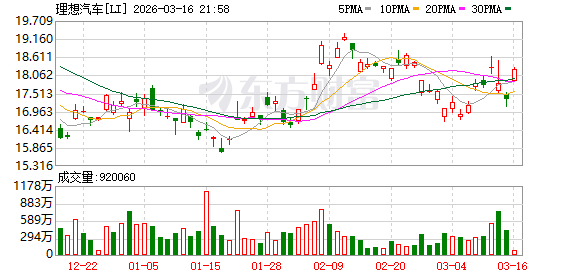
为实现同比20%的增长,理想汽车的三大选择
2 1 Shi Ji Jing Ji Bao Dao· 2026-03-16 13:48
Core Viewpoint - Li Auto has become more pragmatic in 2026, setting a sales target of 480,000 vehicles, which is a 20% year-on-year growth from 2025, reflecting a focus on product upgrades and operational efficiency rather than high growth targets [2][3]. Financial Performance - In 2025, Li Auto achieved a revenue of 112.3 billion yuan and a net profit of 1.1 billion yuan, marking it as the only new force car company in China to surpass 100 billion yuan in revenue for three consecutive years while remaining profitable [2]. - By the end of 2025, Li Auto's cash reserves reached 101.2 billion yuan, leading among domestic new energy vehicle companies [2]. Sales Strategy - The company aims to manage its sales system effectively to achieve its growth target, emphasizing quality over quantity in its sales channels [6][9]. - Li Auto continues to adhere to a direct sales model, believing it ensures service quality and pricing consistency, despite the trend of other companies incorporating dealerships [7][9]. Store Management - The introduction of the "store partner" system aims to empower store managers with decision-making and profit-sharing rights, transforming them into true business operators [10]. - The company is optimizing its existing stores by closing those in poor locations and focusing on high-potential markets for new store openings [8][9]. Product Development - The upcoming L9 model represents a significant upgrade, incorporating advanced AI and smart driving technologies, with a focus on enhancing the vehicle's responsiveness and overall performance [11][12]. - Li Auto plans to ensure successful deliveries of its pure electric models, including the i8 and i6, to support its sales growth target [13]. R&D Investment - In 2025, Li Auto invested 11.3 billion yuan in R&D, with 50% allocated to AI-related projects, and plans to maintain a similar level of investment in 2026 [14]. - The company has restructured its R&D team to enhance efficiency and foster innovation in AI capabilities, aiming to integrate these advancements into its business model [15].
理想汽车业绩“翻车”少卖9.4万辆净利锐减69亿 现金储备超千亿
Chang Jiang Shang Bao· 2026-03-16 02:14
Core Viewpoint - Li Auto, once a leading player in the new energy vehicle sector, reported disappointing financial results for 2025, with significant declines in both revenue and net profit [2][3]. Financial Performance - In 2025, Li Auto achieved revenue of 112.31 billion yuan, a year-on-year decrease of approximately 22.25% [3][8]. - The net profit for 2025 was around 1.1 billion yuan, down 69.08 billion yuan from the previous year, marking an 86% decline [3][8]. - Vehicle sales revenue fell to 106.7 billion yuan, a 23% decrease compared to the previous year [2]. Sales and Delivery - The total new vehicle deliveries for 2025 were 406,300 units, a drop of approximately 94,200 units or 18.8% from 2024 [9]. - The flagship MPV MEGA delivered only 18,500 units, less than 30% of its annual target [9]. - The company faced challenges with its models, including the i6 and i8, which did not meet market expectations due to various factors [9]. Profitability and Margins - The overall gross margin for 2025 was 18.68%, a decline of 1.85 percentage points from 2024 [11]. - The vehicle gross margin was reported at 17.9%, down 1.9 percentage points from the previous year, attributed to changes in product mix [11][12]. Future Outlook - For 2026, Li Auto aims to deliver approximately 487,600 vehicles, representing a 20% growth target [13][14]. - The company plans to launch a new flagship electric SUV, the Li Auto i9, in the second half of 2026 [15]. - Li Auto is also focusing on humanoid robots and AI technologies to enhance its competitive edge in the market [18][19]. R&D Investments - In 2025, Li Auto invested 11.3 billion yuan in R&D, with 50% allocated to AI-related projects [21]. - The planned R&D investment for 2026 is around 12 billion yuan, maintaining a similar focus on AI and related technologies [21]. Operational Adjustments - Li Auto is optimizing its operations, including the closure of underperforming stores, which is part of a broader strategy to enhance operational efficiency [16]. - The company has introduced a "store manager partnership plan" to empower store managers with decision-making authority and profit-sharing [17].
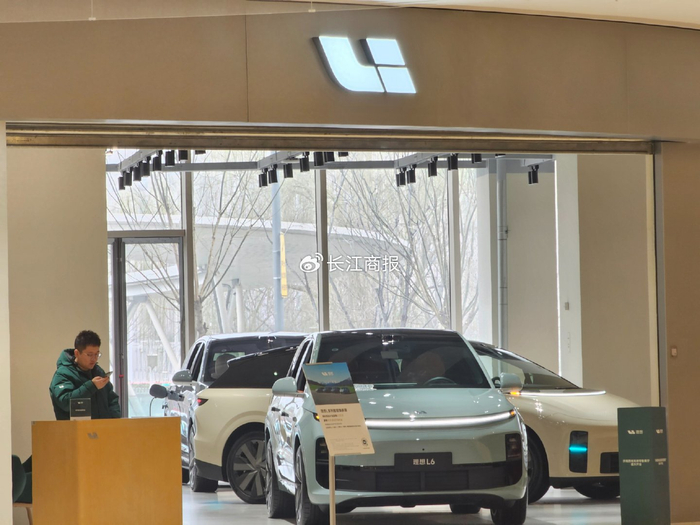
理想汽车业绩“翻车” 少卖9.4万辆净利锐减69亿
Chang Jiang Shang Bao· 2026-03-16 00:48
Core Viewpoint - Li Auto, once a leading player in the new energy vehicle sector, has reported disappointing financial performance for 2025, with significant declines in both revenue and net profit [1][3]. Financial Performance - In 2025, Li Auto achieved a revenue of 112.31 billion yuan, a year-on-year decrease of approximately 22.25% [3][8]. - The net profit for 2025 was around 1.1 billion yuan, down 69.08 billion yuan from the previous year, marking an 86% decline [3][8]. - Vehicle sales revenue fell to 106.7 billion yuan, a 23% decrease compared to the previous year [1]. Vehicle Delivery and Sales - The total new vehicle deliveries for 2025 were 406,300 units, a reduction of approximately 94,200 units or 18.8% from 2024 [1][9]. - The flagship MPV MEGA delivered only 18,500 units, less than 30% of its annual target [9]. - The sales performance of the Li i6 and i8 models was hindered by various challenges, including policy changes and production capacity issues [9]. Profit Margin and Market Competition - The significant drop in net profit is attributed to increased market competition and a rise in terminal discounts, leading to a decrease in gross margin [10]. - The overall gross margin for 2025 was 18.68%, down 1.85 percentage points from 2024, with vehicle gross margin at 17.9%, a decline of 1.9 percentage points [10]. Future Outlook and Strategic Initiatives - For 2026, Li Auto aims for a sales target of approximately 487,600 units, representing a 20% increase from 2025 [10]. - The company plans to launch a new pure electric flagship SUV, the Li i9, in the second half of 2026 [10]. - Li Auto is also focusing on humanoid robots and AI technology as part of its strategy to enhance its competitive edge in the market [12]. R&D Investment - In 2025, Li Auto's R&D expenditure was 11.3 billion yuan, with 50% allocated to AI-related projects [1][12]. - The planned R&D investment for 2026 is around 12 billion yuan, maintaining a similar focus on AI and related technologies [12].
理想汽车业绩“翻车”少卖9.4万辆净利锐减69亿 现金储备超千亿研发113亿一半投向AI
Chang Jiang Shang Bao· 2026-03-15 23:19
Core Viewpoint - Li Auto, once a leading player in the new energy vehicle sector, reported disappointing financial results for 2025, with significant declines in both revenue and net profit [2][5][10]. Financial Performance - In 2025, Li Auto achieved a revenue of 112.3 billion yuan, a year-on-year decrease of approximately 22% [5][11]. - The net profit for 2025 was around 1.1 billion yuan, down from a profit of 6.9 billion yuan the previous year, marking an 86% decline [5][11]. - Vehicle sales revenue fell to 106.7 billion yuan, a 23% decrease compared to the previous year [2][5]. Vehicle Delivery and Sales - The total new vehicle deliveries for 2025 were 406,300 units, a drop of about 94,200 units or 18.8% from 2024 [3][13]. - The flagship MPV MEGA delivered only 18,500 units, less than 30% of its annual target [13]. - The sales performance of the Li Auto i6 and i8 models was hindered by various challenges, including policy changes and production capacity issues [13][14]. Market Competition and Strategy - The decline in net profit is attributed to increased market competition and the need for greater sales incentives, which led to a decrease in gross margin [14][15]. - The overall gross margin for 2025 was 18.68%, down 1.85 percentage points from 2024, with vehicle gross margin at 17.9%, a decline of 1.9 percentage points [16][17]. Future Outlook - For 2026, Li Auto aims to deliver approximately 487,600 vehicles, representing a 20% increase from 2025 [19][20]. - The company plans to launch a new pure electric flagship SUV, the Li Auto i9, in the second half of 2026 [21]. - Li Auto is also focusing on humanoid robots and AI technologies as part of its strategy to enhance its competitive edge in the market [23][24]. Research and Development - In 2025, Li Auto invested 11.3 billion yuan in R&D, with 50% allocated to AI-related projects [3][26]. - The planned R&D investment for 2026 is around 12 billion yuan, maintaining a similar focus on AI technologies [26].