碳中和债

Search documents
建设银行行长张毅:三方面深化合作 引领国际资本绿色流动
Xin Hua Cai Jing· 2026-03-25 05:42
Core Viewpoint - The China Construction Bank (CCB) aims to deepen cooperation in three key areas to lead the green flow of international capital, as stated by President Zhang Yi at the 2026 Global Southern Financial Forum [1]. Group 1: Cooperation Areas - CCB is committed to discussing standards to enhance communication in green finance among different countries, sharing practices in project identification and information disclosure [1]. - The bank seeks to identify opportunities for efficient project-capital matching by enhancing information exchange with financial institutions globally and exploring joint financing and cross-border collaboration [1]. - CCB emphasizes the importance of risk management in addressing climate challenges, proposing to share experiences in climate stress testing and ESG risk management to improve collective capabilities [1]. Group 2: Focus on Green Development - CCB focuses on key regions and industries for green development, supporting national strategies like the Yangtze River Delta ecological integration and the Yellow River basin's ecological protection [2]. - The bank is exploring a "circle-chain-group" operational model to provide comprehensive green services across production, circulation, and consumption, exemplified by its support for the electric vehicle industry [2]. - CCB has innovated financial tools, promoting an integrated commercial and investment banking model, successfully underwriting landmark projects like carbon-neutral bonds, with over 2.7 trillion yuan allocated to green sectors [2]. Group 3: Cross-Border Green Financing - CCB is actively participating in the formulation of regulatory transformation financial standards and assisting key clients in preparing and disclosing transformation plans for international markets [2]. - The bank has expanded its overseas branch network across 28 countries and regions, increasing financial support for green projects along the Belt and Road Initiative [2]. - CCB organizes cross-border matching events to connect China's green production capacity and technological solutions with the green needs of partner countries [2]. Group 4: Risk Management - CCB prioritizes risk management as a vital aspect of sustainable development, conducting climate risk stress tests to assess impacts on key industries and regions [2]. - The bank integrates ESG risk management requirements throughout its investment and financing processes, utilizing GIS technology to prevent ecological risks from the source [2]. - CCB has maintained an AAA rating from MSCI ESG, distinguishing itself as the only bank among the top ten global banks by market capitalization to achieve this highest rating [2].

锚定金融强国目标 永葆国企使命本色
Zhong Guo Zheng Quan Bao· 2026-01-30 21:01
Core Viewpoint - The article emphasizes the commitment of Zhongtai Securities to align with national development goals and the financial strength of the country, particularly in the context of the 14th Five-Year Plan and the spirit of the 20th National Congress of the Communist Party of China [1][3]. Group 1: Strategic Direction - Zhongtai Securities aims to integrate its development with national strategies, focusing on high-quality growth and the financial empowerment of the real economy [1][5]. - The company is committed to enhancing its role as a key player in the capital market, emphasizing the importance of a strong financial system for national modernization and security [3][4]. Group 2: Learning and Implementation - The company has established a closed-loop learning mechanism to ensure that all employees understand and implement the core principles of financial strength and the directives from the 20th National Congress [2][10]. - Zhongtai Securities emphasizes the importance of aligning its operations with the central economic work conference to ensure coherence with national objectives [2][3]. Group 3: Business Focus - The company is focusing on providing comprehensive financial services that support the development of new productive forces and green transformation, particularly in line with the dual carbon strategy [6][8]. - Zhongtai Securities is enhancing its investment in green finance products and services to support sustainable development [6][7]. Group 4: Talent Development - The company recognizes talent as its primary resource and is implementing various programs to enhance employee capabilities and leadership skills [9][10]. - Zhongtai Securities is committed to building a robust talent pipeline to support its strategic goals and ensure high-quality service delivery [9][10]. Group 5: Governance and Compliance - The company is focused on strengthening its governance framework and compliance mechanisms to ensure high standards of operation and integrity in the capital market [10][11]. - Zhongtai Securities is actively working to prevent issues related to corruption and misconduct, maintaining a strong oversight system [11].

兴业银行:逐“绿”而行,点绿成金!绘就美丽中国新画卷
Zhong Jin Zai Xian· 2026-01-29 11:20
Core Viewpoint - The news highlights the significant role of green finance in promoting ecological sustainability and supporting low-carbon development initiatives across various sectors and regions in China, particularly through the efforts of Industrial Bank. Group 1: Green Finance Initiatives - Industrial Bank issued a green loan of 145 million yuan for the ecological reserve forest project in the Yellow River basin, demonstrating its commitment to ecological protection [1] - As of June 2025, Industrial Bank's green finance financing balance reached 2.43 trillion yuan, with green loan balance at 1.08 trillion yuan, supporting projects that save 15.73 million tons of standard coal and reduce CO2 emissions by 27.45 million tons annually [1] - The bank has developed a comprehensive product system for green finance since 2006, expanding its services to include green investment banking, leasing, trust, and funds [2][3] Group 2: Climate-Friendly Financial Services - Industrial Bank provided a "climate loan" of 365 million yuan to support a cable company in enhancing its disaster prevention capabilities and carbon efficiency [4] - The first "climate loan" was replicated in various regions, with a loan in Guizhou expected to reduce CO2 emissions by 4,470 tons, equivalent to planting 182 hectares of trees [5] - The bank issued the first climate-friendly green bond in August 2024, which is projected to reduce CO2 emissions by 14.997 million tons annually [5] Group 3: Carbon Management and Risk Mitigation - Industrial Bank has been enhancing its climate risk management and conducting regular climate risk stress tests since 2021, integrating ESG factors into its credit processes [6] - The bank supports export-oriented enterprises in adapting to carbon tariffs by providing green finance solutions for renewable energy projects, such as a solar power station that can reduce CO2 emissions by 9,800 tons annually [7] - The bank launched a dual-carbon management platform in 2023 to assist enterprises in carbon management, promoting digital and intelligent carbon data management [8]

投资绿色未来 南京银行全力支持零碳园区建设
Jing Ji Guan Cha Wang· 2026-01-06 04:22
Core Viewpoint - The development of zero-carbon parks is becoming a crucial driver for high-quality economic growth, with Nanjing Bank actively supporting this trend through innovative green financial products and deepening cooperation with government and enterprises [1]. Group 1: Support for Zero-Carbon Parks - Nanjing Bank has made significant progress in supporting zero-carbon parks by offering innovative financial products such as the "near-zero carbon factory" linked loan, which provides interest rate exemptions for companies achieving near-zero emissions [2]. - The bank has established a green low-carbon development co-creation center in the Jiangning Economic and Technological Development Zone, aiming to support the creation of Jiangsu's first "near-zero" demonstration factories and the first "zero-carbon outlet" in Nanjing [2]. - Nanjing Bank has provided over 1.3 billion yuan in green credit to support multiple zero-carbon industrial park pilot projects in Yancheng, focusing on sectors like green food, green infrastructure, and green energy [2]. Group 2: Innovative Financial Products - Nanjing Bank launched the "Park Support Plan" in 2021, offering tailored financial services to meet the diverse needs of zero-carbon park development [3]. - The bank provides comprehensive financing services for energy projects, contract energy management services to alleviate initial investment pressures, and financing leasing for green transportation upgrades [3]. - Nanjing Bank has introduced innovative financing options such as pollution rights and virtual power plant revenue rights, along with professional consulting services for carbon asset management [3]. Group 3: Strategic Partnerships and Future Outlook - Nanjing Bank has signed green low-carbon strategic cooperation agreements with nearly 30 parks, aiming for a win-win collaboration through specialized financial services and preferential policies [4]. - The bank has increased its green loan issuance, with an annual growth rate exceeding 30%, supporting the sustainable development of the regional economy [5]. - Nanjing Bank aims to deepen green financial product innovation and collaborate with various stakeholders to build a multi-win zero-carbon financial ecosystem, contributing to the national "dual carbon" goals [6].

迈向“十五五”:以高质量信息披露驱动绿色金融提质增效
Guan Cha Zhe Wang· 2025-12-26 02:49
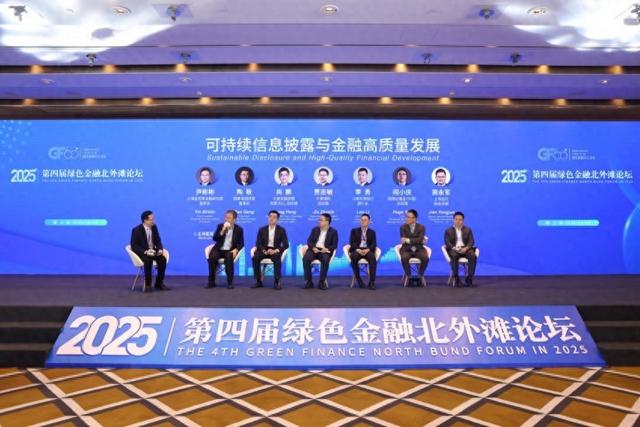
Core Viewpoint - The article emphasizes that green finance has become a core strategy for financial institutions, driven by sustainable information disclosure, which guides funds towards low-carbon sectors and promotes high-quality development in the industry [1]. Group 1: Sustainable Information Disclosure - Sustainable information disclosure is effectively driving financial institutions to integrate green development concepts and implement green innovation practices [1]. - There is a need for a systematic and mandatory information disclosure system to enhance transparency and comparability in ESG disclosures, which are currently mostly voluntary [5]. - The future focus of ESG work should revolve around institutionalizing information disclosure, integrating international standards, and leveraging technology to address data quality issues [5]. Group 2: Green Investment Practices - Companies like Guotai Junan Asset Management have integrated ESG indicators into their investment research systems across various financing businesses, achieving recognition in green financial innovation [5]. - ICBC-AXA Asset Management has seen significant growth in green investment, focusing on sectors like energy storage and renewable energy, while also expanding their green product offerings [7]. - Huaxia Wealth Management has incorporated ESG principles into their product design, ensuring that at least 80% of the underlying assets in green financial products are genuinely green [10]. Group 3: Risk Management and Innovation - Roadmap for risk assessment frameworks is crucial, as identifying and managing risks associated with ESG and climate transition is a key challenge for fund management companies [13]. - Jiangnan Rural Commercial Bank has developed a green finance risk management system to support business expansion and enhance risk control through innovative credit products [16]. - Shanghai Trust emphasizes the flexibility of trust systems in supporting green industries, with a focus on long-term capital and sustainable returns [19]. Group 4: Industry Collaboration and Future Directions - The forum highlighted the need for continuous breakthroughs in information disclosure, standard integration, risk management, and technological empowerment to direct financial resources efficiently towards green low-carbon sectors [21]. - Collaboration with various organizations, including NRDC and WBCSD, indicates a collective effort to advance sustainable finance practices [21].

从三组关键词,透视四川“十四五”金融“成绩单”
Sou Hu Cai Jing· 2025-12-11 16:40
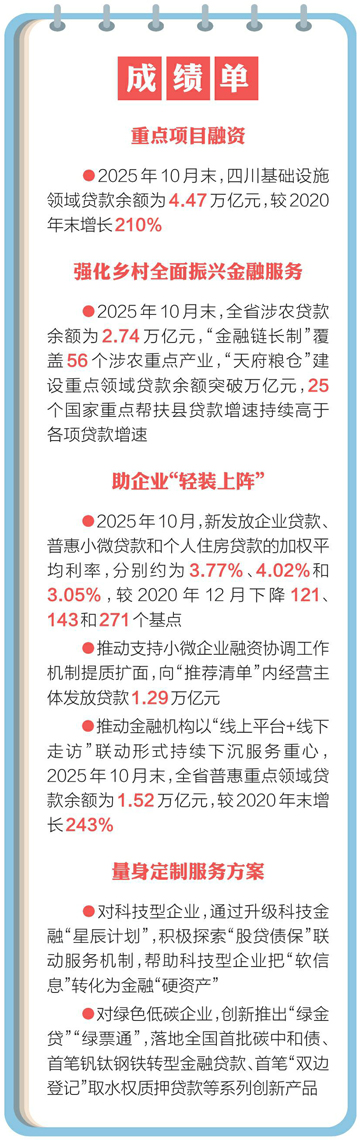
Core Insights - The financial sector in Sichuan has shown significant growth, with the balance of various loans reaching 12.8 trillion yuan by the end of October 2025, marking an 80.7% increase since the end of 2020 [1] - The average annual growth rates for deposits and loans in Sichuan over the past five years were approximately 9.5% and 12.7%, respectively, indicating strong support for the real economy [3] Group 1: Financial Support and Growth - The Sichuan financial system has increased support for the economy, with loan growth outpacing nominal economic growth, effectively meeting the reasonable credit demands of market entities [3] - By the end of October 2025, the loan balance for infrastructure in Sichuan reached 4.47 trillion yuan, a 210% increase from the end of 2020 [3] - Agricultural loans reached 2.74 trillion yuan, with a focus on 56 key agricultural industries, and loans for the "Tianfu Granary" project exceeding 1 trillion yuan [3] Group 2: Structural Optimization - The structure of credit allocation in Sichuan is shifting from heavy asset industries to high-quality development sectors, with significant growth in loans for strategic emerging industries, which doubled since the start of the 14th Five-Year Plan [4] - Personal consumption loans in Sichuan have increased by over 90%, reflecting a focus on promoting consumption and expanding domestic demand [4] Group 3: Cost Reduction and Efficiency Improvement - The financial system in Sichuan has implemented measures to reduce financing costs, with average interest rates for new corporate loans, inclusive of small and micro loans, dropping to approximately 3.77%, 4.02%, and 3.05% by October 2025 [5] - The province has introduced various facilitation measures in the foreign exchange sector, with cross-border RMB settlement volume reaching 1.1498 trillion yuan, a 112.7% increase compared to the 13th Five-Year Plan period [6] Group 4: Diversified Financing Solutions - Sichuan's financial system has established a diverse service network to meet different financing needs, with a total of 187 banks, 110 insurance companies, and 548 securities firms as of the third quarter of 2025 [7] - The bond market has also seen growth, with the outstanding balance of bonds in the interbank market reaching 776.85 billion yuan, a 79.8% increase since the end of 2020 [7] Group 5: Tailored Financial Services - Sichuan has developed customized service plans for various sectors, including the "Star Plan" for technology companies and innovative financial products for green and low-carbon enterprises [8] - The Sichuan regulatory authority is supporting the development of specialized boards for small and medium-sized enterprises, enhancing service efforts for key industries [8]
四川亮出“十四五”时期金融支持四川经济高质量发展“成绩单” 金融“活水”更好浇灌高质量发展沃土
Si Chuan Ri Bao· 2025-12-11 00:28
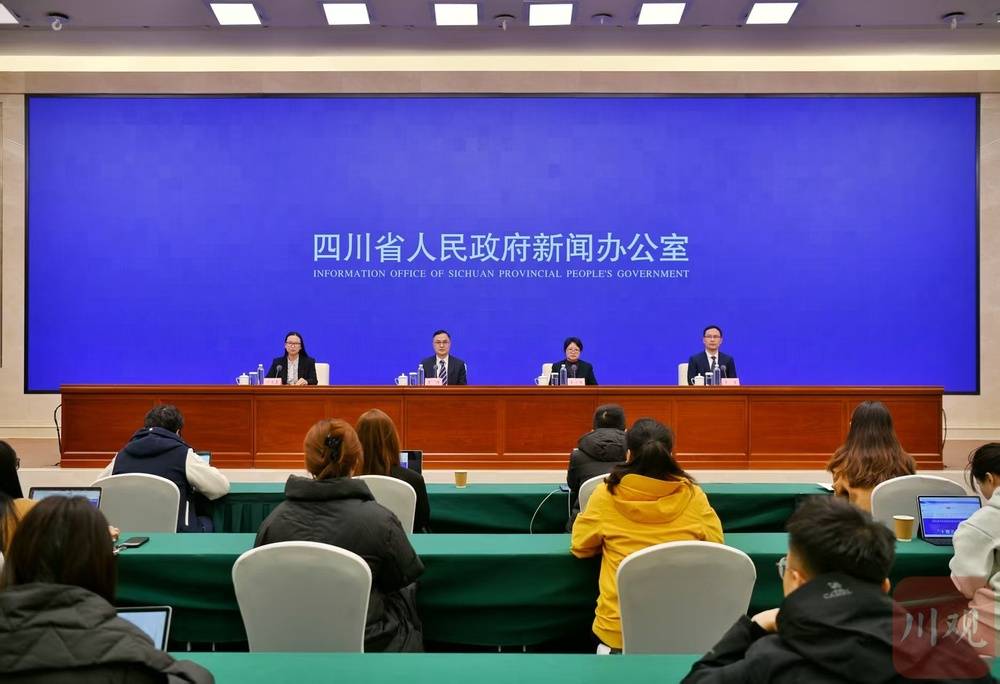
Core Insights - The article highlights the significant growth and structural changes in Sichuan's financial sector over the past five years, emphasizing the support for high-quality economic development through various financial initiatives and policies [3][4]. Group 1: Financial Growth Metrics - As of October 2025, the total balance of various loans in Sichuan reached 12.8 trillion yuan, representing an 80.7% increase compared to the end of 2020 [3]. - The balance of loans in the infrastructure sector was 4.47 trillion yuan, showing a 210% increase from the end of 2020 [4]. - Agricultural loans reached 2.74 trillion yuan, with a notable focus on 56 key agricultural industries [4]. Group 2: Interest Rate Reductions - The weighted average interest rates for newly issued corporate loans, inclusive of micro and personal housing loans, were approximately 3.77%, 4.02%, and 3.05%, respectively, reflecting decreases of 121, 143, and 271 basis points since December 2020 [6][7]. Group 3: Support for Small and Micro Enterprises - Sichuan's financial system has issued 1.29 trillion yuan in loans to businesses on the "recommended list," enhancing support for small and micro enterprises [7]. - The balance of loans in key inclusive finance sectors reached 1.52 trillion yuan, a 243% increase from the end of 2020 [7]. Group 4: Structural Changes in Loan Distribution - The focus of loan distribution has shifted from traditional heavy asset industries to sectors aligned with the "Five Major Financial Articles," which include technology finance, green finance, inclusive finance, pension finance, and digital finance [5][8]. - The financial system has developed a diverse service network to meet the varying financing needs of different enterprises [8]. Group 5: Innovative Financial Products - Sichuan has introduced innovative financial products such as "Green Loans" and "Green Bills" to support green and low-carbon enterprises, along with specialized services for technology companies [8]. - The province has launched the first batch of carbon-neutral bonds and other financial products aimed at facilitating environmental sustainability [8].
以创新实践诠释金融温度 中信银行交出高质量发展答卷
和讯· 2025-12-09 09:18
Core Viewpoint - CITIC Bank was awarded "Bank of the Year China 2025" by The Banker magazine, highlighting its exceptional brand building and comprehensive service matrix that meets customer needs across various sectors [1] Group 1: Brand Activities and Value Communication - CITIC Bank emphasizes its core value of "Wealth with Warmth" through brand activities, including the "信·新" forum focused on financial empowerment for consumption [2] - The bank's continuous engagement in sports and cultural events enhances brand recognition and emotional connection with the audience, showcasing its commitment to the "financial for the people" philosophy [3] Group 2: Business Layout and Performance - CITIC Bank maintains a robust performance across its three main business segments: retail, corporate, and financial markets, ensuring balanced development in quality, efficiency, and scale [5] - In retail banking, CITIC Bank focuses on wealth management, achieving a retail AUM of 5.26 trillion yuan and a year-on-year growth of 13.59% in wealth management income [5][6] - The corporate banking segment has seen a general corporate loan balance of 2.974 trillion yuan, with a year-on-year increase of 10.99%, particularly in manufacturing and private sector loans [6] Group 3: Social Responsibility and ESG Initiatives - CITIC Bank integrates ESG principles into its brand practices, engaging in various charitable activities and educational support programs to assist underprivileged groups [7] - The bank has been recognized for its contributions to rural revitalization and green finance, being the only commercial bank rated "Excellent" in the 2024 rural revitalization assessment [9] - CITIC Bank's brand value reached $16.95 billion, marking a 27.23% increase, and it achieved an upgrade to AAA in the latest ESG ratings by MSCI [9]

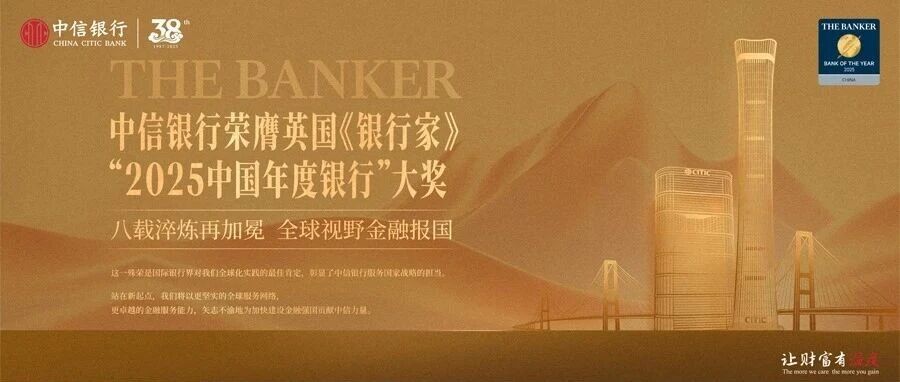
以创新实践诠释金融温度 中信银行交出高质量发展答卷
Zhong Guo Jing Ji Wang· 2025-12-08 03:24
Core Insights - CITIC Bank has been recognized for its exceptional brand building practices amidst profound changes in the financial industry, focusing on a comprehensive product and service matrix that spans retail, corporate, and financial markets [1] - The bank's brand philosophy of "making wealth warm" is integrated into product innovation, customer service, and social responsibility, establishing a differentiated and sustainable brand competitiveness [1] Brand Activities and Value Communication - CITIC Bank continues to promote its core value of "making wealth warm" through brand activities, exemplified by the successful hosting of the third "Xin·New" brand high-quality development forum [2] - The forum released the "China Residents' Pension Wealth Management Development Report (2025)" to explore the integration of financial product innovation and pension services, aiming to provide insights for the development of pension finance in China [2] - The bank's vice president emphasized the importance of value creation and the pursuit of a differentiated financial brand to contribute to high-quality financial development and modernization in China [2] Brand Engagement and Emotional Connection - CITIC Bank has engaged in various brand activities over the years, including supporting the China Open Tennis Tournament and launching photography competitions, which enhance brand aesthetics and emotional connections with the audience [3] - The systematic layout of brand activities has effectively increased brand awareness and reputation while translating the "finance for the people" concept into tangible service experiences [3] Business Development and Performance - CITIC Bank has implemented a collaborative approach across its three main business segments: retail finance, corporate business, and financial markets, focusing on customer-centric and cross-segment integrated financial services [4] - In retail finance, the bank aims to be a leading wealth management institution, with retail assets under management (AUM) reaching 5.26 trillion yuan, and a year-on-year growth of 13.59% in wealth management income [4] - The corporate business has seen a general corporate loan balance of 2.974 trillion yuan, an increase of 294.61 billion yuan or 10.99% year-on-year, with significant growth in loans to manufacturing and emerging industries [5] Social Responsibility and ESG Integration - CITIC Bank integrates ESG principles into its brand practices, engaging in various charitable activities and support for vulnerable groups, showcasing a responsible corporate image [7] - The bank has initiated educational support programs and medical assistance projects, demonstrating its commitment to social welfare and community support [7] - In rural revitalization, CITIC Bank has focused on directing financial resources to key areas such as agriculture and rural infrastructure, receiving recognition for its efforts in supporting rural development [8] Brand Value and Future Outlook - According to Brand Finance, CITIC Bank's brand value reached 16.95 billion USD, a year-on-year increase of 27.23%, making it the fastest-growing bank brand in mainland China [9] - The bank has achieved an upgrade in its ESG rating from A to AAA, reflecting its commitment to high-quality development and social responsibility [9] - Looking ahead, CITIC Bank aims to maintain strategic focus and continue contributing to the modernization of China's financial landscape while upholding its values of responsibility and warmth [9]
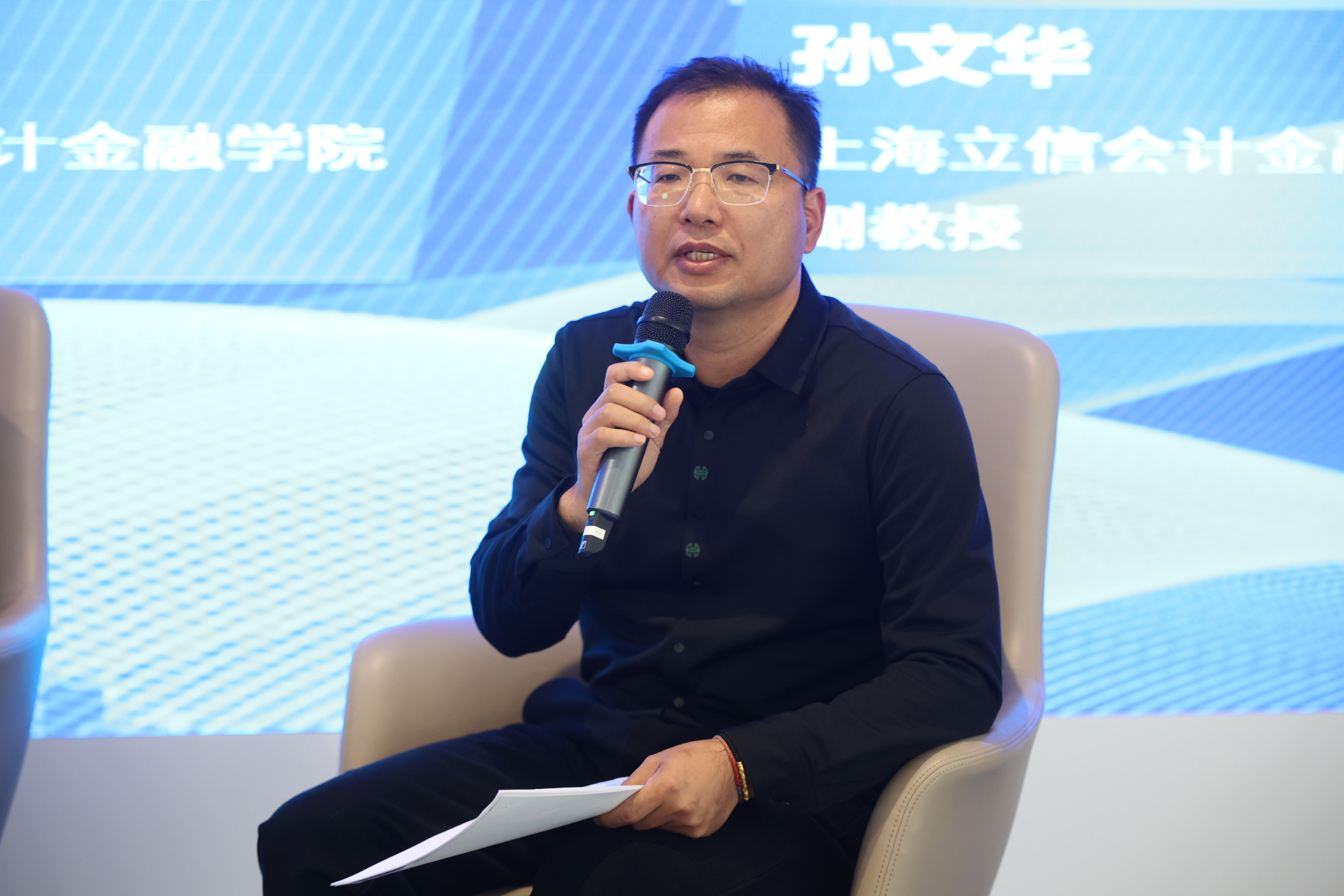
孙文华:金融赋能是长三角高质量发展“血脉通道”
Guo Ji Jin Rong Bao· 2025-12-01 05:30
Core Viewpoint - The financial empowerment system will play a crucial role in the high-quality development of the Yangtze River Delta, transitioning the regional economy from "geographical collaboration" to "functional integration" as part of the 14th Five-Year Plan [1][4]. Financial Empowerment System - The financial empowerment system is not just a tool for capital allocation but a comprehensive ecosystem that integrates long-term, innovative, collaborative, and risk-controlled elements [3]. - This system facilitates the efficient flow of core elements such as capital, technology, and talent, leading to a systemic leap from "individual efforts" to "collective strength" in regional development [4]. Support for High-Quality Development Model - The financial empowerment system is a key support for the "three-in-one 2.0 high-quality development model," which includes institutional guarantees, innovation-driven systems, and financial empowerment systems [4]. Five Major Areas of Financial Service - The financial empowerment system provides a clear practical path for integrated development in the Yangtze River Delta through five major areas: - Green finance guides capital towards low-carbon industries, aiding in the region's green transition [5]. - Technology finance accelerates the transformation of technological achievements through venture capital and intellectual property pledges [5]. - Digital finance enhances the accessibility and precision of financial services using big data and AI [5]. - Inclusive finance activates small and micro enterprises and rural economies by addressing the "last mile" of service [5]. - Pension finance extends the industrial chain, boosting regional consumption and social security capabilities [5]. Financial Security and Regional Integration - The financial empowerment system strengthens the financial security of the Yangtze River Delta, with Shanghai as the leading international financial center [5]. - The region is building a model of financial strength that promotes internal and external circulation, risk prevention, and functional integration [5]. Development Patterns and Challenges - The development pattern identified includes "institutional collaboration as a prerequisite, technological empowerment as a means, and industrial integration as a goal" [6]. - Examples of financial innovation include carbon-neutral bonds issued by Zhejiang New Energy Group and support for small tech enterprises through the Shanghai Equity Custody Trading Center [6]. Recommendations for Overcoming Challenges - Seven strategies are proposed to address current challenges such as institutional barriers and regional imbalances: - Unify regulatory standards and establish cross-regional policy coordination mechanisms [6]. - Balance regional financial support to break the "Matthew effect" [6]. - Build an innovative financial technology system to promote data sharing [6]. - Improve financial talent training and incentive mechanisms [6]. - Create a "smart financial corridor" to eliminate data barriers [6]. - Strengthen local financial firewalls and establish a risk prevention network [6]. - Enhance capital flow efficiency and promote cross-border financial facilitation policies [6].