
科技型中小企业贷款

Search documents
A股上市银行坚守服务实体经济本源 普惠贷款超21万亿深耕民生
Chang Jiang Shang Bao· 2026-02-09 06:42
Core Insights - The banking industry in China is focusing on serving the real economy and fulfilling social responsibilities across multiple dimensions [1][2][3] Group 1: Financial Support for Innovation and Green Development - As of the end of Q3 2025, the balance of RMB loans from financial institutions reached 270.39 trillion yuan, with a year-on-year growth of 6.6%, and an increase of 14.75 trillion yuan in the first three quarters [1] - The balance of loans to technology-based small and medium-sized enterprises (SMEs) was 3.56 trillion yuan, growing by 22.3%, which is 15.8 percentage points higher than the overall loan growth rate [1] - The balance of green loans reached 43.51 trillion yuan, increasing by 17.5% since the beginning of the year, with an addition of 6.47 trillion yuan in the first three quarters [1] Group 2: Inclusive Finance and Support for Vulnerable Groups - The balance of inclusive small and micro loans was 36.09 trillion yuan, with a year-on-year growth of 12.2%, outpacing overall loan growth by 5.6 percentage points, and an increase of 3.15 trillion yuan in the first three quarters [2] - The balance of agricultural loans was 53.4 trillion yuan, growing by 6.8%, which is 0.3 percentage points higher than the overall loan growth rate, with an increase of 3.28 trillion yuan in the first three quarters [2] - By the end of 2024, the balance of inclusive small and micro enterprise loans among A-share listed banks exceeded 21.1 trillion yuan, with state-owned banks, joint-stock banks, and rural commercial banks contributing approximately 14.2 trillion yuan, 4.64 trillion yuan, and 2.25 trillion yuan respectively [2] Group 3: Digital Transformation and Social Responsibility - The banking industry is advancing digital transformation to enhance operational efficiency and risk management while bridging the digital divide and improving customer experience [3] - In terms of public welfare and charity, the banking sector invested nearly 2 billion yuan in 2024, with almost 10,000 charity projects and volunteer service hours totaling approximately 1.85 million [3]
去年我国房地产贷款余额减少近万亿 普惠小微贷增长明显
Nan Fang Du Shi Bao· 2026-01-27 17:09
Core Insights - The People's Bank of China reported a total RMB loan balance of 271.91 trillion yuan at the end of Q4 2025, reflecting a year-on-year growth of 6.4% and an annual increase of 16.27 trillion yuan [1] Loan Growth by Sector - Inclusive small and micro loans reached a balance of 36.57 trillion yuan, growing by 11.1% year-on-year, which is 4.7 percentage points higher than the overall loan growth rate [2][3] - Corporate loans in both domestic and foreign currencies amounted to 186.21 trillion yuan, with a year-on-year growth of 8.9%, an increase of 15.24 trillion yuan for the year [2] - Industrial medium and long-term loans stood at 26.63 trillion yuan, growing by 8.4% year-on-year, which is 2.2 percentage points above the overall loan growth [2] - Agricultural loans reached 53.57 trillion yuan, with a year-on-year increase of 6.5%, adding 3.44 trillion yuan for the year [2] Real Estate Loan Trends - Real estate loans decreased by 1.6% year-on-year, with a total balance of 51.95 trillion yuan, resulting in a reduction of 96.36 billion yuan for the year [3] - Real estate development loans fell to 13.16 trillion yuan, down 3.0% year-on-year, with a decrease of 35.75 billion yuan for the year [3] - Personal housing loans also saw a decline of 1.8%, totaling 37.01 trillion yuan, with a reduction of 67.68 billion yuan for the year [3] Consumer Loan Dynamics - Household loans in both domestic and foreign currencies reached 83.28 trillion yuan, growing by 0.5% year-on-year, with an annual increase of 441.2 billion yuan [4] - Operating loans amounted to 25.11 trillion yuan, reflecting a year-on-year growth of 4.0%, adding 937.8 billion yuan for the year [4] - Non-housing consumer loans totaled 21.16 trillion yuan, with a year-on-year increase of 0.7%, resulting in an annual increase of 180.2 billion yuan [4] Support for Innovation and Technology - By the end of Q4 2025, 27.5 million technology-based SMEs received loans, with a loan approval rate of 50.2%, up by 2 percentage points from the previous year [3] - Loans to technology-based SMEs in foreign currencies reached 3.63 trillion yuan, growing by 19.8% year-on-year, which is 13.6 percentage points higher than the overall loan growth [3] - High-tech enterprises receiving loans numbered 26.54 million, with a loan approval rate of 57.3%, an increase of 0.4 percentage points from the previous year [3]
2025年四季度末我国科技型中小企业获贷率为50.2%
Xin Hua Wang· 2026-01-27 11:49
Group 1 - The People's Bank of China reported that by the end of Q4 2025, 275,000 technology-based SMEs received loan support, with a loan approval rate of 50.2%, an increase of 2 percentage points from the previous year [1] - The balance of loans to technology-based SMEs in both domestic and foreign currencies reached 3.63 trillion yuan, representing a year-on-year growth of 19.8%, which is 13.6 percentage points higher than the growth rate of all loans [1] - Loans to enterprises and institutions were the main driver of credit growth, with an increase of 15.24 trillion yuan in 2025, accounting for over 90% of all new loans [1] Group 2 - By the end of Q4 2025, 265,400 high-tech enterprises received loan support, with a loan approval rate of 57.3%, up 0.4 percentage points from the previous year [1] - The balance of loans to high-tech enterprises in both domestic and foreign currencies was 18.61 trillion yuan, with a year-on-year growth of 7.5%, which is 1.3 percentage points higher than the overall loan growth [1] - The balance of inclusive micro and small loans reached 36.57 trillion yuan by the end of Q4 2025, with a year-on-year growth of 11.1%, adding 363 billion yuan over the year [1] Group 3 - Green loans saw rapid growth in 2025, with an increase of 772 billion yuan in both domestic and foreign currencies throughout the year [2] - The balance of agricultural loans in both domestic and foreign currencies reached 53.57 trillion yuan by the end of Q4 2025, reflecting a year-on-year increase of 6.5% [2] Group 4 - The balance of real estate loans in yuan was 51.95 trillion yuan by the end of Q4 2025, showing a year-on-year decline of 1.6%, with a total reduction of 963.6 billion yuan over the year [3]
去年我国房地产贷款余额减少近万亿,普惠小微贷增长明显
Nan Fang Du Shi Bao· 2026-01-27 11:05
Core Insights - The People's Bank of China reported a total RMB loan balance of 271.91 trillion yuan at the end of Q4 2025, reflecting a year-on-year growth of 6.4% and an annual increase of 16.27 trillion yuan [2] Loan Growth by Sector - Inclusive micro and small enterprise loans reached a balance of 36.57 trillion yuan, growing by 11.1% year-on-year, which is 4.7 percentage points higher than the overall loan growth rate [3] - Corporate loans in both domestic and foreign currencies amounted to 186.21 trillion yuan, with a year-on-year growth of 8.9%, increasing by 15.24 trillion yuan over the year [3] - Agricultural loans also saw a rise, with a balance of 53.57 trillion yuan, reflecting a year-on-year growth of 6.5%, adding 3.44 trillion yuan throughout the year [3] Real Estate Loan Trends - Real estate loans decreased by 1.6% year-on-year, with a total balance of 51.95 trillion yuan, resulting in a reduction of 96.36 billion yuan for the year [4] - Loans for real estate development fell by 3.0% year-on-year, totaling 13.16 trillion yuan, with an annual decrease of 35.75 billion yuan [4] - Personal housing loans also declined by 1.8%, amounting to 37.01 trillion yuan, with a yearly reduction of 67.68 billion yuan [4] Support for Innovation and Consumption - The number of technology-based small and medium enterprises receiving loans reached 275,000, with a loan approval rate of 50.2%, an increase of 2 percentage points from the previous year [4] - Loans to high-tech enterprises totaled 18.61 trillion yuan, growing by 7.5% year-on-year, which is 1.3 percentage points higher than the overall loan growth [4] - Household loans in foreign currencies reached 83.28 trillion yuan, with a year-on-year growth of 0.5%, adding 441.2 billion yuan over the year [5]


数读普惠金融
Bei Jing Shang Bao· 2025-12-10 12:00
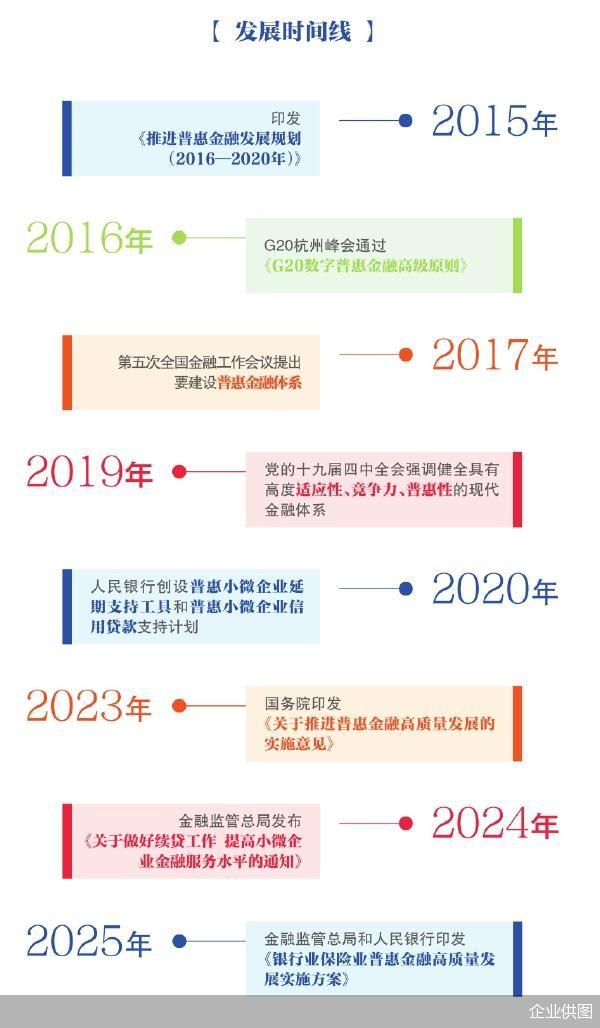
Core Insights - The development of inclusive finance in China has been steadily advancing since the issuance of the "Plan for Promoting the Development of Inclusive Finance (2016-2020)" in 2015, with significant improvements in financial service coverage and quality [1] Timeline of Development - In 2015, the "Plan for Promoting the Development of Inclusive Finance (2016-2020)" was issued [3] - In 2016, the G20 Hangzhou Summit adopted the "G20 High-Level Principles for Digital Inclusive Finance" [3] - In 2017, the Fifth National Financial Work Conference emphasized the need to build an inclusive financial system [3] - In 2019, the Fourth Plenary Session of the 19th Central Committee of the Communist Party of China stressed the importance of a modern financial system that is highly adaptable, competitive, and inclusive [3] - In 2020, the People's Bank of China established support tools for small and micro enterprises [3] - In 2023, the State Council issued "Implementation Opinions on Promoting High-Quality Development of Inclusive Finance" [3] - In 2024, the Financial Regulatory Administration released a notice to improve financial services for small and micro enterprises [3] - In 2025, the Financial Regulatory Administration and the People's Bank of China will issue an implementation plan for high-quality development in the banking and insurance sectors [3] Key Indicator Analysis - The number of bank accounts and digital payment transactions has shown growth, with electronic payment transactions reaching 339.53 trillion yuan in 2024, a year-on-year increase of 1.86% [5] - The balance of inclusive small and micro enterprise loans reached 36.5 trillion yuan in 2024, up from 32.58 trillion yuan in 2023, reflecting a growth of 6% [10] - The balance of loans for technology-based small and medium enterprises reached 3.27 trillion yuan, with a year-on-year increase of 21.2%, outpacing the growth rate of other loans by 14 percentage points [11] - The balance of consumer loans, excluding personal housing loans, was 21.29 trillion yuan in 2024, compared to 20.43 trillion yuan in 2023 [9] Accessibility Dimension - By the end of 2024, there will be an average of three bank outlets per township, with a coverage rate of 97.9% for insurance services [14][15] - There are 59.28 million rural cash withdrawal service points, with rural payment transactions reaching 3.99 billion [17] Quality Dimension - 67.4% of respondents recognize that high returns on financial products often imply high risks, indicating a more rational attitude towards financial product investments [18] - The total credit amount reached 22.9 trillion yuan by the end of 2024, with a year-on-year growth of 1% [19]
信贷模式向新质生产力转型
2 1 Shi Ji Jing Ji Bao Dao· 2025-11-22 01:39
Core Viewpoint - In 2025, China's economy remains stable overall, but insufficient effective demand poses a significant challenge. The banking sector demonstrates resilience, with signs of stabilization in net interest margins and accelerated recovery in non-interest income, while asset quality remains generally controllable [1] Group 1: Internal Macro Environment Analysis - In the first three quarters of 2025, China's GDP reached 101.5 trillion yuan, growing by 5.2% year-on-year, with a quarterly decline in growth momentum: 5.4% in Q1, 5.2% in Q2, and 4.8% in Q3 [2] - Effective demand remains insufficient, highlighted by a slowdown in consumption growth, with retail sales increasing by 4.5% year-on-year, down 0.5 percentage points from the first half of the year [3] - The real estate market remains weak, impacting consumer expectations, with national commercial housing sales area declining by 5.5% year-on-year in September [4] Group 2: Banking Industry Operating Conditions - In the first three quarters of 2025, 42 A-share listed banks achieved a total operating income of over 4.3 trillion yuan, a year-on-year increase of 0.9%, and a net profit of 1.68 trillion yuan, up 1.5% from the previous year [4][5] - Asset quality improved, with 25 banks reporting a year-on-year decline in non-performing loan ratios, while 33 banks saw a decrease in provision coverage ratios [5][6] - The net interest margin showed signs of stabilization, with 12 out of 26 banks reporting either stable or increased margins, attributed to manageable negative impacts from monetary policy adjustments [6][7] Group 3: Banking Industry Regulatory Environment - Since 2025, financial regulatory authorities have focused on balancing development and safety, enhancing the financial regulatory framework to promote high-quality development and systemic risk prevention [7][10] - New regulations have been introduced, such as the Market Risk Management Measures for Commercial Banks, which clarify responsibilities and improve market risk management [8] - The regulatory framework emphasizes a coordinated approach to risk prevention, strong regulation, and promoting development, aiming to create a supportive environment for the banking sector and the real economy [10]
《中国普惠金融指标分析报告(2024—2025年)》发布
Zheng Quan Ri Bao Wang· 2025-11-07 14:07
Core Insights - The People's Bank of China released the "Analysis Report on China's Inclusive Finance Indicators (2024-2025)", highlighting 2024 as a crucial year for achieving the goals of the 14th Five-Year Plan, amidst increasing external pressures and internal challenges [1] Group 1: Financial Support and Development - Financial support for rural revitalization is strengthening, with increased financial resources directed towards agricultural sectors, and a steady growth in the balance of loans for farmers and consumer loans [2] - Credit support for private and small micro enterprises continues to increase, with a growing scale of loans for the private economy and improved quality of inclusive small micro loans [2] - The policies for entrepreneurship guarantee loans and student loans for key groups have been further optimized, enhancing accessibility to financial services for the elderly and disabled [2] Group 2: Digital Finance and Payment Systems - The number of bank settlement accounts is on the rise, with improved service efficiency, and the pilot application of digital RMB has expanded to 26 regions across 17 provinces [2] - The scale of digital payments is steadily increasing, reflecting a broader adoption of digital finance solutions [2] Group 3: Financing Mechanisms and Capital Markets - The financing support mechanisms are being continuously improved, with the launch of a national credit information sharing platform for small and micro enterprises [2] - The inclusiveness and accessibility of multi-level capital markets are enhancing, with ongoing pilot programs in the Beijing Stock Exchange and New Third Board [2] - The issuance and existence of rural revitalization bonds and asset-backed securities remain stable, supporting agricultural risk management [2] Group 4: Insurance and Risk Management - The supply system for inclusive insurance products is being further developed, with ongoing optimization of insurance policies for key grain crops [2] - Both insurance density and depth have increased, along with a rise in the scale of agricultural insurance risk coverage and claims payments [2]
中国普惠金融指标分析报告:丰富普惠金融产品服务,切实满足重点领域和特定群体的金融需求
Xin Hua Cai Jing· 2025-11-07 13:57
Core Viewpoint - The People's Bank of China is conducting a survey to assess the development of inclusive finance in 2024, focusing on various dimensions such as usage, accessibility, and quality, and will release an analysis report for 2024-2025 [1] Group 1: Financial Support and Policy Measures - Various departments are enhancing the quality and effectiveness of inclusive finance through multiple measures, including the implementation of monetary policy tools to create a favorable financial environment [2] - The government is focusing on the financial support for the private economy and small and micro enterprises, with initiatives to improve financial services and establish a long-term lending mechanism [2] - There is a special action plan for financial support in rural revitalization, aiming to improve the rural financial service system and direct financial resources towards rural development [2] Group 2: Trends in Inclusive Finance - In 2024, inclusive finance in China shows new characteristics, such as increased financial support for rural revitalization, with growing loan balances for agricultural operations and consumption [3] - There is a sustained increase in credit support for private and small micro enterprises, with a notable rise in loans for technology-based small and medium enterprises [3] - The product system for financial services in the livelihood sector is becoming increasingly diverse, with optimized policies for entrepreneurship and student loans [3] Group 3: Digital and Technological Advancements - The number of bank settlement accounts is increasing, and the efficiency of account services is improving, with the digital RMB pilot expanding to 26 regions [3] - A national credit information sharing platform for small and micro enterprises has been launched, enhancing the coverage of financial credit information databases [3] Group 4: Capital Market and Insurance Developments - The inclusiveness and accessibility of multi-level capital markets are improving, with ongoing pilot programs in the Beijing Stock Exchange and the New Third Board [3] - The supply system for inclusive insurance products is being further developed, with an increase in agricultural insurance risk coverage and claims payments [3]
央行:中国普惠金融指标分析报告(2024-2025年)
Xin Lang Cai Jing· 2025-11-07 11:18
Core Insights - In 2024, inclusive finance in China continues to show strong development momentum while presenting new characteristics [1] Group 1: Financial Support for Rural Revitalization - Financial resources are increasingly directed towards rural revitalization, with growth in agricultural operating loans and consumer loans, and a steady expansion in loan coverage for impoverished populations [1] Group 2: Support for Private and Small Enterprises - Continuous increase in credit support for private and small enterprises, with a growing scale of loans to the private economy and a favorable trend in inclusive small and micro loans, characterized by volume growth, price reduction, and quality improvement [1] - Rapid growth in loans to technology-based small and medium-sized enterprises, with an increasing loan approval rate [1] Group 3: Optimized Loan Policies for Key Groups - Further optimization of entrepreneurship guarantee loans and student loan policies for key groups, with improved accessibility of banking services for the elderly and disabled [1] - A richer product system to meet the financial service needs in the livelihood sector [1] Group 4: Increase in Bank Account Services - Continuous increase in the number of bank settlement accounts and improved service efficiency [1] - Expansion of digital RMB application trials to 26 regions across 17 provinces (municipalities), with a steady increase in digital payment scale [1] Group 5: Enhanced Financing Mechanisms - Continuous improvement of financing support mechanisms, including the launch of a national credit information sharing platform for small and micro enterprises [1] - Increasing coverage of financial credit information databases for enterprises and organizations, with rapid growth in local credit platform services [1] - Expansion of government financing guarantee business scale [1] Group 6: Inclusive Capital Markets - Enhanced inclusiveness and accessibility of multi-level capital markets, with in-depth promotion of inclusive finance pilots on the Beijing Stock Exchange and New Third Board [1] - Increasing variety of agricultural product futures and options, with a sustained increase in "insurance + futures" projects to manage agricultural risks [1] - Stable issuance and existence scale of rural revitalization bonds and asset-backed securities [1] Group 7: Improvement in Inclusive Insurance Products - Further improvement in the supply system of inclusive insurance products, with ongoing optimization of key grain crop insurance policies [1] - Increase in both insurance density and depth, along with growth in the scale of agricultural insurance risk coverage and claims payments [1]
前三季度普惠小微、科创等领域贷款支持力度较大
Ren Min Ri Bao· 2025-10-26 21:59
Group 1 - The total balance of RMB loans in financial institutions reached 270.39 trillion yuan by the end of Q3, with a year-on-year growth of 6.6%, and an increase of 14.75 trillion yuan in the first three quarters [1] - Inclusive small and micro loans grew rapidly, with a balance of 36.09 trillion yuan by the end of Q3, a year-on-year increase of 12.2%, outpacing overall loan growth by 5.6 percentage points [1] - Green loans saw significant growth, with a balance of 43.51 trillion yuan by the end of Q3, up 17.5% from the beginning of the year, adding 6.47 trillion yuan in the first three quarters [1] Group 2 - Agricultural loans continued to grow, with a balance of 53.4 trillion yuan by the end of Q3, a year-on-year increase of 6.8%, and an addition of 3.28 trillion yuan in the first three quarters [1] - The number of technology-based small and medium enterprises receiving loan support reached 275,400, with a loan approval rate of 50.3%, up 2.8 percentage points from the same period last year [2] - The balance of loans for technology-based small and medium enterprises was 3.56 trillion yuan, showing a year-on-year growth of 22.3%, which is 15.8 percentage points higher than the overall loan growth rate [2]