肉丸

Search documents
(新春见闻)福建东侨华侨新村的别样年味
Xin Lang Cai Jing· 2026-02-14 06:12
Core Viewpoint - The article highlights the unique cultural blend of the Huashiao New Village community in Fujian, showcasing how the local customs and Southeast Asian influences enrich the Chinese New Year celebrations, reflecting the identity and evolution of the overseas Chinese community [1][2]. Group 1: Community Overview - Huashiao New Village is the first community in Fujian populated mainly by returned overseas Chinese, with a registered population of 2,428, over 85% of whom are returned overseas Chinese and their families [2]. - The community has its roots in the East Lake Tang Overseas Chinese Farm established over 60 years ago, and it has transformed into a national-level economic and technological development zone, ranking 24th in the 2024 national comprehensive development assessment [2]. Group 2: Cultural Significance - The community integrates "overseas Chinese flavors" into traditional New Year celebrations, symbolizing the preservation and promotion of overseas Chinese culture [1][2]. - Key cultural features include Southeast Asian-style dances and foods, with community activities centered around the preparation of traditional dishes like Vietnamese braised pork and Indonesian layered cake, serving as a cultural link among families [2]. Group 3: Personal Stories and Practices - A resident, Miao Yayang, emphasizes the importance of maintaining Southeast Asian culinary traditions, using natural ingredients and traditional cooking methods to promote cultural heritage [4]. - The community's New Year celebrations feature a mix of local dishes and overseas Chinese flavors, illustrating the integration of diverse culinary practices and the shared memories of the returned overseas Chinese [4].

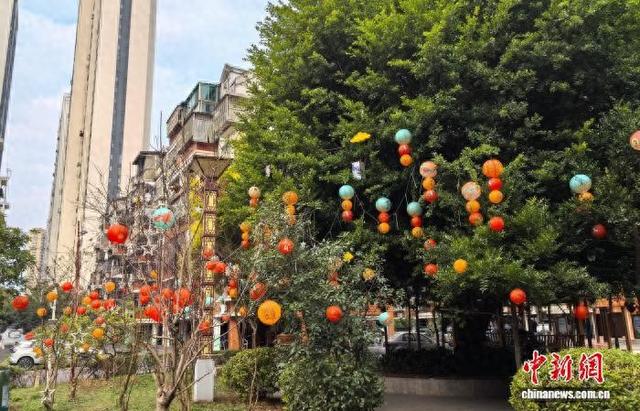
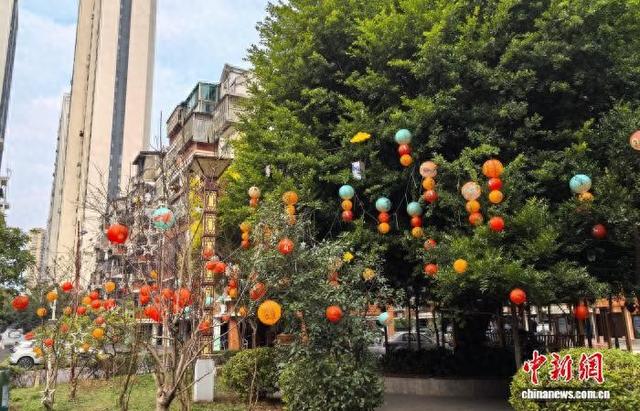
福建东侨华侨新村的别样年味
Xin Lang Cai Jing· 2026-02-14 06:11
Core Viewpoint - The article highlights the cultural integration and celebration of the Chinese New Year in the Overseas Chinese Village community in Ningde, Fujian Province, showcasing the blend of Southeast Asian flavors and traditions with local customs [1][2]. Group 1: Community Background - The Overseas Chinese Village community is the first community in Fujian Province primarily inhabited by returned overseas Chinese, with a registered population of 2,428, over 85% of whom are returned overseas Chinese [2]. - Established over 60 years ago, the community has evolved from a farming-based livelihood to a thriving national economic and technological development zone, ranking 24th in the 2024 national comprehensive development assessment [2]. Group 2: Cultural Practices - The community's cultural identity is reflected in its unique "Southeast Asian style" decorations and traditional Chinese New Year elements, symbolizing the integration of overseas Chinese culture into local traditions [1][5]. - The community organizes various cultural activities, including food-making events that emphasize the importance of culinary traditions in preserving cultural memory [5]. Group 3: Culinary Traditions - Traditional Southeast Asian dishes such as Indonesian layered cake and Vietnamese braised pork are integral to the community's New Year celebrations, serving as a cultural link among families [5]. - The community's residents, like Miao Yayang, actively cultivate local ingredients to maintain authentic Southeast Asian flavors in their cooking, reflecting a commitment to cultural preservation [5].
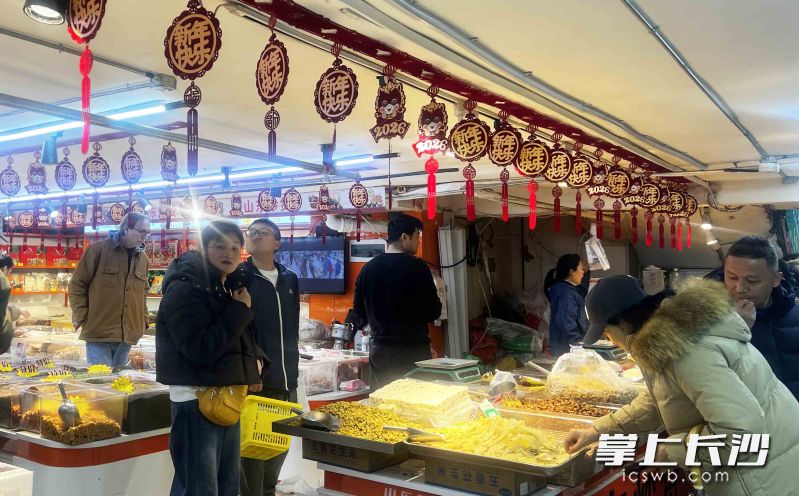
走!去农贸市场品最浓年味
Xin Lang Cai Jing· 2026-02-11 15:36
Core Viewpoint - The article highlights the vibrant and diverse consumer atmosphere in Changsha's agricultural markets as the Lunar New Year approaches, showcasing a blend of traditional and modern shopping experiences that reflect local culture and community engagement [1][9]. Group 1: Traditional Agricultural Markets - The traditional agricultural market, such as the Bixiang Street market, is a hub for local residents to purchase essential New Year ingredients, including meatballs, pickled vegetables, and sweet rice wine, which are integral to the local New Year celebrations [3][5]. - The market evokes nostalgia and a sense of community, with long-time residents sharing their memories and experiences tied to the flavors and aromas of the food available [3][8]. Group 2: Modern and Trendy Markets - The Jinshang Fresh Market has emerged as a trendy destination for younger consumers, combining shopping with entertainment, offering a lively atmosphere where visitors can enjoy food while socializing [5][6]. - This market breaks the traditional perception of agricultural markets by integrating various activities, making it a popular spot for both shopping and leisure during the New Year season [5][6]. Group 3: Rural Markets and Community Engagement - Rural markets surrounding Changsha provide an authentic experience of local culture, where residents can buy homemade goods and fresh produce, contributing to the local economy and enhancing community ties [8][9]. - These markets not only serve as a place for purchasing goods but also host cultural events, fostering a sense of celebration and community spirit as the New Year approaches [8][9].
东瑞股份:已开发猪肉精深加工产品有腊肉、腊肠、肉肠、肉丸等品类
Sou Hu Cai Jing· 2026-01-12 04:10
Core Viewpoint - Dongrui Co., Ltd. has developed a range of deep-processed pork products, including cured meat, sausages, meatballs, and other varieties, in response to investor inquiries about new prepared dishes [1] Group 1 - The company has confirmed the development of various pork deep-processing products [1] - Specific product categories mentioned include cured meat, sausages, meat sausages, and meatballs [1] - The company expressed gratitude for investor interest and support [1]

东瑞股份:目前已开发的猪肉精深加工产品有:腊肉、腊肠、肉肠、肉丸等品类
Mei Ri Jing Ji Xin Wen· 2026-01-12 04:08
Group 1 - The company has developed deep-processed pork products including cured meat, sausages, meat sticks, and meatballs [1] - An investor inquired about the launch of new prepared dishes by the company [2]
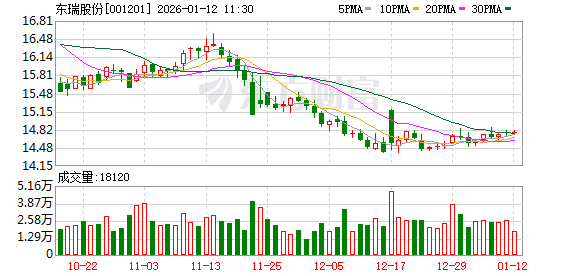
东瑞股份(001201.SZ):生鲜猪肉产品目前暂未通过线上渠道进行销售
Ge Long Hui· 2025-12-23 13:10
Group 1 - The core point of the article is that Dongrui Co., Ltd. has not yet launched its fresh pork products for online sales, but its processed meat products are available on various platforms [1] Group 2 - The company has introduced processed products such as cured meat, sausages, meatballs, and others on platforms like Douyin and WeChat Mini Programs for consumer purchase [1]
向油腻饮食说不
Bei Jing Ri Bao Ke Hu Duan· 2025-12-21 22:45
Core Viewpoint - The article highlights the growing concern over excessive oil consumption in China, which is linked to various health issues, including obesity and chronic diseases. The current average daily cooking oil intake is significantly above recommended levels, prompting a nationwide "reduce oil" initiative to address this public health challenge [1][3][17]. Group 1: Current Consumption and Health Risks - The average daily cooking oil intake in China is 43.2 grams, exceeding the recommended 25-30 grams by approximately one-third [3][4]. - The total daily fat intake per person is 79.1 grams, which is also above the recommended range of 50-70 grams [3][4]. - Excessive oil consumption is linked to serious health risks, including hypertension, diabetes, and various cancers, with obesity being a major public health issue in China [6][7][12]. Group 2: Dietary Trends and Cultural Influences - Traditional cooking practices favor high oil usage, with many consumers believing that more oil enhances flavor, leading to a cultural preference for "heavy oil" dishes [9][10]. - The rise of fast-paced lifestyles and the convenience of high-oil foods have contributed to the normalization of excessive oil consumption [8][14]. - The food delivery industry has further reinforced these trends, with many popular dishes being high in oil, salt, and sugar [14][19]. Group 3: Government Initiatives and Public Awareness - The Chinese government has initiated campaigns to promote reduced oil consumption, including guidelines that recommend daily oil intake not exceeding 25-30 grams [17][18]. - There is a growing public awareness regarding the health implications of high oil consumption, with more individuals adopting healthier cooking practices and dietary habits [18][19]. - The food and nutrition sector is responding to these changes, with restaurants and food services beginning to offer lower-oil options and smaller portion sizes [19][22]. Group 4: Future Directions and Recommendations - Experts suggest a balanced approach to oil consumption, emphasizing the importance of choosing healthier oils rich in unsaturated fats while reducing overall intake [20][21]. - There is a call for diversification in oil sources, promoting the cultivation of high-quality oilseed crops to meet the demand for healthier oils [22]. - The shift towards healthier eating habits is seen as a necessary evolution in Chinese culinary practices, aiming to balance taste and health [22].
东瑞股份(001201.SZ):2025年公司屠宰及肉制品深加工业务实现稳步发展
Ge Long Hui A P P· 2025-12-04 00:54
Core Viewpoint - Dongrui Co., Ltd. is steadily developing its slaughtering and meat processing business, currently in the product research and initial expansion phase, with plans to diversify its product offerings by 2025 [1] Group 1: Product Development - In 2024, the company will introduce processed products such as cured meat and sausages, and by 2025, it aims to develop new products including meat sausages and meatballs, further enriching its product range [1] Group 2: Sales Channels - The company has launched an online sales channel through a WeChat mini-program, while its offline sales will focus on Heyuan and expand throughout Guangdong Province [1] - Future plans include diversifying sales channels by connecting with large supermarkets and catering services to enhance brand influence in the region [1]
福建新晋美食之城,满足旅行和生活的所有想象
3 6 Ke· 2025-12-03 02:21
Core Insights - Ningde, a lesser-known city in Fujian, is gaining attention after being included in the 2026 Michelin Guide, highlighting its unique geographical features and tranquil lifestyle [1][2] Geographical Features - Ningde's landscape is characterized by the integration of mountains and sea, with the Jiufeng Mountain range flowing into the East China Sea, creating a unique rhythm of life [2] - The famous Taima Mountain, known as the "Fairyland on the Sea," features over 360 symbolic rock formations shaped by time, making it a significant geological park [2][3] - The Dazhu Mountain Island, the highest island in Fujian, offers a diverse ecosystem with vast grasslands and clear lakes, resembling a natural paradise [3] Culinary Highlights - The region is renowned for its seafood, particularly the large yellow croaker, which thrives in the nutrient-rich waters of the Guanjing Bay [4] - Traditional dishes such as "Over-the-Bridge Large Yellow Croaker" and "Taro Crab" showcase the local culinary expertise, emphasizing the freshness of ingredients [4][6] - Street food, including the local specialty "Bianrou" and fish balls, reflects the everyday culinary culture of Ningde [6][7] Cultural and Historical Aspects - Ningde's villages, like Xiapu and Ban Yue Li, offer a glimpse into traditional lifestyles, with activities such as seaweed harvesting and ancient methods of drying persimmons [10][15] - The region's rich history is evident in its architecture and local customs, with places like the Longxi Palace and ethnic minority museums preserving cultural heritage [11][15] Travel Experience - The essence of travel in Ningde is found in its slower pace, allowing visitors to immerse themselves in the natural rhythms of the sea and mountains [16] - Scenic spots like the North Qi Village and East Bi Village provide picturesque views and opportunities for photography, especially during sunrise and sunset [10][16]
比星咖啡完成B轮融资;Prada集团收购Versace交易将敲定
Sou Hu Cai Jing· 2025-12-02 06:47
Investment Dynamics - The coffee brand "Bixing Coffee" has completed a Series B financing round of several tens of millions, led exclusively by Suzhou Agricultural Development Industry Science and Technology Innovation Fund. The funds will be used for expanding offline stores and brand promotion [1][3] - The Snow League, a professional winter sports league founded by Shaun White, has raised $15 million in financing, with new investors including 359 Capital, BITKRAFT Ventures, and WISE Ventures. This funding will support the league's first season bonuses and athletes [5] - Zhejiang Ruiwei New Materials Technology Co., Ltd. has completed its third round of equity financing, with investment from the Beautiful Navigation Fund, co-established by L'Oréal and Tiantu Capital. The company focuses on biodegradable materials in the consumer sector [6][7] Brand Dynamics - Prada Group's acquisition of Versace is set to finalize on December 2, with a cash transaction based on a €1.25 billion valuation, which is only 1.33 times Versace's projected $1.03 billion revenue for FY2024, significantly lower than the typical luxury industry valuation of 3 to 5 times [8][10] - The founder of high-end sports fashion brand MooRER has repurchased a 25% stake from Joeone, regaining 100% ownership of the brand, which will now refocus on its high-end niche positioning [12][13] - Katjes Group is in talks to acquire Unilever's snack brand Graze for approximately £35 million, significantly lower than the £150 million Unilever paid in 2019 [14][16] - Nestlé plans to merge its infant nutrition business units in China, which is expected to create new growth opportunities by leveraging the strengths of both brands [18][19] - Beyond Meat has quietly closed its flagship stores on major e-commerce platforms in China, with its factory in Jiaxing ceasing production, primarily due to a small local vegetarian market and high product pricing [22] - Swire Group has laid off about 10% of its Hong Kong headquarters staff, affecting around 40 employees, as part of a restructuring to enhance efficiency [24] - Gao Xin Retail has appointed Li Weiping as the new CEO, marking the third CEO change in two years since the acquisition by Dehong [25][26]