高端化妆品

Search documents
封关后首个春节——海口机场免税客流高峰下的消费新动向
Sou Hu Cai Jing· 2026-02-16 12:50
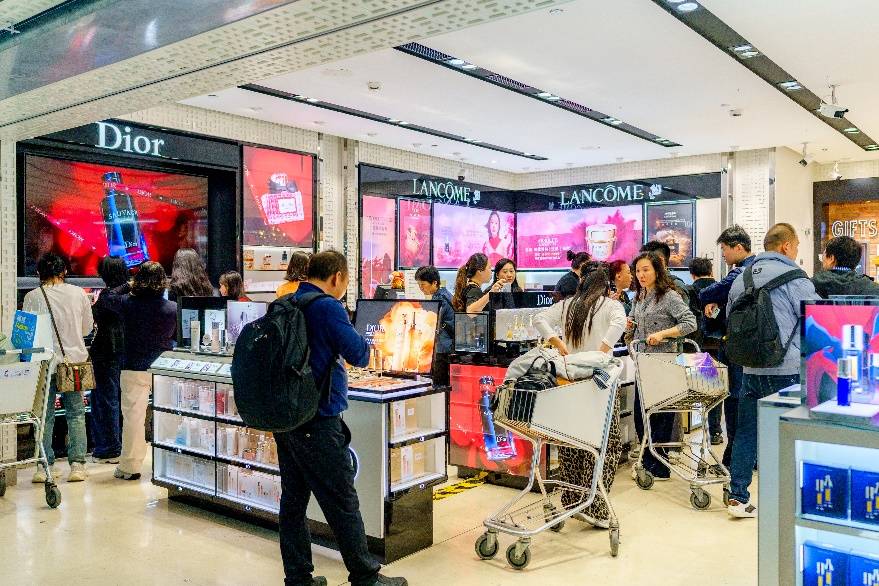
Core Insights - The first Spring Festival Golden Week after the closure operation of Hainan Free Trade Port serves as a critical window to observe the real market dynamics under the new policy environment [1] - The duty-free shopping behavior of travelers is evolving from being "policy-driven" to "habit-driven," and from "personal stockpiling" to "gift-giving socialization" [1][14] Group 1: Consumer Behavior - The "golden shopping window" two hours before flight departures has highlighted the efficiency of consumption, with travelers now making targeted purchases in the duty-free shopping area [2] - Many travelers, like Mr. Wang, have internalized duty-free shopping as a habitual part of their departure process, indicating a significant increase in market maturity [3] - The number of inquiries about basic policies has decreased, with more focus on product comparisons and recommendations, reflecting a smoother policy experience [3] Group 2: Gift-Giving Trends - The festive atmosphere of the Spring Festival has amplified the "gift-giving" aspect of airport duty-free shops, with high-end cosmetics, jewelry, premium alcohol, and gourmet chocolates becoming the most sought-after categories [5] - Travelers are increasingly using the airport duty-free shop as a reliable platform for gift purchases, emphasizing trust, convenience, and a wide selection of products [8] Group 3: Business Ecosystem and Growth - Haikou Meilan International Airport has seen a significant increase in daily passenger flow, with 11 days since January 2026 exceeding 90,000 passengers, and an expected 438 million passengers during the Spring Festival period, marking a year-on-year growth of 5.06% [10] - The recent upgrade of 3,722 square meters and the opening of 27 new stores at the duty-free shop are not just expansions but a strategic ecological renewal to meet diverse consumer demands post-closure [10][12] - The new brand matrix includes luxury leather goods, designer fragrances, high-end jewelry, trendy electronics, and health foods, aiming to cater to a more sophisticated consumer base [10] Group 4: Market Evolution - The first Spring Festival after the closure has served as a "stress test" for the duty-free shop, demonstrating that duty-free consumption is evolving beyond mere price attraction to a more habitual, contextual, and quality-focused experience [14] - The synchronized upgrades in hardware and consumer behavior reflect the maturation of the market and the evolving consumer mindset, showcasing the resilience and internal dynamics of the consumption market in Hainan Free Trade Port [14]

2026春运|海口美兰机场首迎封关后春节“大考” 旅客免税消费行为向“习惯驱动”转变
Zhong Guo Min Hang Wang· 2026-02-13 13:08
Core Insights - The first Spring Festival after the operation of Hainan Free Trade Port has become a key window to observe market dynamics under new policy environments, with significant upgrades and new store openings at the CDF Haikou Meilan Airport duty-free shop [1][5] Group 1: Consumer Behavior - Travelers are increasingly integrating duty-free shopping into their departure routines, with many now making it a habitual action rather than a policy-driven choice [2] - The efficiency of shopping has improved, with travelers completing purchases quickly, indicating a shift towards a more mature market where consumers are more familiar with the process [2] Group 2: Product Trends - The festive atmosphere of the Spring Festival has amplified the "gift-giving" aspect of airport duty-free shopping, with high-end cosmetics, jewelry, premium alcohol, and gourmet chocolates becoming the most sought-after categories [3] - The airport duty-free shop is evolving from merely a price-competitive shopping point to a comprehensive platform for gift solutions, providing trust, convenience, and a wide selection [3] Group 3: Business Development - Haikou Meilan Airport has seen a significant increase in passenger flow, with 11 days since January 2026 exceeding 90,000 passengers, and an expected 438 million passengers during the Spring Festival period, reflecting a 5.06% year-on-year growth [5] - The recent upgrade of 3,722 square meters and the opening of 27 new stores are not just expansions but a strategic enhancement of the commercial ecosystem to meet diverse consumer needs post-closure [5] - The upgraded duty-free shop aims to provide a comfortable shopping experience for a more international and diverse customer base, indicating a shift towards habitual, scenario-based, and quality-focused consumption [5]
海南封关看变化:机场免税消费渐成旅客习惯
Zhong Guo Xin Wen Wang· 2026-02-12 06:36
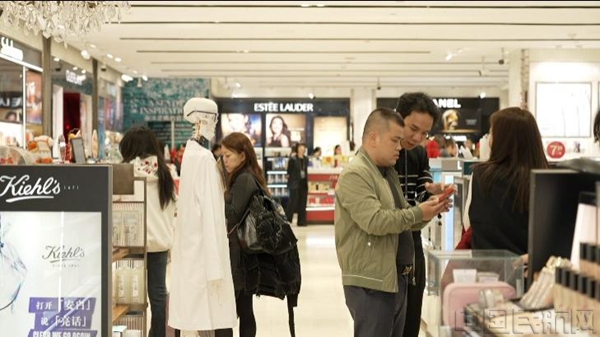
Core Insights - The article highlights the significant increase in consumer behavior at the cdf Haikou Meilan Airport duty-free store during the upcoming Spring Festival, indicating a shift from policy-driven to habit-driven purchasing patterns [1][3] - The duty-free store has undergone a substantial upgrade, adding 27 new stores and expanding its area to 3,722 square meters, catering to the growing demand for luxury and gift items [1][6] Consumer Behavior Trends - Travelers are increasingly treating duty-free shopping as a habitual part of their travel experience, with many completing purchases quickly and efficiently [1][3] - There is a noticeable decrease in basic inquiries about policies, with more focus on product comparisons and recommendations, indicating a maturation of the market [3][6] Gift Purchasing Dynamics - The festive atmosphere of the Spring Festival has amplified the gift-giving aspect of shopping at the airport, with high-end cosmetics, jewelry, premium alcohol, and gourmet chocolates being the most sought-after items [3][4] - The airport duty-free store is evolving into a platform that not only offers competitive prices but also provides trust, convenience, and a wide selection for gift purchases [3][4] Commercial Ecosystem and Traffic Growth - Since January 2026, the airport has seen daily passenger traffic exceed 90,000 on 11 occasions, with an expected 438 million passengers during the Spring Festival travel period, marking a year-on-year increase of 5.06% [6] - The duty-free store has diversified its brand offerings to include luxury leather goods, designer fragrances, high-end jewelry, trendy electronics, and health foods, aligning with the evolving consumer preferences post-border closure [6]
女子花2万多买金饰代购失联
Xin Lang Cai Jing· 2026-02-05 09:58
Group 1 - The article highlights the increasing popularity of purchasing local specialties and high-value items through agents as the Spring Festival approaches, with various products being sought after, including food, cultural items, and gold jewelry [1] - A consumer reported a scam involving a gold jewelry purchase through a代购 (agent), where after a successful initial transaction, the agent disappeared after a larger order, leading to significant financial loss [1] - The article indicates that multiple victims have experienced similar scams, with reported losses ranging from thousands to hundreds of thousands of yuan, suggesting a pattern of "small trial, large fraud" in high-value item purchases [1] Group 2 - The rise of代购 services has created potential risks related to product quality, financial security, and after-sales disputes, particularly for high-value items [1] - The investigation reveals that while代购 services appear convenient, they can conceal significant consumer traps, especially for high-value transactions [1] - The article emphasizes the need for consumers to be cautious when engaging with代购 services, particularly in the context of high-value purchases like gold jewelry [1]
代买年货?“跑腿”生意背后有“风险”
Xin Lang Cai Jing· 2026-02-05 04:47
Core Viewpoint - The article highlights the growing trend of local purchasing services in Beijing as people help friends and relatives buy hometown specialties for the upcoming Spring Festival, while also exposing various consumer risks associated with these services [1][4]. Group 1: Market Trends - The local purchasing service in Beijing includes a wide range of products, from popular snacks to high-value items like gold jewelry and cosmetics, indicating a diverse demand [1][4]. - Social media platforms, particularly Xiaohongshu, have seen a surge in discussions around local purchasing, with hashtags like BeijingPurchasing and SpecialtyRunner gaining traction [1]. Group 2: Consumer Risks - Consumers face multiple risks, including product quality issues, deposit traps, and after-sales disputes, as the purchasing rules are often unilaterally set by the buyers [4][5]. - Many local buyers require upfront deposits and impose strict terms, such as non-refundable fees and limited liability for product freshness, which can leave consumers vulnerable [3][4]. Group 3: Legal and Regulatory Challenges - The legal framework surrounding local purchasing is complex, with the relationship between consumers and buyers potentially classified as either a commission contract or a sales contract, affecting consumer rights [12][13]. - Consumers often struggle to prove that a buyer is a "professional purchaser," making it difficult to pursue legal action or compensation in case of disputes [13][14]. Group 4: Recommendations for Consumers - Consumers are advised to choose reputable e-commerce platforms and avoid private transactions to mitigate risks associated with local purchasing [14]. - It is recommended to clearly document all transaction details, including communication and payment records, to support any potential claims [14].
外媒关注2026开年中国消费市场新趋势——中国消费迎来“开门红”(国际论道)
Xin Lang Cai Jing· 2026-01-12 14:51
Core Insights - The Chinese consumer market is experiencing a significant transformation, shifting from quantity to quality, driven by increased consumer confidence and innovative policies [6][9][10]. Consumer Activity - During the New Year holiday, 142 million domestic trips were made in China, with total spending reaching 84.789 billion yuan, indicating a robust recovery in consumer activity [6][14]. - Hainan's duty-free sales on January 1 reached 251 million yuan, a year-on-year increase of 93.8%, showcasing the growing appeal of domestic tourism and shopping [7][14]. Market Trends - The rise of "China Shopping" alongside "China Travel" reflects a shift in consumer preferences, with tourists increasingly purchasing high-tech products and cultural items rather than traditional souvenirs [7][8]. - The Z-generation in China is gravitating towards new domestic products and services that blend tradition with modern technology, enhancing the appeal of local brands [7][8]. Policy Support - The Chinese government is implementing a series of policies aimed at stimulating consumption, including financial incentives and support for green technology products [9][10]. - The Central Economic Work Conference emphasized the continuation of proactive fiscal policies in 2026 to maintain high growth rates, focusing on boosting consumer spending and investment [9][10]. Economic Resilience - China's consumer market is not only recovering but also reflecting structural optimization and enhanced internal dynamics, contributing to economic resilience [11][19]. - The retail sales of consumer goods increased by 4% year-on-year in the first eleven months of 2025, indicating a steady release of consumer demand [11][19]. Global Perspective - International media highlight the opportunities for global businesses to adapt to the evolving Chinese market, particularly in sectors like retail and services, where consumer preferences are shifting towards local and value-driven products [12][19]. - The focus on service experiences among younger consumers presents significant opportunities for foreign companies in sectors such as tourism, cultural events, and entertainment [12][19].

外媒关注2026开年中国消费市场新趋势——中国消费迎来“开门红”
Ren Min Ri Bao· 2026-01-12 06:51
Core Insights - The Chinese consumer market is experiencing a significant transformation, moving from quantity to quality, which presents substantial opportunities for global markets [1][2][6] Group 1: Consumer Trends - During the New Year holiday, 142 million domestic trips were made in China, with total spending reaching 84.789 billion yuan, indicating strong consumer activity [1] - The "ice and snow tourism" has become a key driver of winter consumption, with record visitor numbers to ski resorts and hot springs [2] - The shopping preferences of travelers to China are evolving, with a shift towards high-tech products and cultural items, reflecting the diversity and quality of Chinese products [2][3] Group 2: Policy Support - China's 14th Five-Year Plan emphasizes promoting consumption as a key strategy for balanced economic growth [5] - The Central Economic Work Conference highlighted the implementation of proactive fiscal policies to stimulate consumption and investment in 2026 [4] - Recent policies aim to enhance consumer confidence through measures like consumption subsidies and improved social security systems [5][6] Group 3: Economic Resilience - The retail sales of consumer goods in China increased by 4% year-on-year in the first eleven months of 2025, showcasing the steady recovery of consumer demand [6] - The focus on domestic consumption is expected to drive sustainable economic growth, shifting the emphasis from investment and exports to services and consumption [5][6] - The resilience of the Chinese economy is further supported by targeted measures to expand domestic demand and enhance social security [6] Group 4: Global Market Opportunities - Global brands are encouraged to adapt their strategies to align with the evolving preferences of Chinese consumers, particularly in terms of value and local tastes [7] - There is significant potential for investment in China's smaller cities, where daily consumer spending shows remarkable resilience [7] - The younger generation in China is increasingly spending on experiences, such as travel and cultural events, presenting opportunities for service-oriented businesses [7]
国际论道丨中国消费迎来“开门红”
Ren Min Ri Bao Hai Wai Ban· 2026-01-12 04:24
Core Insights - The Chinese consumer market is experiencing a significant transformation, moving from quantity to quality, driven by various factors including government policies and changing consumer preferences [1][4][6] Group 1: Consumer Activity - During the New Year holiday, 142 million domestic trips were made in China, with total spending reaching 84.789 billion yuan [1] - Hainan's duty-free sales on January 1 reached 251 million yuan, a year-on-year increase of 93.8% [2] - The rise of "China Shopping" reflects a shift in foreign tourists' purchasing habits towards high-tech products and cultural items [2][3] Group 2: Policy Support - The Chinese government is implementing a series of policies aimed at boosting consumption, including a more proactive fiscal policy and specific actions to stimulate consumer spending [4][5] - The "14th Five-Year Plan" emphasizes the importance of consumption in achieving balanced economic growth [5] Group 3: Economic Resilience - China's consumer market growth indicates a recovery in demand and an ongoing optimization of the economic structure, enhancing internal momentum and resilience [6] - Retail sales of consumer goods increased by 4% year-on-year in the first eleven months of 2025, showcasing the effectiveness of consumption-boosting measures [6] Group 4: Global Opportunities - Global companies and investors are encouraged to adapt to the evolving Chinese market, particularly in retail and service sectors, where local preferences are becoming increasingly important [7] - There is a notable opportunity in smaller Chinese cities, where daily consumer spending shows remarkable resilience, presenting long-term investment potential [7]
中国消费迎来“开门红”
Ren Min Ri Bao Hai Wai Ban· 2026-01-12 01:07
Core Insights - The Chinese consumer market is experiencing a significant transformation, moving from quantity to quality, driven by various factors including government policies and changing consumer preferences [1][4][6] Group 1: Consumer Activity - During the New Year holiday, 142 million domestic trips were made in China, with total spending reaching 84.789 billion yuan, indicating strong consumer activity [1] - Hainan's duty-free sales on January 1 reached 251 million yuan, a year-on-year increase of 93.8%, showcasing the appeal of winter tourism and shopping [2] - The rise of "China Shopping" reflects a shift in purchasing trends, with consumers increasingly buying high-tech products and cultural items rather than traditional goods [2][3] Group 2: Policy Support - The Chinese government is implementing a series of policies aimed at stimulating consumption, including a more proactive fiscal policy and specific actions to boost consumer spending [4][5] - The "14th Five-Year Plan" emphasizes promoting consumption as a key driver for balanced economic growth, highlighting the importance of consumer spending in the overall economy [5][6] Group 3: Economic Resilience - China's consumer market is not only recovering but also showing signs of structural optimization and enhanced internal momentum, contributing to economic resilience [6] - Retail sales of consumer goods increased by 4% year-on-year in the first eleven months of 2025, indicating a steady expansion of market demand [6] Group 4: Global Opportunities - Global companies and investors are encouraged to adapt to the evolving Chinese market, particularly in retail and service sectors, to capitalize on the growing consumer base [7] - There is a notable shift in consumer preferences towards local products and experiences, presenting new opportunities for foreign brands to tailor their strategies to meet local demands [7]
中国消费迎来“开门红”(国际论道)
Ren Min Ri Bao Hai Wai Ban· 2026-01-11 23:07
Core Insights - The Chinese consumer market is experiencing a significant transformation, moving from quantity to quality, driven by increased consumer confidence and diverse product offerings [8][9][12] - The New Year holiday saw 142 million domestic trips and total spending of 84.789 billion yuan, indicating robust consumer activity [8][12] - Policies aimed at boosting consumption, such as subsidies and financial support, are expected to sustain economic growth and enhance consumer spending [11][12][13] Consumer Activity - During the New Year holiday, ice and snow tourism became a major driver of winter consumption, with record visitor numbers to ski resorts and hot springs [9][10] - Hainan's duty-free sales reached 251 million yuan on January 1, a 93.8% year-on-year increase, highlighting the appeal of warm-weather destinations [9][10] - The rise of "China Shopping" reflects a shift in foreign tourists' purchasing preferences towards high-tech products and cultural items [9][10] Policy Support - The Chinese government is implementing a series of policies to stimulate consumption, including a more proactive fiscal policy and specific actions to boost consumer spending [11][12] - The Central Economic Work Conference emphasized the need for targeted actions to enhance consumption and investment, indicating a commitment to maintaining high growth rates [11][12] - Recent notifications from financial authorities aim to strengthen the collaboration between commerce and finance to further stimulate consumer spending [11][12] Economic Resilience - China's consumer market is showing signs of resilience, with retail sales of consumer goods increasing by 4% year-on-year in the first eleven months of 2025 [13][20] - The focus is shifting from investment and exports to services and consumption, indicating a structural change in the economy [12][20] - The government's measures to enhance social security and provide financial support are expected to improve mid-term growth prospects [13][20] Global Opportunities - International brands are encouraged to adapt their strategies to align with the evolving preferences of Chinese consumers, particularly in terms of value and local tastes [14][20] - The consumption vitality in China's smaller cities presents new investment opportunities for global investors [14][20] - The younger generation's increasing spending on experiential services, such as travel and cultural events, indicates a growing market for service-oriented businesses [14][20]