
黑色系商品

Search documents
宏观与大宗商品周报:冠通期货研究报告-20251222
Guan Tong Qi Huo· 2025-12-22 10:21
Report Overview - Report Title: Macro and Commodity Weekly Report - Report Author: Wang Jing - Release Date: December 22, 2025 - Report Institution: Guantong Futures Co., Ltd. 1. Market Summary - Overseas, Japan's interest rate hike was uneventful, and the competition for the Fed Chair heated up. The market showed a dull performance approaching the year - end. Investors were cautious, the VIX index declined slightly, and risk - assets were mixed. Global stocks and commodities mostly fell, A - shares oscillated and pulled back, and the BDI index continued to decline. Commodities were under pressure with internal style transformation. Precious metals and non - ferrous metals weakened, oil prices remained weak, and the black series rebounded strongly [5][8]. - In the domestic market, the bond market rebounded with short - term weakness and long - term strength. Stock indices oscillated and were mostly down, with the growth - style stocks underperforming value - style stocks, and the Shanghai Composite 50 Index rising against the trend. The domestic commodity sectors showed mixed performance. The weekly change of the Wind Commodity Index was 1.5%, with 5 out of 10 commodity sub - indices rising and 5 falling. The black series was strong, with the coal, coke, steel, and ore and non - metallic building materials sectors rising over 4%. The chemical sector followed, while precious metals barely rose, and soft commodities were nearly flat. Other sectors fell, especially the oilseeds, grains, and agricultural products sectors. Non - ferrous metals turned down, and the energy sector continued to slump [5][14]. - In the futures market capital aspect, the overall capital of the commodity futures market slightly flowed out. The agricultural products and soft commodities sectors saw obvious capital inflows, while many sectors had capital outflows, with significant outflows in the non - metallic building materials, energy, and grain sectors [16]. 2. Volatility and Interest Rate Expectations - The volatility of the international CRB commodity index slightly increased, the domestic Wind Commodity Index had a small upward volatility, and the volatility of the Nanhua Commodity Index declined. By sector, the volatility of commodity futures sectors was mixed, with obvious volatility declines in the energy and oilseeds sectors and notable increases in the non - ferrous and soft commodities sectors [6][22]. - According to the CME's FedWatch tool, the probability of the Fed keeping the interest rate unchanged at 3.5 - 3.75% in January was 75.2%, little changed from last week's 72.7%. The probability of a 25 - bp rate cut to 3.25 - 3.5% remained below 30%. The market expected 1 - 3 rate cuts in 2026 [6]. 3. Upcoming Events - Due to the approaching Christmas and New Year holidays, macro - economic data is scarce this week. The focus will be on a small amount of US economic data, especially GDP data. The initial estimate of US Q3 GDP will be released on December 23. Investors will assess the US economic performance and look for clues about the Fed's next rate - cut time. In addition, investors will seek guidance on the Bank of Japan's policy path from Governor Ueda Kazuo's speech on December 25 and the release of the meeting's opinion summary on December 29. The US stock market will close three hours early on December 24 and be closed on December 25 [7]. 4. Fed Chair Candidates - Kevin Hassett, the "insider" most likely to be nominated, is an economic policy "spokesperson" and political ally of Trump. He publicly supports rate cuts and has criticized the Fed's past policies [70]. - Kevin Warsh, the "returner" favored by Wall Street, has Fed experience and is strongly supported by the financial community. He has publicly advocated rate cuts and balance - sheet reduction [71]. - Christopher Waller, the "dark horse" with solid policy experience, is a current Fed governor. He has rational and consistent policy discussions on rate cuts and has promoted conservative reforms within the Fed [72]. 5. Other Key Information - US inflation data for November was lower than expected, with the CPI rising 2.7% year - on - year and the core CPI rising 2.6%. Many economists were puzzled by this, and the data was affected by the government shutdown [77]. - On December 19, the Bank of Japan raised the policy rate to 0.75%. However, Governor Ueda Kazuo's cautious remarks on policy prospects pressured the yen, and the lack of a clear future rate - hike schedule confused investors. The market expects the Bank of Japan's future tightening to be gradual [84]. - This week's key economic data and events include UK Q3 GDP final value, US Q3 GDP initial estimate, and speeches from central bank governors [90].
华泰证券:海外市场对国内映射的四个路径
Xin Lang Cai Jing· 2025-12-18 01:08
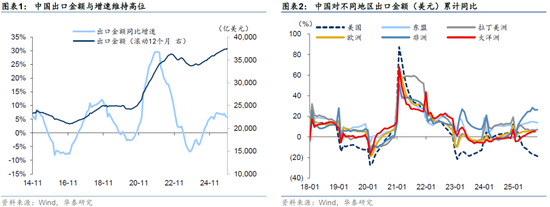
Core Viewpoints - The characteristics of trading driven by overseas macro events have become evident this year, with increased radiation and linkage to the domestic market. The focus has shifted from being primarily economy-driven to multiple channels including economy, geopolitics, AI industry trends, and global liquidity [1][5][36] - Four main paths of overseas influence on the domestic market need close attention in the coming year: external demand affecting profit expectations, AI chains contributing to market hotspots, reduced geopolitical risks, and positive impacts of overseas liquidity and RMB appreciation on domestic assets [1][20][59] Group 1: Overseas Influence on Domestic Market - Despite the impact of tariffs, China's export growth has remained robust, with a cumulative year-on-year increase of 5.4% in export value for the first 11 months, and a trade surplus increase of 21%. Net exports contributed 29% to GDP, surpassing the 17.5% contribution from investment [5][43] - The global economic outlook suggests a dual easing of fiscal and monetary policies, providing strong support for domestic growth through external demand. The structural shift in exports towards Africa and ASEAN has effectively countered declines in exports to the US [5][43][54] - Domestic enterprises are actively expanding into overseas markets, potentially creating a second growth curve, with leading companies likely to break through first. China's foreign direct investment is expected to reach nearly $200 billion in 2024, contrasting with a decline in global FDI [7][45] Group 2: Geopolitical Changes - Geopolitical changes are expected to influence market risk preferences in the short term and the restructuring of global order in the long term. China's response to trade tensions has demonstrated strategic resolve, and the market is becoming less sensitive to US tariff policies [10][49] - The trend towards regional integration and de-dollarization is accelerating, with a focus on self-sufficient supply chains. This context reduces tail risks and enhances the strategic value of scarce resources and capital goods [10][49] Group 3: AI Industry Trends - The AI wave has generated hotspots in the domestic market, primarily impacting hardware profitability and leading to valuation increases in applications. The market has experienced two rounds of AI-related trends this year, with a focus on hardware profitability and the need for actual earnings realization [12][51] - As overseas AI investments deepen, their influence is beginning to spill over into other asset classes, with a shift from "chip shortages" to "electricity shortages" becoming evident. This shift is expected to increase demand for power equipment and copper [13][52] Group 4: Monetary Policy and Currency Trends - The Federal Reserve's easing cycle, narrowing of the US-China interest rate differential, and gradual appreciation of the RMB are favorable for domestic asset performance. The trade surplus remains high, and the willingness of enterprises to convert currency has increased significantly [15][54] - The RMB is expected to continue appreciating, supported by a substantial potential for currency conversion funds and the anticipated further rate cuts by the Federal Reserve in the coming year [15][54] Group 5: Market Conditions and Recommendations - The domestic bond market is facing redemption pressures, with skepticism about the long-term interest rate support. The market is expected to experience volatility, with a focus on short- to medium-term credit bonds as relatively safe choices [39][60] - In the stock market, there is a consensus expectation for a spring rally, but the lack of earnings support may limit upward potential. Key sectors to watch include technology growth, commercial aerospace, and robotics, alongside cyclical and resource sectors [39][62]


大宗反内卷情绪退潮,工业品或重回基本面驱动
2025-08-25 14:36
Summary of Conference Call Records Industry Overview - The conference call primarily discusses the **black commodity sector**, particularly focusing on **steel and coal** markets, and the implications of the **anti-involution policy** on these industries [1][5][7]. Key Points and Arguments 1. **Market Conditions**: The black commodity sector may face downward pressure in Q4 due to weakening favorable factors, with steel and steel billet inventories accumulating rapidly and terminal demand not showing significant recovery [1][2][3]. 2. **Supply and Demand Dynamics**: Initial optimistic expectations for iron ore supply growth have not materialized, with actual increases limited to **10 million to 15 million tons**. Coal supply has been restricted due to overproduction checks, leading to short-term price stability for raw materials [1][3][4]. 3. **Profit Distribution Shift**: The implementation of the anti-involution policy has shifted profit distribution from downstream to upstream, with steel mills maintaining strong production despite coal supply constraints [5][6]. 4. **Investment Opportunities**: Investors are advised to consider buying iron ore and coking coal on dips, while closely monitoring changes in demand, particularly from exports and manufacturing sectors [6][8]. 5. **Policy Risks**: Accumulating policy risks, especially regarding domestic long-term orders, are significant. The marginal effects of policies like trade-in programs are diminishing, and corporate long-term loans are not optimistic, suggesting a potential slowdown in manufacturing demand in Q4 [7][9]. 6. **Future Price Trends**: The future trajectory of black commodities will be influenced by the expansion of raw material supply curves. Recent price increases in iron ore and coking coal have stimulated marginal supply releases, with expectations of new production from major projects in Q4 [8][9]. Additional Important Content - **Steel Industry Performance**: The steel industry has shown complex performance under the anti-involution backdrop, with initial expectations of reduced crude steel output not materializing due to improved profit margins from lower raw material prices [5][6]. - **Long-term Outlook**: The long-term outlook for the black commodity sector remains cautious, with a need to focus on demand-side changes and the effective implementation of policies to manage potential risks [1][4][6]. This summary encapsulates the critical insights from the conference call, highlighting the current state and future expectations of the black commodity sector, particularly in relation to steel and coal markets.
美国关税政策扰动全球供应链 大宗商品需求复苏进程存在不确定性
Qi Huo Ri Bao· 2025-07-31 02:37
Group 1: Economic Overview - In the first half of the year, the European economy showed signs of recovery, the US economy remained resilient, while Japan and South Korea experienced weaker economic conditions, leading to stabilized growth in commodity demand among developed economies [2] - Emerging economies, except for India which maintained high growth, saw a decline in economic growth rates, resulting in a slight decrease in commodity demand growth [2] - As the deadline for the US to postpone tariff increases approaches, there is significant divergence in market expectations regarding global commodity demand for the second half of the year [2] Group 2: Copper Market Analysis - In the first half of the year, copper prices fluctuated widely due to anticipated US tariffs, with an average price around $9,500 per ton [3] - Demand for copper is expected to be influenced by raw material import conditions, with a projected inflow of approximately 180,000 tons into the US before tariffs are implemented [3] - Domestic copper production is estimated to be between 1.05 million and 1.08 million tons per month for the second half of the year, with a total global copper production increase of 320,000 tons expected [3][4] Group 3: Aluminum Market Insights - The aluminum market faced a slight oversupply in the first half of the year, with prices fluctuating between 2,850 and 3,400 RMB per ton [6] - Global aluminum demand is projected to grow by around 4%, with a total increase of approximately 1.8 million tons [7] - The price of aluminum is expected to fluctuate between 19,500 and 20,500 RMB per ton in the second half of the year, with potential peaks reaching 21,000 RMB per ton [7] Group 4: Nickel Market Conditions - Nickel prices have been under pressure due to global trade tensions, with a significant drop in prices observed in the first half of the year [8][10] - The demand for stainless steel remains weak, leading to a pessimistic outlook for nickel demand in the second half of the year [9] - Nickel price fluctuations are expected to range between 105,000 and 128,000 RMB per ton, with London nickel prices between $14,000 and $15,800 [10] Group 5: Tin Market Dynamics - Tin prices experienced a "high-low-rebound" trend in the first half of the year, with expectations for global apparent consumption to turn negative in the second half due to declining end-demand [11] - Global tin supply is expected to increase by 3% in the second half, with a projected price range of $30,000 to $36,000 per ton for London tin [12] Group 6: Lead Market Overview - Lead prices increased by 2.6% in the first half of the year, with a projected growth of 4% in domestic lead production for the year [13][14] - The lead market is expected to see supply and demand growth in the second half, with price fluctuations anticipated between 16,500 and 17,800 RMB per ton [14] Group 7: Black Commodity Market Trends - The black commodity market faced downward pressure due to oversupply and high inventory levels, with crude steel demand expected to decline by 1.5% in the second half of the year [15][16] - Iron ore prices are projected to fluctuate between $76 and $85 per ton internationally, with domestic prices between 656 and 730 RMB per ton [16] Group 8: Lithium Carbonate Market Outlook - Lithium carbonate prices have significantly decreased, with a 22% drop since the beginning of the year, as the industry enters a phase of capacity clearing [17] - Global lithium resource supply is expected to grow by 23% in 2025, with domestic demand projected at 115.7 million tons LCE for the year [18][19] - Lithium carbonate prices are anticipated to remain stable within a range of 50,000 to 70,000 RMB per ton in the second half of the year [19] Group 9: Industrial Silicon Market Forecast - Industrial silicon prices have been on a downward trend, with expectations for a slight increase in supply in the second half of the year [20][21] - The market is projected to achieve a balance between supply and demand, with price fluctuations expected between 6,500 and 9,500 RMB per ton [21]

多空分歧 原油震荡整理
Qi Huo Ri Bao· 2025-07-25 00:15
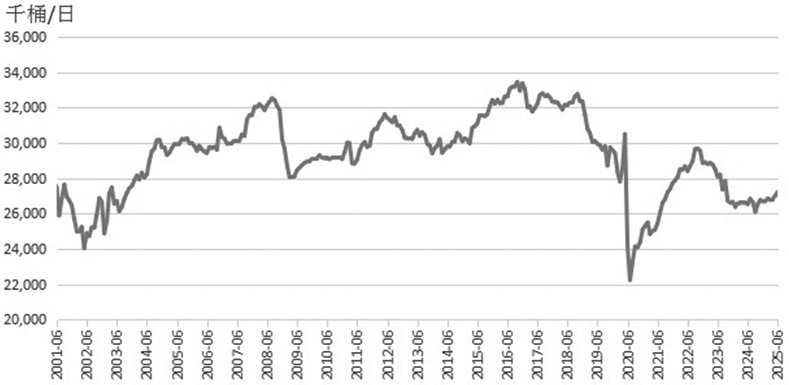
Group 1: OPEC+ Production and Market Dynamics - OPEC+ has accelerated its production increase, with a significant rise in daily output planned for August, aiming to restore previously cut production levels ahead of schedule [3][4][6] - In June, OPEC's total oil production reached 27.235 million barrels per day, showing a month-on-month increase of 219,000 barrels per day and a year-on-year increase of 700,000 barrels per day [4] - The internal conflicts within OPEC+ regarding production quotas may intensify as they attempt to capture market share, potentially leading to concerns about oversupply in the market [6] Group 2: Global Oil Demand and Economic Factors - Major energy agencies have downgraded global oil demand forecasts for this year by 200,000 to 400,000 barrels per day, reflecting concerns over economic conditions and trade tensions [9] - The U.S. commercial crude oil inventory has significantly decreased, with a reduction of 3.859 million barrels to 422 million barrels as of July 11, indicating strong demand during the summer consumption season [8] - China's crude oil imports showed a slight increase in the first half of the year, with a total of 27.9386 million tons imported, up 1.4% year-on-year, suggesting resilience in demand [10] Group 3: Market Sentiment and Futures Positioning - The international crude oil futures market has shown mixed net long positions, with WTI futures seeing a significant decrease of 46,947 contracts, while Brent futures increased by 20,989 contracts [11] - The overall sentiment in the oil market remains divided, with strong demand factors countering the increasing supply pressures from OPEC+ [13]
商品日报(7月3日):黑色系整体偏强 红枣期货大幅回调
Xin Hua Cai Jing· 2025-07-03 11:12
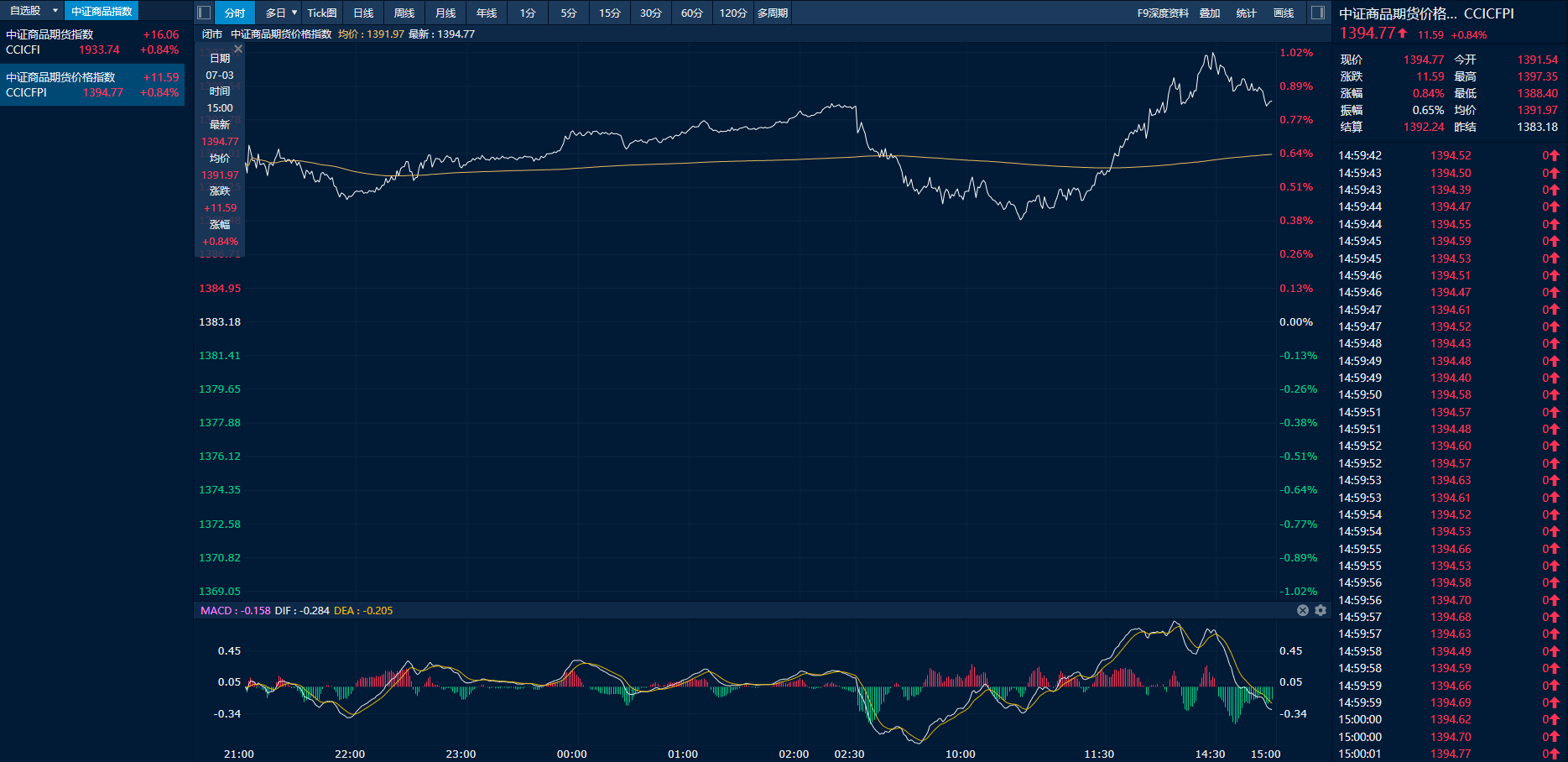
Group 1: Market Performance - On July 3, coking coal rose over 3%, iron ore, polysilicon, and coke increased over 2%, while silver, SC crude oil, glass, hot-rolled steel, rebar, live pigs, palm oil, and high-sulfur fuel oil rose over 1% [1] - The China Securities Commodity Futures Price Index closed at 1394.77 points, up 11.59 points or 0.84% from the previous trading day [1] - The China Securities Commodity Futures Index closed at 1933.74 points, up 16.06 points or 0.84% from the previous trading day [1] Group 2: Black Building Materials and Polysilicon - The "anti-involution" policy is expected to promote the orderly exit of backward production capacity, boosting previously oversupplied products like black building materials and polysilicon [2] - Coking coal's main contract rose by 3.76%, with iron ore, polysilicon, and coke main contracts increasing over 2% [2] - Market rumors about a production limit in Tangshan from July 4-15, reducing sintering machine output by 30%, have also supported the market [2] Group 3: Polysilicon Market Dynamics - After a previous day of limit-up, polysilicon's main contract saw a more moderate increase of 2.14%, indicating a high-level fluctuation [3] - Weak demand in the photovoltaic sector is pressuring downstream battery manufacturers, leading to a cautious purchasing attitude [3] - There is an expectation of slight supply growth in silicon materials due to the resumption of production in some upstream enterprises [3] Group 4: Rubber and Jujube Market Trends - The 20th rubber and jujube both fell over 1%, with rubber demand remaining weak due to trade war impacts [4] - Supply conditions for rubber are expected to normalize as the rainy season in Southeast Asia ends, with no significant drought reported [4] - Jujube prices fluctuated significantly, with high inventories from the previous season creating a complex supply-demand dynamic [4]
商品日报(5月6日):SC原油低开低走 黑色系整体承压
Xin Hua Cai Jing· 2025-05-06 10:58
Group 1: Market Overview - The domestic commodity futures market experienced a mixed performance on May 6, with NR main contract rising over 2% and several other contracts like urea, caustic soda, and natural rubber increasing by more than 1% [1] - The China Securities Commodity Futures Price Index closed at 1355.21 points, down 8.18 points or 0.60% from the previous trading day [1] Group 2: Oil Market Dynamics - International oil prices continued to decline during the holiday period, leading to a 3.69% drop in SC crude oil main contract, which was the largest decline in the domestic commodity market [2] - Analysts suggest that the recent slight rebound in oil prices is more technical than fundamental, with ongoing negative factors such as OPEC+ production strategy changes and demand uncertainty due to U.S. tariffs [2] Group 3: Black Metal Sector - The black metal sector faced pressure as expectations for terminal demand and pig iron production recovery weakened after the seasonal peak [3] - Despite a rise in pig iron production, the market remains cautious due to macroeconomic risks and expectations of a peak in pig iron prices [3] Group 4: Rubber Market Performance - The rubber sector showed resilience, with the main contract for No. 20 rubber rising by 2.16%, supported by a slight rebound in the overseas market [4] - However, the outlook for rubber prices remains uncertain due to weak fundamental expectations and high domestic tire inventory levels [4] Group 5: Urea Market Trends - Urea futures continued their upward trend with a 1.95% increase, driven by expectations of strong agricultural demand and rumors of export policy changes [5] - The market is currently experiencing a supply-demand balance, with domestic urea manufacturers actively seeking orders, indicating a potentially strong trend in the futures market [5]