
商品期货市场

Search documents
商品日报(2月12日):集运欧线反弹超6% 尿素强势拉涨
Xin Hua Cai Jing· 2026-02-12 11:16
Group 1 - The domestic commodity futures market experienced mixed results on February 12, with the shipping index for Europe leading gains, rising over 6% [1][2] - The carbon lithium futures contract increased by over 3%, while urea and soybean futures rose by more than 2% [1] - The China Securities Commodity Futures Price Index closed at 1670.92 points, up 3.25 points or 0.19% from the previous trading day [1] Group 2 - The shipping index for Europe saw a strong rebound of 6.40%, driven by reduced short-selling sentiment and a temporary boost in export demand ahead of policy adjustments [2] - Despite weakened price expectations from Maersk's March quotes, the market remains supported by ongoing demand for shipping related to solar panel exports [2] - Urea prices surged nearly 3%, reaching a new high since May 2025, influenced by new tenders from India and high international prices [3] Group 3 - BR rubber futures led the market decline with a drop of 1.93%, attributed to limited support from oil prices and rising inventory levels [4] - Palm oil continued to weaken, with a decrease of 1.50%, as traders reduced positions ahead of the holiday [4] - The Malaysian palm oil production decreased by 9.16% in early February, but the export volume fell by 16.1%, indicating a mismatch between supply and demand [4]
商品日报(2月11日):商品涨多跌少 碳酸锂增仓涨超9%
Xin Hua Cai Jing· 2026-02-11 10:47
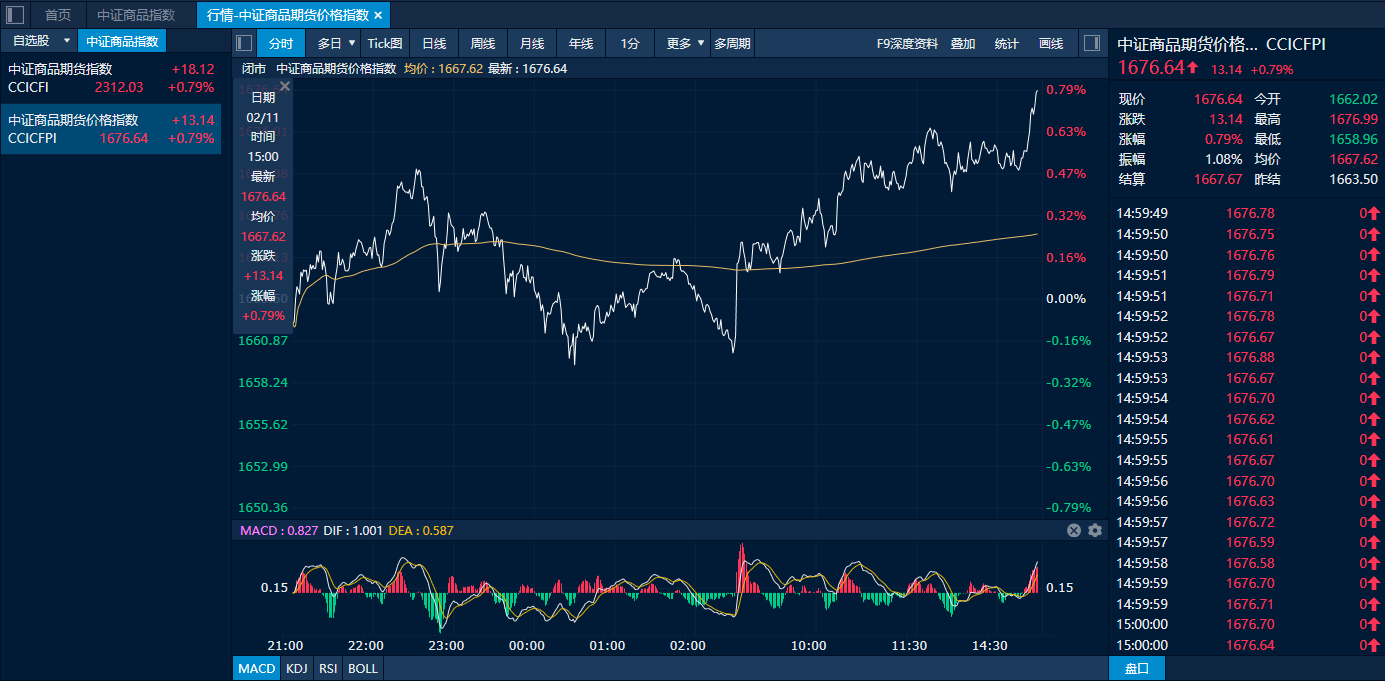
Group 1: Market Overview - The domestic commodity futures market on February 11 saw more gains than losses, with lithium carbonate leading the rise by over 9% [1] - The China Securities Commodity Futures Price Index closed at 1676.64 points, up 0.79% from the previous trading day [1] Group 2: Lithium Carbonate - Lithium carbonate main contract increased by 9.18%, recovering above 150,000 yuan/ton, supported by strong demand despite seasonal slowdowns [2] - Domestic production of lithium iron phosphate is expected to decrease by 5.48% month-on-month in February, but overall operating levels remain high due to stable terminal demand [2] - The market is experiencing a tight balance in supply and demand, with expectations of continued strong demand in the medium to long term [2] Group 3: Nickel and Tin - Nickel and tin prices also saw significant increases, with nickel rising by 4.02% and tin by 3.27% [3] - The reduction of nickel mining quotas in Indonesia has raised concerns about future supply tightening, contributing to the price surge [3] - However, seasonal demand for refined nickel is expected to weaken in the short term due to the upcoming Spring Festival [3] Group 4: Shipping and Glass Markets - The shipping market for the European route continued to show weakness, with the main contract down 1.42% due to oversupply and declining export demand as the Spring Festival approaches [4] - The glass main contract experienced fluctuations, closing up 0.74%, but the overall supply-demand imbalance remains a concern [5] - Analysts expect that the market will remain generally loose, with pressure on inventory levels post-holiday [5]

长安期货刘娜:临近春节假期 橡胶减仓为主
Xin Lang Cai Jing· 2026-02-11 08:12
Group 1 - The commodity futures market has shown signs of recovery, with the Wenhua Commodity Index surpassing the 170 mark, indicating a shift in market sentiment [3][7] - Natural rubber and 20 rubber have experienced three consecutive days of gains, with RU05 rising by 1.62% and NR04 by 1.7%, suggesting a change in the previously bearish technical outlook [3][7] - The ANRPC forecasts a slight increase in natural rubber production to 11,394 thousand tons in 2025, with Thailand's production in December showing a significant decline due to prior flooding, impacting the overall production growth [3][8] Group 2 - Inventory levels have increased, with Qingdao dry rubber inventory at 606,700 tons and social inventory at 1,296,500 tons, attributed to the end of prior replenishment and lower consumption ahead of the holiday [4][8] - The ANRPC projects a modest increase in rubber consumption to 11,350 thousand tons in 2025, with January 2026 heavy truck sales in China reaching approximately 101,000 units, a year-on-year increase of about 40% [4][8] - The supply-demand balance for rubber is expected to remain loose in 2025, but if consumption improves in the first half of 2026, the market dynamics may change [4][8] Group 3 - Despite the recent strength in the rubber market, uncertainties surrounding the upcoming Spring Festival suggest a recommendation for reducing positions before the holiday [5][9]

商品日报(2月3日): 市场情绪改善钯金多晶硅领涨 沪银仍跌超16%
Xin Hua Cai Jing· 2026-02-03 12:25
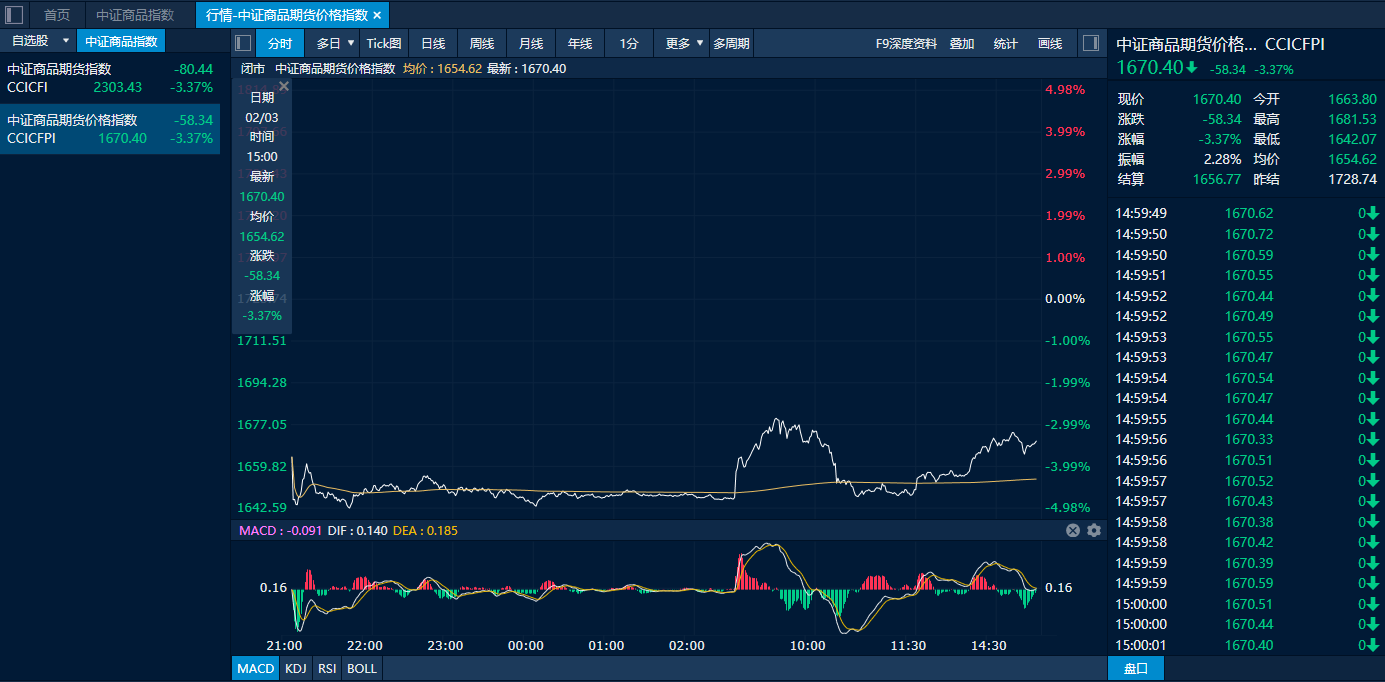
Group 1: Market Overview - The domestic commodity futures market on February 3 saw more declines than gains, with palladium leading the rise by over 8%, followed by polysilicon with over 6% and shipping indices by over 5% [1][2] - The China Securities Commodity Futures Price Index closed at 1670.40 points, down 58.34 points or 3.37% from the previous trading day [1] Group 2: Precious Metals - Market sentiment improved after significant declines, with palladium futures rising by 8.62% and platinum by over 3% due to international precious metal price increases [2] - The EU is considering banning imports of Russian platinum and other metals, raising concerns about supply tightness in platinum group metals, which contributed to the price surge [2][3] - The recent volatility in precious metals is attributed to forced liquidation due to extreme overbuying, but long-term drivers remain intact, suggesting a potential stabilization phase for gold [3] Group 3: Polysilicon Market - Polysilicon futures experienced a significant increase, closing with a 6.61% rise, driven by price adjustments from leading companies [3] - Reports indicate that major polysilicon producers are discussing capacity optimization and price adjustments, with some prices reportedly exceeding 62000 yuan/ton [3] Group 4: Other Commodities - The shipping index and lithium carbonate saw increases of over 5% and 4% respectively, while copper futures rose by over 2% [1][4] - The China Nonferrous Metals Industry Association is working on improving copper resource reserve systems, including expanding national strategic reserves and exploring commercial reserve mechanisms [4][6] Group 5: Silver and Other Metals - Silver futures experienced a significant drop, with the main contract down 16.71%, reflecting ongoing market adjustments after previous overbuying [5] - The overall non-ferrous metal sector remains weak, with tin futures down over 6%, and demand in traditional sectors like power and home appliances showing weakness [6]
贵金属带动商品普跌,EG大幅回撤
Hua Tai Qi Huo· 2026-02-03 05:06
Report Industry Investment Rating No relevant content provided. Core View - The overall sentiment in the commodity market has weakened due to macro - external factors, and the EG price has dropped back to the previous low - level range. The EG fundamentals remain weak, with significant inventory accumulation pressure from January to February, which may ease in March. [1][2] Summary by Directory Price and Basis - The closing price of the EG main contract was 3767 yuan/ton (down 146 yuan/ton or 3.73% from the previous trading day), and the spot price in the East China EG market was 3712 yuan/ton (down 112 yuan/ton or 2.93% from the previous trading day). The East China spot basis was - 98 yuan/ton (up 14 yuan/ton month - on - month). [1] Production Profit and Operating Rate - According to Longzhong data, the production gross profit of ethylene - based EG was - 51 US dollars/ton (down 4 US dollars/ton month - on - month), and the production gross profit of coal - based syngas - based EG was - 748 yuan/ton (down 26 yuan/ton month - on - month). The extrusion of the syngas - based load was not obvious, and the domestic ethylene glycol load was at a high level. [1][2] International Spread No relevant content provided. Downstream Sales, Production, and Operating Rate - Since mid - January, the Spring Festival maintenance plans have been gradually implemented. The weaving load and polyester load have declined rapidly, and the support from rigid demand has weakened. [2] Inventory Data - According to CCF data released every Monday, the inventory at the main ports in East China was 85.8 tons (up 6.3 tons month - on - month); according to Longzhong data released every Thursday, the inventory at the main ports in East China was 64.5 tons (up 2.8 tons month - on - month). The total planned arrivals at the main ports in East China this week are 12.3 tons, and the arrivals at the secondary ports are 2.3 tons. Overall, it is neutral, and the inventory at the main ports is expected to remain stable. There are plans for large Saudi contract vessels to enter the warehouse in early February, and the near - term arrivals are still relatively high, but the pressure will ease in mid - to late February. [1][2] Strategy - Unilateral: In the short term, affected by the macro - external environment, the sentiment in the commodity market has weakened, and the EG price has dropped back to the previous low - level range. Observe the market dynamics. - Inter - period: None - Inter - variety: None [3]
长安期货刘娜:供给端压力或有限 橡胶偏多思路对待
Xin Lang Cai Jing· 2026-01-29 09:05
Group 1 - The core viewpoint of the article highlights the recent strength in the rubber futures market, driven by macroeconomic factors and seasonal production slowdowns, suggesting a potential upward price movement [3][5][9] - The RU 05 contract reached a high of 16,790, with a daily increase of 2.61%, while the NR03 contract saw a maximum increase of over 3%, closing up 2.55% [3][8] - The technical outlook for both natural rubber and 20 rubber has shifted from a bearish to a bullish trend as they surpassed previous highs [3][8] Group 2 - According to the ANRPC, natural rubber production is projected to reach 10,263 thousand tons in the first 11 months of 2025, reflecting a 1.1% increase compared to the same period in 2024 [3][9] - Major producing countries like Thailand, Indonesia, and Vietnam are expected to maintain stable or increasing production, while fluctuations in Malaysia and the Philippines will have a limited impact on overall output [3][9] - Côte d'Ivoire's rubber exports are anticipated to increase by 13.4% in 2025, contributing to the overall production growth [9] Group 3 - Inventory data shows that Qingdao's dry rubber inventory was 584,500 tons as of January 23, slightly down from 584,800 tons the previous week, indicating a halt in the previous accumulation trend [4][9] - The total social inventory decreased to 1,271,800 tons, down from 1,273,900 tons, suggesting a focus on inventory reduction in the future [4][9] - The ANRPC reported a slight decline in rubber consumption to 10,011 thousand tons in the first 11 months of 2025 compared to 2024, with expectations that consumption may not exceed 2024 levels [4][9] Group 4 - In the tire production sector, China's outer tire production is projected to reach 1.18 billion units in 2024 and 1.207 billion units in 2025, marking a year-on-year growth of 0.9%, indicating stable demand [4][9] - Overall, the rubber market is expected to strengthen due to macroeconomic support and seasonal production slowdowns, with a recommendation to adopt a bullish stance on dips [5][9]
华龙期货铁矿周报-20260119
Hua Long Qi Huo· 2026-01-19 02:36
Report Industry Investment Rating - Investment Rating: ★★ [6] Report's Core View - Last week, the Iron Ore 2605 contract rose 3.17%. In the commodity futures market, most major commodity futures prices increased, and the financial market sentiment was relatively positive. With a lack of fundamental drivers, the macro - level provided the main support for the market. Iron ore is expected to maintain a relatively strong oscillatory trend in the near future [4][34] - For single - sided trading, it is advisable to go long on dips and pay attention to the support at 800 yuan/ton. For arbitrage and options, it is recommended to wait and see [5][6][35][36] Summary by Relevant Catalogs 1. Disk Analysis - This section includes analysis of futures prices, spot prices (such as the PB powder 61.5% spot price at Tianjin Port), and futures position net - position analysis [7][8][12] 2. Important Market Information - In 2025, the cumulative increase in the total social financing scale was 35.6 trillion yuan, 3.34 trillion yuan more than the previous year. At the end of December 2025, the broad - money (M2) balance was 340.29 trillion yuan, a year - on - year increase of 8.5%; the RMB loan balance was 271.91 trillion yuan, a year - on - year increase of 6.4% [15] - The World Bank raised its 2026 global economic growth forecast to 2.6%, 0.2 percentage points higher than the previous forecast. The US GDP growth rate is expected to reach 2.2% in 2026, while the economic growth rates of the Eurozone and Japan are expected to slow down to 0.9% and 0.8% respectively [15] 3. Supply - Side Situation - As of December 2025, the import volume of iron ore and concentrates was 11,965 million tons, an increase of 911 million tons from the previous month; the import average price was 101.16 US dollars/ton, a decrease of 0.33 US dollars/ton from the previous month [20] - As of December 2025, Australia's iron ore shipment volume was 7,139.3 million tons, an increase of 954.4 million tons from the previous month; Brazil's iron ore shipment volume was 2,763.5 million tons, a decrease of 332.8 million tons from the first half of the month [24] 4. Demand - Side Situation - This section involves data on the daily average molten iron output of 247 steel mills, the profitability rate of 247 steel mills, and the Shanghai terminal wire rod and screw steel procurement volume [25][28][30] 5. Fundamental Analysis - The total inventory of imported iron ore at 45 ports in the country was 16,555.10 million tons, a month - on - month increase of 279.84 million tons; the daily average port clearance volume was 3.1989 million tons, a decrease of 338,000 tons; the number of ships at the port was 117, an increase of 1 [33] - The blast - furnace operating rate of 247 steel mills was 78.84%, a month - on - month decrease of 0.47% and a year - on - year increase of 1.66%; the blast - furnace iron - making capacity utilization rate was 85.48%, a month - on - month decrease of 0.56% and a year - on - year increase of 1.20%; the steel - mill profitability rate was 39.83%, a month - on - month increase of 2.17% and a year - on - year decrease of 10.39%; the daily average molten iron output was 2.2801 million tons, a month - on - month decrease of 149,000 tons [33] - In early January, key steel enterprises produced 19.97 million tons of crude steel, with an average daily output of 1.997 million tons, a daily output increase of 21.6% month - on - month. It is estimated that the national daily output of crude steel was 2.48 million tons, a month - on - month increase of 22.8%; the daily output of pig iron was 2.15 million tons, a month - on - month increase of 6.8%; and the daily output of steel products was 3.87 million tons, a month - on - month decrease of 1.2% [33] 6. Future Outlook - Iron ore is expected to maintain a relatively strong oscillatory trend in the near future [34] 7. Operation Strategy - For single - sided trading, go long on dips and pay attention to the support at around 800 yuan/ton. For arbitrage and options, wait and see [5][6][35][36]
双焦周报:预计盘面仍呈现偏强震荡,注意短期市场情绪冲击及高波风险-20260117
Wu Kuang Qi Huo· 2026-01-17 13:59
1. Report Industry Investment Rating No relevant information provided. 2. Core Viewpoints of the Report - The overall sentiment for commodities is expected to remain bullish, but the main focus will be on precious metals and non-ferrous metals. Other sectors will be more influenced by the spill - over of market sentiment [18]. - In the short - term, the prices of coking coal and coke are expected to show a moderately strong oscillating trend. However, attention should be paid to the short - term impact of market sentiment and the current high volatility risk [18]. - The supply - demand structure of coking coal and coke is marginally loosening, but considering the pre - holiday restocking, the relationship between coking coal, coke, and downstream hot metal remains relatively balanced. Steel enterprises have low expectations for the future market and weak restocking willingness [18]. 3. Summary by Directory 3.1 Week - on - week Assessment and Strategy Recommendation - **Market Review**: Last week, coking coal futures prices rose at the beginning of the week, hit the upper pressure level, and then oscillated downward, with a weekly decline of 22 yuan/ton or - 1.84%. Coking coal futures are in a daily - level rebound cycle. Coking coke futures prices also showed a slight oscillating downward trend last week, with a weekly decline of 30.5 yuan/ton or - 1.74%. Coking coke prices are approaching the long - term downward trend line since October 2021 [11][16]. - **Weekly Key Points Summary**: - **Spot Prices and Basis**: Coking coal spot prices generally increased, and most varieties had positive basis. Coking coke spot prices remained stable, and the basis showed a discount situation [17]. - **Variety Positions**: The positions of the main coking coal contract are at a high level in the same period of the past six years, and the non - main contracts in March and April also have abnormally high positions. Attention should be paid to the pressure of warehouse receipts after price increases [17]. - **Domestic Production**: The daily average production of clean coal from 523 sample mines increased by 3.42 tons week - on - week, but the cumulative production decreased by about 810,000 tons or - 3.29% year - on - year [17]. - **Overseas Imports**: The customs clearance volume of Mongolian coal at the Ganqimaodu Port has decreased to 169,000 tons/day but is still at a high level. The import profit of Australian Peak View hard coking coal is - 118 yuan/ton, and the import window is still closed [17]. - **Demand**: The daily average coke production of 247 steel enterprises and independent coking plants decreased by 0.28 tons. The daily average hot metal production of steel enterprises decreased by 1.49 tons, and the steel mill profit margin increased by 2.17%. The apparent consumption of five major steel products increased, and the inventory decreased slightly but was still higher than the same period last year [17]. - **Supply - Demand Structure**: The daily average supply of coking coal increased, while the demand decreased, and the supply - demand structure was marginally loosened. The daily average demand for coking coke was slightly lower than the production, and the supply - demand structure also showed marginal looseness [18]. - **Inventory**: The total coking coal inventory increased by 421,000 tons, and the total coking coke inventory increased by 43,100 tons. The inventory of coking coal and coke is being transferred from upstream to downstream [18]. 3.2 Futures - Spot Market - **Coking Coal Spot Prices**: As of January 16, 2026, the prices of skeleton coking coal such as low - sulfur, medium - sulfur, and high - sulfur main coking coal increased significantly, while the prices of 1/3 coking coal, lean coal, and gas coal increased slightly. The prices of different coking coal varieties in different regions also showed varying degrees of increase [22][24][27]. - **Coking Coke Spot Prices**: As of January 16, 2026, the prices of coking coke in Rizhao Port and Lvliang remained stable [33]. - **Coking Coal Basis**: As of January 16, 2026, Shanxi low - sulfur main coking coal and Jinquan Mongolian No. 5 coking coal had positive basis, and the basis increased compared with the previous period [40]. - **Coking Coal Calendar Spread**: As of January 16, 2026, the 5 - 9 spread of coking coal was - 82 yuan/ton, and coking coal maintained a Contango structure [43]. - **Coking Coke Basis**: As of January 16, 2026, Rizhao Port quasi - first - grade wet - quenched coke and Lvliang quasi - first - grade dry - quenched coke had negative basis, and the basis increased compared with the previous period [46]. - **Coking Coke Calendar Spread**: As of January 16, 2026, the 5 - 9 spread of coking coke was - 79.5 yuan/ton, and coking coke maintained a Contango structure [49]. 3.3 Positions and Variety Ratios - **Variety Positions**: As of January 16, 2026, the total unilateral positions of coking coal were 617,800 lots, a decrease of 23,600 lots week - on - week, and the positions were still at a relatively high historical level. The unilateral positions of coking coke were 40,300 lots, an increase of 100 lots week - on - week [58]. - **Variety Ratios**: This week, coking coal performed slightly weaker than iron ore and hot - rolled coils, and the ratio of coking coal to iron ore is still at a low historical level. Iron ore and hot - rolled coils were also slightly stronger than coking coke, and the ratio of coking coke to iron ore is also at a low historical level [65][68]. 3.4 Supply and Demand - **Domestic Coking Coal Production**: As of January 16, 2026, the daily average production of clean coal from 523 sample mines was 768,500 tons, an increase of 34,200 tons week - on - week, and the production continued to recover. The daily average production of clean coal from 314 sample coal washing plants was 273,500 tons, an increase of 12,300 tons week - on - week, and the cumulative production increased year - on - year [73][75]. - **Imported Coking Coal**: As of January 10, 2026, the customs clearance volume of Mongolian coal at the Ganqimaodu Port decreased to 169,000 tons/day but was still at a high level. In 2025, China's cumulative imports of Mongolian coking coal increased year - on - year. The import profit of Australian coking coal was negative, and the import window was closed. In 2025, China's cumulative imports of Australian coking coal decreased year - on - year. The imports of Russian and Canadian coking coal increased in 2025 compared with the previous year, while the imports of US coking coal decreased significantly [78][81][84]. - **Coking Coke Production**: As of January 16, 2026, the daily average coke production of 247 steel enterprises and independent coking plants decreased, and the coking profit of independent coking plants was - 65 yuan/ton, a decrease of 20 yuan/ton week - on - week [90]. - **Downstream Steel Industry**: As of January 16, 2026, the daily average hot metal production of 247 steel enterprises decreased, and the steel mill profit margin increased. The estimated profit of rebar and hot - rolled coils on the futures market improved. The apparent consumption of five major steel products increased, and the inventory decreased slightly but was still higher than the same period last year [96][102][106]. - **Supply - Demand Structure**: The daily average supply of coking coal increased, while the demand decreased, and the supply - demand structure was marginally loosened. The daily average demand for coking coke was slightly lower than the production, and the supply - demand structure also showed marginal looseness [108]. 3.5 Inventory - **Inventory Overview**: As of January 16, 2026, the total coking coal inventory increased by 421,000 tons, and the total coking coke inventory increased by 43,100 tons. The inventory transfer from upstream to downstream continued [112]. - **Coking Coal Inventory**: The inventory of sample mines decreased, while the inventories of independent coking plants and steel mills increased, and the port inventory decreased slightly [112]. - **Coking Coke Inventory**: The inventory of independent coking plants decreased, while the inventories of steel mills and ports increased [112].
国内商品期市夜盘多数上涨,能源品涨幅居前
Xin Lang Cai Jing· 2026-01-14 15:33
Group 1 - The domestic commodity futures market saw most contracts rise during the night session, with energy products leading the gains, particularly fuel which increased by 3.13% [1] - Chemical products mostly experienced increases, with polypropylene rising by 1.23% [1] - Non-metallic building materials also saw a majority increase, with PVC up by 0.70% [1] Group 2 - Agricultural products generally rose, with corn increasing by 0.26% [1] - The black series of commodities mostly rose, with rebar increasing by 0.19% [1] - Oilseeds and oils faced declines, with palm oil dropping by 1.28% [1]
长安期货刘娜:临近假期 橡胶减仓为主
Xin Lang Cai Jing· 2025-12-30 07:36
Core Viewpoint - The commodity futures market is experiencing mixed trends, with rubber prices showing minor declines while maintaining a stable oscillation pattern. The supply side pressure has eased due to adverse weather conditions in Thailand, impacting production levels [3][9]. Supply Side - The rubber output in Thailand has been affected by floods in the southern region, leading to a decrease in production compared to previous years. As per QinRex data, Thailand's natural rubber exports for the first 11 months of 2025 totaled 2.419 million tons, a year-on-year decrease of 7%. However, exports to China during the same period increased by 14%, totaling 945,000 tons [3][9]. - The production in Southeast Asia's main rubber-producing regions is expected to remain stable or slightly increase in the fourth quarter, suggesting that localized production declines will have a limited impact on overall annual output [3][9]. Inventory - According to Steel Union data, the inventory of dry rubber in Qingdao was 524,800 tons for the week ending December 26, up from 515,200 tons the previous week. The social inventory data has not been updated, but it is anticipated that the overall inventory remains in an accumulation phase, indicating greater inventory pressure than in previous periods [10]. Demand Side - The operating rates for downstream steel tires were reported at 61.95% for full steel tires and 72.05% for semi-steel tires for the week ending December 25. The full steel tire operating rate has decreased compared to the previous week, while the semi-steel tire rate has seen a slight increase. Both rates are below those of the same period last year, indicating stable demand without significant changes [10]. Market Outlook - The recent market performance is characterized by a strong tendency, driven by easing supply-side pressures and macroeconomic support from crude oil prices. However, there is significant inventory pressure as the market enters an accumulation phase, compounded by heightened risk aversion as the holiday season approaches. It is recommended to reduce positions in rubber and 20 rubber before the holiday [4][10].