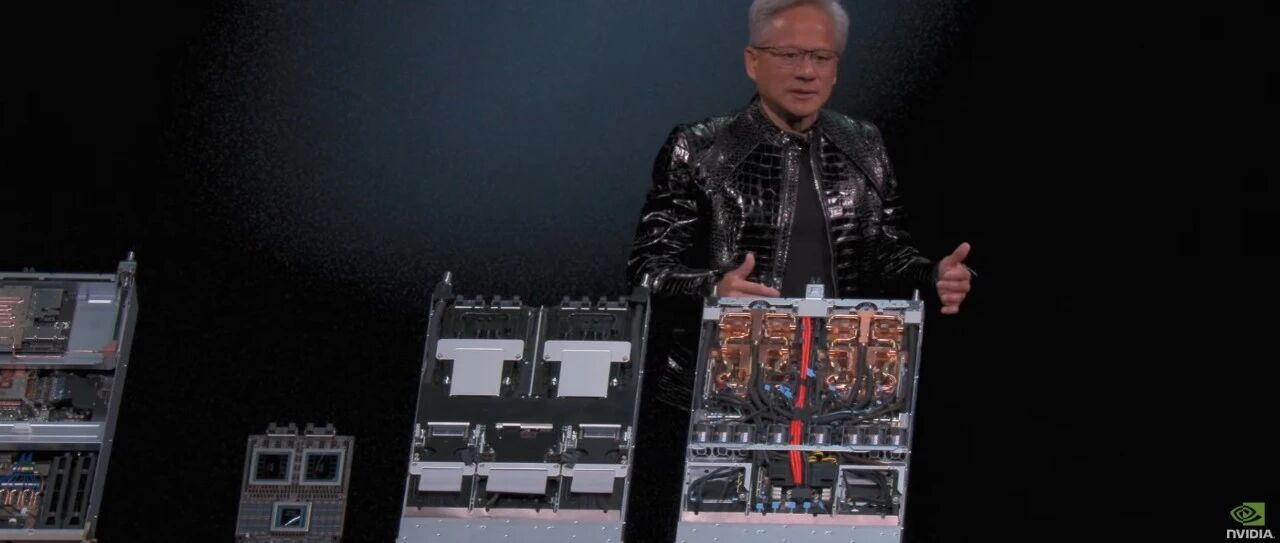
Alpamayo 1

Search documents
智能汽车ETF(159889)盘中涨超1.7%,产业趋势与政策进展受关注
Mei Ri Jing Ji Xin Wen· 2026-01-09 06:59
Core Insights - The smart car ETF (159889) saw an intraday increase of over 1.7%, driven by industry trends and policy developments [1] - According to招商证券, 2026 is projected to be a breakout year for the smart driving and Robotaxi industries, with ongoing market attention on these trends [1] - Nvidia's release of the open-source VLA model Alpamayo 1 signifies a pivotal moment for physical AI, with unmanned taxis expected to be among the first beneficiaries [1] Industry Developments - Waymo is expected to exceed 450,000 weekly orders by 2025, while Tesla's Robotaxi operations are expanding in Austin, with Full Self-Driving (FSD) technology likely to validate the gradual transition from Level 2 to Level 4 [1] - Pony.ai has achieved single-vehicle profitability in Guangzhou, and WeRide has obtained a fully autonomous driving commercial license in the UAE [1] - Regulatory advancements are indicated by the establishment of national standards for L3 access permits and autonomous driving regulations, suggesting a faster pace of progress in legislation [1] Market Dynamics - The smart car ETF (159889) tracks the CS Smart Car Index (930721), which selects listed companies involved in smart driving and vehicle networking from the A-share market, covering the entire industry chain from hardware to software [1] - The index's constituent stocks are concentrated in the electronics, computer, and automotive sectors, providing a comprehensive reflection of the overall performance of the smart car-related industries [1]
黄仁勋CES回应全场,内存卡了GPU脖子,游戏玩家可能只能用旧显卡了
3 6 Ke· 2026-01-07 11:04
Core Insights - Huang Renxun emphasized that robots are akin to AI immigrants, capable of taking on jobs that humans are reluctant to perform [1][5] - The company is considering restarting old production lines for GPUs, such as the RTX 3060, to incorporate new technologies due to current supply chain challenges [1][14][15] Group 1: AI and Robotics - The core theme of Huang's presentation at CES 2026 revolved around physical AI, including robotics and autonomous driving [5] - Huang stated that the "robot revolution" will drive economic growth, creating more jobs and absorbing more labor, while maintaining low inflation levels is crucial for a healthy economy [5] - He predicted that by the end of this year, robots will achieve human-level capabilities in mobility, joint movement, and fine motor skills [5] Group 2: Autonomous Driving - Huang introduced the world's first open-source, large-scale autonomous driving visual-language-action (VLA) inference model, named Alpamayo 1 [7] - The key distinction between Alpamayo and Tesla's FSD is that NVIDIA does not manufacture autonomous vehicles but provides a complete technology stack for companies developing them [9][11] - NVIDIA's systems have high industry penetration, with over 1 billion vehicles on the road today, and millions expected to have autonomous capabilities in the next decade [10] Group 3: GPU and Memory Challenges - NVIDIA did not release consumer-grade gaming graphics cards at CES 2026, citing rising memory costs and supply constraints as significant challenges [14][19] - Huang acknowledged the possibility of reviving production of older graphics cards to meet market demand, although this would require substantial R&D resources [15][16] - The company is positioned as a major buyer of high-bandwidth memory (HBM) and is collaborating closely with suppliers to ensure production aligns with product launches [22] Group 4: Future of Gaming - Huang discussed the future of gaming, suggesting that AI will play a significant role in character development and game realism, with advancements in rendering technology expected [19][20] - He believes that the gaming industry is entering an exceptional era, driven by AI innovations [20] Group 5: Leadership and Vision - Huang humorously shared two secrets for longevity as a CEO: not getting fired and avoiding boredom, while also acknowledging the significant responsibilities of leading NVIDIA [23]


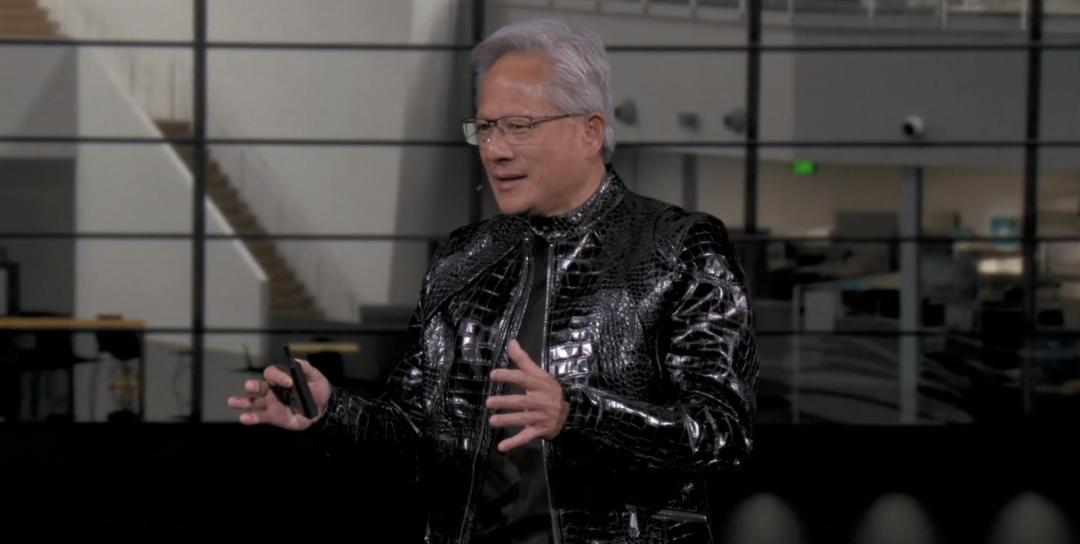
黄仁勋CES回应全场!内存卡了GPU脖子,游戏玩家可能只能用旧显卡了
量子位· 2026-01-07 09:11
Core Viewpoint - Huang Renxun emphasizes that robots are the "AI immigrants" capable of taking on jobs that humans are unwilling to do, highlighting the need for AI to support economic growth and job creation [10][11]. Group 1: AI and Robotics - Huang states that the "robot revolution" will drive economic progress and create more job opportunities while maintaining low inflation levels [11]. - He predicts that by the end of this year, robots will achieve human-level capabilities in mobility, joint movement, and fine motor skills [12]. - The development of robots requires not only visual perception but also tactile capabilities, which poses significant technical challenges [13]. Group 2: Autonomous Driving - Huang introduced the world's first open-source, large-scale autonomous driving visual-language-action (VLA) reasoning model, Alpamayo 1, and praised Tesla's FSD technology as world-class [15][16]. - NVIDIA's role is to provide a complete technology stack for companies developing autonomous vehicles, rather than manufacturing the vehicles themselves [16][20]. - The company has a high industry penetration rate, with over 1 billion vehicles on the road, and expects that millions will have strong autonomous driving capabilities in the next decade [20]. Group 3: AI Infrastructure and Memory Supply - Huang introduced NVIDIA's next-generation AI supercomputing platform, Vera Rubin, and discussed the challenges posed by rising memory prices and supply constraints [24][25]. - The company is positioned as a key player in the memory market, addressing the growing demand for high-bandwidth memory (HBM) and collaborating closely with suppliers to ensure production capacity aligns with product launches [36]. Group 4: Gaming and AI - NVIDIA upgraded its super-resolution model with the new DLSS 4.5 version, indicating a shift towards AI-driven gaming experiences [31]. - Huang predicts that future video games will be filled with AI characters, significantly enhancing realism and interactivity [32][33].

黄仁勋在CES上说了什么?马斯克量产+陈天桥出手 今年将成脑机接口商业化元年?丨20260106从华尔街到陆家嘴
Di Yi Cai Jing· 2026-01-07 01:54
Group 1 - Nvidia has open-sourced its first inference VLA model, Alpamayo 1, which utilizes a 10 billion parameter architecture to address complex driving scenarios in autonomous driving technology [1] - The model is supported by several companies, including Jaguar Land Rover, Lucid, and Uber, aiming to advance Level 4 autonomous driving deployment [1] - Nvidia introduced the Vera Rubin platform, featuring six new chips, with products based on this architecture expected to launch in the second half of 2026 [1] Group 2 - DBS Bank's Dan Tsai highlighted that the focus of AI development in the next 1-2 years will shift from the digital world to the physical world, emphasizing practical applications of AI [2] - Nvidia aims to maintain its market position by integrating general-purpose and specialized chip technologies through a hybrid AI model that combines public cloud and private models [2] Group 3 - The brain-computer interface (BCI) sector is gaining traction, with Elon Musk's Neuralink planning large-scale production of brain-machine devices by 2026, utilizing automated surgical methods [4] - The global BCI market is projected to reach $25-30 billion by 2025, with potential growth to over $200 billion by 2040 if technological breakthroughs continue [5] Group 4 - Citigroup issued a neutral rating for major Wall Street banks, including Morgan Stanley, JPMorgan Chase, and Goldman Sachs, indicating that current valuations reflect high market expectations [6] - Morgan Stanley's stock price may face a pullback due to its current valuation being fully priced in, while JPMorgan is expected to maintain steady growth despite a neutral rating [6] Group 5 - The financial sector is expected to see average earnings growth of 15% in 2025, with some investment banks potentially experiencing stock price increases that exceed earnings growth, raising concerns about adjustments [7] - The A-share financial sector is highlighted as a focus area, with insurance and brokerage firms showing strong performance due to favorable investment results [7]

【钛晨报】定调2026年重点工作,央行最新部署;全球最快IPO AI公司诞生:MiniMax超额认购1209倍,1月9日正式上市;国家发改委:1月6日国内成品油价格按机制不作调整
Sou Hu Cai Jing· 2026-01-06 23:41
Monetary Policy and Financial Services - The People's Bank of China emphasizes the continuation of a moderately loose monetary policy to promote high-quality economic development and reasonable price recovery [2][3] - The central bank plans to use various monetary policy tools flexibly, including reserve requirement ratio (RRR) cuts and interest rate adjustments, to maintain ample liquidity and support balanced credit growth [2][3] - There is a focus on enhancing financial services for the real economy, particularly in key areas such as technology innovation and support for small and micro enterprises [3] Financial Risk Management - The meeting highlights the importance of managing financial risks in key sectors, including the resolution of debt risks associated with financing platforms [3] - It aims to strengthen risk identification and early correction mechanisms for small financial institutions and enhance macro-prudential management tools [3] Financial Reform and Opening-up - The meeting calls for deepening financial reforms and promoting high-level opening-up in various financial markets, including bond, currency, and foreign exchange markets [4] - There is a commitment to support the construction of international financial centers in Shanghai and Hong Kong, and to facilitate the use of the Renminbi in cross-border transactions [4] Automotive Industry Developments - BYD has surpassed Tesla in sales in Germany and the UK, with a sevenfold increase in sales in Germany to 23,306 units, while Tesla's sales dropped to 19,390 units [7] - Chery Group sets a sales target of 3.2 million units for 2026, representing a 14.03% increase from 2025 [7] Technology and AI Developments - Google extends its strategic partnership with XREAL to enhance the Android XR ecosystem, with the first product, Project Aura, set to launch this year [8] - NVIDIA introduces the Alpamayo series of open-source resources aimed at accelerating safe autonomous driving technology development [8][9] Insurance Industry Initiatives - The Guangdong Financial Regulatory Bureau releases guidelines to support the high-quality development of the insurance industry, focusing on providing insurance services for key manufacturing sectors and emerging industries [15] Stock Market Activity - MiniMax's IPO in Hong Kong sees a subscription amount exceeding 253.3 billion HKD, with a public offering oversubscription rate of 1209 times, marking a record for AI companies [16][17]

汽车行业点评报告:催化不断,2026年重视智驾和robotaxi产业趋势
CMS· 2026-01-06 11:30
Investment Rating - The report maintains a "Recommended" rating for the automotive industry, indicating a positive outlook for the sector's fundamentals and expectations for the industry index to outperform the benchmark index [5]. Core Insights - The year 2026 is projected to be a breakthrough year for the smart driving and robotaxi industries, with significant advancements expected [3]. - Nvidia's release of the open-source VLA (Vision-Language-Action) model, Alpamayo 1, is anticipated to catalyze developments in autonomous driving, with the first vehicle equipped with this model, the Mercedes CLA, expected to hit the roads in the U.S. in Q1 2026 [2]. - The report highlights the expected growth in the robotaxi sector, with Waymo projected to exceed 450,000 rides per week by 2025 and Tesla's robotaxi operations expanding significantly in Austin, which is expected to have a notable financial impact in the second half of 2026 [3]. - Regulatory advancements are also noted, with the Ministry of Industry and Information Technology granting L3 access licenses to two companies, and the Ministry of Public Security announcing the initiation of national standards for autonomous driving regulations [3]. Industry Overview - The automotive industry comprises 267 companies, with a total market capitalization of 4,785.2 billion and a circulating market capitalization of 4,146.4 billion [5]. - The industry has shown strong performance, with absolute returns of 8.0% over one month, 26.4% over six months, and 54.0% over twelve months [7]. - Relative performance against the benchmark has also been positive, with 5.1% over one month, 7.9% over six months, and 29.0% over twelve months [7]. Related Companies - Key players in the industry include Bertel, Nexteer, Horizon Robotics, Black Sesame, Desay SV, and others involved in various aspects of smart driving technology and robotaxi operations [4].

【天风汽车】英伟达开源智驾大模型,商业化落地加速-0106
Ge Long Hui· 2026-01-06 09:39
Group 1 - Nvidia has launched an open-source vision-language-action model, Alpamayo 1, for autonomous driving, featuring 10 billion parameters and a significant breakthrough in openness, providing complete development resources from data to deployment [1] - The model is an inference-based VLA that can reason causal relationships before decision-making, predict intentions of others, and handle multi-step decisions, resulting in a 12% improvement in planning accuracy, a 37% increase in action consistency, and a 25% reduction in collision rates [1] - Nvidia's DRIVE system is entering mass production, with the first model being the new Mercedes CLA, set to hit the roads in the US in 2026, and plans to test Robotaxi services in collaboration with partners in 2027 [1] Group 2 - The open-source end-to-end model is expected to reconstruct the intelligent driving ecosystem, further lowering the threshold for Level 4 (L4) autonomous driving, with recommendations for Robotaxi algorithm companies such as Xiaoma and Wenyuan, and attention on unmanned mining vehicle targets like Xidi Zhijia and Boleton, as well as the upcoming listing of Yikong Zhijia [2] - Recommended components for safety redundancy include steering systems from Cybercab's exclusive supplier, Nexperia, braking systems from Bertley and Ruikem, lidar from Hesai and Suteng, and chips from Horizon and Black Sesame [2] - In addition to intelligent driving, Nvidia's Isaac platform and GR00T basic module development cover various types of robots, including industrial, humanoid, and consumer-grade, with a positive outlook on the resonance between intelligent driving and robotics domain control companies like Kobot, Desay SV, and Jingwei Hengrun [2]
NVIDIA推出Alpamayo系列开源AI模型与工具,加速安全可靠的推理型辅助驾驶汽车开发
Xin Lang Cai Jing· 2026-01-06 04:37
Core Insights - NVIDIA has launched the Alpamayo series of open-source AI models, simulation tools, and datasets aimed at advancing the development of safe and reliable inference-based autonomous driving vehicles [1][3] Group 1: Technology and Features - The Alpamayo series introduces a VLA reasoning model based on chain-of-thought, enhancing decision-making capabilities in autonomous driving systems to handle rare and complex scenarios [1][3] - Alpamayo 1 is the first reasoning model designed for the autonomous driving research community, featuring a 10 billion parameter architecture that generates driving trajectories from video input while providing reasoning insights [3][4] - AlpaSim is a fully open-source end-to-end simulation framework that offers realistic sensor modeling and configurable traffic dynamics, supporting rapid validation and strategy optimization [4] Group 2: Data and Ecosystem - NVIDIA provides a diverse large-scale open dataset for autonomous driving, containing over 1,700 hours of driving data across various geographic areas and environmental conditions, essential for developing reasoning architectures [4] - The Alpamayo ecosystem integrates open models, simulation frameworks, and datasets into a unified system, allowing developers and research teams to build upon it for their projects [3][4] Group 3: Industry Support and Impact - Leading companies in the mobility sector, including Lucid, Jaguar Land Rover, and Uber, have shown significant interest in Alpamayo, aiming to develop reasoning-based autonomous driving stacks for achieving Level 4 autonomy [5] - Industry experts emphasize the growing need for AI systems that not only process data but also possess reasoning capabilities to handle real-world behaviors, highlighting the importance of advanced simulation environments and rich datasets [5] - The open-source nature of Alpamayo is expected to accelerate innovation across the industry, enabling partners to adjust and optimize models according to their unique needs [5]
无人驾驶概念强势,浙江世宝等多股涨停,英伟达推首个无人驾驶推理模型
Ge Long Hui· 2026-01-06 01:57
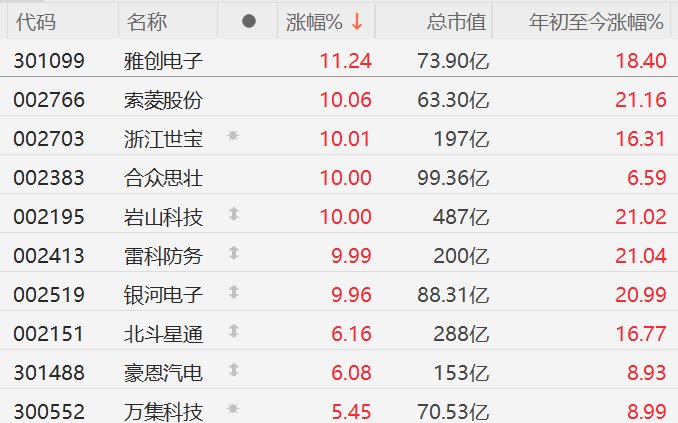
Group 1 - The A-share market saw a collective surge in autonomous driving concept stocks, with Yachuang Electronics rising over 11% and several other companies hitting the 10% daily limit increase [1][2] - Notable performers included Suofei Co. with a 10.06% increase, Zhejiang Seabow at 10.01%, and Hezhong Shizhuang at 10% [2] - The total market capitalization of Yachuang Electronics reached 7.39 billion, while other companies like Zhejiang Seabow and Hezhong Shizhuang had market caps of 19.7 billion and 9.936 billion respectively [2] Group 2 - Nvidia made a significant advancement in the autonomous driving sector by announcing the open-source release of its first inference VLA (Vision-Language-Action) model, Alpamayo 1, aimed at accelerating the development of safe autonomous driving technology [1][3] - The Alpamayo 1 model features a 10 billion parameter architecture that processes video input to generate trajectories and reasoning processes, addressing complex driving scenarios [3] - The model aims to tackle the challenging "long tail effect" in autonomous driving, enabling vehicles to "think" and find solutions in unexpected situations, with the first vehicle equipped with this technology expected to hit the roads in the U.S. in the first quarter [3]


黄仁勋CES放出大杀器:下一代Rubin架构推理成本降10倍
机器之心· 2026-01-06 00:31
Core Insights - The article discusses the transformative impact of AI on various industries, highlighting the advancements presented by NVIDIA at CES 2026, particularly focusing on the new Rubin platform and the Alpamayo open-source model for autonomous driving [1][3][5]. Group 1: NVIDIA Rubin Platform - The NVIDIA Rubin platform introduces six new chips aimed at creating a leading AI supercomputer that excels in cost, performance, and security, significantly reducing training time and inference token costs [8][10]. - The platform features innovations such as the latest NVIDIA NVLink interconnect technology, a Transformer engine, and advanced security measures, which collectively enhance AI capabilities and reduce the GPU count needed for training models by four times compared to previous generations [13][17]. - The Rubin platform is designed to meet the increasing demand for AI computing, with a total bandwidth of 260TB/s, surpassing the entire internet's bandwidth, and is expected to be commercially available in the second half of 2026 [19][20]. Group 2: Alpamayo Open-Source Model - The Alpamayo series introduces a visual-language-action (VLA) model that enhances autonomous driving capabilities by enabling vehicles to reason through rare scenarios, thereby improving safety and interpretability [27][28]. - This model is part of a cohesive open ecosystem that includes open-source models, simulation tools, and datasets, allowing developers to build upon it for autonomous driving technology [29][30]. - The Alpamayo model, featuring 10 billion parameters, is designed to generate driving trajectories and reasoning traces from video inputs, providing a foundation for developers to create tailored autonomous driving solutions [30][31]. Group 3: Robotics and Physical AI - NVIDIA has launched new open-source models and frameworks for physical AI, aimed at accelerating the development of versatile robots capable of learning multiple tasks [35][36]. - The company emphasizes the importance of simulation and evaluation frameworks, such as the Isaac Lab-Arena, to streamline the development process and ensure robust performance before deployment [43][45]. - Collaborations with industry leaders in robotics are highlighted, showcasing the integration of NVIDIA's technology into next-generation robots, which are expected to revolutionize various sectors [36][50].