ES系列

Search documents
不止是进阶,更是底气!星途让中国豪华被世界看见
Jing Ji Guan Cha Bao· 2025-12-25 09:27
Core Insights - The article highlights the ambition of Chinese luxury automotive brand, Exeed, to establish itself as a global player in the luxury market, marking a significant shift in perception from cost-effective manufacturing to luxury branding [1][2][10] Group 1: Brand Positioning and Vision - Exeed is positioned as the pinnacle of Chery Group's brand hierarchy, aiming to define itself as a global leader in luxury electric and intelligent vehicles, similar to how Lexus is to Toyota [2][3] - The brand's mission is to create a unique identity with its own values, striving to be the first of its kind rather than a follower [2][3] Group 2: Technological Advancements - Exeed emphasizes the importance of reliable quality as the foundation of luxury, introducing the "Rock Solid 3.0" body structure with 88% high-strength steel and aluminum alloy, and the industry's first 2400MPa hot-formed steel [3][4] - The brand incorporates over 20 intelligent driving assistance features, achieving emergency braking at 135 km/h, and has developed a health-focused cabin with zero harmful emissions [3][4] Group 3: Product Development and Design - Exeed plans to establish a unique luxury design system based on "interstellar exploration aesthetics," with a product matrix that includes the ES series focused on performance and the ET series on luxury [5][6] - The company aims to launch over three new models in the next 10-20 months, showcasing its strong product development capabilities [5][6] Group 4: Brand Culture and User Engagement - Exeed seeks to build a luxury brand recognized globally, focusing on product excellence, cultural identity, and strong user relationships [6][7] - The brand is committed to creating a community of users who co-create and share experiences, enhancing emotional connections with the brand [7][8] Group 5: Global Recognition and Market Strategy - Exeed has achieved over 70 global quality recognitions and 54 safety evaluations, with a presence in over 30 mainstream markets, and has surpassed an average overseas price of 400,000 yuan [9][10] - The brand has successfully penetrated European markets, achieving top sales in countries like Poland and Italy, marking a transition from cost-based exports to high-value exports [9][10]
星途3.0启幕:以中国硬核实力,拓全球豪华新途
Yang Zi Wan Bao Wang· 2025-12-23 03:51
Core Insights - The article highlights the emergence of Chinese luxury automotive brands, particularly the Xingtou brand, as they enter a new era defined by innovation and a commitment to redefining global luxury standards [1][2]. Group 1: Brand Positioning and Philosophy - Xingtou aims to establish itself as a globally recognized luxury brand by focusing on independent identity and rejecting imitation, drawing from Chery's 28 years of global experience [2]. - The brand emphasizes three core capabilities: product differentiation, cultural depth rooted in Eastern aesthetics, and user engagement to create products that resonate emotionally with consumers [2][3]. Group 2: Product Development and Innovation - Xingtou has achieved over 70 global quality recognitions and 54 safety evaluations, with products sold in over 30 major markets, showcasing its commitment to quality and performance [3]. - The brand's 3.0 era is characterized by a focus on intelligent mobility and performance luxury, with innovations in safety, intelligent driving, and power systems [4][5]. Group 3: Design and Aesthetics - Xingtou's design philosophy integrates Eastern cultural elements with global aesthetic trends, creating a unique "interstellar exploration aesthetic" that enhances brand identity [5]. - The design aims to transcend fleeting trends, establishing a timeless luxury that resonates with consumers on multiple sensory levels [5]. Group 4: Product Line and Market Strategy - Xingtou has defined two main product series: ES focusing on performance and ET focusing on luxury, with plans to launch multiple new models in the next 10-20 months [6][7]. - The ES7 GT and ET8 models exemplify the brand's commitment to performance and luxury, respectively, aiming to redefine user experiences in their segments [6][7]. Group 5: Future Aspirations and Brand Mission - Xingtou has initiated the "EXEED Le Mans Plan," aiming to participate in top-tier automotive competitions, which aligns with its brand spirit of exceeding expectations [7]. - The brand's journey reflects the broader trend of high-quality development in the Chinese automotive industry, with aspirations to become a leader in global performance luxury [7].
雷克萨斯的稳健增长:长期主义策略应对市场挑战
Huan Qiu Wang· 2025-07-21 02:26
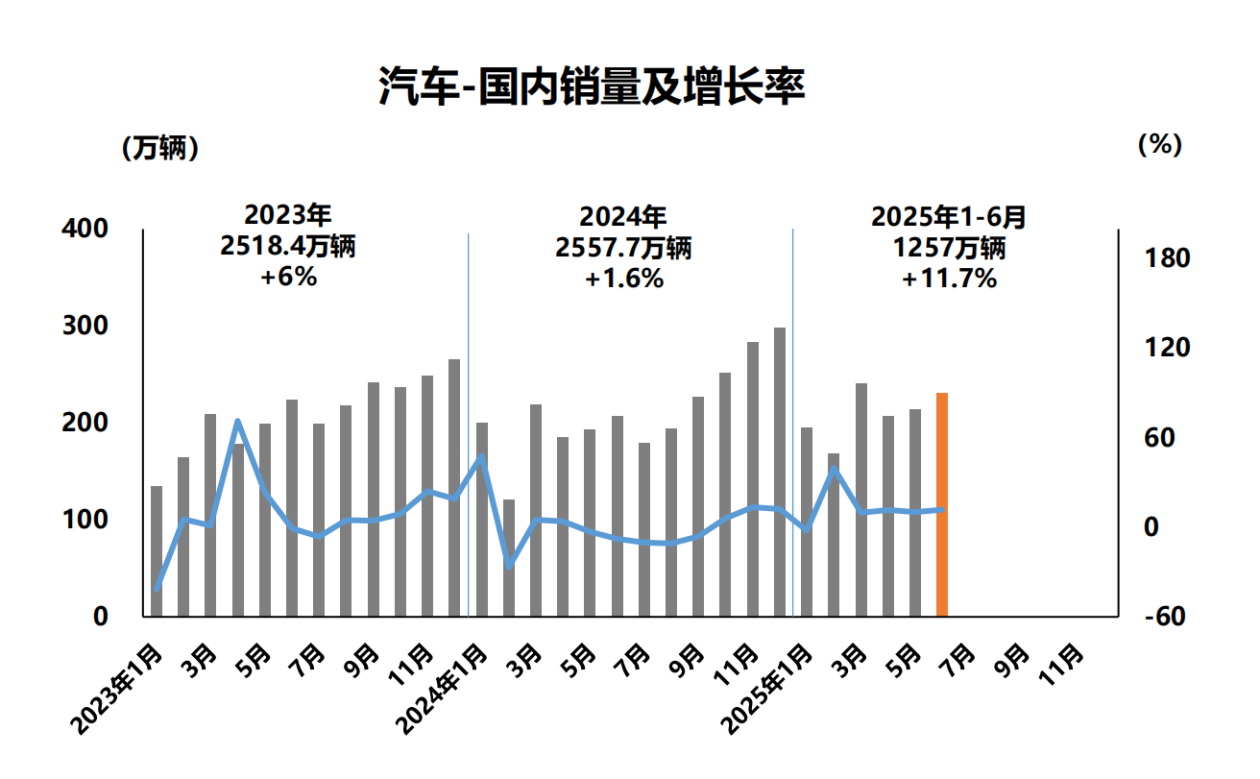
Core Viewpoint - The Chinese automotive market showed strong performance in the first half of the year, with multiple economic indicators achieving double-digit growth year-on-year. However, the industry faces challenges such as intense competition and price wars, particularly in the luxury car segment, necessitating a return to long-term value-driven strategies [3]. Group 1: Market Performance - The overall automotive market in China performed well in the first half of the year, with significant year-on-year growth in various economic indicators [3]. - Toyota's sales in China reached 837,739 units in the first half of 2025, maintaining a strong position among mainstream joint venture brands [3]. Group 2: Lexus Performance - Lexus achieved a sales volume of 85,000 units in the luxury car market during the first half of the year, making it one of the few brands to experience positive growth amidst market pressure [5]. - Lexus's focus on diverse consumer needs has been crucial to its market performance [5]. Group 3: Product Strategy - Lexus has developed a product matrix tailored to various usage scenarios, including the ES series for urban commuting, LX and GX series for outdoor exploration, and LM series for business reception [6]. - The brand emphasizes systematic solutions in product development, integrating user needs into design, technology, and service systems [8]. Group 4: Resale Value - Lexus leads Japanese brands with a three-year resale value of 60.51%, with specific models like the ES and LM achieving top rankings in their respective categories [9][14]. - The ES model boasts a three-year resale rate of 63.89%, while the LM model leads the MPV category with a 77.06% resale rate [14][13]. Group 5: Quality and Reliability - Lexus ranked highly in the 2025 U.S. Initial Quality Study (IQS), reflecting its strong performance in product reliability and manufacturing quality [16]. - The brand's commitment to quality and user value is evident in its diverse product line and high resale values [14]. Group 6: Service and Localization - Lexus views after-sales service as a key component of brand competitiveness, offering extensive warranty and maintenance services for various vehicle types [19]. - The brand has implemented a "IN CHINA FOR CHINA" localization strategy, which has been vital for its stable development in the competitive luxury car market [19][21]. - Lexus has invested in local manufacturing and development, including the establishment of a new electric vehicle factory in Shanghai and the launch of a direct used car business [21].

日系三强6月在华销量分化:丰田领跑 日产回升 本田承压
Xi Niu Cai Jing· 2025-07-16 07:59
Group 1: Core Insights - Japanese automakers Toyota, Nissan, and Honda have reported mixed sales results for June in China, with Toyota showing consistent growth, Nissan recovering from a decline, and Honda continuing to struggle [2][3][4] - Toyota led the Japanese brands with sales of 157,700 units in June, a year-on-year increase of 3.7%, and a total of 742,000 units in the first half of the year, up 8.63% [2] - Nissan's June sales reached 53,800 units, marking a 1.9% increase and ending a 15-month decline, largely driven by the success of its new electric model, the N7 [3] - Honda's June sales were 58,500 units, down 15.2%, with a cumulative first-half decline of 24.2%, primarily due to slow progress in electric vehicle (EV) transition [4] Group 2: Sales Performance and Market Trends - Toyota's strong performance includes significant sales of its models, with the Camry becoming the best-selling B-class sedan and Lexus returning to peak levels with over 20,000 units sold in June [2] - Nissan's N7 electric vehicle has gained traction, selling 6,189 units in two months, contributing to an 11.5% penetration rate for electric vehicles within the brand [3] - Honda's reliance on traditional fuel vehicles is evident, with the CR-V selling 88,700 units in the first half, but overall sales are still declining [4] Group 3: Market Dynamics - The Chinese automotive market is shifting, with domestic brands capturing 64.2% market share in June, a 5.6 percentage point increase, while Japanese brands' retail share fell to 12.0%, down 2.3 percentage points [4] - The rise of domestic brands like BYD, Geely, and Changan in the EV sector is notable, with a 75.4% penetration rate for new energy vehicles in the first half of 2025 [4] - The ongoing price war among joint venture brands is impacting profitability, and future strategies for Japanese brands in China remain uncertain [5]