
LPDDR芯片

Search documents
一小时一个价,存储芯片涨幅200%超黄金,已有车型扛不住涨价5000元
21世纪经济报道· 2026-03-30 13:42
Core Viewpoint - The storage chip market, particularly automotive-grade chips, has experienced unprecedented price increases, significantly impacting vehicle production costs and the overall automotive industry dynamics [4][5][10]. Group 1: Price Trends and Market Dynamics - The price of automotive-grade storage chips has surged dramatically, with examples like Samsung's 8GB eMMC chip rising from approximately $50 to $100, marking a 200% increase [4][9]. - The price increase of storage chips is expected to add between 1,000 to 3,000 yuan to the cost of each vehicle, compounded by anticipated battery cost increases of 3,000 to 5,000 yuan [5]. - The current market for storage chips is characterized by volatility, with prices changing frequently, described as a "wild trading market" where prices can fluctuate hourly [9][10]. Group 2: Supply Chain and Production Challenges - The automotive industry is facing a unique situation where demand is relatively low, but major manufacturers can negotiate directly with chip suppliers to stabilize prices, unlike smaller manufacturers [5][21]. - The supply chain for automotive-grade chips involves multiple layers, including authorized agents and distributors, which complicates the procurement process for smaller manufacturers [13][16]. - The ongoing chip shortage and price increases are forcing automotive companies to explore alternative supply sources and long-term agreements to secure necessary components [25][26]. Group 3: Financial Implications for Automotive Companies - Major chip manufacturers like Samsung and SK Hynix have reported significant revenue increases, with SK Hynix's revenue reaching approximately 97.15 trillion won (about 472.1 billion yuan) in 2025, a 47% year-on-year growth [17]. - In contrast, Chinese automotive companies typically have profit margins ranging from 12% to 29%, highlighting the financial strain caused by rising chip costs [18]. - The pressure from rising costs is leading automotive companies to reconsider pricing strategies, with some opting for subsidies to maintain sales despite increased production costs [23][25]. Group 4: Future Outlook and Strategic Responses - The demand for storage chips in smart vehicles is expected to grow, particularly with advancements in autonomous driving technologies, which will further strain supply chains [8][10]. - Companies like Tesla are investing heavily in their own chip manufacturing capabilities to mitigate supply risks, while others are forming partnerships with chip manufacturers for direct supply [24][25]. - The long-term outlook for the chip market remains uncertain, with potential supply constraints and fluctuating demand complicating future production planning [27][28].



全球存储危机为中国企业撕开万亿通道
财富FORTUNE· 2026-02-02 13:05
Core Viewpoint - A global storage resource war has emerged, creating a trillion-yuan opportunity for Chinese companies as the rapid development of the AI industry leads to a significant shortage of storage products due to capacity being redirected towards high-bandwidth memory (HBM) needed for AI servers [1][3]. Group 1: Market Dynamics - The shortage of storage products has caused prices to surge, impacting various sectors including smartphones, computers, and automobiles, while also presenting structural opportunities for Chinese storage chip companies to catch up technologically [3][4]. - Samsung's co-CEO indicated that the global memory chip shortage is unprecedented, affecting all industries, with significant price increases for LPDDR chips during negotiations with Apple, reflecting an over 80% rise for Samsung and around 100% for SK Hynix [4]. - The automotive industry is also facing risks due to the shortage of storage chips, with UBS Securities warning of potential financial pressures on suppliers and manufacturers [4]. Group 2: Industry Outlook - The shortage is expected to persist, with major DRAM manufacturers like Samsung, SK Hynix, and Micron shutting down DDR4 production lines by 2025 to focus on more profitable DDR5 and HBM products [4][5]. - New technology advancements are anticipated, with New思科技's CEO predicting that the price increases and shortages in memory chips will last until 2027, providing a critical development period for Chinese companies to fill market gaps [5]. Group 3: Chinese Companies' Position - Changxin Storage, the leading domestic company, is expanding production and upgrading technology to provide diverse supply options, capturing 4% of the global DRAM market [7]. - Yangtze Memory Technologies has also made strides in the NAND market, achieving a 10% share in early 2025 and aiming for 15% by the end of 2026 [7]. - Despite advancements, Chinese companies still face technological gaps compared to international giants, with Changxin Storage working on HBM3 production expected by 2026-2027, while SK Hynix is already shipping HBM4 samples [7][8]. Group 4: Capital Market Movements - Chinese storage chip companies are initiating IPO plans to better manage risks, with Changxin Storage expected to submit an IPO application by mid-2026, while Changxin has already been accepted for the STAR Market [9]. - The stock performance of companies like Zhaoyi Innovation has been strong, with significant price increases, although Changxin Storage has yet to achieve profitability, facing cumulative losses of 40.857 billion yuan as of mid-2025 [10]. Group 5: Challenges and Risks - The industry faces challenges due to high costs associated with R&D and production, as well as geopolitical risks that create uncertainties in the supply chain [8]. - Despite the recent surge in stock prices, there are signs of volatility, with a notable drop in memory chip prices attributed to market dynamics and seasonal factors [11].

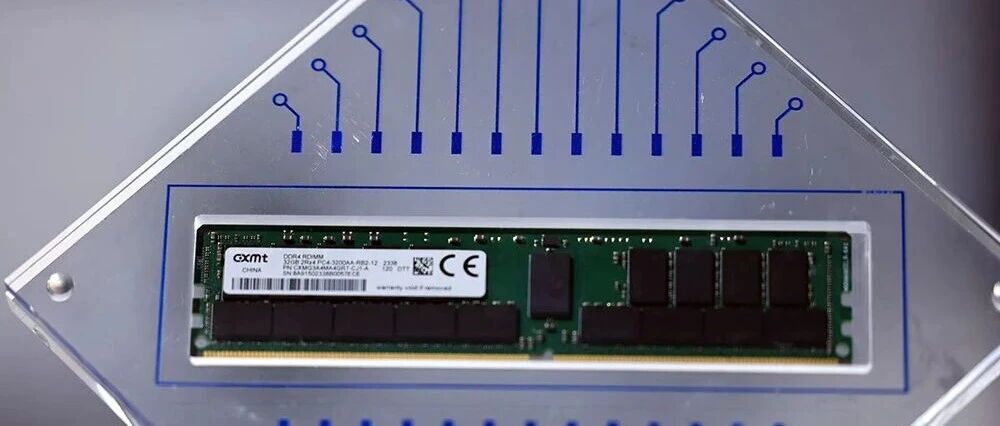
AI存储量价齐飞,国产芯片迎来历史性机遇
Sou Hu Cai Jing· 2026-01-29 10:15
Core Insights - The semiconductor industry is entering a critical phase, with 2026 being a pivotal year for domestic chip production in China, driven by the demand for AI infrastructure [2][6]. Group 1: Market Dynamics - The storage chip market is experiencing a significant price surge, with Samsung and SK Hynix announcing price increases of over 80% and 100% respectively for LPDDR chips in Q1 2026 [3][4]. - The global server shipment growth rate is projected to reach 12.8% in 2026, with AI server shipments expected to grow by over 28% year-on-year [4][9]. - The supply side is struggling to keep pace with demand, leading to a shortage of CPUs from Intel and AMD, which are reportedly sold out for the entire year of 2026 [5][14]. Group 2: Opportunities for Domestic Chips - The current global supply-demand mismatch presents a historic opportunity for the domestic chip industry in China [15][16]. - Domestic manufacturers have made significant progress in HBM chip development, with HBM2e chips already in mass production and HBM3e chips reaching international standards [19][20]. - The Chinese government is actively supporting the semiconductor industry, with substantial funding aimed at achieving a 40% self-sufficiency rate in storage chips by 2027 [21][22]. Group 3: Investment Considerations - Investors are encouraged to consider index funds that track the domestic chip design sector, as these funds encapsulate key assets in the industry [27][31]. - The semiconductor equipment sector also presents strong investment potential, benefiting from the expansion of domestic wafer and storage manufacturers [31].
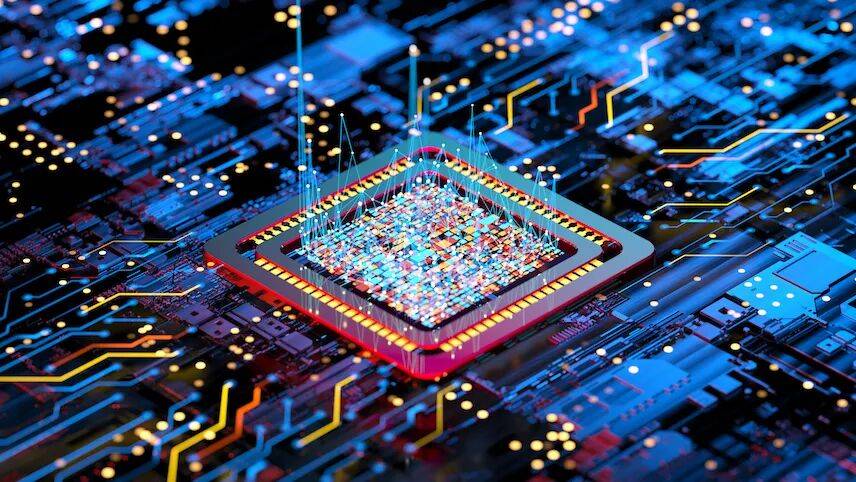
内存价格翻倍,iPhone变贵?天风郭明錤:苹果的策略是"承担成本抢份额,用服务赚回来"
硬AI· 2026-01-28 08:24
Core Viewpoint - Apple is expected to face a similar increase in memory prices in Q2 2026 as in Q1, and the company plans to leverage its strong bargaining power to secure chip supply while absorbing cost pressures to gain market share, later compensating for losses through its services business [2][3][5]. Group 1: Memory Price Trends - Analysts predict that memory prices for low-power DRAM supplied to Apple have nearly doubled recently, with Samsung and SK Hynix increasing prices by over 80% and approximately 100% respectively [3][5]. - Apple's memory pricing negotiations have shifted from biannual to quarterly, indicating ongoing price increases, with Q2 2026 expected to see similar price hikes as Q1 [5][7]. Group 2: Financial Implications - The rising memory costs are anticipated to be a focal point in Apple's upcoming earnings call, potentially impacting stock prices across the industry more significantly than Apple or its suppliers [7]. - The overall profitability of memory suppliers like Samsung and SK Hynix is expected to improve in Q1 due to the price increases, marking a recovery from previous industry downturns [7]. Group 3: Pricing Strategy for New Products - Despite the cost pressures, Apple aims to maintain the starting price of the new iPhone 18 in the second half of 2026 to support marketing efforts [9]. - Unlike previous years, Apple has only completed memory price negotiations for the first half of the year, reflecting the current memory crisis and indicating potential price increases with the launch of new products [9]. Group 4: Supply Chain Risks - Apple has recognized that supply chain risks are spreading beyond memory and T-glass, with potential shortages in other components due to the booming demand for AI server infrastructure [10]. - The sharp rise in memory prices is attributed to a supply-demand imbalance, driven by significant investments from major tech companies in AI infrastructure, while suppliers are focusing on more profitable HBM products [10].


内存价格翻倍,iPhone变贵?天风郭明錤:苹果的策略是"承担成本抢份额,用服务赚回来"
Hua Er Jie Jian Wen· 2026-01-28 05:01
Core Viewpoint - Apple is expected to face a similar increase in memory prices in Q2 2026 as in Q1 2026, with a clear strategy to secure chip supply, absorb cost pressures, and capture market share, later compensating for losses through service revenue [1][2]. Memory Price Trends - Samsung and SK Hynix have recently increased the price of low-power DRAM supplied to Apple by nearly 100% compared to the previous quarter, with Samsung's LPDDR chip prices rising over 80% and SK Hynix's by approximately 100% [1][2]. - Apple's memory pricing negotiations have shifted from biannual to quarterly, indicating that price increases are likely to continue [2]. Impact on Profit Margins - The rising memory costs are expected to directly impact the gross margin of iPhones, with Apple’s strategy focusing on leveraging market chaos for profit while managing costs and increasing market share [2][4]. - The overall profitability of memory suppliers like Samsung and SK Hynix is anticipated to improve in Q1, following significant price increases in DRAM [4]. Pricing Strategy for New Products - Apple aims to maintain the starting price of the new iPhone 18 models in the second half of 2026, despite rising costs, which is beneficial for marketing [5]. - Unlike previous years, Apple has only completed negotiations for the first half of the year regarding memory pricing, rather than securing long-term agreements for the entire year [5]. Supply Chain Risks - Apple has recognized that supply chain risks are spreading beyond just memory and T-glass, with potential shortages in other components due to the booming demand for AI infrastructure [6]. - The sharp rise in memory prices is attributed to an imbalance in supply and demand, driven by large tech companies' investments in AI, while suppliers are focusing on more profitable HBM products, leading to tight supplies of traditional DRAM and LPDDR [6].
连苹果都让步了!
华尔街见闻· 2026-01-27 12:00
Core Viewpoint - The recent price increase of low-power DRAM supplied to Apple by Samsung Electronics and SK Hynix highlights the severe supply-demand imbalance in the memory market, forcing Apple to accept significant price hikes for the first time due to supply constraints [2][3][9]. Group 1: Price Adjustments - Samsung proposed an over 80% price increase for LPDDR chips, while SK Hynix's increase was around 100% during negotiations with Apple [3][9]. - Apple, a key customer with approximately 250 million iPhone shipments last year, has historically leveraged its market position to secure lower memory prices [9][10]. Group 2: Market Dynamics - The surge in memory prices is driven by aggressive investments in AI infrastructure by major tech companies, leading to a spike in DRAM demand, while suppliers are shifting production focus to higher-margin HBM products, exacerbating supply shortages [4][11]. - TrendForce forecasts a 55-60% quarter-over-quarter increase in general DRAM prices for the first quarter [5][12]. Group 3: Contractual Changes - Unlike previous years, Apple has only completed price negotiations for the first half of the year, rather than signing long-term agreements, indicating uncertainty in the memory market and potentially allowing for further price increases in the second half [5][12][13]. - The upcoming launch of the iPhone 18 is expected to significantly increase demand for LPDDR, which may lead to additional price hikes [12]. Group 4: Supplier Positioning - The price adjustments have narrowed the gap between Apple's procurement prices and those of other companies, indicating a shift in bargaining power towards memory suppliers like Samsung and SK Hynix [10][13]. - The overall profitability of DRAM business for Samsung and SK Hynix is expected to improve significantly in the first quarter due to these price increases [12].

1月27日主题复盘 | 国产芯片再度爆发,光通信反弹,光伏午后再度拉升
Xuan Gu Bao· 2026-01-27 09:03
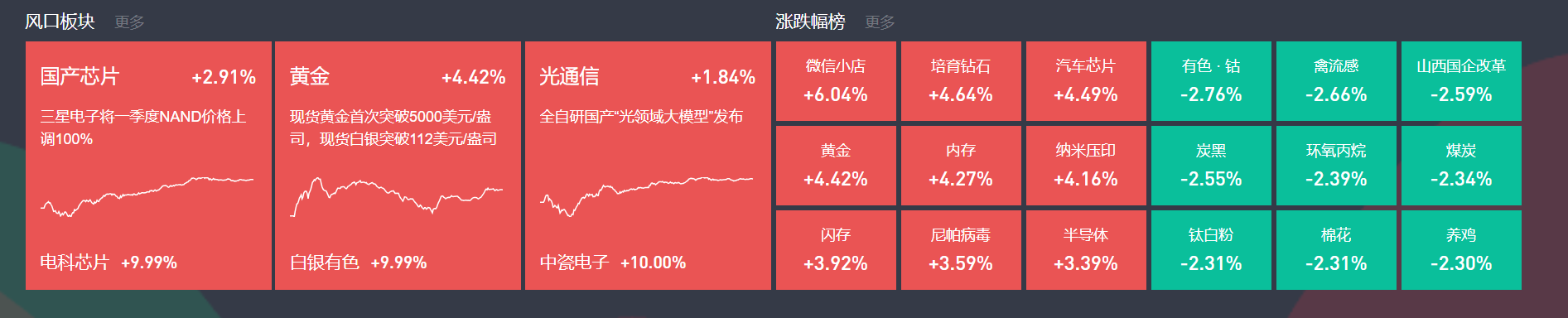
Market Overview - The market experienced a rebound with all three major indices rising, driven by strength in the semiconductor industry and precious metals [1] - Notable stocks included Dongxin Co. and Kangqiang Electronics, both hitting the daily limit, while Huahong Company rose over 7% to reach a new high [1] - The trading volume for the day was 2.92 trillion [1] Key Highlights Domestic Chips - The domestic chip sector saw significant gains, with stocks like Electric Science Chip, Dongxin Co., and Yaxiang Integration hitting the daily limit [4] - Microsoft announced the launch of its next-generation AI chip, Maia200, which reportedly improves performance by 30% per dollar compared to the latest hardware [4] - Samsung proposed a price increase of over 80% for LPDDR chips in Q1, with SK Hynix's increase around 100%, impacting Apple's supply chain [4] Semiconductor Pricing Trends - According to招商证券, the supply-demand gap is driving storage product prices up, with DRAM contract prices expected to increase by 55-60% and Server DRAM prices by over 60% in Q1 2026 [6] - The forecast for NAND Flash products indicates a price increase of 33-38% [6] - The localization rate of semiconductor manufacturing equipment in China is currently low, with projections to reach 30% by 2026 [6] Optical Communication - The optical communication sector rebounded, with stocks like Zhongci Electronics and Kecuan Technology hitting the daily limit [7] - Demand for optical modules remains strong, driven by increased capital expenditures from major North American cloud providers, with a projected total exceeding $380 billion for 2025 [9] Photovoltaic Sector - The photovoltaic sector strengthened in the afternoon, with companies like Saiwu Technology and Zhengtai Power seeing significant gains [10] - Elon Musk announced plans to achieve 200 GW of solar manufacturing capacity in the U.S. within three years, indicating a strong future demand for solar technology [12] Stock Performance - Key stocks in the semiconductor and optical communication sectors showed substantial gains, with Dongxin Co. and Shengke Communication both rising by 20% [18] - The overall market sentiment reflects a positive outlook for sectors related to AI, storage, and renewable energy technologies [18]




“最大客户”都让步了!韩媒称三星、海力士一季度向苹果供DRAM价格较上季度翻倍
Hua Er Jie Jian Wen· 2026-01-27 06:29
Core Insights - Samsung Electronics and SK Hynix have significantly increased the price of low-power DRAM supplied to Apple, with Samsung raising prices by over 80% and SK Hynix by approximately 100% in Q1, indicating a shift in Apple's long-standing ability to secure low memory prices due to supply constraints [1][5][6] - The surge in memory prices is attributed to a dramatic increase in DRAM demand driven by aggressive investments in AI infrastructure by major tech companies, while suppliers are focusing production on higher-margin HBM products, exacerbating the supply shortage [6][7] - Apple, typically a dominant buyer in the LPDDR market with an annual iPhone shipment of around 250 million units, has only completed price negotiations for the first half of the year, leaving room for further price increases in the second half, particularly with the upcoming iPhone 18 launch [5][7] Group 1 - Samsung and SK Hynix have achieved significant price increases in their negotiations with Apple, marking a departure from Apple's historical pricing advantages [1][5] - The price of LPDDR has already seen a 40% increase in Q4 of the previous year, with predictions of a further 55-60% increase in general DRAM prices in Q1 [6][7] - The shift to short-term contracts by Apple reflects the current uncertainty in the memory market and indicates a weakening of Apple's bargaining power in a tight supply environment [7] Group 2 - The focus on HBM production by suppliers has led to a tightening of traditional DRAM and LPDDR supplies, contributing to the price hikes [6][7] - The overall profitability of DRAM suppliers like Samsung and SK Hynix is expected to improve significantly in Q1 due to the price adjustments, following a challenging period in the previous year [6][7] - The anticipated launch of new products in the second half of the year, including the iPhone 18, is likely to further increase demand for LPDDR, potentially leading to additional price hikes [7]
芯片荒激化巨头争沪金冲1023
Jin Tou Wang· 2025-12-26 03:03
Group 1 - The global shortage of high-end memory chips is severely impacting major tech companies like Microsoft, Google, and Meta, leading to a supply chain crisis [3] - Companies are sending procurement executives to South Korea to negotiate with Samsung and SK Hynix, resulting in intense conflicts during negotiations [3] - The shortage has extended to the consumer electronics sector, with Apple paying a 230% premium to secure LPDDR5X chip supplies [3] Group 2 - The current gold futures are trading around 1016.58 yuan per gram, with a 0.78% increase, indicating a short-term bullish trend [1] - The main gold contract is operating within a high volatility range, maintaining a strong overall trend above key moving averages [4] - Technical indicators show a slight slowdown in bullish momentum, with initial resistance levels at 1015-1020 yuan per gram and support levels at 995-990 yuan per gram [4]
智通港股早知道 | 美联储12月降息前景愈发扑朔迷离 英伟达(NVDA.US)Q3业绩全面超预期
Zhi Tong Cai Jing· 2025-11-20 00:00
Group 1: Federal Reserve Meeting Minutes - The Federal Reserve's October FOMC meeting minutes reveal significant internal divisions regarding the continuation of interest rate cuts, with discussions covering inflation risks, labor market cooling, and economic growth discrepancies [1] - The decision to lower the federal funds rate by 25 basis points to a range of 3.75% to 4% was passed with a vote of 10 to 2, indicating a contentious consensus [1] - The outlook for further rate cuts in December has become increasingly uncertain [1] Group 2: U.S. Stock Market Performance - Major U.S. stock indices closed higher, with the Dow Jones Industrial Average up 47.03 points to 46,138.77, a gain of 0.1% [2] - The S&P 500 rose by 24.84 points to 6,642.16, reflecting a 0.38% increase, while the Nasdaq Composite gained 131.38 points to 22,564.23, a 0.59% rise [2] - Nvidia's stock surged over 6% in after-hours trading, contributing to gains in other semiconductor stocks like AMD, TSMC, and Micron Technology, which rose around 4% [2] Group 3: Nvidia's Strong Revenue Outlook - Nvidia provided a robust revenue forecast of approximately $65 billion for the fourth fiscal quarter ending in January, surpassing the analyst average estimate of $62 billion [3] - This outlook alleviates concerns regarding a potential collapse of the AI investment bubble, indicating sustained demand for Nvidia's AI accelerators [3] - Nvidia's stock has increased by 39% year-to-date, reflecting strong market confidence [3] Group 4: Hong Kong's Swap Connect Growth - The Hong Kong Securities and Futures Commission reported that the Swap Connect has seen impressive growth, with trading volume reaching about 10% of the mainland interest rate swap market [4] - As of September, total trading volume exceeded RMB 8.5 trillion, with an average daily volume of RMB 14.7 billion [4] - The Commission is exploring the Southbound Swap Connect to allow mainland investors to utilize Hong Kong's swap market for risk management [5] Group 5: Agricultural Development in Xinjiang - The Ministry of Agriculture and Rural Affairs and the Xinjiang government announced a plan to modernize 30,000 acres of old facilities and add 20,000 acres of modern agricultural production by the end of 2028 [6][7] - The initiative aims to enhance the production capacity, quality, and competitiveness of facility agriculture in southern Xinjiang [7] Group 6: Strategic Partnerships and Agreements - The Central Securities Depository and the Postal Savings Bank of China signed a comprehensive strategic cooperation agreement to deepen collaboration across various financial sectors [9] - The agreement aims to innovate in risk management and research collaboration [9] Group 7: Memory Prices Forecast - Counterpoint Research predicts that memory prices are expected to rise by approximately 50% before the second quarter of 2026 due to critical chip shortages [10] - The LPDDR4 segment faces the highest risk of price increases, driven by Nvidia's increased demand for LPDDR in server applications [10] Group 8: Company Earnings Reports - WanGuo Data reported a net income of RMB 2.887 billion for Q3 2025, a year-on-year increase of 10.2% [13] - GuoFu Quantum anticipates a net profit of approximately HKD 200 million to 210 million for the six months ending September 30, 2025, reversing a loss from the previous year [14] - Kingsoft Software reported a net profit of approximately RMB 213 million for Q3 2025, a decrease of 48% year-on-year [15][16] - Kuaishou's Q3 revenue reached RMB 35.554 billion, a year-on-year increase of 14.2%, with operating profit rising by 69.9% [19]
