
Ren Min Ri Bao Hai Wai Ban

Search documents
从又一个新高感受进博魅力(锐财经)
Ren Min Ri Bao Hai Wai Ban· 2025-11-04 22:48
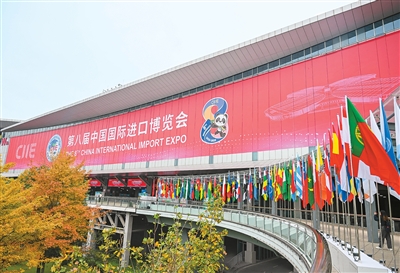
Core Points - The 8th China International Import Expo (CIIE) has set a new record with over 4,100 foreign enterprises participating and an exhibition area exceeding 430,000 square meters, showcasing global products and innovations [2][5] - The event has become a significant platform for international trade, with cumulative intended transaction amounts exceeding $500 billion over the first seven expos [3][4] - Major companies like New Zealand's Fonterra and Schneider Electric have reported substantial growth in sales and market presence in China due to their participation in CIIE [3][4] Group 1: Event Overview - The CIIE, initiated in 2018, is the world's first national-level expo focused on imports, attracting participants from 155 countries and regions [2] - This year's expo features over 3,000 new products, technologies, and services, reinforcing China's role as a major global market [6][7] Group 2: Company Highlights - Fonterra's sales of fresh milk in China have increased over 20 times since their first participation, with weekly sales rising from 3,000 to 80,000 bottles [3] - Schneider Electric showcased innovative products and emphasized its commitment to investing in China, highlighting the "CIIE effect" that has led to increased market penetration [4] - Alcon, focusing on eye health, presented over ten innovative products at the expo, marking its 30th anniversary in the Chinese market [5] Group 3: International Participation - The expo has attracted participation from various countries, with six nations serving as guest countries this year, including Nigeria and Sweden, which are participating for the first time [8] - Norway's seafood exports to China have surged, with a notable increase of approximately 36,000 tons, or 116%, compared to the previous year [7]

为中韩合作架桥 为亚太发展添彩(侨界关注)
Ren Min Ri Bao Hai Wai Ban· 2025-11-04 22:48
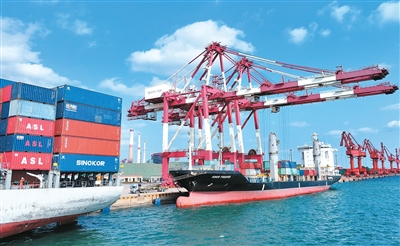
十月二十九日,直达韩国仁川港的"泛奥升奥普轮"(右)在青岛港前湾港区装卸集装箱(无人机照 片)。新华社记者 李紫恒摄 10月30日至11月1日,国家主席习近平应邀赴韩国庆州出席亚太经合组织(APEC)第三十二次领导人 非正式会议并对韩国进行国事访问。 连日来,旅居韩国的华侨华人持续热议APEC会议上的中国声音。在接受本报记者采访时,多位侨胞分 享了亲身参与双多边合作的经历,对即将到来的APEC"中国年"满怀期待,表示将继续发挥侨力,为中 韩合作架桥、为亚太发展添彩。 关注APEC会议释放积极信号 除传统贸易与投资外,中韩在人工智能、新能源、文化旅游、生物科技等领域的合作活力日益凸显 最近,韩国浙江商会会长、全博集团董事长张益波完成了一项重要签约——与韩中总商会签署全面合作 协议。其中,储能储电等新能源技术是双方合作的一个重点。 本次APEC会议上,中方提出强化数智赋能、坚持绿色低碳、落实普惠共享等主张,给张益波留下了深 刻印象,也坚定了他继续推进绿色及高新技术产业合作的信心。目前,他正全力筹备浙江专精特新"小 巨人"企业代表团赴韩考察事宜。"考察团将走访韩国多家科技企业及高校,对接新能源、智能制造等领 域的先 ...
漓水春秋 时代回响
Ren Min Ri Bao Hai Wai Ban· 2025-11-04 22:48
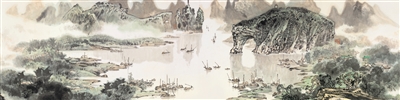
山水甲天下的桂林、风光旖旎的漓江,是中国画家的重要创作灵感和素材。20世纪以来,包括齐白石、 徐悲鸿、黄宾虹、关山月等知名画家,以不同表现方式描绘了漓江的盎然诗意。沿着一代代前辈开拓的 创作道路,当代广西形成了以描绘漓江等广西秀美山水为特色的漓江画派。 作为漓江画派领军人物,黄格胜创作于1985年的《漓江百里图》是漓江画派的重要代表作之一。日 前,"漓水春秋——黄格胜《漓江百里图》创作40周年桂林特展"在广西桂林拉开帷幕。这幅长达200 米、全景式展现漓江山水的巨作,时隔数十载后重回"故里",与观众展开了一次跨越时空的艺术对话。 百里漓江入画图 黄格胜1950年出生于广西鹿寨县,从小在桂林长大,曾任中国美术家协会副主席、广西艺术学院院长、 漓江画派促进会会长。展览现场,回忆起当年创作《漓江百里图》的初衷时,黄格胜表示:"这幅画源 于无意间突然迸发出的一个念头。" 1982年,黄格胜接到中国旅游出版社的邀约,请他以国画形式绘制桂林旅游线路图。站在漓江边,他蓦 然发觉,此前以漓江为主题的画作中,竟无一幅全面表现漓江风光的大型长卷。为了填补这个空缺,黄 格胜决定创作《漓江百里图》。 "后来的3年,我成了漓江边上执着 ...
特色文创成文旅市场新宠(文旅新象)
Ren Min Ri Bao Hai Wai Ban· 2025-11-04 22:12
Core Insights - The article highlights the growing trend of cultural and creative products (文创产品) as a new consumer hotspot in the tourism sector, with tourists increasingly purchasing unique items to commemorate their travels [5][10]. Group 1: Market Trends - Cultural and creative products are becoming essential souvenirs for tourists, with items like fridge magnets and decorative accessories gaining popularity [5][6]. - Popular museums and tourist attractions are launching successful cultural products, such as the "Golden Mask" from Sanxingdui Museum and the "Phoenix Crown" from the National Museum of China, which are attracting high consumer interest [6][7]. - The market for cultural products is expanding, with over 1,030 city gift brands established across the country by April this year, showcasing local cultural characteristics and innovative developments [8][9]. Group 2: Consumer Preferences - Consumers prioritize the commemorative significance, cultural connotation, and aesthetic appeal when selecting cultural products, indicating a shift from practical value to emotional and experiential value [7][9]. - The "Chengdu Gifts" initiative reported 880,000 visitors and sales of 16,000 items during the recent holiday period, reflecting the strong consumer interest in cultural products that represent local culture [9]. Group 3: Industry Development - The rise of cultural products is fostering new job opportunities in design and IP operation, with over one million people currently employed in China's cultural industry [11]. - Collaboration between cultural institutions and educational entities is being encouraged to cultivate talent in the cultural product development sector, enhancing innovation and market responsiveness [12]. - Experts emphasize the need for creative professionals to possess innovative thinking and cross-disciplinary skills to effectively transform traditional culture into modern products [12].

“从手提箱到集装箱,订单规模一路涨”(进博连线)
Ren Min Ri Bao Hai Wai Ban· 2025-11-04 22:12
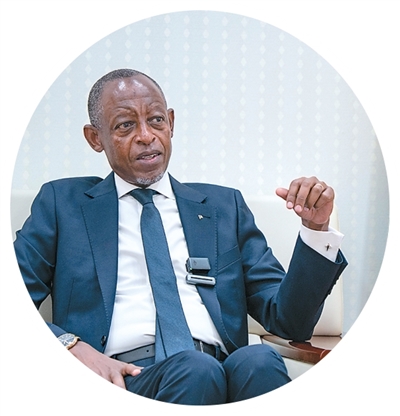
Core Insights - The Rwandan ambassador to China, James Kimonyo, highlighted the significant trade growth for Rwandan exhibitors at the China International Import Expo (CIIE), showcasing the potential of African agricultural products in the Chinese market [2][6][7]. Group 1: Trade Growth and Opportunities - Since its inception in 2018, CIIE has provided a vital platform for Rwandan and other African countries to showcase high-quality agricultural products, leading to increased trade opportunities [2][4]. - This year, approximately 18 Rwandan companies participated in CIIE, presenting products such as coffee, chili, tea, and honey, which are gaining popularity among Chinese consumers [4][6]. - Rwandan coffee, a key export product, has established a strong reputation in China due to its unique flavor profile, with at least seven brands represented at the expo [4][7]. Group 2: E-commerce and Market Expansion - The ambassador has actively promoted Rwandan products through e-commerce platforms, with notable success in selling Rwandan coffee and chili [3][4]. - The introduction of new products, such as macadamia nuts and avocados, into the Chinese market is expected to further enhance trade relations [4][10]. Group 3: Bilateral Trade Statistics - The bilateral trade volume between China and Rwanda is projected to reach $669 million in 2024, reflecting a year-on-year increase of 21.4%, with Chinese imports from Rwanda increasing by 22.5% [7][10]. Group 4: Economic Impact on Local Farmers - The trade relationship has tangible benefits for Rwandan farmers, with increased income from coffee sales, where farmers earn an additional $4 per kilogram sold compared to previous earnings [10][11]. - The collaboration between Rwandan and Chinese companies, such as the chili industry demonstration project, has improved agricultural practices and infrastructure in Rwanda, benefiting local farmers [9][10]. Group 5: Future Cooperation and Development - The ambassador emphasized the importance of continued cooperation in agriculture, technology transfer, and investment to enhance food security and economic development in Africa [11][12]. - Upcoming initiatives, including the establishment of agricultural demonstration zones and the empowerment of small and medium-sized enterprises, are expected to create significant employment opportunities in Africa [11][12].
人形机器人的未来该怎么走
Ren Min Ri Bao Hai Wai Ban· 2025-11-04 22:12
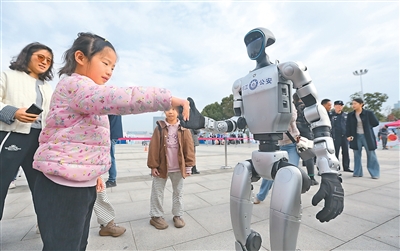
10月25日,江苏省扬州市公安局在扬州市明月湖广场举行 警营开放日活动,现场设立多个主题互动展区,市民可以 近距离接触警务装备。图为人形机器人与小朋友互动。 孟德龙摄(人民视觉) 10月27日,位于安徽合肥的合肥师范附属小学,多模态情 感交互人形机器人——Anni亮相课堂,以助教身份与专业 老师共同教授四年级的科学教育课。图为Anni与学生互 动。 张大岗摄(人民视觉) 陈三虎摄(人民视觉) 11月2日,第八届世界声博会暨2025科大讯飞全球1024开 发者节在位于安徽省合肥市蜀山区的合肥体育中心开幕, 市民走进人工智能产品创新展参观,观看人形机器人表 演。 人形机器人,这个曾经只存在于科幻作品中的角色,如今正快步走向我们的现实生活。它不仅是全球科 技竞争的新焦点,更被认为是推动未来经济发展的全新引擎。面对这样一个技术复杂、产业链长的领 域,我们该如何把握它的未来?答案是:必须让技术创新与产业制造紧密携手,共同前行。 要理解人形机器人的发展,首先要认识它的特殊性。它不像普通的工业机器人那样只需完成固定动作, 而是需要像人一样感知环境、思考决策、灵活运动。这就涉及机器人学、人工智能、控制科学、材料学 等众多领域 ...

冠军家书里的“小我”与“大我”(人民家书)
Ren Min Ri Bao Hai Wai Ban· 2025-11-04 21:32
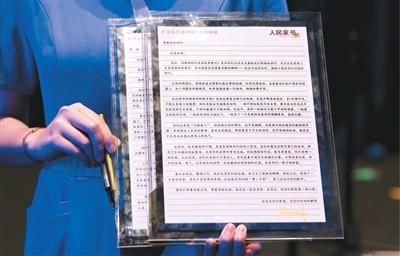
Core Points - The event "Chinese Sports Spirit Recital for the 15th National Games" was launched in Shenzhen, featuring a segment called "Family Letters from the National Games" where actors read heartfelt letters from coaches and athletes [9][10] - Coach Sun Dan expressed her deep connection with the national rhythmic gymnastics team, emphasizing the long-term commitment to nurturing athletes and the emotional bond formed over years of training [10][11] - Olympic champion Li Yuehong shared his reflections on family support throughout his career, highlighting the sacrifices made by his family and the importance of their encouragement in his journey [12][20] Group 1: Event Overview - The event was organized by the General Administration of Sport of China, the Chinese Olympic Committee, and Zijing Culture Group [9] - The "Family Letters" segment featured readings from letters written by Sun Dan and Li Yuehong, showcasing the personal and emotional aspects of their athletic journeys [9][10] Group 2: Coach Sun Dan's Insights - Sun Dan highlighted the rigorous training and emotional growth of her athletes, stating that the team is like a "second home" for them [10][16] - She emphasized the importance of perseverance and the long-term nature of athlete development, encouraging her team to embrace challenges as part of their journey [11][16] - The theme for 2025 is "No Break, No Establishment," reflecting the team's commitment to continuous improvement [11] Group 3: Li Yuehong's Reflections - Li Yuehong expressed gratitude towards his parents for their unwavering support, recounting personal sacrifices made by his family during his training and competitions [19][20] - He shared his journey from being a young athlete to becoming a seasoned competitor, emphasizing the deeper understanding of family and community that comes with experience [13][22] - Li Yuehong's recent achievements include winning a team gold medal at the National Games and his aspirations for the upcoming Paris Olympics [12][21]
在大山里“种”出好日子
Ren Min Ri Bao Hai Wai Ban· 2025-11-04 21:32
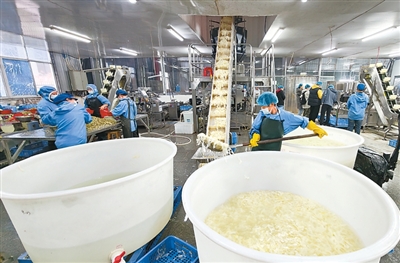
Core Viewpoint - The development of the under-forest economy in Hunan has transformed natural resources into significant economic benefits, creating a sustainable model that balances ecological protection with economic growth [10]. Group 1: Bamboo Shoot Processing - Hunan Green Land High-tech Agricultural Development Co., Ltd. has processed bamboo shoots into various products, achieving a sales target of 80 million yuan this year, supported by a full industrial chain model [11]. - The company has integrated land use rights and introduced a unique "forest rights loan" system, allowing for significant financial support and expansion of production capabilities [12]. Group 2: Herbal Medicine Production - The cultivation of Epimedium (Yin Yang Huo) has become a lucrative venture, with an annual output value of 10,000 to 20,000 yuan per mu, benefiting local farmers and creating job opportunities [14]. - The Jingzhou Guoling Technology Co., Ltd. has established a successful model of intercropping Reishi mushrooms with young trees, reducing land costs and enhancing soil fertility [14]. Group 3: Yellow Essence Cultivation - Hunan Xin Zhu Ecological Agricultural Technology Co., Ltd. has developed a comprehensive processing and sales system for yellow essence, with a projected annual sales volume of 1,500 tons [15]. - The company has successfully integrated various sales channels, including e-commerce and traditional retail, to maximize market reach [15]. Group 4: Camellia Oil Industry - Hunan's camellia oil industry is recognized for its high oil content and health benefits, with a total area of 23.71 million mu and an output value of 94.3 billion yuan [16]. - The industry leverages technological innovations throughout the production chain, enhancing efficiency and product quality [17][18]. Group 5: Employment and Economic Impact - The under-forest economy in Hunan generates over 670 billion yuan in annual output value, directly employing more than 3 million people and increasing farmers' income by over 2,800 yuan per capita [15].
“十四五”,我们见证这些硬核突破|从粒粒良种,到仓廪充盈
Ren Min Ri Bao Hai Wai Ban· 2025-11-04 07:41
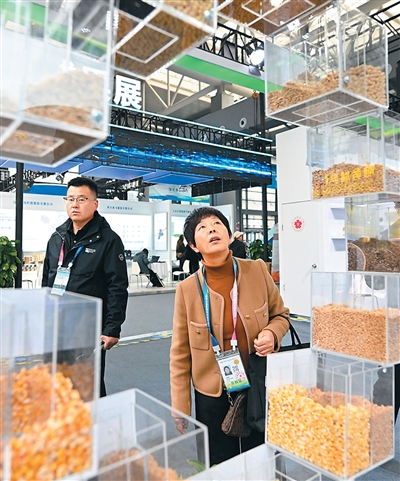
Core Insights - China is implementing a seed industry revitalization action plan during the 14th Five-Year Plan period, achieving over 95% of crop breeding area with domestically bred varieties, including high-yield rice and disease-resistant wheat [1][3][4] Group 1: Crop Breeding Achievements - Breakthrough varieties of staple crops such as rice and wheat have been developed, with significant increases in yield; for instance, the combined yield of regenerated rice and mid-season rice in Sichuan reached over 1300 kg per mu [3][4] - The average yield of early rice is projected to exceed 400 kg per mu by 2025, marking a historical high [4] - New wheat varieties, such as "Yangmai 53," have been developed to combat diseases like Fusarium head blight, achieving a yield increase of 10.13% compared to control varieties [4][5] Group 2: Livestock and Aquaculture Innovations - The domestic breeding of white feather broilers has transitioned from 100% reliance on imports to the introduction of varieties like "Shenze 901," which has begun to penetrate international markets [6][7] - The market share of domestically bred white feather broilers has surpassed 25%, while the Huaxi cattle breed has achieved over 20% market share, reducing dependency on imported livestock [7] - The self-bred South American white shrimp varieties now hold over 30% of the market, previously costing millions in imports [7] Group 3: Genetic Resource Survey and Utilization - A comprehensive national agricultural germplasm resource survey has been conducted, collecting 139,000 new germplasm resources, which are crucial for breeding superior varieties [9][10] - The survey has identified and protected traditional local varieties and wild relatives, enhancing the foundation for breeding high-yield and resilient crops [10]
农作物自主选育品种占比超95%,多个品种打破国外种源依赖——从粒粒良种,到仓廪充盈
Ren Min Ri Bao Hai Wai Ban· 2025-11-04 07:40
Core Insights - The article emphasizes the significant advancements in China's agricultural seed industry during the "14th Five-Year Plan" period, highlighting the development of high-quality and high-yield crop varieties, which have led to increased self-sufficiency in food production [1][2][3][4][5][6][7][8] Group 1: Crop Innovations - China has successfully bred a variety of high-yield rice, wheat, and other crops, with over 95% of the cultivated area consisting of self-bred varieties [1] - In Sichuan Province, the introduction of breakthrough rice varieties has led to an average yield of over 1300 kg per mu (approximately 2170 kg per hectare) [2] - The development of disease-resistant wheat varieties, such as "Yangmai 53," has resulted in a yield increase of 10.13% compared to traditional varieties [3] Group 2: Livestock and Aquaculture - The domestic breeding of white feather broilers has transitioned from complete reliance on imports to achieving over 25% market share, with significant exports to international markets [4][5][6] - The introduction of the Huaxi cattle breed has improved domestic beef production, achieving a market share exceeding 20% [6] - The self-bred varieties of South American white shrimp have also gained a market share of over 30%, reducing previous import costs significantly [6] Group 3: Genetic Resource Management - A comprehensive national agricultural germplasm resource survey has been conducted, collecting 139,000 new germplasm resources, which is crucial for breeding superior varieties [7][8] - The survey has identified and protected traditional local varieties and wild relatives, enhancing the genetic diversity available for breeding programs [8] - Over 6000 germplasm resources have already been applied in breeding innovation and industrial development, supporting the goal of enhancing self-innovation capabilities in the seed industry [8]