Ren Min Ri Bao Hai Wai Ban

Search documents
两岸炎帝神农文化交流大会在湖南炎陵举行
Ren Min Ri Bao Hai Wai Ban· 2025-11-04 01:08
自2010年以来,株洲已举办海峡两岸炎帝神农文化交流活动14次。以炎帝神农文化为媒介,从文化到经 贸、从两岸互访到研讨交流,神农文化和炎帝信仰已成为连接两岸同胞的重要精神纽带。 本报长沙电(记者杨迅)以"文化同根同源 中华同心同梦"为主题的2025(乙巳)年海峡两岸炎帝神农 文化交流大会近日在湖南株洲炎陵举行,吸引500余名两岸同胞参加。 本次交流大会设开幕式、炎帝神农文化交流等环节,通过深入探讨炎帝文化的文明源流与时代价值,推 动两岸在文化、经贸、科技等领域的交流合作,为两岸关系和平发展、融合发展注入新活力。会前,为 深入挖掘炎帝神农文化的丰富内涵与时代价值,传承弘扬炎帝精神,当地举办了"求同存艺——中华炎 帝神农文化视频图片联赛联展"活动。活动得到海内外社会各界文化爱好者、创作者的积极响应与大力 支持,共征集图片、视频作品3379件,会上对获奖作品进行了颁奖。 ...
一批消费者保护国家标准发布
Ren Min Ri Bao Hai Wai Ban· 2025-11-04 01:08
Core Points - The National Market Supervision Administration has released a series of national standards focused on consumer protection, including product usage instructions, service experience enhancement, and consumer privacy protection [1][2][5] - The new standards aim to improve consumer awareness and safety, particularly in the context of children's toys and furniture, by mandating clear labeling of materials and maintenance instructions [1][2] - The standards also address the need for digital formats and QR codes to cater to e-commerce and environmental considerations [1][2] Group 1: Consumer Information and Safety - The updated standards for product usage instructions include specific requirements for toys and furniture, enhancing clarity on materials and maintenance [1][2] - The initiative responds to the evolving consumer market, which now includes a diverse demographic with varying needs, particularly in terms of readability and accessibility of information [2] Group 2: Service Experience Enhancement - New standards have been introduced to improve service quality and consumer experience, particularly for vulnerable consumers, covering the entire service process from design to complaint handling [3] - Additional standards related to consumer experience centers and service in shopping districts are forthcoming, aimed at creating a safer and more reliable shopping environment [3] Group 3: Privacy Protection - A new national standard has been established focusing on consumer privacy protection throughout the product lifecycle, providing guidelines for design, production, and usage [5] - The upcoming release of application case studies will illustrate privacy protection in typical scenarios, such as online retail and smart home devices [5] - The standards align with international practices while addressing local needs, offering clear guidance for businesses to enhance consumer privacy in the digital marketplace [5]


纪录片《国土重光—纪念台湾光复80周年》播出
Ren Min Ri Bao Hai Wai Ban· 2025-11-04 01:08
Core Viewpoint - The documentary series "National Territory Restoration - Commemorating the 80th Anniversary of Taiwan's Liberation" highlights the historical connection between the two sides of the Taiwan Strait and emphasizes the inevitability of China's reunification, countering foreign aggression and colonial history [1] Group 1 - The documentary consists of six episodes: "The Pain of 1895," "Defending Taiwan to the Death," "Unyielding Resistance," "Brothers Across Mountains and Seas," "Dawn of Hope," and "Return to the Motherland" [1] - It employs rigorous historical research and interpretations from experts and witnesses to reveal the harsh exploitation and oppression during Japan's 50-year occupation of Taiwan [1] - The production team conducted interviews and filming across more than ten provinces and Taiwan, gathering valuable historical artifacts and documents from various archives, many of which are being disclosed for the first time [1]
中国—东盟行政院校和智库研讨会在广西南宁举办
Ren Min Ri Bao Hai Wai Ban· 2025-11-04 01:08
Core Points - The seminar on "National Governance and Asian Civilization" was held in Nanning, Guangxi, focusing on modernizing governance systems and capabilities in the context of Asian civilization traditions [1] - The event aimed to implement the outcomes of the China-ASEAN Leaders' Meeting and strengthen cooperation between China and ASEAN countries in governance and policy-making [1] Group 1: Seminar Themes - Participants discussed four sub-topics: "National Governance and Asian Society," "Digital Era and Governance Efficiency," "Regional Cooperation and Sustainable Development," and "Global and Regional Governance with an Asian Approach" [1] - The seminar provided a platform for sharing ideas and practices among representatives from various countries regarding governance modernization [1] Group 2: Participation and Impact - The seminar was attended by representatives from central and national agencies, local government departments, party schools, think tanks, research institutions, and approximately 100 officials from ASEAN countries [1] - The event is seen as a significant step towards building a closer China-ASEAN community with shared destiny through enhanced intellectual support and consensus [1]
“全球视野下的中国抗战”国际学术研讨会在京举办
Ren Min Ri Bao Hai Wai Ban· 2025-11-04 01:08
Core Viewpoint - The international academic seminar "China's Anti-Japanese War from a Global Perspective," hosted by Peking University, aims to reassess the historical significance and contemporary value of China's resistance against Japanese aggression within a broader global context [1][2]. Group 1: Seminar Objectives and Structure - The seminar features 20 breakout sessions and one roundtable forum, focusing on the historical context of China's Anti-Japanese War and Taiwan's recovery [1]. - The event seeks to foster deeper academic dialogue and understanding of the shared history between the two sides of the Taiwan Strait, emphasizing the importance of historical lessons for future unity efforts [1]. Group 2: Key Contributions and Perspectives - Scholars from Taiwan and other countries highlighted the significance of China's Anti-Japanese War, noting it was the earliest and longest resistance in the global anti-fascist struggle, which has been historically overlooked [2]. - The discussion included the impact of the war on Taiwan's recovery, attributing it to the collective efforts of the Chinese people and international support during the war [2]. - Prominent academics presented on various topics related to the global context of the Pacific War and the historical implications of events like the December 9th Movement [2].
“因地制宜加快发展新质生产力”(《习近平谈治国理政》大家读)
Ren Min Ri Bao Hai Wai Ban· 2025-11-03 22:46
Core Viewpoint - The emphasis on high-quality development and the need to accelerate the development of new productive forces tailored to local conditions is highlighted by Xi Jinping's remarks during the 14th National People's Congress [1]. Group 1: Development of New Productive Forces - The concept of "new productive forces" was first introduced by Xi Jinping in 2023, emphasizing the need for innovation and the cultivation of emerging industries to build a modern industrial system [1]. - The Central Committee's proposal for the 15th Five-Year Plan stresses the importance of high-level technological self-reliance to lead the development of new productive forces [1]. Group 2: Global Context and Innovation - In the context of rising global economic uncertainty, countries must seize development opportunities and innovate growth methods, with new productive forces contributing to more efficient, lower-consumption, environmentally friendly, and intelligent production forms [1]. - The World Intellectual Property Organization's 2025 Global Innovation Index Report shows China has risen to 10th place, marking its first entry into the top ten [2]. Group 3: Regional Strategies and Implementation - Different regions in China are adopting tailored strategies to develop new productive forces based on local resources, industrial foundations, and research conditions, avoiding a one-size-fits-all approach [2]. - Examples include Hangzhou focusing on artificial intelligence, Shenzhen on AI chips and smart terminals, Hefei on quantum technology and new energy batteries, and Chongqing on smart connected vehicles and industrial internet [2].
台商台胞走进重庆看发展寻商机
Ren Min Ri Bao Hai Wai Ban· 2025-11-03 22:46
Core Viewpoint - The "Chongqing-Taiwan Week" serves as a significant platform for enhancing economic and cultural exchanges between Taiwan and Chongqing, with a focus on collaboration and mutual development [1][2][3]. Economic Cooperation - The event facilitated the signing of 8 key cross-strait economic cooperation projects, with a total investment of 3.285 billion RMB, focusing on smart technology, health industries, and entrepreneurial services [2]. - As of June 2023, Chongqing has approved 2,299 Taiwanese-funded enterprises, utilizing actual Taiwanese investment of 8.062 billion USD, covering 80% of the districts in Chongqing [3]. Cultural Exchange - Various cultural activities were organized during the "Chongqing-Taiwan Week," including calligraphy and seal carving exchanges, enhancing mutual understanding and cultural ties between the two regions [4]. - The event also featured sports competitions, such as the "Taiwan Association Cup" slow-pitch softball tournament, promoting camaraderie and cultural interaction [4]. Youth Engagement - The event emphasized strengthening exchanges among youth, with over 3,797 job and internship opportunities announced for Taiwanese youth in Chongqing, covering various sectors [6][7]. - Taiwanese youth expressed their positive experiences and the potential for career development in Chongqing, highlighting the city's supportive environment for entrepreneurship [7]. Tourism and Hospitality - From January to July 2023, Chongqing welcomed over 150,000 inbound Taiwanese visitors, with more than 18,000 being Taiwanese youth, marking a year-on-year increase of 45.12% [5].
“人工智能+”让优质医疗资源触手可及
Ren Min Ri Bao Hai Wai Ban· 2025-11-03 22:46
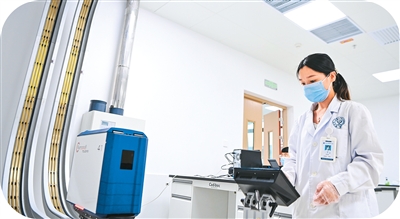
Core Insights - The integration of AI in healthcare is rapidly transforming the industry, enhancing diagnostic capabilities and patient care across various age groups and medical conditions [4][5][11] AI in Pediatric Healthcare - AI technologies are being utilized to improve pediatric healthcare, with innovations such as AI-powered eye cameras for quick eye disease screening and companion robots for early autism screening [5][6] - The first AI pediatric doctor was launched in February, assisting in clinical research and rare disease diagnosis, emphasizing a collaborative approach between AI and human doctors [6] AI in Mental Health - AI is being employed in mental health services, with robots capable of assessing users' cognitive and emotional states and providing recommendations for further treatment [7] - Schools are utilizing AI to support students' mental health, allowing for real-time monitoring of psychological changes through AI interactions [7] AI in Traditional Chinese Medicine (TCM) - AI is being integrated into TCM practices, with devices capable of performing precise acupuncture and massage treatments, enhancing the effectiveness and consistency of therapies [8][9] - The Chinese government is promoting the integration of AI in TCM, aiming to modernize practices and improve patient outcomes through data-driven approaches [10] AI in Chronic Disease Management - AI is becoming a crucial tool in managing chronic diseases, shifting the focus from treatment to prevention and personalized care [11] - Continuous Glucose Monitoring (CGM) technology is highlighted as a significant advancement in diabetes management, providing real-time data and personalized recommendations [12][13]
深化亚太合作 共创发展新局(环球热点)
Ren Min Ri Bao Hai Wai Ban· 2025-11-03 22:46
Group 1 - The core viewpoint of the news is that China's proposals at the APEC meeting aim to address regional challenges and promote an inclusive and open Asia-Pacific economy, emphasizing multilateralism and cooperation amidst rising protectionism and supply chain risks [3][4][5]. - China presented five key suggestions during the APEC meeting, including maintaining a multilateral trade system, creating an open regional economic environment, ensuring stable supply chains, promoting digital and green trade, and fostering inclusive development [3][4]. - The international media has highlighted China's emphasis on building an Asia-Pacific community, especially in the context of some countries adopting unilateral tariff policies and retreating from multilateral mechanisms [3][4]. Group 2 - The meeting underscored the shift from traditional trade to deeper cooperation, with a focus on strategic alignment, platform utilization, and regulatory collaboration to leverage opportunities in the "Chinese market" [6][7]. - China is a major trading partner for 21 APEC economies and the largest partner for 13 of them, indicating its significant role in regional trade dynamics [6]. - The call for stable supply chains and expanded openness from China serves as a strong signal for businesses to engage in collaborative projects and capitalize on the opportunities presented by the Chinese market [6][7]. Group 3 - In key areas like artificial intelligence and green development, China's experience aligns well with the industrialization and digitalization needs of Asia-Pacific countries, creating unique opportunities for regional development [9][10]. - China's advanced technologies in renewable energy and AI can support the region's transition to sustainable practices, while the diverse resource endowments of Asia-Pacific nations complement China's technological capabilities [9][10]. - The collaboration between China's mature technology solutions and the urgent demands of ASEAN countries for electric vehicles, smart manufacturing, and digital infrastructure highlights the potential for mutual benefit and growth in the region [10].

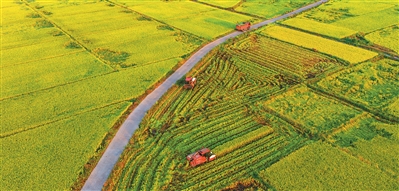
从粒粒良种,到仓廪充盈(“十四五”,我们见证这些硬核突破⑦)
Ren Min Ri Bao Hai Wai Ban· 2025-11-03 22:46
Core Insights - The article highlights China's significant advancements in agricultural seed breeding during the "14th Five-Year Plan" period, focusing on the development of high-yield and disease-resistant crop varieties, which have led to increased food security and market competitiveness [6][7][10]. Group 1: Crop Breeding Innovations - China has implemented a seed industry revitalization action plan, resulting in over 95% of crop varieties being independently bred, including high-yield rice, drought-resistant wheat, and high-oil soybeans [6][7]. - In Sichuan Province, the introduction of high-yield rice varieties has led to a combined yield of over 1300 kg per mu (approximately 0.067 hectares), showcasing the effectiveness of new breeding techniques [7][8]. - The development of disease-resistant wheat varieties, such as "Yangmai 53," has resulted in a yield increase of 10.13% compared to traditional varieties, marking a significant achievement in wheat breeding [8][9]. Group 2: Livestock and Aquaculture Breeding - The successful breeding of domestic white-feather broilers, which previously relied entirely on imports, has now achieved a market share exceeding 25%, ensuring a stable supply of poultry [10][11]. - The introduction of the Huaxi cattle breed has broken the dependency on imported beef cattle, with a market share surpassing 20% and an average daily weight gain of 1.36 kg [11]. - The development of 12 new varieties of South American white shrimp has led to a market share of over 30%, significantly reducing the reliance on imported shrimp [11]. Group 3: Genetic Resource Survey - A comprehensive national agricultural germplasm resource survey has been conducted, collecting 139,000 new germplasm resources, which are crucial for breeding high-quality crop varieties [13][14]. - The survey has identified and protected traditional local varieties and wild relatives, enhancing the genetic diversity available for future breeding efforts [14]. - Over 6000 germplasm resources have already been applied in breeding innovation and industrial development, supporting the goal of enhancing China's seed industry [14].