Ren Min Ri Bao Hai Wai Ban

Search documents
“公园市集”,你打卡了吗?
Ren Min Ri Bao Hai Wai Ban· 2025-10-21 01:55
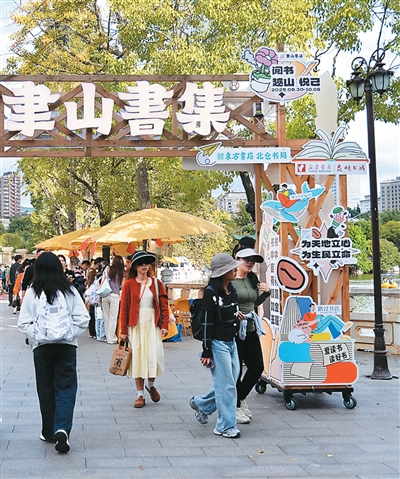
Core Insights - The "park market" model is gaining popularity, characterized by low barriers, strong experiences, and high integration, significantly enhancing consumer frequency and spending [2][3][4] Group 1: Consumer Engagement - Events like the Shanghai Zhongshan Park commodity exhibition and the Beijing Ditan Book Fair have seen impressive attendance and sales, with the latter attracting 550,000 readers and achieving over 90 million yuan in book sales [3][4] - The Chengdu People's Park received 8.5 million visitors last year, with 70% being tourists, indicating the park's dual appeal to locals and visitors [2] Group 2: Market Trends - The integration of diverse business formats in park markets is activating consumer potential, with cultural consumption and lifestyle purchases being key drivers [2][3] - The success of park markets is being replicated across various regions, with cities like Linyi and Hangzhou hosting numerous events that attract millions of participants [3][4] Group 3: Challenges and Opportunities - The park market faces challenges such as avoiding homogenization and managing high operational costs, which include venue fees and setup expenses [4][5] - Emphasizing local characteristics and balancing environmental sustainability with commercial interests are crucial for the long-term development of park markets [5]

鼓励入境消费 “真金白银”这样投
Ren Min Ri Bao Hai Wai Ban· 2025-10-21 01:46
Core Viewpoint - China aims to enhance its international consumption environment by selecting around 15 pilot cities for development, with a focus on attracting inbound consumption and improving the overall consumer experience [2][11]. Group 1: Pilot Cities and Funding - The Ministry of Finance and the Ministry of Commerce have announced the selection of approximately 15 pilot cities to develop an international consumption environment, with central government financial support [2][11]. - The five existing international consumption center cities—Shanghai, Beijing, Guangzhou, Tianjin, and Chongqing—will receive a total subsidy of 200 million yuan each, while other eligible cities will receive 100 million yuan each [4][11]. Group 2: Key Focus Areas for Development - The construction of an international consumption environment will focus on enhancing high-quality consumption supply, optimizing foreign payment services, and improving international service levels [5][10]. - Specific measures include increasing the number of foreign card POS machines, establishing foreign currency exchange facilities, and enhancing multilingual signage and services in key areas [5][8]. Group 3: Addressing Shortcomings - The initiative emphasizes identifying and addressing gaps in the current consumption environment, such as the need for more foreign currency exchange points and foreign card payment options [8][10]. - The performance indicators for the initiative include the number of new foreign card POS machines and foreign currency exchange points established in key commercial areas and tourist attractions [8][12]. Group 4: Policy Integration and Effectiveness - The new measures will complement existing policies aimed at expanding inbound consumption, focusing on both hardware improvements and the development of a supportive soft environment [11][12]. - The initiative aims to create a more attractive international consumption destination by integrating local and international brands, enhancing service quality, and improving the overall consumer experience [12][13].
前三季度新质生产力加快培育
Ren Min Ri Bao Hai Wai Ban· 2025-10-21 01:39
Group 1 - The core viewpoint of the articles highlights the significant increase in corporate innovation investment and the robust growth of strategic emerging industries in China, indicating a faster pace of new productivity development that injects new momentum into economic growth [1][2] Group 2 - In the first three quarters, the sales revenue of the technology service industry, a key area for integrating technology resources, grew by 22.3% year-on-year, continuing its rapid growth trend [1] - The sales revenue of high-tech industries and equipment manufacturing increased by 15.2% and 9% year-on-year, respectively, with notable growth in sectors such as computer communication equipment manufacturing and aerospace [1] - The sales revenue of specialized and innovative "little giant" enterprises increased by 8.2% year-on-year, with high-tech manufacturing enterprises experiencing an 11.8% growth [2] Group 3 - The core industries of the digital economy saw a sales revenue increase of 10.6% year-on-year, with digital product manufacturing and digital technology application sectors growing by 11% and 14.5%, respectively [2] - The total amount spent by enterprises on digital technology increased by 10.6% year-on-year, reflecting an upgrade in industrial digitalization [2]
锐财经丨经济运行总体平稳稳中有进
Ren Min Ri Bao Hai Wai Ban· 2025-10-21 01:39
Economic Growth - China's GDP grew by 5.2% year-on-year in the first three quarters, ranking among the top major economies [1][2] - The economic increment reached 39,679 billion yuan, an increase of 1,368 billion yuan compared to the previous year [1][2] Employment and Prices - The average urban unemployment rate for the first three quarters was 5.2%, consistent with the first half of the year [4] - The Consumer Price Index (CPI) slightly decreased by 0.1%, while the core CPI, excluding food and energy, rose by 0.6% [4] International Trade - China's foreign trade showed strong resilience, with import and export volumes reaching historical highs, and foreign exchange reserves maintained above 3.3 trillion USD [4][5] - The total value of goods imports and exports increased by 6.0% year-on-year in the third quarter [9] Industrial Development - The proportion of added value from high-tech manufacturing and equipment manufacturing reached 16.7% and 35.9%, respectively [4] - Investment in equipment and tools increased by 14.0% year-on-year, significantly contributing to overall investment growth [6] New Economic Drivers - Industries such as lithium-ion battery manufacturing and electric vehicle production saw substantial growth, with increases of 29.8% and 29.7%, respectively [7] - The production of new energy vehicles and related products also experienced double-digit growth [7] Policy Impact - A series of policies have effectively stabilized the economy and supported long-term development, with consumer spending contributing 53.5% to economic growth [6] - The government has issued 300 billion yuan in special bonds to stimulate consumer demand through programs like "old for new" [6]

“丹青颂丰碑”主题书画展在京开幕
Ren Min Ri Bao Hai Wai Ban· 2025-10-21 00:44
Core Viewpoint - The "Danqing Song Fengbei" themed painting and calligraphy exhibition commemorates the 80th anniversary of the victory in the Chinese People's Anti-Japanese War and the 80th anniversary of Taiwan's liberation, showcasing the historical collaboration between Taiwan and mainland China in the anti-war efforts [1] Group 1: Exhibition Overview - The exhibition opened on October 19 at the Beijing Taiwan Association, featuring nearly a hundred artists from both sides of the Taiwan Strait [1] - It is organized by the Taiwan Democratic Self-Government League Central Committee, the Cross-Strait Calligraphy and Painting Institute, and other organizations [1] - The exhibition consists of three parts: "Poetry Casts the Soul, Ink Celebrates the Monument," "Baptism in Blood, Fire Rebirth," and "Victory Flowers Reflecting the Rivers and Mountains," displaying over 170 exquisite works of calligraphy and painting [1] Group 2: Historical Significance - The exhibition emphasizes the historical significance of the Anti-Japanese War and Taiwan's liberation, highlighting the unity of Taiwanese and mainland Chinese people in their fight against foreign aggression [1] - Zheng Jianmin, Vice Chairman of the Taiwan Democratic Self-Government League Central Committee, stated that the exhibition helps deepen ethnic, national, and cultural identity among compatriots on both sides [1] Group 3: Artistic Contributions - Taiwanese artist Ouyang Kun presented a traditional Chinese painting titled "Yimi War," which involved extensive research into the history of the Yimi War [1] - Ouyang expressed a strong sense of mission in his work, aiming to remind the younger generation of the importance of remembering the history of the Anti-Japanese War and cherishing the current peace [1]
乡村产业绘新貌
Ren Min Ri Bao Hai Wai Ban· 2025-10-21 00:43
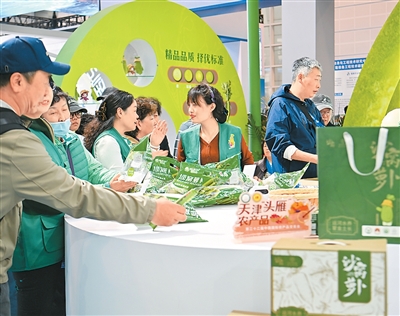
Core Insights - The 12th China International Agricultural Products Trade Fair showcased the vibrant development of rural industries in China, highlighting local specialties and the growth of agricultural processing enterprises [1][2]. Group 1: Agricultural Production and Processing - In 2024, China's grain production is expected to reach 1.4 trillion jin, an increase of 74 billion jin compared to 2020 [2]. - The number of large-scale agricultural processing enterprises is projected to exceed 100,000, with total revenue around 18 trillion yuan [1][2]. - Over 94,000 leading enterprises at the county level are primarily engaged in agricultural processing, with more than 80% of them focused on this sector [3]. Group 2: Rural Development and New Industries - Various regions are developing unique local industries, such as Yunnan coffee and Yan'an apples, which are driving the growth of rural e-commerce and leisure industries [4]. - The income from leisure agriculture is expected to approach 900 billion yuan in 2024, an increase of nearly 50 billion yuan since 2020 [4]. Group 3: Poverty Alleviation and Income Growth - The transition period for consolidating poverty alleviation results and rural revitalization is crucial, with 832 poverty-stricken counties cultivating 2 to 3 leading industries, generating a total output value exceeding 1.7 trillion yuan [5]. - The per capita disposable income of rural residents is projected to reach 23,119 yuan in 2024, indicating a gradual narrowing of the income gap between urban and rural residents [5]. Group 4: Agricultural Modernization and Reforms - The trade fair highlighted advanced agricultural equipment, such as multifunctional robots in orchards, showcasing the new productive forces in agriculture [7]. - Ongoing rural reforms, including the extension of land contracts and the management of rural homesteads, are providing strong momentum for the development of rural industries [7].
中国新增22处国家重要湿地
Ren Min Ri Bao Hai Wai Ban· 2025-10-20 23:31
Core Points - The National Forestry and Grassland Administration of China has recently included 22 wetlands, including the Sanggan River in Shanxi Province, in the national important wetland directory, bringing the total number of national important wetlands to 80 [1] - Over the years, China has implemented more than 3,700 wetland protection and restoration projects, adding and restoring over 1 million hectares of wetlands [1] - The country has designated 82 international important wetlands, certified 22 international wetland cities, recognized 80 national important wetlands, and identified 1,205 provincial important wetlands, establishing a preliminary wetland management system [1] - The National Forestry and Grassland Administration will continue to implement the Wetland Protection Law and focus on advancing the construction of wetland protection and restoration systems, investigation and monitoring systems, and protection and supervision systems to enhance the quality and stability of wetland ecosystems [1]
海峡两岸社团交流节精彩纷呈
Ren Min Ri Bao Hai Wai Ban· 2025-10-20 22:53
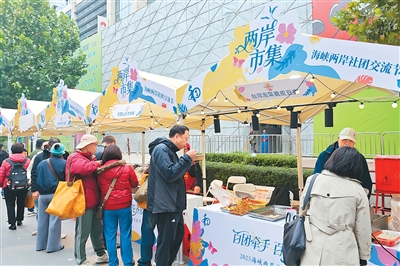
Core Points - The 2025 Cross-Strait Community Exchange Festival opened in Beijing, featuring over 360 Taiwanese guests from various sectors, emphasizing the importance of community interaction in promoting cross-strait relations [1][2][6] - The event aims to deepen cooperation and understanding between the two sides, with a focus on cultural, technological, and health sectors, as well as youth engagement [2][5] Group 1: Event Overview - The festival is themed "Hundreds of Groups Hand in Hand, Hundreds of Flowers Blooming," highlighting the significance of community ties in cross-strait relations [1] - The opening ceremony featured speeches from key figures, including Zhang Zhijun, who emphasized the need for continued dialogue and cooperation based on the "One China" principle and the "1992 Consensus" [1][2] Group 2: Activities and Participation - The festival includes various activities such as cultural performances, food markets showcasing Taiwanese delicacies, and discussions on professional cooperation between Taiwanese and mainland associations [3][4][5] - Approximately 40 specialty booths were set up at the market, featuring well-known brands and traditional Taiwanese foods, attracting significant interest from visitors [4] Group 3: Future Initiatives - Following the opening ceremony, ten "Hand in Hand" salon activities will take place, focusing on in-depth discussions about community exchanges and professional collaborations [5] - The event will also organize thematic visits for Taiwanese guests to cities like Tianjin and Shanxi, covering areas such as cultural heritage, technological innovation, and community governance [5]
在五峙山列岛守护“神话之鸟”(保护候鸟·我在一线)
Ren Min Ri Bao Hai Wai Ban· 2025-10-20 22:53
Core Viewpoint - The article highlights the conservation efforts for the critically endangered Chinese Crested Tern, emphasizing the role of volunteers and researchers in protecting this species and its breeding grounds on the Wuzhishan Islands in Zhejiang, China [10][19]. Group 1: Conservation Efforts - The Wuzhishan Islands serve as a provincial marine bird nature reserve, attracting thousands of migratory birds, including the Chinese Crested Tern, which is classified as a critically endangered species with only about 200 individuals remaining globally [10][12]. - Since 2008, volunteers have been monitoring the breeding activities of the Chinese Crested Tern, with 155 individuals recorded in recent years, making the islands the second-largest breeding site for this species worldwide [10][11][16]. Group 2: Volunteer Experience - Volunteers, such as Wang Yi'an and Wang Rui, face challenging conditions while living on the islands, relying on supplies delivered by boat and managing their daily needs independently [17][19]. - The volunteers document the birds' behaviors and environmental conditions using surveillance cameras and other equipment, contributing to the understanding of the tern's breeding and survival [13][14]. Group 3: Ecological Significance - The presence and population of the Chinese Crested Tern serve as indicators of the ecological health of the marine environment in the East China Sea, reflecting the success of conservation efforts [16]. - The article emphasizes the importance of public awareness and education regarding the Chinese Crested Tern, as seen in the establishment of the East China Sea Cloud Marine Bird Science Popularization Museum, which aims to engage the public in conservation efforts [18][19].

铺展故宫博物院百年长卷
Ren Min Ri Bao Hai Wai Ban· 2025-10-20 22:53
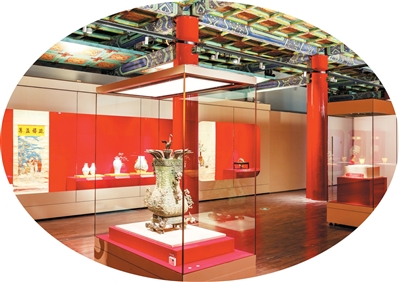
Core Viewpoint - The Palace Museum is celebrating its 100th anniversary with a major exhibition titled "Centennial Guardianship - From the Forbidden City to the Palace Museum," showcasing 200 selected cultural relics that highlight the museum's century-long journey and its commitment to cultural preservation and innovation [8][9]. Group 1: Exhibition Overview - The exhibition is divided into three sections: "Cultural Heritage," "Centennial Legacy," and "Diverse Manifestations," featuring a total of 200 artifacts [8]. - The narrative combines artifacts and archival documents to comprehensively present the development of the Palace Museum over the past century [9]. Group 2: Historical Significance - The Palace Museum was established on October 10, 1925, transforming from a restricted imperial palace into a cultural institution open to the public [11]. - During the Second Sino-Japanese War, the museum undertook the largest and longest cultural relic relocation in history, successfully preserving thousands of artifacts [11]. Group 3: Notable Artifacts - The exhibition includes significant pieces such as the "Five Cows" painting, which is the earliest existing paper painting, and the "Qingming Shanghe Tu," a famous silk scroll depicting life in the Northern Song Dynasty [12][13]. - The "Baiyuan Tie," a calligraphy work from the Eastern Jin Dynasty, is highlighted as a rare treasure that was repurchased from Hong Kong in 1951 [12]. Group 4: Cultural Representation - The exhibition emphasizes the importance of the Palace Museum in promoting Chinese civilization and cultural identity, showcasing artifacts that reflect the rich history and diversity of Chinese culture [16][17]. - Key artifacts like the "Golden Cup of Eternal Stability" symbolize the stability and prosperity of the nation, while others illustrate the cultural exchanges along the ancient Silk Road [17].