
Ren Min Ri Bao Hai Wai Ban

Search documents
让数字公共服务惠及更多农村居民
Ren Min Ri Bao Hai Wai Ban· 2025-09-15 05:36
Core Insights - The construction of digital rural services is rapidly advancing, with a nationwide survey conducted by China University of Political Science and Law in 2024 revealing significant findings about rural residents' engagement with digital media and services [1][2]. Group 1: Digital Media Usage - Rural residents are not isolated from digital media; new media, especially short videos, have become the primary tools for information and social interaction among them [1]. - The survey indicates a high preference for new media among rural residents, with short videos being the most popular due to their low entry barrier and ability to meet information needs quickly [1]. Group 2: Digital Divide - Despite the preference for new media, many rural residents primarily consume entertainment content rather than accessing public services or participating in social governance [2]. - The "digital divide" persists in rural areas, particularly among older individuals and those with lower education levels, who often lack the skills and equipment to utilize digital service platforms effectively [2]. Group 3: Recommendations for Improvement - To ensure digital public services benefit more rural residents, services should align with user habits by integrating public service information with entertainment content, such as creating engaging and interactive public service short videos [3]. - Information dissemination should be precise, targeting specific demographics like the youth for employment and the elderly for health information through tailored advertising and recommendations [3]. - Enhancing digital literacy among rural residents is crucial, with suggestions for government and social organizations to provide training and support through hotlines, workshops, and community leaders [3].
美国华人捐献飞虎队抗战家书
Ren Min Ri Bao Hai Wai Ban· 2025-09-15 01:59
Core Viewpoint - The donation of 15 letters from the American Volunteer Group (AVG), known as the Flying Tigers, to the Renmin University of China highlights the importance of preserving historical artifacts related to the Anti-Japanese War and the contributions of foreign volunteers [1] Group 1 - The donor, Chen Canpei, has been collecting artifacts related to the Flying Tigers and the Anti-Japanese War since 2007, amassing approximately 20,000 items and spending over one million dollars [1] - This donation marks Chen's second contribution to the Renmin University after a decade, emphasizing his commitment to historical preservation [1] - The letters donated are significant as they fill a gap in the collection of the university's family letter museum, according to Zhang Ding, the deputy curator [1] Group 2 - The Flying Tigers were a volunteer air force unit from the United States that played a crucial role in combating the Japanese air force during the Anti-Japanese War, ensuring the safety of the "Hump" airlift route [1]
就美国对华集成电路领域相关措施发起反歧视立案调查
Ren Min Ri Bao Hai Wai Ban· 2025-09-15 01:59
Core Viewpoint - The Ministry of Commerce of China announced the initiation of an anti-discrimination investigation against the United States regarding measures in the integrated circuit sector, effective September 13, 2025, due to evidence suggesting discriminatory practices against China [1] Group 1: Investigation Announcement - The Ministry of Commerce has decided to start an anti-discrimination investigation into the U.S. measures related to the integrated circuit sector, citing preliminary evidence of discriminatory practices [1] - The investigation is based on Article 7 of the Foreign Trade Law of the People's Republic of China, which addresses discriminatory prohibitions and restrictions in trade [1] Group 2: U.S. Measures and Impact - The U.S. has implemented a series of prohibitive and restrictive measures against China in the integrated circuit sector, including Section 301 investigations and export controls [1] - These protectionist actions are seen as an attempt to suppress China's development in advanced computing chips and artificial intelligence, which not only harms China's development interests but also threatens the stability of the global semiconductor supply chain [1] Group 3: Investigation Principles and Participation - The investigation will be conducted based on principles of fairness, justice, and transparency, inviting participation from all stakeholders affected by U.S. measures, including domestic industries and enterprises in China [1] - China is committed to taking all necessary measures to defend the legitimate rights and interests of its enterprises [1]
在文化交流中感知认识中国(海客话中国)
Ren Min Ri Bao Hai Wai Ban· 2025-09-15 01:21
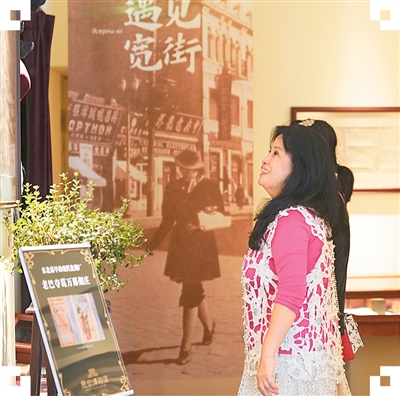
Core Viewpoint - Mitja Saje is recognized as the "Father of Sinology" in Slovenia, having dedicated his life to promoting Chinese language and culture in Slovenia since 1976, and continues to be active in cultural exchanges between Slovenia and China [5][11]. Group 1: Contributions to Sinology - Mitja Saje began his journey in Sinology with a strong passion for Chinese language and culture, studying systematically in China and later establishing a Chinese language program at the University of Ljubljana [5][6]. - He faced challenges in finding Chinese language learning resources, leading him to compile the first Slovenian Chinese dictionary, which remains a key reference for students [6][7]. - Saje has guided over 200 young scholars in their research on China, covering various aspects such as history, culture, and economics, thereby fostering a new generation of cultural ambassadors [7][8]. Group 2: Academic Achievements - Saje published a comprehensive work titled "Chinese History" in 2016, which provides valuable insights into Chinese society from multiple perspectives, contributing significantly to the understanding of China in Slovenia and Europe [8][9]. - He has organized numerous cultural projects and exhibitions to enhance the exchange between Slovenian and Chinese cultures, including the "Encounter China" exhibition that showcased nearly 200 years of cultural interactions [9][10]. Group 3: Historical Context and Legacy - Saje draws inspiration from historical figures like Liu Songling, a Slovenian missionary and astronomer in China, and has worked to promote Liu's legacy through various academic initiatives [10][11]. - He emphasizes the importance of cultural exchange in fostering mutual understanding and respect between China and Slovenia, aiming to share the rich narratives of Chinese civilization with a broader audience [11].


把人文学科当作生活方式(有事说事)
Ren Min Ri Bao Hai Wai Ban· 2025-09-15 01:21
Core Perspective - The essence of humanities is to adopt a reflective and self-consistent attitude towards life, rather than requiring everyone to become philosophers or writers [1][2] Group 1: Importance of Humanities - Humanities provide a spiritual framework for individuals to cope with life, emphasizing that their value lies not in direct monetization but in personal growth and understanding [2] - The opening speech by Cheng Lesong resonated widely as it captured collective confusion in a changing society, highlighting the anxiety of choice and utilitarianism [1][2] Group 2: Educational Insights - Cheng Lesong's address critiques the superficial engagement of students in campus life, describing them as "outsiders in the midst of noise" [1] - He emphasizes the importance of finding a suitable and enjoyable way of living, warning against short-sighted, utilitarian calculations [1][2] Group 3: Philosophical Reflection - The speech encourages individuals to reflect on their choices through a philosophical lens, fostering empathy and understanding of others, and using historical wisdom to navigate present anxieties [2] - Cheng Lesong's message underscores that seemingly intangible qualities are foundational for personal stability and success [2]
当华裔青年遇到潮汕英歌舞
Ren Min Ri Bao Hai Wai Ban· 2025-09-15 01:20
Core Points - The article highlights the journey of Malaysian Chinese student Pang Qirui, who has actively participated in traditional Chinese cultural performances, particularly the Yingge dance, during her time at Shantou University [1][2][3] - Pang Qirui's dedication to the Yingge dance, despite facing physical challenges, showcases the resilience and commitment of students in preserving and promoting traditional culture [2][3] Group 1: Cultural Participation - Pang Qirui joined the Shantou University drum team shortly after her enrollment in 2020 and later became a member of the Yingge dance team, which was formed in response to the growing popularity of the dance [1] - The Yingge dance is a traditional folk performance that combines martial arts, dance, and drama, featuring actors in ancient costumes and face painting [1] - The Yingge dance team has grown to approximately 50 members within a year and has performed at significant events, including the "Challenge Cup" opening ceremony and the Jieyang Marathon [2] Group 2: Personal Challenges and Achievements - Pang Qirui faced a serious injury, a comminuted fracture of her collarbone, yet she remained committed to her training and performances, demonstrating her determination [1][2] - Despite suffering from a high fever during training for the international cultural festival, she continued to participate and even shifted to the instrument group to support her team [2] - Pang Qirui actively shares her experiences and the uniqueness of Yingge dance on social media, promoting traditional Chinese culture to a broader audience [2]
东南亚院校学子国际竞“技”展风采
Ren Min Ri Bao Hai Wai Ban· 2025-09-15 01:20
Group 1 - The 2025 World Vocational College Skills Competition (Southeast Asia Region) recently concluded in Cambodia, showcasing the importance of vocational skills for youth empowerment [1] - The competition featured 60 teams and 200 participants from Southeast Asian countries, emphasizing the craftsmanship spirit and excellence of contemporary vocational students [1] - Six projects from the Cambodian-Chinese University of Technology won gold medals, while nine projects from Indonesia and fifteen from the Philippines received silver and bronze medals, respectively [1] Group 2 - The event marked a significant step in the cooperation between China and Cambodia in vocational education, transitioning from "project cooperation" to "platform co-construction" [2] - The Cambodian government has prioritized vocational education reform, with China being a key partner in this strategic initiative [3] - The successful hosting of the competition lays a foundation for regional vocational skills cooperation and highlights the value of vocational education [3]
古老文明焕发文旅新活力
Ren Min Ri Bao Hai Wai Ban· 2025-09-15 01:20
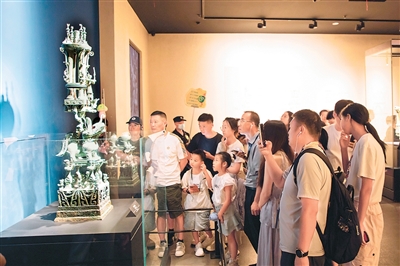
Core Insights - The Sanxingdui Museum's new building showcases unique artifacts from ancient Shu civilization, attracting a significant number of visitors and enhancing cultural appreciation [1][2][3] Group 1: Museum Features - The new museum features a large collection of bronze and jade artifacts, highlighting the exquisite craftsmanship of ancient Shu civilization [2] - A notable exhibit is the 1.5-meter tall bronze tree, which showcases intricate design and craftsmanship, drawing considerable attention from visitors [1] - The architectural design of the new museum incorporates elements of Sanxingdui culture, creating a seamless connection with the old museum [2] Group 2: Visitor Experience - Visitors engage with the exhibits through interactive experiences, such as "wearing" the gold mask for photos, enhancing their connection to the artifacts [1] - The museum includes a large circular chandelier inspired by the motifs found in Sanxingdui artifacts, adding a mysterious ambiance to the space [2] - A rotating ramp in the new museum has been retained from the old museum, providing a sense of familiarity for returning visitors [2] Group 3: Cultural and Economic Impact - The museum is projected to receive nearly 6 million visitors in 2024, indicating its growing popularity [3] - The annual sales of Sanxingdui cultural products are estimated to reach approximately 200 million yuan, reflecting the commercial success of the museum's offerings [3] - The integration of ancient cultural elements into modern products enhances cultural dissemination and practical value [3]
着力打造文旅全季“长红”
Ren Min Ri Bao Hai Wai Ban· 2025-09-15 01:20
Core Insights - Harbin is transitioning from a winter-focused tourism model to a year-round cultural and tourism growth strategy, emphasizing autumn as a new peak season for visitors [1] Group 1: Cultural and Tourism Developments - The city is promoting "City Walk" experiences, highlighting its unique autumn atmosphere with historical architecture and cultural events [2] - Various performances, including classic ballets and contemporary music concerts, are scheduled from early September to the National Day holiday, showcasing Harbin's cultural richness [2] - The Harbin Tourism Investment Group has developed six premium autumn tourism routes, featuring interactions with animals and unique ice and snow experiences [3] Group 2: Agricultural and Rural Tourism - Harbin's agricultural landscape is vibrant in autumn, with initiatives combining cultural tourism and agriculture to offer visitors immersive experiences [5] - Events during the "China Farmers' Harvest Festival" will include art exhibitions and traditional farming skill competitions, enhancing the agricultural tourism appeal [5] Group 3: Historical and Red Tourism - The city is promoting its historical significance through exhibitions and memorials related to the Anti-Japanese War, enhancing the educational aspect of tourism [6] - The upcoming film "731" will further engage visitors in the historical narrative of Harbin, encouraging exploration of significant sites [6] Group 4: Consumer Engagement Initiatives - The Harbin Municipal Bureau of Commerce is planning promotional activities during the National Day and Mid-Autumn Festival to boost consumption in shopping, dining, and accommodation sectors [7]
文艺为桥,助推中阿文明互鉴
Ren Min Ri Bao Hai Wai Ban· 2025-09-15 01:20
Core Points - The event "Silk Road Integration: Arab Experts Entering Chinese Artists' Home" was held in Beijing, focusing on cultural exchange and dialogue between China and Arab countries [1] - Notable scholars from Egypt and Jordan shared insights on the importance of academic exchange and translation in promoting dialogue between civilizations [1][2] - The event highlighted the role of young Chinese artists in fostering cultural dialogue through their creative works, showcasing the potential of contemporary Chinese literature and art on the global stage [2][3] Group 1: Cultural Exchange and Translation - Egyptian scholar Hossain Fahmy discussed his experiences translating Mo Yan's "Red Sorghum Clan" and the positive reception of Chinese literature in the Arab world, emphasizing translation as a bridge between civilizations [1] - Jordanian scholar Mana expressed her aspirations to introduce Chinese literature to Jordanian readers, sharing her experiences in translating works like Ba Jin's "Cold Night" [1] - The comparison of the Egyptian pyramids and the Terracotta Army by Li Habib illustrated the shared pursuit of eternity in both civilizations, highlighting the common spiritual wealth of humanity [1] Group 2: Role of Young Artists - Chinese visual director Lu Beike emphasized the importance of integrating Eastern aesthetics and diverse cultural elements in the adaptation of "The Three-Body Problem," showcasing the potential for cross-cultural resonance [2] - Screenwriter Peng Yining noted that real-life experiences serve as a rich source for storytelling, which can bridge cultural gaps through relatable narratives [2] - Actress Reyiza shared her experience with the series "The Sea and the Mountain," which has been translated into over 20 languages and resonates with international audiences due to its authentic portrayal of China's poverty alleviation efforts [3] Group 3: Future Collaboration - Hussein Ismail from the China Foreign Languages Publishing Administration called for the establishment of long-term cooperation mechanisms, emphasizing the deep-rooted resonance between Chinese and Arab civilizations in values and social ideals [3] - The event was co-hosted by various Chinese cultural organizations, indicating a collaborative effort to enhance cultural exchange and understanding [3]