
Ren Min Ri Bao Hai Wai Ban

Search documents
苏州,让我爱上中国的N个理由
Ren Min Ri Bao Hai Wai Ban· 2025-09-15 22:49
Core Viewpoint - The article highlights the advantages of Suzhou as an attractive destination for foreign talent, emphasizing its supportive policies, innovative environment, and collaborative opportunities in various industries, particularly in technology and education [9][10][11][13][17]. Group 1: Innovation and Research Environment - Suzhou's research environment is characterized by its ability to break down barriers between academia and industry, facilitating collaboration and practical application of research [10][12]. - The city supports high-level talent with significant project funding, including up to 100 million yuan for projects and 10 million yuan for housing subsidies [14]. - The collaborative model in Suzhou allows for shared resources between universities and companies, enhancing the development of advanced technologies [12][22]. Group 2: Entrepreneurial Support - Suzhou's policies provide comprehensive support for talent innovation and entrepreneurship, including funding, office space, and policy guidance [15][24]. - The city has implemented a talent-friendly policy framework that encourages the establishment and growth of startups, particularly in the technology sector [13][24]. - The government actively engages with foreign entrepreneurs, offering personalized services to address their specific needs [11][20]. Group 3: Education and Cultural Integration - Suzhou is recognized as a fertile ground for educational ideals, fostering a diverse and inclusive environment for students from various backgrounds [17][19]. - The collaboration between educational institutions and local governments creates platforms for students to engage in entrepreneurship and innovation [18][19]. - The cultural richness of Suzhou enhances the educational experience, promoting respect and cooperation among students from different cultures [19]. Group 4: Industry Growth and Market Potential - Companies in Suzhou, particularly in the biotech and technology sectors, have experienced significant growth, with some reporting sales increases of up to 70% year-on-year [25]. - The local government’s efficient support during crises, such as the COVID-19 pandemic, has been crucial for businesses to maintain operations and continue their growth trajectory [24][25]. - Suzhou's strategic location and robust industrial ecosystem position it as a key player in the global innovation landscape, attracting international talent and investment [12][15].


赴约服贸会,外企收获什么?(听在华外企说·我在这里,看见向上的中国)
Ren Min Ri Bao Hai Wai Ban· 2025-09-15 22:49
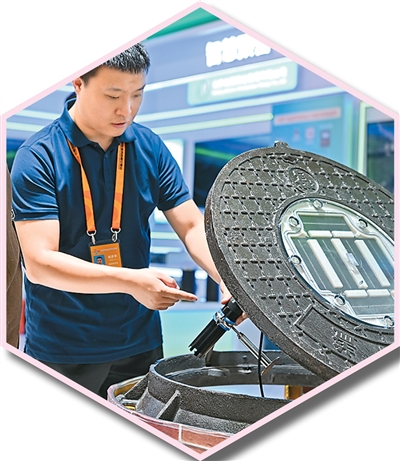
Core Insights - The 2025 China International Fair for Trade in Services (CIFTIS) concluded on September 14, showcasing 85 countries and over 480 Fortune 500 companies, highlighting its role as a platform for international cooperation and visibility for foreign enterprises [9][10][12] Group 1: Exhibition Highlights - The fair featured innovative products such as solar-powered smart manhole covers that integrate photovoltaic panels and IoT data collection modules for real-time monitoring of utilities [1] - A manned flying vehicle was also exhibited, showcasing advancements in transportation technology [3] - Interactive robots attracted audience engagement, indicating a growing interest in automation and robotics [7] Group 2: International Participation - Many foreign exhibitors aimed to enhance visibility and establish new partnerships, with representatives from Spain's HLK Football Club expressing hopes for increased collaboration in sports [10] - Iranian artisans showcased handmade products, seeking to promote cooperation with Chinese businesses [10] - Norwegian companies aimed to introduce high-quality products to Chinese consumers, leveraging the fair for market expansion [10] Group 3: Market Trends and Insights - The fair provided insights into the evolving Chinese market, with foreign companies noting a rising consumer awareness of green and energy-efficient products [11] - Companies like Novaerus highlighted the importance of aligning with China's digitalization trends to better meet local market demands [11] - The event served as a window for foreign enterprises to gauge consumer interests and technological collaboration needs in China [11] Group 4: Innovation and Localization - Schneider Electric emphasized the importance of localizing services and products to meet the specific needs of the Chinese market, establishing innovation centers in Beijing and Shanghai [15] - The first foreign-owned comprehensive hospital in Tianjin showcased its international service model and commitment to high-quality healthcare [16] - Sony China developed a localized sports performance tracking solution that enhances the viewing experience without wearable devices, demonstrating innovation tailored to local market demands [16]


碳市场2.0,中国这样布局
Ren Min Ri Bao Hai Wai Ban· 2025-09-15 22:49
Core Viewpoint - The article discusses the development and significance of China's carbon market, highlighting its transition into a 2.0 era with the recent release of guidelines aimed at enhancing the market's vitality and international influence [4][5]. Summary by Sections Carbon Market Overview - Since 2013, China has initiated carbon emission trading trials in various provinces, culminating in the launch of a national carbon market in 2021, which serves as a crucial tool for addressing climate change and promoting green economic transformation [4][5]. Market Structure - The national carbon market consists of two components: a mandatory carbon market for key emission units and a voluntary carbon market aimed at encouraging self-directed emission reductions. The mandatory market began in 2021, while the voluntary market is set to launch in 2024 [6][7]. Market Size and Performance - As of August 22, 2023, the mandatory carbon market has over 2,000 key emission units, with a cumulative trading volume exceeding 680 million tons and a transaction value of 47.41 billion yuan. The voluntary market has recorded 2.49 million tons of certified voluntary emission reductions, amounting to 210 million yuan [7][8]. Industry Coverage and Future Goals - The mandatory carbon market has expanded to include industries such as steel, cement, and aluminum, covering over 60% of national carbon emissions. Future goals include broadening the market's coverage and transitioning to a total control system for carbon emissions by 2030 [9][11]. Financial Mechanisms - The article highlights the introduction of carbon finance mechanisms, such as carbon pledges and repurchase agreements, which allow companies to leverage carbon assets for financing, thereby enhancing their participation in emission reduction efforts [12][14]. Insurance and Risk Management - Carbon emissions can also be insured, as demonstrated by a recent case where a forestry carbon sink was insured against loss due to natural disasters, showcasing innovative approaches to managing carbon assets [13]. Enhancing Market Activity - The guidelines propose measures to improve the carbon pricing mechanism and encourage broader participation from financial institutions and individuals in the carbon market, aiming to increase market liquidity and effectiveness [14][15].

我国居民健康水平持续改善(大健康观察)
Ren Min Ri Bao Hai Wai Ban· 2025-09-15 22:49
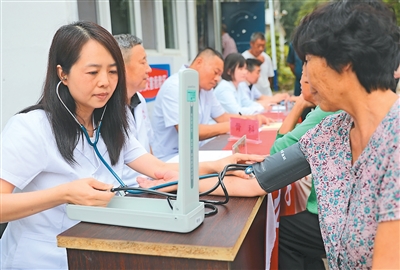
Group 1: Healthcare Initiatives - A free health consultation and diagnosis event was held in Qinhuangdao, Hebei Province, providing services from orthopedic, traditional Chinese medicine, internal medicine, and geriatric specialists [2] - The 2025 China International Service Trade Fair in Beijing focused on digital, intelligent, and green trends in service trade, showcasing innovations in fields like artificial intelligence and healthcare [4] Group 2: Health System Development - During the 14th Five-Year Plan period, China established the world's largest disease prevention and control system, aiming for a life expectancy of 79 years by 2024 and improving health literacy to 31.9% [8] - The National Health Commission reported improvements in healthcare service quality and efficiency, with 87% of secondary and higher public hospitals offering appointment services and a significant increase in internet hospital visits [10] Group 3: Elderly and Child Health Services - Policies were introduced to enhance health services for the elderly, with 84.6% of secondary hospitals having geriatric departments and a focus on multi-disease treatment models [11] - Child healthcare services were also improved, with a 49.3% increase in pediatric practitioners and a rise in pediatric bed availability [12] Group 4: Traditional Chinese Medicine - The number of traditional Chinese medicine consultations increased by 60% since the end of the 13th Five-Year Plan, with a high coverage of TCM facilities in county-level medical institutions [14] - Efforts to enhance TCM services included establishing collaborative mechanisms between TCM and Western medicine, improving treatment outcomes for various diseases [15] Group 5: Disease Control and Prevention - A modernized disease control system was established, enhancing monitoring and emergency response capabilities, with significant improvements in infectious disease management [16][17] - The introduction of new vaccination programs, including HPV vaccines for girls, reflects ongoing efforts to improve public health [18]
中国创新自信向未来(环球热点)
Ren Min Ri Bao Hai Wai Ban· 2025-09-15 22:49
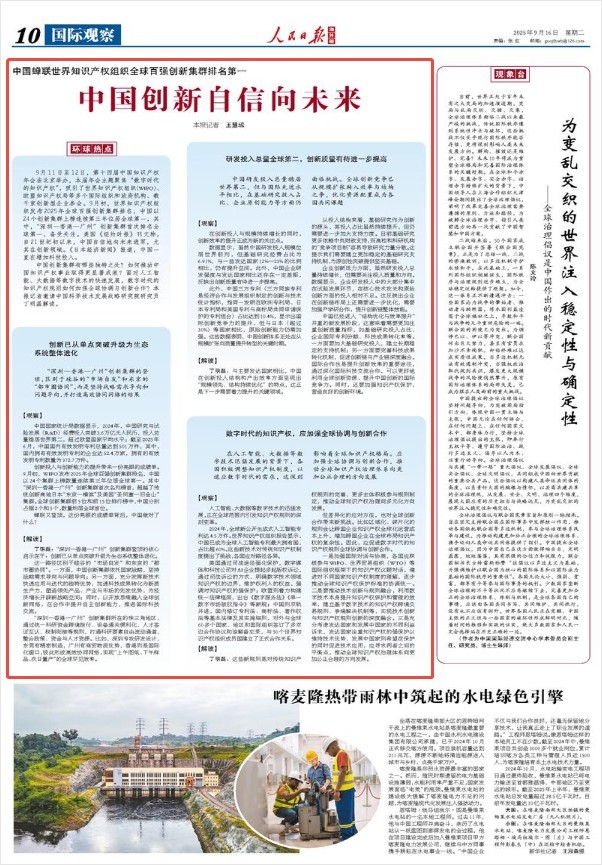
Group 1 - The 14th China Intellectual Property Annual Conference focused on "Intellectual Property in the Digital Age," attracting numerous international organizations and innovative enterprises [1] - China ranked first globally for the third consecutive year in the WIPO's 2025 Global Top 100 Innovation Clusters, with 24 clusters listed, including the "Shenzhen-Hong Kong-Guangzhou" cluster, which ranked first for the first time [2][3] - China's R&D expenditure is projected to exceed 3.6 trillion RMB in 2024, maintaining the second position globally, surpassing the average level of EU countries [2][4] Group 2 - The "Shenzhen-Hong Kong-Guangzhou" innovation cluster's success is attributed to a strategic demand-oriented approach and efficient collaborative networks, differing from the spontaneous market approach of Silicon Valley and the urban synergy of Tokyo [3] - The Pearl River Delta region facilitates research collaboration through unified funding, equipment clearance, talent visa recognition, and tax system integration, enhancing the efficiency of innovation processes [3][4] Group 3 - Despite leading in R&D investment, China faces challenges in the proportion of basic research funding and original innovation capabilities compared to developed countries [5][6] - The share of triadic patents in China is 10.4%, indicating improved international competitiveness, but still lags behind Japan's over 30% [5][6] Group 4 - The digital age necessitates global coordination and innovation cooperation in intellectual property, as rapid advancements in AI and big data challenge traditional IP frameworks [8][10] - China has become the largest holder of AI patents globally, accounting for over 60% of the total, highlighting the need for adaptive IP regulations [8][10] Group 5 - Differing national approaches to IP protection create challenges for global innovation cooperation, necessitating dialogue and collaboration within international frameworks like WIPO and WTO [10] - Emphasizing the balance between strong IP protection for developed countries and promoting technology application for developing countries is crucial for a fair global IP governance system [10]
科普月里感受科学魅力
Ren Min Ri Bao Hai Wai Ban· 2025-09-15 22:48
Core Points - The National Science Popularization Month is being celebrated across various regions in China, emphasizing the theme "Technology Changes Life, Innovation Wins the Future" [18][20] - Numerous activities, including science fairs, educational workshops, and interactive experiences, are being organized to enhance public engagement with science and technology [20] Group 1 - The first National Science Popularization Month event in Zhangye City, Gansu Province, involved over 1,000 teachers and students from 12 schools [6] - In Henan Province, a science-themed event showcased robotic dog performances, attracting significant public interest [9] - The main event for National Science Popularization Month was launched at the National Science Communication Center and China Science and Technology Museum in Beijing [16] Group 2 - The event in Anhui Province and Hefei City featured over 70 technology units showcasing advanced technologies, lasting for 20 days [18] - Various activities such as science plays, garden parties, and science sports competitions have been widely conducted, enriching public science experiences [20] - The National Science Popularization Month platform has aggregated over 100,000 activities nationwide, significantly enhancing public access to scientific knowledge [20]

经济运行呈现多方面积极特点(锐财经)
Ren Min Ri Bao Hai Wai Ban· 2025-09-15 22:38
Core Viewpoint - The economic data for August indicates a stable and improving trend in China's economy, with significant growth in industrial output and service sectors, driven by effective macroeconomic policies and expanding domestic demand [4][5][7]. Economic Performance - The industrial added value for large-scale enterprises increased by 5.2% year-on-year in August, maintaining a rapid growth rate [5][6]. - The service sector production index grew by 5.6% year-on-year, outperforming the industrial sector [5][6]. - The total retail sales of consumer goods rose by 3.4% year-on-year, with significant growth in the sales of home appliances and furniture [5][7]. Investment Trends - Fixed asset investment increased by 0.5% year-on-year from January to August, with manufacturing investment growing by 5.1%, indicating strong support for manufacturing upgrades [5][6]. - Equipment and tool investment rose by 14.4% year-on-year, contributing to a 2.1 percentage point increase in fixed asset investment [7]. Foreign Trade and Reserves - The total goods import and export value increased by 3.5% year-on-year in August, with both exports and imports achieving three consecutive months of growth [6][9]. - The export value of electromechanical products grew by 9.2% year-on-year from January to August [6]. Employment and Inflation - The urban surveyed unemployment rate was 5.3% in August, reflecting a slight increase due to the influx of new graduates into the labor market [9][10]. - The core Consumer Price Index (CPI), excluding food and energy, rose by 0.9% year-on-year, marking a continuous expansion in the inflation rate over four months [6][9]. Policy Impact - The government's policies aimed at boosting consumption and investment are showing positive effects, contributing to a virtuous cycle of stable demand and production [7][8]. - The third batch of consumption upgrade policies has been implemented, further stimulating consumer demand and related sales [7][8]. Long-term Outlook - The long-term supportive conditions for China's economy remain intact, with effective macroeconomic policies and ongoing reforms expected to sustain stable growth [9][11].
中国企业500强发展态势向好向优
Ren Min Ri Bao Hai Wai Ban· 2025-09-15 22:22
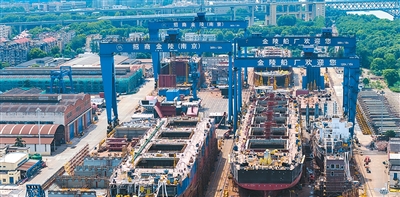
Core Insights - The "2025 China Top 500 Enterprises" list shows a continuous increase in annual revenue threshold, reaching 47.96 billion yuan, up by 579 million yuan from the previous year [1] - Major Chinese enterprises are adapting to complex external environments, demonstrating positive growth trends and improving economic efficiency [1] Group 1: Revenue and Profit Growth - The annual operating revenue of the top 500 enterprises increased from 89.83 trillion yuan to 110.15 trillion yuan, a growth of 22.62% [2] - Net profit attributable to the parent company rose from 40,712 billion yuan to 47,073 billion yuan, an increase of 15.62% [2] - The average revenue per employee reached 3.4938 million yuan, up by 29.89%, while average net profit per employee increased by 22.48% to 149,300 yuan [2] Group 2: Structural Optimization and Innovation - The number of enterprises in advanced manufacturing sectors increased from 23 to 32, indicating a shift towards more balanced regional distribution [3] - R&D investment among the top 500 enterprises grew from 13,066 billion yuan to 17,287 billion yuan, a rise of 32.3% [3] - The total number of patents held by these enterprises increased from 1.4486 million to 2.2437 million, with invention patents rising from 594,600 to 1,039,600 [3] Group 3: International Expansion - The overseas assets of the top 100 Chinese multinational companies increased from 92,179 billion yuan to 119,594 billion yuan, a growth of 29.74% [4] - Overseas operating revenue surged from 61,507 billion yuan to 90,687 billion yuan, marking a 47.44% increase [4] - The average multinational index for these companies rose from 15.07% to 15.56%, an increase of 0.49 percentage points [4]
持续巩固“爱国者治澳”良好局面
Ren Min Ri Bao Hai Wai Ban· 2025-09-15 22:22
Core Points - The eighth Legislative Assembly election in Macau was held on September 14, with preliminary results showing 26 elected members, marking the first implementation of the revised election law [1][2] - The election reinforced the principles of "One Country, Two Systems" and "Patriots Governing Macau," contributing to the stability of Macau's constitutional order [1][2] - The election process was characterized by fairness, transparency, and active participation from candidates, reflecting a high level of democratic practice [1][2] Election Organization - The Chief Executive and the government of the Macau SAR took responsibility for organizing the election, ensuring adherence to the "Patriots Governing Macau" principle [1] - The voting process was orderly, with smooth operations at polling stations [1] Voter Participation - Public officials led by example, encouraging widespread voter engagement, resulting in unprecedented voter turnout and enthusiasm [2] - The election demonstrated a positive trend in democratic participation in Macau [2] Legislative Assembly's Future Role - The new Legislative Assembly faces the important task of leveraging the advantages of "One Country, Two Systems" to promote better development in Macau [3] - The assembly is expected to work closely with the Chief Executive and the government to enhance economic diversification and improve social welfare [3] - There is optimism that the new assembly will unite various sectors in Macau to focus on economic growth and development [3]
板蓝根能预防感冒吗?
Ren Min Ri Bao Hai Wai Ban· 2025-09-15 08:08
Core Viewpoint - The article discusses the efficacy and limitations of Banlangen (Isatis root) in preventing and treating colds, emphasizing its traditional use in Chinese medicine and the lack of substantial clinical evidence supporting its antiviral properties [1][2][3]. Group 1: Efficacy of Banlangen - Banlangen is recognized for its antiviral and antibacterial properties, with some studies indicating its active components can inhibit certain viruses in vitro, but these findings have not been confirmed in human clinical trials [1][2]. - The immune modulation effect of Banlangen is highlighted as a key aspect of its pharmacological activity, enhancing the body's defense mechanisms while preventing excessive inflammatory responses [1]. Group 2: Limitations and Risks - The antiviral effects of Banlangen are limited, with no high-quality clinical evidence supporting its use against influenza or other viral infections, and it is not recommended by the World Health Organization (WHO) as a primary antiviral medication [2]. - Banlangen is suitable only for specific types of colds, particularly wind-heat colds, and may exacerbate symptoms in cases of wind-cold colds or bacterial infections [2]. - Potential adverse reactions include allergic responses, gastrointestinal discomfort, and possible liver and kidney function impacts, necessitating caution in certain populations [2]. Group 3: Recommendations for Use - Banlangen may be used as an adjunct treatment for mild wind-heat colds, but medical attention is advised if symptoms persist beyond three days [4]. - Individuals with allergies, pregnant women, infants, and those with liver or kidney issues should use Banlangen under medical supervision [4]. - Caution is advised when combining Banlangen with Western medications, with recommendations to space doses by at least two hours to avoid interactions [4].