Ren Min Ri Bao Hai Wai Ban

Search documents
“第二课堂”有温度又有深度
Ren Min Ri Bao Hai Wai Ban· 2025-12-04 01:00
Group 1 - The core idea of the articles revolves around the development of experiential learning programs in Linping District, focusing on ecological agriculture and local cultural heritage to enhance students' education and engagement [1][2] - Linping District has established a "Five Ones" work mechanism to integrate various resources through party-building initiatives, aiming to create a rich and layered experiential learning environment for students [1] - The "Add Oil, Youth" five-color and five-education experience map has been launched, featuring 30 selected sites and 10 educational routes that encompass moral, intellectual, physical, aesthetic, and labor education [2] Group 2 - A tiered "Learning Across the World" curriculum system is being constructed, tailored to the cognitive characteristics and developmental needs of students at different educational stages, with themes such as "Walking in Hometown," "Viewing Zhejiang," and "Dialogue with the World" [2] - The district is developing a series of systematic and distinctive experiential travel routes, providing a menu-style service to enrich the learning scenarios for primary and secondary school students [2] - The positive feedback from students and parents is attributed to the exploration and presentation of Linping District's unique cultural history, industrial development, and natural environment [2]
助力中国—东盟命运共同体建设
Ren Min Ri Bao Hai Wai Ban· 2025-12-04 01:00
Core Points - The establishment of the China-ASEAN Free Trade Area 3.0 marks a significant step towards deepening regional cooperation and building a community of shared destiny in the context of global changes [1][2] - The transition from factor-driven to institutional openness is essential for high-quality regional economic cooperation, necessitating updates to trade rules and standards [2][4] - The focus on digital economy and green trade represents new opportunities for cooperation, with Chinese enterprises encouraged to leverage their technological advantages in ASEAN countries [4][6] Group 1: Institutional Openness - The signing of the upgraded protocol for the China-ASEAN Free Trade Area will shift cooperation from factor flow to institutional openness [1] - There is a need for the government to enhance domestic openness while updating trade rules to lower tariffs and eliminate hidden trade barriers [2] - The upgrade of the China-ASEAN Free Trade Area agreement is seen as a key measure to counter Western institutional hegemony and promote multilateralism [2] Group 2: Regional Cooperation - The upgrade of the China-ASEAN Free Trade Area is opening new avenues for regional cooperation, particularly in digital economy and green trade [4] - Chinese enterprises are encouraged to participate in the digital infrastructure development of ASEAN countries, utilizing their strengths in 5G and AI [4] - The complete layout of the new energy vehicle industry chain by Chinese companies aligns with ASEAN countries' urgent need for green transformation [4][6] Group 3: Think Tank Support - The construction of the China-ASEAN community of shared destiny requires robust theoretical research and decision-making support from think tanks [5] - Local universities with overseas Chinese resources are playing a crucial role in deepening China-ASEAN cooperation through research on overseas Chinese communities [5][6] - The collection of oral histories from overseas Chinese in ASEAN countries contributes to the cultural foundation of the China-ASEAN community [6]
德企的选择,是中欧合作共赢生动写照
Ren Min Ri Bao Hai Wai Ban· 2025-12-04 01:00
Group 1 - Volkswagen Group has launched a full-process R&D testing center in Hefei, Anhui, marking the first full-chain development of a new vehicle platform outside its German headquarters, reducing the vehicle development cycle by approximately 30% [1] - This move reflects the recognition of China's technological advantages and industrial ecosystem, as well as the growing trend of German companies investing in China [1] - Siemens Healthineers, Bosch Group, and BASF are among the German companies making significant investments in China, indicating a shift towards China as a global innovation platform [1] Group 2 - German companies are not only seeking market share in China but are also synchronizing with the new wave of productivity in China, accelerating the integration of R&D, manufacturing, and market [2] - Collaborations in the field of intelligent driving, such as partnerships between Mercedes-Benz and ByteDance, and BMW with Alibaba, highlight the deepening cooperation between German automakers and Chinese innovation [2] - The bilateral trade between China and Germany reached €185.9 billion in the first nine months of 2025, showing a year-on-year growth of 0.6%, with China remaining Germany's largest trading partner [2] Group 3 - Chinese enterprises are also steadily investing in Germany, with 199 greenfield projects initiated in 2024, making China the third-largest source of foreign investment in Germany [3] - Leading Chinese companies in the new energy sector, such as CATL and NIO, are establishing production or R&D bases in Germany, enhancing cooperation in green transformation and technological innovation [3] - The bilateral cooperation between China and Germany is characterized by mutual dependence and is based on industrial complementarity, market needs, and joint innovation [3]
澳门青少年外交知识竞赛总决赛举行
Ren Min Ri Bao Hai Wai Ban· 2025-12-04 01:00
外交部发言人郭嘉昆视频致辞表示,赛事已成为特区国情教育和爱国主义教育的金字品牌。希望同学们 筑牢爱国之志,珍惜时代机遇,树立远大志向,当好"一国两制"事业的建设者和接班人。 程雷表示,同学们要胸怀家国、刻苦学习、拼搏进取,早日成为国家和澳门建设的栋梁之材。 本报澳门12月3日电(记者富子梅)由外交部驻澳门特派员公署和澳门特区政府组织的第十六届澳门青 少年外交知识竞赛总决赛2日在教业中学举行,镜平学校、濠江中学、圣公会(澳门)蔡高中学、教业 中学分获冠、亚、季、殿军。 本届比赛吸引澳门37所中学近万名学生参与,8支进入决赛的队伍围绕"一国两制"的世界意义、四大全 球倡议等进行精彩论述。外交部驻澳门特派员公署署理特派员程雷,特区政府社会文化司司长代表、教 青局局长龚志明出席并致辞。澳门中联办、解放军驻澳门部队以及特区政府相关主管部门、院校机构负 责人和师生代表等300余人出席总决赛。 龚志明表示,澳门青少年要以参赛为契机,立足澳门、胸怀国家、放眼世界,讲好澳门故事和中国故 事。 ...
“两岸暨港澳·东南亚华文媒体广州行”启动
Ren Min Ri Bao Hai Wai Ban· 2025-12-04 01:00
本报广州12月3日电(记者王平)以"湾区新质 羊城新彩"为主题的"2025年两岸暨港澳·东南亚华文媒体 广州行"活动2日在广州启动。 为期3天的活动中,来自两岸暨港澳、东南亚地区的40余名媒体记者和自媒体人将走进广州科技创意园 区、现代化产业高地、著名历史地标与多元文化融合阵地,展开沉浸式的城市主题之旅,感受广州的独 特魅力和发展活力。 海峡两岸关系协会副会长马晓光致辞表示,广州是两岸交流合作的枢纽之一,希望媒体朋友在广州感受 岭南文化的底蕴,看看新质生产力的发展势头,体验两岸融合发展的氛围,用镜头记录湾区发展脉动, 用文字传递两岸融合温度,让更多台湾同胞通过广州看到大陆的发展机遇。 广州市台办主任曾卫东说,本次活动旨在以广州为窗口讲好中国故事。诚邀各位媒体朋友切实感受广州 厚重的历史文化积淀和多彩的岭南文化魅力,了解广州深化改革开放、推进科技创新、优化营商环境, 特别是完善惠台政策体系、服务台胞创新创业等方面的新气象、新风貌。 启动仪式上,穗台交流原创歌曲《心手相牵》发布,系列微纪录片《双城逗阵浪》也同步上线。《心手 相牵》是由广州市台办制作的原创歌曲,唱响两岸同胞携手同心的深情厚谊。《双城逗阵浪》是广州市 ...
藏地家书(人民家书)
Ren Min Ri Bao Hai Wai Ban· 2025-12-03 22:55
Core Viewpoint - The article highlights the significant social and economic development in Tibet over the past 60 years, emphasizing the successful practice of the regional ethnic autonomy system and the strengthening of national unity among various ethnic groups [10]. Group 1: Family Letters - The letters from various individuals reflect their deep emotional connections with their families while serving in Tibet, showcasing personal sacrifices for the greater good of the nation [10][24]. - Zhang Guohua encourages his children to be useful to the country, emphasizing the importance of education and personal responsibility [12][13]. - Kong Fansen expresses pride in his daughter's achievements and encourages her to develop a strong character and contribute positively to society [14][20]. - Wen Lu shares his experiences as a border guard, expressing gratitude for his wife's support and the challenges of maintaining their relationship while serving in remote areas [21][24]. - Qiong Dazhuo's letter conveys her well-being and gratitude towards her parents for their sacrifices, highlighting the impact of national policies on her education and opportunities [30][31]. Group 2: Historical Context - The letters are set against the backdrop of significant historical figures who contributed to Tibet's development, such as Zhang Guohua and Kong Fansen, both of whom played crucial roles in the peaceful liberation and governance of Tibet [13][20][28]. - The article illustrates how personal stories intertwine with national history, reflecting the broader narrative of sacrifice and dedication to the country [10][29].

一场村民与创客的双向奔赴(乡情村貌)
Ren Min Ri Bao Hai Wai Ban· 2025-12-03 22:55
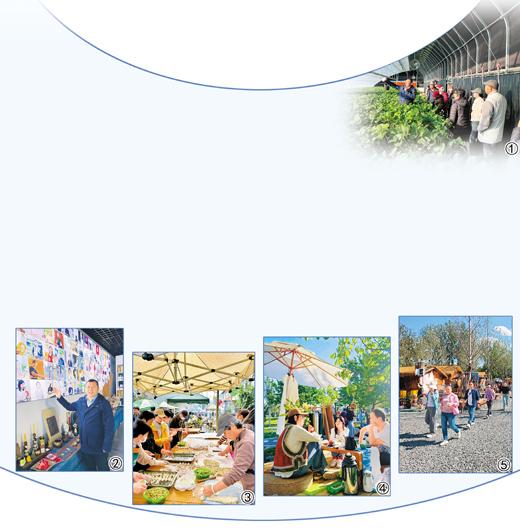
图③:村里的饺子"百家宴"活动。 图④:东市市集。 图⑤:西市市集。 本版照片除署名外,均为受访者提供 周末午后,在位于北京市昌平区兴寿镇的辛庄村,一场热闹的市集正在进行。售卖农产品、手工艺品、 小吃等的小摊依次排开,酿坊的桂花米酒散发出浓郁香气,街头歌手的吉他弹唱富有节奏,选购手作的 顾客与匠人热切交流……这个充满创意与烟火气的市集,是游客到辛庄必打卡的景点。 从一场热闹的市集,走进一个欣欣向荣的京郊村庄,人们看见了错落有致的民居、绿意盎然的庭院、干 净整洁的街道、充满艺术气息的商业街区……很难不爱上这份田园诗意和人间烟火。怪不得网友称辛庄 为"京郊小大理"。 图①:草莓大棚。 图②:王锋在创客墙前介绍。 本报记者 严 冰摄 "十五五"规划建议对加快农业农村现代化作出部署,强调促进城乡融合发展,推进宜居宜业和美乡村建 设。作为北京市"百村示范、千村振兴"工程(简称"百千工程")首批入选的示范村之一,辛庄村正绘制 出一幅村美、民富、业兴、人和的乡村全面振兴新画卷。 创客街彰显辛庄特色 近日笔者走进辛庄村,记录下在这里的"一线见闻"。车辆一驶进村庄,"我在辛庄等你"的标牌立即跃入 眼帘,周遭的气象豁然亮堂起来: ...
感受文学创作“八面来风”
Ren Min Ri Bao Hai Wai Ban· 2025-12-03 22:55
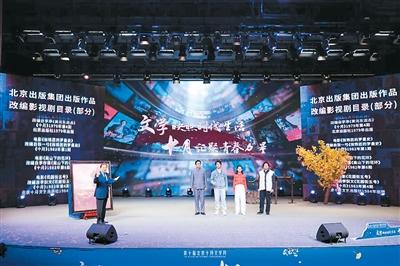
Core Viewpoint - The 10th Beijing October Literature Month emphasizes the theme "Literature Reflects Contemporary Life, October Gathers Youth Power," showcasing a variety of literary activities and discussions aimed at promoting quality literary development and enhancing public reading culture [3][6]. Group 1: Event Overview - The event features renowned authors such as A Lai, Mai Jia, and Liu Liangcheng, who share insights on literature and life [3][6]. - The opening ceremony includes performances of classic literary excerpts, evoking memories and emotions among the audience [6]. - The event is organized by various governmental and cultural institutions, aiming to strengthen the literary community and foster quality creations [3][6]. Group 2: Focus on Literary Development - The "10th Beijing Literature Forum" addresses the challenges and innovations in contemporary literary production, emphasizing the need for trust among writers, readers, critics, and publishers [6][8]. - Discussions highlight the importance of literature rooted in reality and the necessity for continuous refinement in literary works to achieve lasting value [6][8]. Group 3: Support for Young Writers - The "Wang Meng Young Writer Support Program" aims to nurture talented young authors under 40, encouraging them to create works that reflect contemporary spirit [8][9]. - Selected young writers share their innovative approaches to writing, focusing on capturing the nuances of their generation's experiences [8][9]. Group 4: New Popular Literature - The emergence of "New Popular Literature" is a focal point, showcasing works from diverse backgrounds, including those of ordinary workers and their life stories [11][12]. - The "New Popular Literature Beijing Creation Plan" features a variety of genres and themes, highlighting the contributions of everyday individuals to the literary landscape [11][12]. Group 5: Critical Discussions - The "Who Creates New Popular Literature" forum discusses the characteristics and aesthetics of this literary form, emphasizing the role of ordinary laborers in documenting their lives [12]. - The event marks a decade of the Beijing October Literature Month, which has become a significant platform for literary and publishing communities [12].
推进国际军控进程的中国力量(环球热点)
Ren Min Ri Bao Hai Wai Ban· 2025-12-03 22:55
Core Viewpoint - The white paper titled "China's Arms Control, Disarmament, and Non-Proliferation in the New Era" emphasizes China's commitment to maintaining the international arms control system centered around the United Nations and actively promoting global security governance [1][2]. Group 1: Background and Context - The white paper aims to comprehensively explain China's policies and practices regarding arms control, disarmament, and non-proliferation, particularly in emerging fields such as outer space, cyberspace, and artificial intelligence [2]. - This year marks the 80th anniversary of the victory in the Chinese People's War of Resistance Against Japanese Aggression and the establishment of the United Nations, highlighting the need for a timely response to the current international arms control challenges [3]. Group 2: Current Global Security Landscape - The international strategic landscape is rapidly changing, with a shift towards a more balanced distribution of power and a rise in multilateralism, while simultaneously facing severe challenges from hegemonism, unilateralism, and intensified geopolitical conflicts [4]. - The complexity of international arms control, disarmament, and non-proliferation is increasing, with both opportunities and challenges coexisting [4][5]. Group 3: China's Role and Responsibilities - As a permanent member of the UN Security Council, China actively maintains the authority and effectiveness of international arms control mechanisms and participates constructively in multilateral arms control processes in nuclear, biological, and chemical fields [6]. - The white paper outlines China's arms control philosophy, which combines traditional principles with contemporary global initiatives, advocating for multilateralism and international peace [7]. Group 4: Emerging Security Challenges - The white paper identifies several emerging security risks, including the rising nuclear factors in regional conflicts, increased risks of an arms race, and the complexities of international nuclear proliferation [5]. - It emphasizes the need for a global governance framework in emerging fields to enhance mutual trust among nations and prevent an arms race [8]. Group 5: Commitment to Peace and Stability - China positions itself as a builder of world peace, a contributor to global development, and a maintainer of international order, advocating for genuine multilateralism and a commitment to international arms control processes [10]. - The white paper calls for the establishment of a governance framework for emerging fields that includes broad participation and enhances the representation of developing countries [9].
同城化,让都市圈更红火(这些新提法,写入“十五五”规划建议⑤)
Ren Min Ri Bao Hai Wai Ban· 2025-12-03 22:29
Core Viewpoint - The development of urban agglomerations in China is gaining momentum, with a focus on enhancing transportation networks, industrial collaboration, and public service integration to achieve high-quality growth and improve living standards for residents [5][6][7]. Group 1: Urban Agglomeration Development - The concept of urban agglomerations is defined as urban spaces centered around major cities, facilitating a one-hour commuting radius [6]. - Since the implementation of the guidelines for modern urban agglomeration development in 2019, 18 urban agglomerations have been officially approved by the government [5][6]. - The "14th Five-Year Plan" emphasizes the modernization of governance in mega cities and the integration of urban clusters, providing a clear direction for high-quality urban agglomeration development [5][6]. Group 2: Transportation and Connectivity - The Nanjing urban agglomeration has achieved a 100% connectivity rate for high-speed rail and rapid transit, significantly enhancing intercity travel [7]. - Chengdu urban agglomeration has implemented cross-city public transport systems, with over 65 million daily cross-city passenger movements [7]. - The opening of the Shenyang-Jiamusi high-speed rail line optimizes the Northeast region's high-speed rail network, promoting the high-quality development of the Changchun urban agglomeration [5][6]. Group 3: Industrial Collaboration - The Chongqing urban agglomeration showcases deep industrial collaboration, with 85% of enterprises in the high-tech zone complementing the main industries of Chongqing [7]. - The integration of supply chains and industrial clusters is emphasized to enhance regional economic resilience and competitiveness [9][12]. Group 4: Public Services and Quality of Life - Urban agglomerations are increasingly providing shared public services, such as direct medical billing across cities, enhancing the quality of life for residents [7]. - There is a growing demand for seamless transportation and public service integration, including simplified processes for loans and social services across urban agglomerations [10][11]. Group 5: Future Directions and Differentiation - Experts suggest that urban agglomerations should focus on achieving six types of "integration," including transportation, industry, resource allocation, public services, social governance, and urban functions [11]. - Differentiated development strategies are recommended for urban agglomerations based on their regional influence, with a focus on enhancing competitiveness and addressing local needs [12][13].