Shang Hai Zheng Quan Bao

Search documents
如何看待沃什被提名为下一任美联储主席
Shang Hai Zheng Quan Bao· 2026-02-04 18:12
Core Viewpoint - The selection of Kevin Warsh as the next Federal Reserve Chairman is fundamentally a result of a "triple balance" involving policy, political, and market considerations [1][3]. Group 1: Policy Balance - Warsh's proposal of "balance sheet reduction + interest rate cuts" meets the current U.S. government's urgent need for economic stimulus while also addressing inflation risks, thereby enhancing the credibility of the central bank [1][3]. - This approach aims to mitigate the risk of being labeled a "political puppet" by demonstrating a commitment to both economic growth and inflation control [3]. Group 2: Political Balance - Warsh's experience with the Federal Reserve, Wall Street background, and academic credentials make him a politically viable candidate, reducing the likelihood of resistance from the Democratic Party in a Republican-controlled Senate [2][3]. - His familial ties to Trump, particularly through his father-in-law, further enhance his trustworthiness in the eyes of the current administration [3][4]. Group 3: Market Balance - The White House seeks to balance "policy reform" with "market stability" to avoid market volatility caused by hasty policy changes [3]. - Warsh's advocacy for reducing the Fed's balance sheet and reforming monetary policy frameworks is seen as a way to provide "controlled easing" while reassuring markets about the Fed's independence [3]. Group 4: Historical Context - The article draws parallels between Warsh's potential tenure and that of Jerome Powell, who was also seen as a politically favorable choice but faced significant challenges once in office [6][9]. - The historical context suggests that while there may be an initial "honeymoon period" between Warsh and Trump, institutional roles will likely dominate personal inclinations over time [9]. Group 5: Future Monetary Policy - Warsh's approach to monetary policy diverges from traditional models, favoring a more discretionary and results-oriented decision-making process rather than relying heavily on predictive models [11]. - Despite his preferences, the collective decision-making structure of the Federal Open Market Committee (FOMC) may limit Warsh's ability to implement significant interest rate cuts without broader consensus [11][12]. Group 6: Political Implications - The upcoming midterm elections are a critical factor influencing the White House's decision to replace Powell with Warsh, as it allows the administration to position itself favorably in the eyes of voters [15]. - The article suggests that the immediate goal of the leadership change is to shift blame for economic challenges away from the administration and onto Powell [15].
煤炭产业:基本面持续改善,价格中枢上移
Shang Hai Zheng Quan Bao· 2026-02-04 18:12
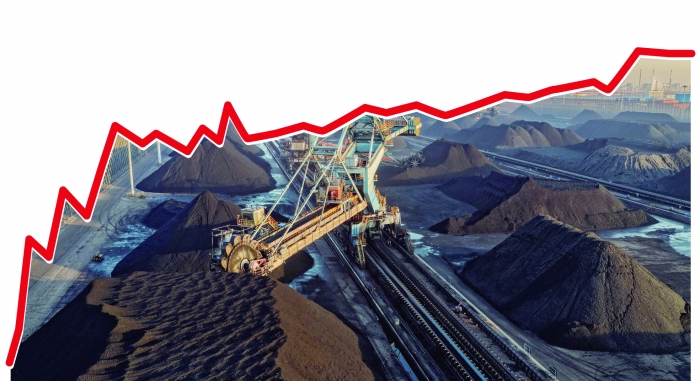
4613.96 煤炭指数昨日分时走势图 ◎记者 王文嫣 截至2月4日收盘,万得央企煤炭概念指数、万得煤炭开采精选指数涨幅分别达到7.61%和7.58%,中煤 能源、恒源煤电、兖矿能源、山西焦煤、潞安环能、山煤国际、晋控煤业等一批个股涨停。 煤炭企业人士、研究员认为,短期内煤价或受印尼矿商暂停现货煤炭出口等消息的扰动。从中长期来 看,煤炭供需基本面有望持续改善,年度价格中枢有望上移。 近年来,新疆煤炭产量迅速攀升,成为影响市场的重要变量。新疆维吾尔自治区统计局最新发布数据, 2025年全疆规模以上工业企业原煤累计产量5.53亿吨,同比增长1.9%,较2024年17.5%的增速明显放 缓。 煤炭市场已提前进入春节放假状态 卓创资讯煤炭行业报告认为,2026年国内动力煤供应量整体仍将保持在高位充裕水平,但考虑到国内超 产核查及"反内卷"工作将继续推进,且新增产能有限,同时煤矿或有控制产量以平衡库存保障利润行为 等因素影响产量,原煤产量增速将放缓的预期较强。 从供应端来看,主产区部分民营煤矿提前进入春节假期,国有煤矿维持稳定生产以保障供应,整体产量 边际收缩。 从需求端来看,前期寒潮推动沿海电厂日耗维持高位,但随着寒 ...





有色市场:结构分化,波动加剧
Shang Hai Zheng Quan Bao· 2026-02-04 18:12
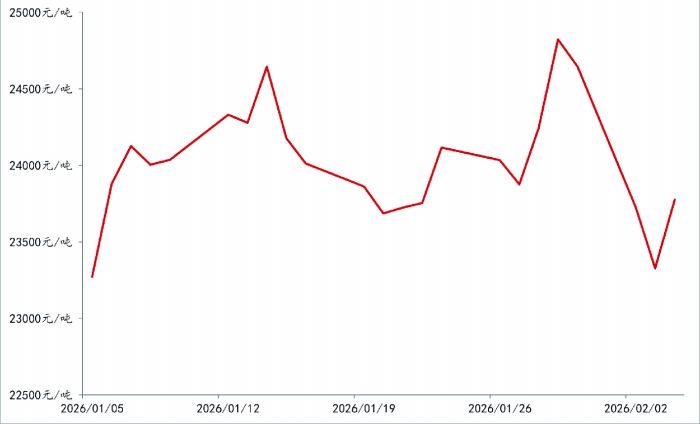
"2025年,规模以上有色金属工业企业实现利润总额突破5000亿元大关,达到5284.5亿元,较上年增长 25.6%,创历史新高。"中国有色金属工业协会党委常委、副会长陈学森介绍,从金属品种来看,2025 年铝、黄金、铜三大品种表现亮眼,实现利润增加额分别为380亿元、212亿元和177亿元,铅锌、钨 钼、稀土三大品种实现利润增加额均超过50亿元,这六大品种对规上有色金属企业实现利润增长的贡献 率分别为35%、20%、16%、7%、5%和5%。 中国有色金属工业协会副秘书长兼政策研究室(规划研究办公室)主任林如海表示,展望2026年,有色 金属市场将呈现"结构分化、波动加剧"的整体格局,价格中枢有望进一步上移。 从宏观环境来看,全球降息周期将持续深化,国内"十五五"规划开局在即,国内政策或持续发力,流动 性充裕的格局不会改变,为有色金属价格提供坚实支撑。避险需求及各国央行增持黄金储备依然会继续 支撑贵金属价格。 ◎记者 霍星羽 在2月3日中国有色金属工业协会举办的2025年有色金属工业经济运行情况新闻发布会上,协会相关负责 人表示,2025年全球主要有色金属价格整体呈现显著上行态势,我国规上有色金属工业企业利 ...
油气市场:油市博弈加剧 气市供需宽松
Shang Hai Zheng Quan Bao· 2026-02-04 18:12
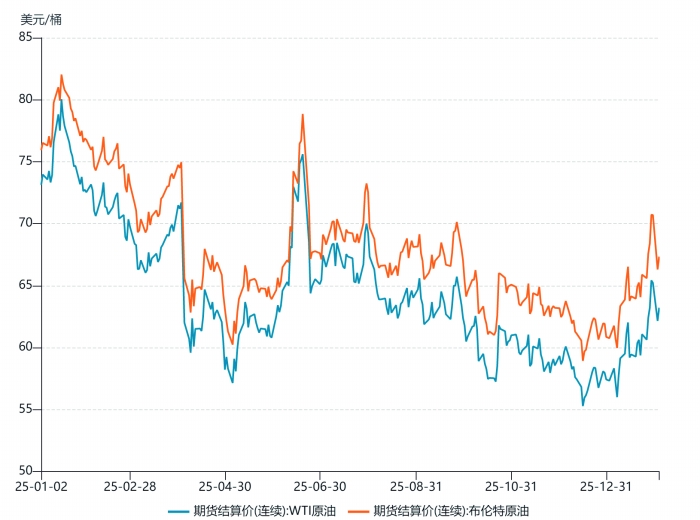
2025年以来国际油价走势 ◎林玉莲 记者 徐锐 回望2025年,全球石油市场主要由供需基本面主导,由紧平衡转向明显过剩。地缘冲突仅对油价形成阶 段性支撑,但未能扭转下跌趋势。 展望2026年国际油价走势,王海博预计,在基本面主导的情况下,布伦特原油期货的均价将处于每桶60 美元至65美元的区间;地缘冲突会是市场最大的变数,在地缘冲突的主导下,这一指标可能会攀升至每 桶70美元至75美元。 具体而言,全球石油库存或延续上涨趋势,进而压制国际油价中枢。王海博称,尽管欧佩克+(产油国 联盟)已决定今年3月继续暂停增产,但考虑到其他国家产量情况,预计2026年全球石油供应仍将增长 130万桶/日,最终达到1.063亿桶/日;反观需求端,预计2026年全球石油需求为1.043亿桶/日,增幅与 2025年基本持平。 2026年,美联储货币政策对油市影响几何?王海博说,市场预期美联储至少降息2次,累计50个基点, 美元指数将进一步下行,但仍难对油价形成有效支撑。 从国内市场来看,2025年,原油产量达2.16亿吨,创下历史新高,2026年原油产量或将保持2亿吨稳 产。就消费端而言,2026年国内石油消费总量基本保持稳定, ...
公募今年已分红逾330亿元 权益类基金占比近八成
Shang Hai Zheng Quan Bao· 2026-02-04 18:12
◎记者 朱妍 春节未至,公募基金的"红包"率先到来。数据显示,2026年以来,公募基金分红金额同比大幅提升,权 益类基金分红占比近八成。在政策、业绩、行业转型和资金需求共同作用下,公募分红力度加大已成为 行业高质量发展下的一大趋势。 Choice数据显示,2026年以来,截至2月4日,610只公募基金分红630次(不同份额分开计算),分红总 额达到334.64亿元,同比增长37.38%。 权益类基金是年内分红的"主力军",分红总额已达263亿元,占所有基金分红金额的近八成。其中:股 票型基金的分红额为194.38亿元,在各类产品中遥遥领先;混合型基金分红额达到68.65亿元。同时,在 分红次数方面,今年以来,共有14只基金分红2次及以上,这些产品均为权益类基金。 从单只基金分红额来看,最"大方"的5只产品均为ETF。沪深300ETF华泰柏瑞以98亿元的分红额暂居首 位,沪深300ETF易方达分红额为近45亿元。 排排网旗下融智投资FOF基金经理李春瑜认为,行业正从规模扩张转向"投资者利益优先",分红已经成 为提升持有体验的关键,被动型产品的发展提升了分红力度。此外,宽基ETF等产品的规模扩大、分红 机制成熟, ...
永川雄心
Shang Hai Zheng Quan Bao· 2026-02-04 18:12
Core Insights - Chongqing's Yongchuan District is transforming from an "industrial small town" to a "new industrial city" through the development of a modern manufacturing cluster known as "3322" [1][2] - The district is integrating traditional industries with modern technology, showcasing a blend of historical culture and contemporary industrial growth [1][2] Group 1: Industrial Development - Yongchuan is home to advanced manufacturing facilities, including Great Wall Motors and Yadea's electric motorcycle production, highlighting the shift to intelligent factories and smart production lines [1] - The district is focusing on high-end products, such as advanced fiberglass from the Dongfang Hope new materials project, which aims to fill gaps in the western industrial landscape [2] Group 2: Innovation and Future Planning - Yongchuan is actively developing a hydrogen energy industry chain and exploring low-altitude economy through drone testing, indicating a commitment to green energy and new industrial sectors [2] - The integration of digital economy with traditional industries is evident, as seen in the use of virtual filming technology in the film industry, showcasing the deep fusion of digital and physical economies [2] Group 3: Strategic Vision - Yongchuan's development is characterized by a strategic vision of becoming a "sub-center of Chongqing city and an international open hub in western China," reflecting its ambition for high-quality growth within the Chengdu-Chongqing economic circle [2] - The district emphasizes the importance of education-industry integration to strengthen its development foundation, ensuring sustainable industrial growth [2]
量产快 扩产忙 并购热 上市公司开年首月干劲足
Shang Hai Zheng Quan Bao· 2026-02-04 18:12
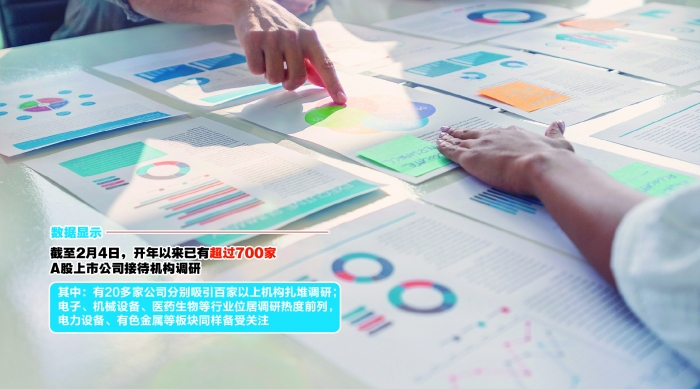
Core Insights - The article highlights the accelerated pace of institutional research on A-share listed companies as they prepare for investment opportunities in 2026, with over 700 companies receiving institutional inquiries since the beginning of the year [2] Group 1: Institutional Research Trends - More than 700 A-share listed companies have been visited by institutional investors for research since the start of 2026, with over 20 companies attracting more than 100 institutions each [2] - Key sectors attracting attention include electronics, machinery, pharmaceuticals, power equipment, and non-ferrous metals [2] Group 2: New Product Launches - Several companies have announced timelines for mass production of new products, indicating a strong growth outlook for 2026 [3] - Nepean Mining revealed plans to globally promote its innovative composite lining board, with production ramping up in 2026 [3] - Huajin Technology's robotics division is set to deliver mass-produced robots in 2026, enhancing flexible manufacturing capabilities [3] - Jiemai Technology is investing in a production line for critical products, expected to achieve scale production by mid-2026 [3] Group 3: Brain-Computer Interface Developments - Companies like Xiangyu Medical are focusing on brain-computer interface technologies, with plans to launch nearly 100 products by the end of 2026 [4] - The integration of software with rehabilitation equipment is expected to enhance product offerings and reduce upgrade cycles [4] Group 4: High-Growth Sector Expansion - The demand for AI and computing power is driving growth in sectors like optical communication and liquid cooling, prompting companies to accelerate production capacity [5] - Daikin Heavy Industries reported a tight production schedule for overseas projects, anticipating significant growth in offshore wind energy markets [5] - Zhongji Xuchuang noted a strong order backlog extending into Q4 2026, indicating sustained demand in the optical module sector [5] Group 5: Storage and Liquid Cooling Innovations - Dike Technology plans to increase its storage chip output target to between 30 million and 50 million units in 2026, aiming for significant revenue growth [6] - Dingtong Technology is expanding its liquid cooling production capacity to meet rising customer demand [6] - Haitan Ruisheng is enhancing its overseas operations, planning to establish a second local delivery base in Southeast Asia by the end of 2026 [6] Group 6: Mergers and Acquisitions for Growth - Companies are increasingly pursuing acquisitions to enter new markets and drive business transformation [7] - Yingtang Zhikong plans to acquire Guanglong Integration and Ao Jian Microelectronics to enter the optical communication sector [7] - Dinglong Co. is acquiring Haofei New Materials to expand into the lithium battery materials market, with expected sales growth in 2026 [7] - Tianlu Technology is reallocating funds to projects aimed at enhancing its product offerings in the display industry [8]
上海医药拟10.23亿元转让中美施贵宝30%股权
Shang Hai Zheng Quan Bao· 2026-02-04 18:12
Core Viewpoint - Shanghai Pharmaceuticals plans to transfer 30% equity stake in its subsidiary, China Medical Shanghai Bristol-Myers Squibb Pharmaceutical Co., Ltd. (referred to as "China Medical Bristol-Myers Squibb"), through a public listing with a minimum transfer price of 1.023 billion yuan [1][2] Group 1: Transaction Details - The transfer price is based on the previous equity disposal plan by Bristol-Myers Squibb, which aimed to sell its 60% stake in China Medical Bristol-Myers Squibb for approximately 480 million USD, equating to 1.44 billion USD for Shanghai Pharmaceuticals' 30% stake [1] - The transaction will result in Shanghai Pharmaceuticals no longer holding any equity in China Medical Bristol-Myers Squibb if completed successfully [1] Group 2: Company Financials - China Medical Bristol-Myers Squibb, established in 1982, has a registered capital of 18.44 million USD and operates in the pharmaceutical manufacturing sector [2] - For the fiscal year 2024 and the first three quarters of 2025, the company reported revenues of 1.795 billion yuan and 1.096 billion yuan, with net profits of 248 million yuan and 87.11 million yuan, respectively [2] - As of September 30, 2025, the total assets of China Medical Bristol-Myers Squibb amounted to 1.262 billion yuan, with net assets of 797 million yuan [2] Group 3: Strategic Implications - The transaction is expected to maximize asset value and protect the interests of all shareholders, particularly minority shareholders [1] - Shanghai Pharmaceuticals asserts that this transaction will not significantly impact its normal operations and financial status, while also optimizing its investment structure [2]

“永”立潮头 “川”流不息——重庆永川以产业之力筑强渝西发展高地
Shang Hai Zheng Quan Bao· 2026-02-04 18:12
雅迪重庆基地生产车间 重庆市永川区城市一角 长城汽车永川工厂 永川科技片场 数据印证了永川产业崛起的坚实步伐:地区生产总值连续多年稳步攀升,2025年实现规上工业总产值 1050.7亿元,规上工业企业数量达394家,是国家定位的现代制造业基地、西部职教基地,也是重庆支 持建设的城市副中心。 "我们将按照市委、市政府部署,持续提升城市综合承载力、经济辐射力和示范引领力,把区位优势、 产教优势转化为产业胜势,推动传统产业筑基、新兴产业聚能、未来产业布局,为成渝地区双城经济圈 建设贡献更强永川力量。"永川区相关负责人表示。 ◎记者 李少鹏 链聚实业:筑强集群根基,激活产业发展新动能 永川茶山竹海 城以"永"为名,寄寓永续发展之愿;业以"川"为脉,承载川流不息之兴。 重庆市永川区——这座承载千年文脉的古城,东接重庆主城,西连四川泸州,得天独厚的区位优势,使 其自古便是川渝黔交通要冲、商贸重镇,更成为如今成渝地区双城经济圈建设中不可或缺的产业枢纽。 近年来,永川牢牢把握制造业高质量发展核心,以"3322"现代制造业集群体系建设为抓手,聚焦智能网 联新能源汽车摩托车及零部件、新材料、大数据及人工智能三大重点产业,夯实消费 ...

金价“过山车” 银行理财配置逻辑迎“压力测试”
Shang Hai Zheng Quan Bao· 2026-02-04 18:12
Core Viewpoint - Recent fluctuations in international gold prices have significantly increased volatility, impacting both gold itself and related bank wealth management products, which has prompted a reassessment of asset allocation capabilities in the context of risk awareness [2][3]. Group 1: Market Dynamics - The recent volatility in the gold market is attributed more to emotional and capital dynamics rather than fundamental shifts [2]. - The surge in gold prices at the beginning of the year was driven by expectations of Federal Reserve rate cuts and geopolitical risks, but market sentiment reversed with the potential appointment of a hawkish Fed chair [2]. - The concentration of profit-taking led to a significant market downturn, exacerbated by leveraged futures liquidations and quantitative trading strategies [2]. Group 2: Long-term Outlook - Despite short-term volatility, institutions maintain a strong long-term outlook for gold, viewing it as a core asset in the new macroeconomic cycle [3]. - Gold is evolving from a traditional safe-haven asset to a sovereign reserve asset, with its pricing logic shifting from financial cycles to monetary cycles [3]. Group 3: Strategic and Tactical Importance - The strategic role of gold in asset allocation remains unchanged, but its tactical importance is increasing, with a focus on flexible adjustments to respond to geopolitical and monetary uncertainties [4]. - Gold is viewed as a "satellite" asset in wealth management, enhancing portfolio resilience rather than determining absolute returns [6]. - The allocation of gold in investment portfolios is typically controlled between 5% to 15%, aimed at improving overall portfolio stability [6]. Group 4: Product Design and Risk Management - Wealth management products linked to gold have shown minor fluctuations, reflecting the transmission of underlying asset risks to higher-level products [5]. - The design of wealth management products emphasizes risk diversification and hedging against stock and bond volatility, with gold serving as a stabilizer due to its low correlation with mainstream assets [6][7]. - The impact of market shocks on most wealth management products is considered manageable, as gold does not provide cash flow returns and primarily serves a hedging function [7]. Group 5: Investor Psychology and Education - The recent market dynamics challenge the perception that safe-haven assets are devoid of volatility, necessitating a shift in investor expectations [8]. - Investors must recognize that gold allocation involves accepting price volatility in exchange for long-term stability in extreme conditions [9]. - There is a need for improved investor education to address misconceptions about the nature of gold as a financial instrument and the realities of net asset value fluctuations in a fully net-valued environment [9].