
2 1 Shi Ji Jing Ji Bao Dao

Search documents
被处以2500万元顶格罚款,天风证券历史遗留问题“彻底终结”
2 1 Shi Ji Jing Ji Bao Dao· 2026-02-13 13:01
Core Viewpoint - Tianfeng Securities is facing administrative penalties and regulatory measures from the China Securities Regulatory Commission (CSRC) due to historical violations linked to its former private shareholders, marking the end of long-standing issues that have constrained the company's development [1][2]. Group 1: Regulatory Actions - The CSRC has proposed a maximum fine of 25 million yuan for Tianfeng Securities and its former major shareholder, Wuhan Contemporary Technology Industry Group, for illegal financing and information disclosure violations from 2020 to 2022 [2]. - A total of 34.8 million yuan in fines is proposed for nine responsible individuals, including lifetime market bans for key executives [2]. - The Hubei Securities Regulatory Bureau plans to implement administrative measures such as suspending relevant business and mandating disciplinary actions against responsible personnel [2]. Group 2: Company Response and Governance - Tianfeng Securities has actively cooperated with regulatory investigations and initiated internal rectifications since the start of the inquiry, leading to a comprehensive overhaul of its governance and internal control systems [1][4]. - Under the guidance of its state-owned controlling shareholder, Hongtai Group, the company has clarified issues, developed rectification plans, and strengthened compliance and risk management [4]. - The company aims to shift its focus towards compliance and business development, having resolved historical issues as of 2023 [4]. Group 3: Future Outlook - With the resolution of historical burdens and enhanced internal controls, Tianfeng Securities is positioned to pursue its strategic focus on core business and regional economic service [5]. - The company has reported significant contributions to the real economy, with nearly 930 billion yuan in financing over the past three years, including over 120 billion yuan supporting Hubei enterprises [4]. - The company anticipates a net profit of 125 million to 185 million yuan for the year, successfully turning around its financial performance [4].

专访斯里兰卡前海军司令:共建“一带一路”倡议创造发展红利
2 1 Shi Ji Jing Ji Bao Dao· 2026-02-13 12:35
Group 1 - Sri Lanka has benefited significantly from the Belt and Road Initiative since joining in 2014, with infrastructure projects such as ports, airports, and highways developed by China [1] - Despite rising global trade protectionism, China continues to maintain rapid growth and is a leader in advanced technologies like artificial intelligence and quantum computing [1] - Sri Lanka aims to improve its economy and views China's capabilities as essential for developing maritime infrastructure, integrating into global supply chains [1] Group 2 - Tourism is a vital pillar of Sri Lanka's economy, with Chinese tourists being the second-largest source of visitors, significantly supporting the local economy through their spending [2] - Sri Lanka's diverse tourism resources, including beaches, tea plantations, and ancient cities, cater to various tourist preferences, and the country is optimizing visa policies to attract more Chinese visitors [2] - Coastal tourism contributes not only to tourism revenue but also drives the development of marine-related industries, highlighting the importance of enhancing maritime cooperation between China and Sri Lanka [2] Group 3 - Major challenges facing the Indian Ocean include global warming, rising sea levels, and overfishing, necessitating collaboration for marine environmental protection [3] - China is recognized for its financial strength and technological capabilities in marine environmental protection, which are crucial for sustainable development [3] - Countries like Sri Lanka, with limited economic power, need to leverage China's advancements in renewable energy to achieve green development and contribute to global climate governance [3] Group 4 - Sri Lanka seeks to learn from China's development experience and anticipates increased investment and technological cooperation from China [4] - The country has the potential to become a manufacturing and logistics hub for China, serving South Asia, Africa, and the Middle East, creating a win-win situation for both parties [4] - Future cooperation can be expanded in investment, technology, and capacity integration for deeper collaboration [4]
6倍大牛股跌停,深交所暂停部分投资者交易
2 1 Shi Ji Jing Ji Bao Dao· 2026-02-13 12:18
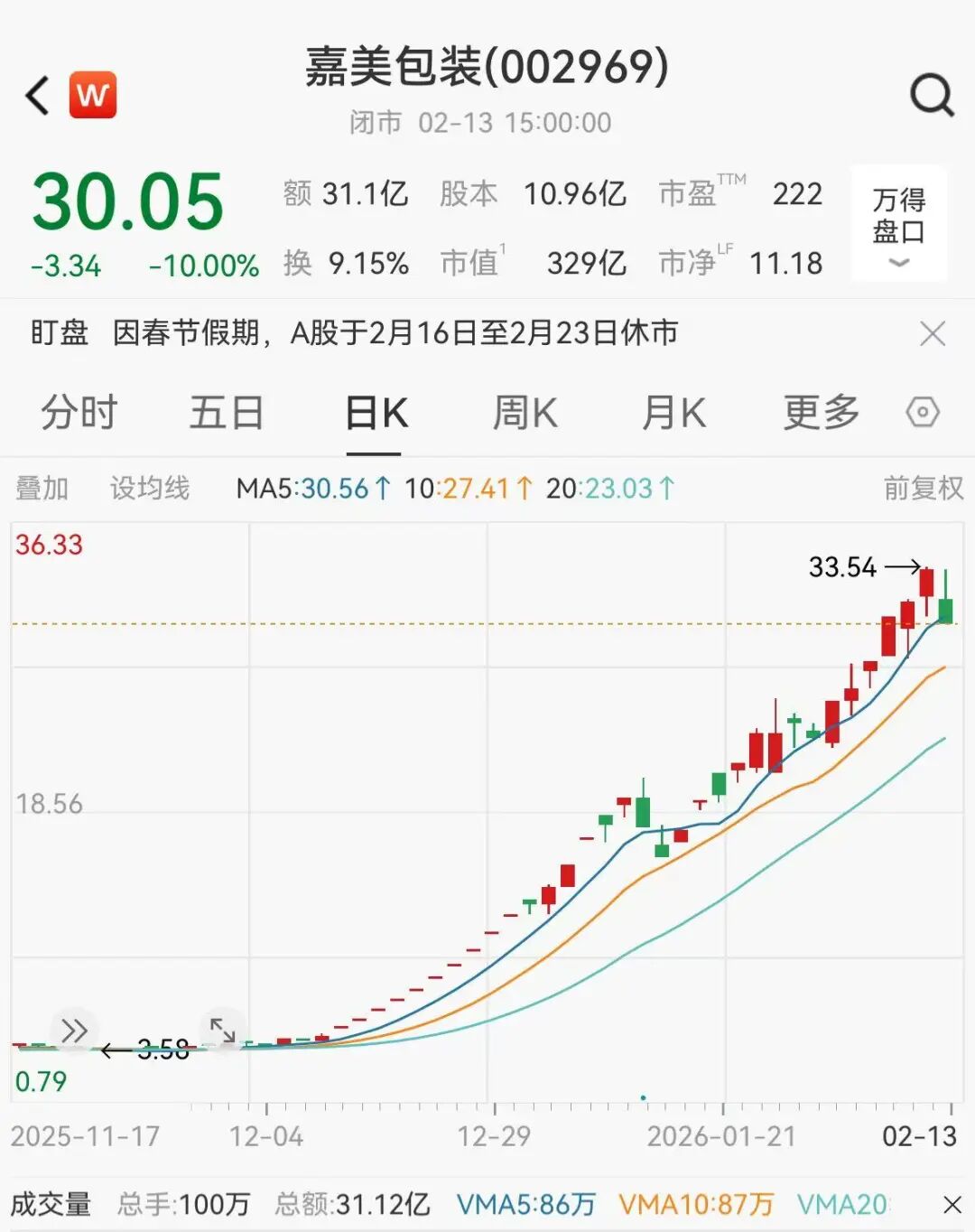
据深交所消息,2月9日至2月13日,深交所共对163起证券异常交易行为采取了自律监管措施,涉及盘中拉抬打压、虚假申报等异常交易情形;共对6起上 市公司重大事项进行核查,并上报证监会8起涉嫌违法违规案件线索。 深交所指出,近期,"嘉美包装(002969)"股价出现严重异常波动,公司停牌核查并多次发布风险提示公告,复牌后股价连续上涨,部分投资者在交易该 股过程中存在影响股票交易正常秩序的异常交易行为,本所依规对相关投资者采取了暂停交易等自律监管措施。 2月13日,嘉美包装股价跌停,报30.05元/股,总市值为329.47亿元。 2月12日,嘉美包装(002969.SZ)发布股票交易异常波动暨风险提示公告,称公司基本面未发生重大变化,但公司股票价格严重脱离公司基本面情况,存在 市场情绪过热、非理性炒作风险。自2025年12月17日至2026年2月12日期间价格涨幅为632.24%,其间多次触及股票交易异常波动情形。如未来公司股票 价格进一步异常上涨,公司可能再次向深圳证券交易所申请停牌核查。 经查询,深圳证券交易所官网2026年2月6日发布的监管动态显示,公司股票已于近期被交易所重点监控。逐越鸿智关联企业魔法原子现 ...


浙商证券邱冠华:浙商研究力争再用五年时间,夯实基础冲刺前五
2 1 Shi Ji Jing Ji Bao Dao· 2026-02-13 12:14
Core Viewpoint - Zhejiang Securities aims to establish itself as a top-tier research institute in China, focusing on the Yangtze River Delta, embracing large finance, and concentrating on new industries [1] Group 1 - The company is committed to building a first-class diamond research institute [1] - It emphasizes three key aspects: integration of production and finance, combination of sell-side research and wealth management, and alignment of employee careers with the company's mission [1] - The goal is to solidify its foundation and strive for a top-five position within five years, becoming a respected leading research institute [1]

陆控:与平安保险签订2026年服务框架协议
2 1 Shi Ji Jing Ji Bao Dao· 2026-02-13 12:03
Core Viewpoint - The company announced a service framework agreement with Ping An Insurance, which will provide various consulting services, with an expected annual service fee of RMB 42.17 million [1] Group 1: Agreement Details - The agreement is between the company's wholly-owned subsidiary, Ping An Puhui Enterprise Management Co., Ltd., and Ping An Insurance [1] - The duration of the agreement is from February 13, 2026, to December 31, 2026 [1] - Services to be provided include financial consulting, administrative services, legal and risk management services, human resources consulting, and technology information services [1] Group 2: Financial Implications - The expected annual service fee is RMB 42.17 million, inclusive of VAT [1] - Payments will be made quarterly in four installments, with each installment representing 25% of the total fee [1] Group 3: Compliance and Approval - The transaction is classified as a continuing connected transaction and has been approved by the board of directors, with relevant connected directors abstaining from voting [1] - The company must comply with the Hong Kong Stock Exchange's Listing Rules Chapter 14A regarding disclosure, announcement, and annual review requirements [1]
我国系统重要性银行扩容,名单新增1家,分组有调整
2 1 Shi Ji Jing Ji Bao Dao· 2026-02-13 12:01
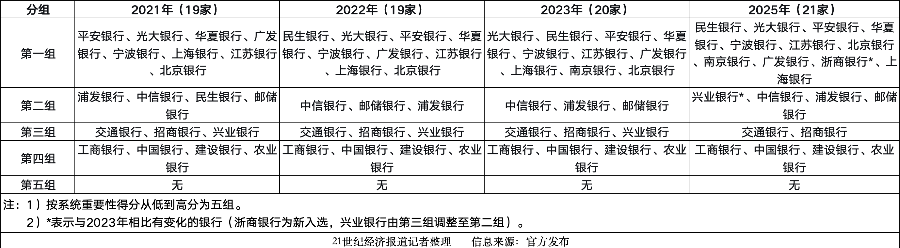
Core Viewpoint - The People's Bank of China and the National Financial Regulatory Administration announced the list of systemically important banks for 2025, identifying 21 banks, an increase of one from the previous assessment, indicating a slight expansion trend in the number of recognized banks [1][4]. Group Structure - The list of systemically important banks has shown a gradual increase over the years, with 19 banks recognized in both 2021 and 2022, 20 in 2023, and 21 in 2025, reflecting a consistent expansion [1][4]. - The fourth group remains stable, consistently comprising the four major banks: Industrial and Commercial Bank of China, Bank of China, China Construction Bank, and Agricultural Bank of China [2][4]. Group Classification - The 21 banks are categorized into five groups based on their systemic importance scores, with the fifth group remaining vacant. The first group increased from 10 to 11 banks, the second group rose from 3 to 4 banks, the third group decreased from 3 to 2 banks, and the fourth group maintained its count at 4 banks [4]. - The first group now includes 11 banks: China Minsheng Bank, China Everbright Bank, Ping An Bank, Huaxia Bank, Ningbo Bank, Jiangsu Bank, Beijing Bank, Nanjing Bank, Guangfa Bank, Zhejiang Commercial Bank, and Shanghai Bank. The second group consists of 4 banks: Industrial Bank, China CITIC Bank, Shanghai Pudong Development Bank, and China Postal Savings Bank. The third group has 2 banks: Bank of Communications and China Merchants Bank. The fourth group includes 4 banks: Industrial and Commercial Bank of China, Bank of China, China Construction Bank, and Agricultural Bank of China [4]. Key Changes - A significant change in this announcement is the inclusion of Zhejiang Commercial Bank in the first group, marking its first entry as a systemically important bank. Additionally, Industrial Bank has been moved from the third group to the second group [4]. Regulatory Framework - The assessment and publication of the list are part of the regulatory authorities' efforts to establish a comprehensive macro-prudential management system and strengthen the supervision of systemically important financial institutions [4][5]. - The People's Bank of China and the National Financial Regulatory Administration will continue to enhance the additional supervision of systemically important banks to promote their safe and sound operation, thereby better serving the high-quality development of the real economy [5].




携程、高德、同程、飞猪、航旅纵横、去哪儿,被集体约谈
2 1 Shi Ji Jing Ji Bao Dao· 2026-02-13 11:55
Core Viewpoint - The financial regulatory authorities in China have conducted discussions with six travel platform companies regarding issues related to their lending practices in collaboration with financial institutions, emphasizing the need for compliance and consumer protection [1] Group 1: Regulatory Actions - The financial regulatory bureau, in conjunction with the market regulatory bureau and the People's Bank of China, has engaged with Ctrip, Amap, Tongcheng Travel, Fliggy, Hanglv Zhongheng, and Qunar regarding their lending operations [1] - The companies are required to standardize their marketing behaviors and refrain from using misleading promotional language [1] Group 2: Consumer Protection Measures - Companies must clearly disclose the names of lending institutions and the details of credit products offered [1] - There is an emphasis on providing clear warnings to borrowers about rational borrowing practices [1] - The companies are instructed to enhance customer complaint channels, ensuring timely responses and proper handling of consumer disputes to improve service quality and protect consumer rights [1]


ST信通:子公司签订服务器采购合同,总价4.00亿元
2 1 Shi Ji Jing Ji Bao Dao· 2026-02-13 11:48
Core Viewpoint - ST Xintong's subsidiary, Dalian Turing Xintong Technology Co., Ltd., has signed a server procurement contract with an overseas supplier totaling approximately 57.79 million USD, equivalent to about 400 million RMB [1] Group 1 - The contract is set to be delivered in batches by March 31, 2026 [1] - The payment method for the contract will be via wire transfer [1] - This contract is categorized as a routine operational procurement contract and has been approved by the company's 9th Board of Directors at its 24th meeting [1]

2025保险业保费破6万亿大关 资产增速15.1%领跑金融业
2 1 Shi Ji Jing Ji Bao Dao· 2026-02-13 11:37
Core Insights - The insurance industry in China has shown strong resilience, with total assets reaching 41.3 trillion yuan by the end of 2025, marking a 15.1% increase from the beginning of the year, surpassing the banking sector's 8.0% growth [1][4] - The original insurance premium income has historically exceeded 6 trillion yuan for the first time, totaling 6.1 trillion yuan in 2025, reflecting a year-on-year growth of 7.4% [2][4] - However, there is a structural differentiation in profitability and capital replenishment within the industry, as evidenced by a slight decline in the core solvency ratio of life insurance companies [1][5][6] Asset Growth - By the end of 2025, the total assets of the insurance industry reached 41.3 trillion yuan, with life insurance companies contributing significantly to this growth, accounting for 88.1% of total assets [4] - Life insurance companies' total assets reached 36.4 trillion yuan, growing by 15.4% from the beginning of the year, contributing approximately 89.5% to the industry's asset increase [4] - Property insurance companies showed more stable performance, with total assets of 3.1 trillion yuan, growing by 7.5% [4] Premium Income and Claims - The insurance sector achieved a record premium income of 6.1 trillion yuan in 2025, with a total of 1.168 billion new policies issued, reflecting a 12.6% year-on-year increase [2] - Claims and benefit payments amounted to 2.4 trillion yuan, representing a 6.2% increase, demonstrating the industry's role as a risk compensation "shock absorber" [2] - Life insurance business contributed approximately 4.65 trillion yuan in premiums, with a year-on-year growth of 9.1%, while property insurance premiums reached 1.47 trillion yuan, growing by 2.6% [2] Solvency and Capital Pressure - As of the end of 2025, the average comprehensive solvency ratio for insurance companies was 181.1%, with a core solvency ratio of 130.4%, indicating overall solvency above regulatory requirements [5][6] - Life insurance companies faced declining core solvency ratios, with comprehensive solvency at 169.3% and core solvency at 115.0%, down from 190.5% and 123.8% respectively at the end of 2024 [6] - To strengthen capital bases, 21 insurance companies were approved for capital increases totaling 41.272 billion yuan, and 23 companies issued bonds to supplement capital amounting to 104.2 billion yuan [6] Structural Optimization - Agricultural insurance has become a key service for national strategy, with premiums exceeding 155 billion yuan in 2025, providing risk coverage for over 125 million farming households [3] - The industry is experiencing a structural optimization in the protection sector, with a focus on diversifying asset allocation to enhance resilience [4]

“存款搬家”主要是结构调整,而非系统性的流动性迁移
2 1 Shi Ji Jing Ji Bao Dao· 2026-02-13 10:56
Core Viewpoint - The rapid growth of non-bank financial institution deposits in China reflects a significant shift in the financial landscape, driven by factors such as the deepening of financial market reforms, the demand for wealth management, and the challenges posed to banks' liquidity management and profitability strategies [1][5]. Group 1: Non-Bank Deposit Growth - By the end of 2025, the balance of deposits in non-bank financial institutions reached 34.6 trillion yuan, a year-on-year increase of 22.8%, marking the highest growth in a decade [1]. - The increase in non-bank deposits is attributed to a "deposit migration" phenomenon, where residents and enterprises reallocate funds from traditional bank deposits to higher-yielding financial products like wealth management and funds [2][3]. - The balance of asset management products sourced from households and enterprises reached 56.3 trillion yuan by the end of 2025, growing by 9.7% year-on-year, indicating a clear trend of wealth migration from traditional deposits to asset management products [3]. Group 2: Impact on Banking Sector - The rapid growth of non-bank deposits has altered the liability structure of banks, with household and enterprise deposits decreasing in proportion while non-bank deposits are on the rise [6]. - Non-bank deposits are characterized by higher volatility and uncertainty compared to traditional deposits, necessitating enhanced liquidity management by banks [7]. - The increase in non-bank deposits poses challenges to banks' net interest margins and profitability, as the decline in deposit rates does not match the decrease in asset yields [7][8]. Group 3: Risk Management and Regulatory Response - The rise of non-bank deposits requires banks to expand their risk management frameworks to include monitoring of the asset management industry and systemic risks in financial markets [8]. - The People's Bank of China has accelerated the improvement of macro-prudential management frameworks, indicating a heightened focus on systemic risks associated with non-bank financial institutions [8]. - Banks are advised to enhance their liquidity risk management systems and conduct regular stress tests to prepare for potential scenarios of rapid deposit migration [15][16].
