2 1 Shi Ji Jing Ji Bao Dao

Search documents
收复失地!黄金白银深夜反弹 黄金突破5040美元
2 1 Shi Ji Jing Ji Bao Dao· 2026-02-14 00:13
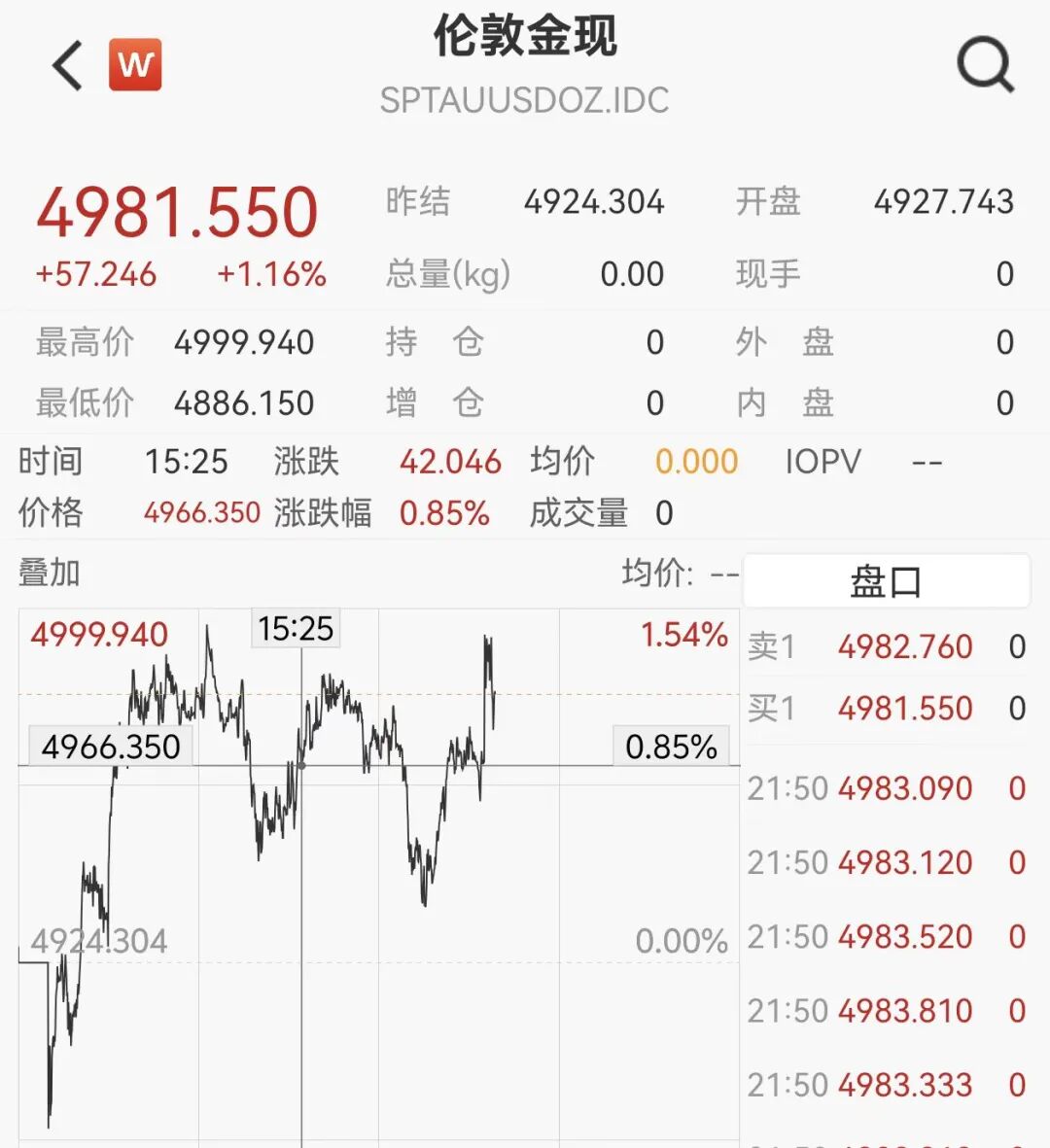
Core Viewpoint - The current upward trend in gold prices is not yet over, driven primarily by liquidity expectations and geopolitical tensions providing a safe-haven appeal for gold [1][1][1] Group 1: Market Performance - On February 13, gold and silver prices rebounded, with spot gold rising by 2.4% to surpass $5040 per ounce, and spot silver increasing by 2.8% to $77.3 per ounce [1][1][1] Group 2: Analyst Insights - A chief analyst from CITIC Securities highlighted that liquidity expectations are the core driving force behind the current gold price movements [1][1][1] - Ongoing geopolitical conflicts are contributing to a phase of safe-haven demand for gold [1][1][1]

深夜黄金突破5040美元,美股黄金股爆发,芯片股反弹,特朗普证实美军第二艘航母将派往中东
2 1 Shi Ji Jing Ji Bao Dao· 2026-02-13 23:27
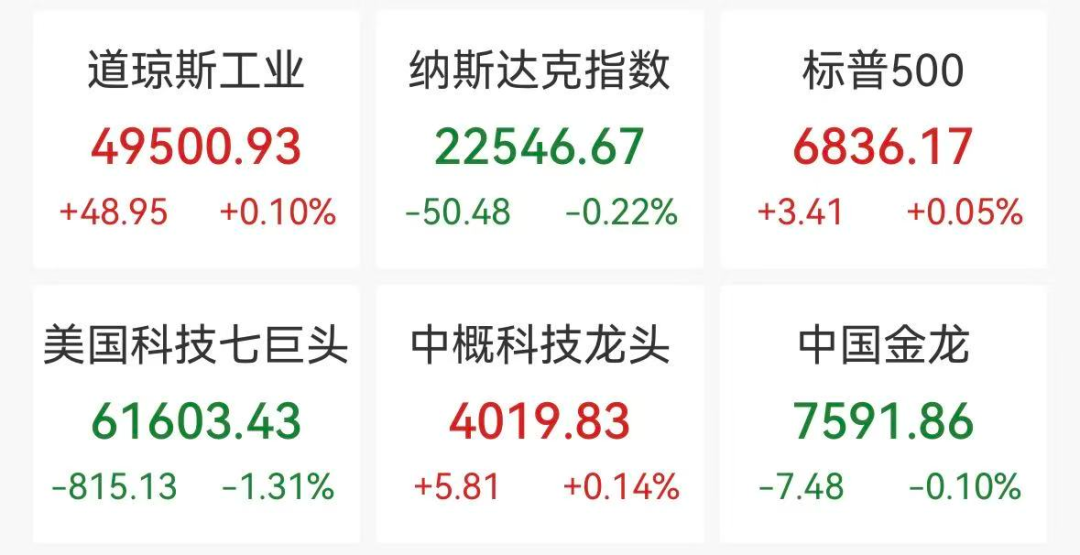
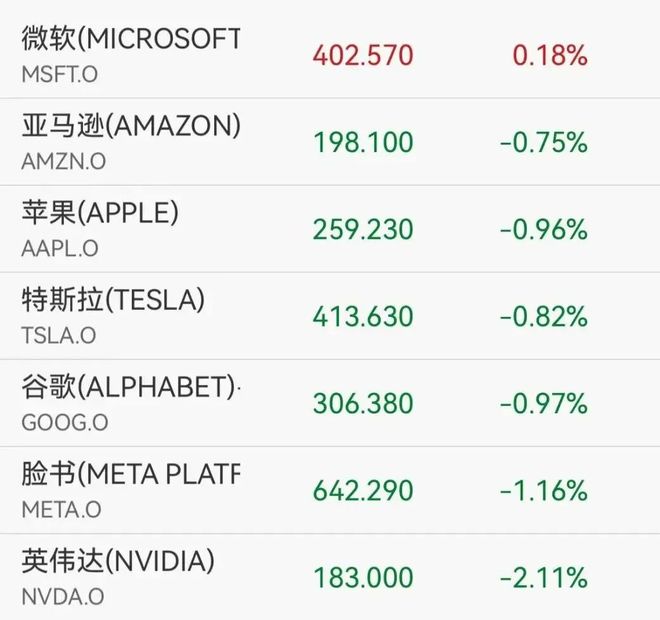
Market Performance - On February 13, the three major U.S. stock indices closed mixed, with the Dow Jones up 0.1%, S&P 500 up 0.05%, and Nasdaq down 0.22% [1] - For the week, the Dow Jones fell 1.23%, S&P 500 dropped 1.39%, and Nasdaq decreased by 2.1% [1] Sector Performance - Most large tech stocks declined, with Apple and Nvidia down over 2%, Facebook and Google down over 1%, while Tesla saw a slight increase of 0.09% [3] - Semiconductor stocks mostly rose, with the Philadelphia Semiconductor Index up 0.66%, and notable gains in Applied Materials (over 8%), ARM (over 2%), and Qualcomm (over 1%) [3] - Gold stocks performed strongly, with Coeur Mining up over 7%, Harmony Gold, Kinross Gold, and Pan American Silver up over 6%, and Barrick Gold up over 5% [3] Chinese Stocks - The Nasdaq Golden Dragon China Index fell 0.10%, with Tencent Music up over 4%, Yum China up over 3%, and Hesai Technology and NetEase up over 2% [3] - Declines were seen in JinkoSolar (down nearly 3%), Canadian Solar, New Oriental, Alibaba (down over 2%), and Li Auto (down nearly 2%) [3] Commodity Prices - Precious metals saw a rebound, with spot gold rising 2.4% to surpass $5040 per ounce, and spot silver increasing by 2.8% to $77.3 per ounce [3] - WTI crude oil futures rose by 0.08% to $62.89 per barrel, while Brent crude oil futures increased by 0.34% to $67.75 per barrel [4] Cryptocurrency Market - The cryptocurrency market experienced a collective rebound, with Bitcoin rising over 4% to approach $69,000 per coin, and over 90,000 traders liquidated in the past 24 hours [4][5] Economic Indicators - The U.S. Consumer Price Index (CPI) for January showed a year-over-year increase of 2.4%, below the market expectation of 2.5%, marking a decrease from 2.7% in December 2025 [6] - The month-over-month CPI, seasonally adjusted, rose by 0.2%, also below the expected 0.3%, indicating a significant cooling of inflation [6] - Following the CPI release, the probability of the Federal Reserve implementing a rate cut in June surged to 83% from 49.9% [6]

有奖发票“撞”上春节,奖金规模将超10亿元!如何参与?
2 1 Shi Ji Jing Ji Bao Dao· 2026-02-13 23:10
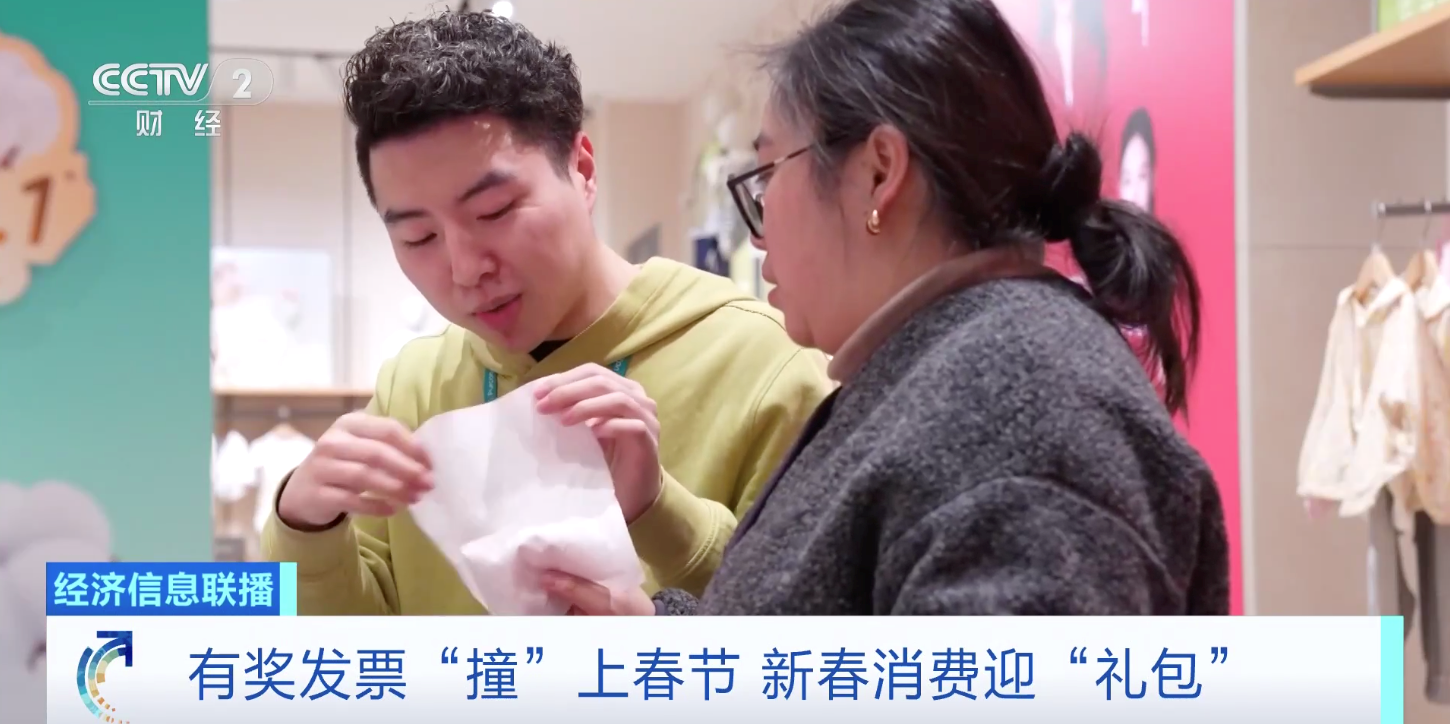
Core Viewpoint - The nationwide lottery for invoices has been launched in 50 pilot cities, with a total prize pool exceeding 1 billion yuan during the 9-day Spring Festival holiday, attracting significant consumer participation and engagement [1][14]. Group 1: Participation and Engagement - In Chongqing, the lottery activity has seen considerable consumer participation since its launch on February 12, with reports of multiple winners [3][16]. - In Ningbo, Zhejiang, over 530,000 invoices have been uploaded since the activity started on February 6, resulting in over 6.7 million yuan in prizes distributed, significantly boosting sales for related businesses [6][18]. - In Chengdu and Luzhou, Sichuan, more than 300,000 invoices have participated in the lottery by February 12, while Suzhou, Jiangsu, has seen 296,000 participants uploading around 500,000 valid invoices, with total prizes amounting to 10.25 million yuan [14][25]. Group 2: Consumer Requirements and Compliance - Consumers must ensure that the invoices they upload meet specific criteria, including the consumer's name, invoice date within the activity period, and a minimum single invoice amount of 100 yuan [10][22]. - Some consumers have faced issues with participation due to non-compliance with the activity's requirements, highlighting the importance of adhering to the guidelines set by the tax authorities [10][23].
春季行情能否掀起,看节后抉择
2 1 Shi Ji Jing Ji Bao Dao· 2026-02-13 23:04
Core Viewpoint - The market is currently cautious, with a tendency for structural opportunities to emerge, particularly in sectors experiencing price increases, such as resource and innovative growth industries [5][14]. Market Trends - The A-share market typically exhibits a pattern of "weak before the holiday, strong after" based on historical trends [5][14]. - The Shanghai Composite Index has formed a significant upward channel since January 2025, with upper resistance levels identified at 3359 points (February 13, 2025), 3439 points (March 19, 2025), 3883 points (August 25, 2025), and 4025 points (October 30, 2025) [5][14]. - The lower boundary of this upward channel aligns with the 60-day moving average and the half-year line, currently situated between 3940 and 4000 points, which may provide strong support [5][14]. Future Projections - An important cyclical period is anticipated in August 2026, coinciding with various historical market milestones, which may influence market dynamics [6][15]. - The Shanghai Composite Index has recently broken above a long-term resistance level of 3730 points, establishing a bullish foundation for the market [6][15]. - The upward channel's lower boundary is expected to rise, potentially leading the index to approach historical gap levels from June 2015, specifically between 4456 and 4483 points [7][16]. Technical Analysis - The Shanghai Composite Index has formed a triangular consolidation pattern since December 16, 2025, with upper resistance around 4150 points and lower support near 4060 points [8][17]. - The Shenzhen Component Index has established a large converging upward channel since October 2024, with significant resistance and support levels identified [8][17]. - The long-term outlook for the Shenzhen Component Index suggests a potential breakout, driven by economic transformation and the growth of new industries, indicating a possible "transformation bull market" [9][18].

《互联网平台反垄断合规指引》发布,明确4类垄断风险
2 1 Shi Ji Jing Ji Bao Dao· 2026-02-13 17:07
Core Viewpoint - The "Guidelines for Antitrust Compliance of Internet Platforms" prohibit platform operators from engaging in monopolistic behaviors as defined by the Anti-Monopoly Law of the People's Republic of China, utilizing data, algorithms, technology, capital advantages, or platform rules [1] Summary by Categories Monopolistic Risks - The guidelines specifically address four categories of monopolistic risks: monopolistic agreements, abuse of market dominance, concentration of operators, and abuse of administrative power to eliminate or restrict competition [1] New Types of Monopolistic Risks - Eight new types of monopolistic risks have been identified based on the characteristics of the platform economy, including: - Algorithmic collusion between platforms - Organizing assistance for platform operators to reach monopolistic agreements - Unfair high pricing by platforms - Selling below cost by platforms - Blocking and obscuring competitors - "Choose one of two" behavior - "Lowest price on the entire network" practices - Differential treatment by platforms [1]
闪迪重挫5%,美股半导体深夜下跌,应用材料飙升12%,黄金白银强势反弹
2 1 Shi Ji Jing Ji Bao Dao· 2026-02-13 16:02
Market Overview - The three major U.S. stock indices opened lower, with the Nasdaq down 0.29%, the Dow down 0.16%, and the S&P 500 down 0.08% as of the report time [1] - Large tech stocks mostly declined, with Google and Meta down approximately 1%, and Nvidia down over 2% [1] - Semiconductor stocks saw significant declines, with Western Digital down over 7%, Micron Technology down over 5%, and Seagate Technology down nearly 3% [2] Company Performance - Application Materials reported a significant profit increase of 70% year-over-year to $2.03 billion for the first fiscal quarter ending in January, with adjusted earnings per share of $2.38, exceeding market expectations of $2.21 [4] - Revenue for Application Materials decreased by 2% year-over-year to $7.01 billion, still above market expectations of $6.87 billion [4] - The Nasdaq Golden Dragon China Index fell by 0.7%, with notable declines in companies such as Century Internet down over 6%, and Alibaba and Baidu down 2% [4][6] Commodity and Currency Movements - Gold prices surged, with spot gold rising 2% to $5,019.64 per ounce, and New York futures surpassing $5,040 per ounce [6] - International oil prices continued to decline, with Brent crude futures at $67.4 per barrel and WTI crude futures at $62.6 per barrel [7] - Most cryptocurrencies saw an increase, with Bitcoin rising above $68,000, up 2.70% [8]
租赁巨头冲刺IPO,赚钱能力碾压爱马仕
2 1 Shi Ji Jing Ji Bao Dao· 2026-02-13 15:34
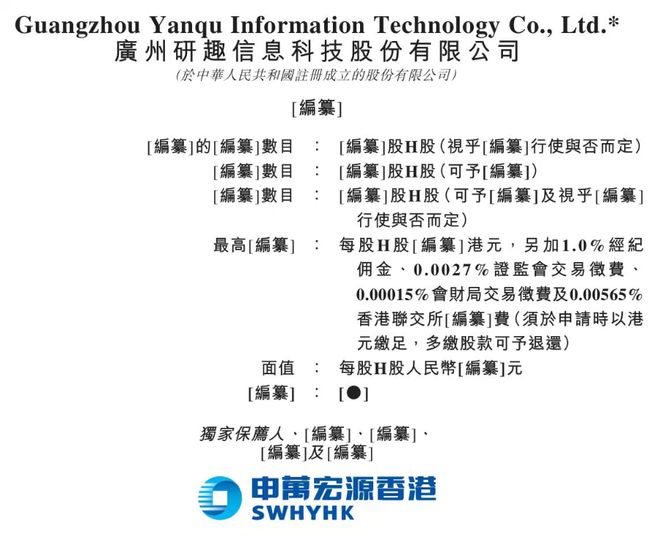
Core Viewpoint - The consumption rental market is rapidly growing, with a significant increase in demand from younger consumers, particularly the post-00s generation, leading to a surge in rental orders for various products [1][6]. Group 1: Company Overview - Guangzhou Yanqu Information Technology Co., Ltd. (referred to as "Yanqutech") has submitted an IPO application to the Hong Kong Stock Exchange, aiming to become the first consumption rental platform to go public in China [1][4]. - Yanqutech's rental platform, Renrenzu, achieved a Gross Transaction Value (GTV) of approximately 7.5 billion yuan in 2024, making it the largest online rental consumption service platform in China [3][8]. Group 2: Financial Performance - The company reported revenues of 294 million yuan, 421 million yuan, and 356 million yuan for the years 2023, 2024, and the first three quarters of 2025, respectively, with corresponding net profits of 80 million yuan, 119 million yuan, and 89 million yuan [3][9]. - Yanqutech maintains a high gross margin, consistently above 80%, with margins of 80.5%, 82.3%, and 82.9% for the years 2023, 2024, and the first three quarters of 2025, respectively [9][10]. Group 3: Market Position and Growth - The rental consumption market in China is projected to grow from approximately 2.9 billion yuan in 2020 to 27.3 billion yuan in 2024, with a compound annual growth rate of about 74.7% [6][8]. - Yanqutech holds a market share of approximately 27.5% in the rental consumption sector, significantly surpassing other competitors [8][9]. Group 4: Business Model - Yanqutech operates a light-asset model, acting as an intermediary between merchants and consumers, with ownership of rental products remaining with the merchants [10][11]. - Revenue is primarily generated from fixed annual fees charged to merchants and transaction commissions ranging from 5% to 20% per transaction [11]. Group 5: Compliance and Regulatory Challenges - Yanqutech faces several compliance issues, including allegations of high-interest leasing practices and consumer complaints regarding service quality and pricing transparency [13][17]. - The company has been criticized for its lack of effective risk control measures, which could impact its valuation and operational stability [20][22].
春节假期投资日历出炉
2 1 Shi Ji Jing Ji Bao Dao· 2026-02-13 15:23
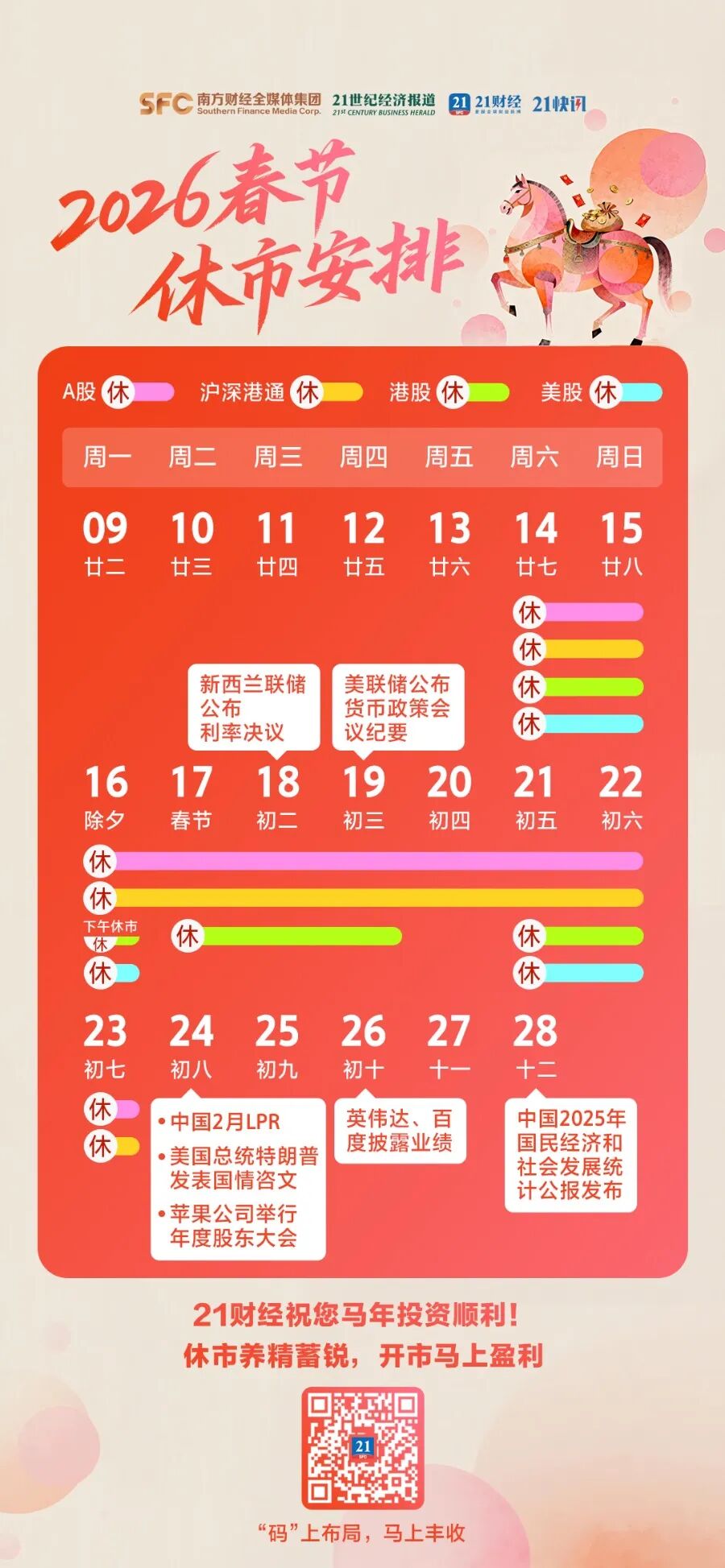
港股方面,2月16日(星期一)除夕上午开市半天,下午休市。2月17日(星期二)至2月19日(星期四)休市,2月20日(星期五)初四开 市。 视频|王学权 今天是蛇年A股最后一个交易日,2026年春节假期即将来临,A股2月16日(星期一)至2月23日(星期一)休市,2月24日(星期二)大 年初八起照常开市。 沪深港通方面,2月16日(星期一)至2月23日(星期一)不提供服务,2月24日(星期二)起照常开通服务。 SFC 到南方小城去过年 美股方面,2月16日(星期一)因华盛顿诞辰日(总统日)休市一天,2月17日(星期二)起正常交易。 ...
黄金直线拉升,美元急跌,白银飙升5%,美联储降息概率有变
2 1 Shi Ji Jing Ji Bao Dao· 2026-02-13 14:16
Group 1 - The U.S. January CPI year-on-year decreased from 2.7% to 2.4%, marking the lowest level since May 2025, with market expectations at 2.5% [1] - The core CPI year-on-year also fell from 2.6% to 2.5%, the lowest since March 2021, aligning with market expectations [1] - Following the CPI data release, the dollar index dropped below 97, and U.S. stock index futures experienced a mild rebound [1] Group 2 - The two-year U.S. Treasury yield fell to approximately 3.4%, the lowest since October of the previous year [1] - U.S. interest rate futures slightly increased the probability of the Federal Reserve easing policies in June to 69%, up from 63% before the CPI data release [1] - The expected rate cut by the Federal Reserve for 2026 rose to 61 basis points, compared to the previous expectation of 58 basis points [1] Group 3 - Gold and silver have experienced significant fluctuations in the current precious metals market, with gold's year-to-date increase shrinking from 25% to 15%, while silver's rise has decreased from over 50% to around 7% [3] - The fundamental difference in investment attributes between gold and silver is highlighted, with gold being a safe-haven asset and silver having a higher industrial demand, leading to greater price volatility [3] - The gold-silver ratio, an important indicator of the relative strength of precious metals, has risen from below 50 at the beginning of the year to 65, indicating increased market risk aversion and a preference for gold over silver [3]
2026年全国碳市场重点工作来了!从存证到清缴,一步都不能少
2 1 Shi Ji Jing Ji Bao Dao· 2026-02-13 14:01
Core Viewpoint - The Ministry of Ecology and Environment has issued a notification detailing the responsibilities and obligations of key emission units in the carbon emission trading market, which will include the power generation, steel, cement, and aluminum smelting industries by 2026, as part of China's dual carbon goals [1][2]. Group 1: Key Emission Units and Coverage - By 2026, the carbon market will include approximately 3,700 key emission units, covering around 8 billion tons of carbon emissions, which accounts for over 60% of the national carbon emissions [2]. - The eight key industries, including power generation, steel, construction materials, non-ferrous metals, petrochemicals, chemicals, paper, and aviation, contribute to about 75% of China's carbon dioxide emissions [2][5]. Group 2: Compliance Requirements - The four core industries (power generation, steel, cement, aluminum smelting) must complete a full compliance process, including listing, monthly verification, annual reporting, and quota management [2][4]. - The notification outlines specific deadlines for key emission units, such as the publication of the 2027 key emission unit list by October 31, 2026, and the submission of greenhouse gas emission reports by March 31, 2026 [3][4]. Group 3: Additional Industry Management - Industries like petrochemicals and chemicals are required to submit annual emission reports but are not yet involved in quota trading and compliance [5]. - Companies in these sectors with annual emissions of 26,000 tons of CO2 equivalent must participate in the annual reporting process, with the same reporting deadline of March 31, 2026 [5][6]. Group 4: Future Preparedness - Industries not yet included in the carbon market should focus on preparing for future compliance by enhancing their reporting and verification capabilities [6]. - It is recommended that these companies establish carbon asset management departments and develop carbon reduction plans to ensure readiness for future inclusion in the carbon market [6].