2 1 Shi Ji Jing Ji Bao Dao

Search documents
348万亿美元!全球债务创历史新高
2 1 Shi Ji Jing Ji Bao Dao· 2026-02-27 05:59
Core Insights - The International Institute of Finance (IIF) reported that global debt is projected to reach a record $348 trillion by the end of 2025, marking an increase of nearly $29 trillion in 2025, the fastest annual growth since the onset of the pandemic [1] - This growth is primarily driven by government debt, which increased by over $10 trillion last year [1] - The IIF anticipates that a combination of fiscal expansion, loose monetary policy, and deregulation may lead to further debt accumulation, raising concerns about rising leverage and localized overheating in the market [1] - The report emphasizes that debt itself is neutral; the critical factor is whether the resources leveraged by this debt can be transformed into genuine technological advancements and improvements in public welfare [1]
两会前瞻丨投资于人:2026年将催生哪些经济新动能
2 1 Shi Ji Jing Ji Bao Dao· 2026-02-27 05:57
2025年12月召开的中央经济工作会议要求,必须坚持投资于物和投资于人紧密结合。 就业、教育、养老等都是投资于人的重要领域,2026年全国两会或将出现更多相关建言及政策动 向,"预告"此后将催生出哪些新的经济增长点。 长期以来,以基础设施和制造业投资为代表的投资于物模式在奠定物质基础的同时,其边际效益也呈现 变化。 全国政协委员、湖北第二师范学院院长郑军近日指出,投资于人实质在于通过系统性投入,提升全民的 知识、技能、健康水平与社会适应力,将人口规模优势升级为支撑长远发展的人力资本质量优势。 "这既是应对人口结构变化的必然要求,更是挖掘经济新增长点、增强发展内生动力的核心路径。" 郑 军认为。 根据世界银行数据库,2024年我国居民消费支出占GDP比重(消费率)为39.9%,中等偏上收入国家平 均为48.2%,高收入国家(2022年)平均为57.8%。 进一步加大对人力资本和民生的投资,有望进一步加快赶超速度,实现党的二十届四中全会设定的"居 民消费率明显提高"目标。 居民消费水平提高的底气来自居民增收,增收的重要基础是就业改善、社保完善。人力资源社会保障部 部长王晓萍今年1月接受《人民日报》采访时表示,将聚 ...
投资于人:2026年将催生哪些经济新动能
2 1 Shi Ji Jing Ji Bao Dao· 2026-02-27 05:54
根据世界银行数据库,2024年我国居民消费支出占GDP比重(消费率)为39.9%,中等偏上收入国家平 均为48.2%,高收入国家(2022年)平均为57.8%。 21世纪经济报道记者王峰 北京报道 投资于人,将成为2026年建设强大国内市场的重要变量。 2025年政府工作报告首次提出"投资于人",要求推动更多资金资源"投资于人"、服务于民生,支持扩大 就业、促进居民增收减负、加强消费激励,形成经济发展和民生改善的良性循环。 2025年12月召开的中央经济工作会议要求,必须坚持投资于物和投资于人紧密结合。 就业、教育、养老等都是投资于人的重要领域,2026年全国两会或将出现更多相关建言及政策动 向,"预告"此后将催生出哪些新的经济增长点。 实施稳岗扩容提质行动 长期以来,以基础设施和制造业投资为代表的投资于物模式在奠定物质基础的同时,其边际效益也呈现 变化。 全国政协委员、湖北第二师范学院院长郑军近日指出,投资于人实质在于通过系统性投入,提升全民的 知识、技能、健康水平与社会适应力,将人口规模优势升级为支撑长远发展的人力资本质量优势。 "这既是应对人口结构变化的必然要求,更是挖掘经济新增长点、增强发展内生动力的 ...
机械ETF上涨 机构看好核心零部件业绩回升丨ETF基金日报
2 1 Shi Ji Jing Ji Bao Dao· 2026-02-27 05:54
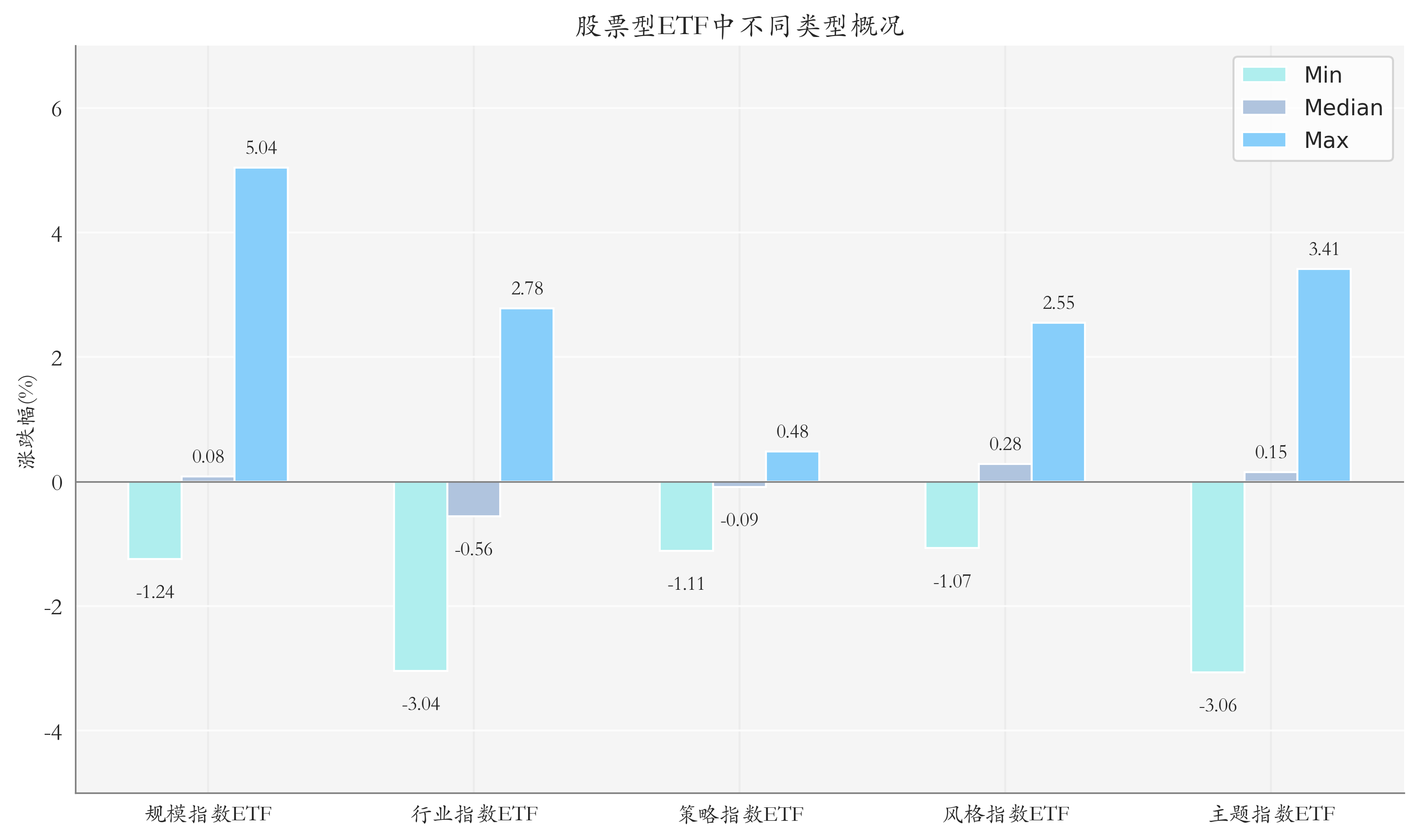
Market Overview - The Shanghai Composite Index fell by 0.01% to close at 4146.63 points, with a daily high of 4152.19 points [1] - The Shenzhen Component Index increased by 0.19% to close at 14503.79 points, reaching a high of 14536.08 points [1] - The ChiNext Index decreased by 0.29% to close at 3344.98 points, with a peak of 3351.57 points [1] ETF Market Performance 1. Stock ETF Overall Performance - The median return of stock ETFs was 0.0% [2] - The highest return among scale index ETFs was the Bosera National Index 2000 ETF at 5.04% [2] - The highest return among industry index ETFs was the Harvest National Index Communication ETF at 2.78% [2] - The highest return among strategy index ETFs was the Qianhai Kaiyuan CSI 500 Equal Weight ETF at 0.48% [2] - The highest return among style index ETFs was the Wanji Shanghai Stock Star Growth ETF at 2.55% [2] - The highest return among theme index ETFs was the Bosera 5G50 ETF at 3.41% [2] 2. Stock ETF Performance Rankings - The top three stock ETFs by return were: - Bosera National Index 2000 ETF (5.04%) [5] - Bosera 5G50 ETF (3.41%) [5] - Harvest Shanghai Stock Star Industrial Machinery ETF (3.31%) [5] - The bottom three stock ETFs by return were: - Tianhong Hang Seng Shanghai-Shenzhen-Hong Kong Innovative Drug Selection 50 ETF (-3.06%) [6] - Huabao CSI 800 Real Estate ETF (-3.04%) [6] - Real Estate ETF (-2.88%) [6] 3. Stock ETF Fund Flows - The top three stock ETFs by fund inflow were: - Huaxia CSI Electric Grid Equipment Theme ETF (inflow of 0.924 billion) [8] - Guotai CSI All-Index Securities Company ETF (inflow of 0.847 billion) [8] - Sci-Tech 100 ETF (inflow of 0.444 billion) [8] - The top three stock ETFs by fund outflow were: - Southern CSI 1000 ETF (outflow of 3.203 billion) [9] - Huatai-PB CSI 300 ETF (outflow of 1.813 billion) [9] - Huaxia CSI 1000 ETF (outflow of 1.559 billion) [9] 4. Stock ETF Margin Trading Overview - The top three stock ETFs by margin buying were: - E Fund ChiNext ETF (5.65 billion) [11] - Huaxia Shanghai Stock Star 50 Component ETF (4.37 billion) [11] - Guotai CSI All-Index Securities Company ETF (4.01 billion) [11] - The top three stock ETFs by margin selling were: - Southern CSI 1000 ETF (0.14 billion) [12] - Southern CSI 500 ETF (58.414 million) [12] - Huaxia CSI 1000 ETF (39.547 million) [12] Institutional Insights - Dongwu Securities noted that the engineering machinery industry is showing strong cyclicality, with a recovery phase expected to begin in the second half of 2025 [13] - Xiangcai Securities highlighted that domestic demand is accelerating due to equipment updates and electrification, leading to a rebound in performance for core components [14]

稀土概念领涨,相关标的有色金属ETF天弘(159157)实时净申购7600万份居深市同标的第一,机构:紧平衡下稀土价格中枢或上移
2 1 Shi Ji Jing Ji Bao Dao· 2026-02-27 05:48
Group 1 - The rare earth sector is experiencing significant gains, with the Zhongzheng Industrial Nonferrous Metals Theme Index rising by 3.50%, and stocks like Xiamen Tungsten and China Rare Earth increasing by over 5% [1] - The Tianhong Nonferrous Metals ETF (159157) has seen a trading volume exceeding 230 million yuan, with a net subscription of 76 million shares, ranking first among similar products in the Shenzhen market [1] - The Tianhong Nonferrous Metals ETF has recorded a net inflow of 1.1 billion yuan on the previous trading day, marking nine consecutive days of net inflows, totaling 1.184 billion yuan [1] Group 2 - The establishment of the National Rare Earth Permanent Magnet Motor Quality Inspection and Testing Center has been approved, filling a gap in national-level quality inspection platforms in the rare earth permanent magnet motor sector [2] - According to Guotou Securities, the price center for rare earths is expected to rise due to a tight balance, with global demand for praseodymium and neodymium oxide projected to exceed supply by 5,229 tons in 2025 [2] - The supply constraints from domestic quota controls and slow overseas production, combined with strong demand from sectors like electric vehicles and wind power, indicate a robust upward price movement for rare earths [2]
21评论|春节“钱花在哪儿”:中国人消费结构发生哪些变化?
2 1 Shi Ji Jing Ji Bao Dao· 2026-02-27 05:48
Core Insights - The 2026 Spring Festival in China showcased a robust consumer market, driven by a long holiday and various consumption-promoting policies, leading to a significant increase in consumer willingness and an optimized consumption structure [1][7] Group 1: Consumer Spending Trends - Payment data indicates a strong surge in consumer activity, with 4.931 billion transactions processed on the eve of the Spring Festival, marking a 21.64% increase compared to 2025 [1] - Shanghai's total online and offline consumption during the festival reached 60.35 billion yuan, a 12.8% year-on-year growth, with offline consumption growing by 15.4% [2] - National key retail and catering enterprises reported an average daily sales increase of 5.7% during the festival, with foot traffic and sales in monitored pedestrian streets growing by 6.7% and 7.5% respectively [3] Group 2: Consumption Structure and Quality - There was a notable increase in service consumption, with domestic tourism seeing significant growth, particularly in high-tier cities and county-level tourist spots [2] - Health-conscious products saw a surge, with sales of smart wearable devices increasing by 130%, and organic food sales rising by 52% [4] - The trend towards convenience in consumption was evident, with 65.8% of consumers purchasing pre-prepared meals during the festival [4] Group 3: Digital Integration and Local Products - Digital payment and innovative consumption scenarios were prevalent, with significant increases in transaction volumes for travel and entertainment [5] - Local specialty products gained traction through e-commerce platforms, with notable sales increases for regional delicacies [5] Group 4: Policy Impact - The strong performance of consumer spending during the Spring Festival was supported by targeted government policies, including a 20.5 billion yuan fund for consumer vouchers and subsidies [6] - The "old-for-new" subsidy program, with an initial allocation of 62.5 billion yuan, effectively stimulated large-scale consumption [6]
钢铁、芯片与技术未来︱21书评
2 1 Shi Ji Jing Ji Bao Dao· 2026-02-27 05:47
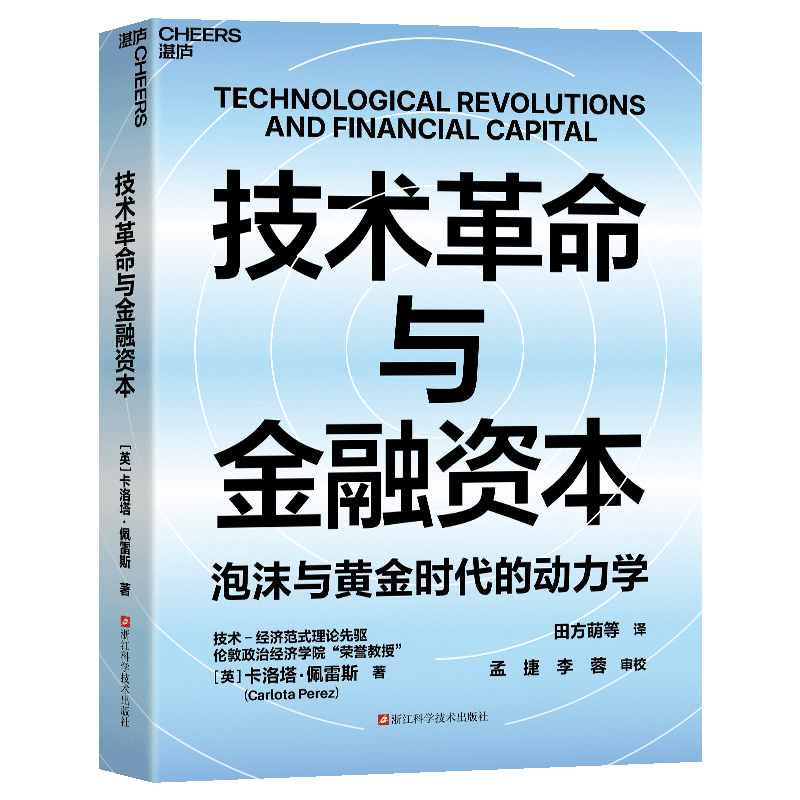
Core Insights - The article discusses the historical context and implications of Carlota Perez's "Technological Revolutions and Financial Capital," emphasizing the cyclical nature of capitalism driven by technological revolutions [1][2] Group 1: Technological Revolutions - The author identifies five technological revolutions that have occurred since the early 21st century: the Industrial Revolution, the Steam and Railway Era, the Steel, Electricity, and Heavy Industry Era, the Oil, Automobile, and Mass Production Era, and the Information and Communication Era [1] - The current technological environment is influenced by the AI revolution, open-source innovation, distributed finance, and global geopolitical competition, which may alter the historical conditions of the "technological-economic paradigm" [2] Group 2: Economic Implications - The article highlights that significant events in the global economy since the book's original publication include the ongoing breakthroughs in the information revolution, the irreversible threat of climate change, and China's rise as the world's second-largest economy [4] - China has leveraged both mature technologies from the fourth technological revolution and emerging technologies from the fifth to achieve substantial economic growth, paralleling the historical achievements of the U.S. and Germany during the third technological revolution [5] Group 3: Institutional Changes - The article emphasizes the necessity of major institutional reforms to facilitate innovation and investment, address social inequality, and achieve a green transition before climate change becomes irreversible [8] - Historical examples illustrate how previous technological revolutions required significant institutional changes to adapt to new economic realities, suggesting that similar reforms are needed today [6][8] Group 4: Challenges Ahead - The article notes that despite the potential for a new golden age of the information revolution, significant changes that could have occurred after the 2000 tech bubble and the 2008 financial crisis did not materialize, leading to continued speculative behavior in finance rather than long-term investments in the real economy [9] - The book aims to provide insights into the relationship between technological, economic, and political changes, rather than making predictions, encouraging readers to learn from historical patterns [9]
“蓝天”成色如何?万亿GDP城市PM2.5优于全国平均水平
2 1 Shi Ji Jing Ji Bao Dao· 2026-02-27 05:45
Core Insights - The Ministry of Ecology and Environment announced that by 2025, China's air quality will reach its historical best, with PM2.5 average concentration at 28 micrograms per cubic meter, good days ratio at 89.3%, and heavy pollution days ratio at 0.9% [1][2] Group 1: Air Quality Improvement - By 2025, the average PM2.5 concentration in cities at or above the prefecture level will be 28.0 micrograms per cubic meter, with a good days ratio of 89.3% and heavy pollution days ratio of 0.9%, all representing the best levels recorded [1] - The number of cities meeting air quality standards increased from 206 to 246 during the 14th Five-Year Plan, marking a 20% increase [2] Group 2: Economic Growth and Air Quality - During the 14th Five-Year Plan, China's GDP grew by 30%, while PM2.5 concentration decreased by 20%, demonstrating a successful synergy between economic growth and air quality improvement [2] - In cities with a GDP exceeding 1 trillion yuan, the average PM2.5 concentration is 27.8 micrograms per cubic meter, which is better than the national average and shows significant improvement during the 14th Five-Year Plan [2] Group 3: Beijing's Achievements - Beijing's PM2.5 concentration decreased from 89.5 micrograms per cubic meter in 2013 to 27 micrograms per cubic meter in 2025, achieving a significant milestone in air pollution control [2]
盘中线索丨培育钻石概念冲击“四连涨”,机构称AI服务器需求爆发致PCB钻针量价齐升
2 1 Shi Ji Jing Ji Bao Dao· 2026-02-27 05:33
Core Viewpoint - The concept of cultivated diamonds is experiencing a surge, with stocks like World reaching their daily limit and others like Guoji Precision Engineering rising over 6% due to increased demand in the AI server market impacting the PCB drilling tools sector [1] Group 1: Market Performance - Cultivated diamond stocks are on a four-day rising streak, with significant gains in companies such as World and Guoji Precision Engineering [1] - The overall strength in the superhard materials sector is attributed to the booming demand for AI servers, leading to a simultaneous increase in both volume and price for PCB drilling tools [1] Group 2: Industry Dynamics - The introduction of Nvidia's new product Rubin, which utilizes M9-grade copper-clad laminates, presents unprecedented processing challenges for the PCB industry [1] - M9-grade laminates incorporate quartz fabric, significantly increasing hardness compared to traditional glass fabric [1] - The number of layers in PCBs has increased from 16 to 24, resulting in a drastic reduction in the lifespan of traditional hard alloy drilling tools [1] Group 3: Technological Advancements - The lifespan of coated drilling tools on M9 materials is reported to be only 150-200 holes per tool, an 80% decrease compared to standard materials [1] - The rapid development of the computing power industry is driving breakthroughs in the functional applications of diamonds [1] - The escalating competition in artificial intelligence is leading to exponential growth in computing power demand, with chip cooling becoming a critical bottleneck for industry development [1]


受外卖大战影响,瑞幸在去年末净利润下滑丨消费参考
2 1 Shi Ji Jing Ji Bao Dao· 2026-02-27 05:08
Group 1 - The core point of the article is that the fierce competition in the food delivery market is significantly transforming the coffee industry, particularly affecting companies like Luckin Coffee and Kudi Coffee [1][3]. Group 2 - Luckin Coffee reported a revenue increase of 32.9% year-on-year to 12.777 billion yuan in Q4 2025, but its net profit fell by 39% to 518 million yuan [2]. - The decline in net profit for Luckin Coffee is attributed to the impact of the food delivery war, with delivery costs rising significantly due to increased order volumes [3]. - In Q4 2025, delivery expenses for Luckin reached 6.8787 billion yuan, a 143.8% increase compared to the same period in 2024 [3]. - Despite the challenges, Luckin Coffee continues to expand, with a total of 31,048 stores by the end of Q4 2025, and self-operated store revenue growing by 32% year-on-year [4]. Group 3 - Kudi Coffee has also been affected by the food delivery competition, leading to a reduction in its pricing power as it relies heavily on delivery channels [5][6]. - Luckin Coffee's CEO emphasized that in the long term, in-store pickup will remain the primary consumption method, with delivery serving as a supplementary channel [7].