
Jing Ji Guan Cha Bao

Search documents
小药盒,大政策:慢性病证明与医保改革的民生共鸣
Jing Ji Guan Cha Bao· 2025-11-13 08:25
Core Insights - The article discusses the impact of healthcare policy reforms on chronic disease patients in China, highlighting the balance between personal account reductions and increased social insurance coverage [1][4][6] Group 1: Policy Changes and Their Effects - The healthcare policy in Jilin Province has undergone three adjustments from 2023 to 2025, significantly reducing out-of-pocket expenses for chronic disease medications [1][4] - The monthly contributions to personal accounts for retirees have decreased from 240 yuan in 2022 to 111 yuan in 2023, and further to 78 yuan in 2024, reflecting a shift towards increased reimbursement rates [2][3] - New outpatient reimbursement policies have been introduced, increasing reimbursement rates by 5% and lowering the threshold for chronic disease patients, thus enhancing financial support for those with chronic conditions [3][4] Group 2: Financial Implications for Patients - Patients like Zhang Guilan and Li Hongmei have reported reduced personal expenses due to the new reimbursement policies, despite lower personal account contributions [3][5] - The introduction of a "public servant medical subsidy" in 2025 aims to provide additional support for retired civil servants, reflecting a targeted approach to healthcare funding [4][6] - The overall trend indicates a move from individual account reliance to a more collective insurance model, enhancing the mutual support capacity of the healthcare system [4][6] Group 3: Broader Implications for Healthcare Access - The reforms aim to address the inequities in healthcare access between urban and rural areas, with improvements in the availability of essential medications in rural health facilities [8][12] - The introduction of chronic disease certificates has significantly reduced medication costs for patients, demonstrating the effectiveness of policy in alleviating financial burdens [9][10] - Future reforms are expected to further expand coverage for chronic diseases and improve the efficiency of the reimbursement process, indicating a commitment to enhancing healthcare access for all [11][12]
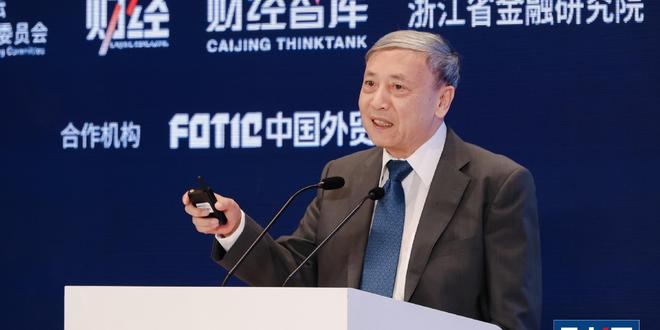
蔡昉:这一轮AI投资热“浇不冷”
Jing Ji Guan Cha Bao· 2025-11-13 06:08
Core Insights - The current wave of AI investment is seen as both a revolution and a potential bubble, but it is unlikely to cool down due to pressing demands for productivity improvements, geopolitical competition, and the necessity for companies to adopt AI to remain competitive [2][3] Group 1: AI Investment Drivers - East Asian countries face challenges such as declining birth rates, labor shortages, and accelerated aging, making AI a critical solution for enhancing labor productivity [2] - Geopolitical tensions have made AI capabilities a key determinant of national power, prompting countries to vigorously pursue AI advancements [2] - Major companies view AI technology as a symbol of technological leadership and market position in the context of strategic competition [2] - Organizations recognize that failing to embrace AI could lead to competitive disadvantages and potential obsolescence [2] Group 2: The Dual Nature of AI - AI is characterized as a "creative destruction," meaning it brings both innovation and disruption, which is inherent in any technological advancement [2][3] - Historical patterns indicate that disruptive technology cycles are often accompanied by investment booms and bubbles, which are difficult to avoid [3] Group 3: Productivity and Economic Growth - The "benchmarking" concept is proposed, emphasizing that AI should be directed towards enhancing productivity to overcome supply-side growth constraints [4] - China's economic growth is increasingly limited by demand-side factors, particularly due to population decline and aging, necessitating AI solutions to boost consumer demand [5] - The Solow Paradox suggests that while new technologies can enhance productivity, actual improvements may not be realized uniformly across different sectors and regions, leading to a widening productivity gap [4] Group 4: Institutional Framework for AI - The successful implementation of AI requires a supportive institutional environment, which can be achieved through reforms that balance the creative and destructive aspects of new technologies [6] - Institutional reforms are necessary to ensure that AI contributes positively to societal needs, such as supporting the elderly and addressing demographic challenges [6]

立体化无人智慧餐配方案落地江岸 “空中+地面”网络开启配送新篇章
Jing Ji Guan Cha Bao· 2025-11-13 04:52
Core Insights - The 11th China Graduate Smart City Technology and Creative Design Competition was held from November 8 to 10 at Wuhan University, focusing on promoting innovation in low-altitude economy and robotics [1] - The event featured government presentations and theme reports from scholars and industry representatives, aiming to facilitate project signings and technology transfer in smart city initiatives [1] - A cooperation agreement was signed between Jiang'an District Government, Yum China (Wuhan), and SF Express for an unmanned delivery project, marking a new chapter in "Smart Jiang'an" construction [1] Group 1 - The unmanned delivery project utilizes drones, unmanned vehicles, building robots, and smart food lockers to provide a convenient and safe delivery experience, overcoming environmental limitations such as weather and traffic [1][2] - The collaboration aims to enhance service coverage and delivery efficiency, particularly in challenging scenarios like nighttime or adverse weather conditions [2][3] - The system is designed to operate 24/7, improving delivery efficiency by over 50% while achieving zero carbon emissions through electric-powered operations [2][3] Group 2 - The logistics system includes a dedicated drone takeoff and landing area for efficient order processing and rapid preparation [3] - The unmanned delivery process involves drones delivering to smart lockers, with building robots handling the last-mile delivery, ensuring a contactless experience for residents [3] - The integration of advanced navigation and obstacle avoidance technologies allows drones to bypass ground traffic, ensuring timely delivery [3] Group 3 - The "Smart Brain" of the delivery system, developed by SF Express, leverages AI and big data to optimize order predictions and resource allocation [4] - The system enhances operational efficiency by continuously monitoring and adjusting delivery routes and strategies [4] - The showcased delivery solution addresses common delivery challenges, such as congestion and high-demand periods, by utilizing drones for rapid transport [4] Group 4 - SF Express has expanded its unmanned delivery technology into various commercial applications, including medical emergency transport and campus delivery services [5] - The collaboration aims to create a comprehensive smart delivery system that integrates aerial and ground delivery methods [5] - Future prospects include expanding the "human-machine collaboration" model to more urban service areas, supporting smart city development [5]
Spikes Asia 2026 评委主席阵容揭晓,中国区代表执掌娱乐类评审
Jing Ji Guan Cha Bao· 2025-11-13 03:59
Core Insights - The Spikes Asia 2026 Jury Presidents have been announced, showcasing influential leaders in the creative and marketing sectors who will set the standards for excellence in the Asia-Pacific region [1][2] - Britney Pai from Dentsu will serve as the Jury President for the Entertainment, Gaming, and Music category, marking a significant representation for China in this prestigious event [1][3] Group 1: Jury Presidents Overview - The 2026 jury lineup reflects the diversity and depth of creative leadership in the Asia-Pacific region, with new categories and representatives from various countries [2] - Notable jury members include Reed Collins from Ogilvy, Lisa Fedyszyn from Special Group, and Wendy Walker from Salesforce, among others, each leading different creative categories [2][3] Group 2: Britney Pai's Role - Britney Pai is recognized for her leadership in integrating creativity with technology and data-driven insights, enhancing Dentsu's entertainment business in the region [1] - Her role as Jury President emphasizes the importance of innovative solutions and unique brand narratives within the entertainment ecosystem [1]
乐舞声声:五代时期的江南夜宴
Jing Ji Guan Cha Bao· 2025-11-13 03:06
Core Viewpoint - The article explores the cultural and social significance of banquets during the Five Dynasties period, particularly focusing on the famous painting "Night Banquet of Han Xizai," which reflects the lavish lifestyle and the political turmoil of the time [1][11]. Group 1: Historical Context - The Five Dynasties period was marked by political instability, with the Southern Tang dynasty under the rule of Li Yu, who was more interested in arts than governance [1]. - Han Xizai, a prominent official, hosted extravagant banquets to navigate the political landscape, showcasing the intersection of culture and politics during this era [1][11]. Group 2: Banquet Culture - Banquets served as a crucial social activity, transcending mere entertainment to become a vital form of communication among various social classes, from emperors to commoners [1]. - The article describes the evolution of banquet furniture, highlighting the transition from low-foot to high-foot furniture, reflecting changing social aesthetics [2]. Group 3: Musical Elements - Music played a central role in banquets, with instruments like the pipa being prominent, showcasing the evolution of musical styles and instruments during the period [4][5]. - The participation of guests in performances indicates a shift from passive enjoyment to active engagement in the cultural practices of the time [5]. Group 4: Culinary Aspects - The cuisine of the banquets featured local delicacies, particularly seafood, reflecting the agricultural richness of the Jiangnan region [7]. - Various dishes, including fish and game, were staples, with references to historical texts highlighting the importance of food in social gatherings [7][8]. Group 5: Attire and Aesthetics - The article discusses the fashion of the Five Dynasties, which represented a transitional phase between the opulence of the Tang dynasty and the more restrained styles of the Song dynasty [10]. - Attire during banquets was characterized by simplicity and elegance, contrasting with the elaborate styles of previous eras [10]. Group 6: Conclusion and Reflection - The lavishness of the banquets, while culturally significant, also served as a facade for the underlying political instability and personal tragedies faced by figures like Han Xizai [11]. - The article concludes that despite the grandeur of these events, they ultimately reflect a deeper sense of melancholy and the fleeting nature of power and luxury during a tumultuous period in Chinese history [11].
当你忍不住想发火时,请读完这6句话,保证你不再吼孩子
Jing Ji Guan Cha Bao· 2025-11-13 01:33
Group 1 - The article emphasizes that yelling at children may provide immediate relief but leads to long-term regret and damage to the parent-child relationship [2][19][24] - It suggests that children's misbehavior often stems from their developmental stage and not intentional defiance, highlighting the importance of understanding their limitations [4][6][12] - The article encourages parents to adopt a coaching mindset, helping children learn rather than resorting to anger [7][18][34] Group 2 - It discusses the significance of acknowledging children's emotions as valid and real, rather than dismissing them as trivial [11][12][30] - The article points out that children's brains are still developing, and they require time and patience to learn new skills [13][16][18] - It warns that yelling instills fear rather than understanding, which can hinder effective learning [19][21][25] Group 3 - The article reflects on the fleeting nature of childhood, urging parents to cherish the moments spent with their children instead of focusing on frustrations [26][30][31] - It highlights the importance of viewing mistakes as learning opportunities, fostering resilience in children [33][34] - The conclusion stresses the need for patience and warmth in parenting, advocating for a nurturing approach to child-rearing [35][36][37]
北大医药实控人徐晰人被检方批捕
Jing Ji Guan Cha Bao· 2025-11-12 16:42
Group 1 - The actual controller and chairman of Beijing University Pharmaceutical, Xu Xiren, has been arrested for criminal charges as confirmed by the Chongqing Jiangbei District People's Procuratorate [1] - Xu Xiren's arrest follows a rapid sequence of events, starting from his temporary inability to perform duties on October 24, followed by his criminal detention on October 30, and culminating in his formal arrest on November 12, all within approximately 19 days [1] - Xu Xiren, aged 46, acquired control of Beijing University Pharmaceutical at a symbolic price of 1 yuan in December 2024, raising market interest [1] Group 2 - Following the change in control, significant personnel changes occurred within Beijing University Pharmaceutical, including the election of Xu Xiren as chairman and the appointment of other board members [2] - Internal conflicts surfaced when a board member, Mao Run, opposed his removal from the board, highlighting tensions within the company's leadership [2] - Reports suggest that Xu Xiren's acquisition was financed through short-term loans from Zhejiang Zhongbei Jiuzhou Group, indicating potential financial irregularities in the acquisition process [2] Group 3 - Just one day before Xu Xiren's arrest, Jiu Zhou Pharmaceutical announced that its 82-year-old founder, Hua Xuande, transferred his stakes in Zhongbei Group and Taizhou Gede to his daughters, effectively removing his indirect ownership in the company [3]

“自嗨”的长安马自达,渴望被夸奖,也渴望被证明
Jing Ji Guan Cha Bao· 2025-11-12 10:59
Core Viewpoint - Changan Mazda's first global strategic electric SUV, EZ-60, was launched on September 26, marking a critical turning point for Mazda in the new energy era [1] Sales Performance - Within five days of its launch, EZ-60 sold 3,317 units, and by the end of October, cumulative sales reached 4,565 units. However, this falls short of the previously announced 40,000 "small orders," indicating a significant gap between expectations and reality [2] - The majority of these "small orders" are merely intention orders, with a limited conversion rate to actual deliveries, highlighting a disconnect between pre-launch hype and post-launch sales performance [2] Market Positioning - EZ-60 is positioned in a highly competitive price range of 119,900 to 160,900 CNY, directly competing with domestic brands [2] - Compared to other models within the same platform, such as Avita, which represents a technological leap for domestic brands, Changan Mazda is struggling to regain its market position as a Japanese brand [2] Brand Perception - For the current generation of car buyers in their twenties and thirties, Mazda is perceived as a brand they have heard of but cannot recall specific models [3] - In contrast, other Japanese brands like Nissan and Toyota have successfully established their presence in the new energy market, while Mazda appears to be lagging behind [3] Marketing Efforts - On November 11, Changan Mazda held a dedicated launch event for EZ-60 on CCTV, marking the first time a single automotive brand received such a platform. This event aimed to leverage national credibility to enhance the brand's image [4] - However, the symbolic significance of the event outweighs its market impact, as Mazda has yet to identify its potential user base [4] Competitive Challenges - The pricing strategy of EZ-60 is challenged by the fact that the competitive landscape in its price range has already been reshaped by domestic brands [5] - The reliance on a "global car" identity is more of a strategic slogan than a reflection of actual market validation, as Mazda's electric vehicle presence outside China remains limited [4] Consumer Trust - The authority of CCTV can temporarily boost trust, but it cannot compensate for the structural gap in product and brand recognition. The true competition in the Chinese new energy market is now centered around product experience and consumer perception [5] - The real risk for Mazda is not just poor sales but the potential of being completely forgotten by younger consumers [5]
香港保险市场上演内地巨头“三国杀”
Jing Ji Guan Cha Bao· 2025-11-12 10:53
Core Viewpoint - JD.com is entering the Hong Kong insurance market by obtaining an insurance brokerage license and starting recruitment for its subsidiary, JD Insurance Consultants (Hong Kong) Limited, with a focus on serving its mainland customers [2][3][4]. Group 1: Company Developments - JD Insurance Hong Kong has received its insurance brokerage license from the Hong Kong Insurance Authority, allowing it to operate from October 14, 2025, to October 13, 2028, and to offer various insurance products including life insurance and travel insurance [4][5]. - The company is primarily targeting JD Finance's mainland customers for its initial client base, aiming to redirect those interested in Hong Kong insurance to its services [8][9]. - JD Insurance Hong Kong is actively recruiting for various positions, with salaries ranging from 20,000 to 65,000 HKD per month, and is looking for candidates with relevant qualifications and experience in the Hong Kong insurance market [5][6]. Group 2: Market Context - The value of insurance licenses in Hong Kong is increasing, with more mainland visitors purchasing insurance in the region. JD.com joins Tencent and Alibaba in competing for market share in this sector [3][9]. - In 2024, Hong Kong's new insurance premium total reached 219.755 billion HKD, a 22% increase from 2023, with mainland visitors contributing 62.798 billion HKD, representing 29% of the total new premiums [9]. - The trend shows that 41% of high-net-worth individuals from mainland China consider Hong Kong their preferred destination for overseas investment in the next three years, indicating a growing interest in insurance products [9][10]. Group 3: Competitive Landscape - The entry of JD.com into the Hong Kong insurance market marks the beginning of intensified competition among the three major mainland players: JD.com, Tencent, and Alibaba [11][13]. - Tencent has previously established a digital insurance business in Hong Kong through its investment in a local insurance company, while Alibaba has made significant moves by acquiring a life insurance company [11][12].


软银清仓英伟达,押注OpenAI,AI投资或进入“下半场”
Jing Ji Guan Cha Bao· 2025-11-12 10:07
Core Insights - SoftBank has completely divested its holdings in NVIDIA, cashing out $5.83 billion, and is now focusing on investing in OpenAI, marking a strategic shift in its AI investment approach [1][2][3] Investment Strategy - SoftBank's decision to sell NVIDIA shares is seen as a move to reallocate funds towards OpenAI, with a commitment to invest an additional $22.5 billion, raising its total stake in OpenAI from 4% to 11% [1][2] - The total investment in OpenAI could exceed $30 billion, as SoftBank aims to accelerate the development of AGI (Artificial General Intelligence) and position OpenAI as a leading global company [2] Financial Impact - Following the divestment, SoftBank's cash reserves increased to approximately $20 billion, and the Vision Fund reported investment gains of $19 billion, primarily driven by the rising valuations of OpenAI and Oracle [3] - The market reacted negatively to SoftBank's exit from NVIDIA, with the stock dropping 3%, raising concerns about potential follow-on selling by other investors [3] Market Dynamics - The valuation of OpenAI has surged from $29 billion at the beginning of 2023 to over $500 billion by 2025, indicating strong market confidence in its growth potential [2] - Analysts are divided on SoftBank's strategy; some view it as a necessary liquidity move, while others express concerns about the sustainability of AI valuations and the risks associated with heavy investment in OpenAI [3][4] Strategic Considerations - SoftBank's shift away from NVIDIA may reflect a desire to mitigate risks associated with geopolitical tensions and competition in the semiconductor space [4] - The collaboration between SoftBank's Arm and OpenAI to develop low-power AI chips, along with the "Stargate" project aimed at creating a massive AI training infrastructure, highlights the potential for synergistic benefits within SoftBank's portfolio [4] - The transition from hardware-centric investments to a focus on AI applications suggests a broader trend in the industry, indicating that the next phase of AI investment will prioritize ecosystem integration over mere hardware acquisition [4]

