
Ren Min Ri Bao

Search documents
主页圈点赞、养电子宠物……警惕儿童智能手表“手机化”倾向
Ren Min Ri Bao· 2026-01-26 01:10
警惕儿童智能手表"手机化"倾向(百姓关注) "'碰一碰'加好友、主页圈点赞、养电子宠物,孩子像着了迷一样,天天捧着手表玩儿""不买手表担忧孩 子会被孤立,买了又担心孩子过度沉迷"……近来,不少读者来信反映,儿童智能手表的功能越来越繁 杂,出现"手机化""成人化"倾向,部分社交功能催生庸俗、攀比之风,滋生刷赞、卖号、破解系统等灰 色产业链,一些不法分子甚至利用手表的私密聊天功能,向孩子传播不良信息。 北京市家长陈女士说,孩子从幼儿园到三年级,使用过两代智能手表,最初是为了随时了解孩子的位 置、和孩子通话,但现在手表的社交、娱乐等功能越发突出,手表里预装了聊天软件、益智游戏、红包 支付等应用,还有虚拟装扮、积分点赞、社交圈排名等功能,"像个小手机一样"。 根据中国产业研究院发布的《2022—2027年中国儿童智能手表行业深度调研及投资前景预测研究报 告》,目前中国5岁至12岁的儿童数量约为1.7亿人,儿童智能手表的市场普及率约为30%,基本上每3 个孩子当中就有1个孩子有智能手表,在城市儿童的市场普及率至少过半。 上海市教育科学研究院普教所学生发展研究中心主任王枫认为,一方面,家校应协同加强对儿童青少年 的关心关 ...
我国建成世界规模最大寄递网络
Ren Min Ri Bao· 2026-01-26 01:10
连接生产消费 服务实体经济 我国建成世界规模最大寄递网络(向新向优的中国产业) 北国大地,千里冰封;查干湖上,马蹄阵阵。 数九寒天,吉林查干湖冬捕现场,直播与快递齐上阵,助力"北鱼南飞"极速达。 那头,一辆辆冷链车、无人车列队待发,冰湖起网、锁鲜封装,产地直发叠加公铁空立体化运力,助力 鲜鱼最快次日早晨便能抵达北京、上海等地。 小小快递,连接城市乡村、联通线上线下,是推动资源双向流动、畅通经济循环的重要力量。 习近平总书记高度重视现代物流体系建设,强调"物流是实体经济的'筋络'",指出"要积极发展农村电子 商务和快递业务"。 战略定、方向明,更好连接生产消费、服务实体经济的使命更加清晰。 面对外部冲击和内需不足挑战,2025年,邮政快递业坚定动能向新、结构向优,行业发展稳中有 进,"筋络"作用更好发挥。 这边,镜头对准冰面,传统渔猎的古老仪式、"冰湖腾鱼"的壮观景象,引得直播间粉丝连连惊叹; "强筋",以新技术助力"提高经济运行效率"。 "用新'国补'买新平板电脑,实惠得很。"今年1月10日10时,四川成都市民李莉点击下单,10多公里 外,京东物流的一场智能配送由此开启—— 智能仓库内,飞梯机器人、搬运机器人 ...
边角料里“淘”出百亿产业(财经深一度·宝藏小城的出口生意经)
Ren Min Ri Bao· 2026-01-26 01:06
机器将扁平的尺条加工出弧度,激光打印机精准标注刻度,工人们熟练钉钩、装弹簧、拧螺丝……隆冬 时节,寒意正浓,河南商丘虞城县高新区的钢卷尺生产车间内却是一片忙碌的热闹景象。 虞城这座豫东小城,在上世纪80年代时,钢卷尺产业还是家庭作坊式的生产,老一辈从业者靠回收钢卷 尺边角料来加工尺条,手工组装后走村串户售卖。如今,虞城县已构筑起集研发、生产、销售于一体的 完整产业生态,形成了百亿钢卷尺产业集群。 数据显示,虞城县拥有2000多家钢卷尺企业,年产钢卷尺15亿只,占全国产销份额的85%、全球市场的 65%以上,产品远销欧美、东南亚等120多个国家和地区,年产值达120亿元。 依靠不断创新,虞城县以新技术引领产品换代,以新理念开拓市场,小小的钢卷尺不断书写着产业迭代 升级的故事。 工艺更精—— 创新丰富优质产品供给 在河南玄石工具有限公司的产品展示间,展柜上摆放着各式各样的钢卷尺,从最普通的钢卷尺到最新一 代的激光测距钢卷尺,越来越精美的外观和不断丰富的测量功能,展示着钢卷尺逐步迈向高端的进阶之 路。 其中,一款纯银色的镂空钢卷尺凭借其出众的"颜值"引人注目。"这款卷尺是我们非常具有代表性的创 新成果,算得上明星产 ...

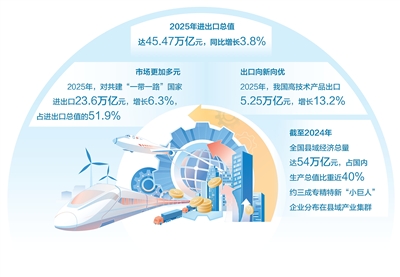
向新而行,站稳风口还要找准接口(每周经济评论)
Ren Min Ri Bao· 2026-01-26 01:06
围绕新"新三样",新政策举措接连落地。 先说机器人。北京近日首设机器人专业职称,7月将启动首次评审,为的是让人才需求跟上产业热度。 上海海关为机器人上"户口",以精准统计更好支持行业发展。从蹒跚起步到奔跑赛场、腾空起舞,机器 人加速进化。 数据来源:国家统计局等 体"。新一批在全国复制推广的25项跨境贸易便利化措施公布,支持"空中丝绸之路"发展等。政策因时 而动、因势而变,护航经济大船行稳致远。 快中有慢,方显定力。抢位更要错位,才能在空间坐标中找准接口,各展所长。 找准自身优势和全国大局的接口,在深度参与全国统一大市场建设中大展身手。追"新",不是不顾实 际、盲目追风口,而是立足地区差异性,以一域之特色服务全局之所需。广东深圳依托珠三角制造业集 群优势,在具身智能产业上投早、投小、投硬科技。重庆人工智能湾区建设启动,发布"渝车出海"等12 个案例。这启示我们,只有正视客观差别,厚植特色优势,才能杜绝贪大求全,找准向新发展的赛 道,"既为一域争光、更为全局添彩"。 找准接口,顺势而为。4部门推进职业技能证书互通互认,促进技能人才合理顺畅流动。商务部部署健 全现代市场和流通体系,完善现代商贸流通体系。借助全国统 ...
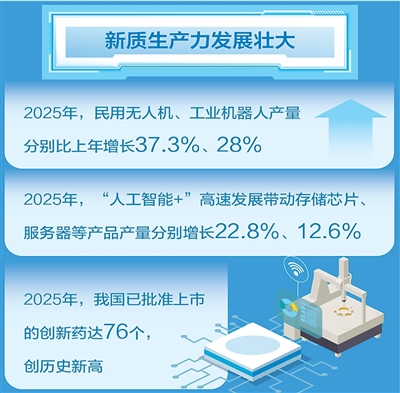
让志愿服务在阳光下闪耀(人民时评)
Ren Min Ri Bao· 2026-01-26 01:06
美好的事业,值得用心守护。让每一次善举都清澈透明,必能为社会文明添砖加瓦,让生活更有温度、 更具希望 志愿服务犹如一束温暖的光,照亮他人也温暖社会,用点滴善举传递真善美、汇聚正能量,是衡量社会 文明程度的重要标尺。 近期,中央社会工作部公布了志愿服务领域7个突出问题典型案例,涉及售卖虚假志愿服务时长、以志 愿服务名义为营利性活动引流等乱象。公开曝光,不只是对歪风邪气的当头棒喝,更彰显推动新时代志 愿服务高质量发展的决心。 志愿服务的本质是超越物质回报的利他行为,旨在促进公共福祉而非个人利益,传递奉献、互助的精神 力量,塑造温暖向上的社会文化。虚假时长、逐利变现等问题,扭曲了志愿服务无偿、诚信等原则,让 宝贵的志愿资源流入投机者手中。乱象若不遏制,必然导致参与者流失、全社会质疑,最终损害整个志 愿服务生态。 纠治志愿服务领域存在的突出问题,不光要纠偏乱象,更要抚平负面影响。用公开典型案例的方式加强 警示教育,既能震慑那些动歪心思的人,更能增进公众的信任。通过主动曝光、强化整改,让全社会看 见行动、看见实效,方能守住这份事业的美好底色。 健全的制度,是志愿服务行稳致远的"安全带"。"十五五"规划建议提出:"发展志 ...
向太空要空间(微观)
Ren Min Ri Bao· 2026-01-26 01:06
Core Viewpoint - China has submitted an application to the International Telecommunication Union for frequency and orbital resources for an additional 203,000 satellites, covering 14 satellite constellations, marking a new record for the country in terms of application quantity [1] Group 1: Industry Development - The commercial space industry in China is rapidly advancing, with projections indicating that the industry scale will reach between 2.5 trillion to 2.8 trillion yuan by 2025, involving over 600 related enterprises [2] - The global low Earth orbit (LEO) satellite planning has surpassed 100,000 satellites, indicating a new phase of dense networking and large-scale development in the industry [1][2] - The construction of a LEO satellite internet requires a high number of satellites, necessitating the deployment of hundreds of satellites within one to two years to establish a self-controlled LEO satellite internet [2] Group 2: Technological Innovation - The "Thousand Sails Constellation" project employs a strategy of "developing one generation, pre-researching one generation, and planning one generation," allowing for continuous optimization based on in-orbit performance [3] - Collaborative innovation is essential, as breakthroughs in upstream materials and components require validation in the midstream manufacturing process, while downstream application demands can drive technological research [3] Group 3: Market Applications - The commercial space sector has diverse application scenarios, including eliminating communication blind spots in remote areas, providing real-time communication for ocean-going vessels, and delivering remote sensing data for precision agriculture [4] - The policy environment for commercial space has been continuously optimized, with initiatives such as the establishment of a commercial space administration and the facilitation of commercial rocket companies accessing the Science and Technology Innovation Board [4]
国家发展改革委印发意见:推进城际铁路健康可持续发展
Ren Min Ri Bao· 2026-01-26 00:55
日前,国家发展改革委印发《关于推进城际铁路健康可持续发展的意见》(以下简称《意见》)。这是国 家首次针对城际铁路出台文件,将进一步加强政策引导和支持,推动城际铁路实现更高质量、更可持续 的发展。 明确监管要求。要求国家铁路局履行行业监督管理部门职责,压实地方政府工程质量安全监管责任。落 实地方政府支出责任,明确新建城际铁路项目资本金比例不低于50%,不得违规举债融资,既有城际铁 路运营10年后未实现现金流平衡的地区,也要暂停新建城际铁路项目,防范债务风险。 明确管理体系。建立国家统筹、省负总责的实施机制,发挥部门间、央地间、政企间合力,明确由国家 发展改革委会同自然资源部等统筹推进城际铁路发展,省级有关部门组织落实城际铁路规划、设计、建 设、运营等各环节具体工作。 (责任编辑:张紫祎) 城际铁路是城市群内重要交通方式。国家发展改革委新闻发言人表示,国家近年来统筹推进城际铁路规 划建设,在部分重点区域积极打造"轨道上的城市群",有力支撑了区域重大战略和新型城镇化战略的深 入实施。 《意见》的主要内容包括以下几个方面。 明确功能定位。城际铁路是城市群节点城市间的骨干旅客运输方式,重点满足1至2小时通勤、休闲、商 ...
图谋修改“无核三原则”,高度警惕日本重拾核武装旧梦
Ren Min Ri Bao· 2026-01-26 00:53
Core Viewpoint - Japan's recent political discourse indicates a potential shift towards nuclear armament, challenging its post-war pacifist stance and raising concerns about regional security and global nuclear non-proliferation efforts [1][3]. Group 1: Japan's Military Aspirations - The right-wing factions in Japan are pushing for a re-evaluation of the post-war military constraints, aiming to accumulate political capital for amending the "Peace Constitution" and establishing Japan as a "military power" [2]. - Discussions surrounding nuclear policy are intended to weaken the post-war system's restrictions, indicating a desire for military expansion [2]. Group 2: Testing Policy Boundaries - Japanese politicians are using provocative statements about nuclear armament to gauge domestic and international reactions, assessing the feasibility and resistance to nuclear armament for future policy adjustments [2]. - This strategy serves as a means to prepare public opinion for potential policy changes regarding nuclear capabilities [2]. Group 3: Enhancing Deterrence and Alliance Dynamics - Japan views "self-reliant nuclear capabilities" as a way to reduce dependence on its alliance with the United States and to enhance its own deterrent power [2]. - There is a desire among Japanese right-wing factions to increase their role in nuclear discussions within the alliance, thereby improving their bargaining power in the nuclear deterrence framework [2]. Group 4: Strategic Pressure on Neighbors - Japan aims to strengthen its military deterrence capabilities in the Taiwan Strait, East China Sea, and surrounding areas to influence the strategic calculations and actions of neighboring countries [2]. - This approach seeks to position Japan more favorably within the regional power dynamics [2]. Group 5: Implications of Revising the "Three Non-Nuclear Principles" - The potential modification of Japan's "Three Non-Nuclear Principles" poses a significant challenge to the global nuclear non-proliferation framework and could destabilize international peace [3]. - Upholding the integrity of these principles is seen as Japan's responsibility towards history, regional stability, and future generations [3].
合肥以“细腻针法”推进保护性更新——城市在“长大” 记忆未走远
Ren Min Ri Bao· 2026-01-26 00:44
《人民日报》(2026年01月25日 第07版) 图①:改造后的撮造山巷。何 刚摄 图②:改造后的勤劳巷。袁鸿雁摄 图③:合肥城市记忆馆利用多种手段,展示合肥城市发展历程。图为馆内陈列。本报记者 王 珏摄 转机始于2019年。随着合肥市对老城更新保护重视程度的提升,庐阳区专门成立了老城保护更新管 理服务中心,淮河路步行街片区的大规模有机更新正式启动。 图④:逍遥津公园。何 刚摄 冬日的安徽合肥,逍遥津公园里,游人漫步于张辽塑像旁,遥想三国风云;淮河路步行街上,老字 号与新店铺比邻而居,传统技艺与现代创意共生;工业遗产内,老厂房和新业态错落交融。一幅既饱含 历史厚度,又充满当代活力的城市人文画卷,正在这里徐徐铺展。 "5公里长的主干道,5万常住人口,5家铁匠铺……"这曾是老一辈合肥人口中"江淮小邑"最为形象 的素描。如今,翻开合肥的新名片:市域面积1.14万平方公里,常住人口逾千万,经济规模突破万亿 元,科技企业云集……数字的巨变,勾勒出这座城市数十年来惊人的发展轨迹与成长速度。 在"长大"的过程中,合肥以保护性更新的"细腻针法",让历史的厚重感与未来的探索性在这座城市 的肌理中交织。 焕新步行街区,激活百年风 ...

大力提振消费的战略意义和实践要求
Ren Min Ri Bao· 2026-01-26 00:12
Core Viewpoint - The Chinese government emphasizes the importance of boosting consumption as a key driver for economic growth and stability, with strategic plans to enhance domestic demand and consumer spending [1][2][4]. Group 1: Strategic Importance of Consumption - Consumption is identified as the foundation of the national economy and a crucial engine for economic growth, with ongoing emphasis from the central government on its role [2][4]. - The government aims to establish a robust domestic market by prioritizing domestic demand and enhancing consumer spending as part of its economic strategy [1][2][4]. Group 2: Economic Development and Consumption Trends - As China transitions towards a high-income economy, the shift from investment-driven growth to consumption-driven growth is seen as a natural progression, supported by a large domestic market [3][4]. - The potential for consumption growth remains significant, with current consumer spending levels lower than those in developed countries, indicating room for expansion [8][9]. Group 3: Factors Supporting Consumption Growth - Rising household incomes and the expansion of the middle-income group are expected to drive consumption upgrades, with average disposable income projected to grow by 5.4% annually during the 14th Five-Year Plan [9][10]. - Urbanization efforts are anticipated to further enhance consumption, with estimates suggesting that a 1% increase in urbanization could generate over 200 billion yuan in additional consumer demand [9]. Group 4: Consumption Structure and Quality Upgrades - The consumption structure is shifting towards higher quality and service-oriented products, with significant growth expected in sectors such as healthcare and digital services [10]. - The rise of new consumption patterns, including digital and green consumption, is expected to create new market opportunities, with e-commerce continuing to thrive [10]. Group 5: Policy Measures to Stimulate Consumption - The government plans to implement targeted actions to boost consumption, focusing on enhancing residents' income, improving social security systems, and expanding the supply of quality goods and services [11][12][14]. - A comprehensive policy framework is being developed to support consumption, including fiscal measures, financial incentives, and regulatory improvements to create a favorable environment for consumer spending [15].