Xin Hua Cai Jing

Search documents
【环球财经】摆脱两年衰退 德国经济2025年实现小幅增长
Xin Hua Cai Jing· 2026-01-15 14:39
Economic Growth - After two consecutive years of recession, the German economy is projected to grow by 0.2% in 2025 according to preliminary calculations by the Federal Statistical Office of Germany [1] Consumption and Investment - Household consumption is expected to increase by 1.4%, while government consumption is projected to rise by 1.5% in 2025 [2] - Total asset investment in Germany is forecasted to decline by 0.5%, with construction investment decreasing by 0.9% for the fifth consecutive year [1][2] Export and Import Trends - German exports are anticipated to decrease by 0.3% in 2025, marking the third consecutive year of decline, while imports are expected to grow significantly by 3.6% after two years of decline [2] Sector Performance - The manufacturing sector is expected to see a continuous output decrease for the third year, with a year-on-year decline of 1.3%, particularly in the automotive and mechanical engineering industries [1] - The construction industry is projected to decline by 3.6% due to high construction costs, while the service sector shows mixed results with certain industries like sports and entertainment declining, but trade, transportation, accommodation, and food services growing by 1.2% [1]
印尼取消B50政策叠加油价下跌 棕榈油继续回落
Xin Hua Cai Jing· 2026-01-15 14:39
Group 1 - The cancellation of Indonesia's B50 biodiesel policy is expected to negatively impact palm oil prices, leading to a decline in Malaysian palm oil for three consecutive trading days [1] - The Indonesian government will continue with the B40 biodiesel blending policy and is preparing for a potential B50 implementation later in the year, but current market conditions favor maintaining the B40 ratio [1][2] - The market sentiment is currently bearish due to the cancellation of the B50 plan, but there is an expectation of marginal improvement in the short-term supply-demand fundamentals, particularly from major consuming countries like India [1][3] Group 2 - The palm oil export volume from Malaysia increased by 17.53% in the first half of January compared to the same period last month, indicating improved demand from major consumers [2] - The overall market is experiencing volatility, with expectations that Indian consumption and potential adjustments in U.S. biodiesel policies may support demand for oils [3] - MBSB Research forecasts a moderate growth of 1.0% in palm oil production for 2026, with exports expected to remain low at 15.1 million tons and ending stocks at a high of 3.18 million tons due to ongoing weak demand [3]
【环球财经】欧元区2025年11月工业产出环比增长0.7%
Xin Hua Cai Jing· 2026-01-15 14:36
Core Insights - The Eurozone's industrial production showed a month-on-month increase of 0.7% in November 2025, while the EU's industrial production rose by 0.2% [1] - Year-on-year, the Eurozone's industrial production grew by 2.5%, and the EU's by 2.2% [1] Monthly Performance - In November, capital goods in the Eurozone led the growth with a 2.8% increase, while energy, durable goods, and non-durable goods saw declines of 2.2%, 1.3%, and 0.6% respectively [1] - For the EU, capital goods increased by 2.5%, while energy, durable goods, and non-durable goods experienced declines of 1.7%, 1.8%, and 1.2% respectively [1] - Estonia recorded the highest month-on-month growth at 6.0%, followed by Lithuania at 5.8% and the Czech Republic at 2.3%. Luxembourg had the largest decline at 7.3%, with Denmark and Portugal declining by 5.1% and 3.0% respectively [1] Yearly Performance - Year-on-year, capital goods in the Eurozone grew by 3.6%, non-durable goods by 3.4%, intermediate goods by 1.1%, and energy by 0.5%, while durable goods fell by 2.1% [2] - In the EU, capital goods increased by 4.0%, non-durable goods by 2.6%, intermediate goods by 0.9%, and energy decreased by 0.3%, with durable goods declining by 2.9% [2] - Ireland had the highest year-on-year growth at 10.6%, followed by Cyprus at 10.5% and Croatia at 8.8%. Bulgaria experienced the largest decline at 9.3%, with Malta and Hungary declining by 8.2% and 5.5% respectively [2]
2025年企业外汇套期保值比率升至30% 为历史新高
Xin Hua Cai Jing· 2026-01-15 14:35
Core Insights - By 2025, the foreign exchange market transaction volume is projected to reach $42.6 trillion, with corporate foreign exchange hedging ratios increasing to 30% [1] - As of September, China's foreign assets and liabilities have reached historical highs of $11.5 trillion and $7.5 trillion, respectively [1] - The State Administration of Foreign Exchange (SAFE) emphasizes the importance of balancing domestic and international needs while enhancing the effectiveness of foreign exchange management to support the real economy [1] Foreign Exchange Management - SAFE has introduced a comprehensive package of 28 measures to support stable foreign trade development, deepen cross-border investment and financing reforms, and aid the construction of free trade pilot zones [3] - Since the implementation of these policies in the fourth quarter of last year, over $220 billion in related facilitation services have been processed nationwide [3] - The support for cross-border e-commerce has enabled over 10 billion online foreign exchange transactions, benefiting more than 1.8 million small and micro enterprises [3] - The number of banks participating in foreign exchange business reforms has expanded from 16 at the end of 2024 to 30, covering major banks involved in cross-border transactions [3] - In 2025, cross-border payment transactions under the "免审单" (exemption from review) policy are expected to reach $2.3 trillion, a 33% increase from 2024 [3] Foreign Exchange Market Overview - Total cross-border income and expenditure for enterprises and individuals is projected to reach $15.6 trillion in 2025, reflecting a nearly 10% increase from 2024 [4] - The net outflow of cross-border funds has reversed to a net inflow of $302.1 billion, with a bank settlement surplus of $196.6 billion [4] - Direct investment in China is showing a net inflow, while domestic entities are increasing their foreign investments [4] - The stability of foreign exchange reserves is maintained, with the RMB exchange rate remaining stable at a reasonable and balanced level [5] Future Outlook - SAFE plans to deepen and expand reforms in the foreign exchange sector, aiming to create a policy environment that is both flexible and well-regulated [5]

海南着力构建“快速、严格、协同”的知识产权全链条保护体系
Xin Hua Cai Jing· 2026-01-15 14:35
Core Viewpoint - Hainan Province is focusing on developing a comprehensive intellectual property protection system during the 14th Five-Year Plan period, aiming for the highest growth in the national intellectual property development index by 2025 [1][2]. Group 1: Intellectual Property Protection System - Hainan Province is building a "fast, strict, and collaborative" intellectual property protection system to support local industries [1]. - The establishment of national-level intellectual property protection centers in Sanya and Haikou has created a "fast track" for patent pre-examination, enhancing innovation in key industries such as seed, marine, equipment manufacturing, and biomedicine [1]. Group 2: Strict Protection Measures - The introduction of the "Hainan Free Trade Port Intellectual Property Protection Regulations" aligns with international standards, aiming to create a high-level intellectual property protection system [2]. Group 3: Collaborative Protection Mechanism - A collaborative protection mechanism has been established involving multiple departments such as courts, copyright, agriculture, and customs to combat infringement and counterfeiting [2]. - During the China International Consumer Products Expo, a knowledge property protection workstation was set up to ensure proactive measures against potential issues with exhibited products [2]. Group 4: Future Directions - The Hainan Intellectual Property Bureau plans to deepen reforms and innovations in the intellectual property sector, focusing on the needs of local industries and enhancing public services to support the development of a high-standard free trade port [2].
【环球财经】欧盟11月对外贸易顺差收窄
Xin Hua Cai Jing· 2026-01-15 14:32
Core Viewpoint - The Eurozone and EU experienced a decline in trade surplus in November 2025 compared to the previous year, with notable decreases in exports and imports, particularly in manufactured goods [1] Group 1: Eurozone Trade Data - In November 2025, the Eurozone recorded a trade surplus of 99 billion euros, down from 154 billion euros in November 2024 [1] - Eurozone exports amounted to 240.2 billion euros, reflecting a year-on-year decrease of 3.4%, while imports were 230.3 billion euros, down 1.3% year-on-year [1] Group 2: EU Trade Data - The EU's trade surplus in November 2025 was 81 billion euros, a decrease from 118 billion euros in the same month the previous year [1] - EU exports totaled 213.8 billion euros, showing a year-on-year decline of 4.4%, and imports were 205.7 billion euros, down 2.9% year-on-year [1] - The decline in surplus is primarily attributed to a decrease in the surplus from the manufacturing sector, particularly in machinery, vehicles, and other manufactured goods, although a narrowing energy deficit provided some offset [1] Group 3: Trade with the US - In November 2025, EU exports to the US were 37.4 billion euros, a significant year-on-year decline of 20.3%, while imports from the US were 26.7 billion euros, down 7.1% [1] - The trade surplus with the US fell to 10.7 billion euros, markedly lower than the 18.2 billion euros recorded in the same month the previous year [1] Group 4: Trade with China - The EU's exports to China in November 2025 were 16.4 billion euros, a slight year-on-year decrease of 1.2%, while imports from China rose to 48.7 billion euros, an increase of 3.8% [1] - The trade deficit with China expanded to 32.3 billion euros, compared to 30.3 billion euros in the same month the previous year [1]
【财经分析】高位震荡下不乏机遇 2026年一季度转债市场如何布局?
Xin Hua Cai Jing· 2026-01-15 14:28
新华财经上海1月15日电(记者杨溢仁)2026年以来,转债市场延续了2025年末的高位运行态势。就市 场联动看,转债表现与A股的强势走势深度绑定,年初上证指数突破4000点带动风险偏好提升,可转债 基金成为了债基中的"亮色",截至1月7日,其年内的平均涨幅超3.6%,多只产品回报超6%,显著跑赢 纯债基金。 股性主导定走势科技赛道独占鳌头 就核心指数表现来看,截至2026年1月13日,中证转债及可交换债指数(931078)报收于549.8680点, 较2026年年初的525.5226点上涨4.63%,期间最高触及557.4701点,创下阶段性新高。 量能层面同步放大,1月以来的市场成交额稳步攀升。公开数据显示,1月12日的转债市场成交额达到了 1080.95亿元,较1月5日的834.60亿元增长29.54%;1月13日虽有回调,但成交额仍维持在1023.15亿元的 高位水平,显示市场交投活跃度持续提升。 至于行业表现方面,当前的结构性行情凸显,脑机接口、AI医疗、商业航天等新兴科技领域转债表现 强势,如塞力转债因脑机接口概念,在1月5日、1月6日两个交易日内的累计涨幅达到了44%;传统行业 中,基本面改善的标 ...
美联储官员博斯蒂克:政府停摆扭曲了数据 直至4月或5月才能消除影响
Xin Hua Cai Jing· 2026-01-15 14:15
Group 1 - Federal Reserve official Bostic stated that the government shutdown has distorted data, and the impact will not be fully eliminated until April or May [1]
美联储官员博斯蒂克预计 通胀压力将持续到2026年
Xin Hua Cai Jing· 2026-01-15 14:01
美联储官员博斯蒂克预计,通胀压力将持续到2026年。 (文章来源:新华财经) ...
债券ETF业务发展现状及展望
Xin Hua Cai Jing· 2026-01-15 13:59
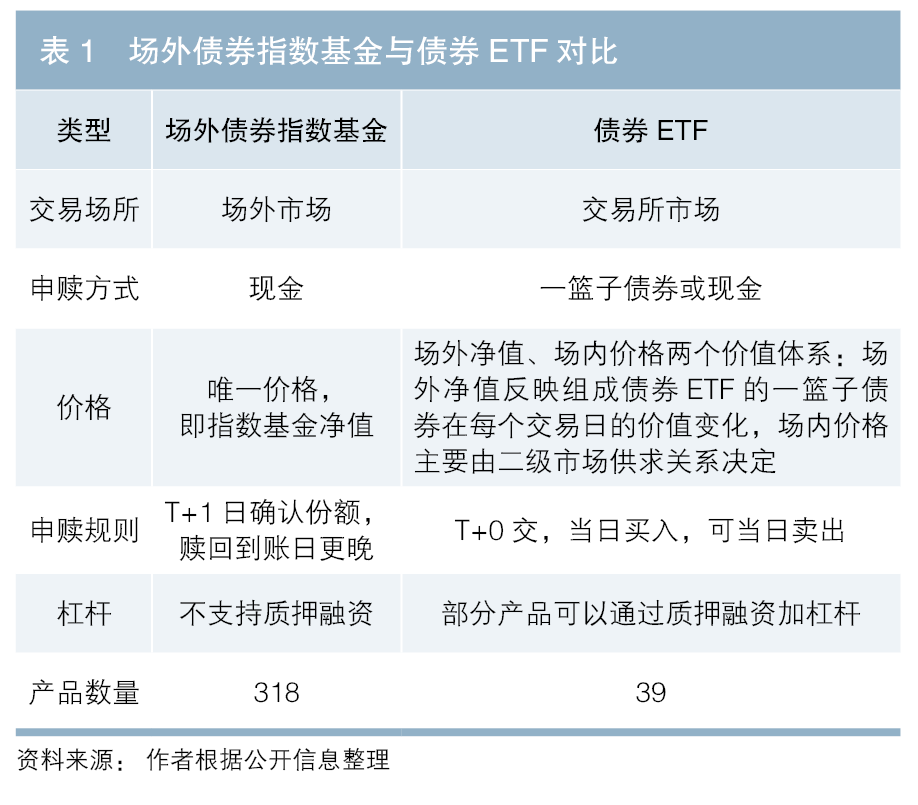
Core Viewpoint - The Chinese bond ETF market is experiencing rapid growth due to a low interest rate environment and accelerated passive transformation in the asset management industry, with significant policy support and product innovation driving this expansion [1][6][20]. Group 1: Market Development - The first batch of 8 benchmark market-making credit bond ETFs was listed on January 7, 2025, on both the Shanghai and Shenzhen Stock Exchanges [1]. - On July 17, 2025, the China Securities Regulatory Commission announced the acceleration of the launch of Sci-Tech Innovation Bond ETFs, with 10 such ETFs approved for listing [1]. - As of August 2025, the total size of existing bond ETFs reached 564.31 billion yuan, with a compound annual growth rate of 137.04% from 2021 [7][9]. Group 2: Bond ETF Characteristics - Bond ETFs are passive index bond funds that trade on exchanges, consisting of a basket of bonds, and allow for T+0 trading [2][4]. - The transparency of bond ETF components is high, with regular disclosures from index companies and fund managers [4]. - Bond ETFs can engage in general pledge-style repurchase agreements, enhancing liquidity, with 9 credit bond ETFs included in the pledge library as of May 29, 2025 [5]. Group 3: Types and Structure of Bond ETFs - As of August 2025, there are 39 bond ETFs categorized into three main types: interest rate bond ETFs, credit bond ETFs, and convertible bond ETFs, with credit bond ETFs dominating in both number and scale [9][11]. - The credit bond ETF market saw significant growth in 2025, with the scale increasing from 54.1 billion yuan at the end of 2024 to 350.4 billion yuan by August 2025 [11]. - Convertible bond ETFs experienced growth from 6.6 billion yuan at the end of 2023 to 43.9 billion yuan at the end of 2024, maintaining a steady increase into 2025 [12]. Group 4: Challenges in the Bond ETF Market - The liquidity of bond ETFs is characterized by a concentration at the top, with the top 5 ETFs accounting for 62.30% of total market turnover, while many products have low trading volumes [16]. - The investor structure is predominantly institutional, with low participation from individual investors, leading to homogeneity in trading behavior [17]. - There is significant product homogeneity, with many ETFs tracking similar indices, which can lead to resource wastage and liquidity issues for smaller products [18]. Group 5: Future Outlook and Recommendations - Recommendations include optimizing market maker arrangements to improve liquidity, such as adjusting assessment criteria and providing subsidies for market makers [20]. - Diversifying the types of products offered can attract a broader range of investors, including individual and overseas investors, enhancing market stability [21]. - Improving regulatory frameworks and infrastructure is essential for encouraging product innovation and facilitating smoother cross-market operations [22][23].