
Zhong Guo Hua Gong Bao

Search documents
长庆油田连续6年保持高产规模
Zhong Guo Hua Gong Bao· 2025-12-03 02:52
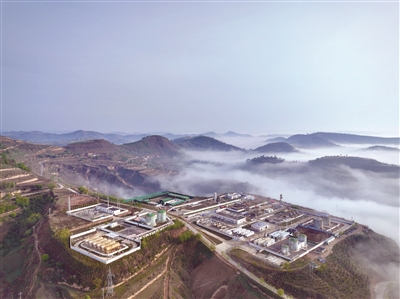
Core Insights - Changqing Oilfield has achieved an annual oil and gas equivalent production of over 60 million tons, maintaining this high production level for six consecutive years since becoming China's first large-scale oil and gas field of this size in 2020 [1] Group 1: Production Achievements - The exploration and development area of Changqing Oilfield is primarily located in the Ordos Basin, characterized by low pressure, low permeability, and low abundance, making development challenging [2] - In 2024, Changqing Oilfield's annual oil and gas equivalent production is expected to reach a historical high, accounting for one-sixth of the total domestic oil and gas production for that year [2] Group 2: Technological Advancements - Changqing Oilfield has increased its efforts in exploration, development, and technological innovation to overcome the challenges of "three lows" in oil and gas reservoirs [2] - The oilfield has established China's first 3 million-ton shale oil production base and a 50 billion cubic meter gas area [2] - A hydraulic fracturing test site has been built at the Qingcheng shale oil platform to enhance single well production and promote the effective development of shale oil [2] - The first "zero-support agent" fracturing operation for coalbed methane was implemented at the Shaanxi Mizhi coalbed gas production site, marking a significant transition in fracturing methods [2] - In the Longdong Yuan 284 block, a demonstration area for the transformation of ultra-low permeability oil reservoirs to water injection development has been established, increasing oil extraction speed by four times and annual production from 48,000 tons to 196,000 tons [2]

2025 AI+石油化工产业数字化转型与融合发展大会: AI正从单点应用走向平台化赋能
Zhong Guo Hua Gong Bao· 2025-12-03 02:40
Core Insights - The conference on "AI + Petrochemical Industry Digital Transformation" highlighted the shift of AI technology from single-point applications to platform-based empowerment [1][2] - Experts emphasized the need for the petrochemical industry to focus on data resources and scenario-driven approaches for digital transformation [1] Group 1: Data and AI Integration - The petrochemical industry should reconstruct its data system to ensure data is usable, manageable, and trustworthy [1] - High-value datasets should be developed to drive the evolution of intelligent models, making data usable, trainable, and capable of advancing model performance [1] - A collaborative industry data ecosystem is essential to allow data to flow and unlock industry value [1] Group 2: Safety and Operational Efficiency - Safety in production is a critical focus area for intelligent transformation, with a need for chemical safety education and technological innovation to enhance safety standards [1] - The industry should adopt principles such as reducing human presence in hazardous areas and automating inspections to improve safety levels [1][2] - AI-driven process optimization can provide new pathways for complex chemical process improvements, enhancing safety and reducing workload [2] Group 3: Technological Support and Innovation - The development of an industrial operating system through concept innovation and platform integration can support the industry's transition to smart manufacturing [2] - The launch of the SRA process comprehensive risk analysis software aims to provide systematic and precise risk assessments for complex tank areas, already implemented in companies like Sinopec [2]
华为中国政企业务油气矿山军团作答: AI技术如何扎根能源化工行业?
Zhong Guo Hua Gong Bao· 2025-12-03 02:38
Core Insights - The core idea presented is that advanced technology, particularly AI, should be integrated into the oil and gas industry by addressing real business pain points, allowing technology to grow from the ground up [1] Group 1: AI Application in Oil and Gas - The traditional energy and chemical industry faces challenges such as safety management, efficiency improvement, and green transformation, which create significant pressure for development [2] - Huawei has partnered with Yuntianhua to create the world's first real-time online optimization technology (RTO) model for coal gasification, which is expected to save over 9,000 tons of coal and reduce CO2 emissions by more than 20,000 tons annually, generating over 10 million yuan in direct economic benefits each year [2] - In equipment maintenance, Huawei collaborates with Wanhua to utilize the Pangu AI model for predictive maintenance, allowing for early identification of equipment aging trends [2] Group 2: Overcoming Fragmentation in AI Implementation - As AI applications deepen, the complexity of models and the volume of data increase, leading to challenges in avoiding fragmented AI projects within the energy and chemical industry [3] - Huawei proposes a "dual-drive" solution through "root technology + ecological collaboration" to transition from isolated AI applications to coordinated intelligence across the entire industry chain [3] - The economic benefits of industrial AI have matured, transforming AI-managed systems from being mere "landscapes" to integral parts of operations [3] Group 3: Integration of AI Models - Industrial large models encompass various categories such as language, scientific computing, prediction, and machine vision, requiring a comprehensive approach to integrate different systems into a unified model [4] - Huawei's collaboration with China National Petroleum Corporation on the Kunlun large model demonstrates the ability to quickly implement and optimize across 119 business areas through a unified platform [4] - The company is focused on establishing industry digital standards and ensuring that each AI application can evolve and be replicated effectively [4] Group 4: Data-Driven Transformation - The core driving force behind the intelligent development of industries like oil and gas is shifting from process digitization to a deep integration of data and AI [5] - Huawei has introduced a cloud-edge collaborative architecture and layered model construction to facilitate rapid development of scenario applications based on general large models, lowering the barriers to AI usage [5] Group 5: Infrastructure and AI Value - The ability of infrastructure must grow in tandem with the value generated from AI applications, as these applications produce vast amounts of operational data and optimization needs [6] - Huawei collaborates with leading companies across industries to build competitive solutions that promote intelligent development [6] - The future trend indicates a transition of high-risk job roles to digital operators and intelligent engineers, marking a significant shift in the oil and gas industry's core operational systems [6]
涨超10%!己内酰胺价格为何大幅反弹?
Zhong Guo Hua Gong Bao· 2025-12-02 09:53
Core Viewpoint - The caprolactam market has begun to rebound after hitting a five-year low price of 8050 yuan per ton in early November, driven primarily by self-initiated production cuts by companies to stabilize prices [2][3][5]. Price Trends - As of November 24, prices in East China rose to 8700 yuan per ton, and by November 26, they reached 9000 yuan, marking an increase of 950 yuan or 11.8% from the low point [2][6]. - The average production profit from January to October was -1557 yuan, with some companies experiencing losses exceeding 600 yuan per ton in October [4]. Production Capacity and Demand - The caprolactam production capacity is projected to increase to 6.94 million tons in 2024, with an output of 6.54 million tons [3]. - The compound annual growth rate of caprolactam consumption over the past five years is 13.5%, with a significant demand increase expected in 2024, particularly in the textile sector, where demand growth could reach 28% [3]. Industry Actions - Companies have voluntarily reduced production by 20% to maintain price stability, with several major firms leading this initiative [5]. - By November 20, industry operating rates had dropped to around 80% due to these production cuts [5]. Supply Chain Dynamics - The reduction in caprolactam supply has led to a decrease in inventory to approximately 32,500 tons, creating a tighter supply situation that supports price increases [6]. - Analysts suggest that the ongoing production cuts will likely continue to support caprolactam prices and positively influence downstream products like nylon 6 [7]. Global Market Influences - Japanese companies are adjusting their production strategies, with Ube Industries announcing an earlier-than-expected reduction in production in Thailand, impacting related products like caprolactam [8].

天津静海:10亿元储能项目建成投产
Zhong Guo Hua Gong Bao· 2025-12-02 06:09
Core Insights - The production launch of Beijing Tianqi Hongyuan New Energy Technology Co., Ltd.'s energy storage system integration factory and R&D center marks a significant milestone in the company's operations and strategic expansion in the Beijing-Tianjin-Hebei market [2][3]. Group 1: Project Overview - The project has a total investment of 1 billion yuan, with an expected annual output value of 2.5 billion yuan and a tax contribution of 20 million yuan, creating over 300 jobs [4]. - The factory covers an area of 17,000 square meters and features an intelligent production line capable of an annual production capacity of 4 GWh [3][4]. Group 2: Technological and Operational Highlights - The production line integrates advanced automation, showcasing precision in processes such as cell assembly and module integration, reflecting the company's commitment to modern manufacturing [2][3]. - The R&D center is equipped with capabilities for the independent development of core systems including PCS (Power Conversion System), BMS (Battery Management System), and EMS (Energy Management System), serving as a core engine for technological innovation [3]. Group 3: Strategic Importance - The project is positioned as a key player in the energy storage industry, which is crucial for achieving carbon peak and carbon neutrality goals, and aims to establish a complete industrial ecosystem from equipment manufacturing to application scenarios [4]. - The collaboration between government and enterprise has facilitated a supportive business environment, significantly reducing project approval times and enhancing operational efficiency [3][4]. Group 4: Future Outlook - The company plans to launch five new high-performance energy storage products tailored for new power systems, targeting diverse application scenarios including commercial, grid-side, and residential uses [4]. - The local government anticipates that the project will attract more quality enterprises to the region, fostering a green industry cluster that contributes to low-carbon development in the Beijing-Tianjin-Hebei area [5].
同兴科技拟建钠电产业项目
Zhong Guo Hua Gong Bao· 2025-12-02 04:26
Core Viewpoint - Tongxing Technology (003027) has signed an investment cooperation framework agreement with the People's Government of Ping Shan County, Yibin City, Sichuan Province, to establish a production capacity of 100,000 tons of sodium battery cathode materials and 6 GWh of battery cells [1] Group 1 - The project will cover a total planned land area of approximately 380 acres [1] - The total planned investment for the project is approximately 3.2 billion yuan, with around 2 billion yuan allocated for the sodium battery cathode materials project and about 1.2 billion yuan for the battery cell project [1]

轮南油田成“零碳工厂”试点
Zhong Guo Hua Gong Bao· 2025-12-02 04:26
作为塔里木油田首个低碳示范区,轮南油田充分发挥区位优势、挖掘潜力及丰富太阳能资源,推动多技 术、多系统协同创新,通过光伏清洁替代、余热利用节能降耗、烟道气回注、辅助碳汇林和碳捕集利用 与封存(CCUS)等多能互补模式,实现油气生产"负碳运营"。"目前非化石能源消费占比已达 29.79%。"塔里木油田轮南采油气管理区执行董事、党委书记崔小虎介绍,"我们甚至直接用光伏电力为 井场电加热炉加热,替代传统燃气加热。" 在沙漠腹地,150亩"沙戈荒"空地上建有6兆瓦集中式光伏电站,15口单井场站铺设了1.45兆瓦分布式光 伏板,年发电量达1080万千瓦时,不仅满足轮南油田全年用电,余电还可返输电网。余热利用也成为节 能降碳的关键举措。油田利用压缩机出口130摄氏度的高温气体与供暖回水换热,实现年节约天然气97 万立方米,减排二氧化碳2097吨。此外,轮南油田租赁的8辆新能源电动车及2座光伏车棚,替代了老旧 燃油车,年节约汽油100余吨,实现减排304吨。 目前,轮南油田"零碳工厂"年碳排放量已由建设前的1.7万吨降为"负碳运营",实现每生产1吨原油减排 二氧化碳8.11千克。 中化新网讯 近日,2025年"零碳中国"标 ...
中国资环风热光热示范项目投运
Zhong Guo Hua Gong Bao· 2025-12-02 04:26
据了解,该项目将风热、光热技术与示范基地现有地热系统进行了深度耦合与智能协同,既成功构建起 风能、光能与地热优势互补、稳定高效的多元化绿色能源供应体系,也探索出一条资源循环利用新路 径。 "我们将退役新能源设备梯次利用作为打通'双碳'链条的关键环节,让退役风机、光伏'二次上岗',既缓 解风光产业固废压力,又降低清洁供热成本,真正实现'循环利用、变废为宝'。"资环新能源党委书 记、董事长王冬容介绍,"未来,我们将持续优化风能、光能、地热、生物质等多能互补体系,构建'风 光供热+地热+储能调峰'一体化系统,让退役的风光储设备在清洁供热全领域充分发挥效能。" 中化新网讯 11月26日,中国资环旗下资环新能源的首个风热、光热示范项目,在位于天津港 (600717)保税区的中国资环绿色低碳循环经济示范基地正式投运。 该项目的核心装备是一台200千瓦风力磁涡流热泵机组。它应用了基于空气动力学与电磁涡流制热理论 的风—热转换技术,能够将风能直接、高效地转化为热能,从而实现风能"宜电则电、宜热则热"的灵活 应用。这一技术不仅能有效缓解现有风力发电的弃风限电问题,大幅提高能源和设备利用率,也实现了 对退役风机关键设备的梯次利用 ...
友谊新材料BOPP薄膜项目投产
Zhong Guo Hua Gong Bao· 2025-12-02 04:26
Core Viewpoint - The production project of BOPP film and specialty tape by Guangdong Friendship New Materials Technology Co., Ltd. has officially commenced in Jiangmen Heshan Industrial City, filling a gap in the high-end functional film industry in South China [1] Group 1: Project Overview - The project is a key construction project in Guangdong Province with a total investment of 4 billion yuan, covering approximately 600 acres and being developed in two phases [1] - Phase one involves an investment of about 2 billion yuan, featuring two German Bruckner 10.4-meter BOPP film production lines and 30 specialty tape and winding film production lines, with an annual output of 200,000 tons of specialty tape and other high-end products [1] - Phase two is planned to be completed by 2026, with an expected annual output value of 2.25 billion yuan upon full production, contributing to a new materials industrial belt alongside Heshan Longi Green Energy and Delixi Optical Film projects [1] Group 2: Environmental and Technological Aspects - The project incorporates rooftop photovoltaic power generation and a fully enclosed workshop waste gas collection system, aiming to create a "smart manufacturing + low-carbon production" dual demonstration factory [1] - Environmental protection processes such as secondary condensation and zeolite adsorption are employed to achieve efficient waste gas treatment [1]
广东石化聚丙烯装置试用国产催化剂
Zhong Guo Hua Gong Bao· 2025-12-02 04:26
Core Insights - Guangdong Petrochemical has successfully completed the trial of domestically produced catalysts in its 200,000 tons/year polypropylene unit, producing the medium melt impact polypropylene product K8009, meeting all quality standards [1] - The company aims to reduce production costs and enhance supply chain security by promoting the localization of catalysts, which have previously relied on expensive imports [1][2] Group 1: Production and Technology - The 200,000 tons/year polypropylene unit utilizes the Japanese JPP company's Horizone process technology, capable of producing 55 grades of products including homopolymers and various copolymers [1] - The unit has previously used imported catalysts, which, while stable in performance, posed high costs and procurement risks due to reliance on a single supplier [1] Group 2: Catalyst Localization Efforts - The company has made significant progress in the localization of catalysts, with successful trials of domestically produced catalysts for low melt copolymer K8003 in late July, receiving positive market feedback [1] - The next steps involve closely monitoring downstream customer usage of the domestically produced catalysts to gather data and experience for a full replacement of imported catalysts [2]