
Zhong Guo Hua Gong Bao

Search documents
湿电子化学品制造体系的挑战与机遇会议:构建更为安全高效的供应链体系
Zhong Guo Hua Gong Bao· 2025-11-24 02:37
Core Insights - The wet electronic chemicals industry in China has made significant progress in the mid-to-low end market, but still faces challenges in high-end technology, necessitating innovation and supply chain collaboration for domestic product replacement [1] - Current domestic production rates vary across sectors: approximately 50% in semiconductors, 55% in new displays, and nearly full localization in photovoltaics [1] - The global semiconductor industry's recovery in 2024 is expected to drive demand for electronic wet chemicals, although there remains a gap in customized and high-end functional chemicals compared to international standards [1] Industry Developments - Research teams from domestic institutions are actively seeking breakthroughs in purification technologies for wet electronic chemicals, which are essential for meeting the increasing purity and performance requirements due to advancements in chip manufacturing processes [2] - The Chinese Academy of Sciences has made progress in developing purification technologies for electronic-grade solvents, including a multi-site basic functional ionic liquid catalyst for G4/G5 grade photoresist solvents [2] - New technologies, such as high-efficiency impurity penetration resistance, have been developed and successfully applied in producing high-grade wet electronic chemicals, significantly improving product quality [2]
电子气体技术及相关配套产业进展与市场趋势会议:强化需求导向的定制化合作开发
Zhong Guo Hua Gong Bao· 2025-11-24 02:37
Core Insights - The electronic specialty gas industry in China has made significant progress in market scale and technology, but still faces challenges in high-end product autonomy and risks of homogenization and supply chain vulnerabilities [1][2]. Market Growth - The electronic specialty gas market in China is steadily growing, with over 20 new suppliers added from 2017 to 2024, representing a growth rate exceeding 150% [1]. - In 2024, the sales revenue of domestic electronic gas companies reached 19.6 billion yuan, a year-on-year increase of 12.6%, with semiconductor manufacturing gases accounting for 9.09 billion yuan, also up by 12.6% [1]. Industry Challenges - Rapid expansion has led to homogenized competition, particularly in specialty gases used for cleaning, etching, and photolithography in integrated circuits, while further technological breakthroughs are needed for gases related to doping and deposition processes [2]. - The market for mid- and low-end electronic specialty gases is crowded, exemplified by NF3, where domestic production capacity is expected to exceed 60,000 tons per year against a global demand of approximately 40,000 tons [2]. Technological Development - To address industry challenges, companies are focusing on customized development based on downstream trends, particularly in the photovoltaic, display panel, and advanced packaging sectors [3]. - Collaborative efforts between academia and industry are being emphasized to accelerate the commercialization of technologies, as demonstrated by the successful launch of the world's first industrial demonstration unit for dichlorodihydrosilane (DCS) to produce silane, achieving a product purity of 7N [3].
2025湿电子化学品及电子气体高端发展会议:以科产融合数智创新加速国产替代
Zhong Guo Hua Gong Bao· 2025-11-24 02:35
Core Insights - The conference held on November 21 in Sichuan focused on how electronic chemicals can enhance domestic production rates and address the imbalance between low-end oversupply and high-end shortages through technological and industrial innovation [1] Group 1: Industry Challenges and Opportunities - The domestic production rate of electronic chemicals has improved, but high-end products still rely heavily on imports, necessitating a faster transition to a self-controlled industrial chain [1] - Key issues hindering industry development include insufficient R&D investment, a lack of talent, and reliance on imported critical equipment [1][2] - The development of high-end products for integrated circuits and display panels remains dependent on imports, while photovoltaic high-end products have achieved self-sufficiency [1] Group 2: Technological Innovations - Smart molecular engineering is identified as a historical opportunity for the fine chemical industry, encompassing molecular functionality, design, and manufacturing intelligence [2] - AI is seen as a new engine to solve critical challenges in electronic chemicals, helping to reduce costs and accelerate material iteration through data-driven approaches [2] - The industry is encouraged to avoid low-price competition and focus on the localization of high-end production equipment while also accelerating the training of specialized talent [2] Group 3: Conference Details - The conference was co-hosted by the China Chemical Industry News and the People's Government of Fushun County, with over 200 attendees including industry experts and government officials [3][6]


依氟而生 因氟而兴 向氟而强
Zhong Guo Hua Gong Bao· 2025-11-23 10:44
Core Viewpoint - The conference on high-end development of wet electronic chemicals and electronic gases highlighted the advancements in the fluorine materials industry, particularly in the Fushun Chenguang Chemical Park, which is focused on creating a comprehensive industrial ecosystem around fluorine chemicals and materials [1][4]. Group 1: Industrial Development - The Fushun Chenguang Economic Development Zone has established a modern chemical system centered on fluorine chemicals, transitioning from single basic chemical production to a diversified industrial cluster [3][4]. - The park has completed standardized factory buildings totaling 120,000 square meters and has added 4,000 acres of chemical land, focusing on high-end fluorinated chemicals and new materials for applications in various sectors [4][5]. Group 2: Technological Advancements - Zhonghao Chenguang Chemical Research Institute has developed nearly 200 core technology patents across seven product series, including fluororesins and fluororubbers, achieving international leading levels in several technologies [7]. - The products developed by Zhonghao Chenguang are essential in various industries, including aerospace, medical, and communications, showcasing the company's capability to reduce reliance on imported high-end fluorinated materials [7]. Group 3: Strategic Vision - The park aims to create a low-cost, core competitive advantage by integrating the chlor-alkali and fluorochemical industries, ensuring a complete industrial chain from basic raw materials to high-value fluorinated polymers and fine chemicals [4][5]. - The development strategy emphasizes collaboration with leading enterprises to enhance the fluorosilicon industry chain and attract new material production companies, fostering a conducive environment for advanced industrial clusters [5].
60亿元高端新材料项目进入实施阶段
Zhong Guo Hua Gong Bao· 2025-11-21 14:58
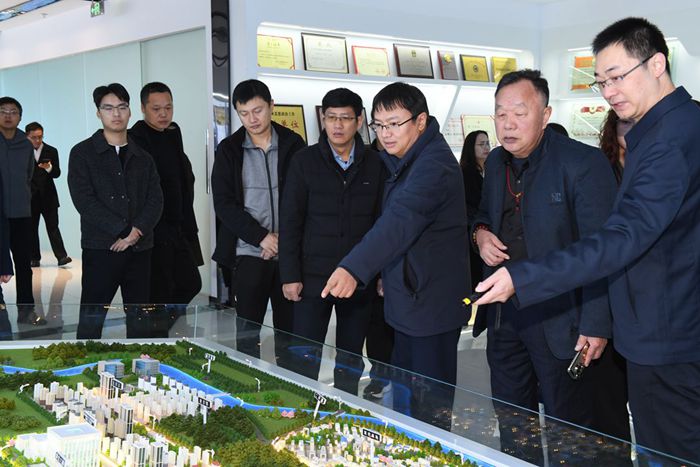
Group 1 - The core point of the news is the signing of an investment cooperation intention letter between Sinopec Yanshan Petrochemical Company and the Tianjin Economic and Technological Development Zone, marking the full implementation phase of the Tianjin South Port Green High-end Rubber New Materials Project with a total investment of approximately 6 billion yuan [1] - The project is planned to be executed in two phases, with the first phase involving an investment of 2.42 billion yuan, covering an area of 277,000 square meters, and the construction of two production facilities: 100,000 tons/year of solution-styrene-butadiene rubber and 100,000 tons/year of polybutadiene rubber, along with corresponding auxiliary facilities [1] - The second phase will focus on planning distinctive advantageous projects of Yanshan Petrochemical, which will be initiated based on the construction, processes, and market conditions of the first phase [1] Group 2 - The news also touches on the "14th Five-Year Plan" and the "anti-involution" policy aimed at building a new ecological environment for the chemical industry, indicating a strategic direction for future developments in the sector [1] - There is a discussion on the current state and misunderstandings of intellectual property rights within chemical enterprises, highlighting the need for better awareness and management of intellectual property [1] - The importance of protecting trade secrets in chemical enterprises is emphasized, including risk identification, high-risk scenarios, and the establishment of a protection system for trade secrets [2]

中煤榆林煤炭深加工基地项目大件设备吊装圆满收官
Zhong Guo Hua Gong Bao· 2025-11-21 05:25
Core Viewpoint - The successful completion of the lifting of four key pieces of equipment marks a significant milestone in the construction of the coal deep processing project in Yulin, undertaken by Sinopec's Fourth Construction Company [1] Group 1: Project Progress - The lifting of the last four critical devices (E-2701A/B and E-2614A/B) has been completed safely and smoothly, concluding the lifting tasks for the olefin separation unit [1] - The project has achieved its engineering control points on schedule, thanks to the optimization of construction plans and continuous improvement of construction methods [1] Group 2: Team Efforts - The successful completion of the lifting tasks is attributed to the collective efforts of all participating employees, laying a solid foundation for subsequent work such as the installation of process pipelines [1] - The project team is fully engaged and motivated, making steady progress towards the project's defined goals in the next construction phase [1]

国家碳达峰试点(成都)实施方案印发
Zhong Guo Hua Gong Bao· 2025-11-21 04:45
Group 1 - The core viewpoint of the news is the implementation of the "National Carbon Peak Pilot (Chengdu) Implementation Plan," which outlines eight key tasks to effectively promote the city's carbon peak pilot construction [1] Group 2 - The plan emphasizes the development and utilization of clean energy, including support for photovoltaic, hydrogen, and biomass energy applications, with a target of exceeding 1.5 million kilowatts of renewable energy installed capacity by 2030 [1] - The plan aims to optimize and adjust the industrial structure by exploring the construction of low-carbon and zero-carbon parks, focusing on energy structure transformation and resource-saving measures [1] - The advanced energy industry scale is expected to reach 200 billion yuan by 2027, with a focus on lithium batteries, new energy vehicles, and green hydrogen [1] Group 3 - The city plans to improve the resource utilization rates of urban solid waste, aiming for an 87% resource utilization rate for municipal waste and over 96% for general industrial solid waste by 2030 [2] - The plan includes a focus on green low-carbon technology innovation in fields such as hydrogen energy and new power systems, utilizing competitive approaches to accelerate breakthroughs in advanced technologies [2]
引领“双新”创新 前瞻产业未来——2025石油和化工行业推进中国式现代化发展大会分论坛“新能源新材料产业创新会议”观点集萃
Zhong Guo Hua Gong Bao· 2025-11-21 04:38
Core Insights - The conference focused on the modernization of the oil and chemical industry in China, addressing topics such as MOF materials, AI-driven new material development, flow battery energy storage applications, and green methanol development pathways [1][5]. Group 1: MOF Materials - MOF materials have a vast market potential, with a global market size projected to grow from $410 million in 2024 to $2.1 billion by 2031, representing a compound annual growth rate (CAGR) of approximately 34% [5]. - The unique characteristics of MOF materials include an ultra-high specific surface area, adjustable pore sizes for efficient gas separation, and strong designability for various applications in clean energy, semiconductors, catalysis, and biomedicine [5][6]. Group 2: AI in Material Development - The application of artificial intelligence (AI) is transforming the research paradigm in new material development, significantly enhancing the efficiency and accuracy of material discovery processes [8][9]. - A new molecular language model has been developed to predict and generate over 2 million structures in just a few hours, improving material discovery efficiency by over 80% with an accuracy rate exceeding 90% [8]. Group 3: Industry Trends and Strategic Directions - The chemical industry is shifting towards high-quality development in response to global competition, particularly between major powers like China and the U.S., with a focus on meeting societal needs through innovation and collaboration [11]. - The demand for new materials is surging, particularly in the fields of new energy and electrification, driven by the rapid growth of electric vehicles and renewable energy sectors [11]. Group 4: Flow Battery Technology - Flow batteries, particularly vanadium flow batteries, are gaining traction due to their safety, long lifespan, and suitability for large-scale energy storage applications [13]. - China leads the global market in vanadium production, accounting for 72% of global output, and is expected to achieve complete domestic control of the flow battery supply chain soon [13]. Group 5: Green Methanol Development - Green methanol is positioned as a key player in the energy revolution and carbon neutrality goals, with significant potential in various applications including automotive fuel and as a low-carbon chemical feedstock [15]. - Over 100 green methanol projects have been signed or registered in China, with a cumulative planned annual production capacity exceeding 50 million tons, although only a few projects have been realized [15]. Group 6: Innovation and Sustainability - Innovation is identified as the core support for carbon reduction and efficiency enhancement in the chemical industry, with a focus on high-efficiency heat transfer technologies [17][18]. - The chemical industry is expected to see a total sustainable investment of $20 trillion to $33 trillion by 2030, emphasizing the need for accelerated technology development and application [20][21]. Group 7: Intellectual Property and Competitive Strategy - Intellectual property protection is crucial for overcoming "involution" in the chemical industry, which is characterized by homogeneous products competing on price [25]. - Companies are encouraged to shift from quantity-driven growth to quality-focused operations, emphasizing the importance of high-value patents and strategic IP management [25].

百年延长 能源之光——写在延长石油创立一百二十周年之际
Zhong Guo Hua Gong Bao· 2025-11-21 04:00
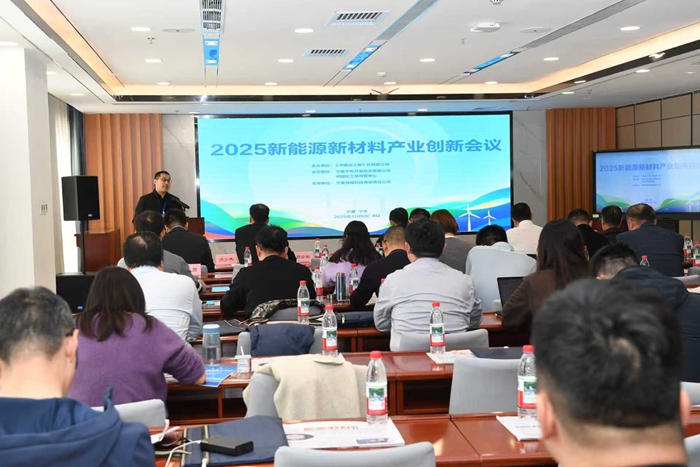
Core Viewpoint - The article highlights the historical significance and evolution of Yanchang Petroleum, emphasizing its role in China's oil industry and its contributions to national energy security and local economic development over the past century [1][3][11]. Historical Development - Yanchang Petroleum was established in 1905, marking the beginning of China's modern oil industry with the drilling of the first oil well in 1907 [3][4]. - The company survived through various historical challenges, including wars and economic turmoil, and became a symbol of national resilience and industrial development [4][5]. - After the founding of New China, Yanchang Petroleum faced numerous challenges but achieved significant milestones, including surpassing 10,000 tons of crude oil production in 1959 and 1 million tons in 1997 [5][6]. Corporate Growth and Transformation - The company underwent restructuring in 1998 and 2005, leading to a rapid increase in production and revenue, with crude oil production exceeding 10 million tons in 2007 and revenue surpassing 100 billion yuan in 2010 [6][7]. - By 2013, Yanchang Petroleum became the first company in Western China to enter the Fortune Global 500, with revenue growing from 162.1 billion yuan in 2012 to 390 billion yuan in 2024 [7][8]. Industry Position and Achievements - Yanchang Petroleum has established itself as a major player in the oil and gas sector, ranking as the seventh largest oil field in China and the fourth largest gas field, with a gas production of over 12 billion cubic meters [8][9]. - The company has diversified its operations, achieving a historic shift from being oil-dominant to a balanced structure of oil, gas, coal, and chemical products [8][9]. Technological Innovation - Yanchang Petroleum has invested over 60 billion yuan in research and development over the past decade, leading to significant technological advancements in oil and gas exploration and production [9][10]. - The company has established itself as a leader in innovation, with numerous projects filling gaps in the industry and receiving national recognition [9][10]. Social Responsibility and Community Engagement - Yanchang Petroleum has contributed significantly to local economic development, paying over 762.3 billion yuan in taxes from 2006 to 2024 and supporting various community projects [11][12]. - The company has played a crucial role in poverty alleviation and local development, investing in infrastructure and social programs in the Shaanxi region [12][13]. Future Outlook - As Yanchang Petroleum approaches its 120th anniversary, it aims to continue its commitment to high-quality development, focusing on energy security and sustainable practices while expanding into new energy sectors [15].
葡萄牙化工组织:需投入300亿欧元推进行业脱碳
Zhong Guo Hua Gong Bao· 2025-11-21 03:38
Core Insights - The Portuguese chemical, petrochemical, and refining sectors need to increase decarbonization investments to achieve the net-zero emissions target by 2050, with an estimated investment requirement of €30 billion [1] Investment Requirements - The current annual investment in the Portuguese chemical industry is approximately €1 billion, primarily focused on business growth, production process optimization, and energy efficiency, with only a portion directed towards decarbonization efforts [1] - The €30 billion decarbonization cost estimate is based on a study conducted in collaboration with consulting firm Ernst & Young, marking the first time the industry has provided a specific figure for decarbonization costs [1] Decarbonization Strategy - The investment will be used for a structured plan to meet the carbon neutrality requirements outlined in UN and EU treaties, necessitating significant initial capital injection [1] - Key areas for investment include electrification upgrades, development of renewable gases (such as green hydrogen and biomass), and the application of carbon capture, utilization, and storage (CCUS) technologies [1] Regulatory Context - Achieving carbon neutrality is a legal obligation in Europe, and there is no doubt among APQuimica members regarding this requirement [1] - The chemical industry is capital-intensive, already investing substantial funds annually, and has the capacity to increase investments further [1] Emissions Data - The manufacturing sector in Portugal accounts for 26% of the country's total greenhouse gas emissions, with the chemical, petrochemical, and refining industries contributing over one-third of industrial emissions [1]