
Jing Ji Guan Cha Wang

Search documents
中通快递股票下跌3.82% 公司斥资1526万美元回购
Jing Ji Guan Cha Wang· 2026-02-26 19:17
Company Performance - On February 26, ZTO Express (ZTO.N) experienced a stock decline of 3.82% in the US market, while its Hong Kong counterpart (02057.HK) fell by 2.88%, reflecting a broader market downturn where the Nasdaq index dropped by 1.92% [1] - On February 25, ZTO Express announced a share buyback of 617,600 shares at a cost of $15.26 million, with prices ranging from $24.52 to $25.15 per share. Despite being a positive signal, the buyback did not mitigate the overall market pressure [1] Industry Trends - According to a report by Guohai Securities, the express delivery industry saw a year-on-year increase of 5.40% in shipment volume during the first eight weeks of 2026. However, due to the timing of the Spring Festival, the shipment volume in the first three weeks of February declined by 28.35% year-on-year [1] - The competition within the industry is shifting from quantity to quality, with leading companies expected to achieve performance and valuation recovery, although short-term data fluctuations may impact market expectations [1] Capital Flow - On February 26, ZTO Express in Hong Kong experienced a net capital outflow of HKD 3.8232 million. While there was a net inflow of HKD 121 million from institutional investors, retail investors withdrew HKD 124 million, indicating some retail investors chose to exit [2]
巴克莱银行2025年Q4利润19亿英镑,计划向股东返还150亿英镑
Jing Ji Guan Cha Wang· 2026-02-26 17:38
Group 1: Company Performance - Barclays reported a pre-tax profit of £1.9 billion for Q4 2025, exceeding market expectations [2] - The total pre-tax profit for the year reached £9.1 billion, with total revenue of £29.14 billion [2] - The bank committed to returning at least £15 billion to shareholders through dividends and share buybacks by 2028, alongside a £1 billion share buyback plan [2] Group 2: Strategic Goals - Barclays set a new target to increase tangible equity return to over 14% by 2028 [2] - The bank plans to achieve approximately £2 billion in "efficiency savings" through cost reductions [2] Group 3: Market Insights - Barclays released a research report highlighting the trend of deep integration between artificial intelligence and robotics, predicting that the AI-driven robotics and autonomous machines market could expand to a trillion-dollar scale by 2035 [3]

苏州锦艺新材料科技股份有限公司启动上市辅导
Jing Ji Guan Cha Wang· 2026-02-26 16:49
经济观察网证监会网站显示,苏州锦艺新材料科技股份有限公司2026年2月27日向江苏证监局办理辅导 备案登记,辅导机构为国信证券股份有限公司。 ...

蔚来芯片子公司获首轮22亿元融资 投后估值近百亿
Jing Ji Guan Cha Wang· 2026-02-26 12:54
Core Insights - NIO's chip subsidiary, Anhui Shenqi Technology Co., Ltd., completed its first round of equity financing, raising over 2.2 billion RMB, with a post-investment valuation nearing 10 billion RMB [2] - The financing round included multiple investors such as Hefei Guotou, Hefei Haiheng, IDG Capital, and others, indicating strong market recognition for China's self-developed chips [3] - Following the financing, NIO will retain a 62.7% controlling stake in Shenqi, while investors will hold a combined 27.3% [2] Company Developments - Shenqi Technology, established in June 2025, focuses on chip R&D, production, and technology licensing, with its core product being the Shenqi NX9031, the world's first 5nm automotive-grade smart driving chip [3] - The NX9031 chip is set to debut in NIO's flagship model ET9 in March 2025, with over 150,000 units shipped since production began in 2024 [3] - NIO plans to use the financing to support ongoing R&D and promote high-end, competitive chip products, aiming for long-term strategic positioning in autonomous driving and embodied intelligence [2][3] Industry Context - The financing of Shenqi Technology reflects a broader trend of increasing market acceptance for domestic chips in China, with potential for expanded R&D teams and chip supply to external clients [3] - Other major Chinese automakers, including BYD, Xpeng, and Li Auto, are also developing their own chips, indicating a competitive landscape for smart driving technology [4] - The current geopolitical climate and instability in the chip supply chain suggest that domestic chips are entering a critical phase for widespread adoption in the automotive sector [5]



百度2025年Q4 AI业务收入占比超4成 AI能干活也能赚钱
Jing Ji Guan Cha Wang· 2026-02-26 12:32

Core Insights - Baidu's 2025 financial report reveals a significant shift, with AI business revenue becoming a core growth driver after over a decade of strategic investment [1][6] - The company reported total revenue of 129.1 billion yuan for 2025, with AI business revenue reaching 40 billion yuan, and AI revenue accounting for 43% of total revenue in Q4 [1][4] Financial Performance - In 2025, AI cloud revenue grew by 34% year-on-year, AI applications revenue surpassed 10 billion yuan, and AI-native marketing service revenue increased by 301% [4][6] - Baidu announced a stock buyback of approximately 5 billion USD, representing 10% of its market value, and plans to distribute dividends for the first time in 2026 [4][5] AI Business Development - The disclosure of AI revenue share indicates that the AI business has reached a level of risk resilience and certainty, transitioning from a cost center to a profit center [6] - Baidu's AI capabilities are being utilized across various sectors, leading to reduced marginal costs and establishing a sustainable revenue stream [6][9] AI Infrastructure and Applications - Baidu has positioned itself as a leader in AI infrastructure, with its self-developed Kunlun chip serving as a foundation for AI applications [8] - The introduction of the self-evolving super-intelligent agent "Famu" demonstrates Baidu's commitment to enhancing application efficiency in various industries [9] Consumer Engagement - Baidu's strategy focuses on integrating AI into its 700 million monthly active users through practical applications rather than entertainment, enhancing user retention [10][11] - The "Wenxin Assistant" within the Baidu app has seen a significant increase in active users, driven by practical features and services [11][12] Global Expansion - Baidu's autonomous driving service "Luobo Kuaipao" is expanding globally, with successful operations in Abu Dhabi and plans for further deployment in Europe and Hong Kong [14][15] Market Valuation and Future Outlook - The independent disclosure of AI business performance is leading to a systematic re-evaluation of Baidu's market value, with analysts adjusting target prices upward [17] - The anticipated spin-off of Kunlun chip assets is expected to catalyze further valuation reassessment, marking a new phase for Baidu's long-term AI strategy [17]

3月1日起保费上调!蚂蚁保、腾讯微保多款互联网保险产品涨价
Jing Ji Guan Cha Wang· 2026-02-26 12:30
Company Dynamics - Ant Insurance and Tencent Weibo have announced that several popular term life insurance products will be officially discontinued on February 28, with new products set to launch on March 1, which has garnered significant market attention [2] - Ant Insurance's "Universal Insurance Term Life" will be discontinued on February 28, with a replacement product expected to see a price increase of approximately 7.2% [2] - Similarly, the "Zhenai Term Life Insurance" from Tongfang Global Life will also be taken off the shelf on the same day, with a price increase exceeding 7% for the new product [2] - Tencent Weibo's "Hushenfu Term Life Insurance (Goose Community Version)" is also facing discontinuation, which is the same product as Ant Insurance's "Zhenai Term Life Insurance," both being "Tongfang Global's 'Zhenai 2026'" [2] - This product currently ranks first in the sales chart for term life insurance on the Tencent Weibo platform [2] Market Analysis - Industry experts attribute the concentrated discontinuation and price adjustment of term life insurance to three main factors: a continuous decline in the predetermined interest rate, leading to changes in product pricing foundations; a more cautious risk assessment approach by insurance companies reflected in product pricing; and a shift in market competition logic from price-oriented to value-oriented [2] - In light of this wave of product discontinuations, industry insiders advise consumers to take advantage of the last window period to plan their insurance coverage based on actual family needs, rather than blindly pursuing low prices [2]
416亿并购案迎来“还款时刻” 高瓴资本首次减持格力电器
Jing Ji Guan Cha Wang· 2026-02-26 11:48
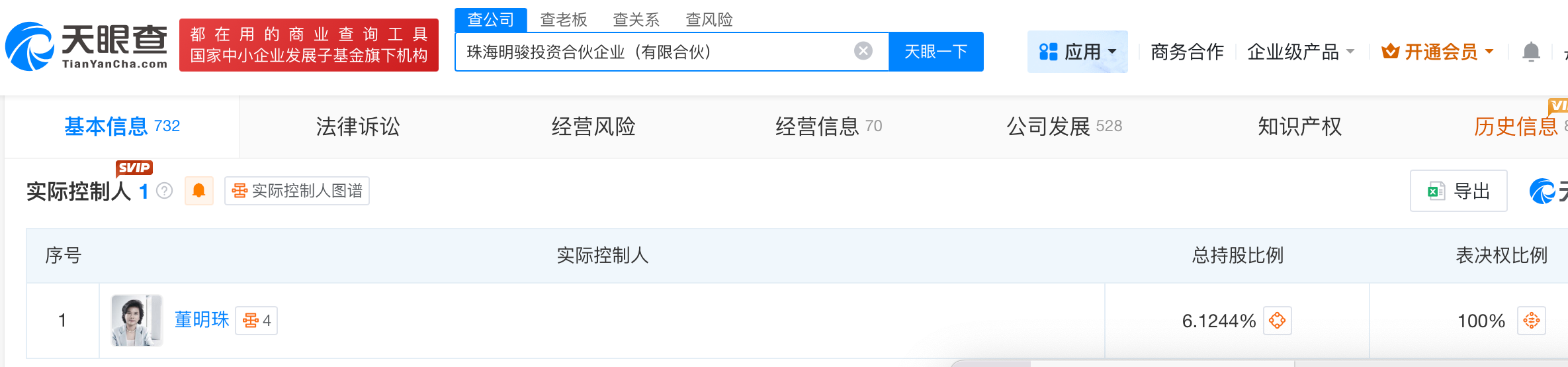
Core Viewpoint - Gree Electric Appliances is initiating a share reduction plan by its largest shareholder, Zhuhai Mingjun Investment Partnership, to repay bank loans, marking the first reduction since Hillhouse Capital's acquisition in 2020. The reduction is driven by a repayment pressure of approximately 25 billion yuan [1][4]. Group 1: Share Reduction and Financial Impact - Zhuhai Mingjun plans to reduce up to 111,702,774 shares, representing 2% of the total share capital after excluding repurchased shares, with an estimated cash inflow of about 4.3 billion yuan [1][8]. - The initial acquisition price was 46.17 yuan per share, with a total transaction value of 41.662 billion yuan for 902,359,632 shares, leading to a current effective holding cost of around 34 yuan per share after accounting for dividends [1][2]. - Despite Gree's generous dividends exceeding 13 billion yuan over six years, there remains a funding gap of nearly 10 billion yuan against the estimated debt repayment of 25 billion yuan [4][7]. Group 2: Market Reaction and Company Performance - Following the announcement, Gree's stock price fell by 2.34% to 37.59 yuan, with a total market capitalization dropping to around 210 billion yuan [1][7]. - Gree's financial performance has shown a decline, with Q3 2025 revenue at 39.855 billion yuan, down 15.09% year-on-year, and a net profit of 7.049 billion yuan, down 9.92% [7][8]. - The company faces rising costs due to copper prices exceeding 100,000 yuan per ton, which could pressure profit margins as Gree has committed to maintaining product prices without passing costs to consumers [7][8]. Group 3: Future Outlook and Strategic Considerations - The potential for further share reductions exists if stock prices remain low, which could create a cycle of reduced share value and additional sell-offs [5][9]. - Gree's valuation is currently low, with a dynamic price-to-earnings ratio below 7, but achieving stability in revenue and gross margins in Q1 2026 could mitigate short-term market concerns [8][9]. - The balance between maintaining control, performance recovery, and capital exit strategies will be crucial for Gree's future, especially given its status as a mixed-ownership reform benchmark [9].

2026存储“超级牛市”仍未结束?
Jing Ji Guan Cha Wang· 2026-02-26 11:46
Core Viewpoint - The short-selling report by Citron Research on SanDisk highlights concerns over the storage chip market's supply-demand dynamics, suggesting that the current supply tightness is temporary and that SanDisk's valuation is significantly overstated [1] Group 1: Market Dynamics - Citron Research argues that the storage industry is characterized by strong cyclicality, with NAND flash memory prices and profitability heavily influenced by supply-demand cycles [1] - Historical trends show that the storage industry has experienced cycles of "boom—oversupply—collapse," with significant price drops following periods of high demand and subsequent capacity expansions [1] - The report indicates that the current high gross margins of approximately 50% are often indicative of a market peak rather than a sustainable state [1] Group 2: Company-Specific Insights - Citron compares SanDisk to high-growth stocks like Nvidia, asserting that its products are essentially commoditized and lack long-term technological barriers [1] - The report notes that Western Digital, SanDisk's former parent company and a significant shareholder, has recently sold shares at below-market prices, which Citron interprets as an insider prediction of a market peak [1] Group 3: Stock Performance and Market Reaction - Prior to the report, SanDisk's stock was at a high of $666.49, with a cumulative increase of approximately 175% since the beginning of 2026 and over 1200% in the past 12 months [2] - Following the report, SanDisk's stock fell to a low of $612.92, closing at $638.52, reflecting a decline of 4.20% and a significant increase in trading volume to over 30.4 million shares [2] - Despite the initial impact of the short-selling report, SanDisk's stock rebounded close to pre-report levels within two trading days, while competitors like Samsung and SK Hynix reached historical highs [2] Group 4: Industry Outlook - The CEO of SanDisk previously stated that AI-driven demand for high-bandwidth memory and NAND represents a structural change in the storage market, challenging the cyclical view presented by Citron [2] - Citigroup has raised its 2026 forecasts for DRAM and NAND average selling prices, predicting increases of 88% and 74% respectively, indicating a "runaway" market and a severe seller's market due to AI infrastructure investments [2] - For investors in mainland China, the China-Korea semiconductor ETFs have become important tools for exposure to Korean and American semiconductor giants, with a notable single-day increase of nearly 10% and a closing premium rate of 21.1% [2]
北斗星通近三日股价累计涨3.08%,成交额达18.06亿元
Jing Ji Guan Cha Wang· 2026-02-26 10:59
Core Viewpoint - Beidou Xingtong's stock has shown active performance over the past three trading days, with a cumulative increase of 3.08% and a total transaction amount of approximately 1.806 billion yuan [1] Trading Performance - The stock price of Beidou Xingtong closed at 42.65 yuan on February 24, with a daily increase of 0.26% - On February 25, the closing price rose to 43.53 yuan, reflecting a growth of 2.06% and a transaction volume of 777 million yuan - As of February 26, the latest stock price was 43.85 yuan, up 0.74% from the previous day, with a transaction amount of 432 million yuan - The cumulative increase over the three trading days was 3.08%, with a total transaction volume of approximately 1.806 billion yuan, indicating active trading [1] Capital Flow - On February 25, the net inflow of main funds into Beidou Xingtong was 44.7443 million yuan, accounting for 5.76% of the total transaction amount - Concurrently, retail funds also saw a net inflow of 13.5745 million yuan - Technical indicators show that the current stock price is near the middle track of the 20-day Bollinger Bands, with a narrowing negative value in the MACD histogram and signs of oversold recovery in the KDJ indicator, indicating increased short-term volatility [1]

蚂蚁保、腾讯微保等多款互联网保险宣布3月1日上调保费
Jing Ji Guan Cha Wang· 2026-02-26 10:57
Core Insights - Multiple popular term life insurance products from internet insurance platforms such as Ant Group and Tencent will be discontinued on February 28, with new products set to launch on March 1 at increased premiums [1] Pricing Changes - Ant Group's Sunshine Life's "National Insurance" term life insurance and Tongfang Global's "Zhenai" term life insurance will see a price increase of approximately 7.2% [1] - Tencent's WeSure will also stop offering the "Tongfang Global Hushenfu" term life insurance (Goose Community version), with no new products currently available [1] Factors Influencing Changes - The price adjustments are driven by three main factors: a decline in the predetermined interest rate, the implementation of a new life table, and tighter regulations on value-added tax policies [1] - The industry's pricing logic is shifting from price competition to a focus on protection and risk pricing [1] Consumer Guidance - Industry experts advise consumers to configure their insurance needs wisely and to rationally grasp the insurance application window, avoiding blind speculation on "炒停售" (speculative buying of discontinued products) [1]