
Feng Huang Wang

Search documents
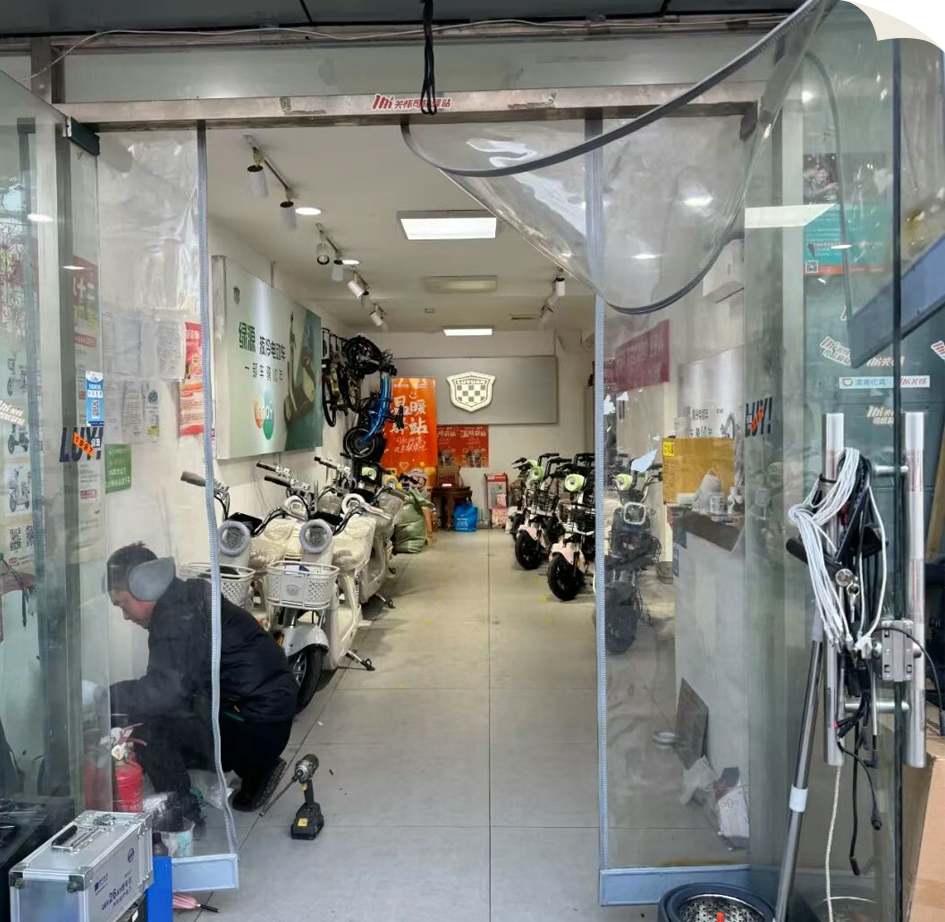
新国标落地后,小电驴店主“过冬”
Feng Huang Wang· 2025-12-26 12:24
Core Viewpoint - The implementation of the new national standard for electric bicycles has led to significant market disruption, resulting in a decline in sales and a challenging environment for dealers and manufacturers [2][3][4]. Group 1: Market Impact - The transition to the new standard has caused many physical stores to halt operations, with a noticeable absence of old standard vehicles and a lack of new standard models available for sale [2][3]. - Sales figures have plummeted, with a reported 28.7% year-on-year decline in domestic shipments of electric bicycles in November, totaling 2.21 million units [2][12]. - Major brands like Aima, Tailg, and Ninebot have experienced significant sales declines, with drops ranging from 24.8% to 48.8% [2][14]. Group 2: Consumer Sentiment - Consumers have expressed dissatisfaction with the new standard models, particularly regarding the speed limit of 25 km/h, which they feel negatively impacts their commuting efficiency [4][6]. - Price increases for new standard models, often by over 100 yuan, have also deterred consumers, with many feeling that the new models do not justify the higher costs [4][6]. - Issues such as inadequate storage space and the inability to carry children have further fueled consumer resistance to the new models [6][8]. Group 3: Dealer Challenges - Dealers are caught in a difficult position, facing inventory issues with old standard models while struggling to sell new standard models that are not meeting consumer expectations [3][9]. - Many small brand dealers have already exited the market due to the inability to adapt to the new standards and declining sales [2][3]. - Major brands are attempting to address these challenges by optimizing their product offerings and clarifying misconceptions about the new standards [9][11]. Group 4: Industry Response - The industry is witnessing a consolidation phase, where weaker brands are likely to be eliminated, while stronger, innovative companies may find new opportunities for growth [14][15]. - The new standard aims to enhance safety and compliance, pushing manufacturers to upgrade their technology and production processes [15][18]. - As the market adjusts, companies are expected to develop more practical solutions that balance safety with consumer needs, moving away from the previous low-cost, low-quality model [18].

联想天禧AI 3.5发布:承诺未来12个月智能体利润全部归属开发者
Feng Huang Wang· 2025-12-26 11:19
Group 1 - Lenovo announced the upgrade of Tianxi AI to version 3.5, transitioning from an "AI assistant" to an "AI teammate" with closed-loop execution capabilities [1] - The Tianxi AI ecosystem has surpassed 280 million monthly active users, with over 70% of users aged between 18 and 34, and a distribution volume expected to exceed 4 billion by 2025 [1] - Lenovo launched the "Tianxi AI Ecosystem Intelligent Body Pilot Program" in collaboration with Volcano Engine, offering developers 100 million token vouchers and committing to 100% profit sharing for the next 12 months [1] Group 2 - The value measurement standard for intelligent agents is shifting from SEO to GEO, indicating a change in traffic distribution based on user intent understanding and task delivery [2] - Lenovo is building infrastructure including A2A collaboration protocols and TAP payments to create a complete commercial closed loop from intent understanding to task delivery [2] - The newly released Tianxi AI 3.5 features upgrades in personalized memory, multi-agent collaboration, and interaction experience, with future plans for Tianxi AI 4.0 to possess deep cognitive abilities and cross-application resource scheduling [2] Group 3 - Lenovo will showcase at CES 2026 on January 7, 2026, alongside industry leaders from NVIDIA, Intel, and AMD to discuss the future direction of AI PCs and industry innovation [3]


供应链锁死,皮革制品遭关税“精准阻击”明年美国涨价冲击将更明显?
Feng Huang Wang· 2025-12-26 05:10
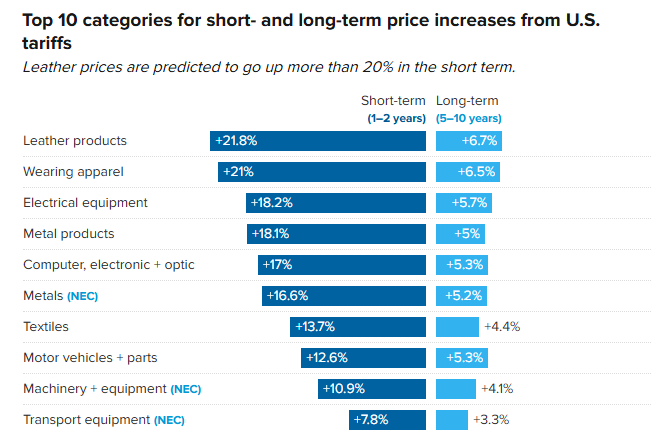
Group 1 - The core impact of tariffs on leather products has led to significant price increases, with an estimated rise of nearly 22% over the next one to two years due to inflation, supply chain bottlenecks, and high tariffs, particularly affecting imports from China, Vietnam, Italy, and India [1][6] - Major companies like Tapestry, which owns brands such as Coach and Kate Spade, are facing substantial tariff-related costs, potentially reaching $160 million, and are warning of unexpected profit pressures [3][6] - The leather industry is heavily reliant on imports, with the U.S. importing $1.37 billion worth of leather apparel in 2023 while only exporting $92.7 million, resulting in a trade imbalance of approximately 15 to 1 [5][6] Group 2 - The global supply chain model, which previously reduced costs, is now becoming a liability due to new tariffs, as manufacturers like Twisted X struggle with increased production costs and longer delivery times from alternative sourcing countries [4][6] - The U.S. leather industry is experiencing a significant decline, with the number of tanneries dropping from about 1,000 in the 1950s to a projected 500 by 2025, leading to a workforce reduction from over 300,000 to around 50,000 [6][7] - The current shortage of raw materials, particularly due to a decrease in cattle numbers, is exacerbating the cost of leather production, as fewer cattle lead to higher prices for the remaining leather [8][9]
马斯克今年赚了地球上其他人一生都赚不到的钱
Feng Huang Wang· 2025-12-26 05:10
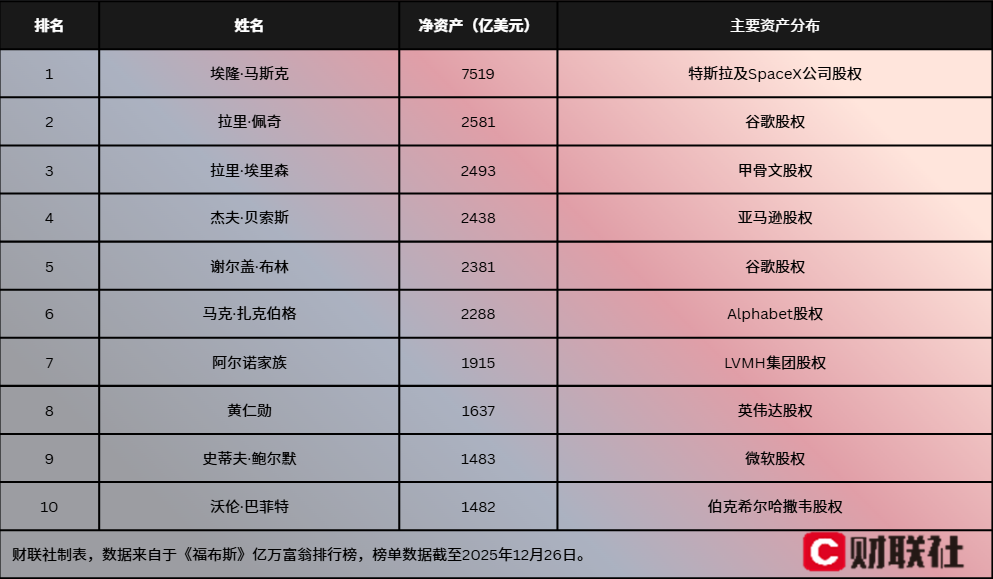
Core Insights - In 2025, the global billionaire population experienced record wealth growth, largely driven by advancements in artificial intelligence and the technology sector [1] - The total wealth of billionaires reached $18.7 trillion, an increase of $3.6 trillion year-on-year, and up $10 trillion since 2020 [1] - The number of billionaires with a net worth exceeding $100 billion reached a record 19, compared to only one six years ago [1] Billionaire Rankings - Elon Musk leads the list with a net worth of $751.9 billion, primarily from Tesla and SpaceX [2] - Larry Page and Sergey Brin, co-founders of Google, have net worths of $258.1 billion and $238.1 billion, respectively [2] - The top ten billionaires collectively saw their wealth increase by over $700 billion in the past year, with Musk alone gaining $330.9 billion [2][3] Wealth Growth Factors - Musk's wealth surge is attributed to the significant valuation increases of Tesla and SpaceX, with SpaceX's valuation more than doubling to $800 billion [3] - Larry Ellison of Oracle gained nearly $100 billion in a single day due to a 36% rise in Oracle's stock price, although it later fell by about 40% [3] - The wealth of Google's founders increased due to the launch of the Gemini 3 model, which positively impacted Google's stock price [3] New Billionaires - A significant portion of the new billionaires this year emerged from the artificial intelligence sector, with many being self-made [4] - Notable new entrants include Liang Wenfeng, founder of DeepSeek, and seven key employees who left OpenAI [4]



越来越多美企拿AI当裁员借口?高盛:投资人已经不吃这套了
Feng Huang Wang· 2025-12-26 05:10
Group 1 - The core observation is that investors are increasingly skeptical about layoffs announced by companies, even when framed as strategic restructuring, leading to a decline in stock prices rather than an increase [1][2]. - Recent layoffs in the U.S. have reached a total of 1.1708 million job cuts, marking a 54% increase compared to the same period in 2024, indicating a significant rise in corporate layoffs [2]. - Companies citing automation and technological advancements as reasons for layoffs are facing market penalties, with average stock prices dropping by 2% following such announcements [2][3]. Group 2 - Analysts have noted that companies announcing layoffs have seen capital expenditures, debt, and interest expenses grow faster than their industry peers, while profit growth lags behind, suggesting that layoffs may be driven by more concerning factors [3]. - The trend of executives boasting about replacing human workers with AI has become prevalent, with many high-profile leaders expressing confidence in AI's efficiency, which has not been well-received by investors [4]. - A notable example is Klarna, which initially promoted AI as a replacement for human workers but later reversed its hiring freeze, acknowledging the importance of human interaction for customer relations [5].
京东独立购物app“京东AI购”进入内测阶段 能让智能体帮忙购物、点外卖
Feng Huang Wang· 2025-12-26 04:04
Core Insights - JD.com is testing a new independent app called "JD AI Shopping," designed as a life service assistant that is "thoughtful, capable of shopping, and caring" [1] Group 1: Product Features - The app integrates JD.com's self-developed language model, Yansai, and differs from traditional Q&A formats by proactively pushing shopping guides, discount information, and lifestyle service inspirations to users [1] - Users can express simple intentions like "I want" in the input box to summon a personal shopping assistant for consumer decision-making and product matching [1] - The "Love Shopping Channel" features an "online shopping street" mode, allowing users to browse while asking questions and quickly access core product information such as parameters and reviews [1] Group 2: Additional Functionalities - The app includes features focused on exclusive discounts, such as "Daily Deals," and supports virtual try-ons through the "AI Outfit" function [1] - It also integrates local life services like food delivery, enabling users to complete the ordering and payment process through simple commands [1]

午评:创业板指冲高回落跌0.15%,全市场超3900只个股下跌
Feng Huang Wang· 2025-12-26 03:45
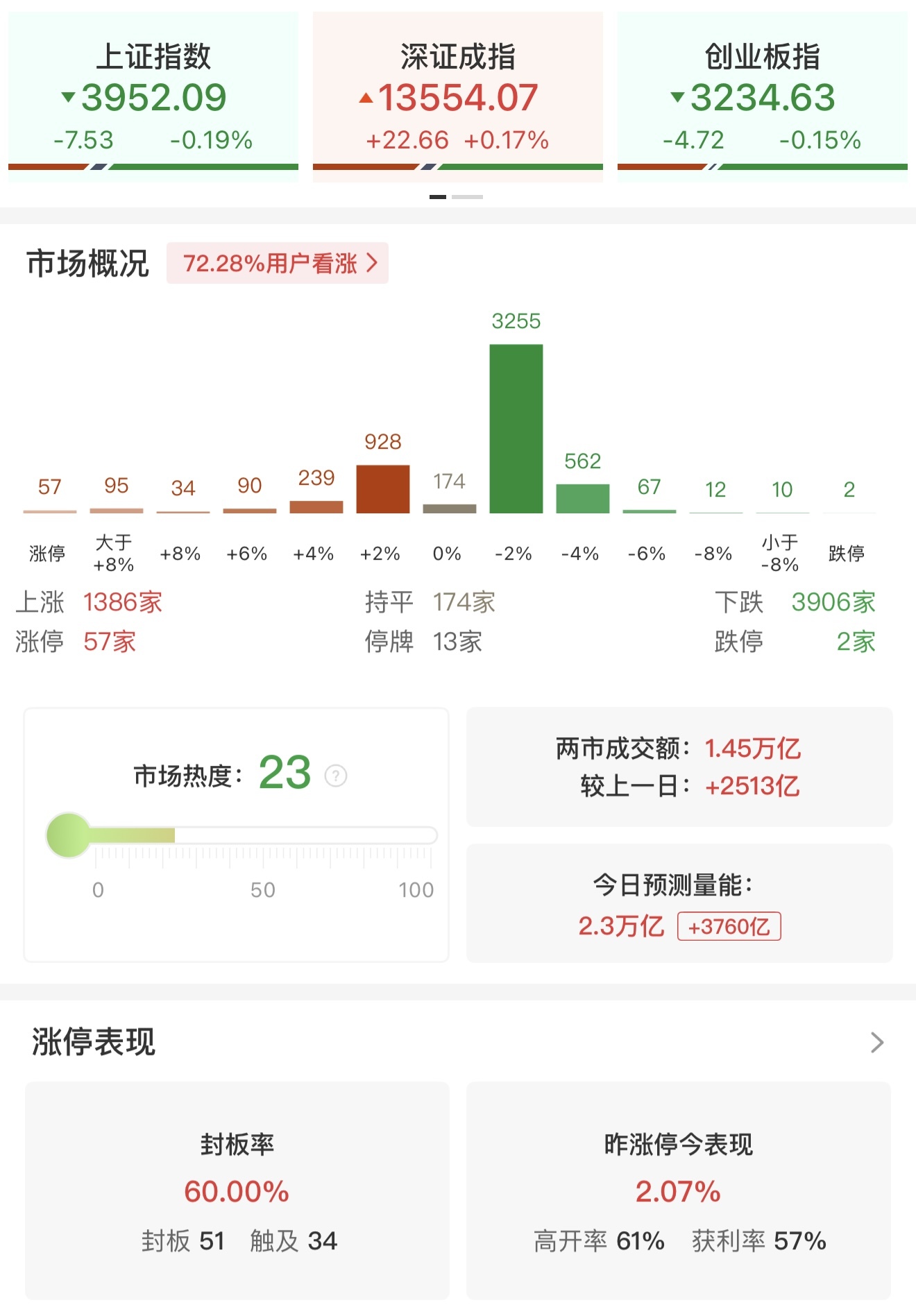
涨停表现 封板率 12月26日,市场早盘冲高回落,三大指数盘中集体跳水翻绿。沪深两市半日成交额1.45万亿,较上个交易日大幅放量2513亿。 盘面上热点快速轮动,全市场超3900只个股下跌。截至收盘,沪指跌0.19%,深成指涨0.17%,创业板指跌0.15%。 从板块来看,锂电产业链快速走强,天际股份4天3板,宏源药业、永兴材料等多股涨停。商业航天概念反复活跃,神剑股份7连板,九鼎新材4连板,佳缘科 技、中超控股涨停。光伏概念局部拉升,协鑫集成、亿晶光电涨停。海南自贸概念表现活跃,海南发展6天5板。下跌方面,算力硬件概念表现较弱,长光华 芯跌超10%。 60.00% 封板 51 触及 34 昨涨停今表现 2.07% 高开率 61% 获利率 ...

再创新高:现货黄金收复4500美元,现货白银突破75美元
Feng Huang Wang· 2025-12-26 03:12
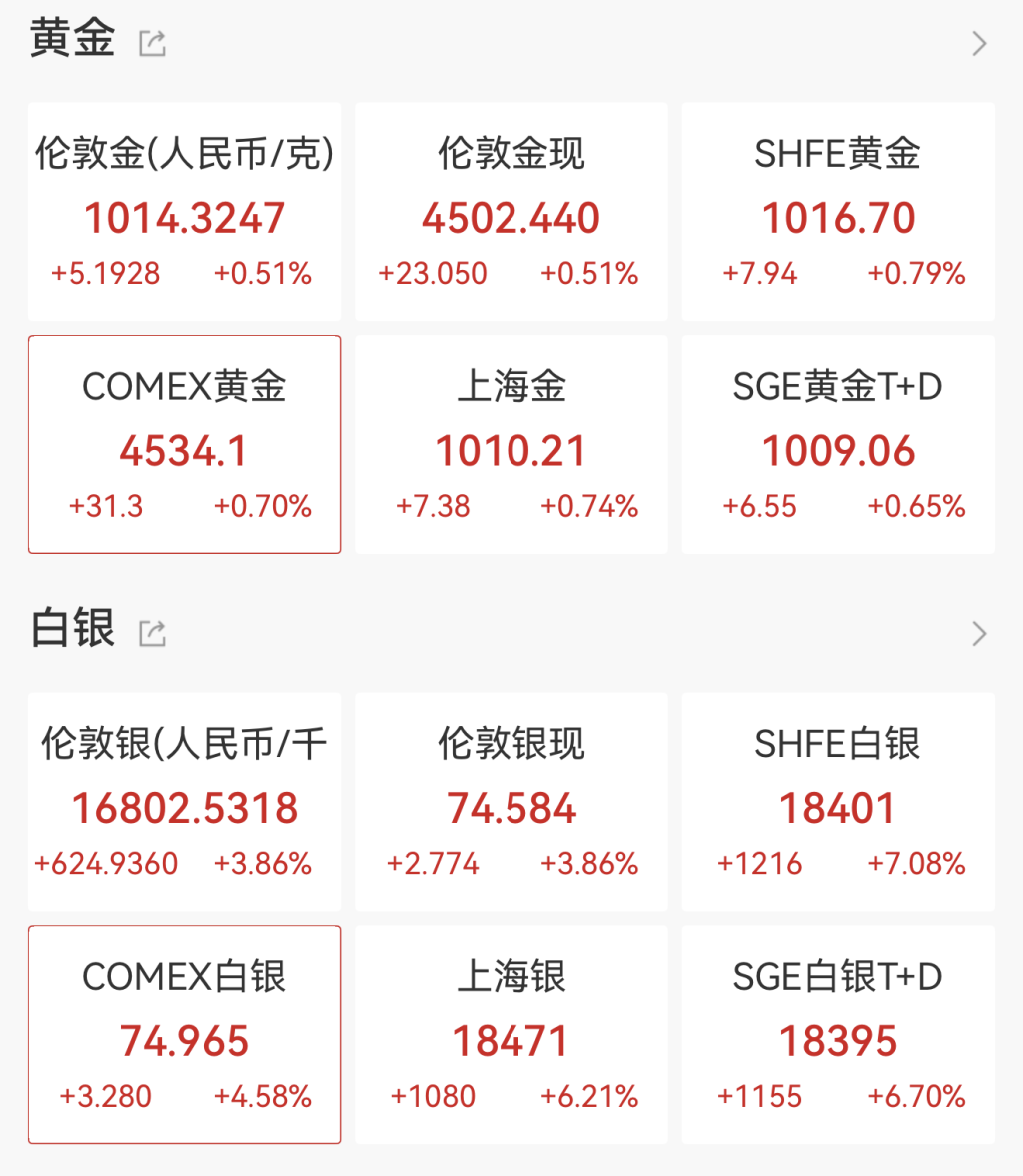
Core Viewpoint - The prices of gold and silver have reached historical highs, driven by multiple factors including monetary policy changes and geopolitical risks [1][3]. Gold Market Summary - On December 26, spot gold prices peaked at $4,531.284 per ounce before settling at $4,502.44, reflecting a 0.51% increase [1]. - The recent surge in gold prices is attributed to three main factors: the Federal Reserve's resumption of a loose monetary policy, a decline in the credibility of the US dollar, and escalating global geopolitical risks [3]. - Despite the current high prices, there are concerns about potential market bubbles as gold prices exceed short-term valuation models [3]. - The bullish trend in gold is expected to continue as the Federal Reserve's policies and the US economy have not yet shown signs of a turning point [3]. Silver Market Summary - Spot silver prices reached a high of $75.142 per ounce, currently trading at $74.584, marking a 3.86% increase [1][2]. - The silver market is characterized by its smaller scale and sensitivity to industrial demand, making it more reactive to investment and speculative activities [4]. - A significant indicator of physical silver shortages is the one-year silver swap rate, which has dropped to -7.18%, indicating a premium for immediate physical delivery over future contracts [4]. - This inversion suggests that investors are prioritizing physical silver over paper contracts, leading to a potential "run" on the physical silver market [4][5]. - As long as the shortage persists, the upward trend in silver prices is likely to continue [5].
"基金销售不得宣传规模、规模增长"引激烈讨论:ETF要怎么宣传?
Feng Huang Wang· 2025-12-26 01:55
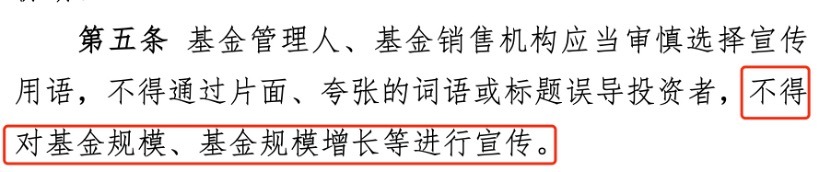
Core Viewpoint - The public fund industry is undergoing significant reforms, with the introduction of strict sales regulations that prohibit the promotion of fund size and growth, leading to considerable debate within the industry [1] Group 1: Regulatory Changes - The recent release of the "Sales Behavior Norms for Publicly Raised Securities Investment Funds (Draft for Comments)" is considered the strictest sales regulation in history, particularly prohibiting the promotion of fund size and growth [1] - The new regulations are part of a broader initiative aimed at high-quality development in the public fund sector, with multiple new rules being discussed since the second half of this year [1] Group 2: Industry Reactions - Marketing personnel from fund companies expressed shock at the new regulation, noting that fund size is a critical indicator of product competitiveness and investor awareness [2] - Concerns were raised that smaller funds may lead to higher unit costs and greater tracking errors, impacting investor decision-making [2] Group 3: Importance of Fund Size - Fund size is seen as a reflection of market consensus and acceptance of the investment strategy, with larger ETFs typically offering better liquidity and narrower bid-ask spreads [3] - A larger asset base can dilute fixed operational costs, benefiting long-term investors by maintaining lower and more stable fee rates [4] Group 4: Transparency and Investor Rights - The prohibition on promoting fund size may undermine the transparency advantage of ETFs, which are valued for their clear investment objectives and operational transparency [5] - Fund size and its changes are considered essential information for investors, influencing their decisions and reflecting market activity in specific sectors [4][6] Group 5: Potential Challenges - The regulation may create confusion if it restricts the use of publicly available size data in promotional materials, leading to questions about regulatory consistency [6] - Fund companies may need to explore alternative metrics for promotion, such as trading volume and turnover rates, which could still relate to fund size [6]
美媒实体探访特斯拉Robotaxi:华尔街热捧的万亿美梦遭遇冰冷现实
Feng Huang Wang· 2025-12-26 01:38
Core Insights - Tesla's stock price reached an all-time high this month, driven by investor optimism about its potential to dominate the emerging robotaxi market, valued at trillions of dollars [1] - However, Tesla faces intense competition, particularly from Waymo, which has a significant head start in the autonomous taxi sector [2][3] Group 1: Competition Landscape - Tesla has deployed approximately 30 robotaxis in Austin since June, while Waymo has around 200 vehicles operating in the same area and over 2,500 across multiple cities [1][2] - Waymo has completed 14 million paid rides this year and plans to expand to 20 more cities by 2026, highlighting its operational scale compared to Tesla [3] - Tesla's robotaxis require a safety driver, while Waymo's vehicles operate without human oversight, indicating a technological and operational gap [2] Group 2: Technological Challenges - Tesla's reliance solely on cameras for its autonomous driving system may hinder its ability to catch up with competitors that utilize radar and lidar, which enhance vehicle performance [7] - Experts express skepticism about Tesla's proximity to achieving a fully autonomous system, citing limitations in its current technology [7] Group 3: Financial Implications - Analysts question whether the robotaxi business can generate the trillions in revenue predicted by Tesla's CEO, noting that significant consumer behavior changes would be necessary for such growth [8] - The costs associated with monitoring and maintaining autonomous vehicles could limit profitability in the industry [8] Group 4: Regulatory and Safety Concerns - Both Tesla and Waymo have been involved in minor accidents, raising questions about the safety of autonomous vehicles [9] - Regulatory changes in Texas require companies to obtain permits before operating, reflecting growing concerns about the pace of autonomous vehicle deployment [10] Group 5: Market Perception - Some investors are willing to be patient with Tesla's progress, as long as the company is moving in the right direction, despite past delays in meeting ambitious targets [6] - Public sentiment is mixed, with some residents feeling safer in autonomous vehicles compared to human drivers, while others remain skeptical [11]