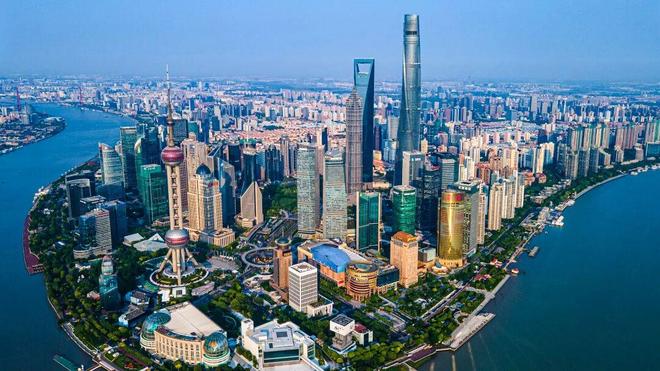
Di Yi Cai Jing Zi Xun

Search documents
AI应用概念爆发,多家A股公司回应相关布局
Di Yi Cai Jing Zi Xun· 2026-01-13 13:24
Core Insights - The recent surge in AI application concepts has attracted market attention, leading to significant stock price increases for related companies, with multiple firms announcing their business layouts on January 13 [1] Group 1: Business Revenue Impact - Companies like Tongda Hai and Dian Diagnostics report that their AI-related business is still in the early stages, with AI-driven revenue accounting for a small proportion of overall revenue, thus having no significant impact on overall business performance [2] - Companies such as Gravity Media and Xinhua Net indicate that their GEO business has not yet formed a mature business model, with market recognition and profitability remaining uncertain, and no related revenue generated [3] Group 2: Business Development Status - Companies like Tianlong Group and Oriental Pearl state that their AI tools are primarily used internally for advertising and content creation, with no additional revenue generated from these tools, thus not significantly affecting overall business performance [3] - Companies like People’s Daily and Zhejiang Shuju Culture confirm that they do not engage in GEO business, focusing instead on advertising, content technology services, and digital marketing [4]
瑞银仍“看多”A股
Di Yi Cai Jing Zi Xun· 2026-01-13 13:17
Group 1 - The core viewpoint of the articles is that despite recent adjustments in the A-share market, there is an overall optimistic outlook for the first quarter of 2026, driven by liquidity, policy support, and potential inflows from domestic and international investors [2][5][6] - UBS analysts predict that the A-share market could see further upward movement in 2026, with an expected overall profit growth of around 8% [5][6] - The A-share market has shown significant gains over the past year, with the Shanghai Composite Index rising over 20%, the Shenzhen Component Index over 36%, and the ChiNext Index over 55% [4] Group 2 - Concerns have been raised about whether A-share valuations are still attractive, as the price-to-earnings ratio has reached a historical mean level, but there is still room for further recovery compared to global markets [4][6] - The trading volume in the A-share market has been active, indicating a healthy market environment without signs of overheating, with personal investors and institutional funds continuing to flow into the market [5][6] - UBS analysts highlight that the Chinese stock market remains attractive due to its lower valuation compared to historical averages, despite recent increases [6][7] Group 3 - The first half of 2026 is expected to present more opportunities for investors, with foreign capital likely to continue increasing its allocation to Chinese stocks [7] - Key investment themes include AI, internet companies, brokerage firms, and the photovoltaic sector, with a focus on companies that can benefit from global trends and technological advancements [8] - The Asia-Pacific region is anticipated to capture new opportunities from AI advancements, with significant progress expected in the Chinese tech sector by 2025 [8]



涉“商业航天”、“AI应用”概念,两公司被上交所予以监管警示
Di Yi Cai Jing Zi Xun· 2026-01-13 12:44
公司相关行为违反了《上海证券交易所股票上市规则》(以下简称《股票上市规则》)第1.4条,《上海证 券交易所上市公司自律监管指引第1号——规范运作》第7.1.1条、第7.5.3条、第7.5.4条等有关规定。责 任人方面,时任董事会秘书侯志平作为公司信息披露事务的具体负责人,未能勤勉尽责,对公司上述违 规行为负有责任。上交所决定,对中电科数字技术股份有限公司及时任董事会秘书侯志平予以监管警 示。 上交所发布关于对中电科数字技术股份有限公司及有关责任人予以监管警示的决定。当前市场对于"商 业航天""卫星""AI应用"等相关概念高度关注,对公司股价和投资者决策可能产生较大影响,公司发布 相关信息尤其应当审慎、准确、客观,并充分提示不确定性风险,避免对投资者产生误导。 公司在投资者关系活动记录表中披露的内容未能准确反映公司卫星通信产品、AI产品的发展阶段、销 售规模及对公司整体经营情况的影响,也未就未来发展存在的不确定性等情况充分提示风险,经监管督 促才发布公告予以说明,信息披露不准确、不完整,风险提示不充分,可能对投资者决策产生误导。 1月13日晚间,上交所官网披露两条监管警示决定,分别涉及电科数字、 杭萧钢构两家上 ...



特朗普百万美元“金卡”计划推出首月收效如何
Di Yi Cai Jing Zi Xun· 2026-01-13 12:44
2026.01.13 咨询量增长背后 本文字数:3110,阅读时长大约5分钟 作者 |第一财经 高雅 上个月,美国特朗普政府正式启动"金卡"移民计划,为外籍人士提供了一条以100万美元捐赠换取快速 获得美国"合法永久居民资格"的通道。 如今计划启动已满一个月,市场的初步反应究竟如何?根据第一财经记者对多家投资移民顾问机构、跨 境资产管理公司及移民律师的采访,尽管咨询量与关注度出现了不同程度的上升,但由于对政策稳定 性、合规风险以及税务影响的普遍担忧,绝大多数潜在申请人仍持观望与疑虑态度。 总部在马来西亚吉隆坡的亚洲房产科技集团居外 IQI(Juwai IQI)联合创始人兼集团首席执行官安萨里 (Kashif Ansari)对第一财经记者表示,自美国"金卡"正式开放申请以来,市场反应呈现显著分化。 他表示:"移民律师群体普遍持审慎态度。许多人质疑该项目的稳定性,并认为这并未提供清晰或有保 障的永久居留或入籍路径。与此同时,我们也观察到,部分超高净值家庭展现了真实兴趣。他们的关注 点并非表面的价格,而是速度、灵活性,以及为自己多提供一个备选方案的价值。" "金卡"官方网页承诺,该计划能让申请者以"创纪录速度"获得 ...

立讯精密:终止收购印度闻泰资产
Di Yi Cai Jing Zi Xun· 2026-01-13 12:17
1月13日,立讯精密公告称,由于印度闻泰相关资产存在包括资产查封、冻结等在内的交割受限情形, 导致无法办理权属变更手续,相关资产交易尚未完成权属交割。基于前述因交易对方原因导致的实质性 交割障碍,本次印度资产转让协议的合同目的已无法实现。 根据公告,闻泰科技要求立讯联滔根据《印度资产协议》的相关约定,支付印度业务资产包剩余的交易 对价约1.6亿元;而立讯联滔主张终止《印度资产协议》并返还其此前已支付的交易对价,合计约19.77 亿印度卢比,并支付自立讯联滔发出终止通知书之日起至前述款项实际支付日期间产生的相应利息及仲 裁费用。 截至今日收盘,立讯精密跌1.53%,报54.58元;闻泰科技跌3.45%,报38.58元。 编辑|心一 据公告,公司全资子公司Luxshare Lanto India Private Limited已向新加坡国际仲裁中心提起仲裁申请并 提交了仲裁通知,请求裁决终止印度资产转让协议,并诉请印度闻泰退还已支付的交易对价及其他费用 合计印度卢比19.77亿元(约人民币1.53亿元),并支付至实际清偿之日止的利息。 立讯精密表示,有关印度闻泰业务资产包交易的终止,不会对公司正常生产经营活动和财 ...


约3000名沃尔沃电车车主被警告:不要充满电
Di Yi Cai Jing Zi Xun· 2026-01-13 11:33
Group 1 - Volvo has initiated a recall plan for the EX30 model due to potential overheating risks associated with the high-voltage battery, affecting over 3,300 vehicles across multiple markets [1][2] - The recall includes 2,815 units in Australia, 40 units in the United States, 85 units in Canada, and 372 units in South Africa, with additional concerns raised for 10,440 units in the UK [2] - The battery cells in question are supplied by Shandong Geely Xinhua Power Battery Co., Ltd., which has faced previous legal issues regarding battery quality defects [2] Group 2 - Volvo has stated that the battery issue does not affect all EX30 models and has not resulted in serious injuries, emphasizing a proactive approach to safety [3] - The EX30 is a key model for Volvo's transition to full electrification, with 2025 sales figures showing a decline of 13% in pure electric vehicle sales, totaling 151,830 units, which represents about 21% of total sales [3]
创始人张勇重任海底捞CEO
Di Yi Cai Jing Zi Xun· 2026-01-13 11:29
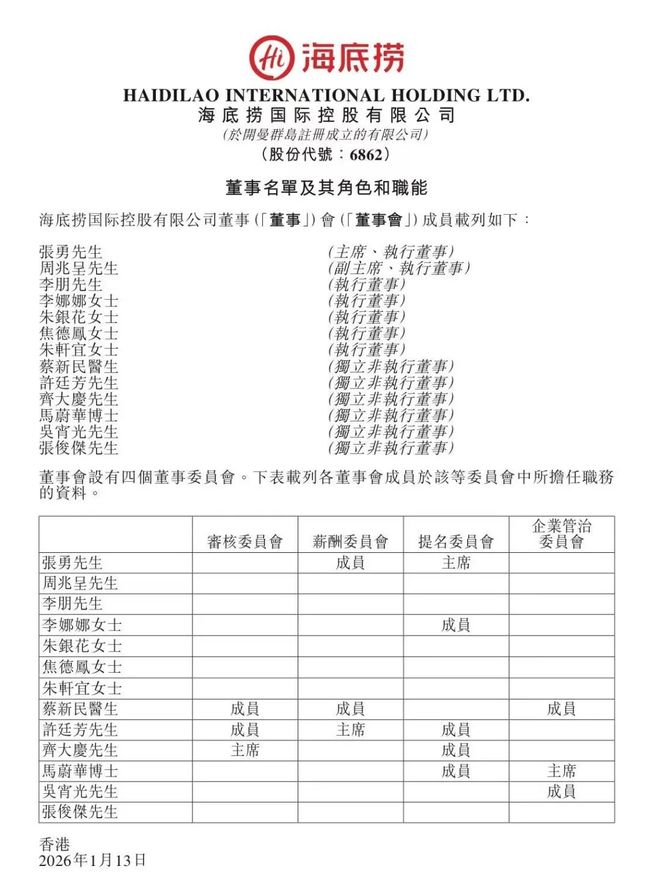
此外,公司的几名执行董事也有变更。宋青辞任公司执行董事及提名委员会成员,高洁辞任公司执行董 事。相关人员辞任后,将继续在集团担任重要管理职能。同时,为支持本公司持续创新及长期发展,磨 砺并培养年轻一代管理团队,李娜娜、朱银花、焦德凤及朱轩宜已分别获委任为公司执行董事,均为女 性。 创始人张勇又做回海底捞CEO了。 1月13日,海底捞国际控股有限公司(下称"海底捞",股票代码:6862.HK)发布公告称,苟轶群辞去 CEO,张勇接任。 | | 審核委員會 | 新酬委員會 | 提名委員會 | 企業管治 委員會 | | --- | --- | --- | --- | --- | | 張勇先生 | | 成員 | 主席 | | | 周兆呈先生 | | | | | | 李朋先生 | | | | | | 李娜娜女士 | | | 成員 | | | 朱銀花女士 | | | | | | 焦德鳳女士 | | | | | | 朱軒宜女士 | | | | | | 蔡新民醫生 | 成員 | 成員 | | 成員 | | 許廷芳先生 | 成員 | 主席 | 成員 | | | 齊大慶先生 | 主席 | | 成員 | | | 馬蔚華博士 | | ...

7亿基金突遭“资金洪流”
Di Yi Cai Jing Zi Xun· 2026-01-13 11:16
Group 1 - The core point of the article highlights the recent surge in interest and investment in the Debon Fund's "Debon Stable Growth" product, leading to significant purchase limits being imposed to protect existing investors [2][4][11] - On January 13, the A-share market reached a record trading volume of nearly 3.7 trillion yuan, with many equity funds hitting new net asset value highs, prompting over 80 equity funds to announce purchase limits since the beginning of the year [2][11][12] - The Debon Stable Growth fund saw a single-day inflow of 12 billion yuan, although the fund company denied disclosing real-time fund size data, emphasizing that such information is not publicly available until the end of the trading day [4][9] Group 2 - The fund's risk rating was raised to "high risk" on the Ant Financial platform due to increased trading activity and market volatility, while another platform still categorized it as "medium to high risk" [6][8] - The fund's A-class share reported a year-to-date return of 29.42% as of January 12, with significant performance from its top holdings in the technology sector [8][9] - The recent market dynamics are attributed to institutional and absolute return funds driving a notable rally, with expectations for continued upward movement in the spring market [3][13]

钟薛高创始人宣布终审胜诉
Di Yi Cai Jing Zi Xun· 2026-01-13 10:56
Core Viewpoint - The final ruling on the "love to buy or not" maliciously edited interview has been upheld, confirming it as malicious editing by the media, marking the end of a nearly five-year legal battle for the founder of Zhong Xue Gao, Lin Sheng [2]. Group 1: Legal Proceedings - The final judgment confirmed that the edited video, which misrepresented Lin Sheng's comments about high-priced ice cream, was a result of malicious editing driven by traffic [2]. - The first-instance judgment in 2025 recognized the editing as defamation, ordering the defendants to pay 2.3 million yuan and issue a public apology [2]. - The legal battle began in 2021 and concluded recently, with Lin Sheng stating that while the outcome does not help Zhong Xue Gao's current situation, it is still considered good news [2]. Group 2: Financial Status - As of now, Zhong Xue Gao Food (Shanghai) Co., Ltd. has two enforcement cases with a total amount of 5.8673 million yuan, and a historical record of 39 enforcement cases exceeding 67.11 million yuan [3]. - The company has been listed as a dishonest executor in 10 cases, involving amounts over 7.25 million yuan [3]. - On July 16, 2025, Zhong Xue Gao was applied for bankruptcy by Shanghai Zhenliao Trading Co., Ltd., with the Shanghai Third Intermediate People's Court handling the case [2].
上海发布28条新政促消费
Di Yi Cai Jing Zi Xun· 2026-01-13 10:50
Core Insights - Shanghai has introduced a new policy document aimed at enhancing service quality and boosting consumption, marking a shift from short-term stimulus measures to a long-term strategic focus on service and consumption interlinkage [2][3] Group 1: Policy Measures - The new measures consist of 28 policy initiatives designed to optimize supply and expand consumption, fostering new growth points in service supply and consumer demand [2][3] - The focus is on systemic interlinkage, emphasizing quality competition on the supply side and signaling a clear policy direction to promote consumption through quality [2][4] Group 2: Economic Context - The service sector and consumption in Shanghai have shown positive growth trends, with service value added increasing by 5.9% and retail sales of consumer goods growing by 5% in the first eleven months of 2025, both surpassing national averages [3][4] - The interlinkage between service and consumption is seen as essential for stabilizing growth and supporting domestic demand [3][4] Group 3: Industry Focus - The policy targets six key industries: finance, information services, transportation, cultural and entertainment services, life services, and inspection and certification, which together account for about 60% of Shanghai's service sector value added [5][6] - Financial innovation is highlighted as a crucial driver for consumption and industry growth, with an emphasis on integrating consumption scenarios with financial products [5][6] Group 4: Consumer Experience Enhancement - The measures aim to enhance the quality and diversity of life services, including the establishment of employee-based housekeeping companies and the promotion of "no companion care" services in medical institutions [7][8] - The document outlines initiatives to improve brand certification, standard systems, and inspection services, aiming to enhance consumer trust and service quality [8] Group 5: Implementation Strategy - The Shanghai government plans to ensure effective implementation of the measures by coordinating service supply with consumer demand and creating a conducive policy environment [9][10] - Emphasis is placed on cross-departmental collaboration to avoid policy fragmentation and to establish a dynamic evaluation mechanism for monitoring policy effectiveness [10]