
Zhong Guo Huan Jing Bao

Search documents
六五特刊 | 一个湖与一座城的相互成就
Zhong Guo Huan Jing Bao· 2025-06-05 00:05
Group 1 - Wuxi has invested a total of 135 billion yuan from 2008 to 2024 for the ecological restoration of Taihu Lake, achieving a significant improvement in water quality [1] - In 2024, Taihu Lake achieved an average water quality rating of Class III for the first time in 30 years, becoming the first of the three major lakes under national key governance to maintain "good" water quality throughout the year [1] - The "Taihu Star," an intelligent ecological dredging ship, has been introduced to effectively reduce internal pollution by extracting sediment from the lakebed [1] Group 2 - Wuxi has implemented strict measures to control pollution sources, particularly in the chemical industry, leading to the exit of over 100 high-pollution enterprises from the region [2] - The total industrial output value of new industries such as life health, high-end equipment, and new energy vehicle parts in the area formerly known for chemical production is expected to exceed 25 billion yuan in 2024 [2] - The ecological system of Taihu Lake has shown signs of recovery, with the establishment of underwater forests that enhance water quality and provide habitats for aquatic life [2] Group 3 - The biodiversity index of Taihu Lake reached 3.12 in 2024, marking the first time it achieved an "excellent" rating, with the presence of rare species such as the Chinese merganser [3] - Wuxi has seen a 60.3% reduction in PM2.5 concentration and a 26.2 percentage point increase in the number of days with good air quality, achieving the best levels since monitoring began [3] - Public satisfaction with the ecological environment in Wuxi reached 95.2% in 2024, reflecting the effectiveness of measures taken to address environmental concerns [3] Group 4 - Wuxi's government has prioritized beautiful city construction and ecological protection in annual meetings for ten consecutive years, ensuring a balance between economic development and ecological sustainability [4] - The city aims to leverage its "first-mover advantage" in building a beautiful China and is committed to meeting the ecological protection goals set for the 14th Five-Year Plan [4]
六五特刊 | 中部省份的绿色转型路径
Zhong Guo Huan Jing Bao· 2025-06-04 23:52
Group 1 - Jiangling Holdings Co., Ltd. has passed the performance rating for key industries in heavy pollution weather in Jiangxi Province, indicating a commitment to environmental standards and upgrades [1] - The company invested over 13 million yuan in upgrading its painting workshop to reduce VOC emissions, achieving a decrease in emission concentration from 26.36 mg/m³ to 3.48 mg/m³ [1] - Jiangxi Province has provided green transformation services to over 2,500 enterprises, with a total of 2 billion yuan in special funds supporting equipment updates and technological transformations [2] Group 2 - The province's industrial energy consumption has decreased by 16.4% during the 14th Five-Year Plan period, with high-tech manufacturing value added increasing by 12.5% year-on-year in 2024 [2] - Jiangxi has established 61 green factories and 4 green industrial parks, reflecting the province's focus on green manufacturing [2] - The "Green Carbon Exchange" platform in Fuzhou encourages low-carbon behaviors among citizens, leading to a total of 9.7 billion carbon credits accumulated and a preliminary calculation of 197,000 tons of carbon reduction [3] Group 3 - Jiangxi Province has initiated voluntary greenhouse gas reduction projects and established a voluntary pollution reduction and carbon reduction alliance among state-owned enterprises [4] - The province's green loan balance reached 1.07 trillion yuan by the end of Q1 2025, with a growth of 12.3% since the beginning of the year [4] - The province has built 1,192 "waste-free" entities, including businesses and communities, as part of its comprehensive waste-free city initiative [4] Group 4 - Jiangxi has seen significant improvements in environmental quality, with PM2.5 average concentration at 27 µg/m³ and a 97.7% excellent water quality ratio in national monitoring sections [6] - The province is transitioning from resource-dependent development to a model that leverages green practices for economic growth, enhancing its ecological and developmental advantages [7]
六五特刊 | 共铸大湾区低碳标尺
Zhong Guo Huan Jing Bao· 2025-06-04 23:42
Group 1 - The mutual recognition of carbon labels between Guangdong and Hong Kong significantly enhances the international competitiveness of products, as it aligns with consumer concerns about green and low-carbon products [1][2] - Guangdong has established itself as a pioneer in low-carbon development, with five products from five companies achieving mutual recognition of carbon labels, facilitating green and low-carbon collaborative development in the Guangdong-Hong Kong-Macao Greater Bay Area [1][2] - The carbon label mutual recognition mechanism reduces the cost of green certification, increases international recognition of products, and promotes low-carbon transformation in industries, contributing to the creation of a trillion-level green market in the Greater Bay Area [3][4] Group 2 - As of March 2025, Guangdong has issued 125 carbon label certificates to 109 companies across 22 industries, including electrical machinery, metal products, and food manufacturing [2][4] - The establishment of the Guangdong Carbon Label Professional Committee in January 2022 and the signing of a memorandum with the Hong Kong Chinese Manufacturers' Association in 2023 laid the groundwork for the mutual recognition of carbon labels [2][3] - The Greater Bay Area's economy has surpassed 14 trillion yuan, positioning it among the top global bay areas, showcasing significant market capacity and growth potential [4][5]
六五特刊 | 寻回长三角的生态之“光”
Zhong Guo Huan Jing Bao· 2025-06-04 23:33
Core Viewpoint - The restoration of the ecological environment in Jiaxing, Zhejiang Province, has successfully brought back fireflies, indicating significant improvements in local biodiversity and water quality [1][4][5]. Group 1: Ecological Restoration Efforts - Jiaxing has implemented water ecological restoration projects since 2021, leading to improved water quality and the return of fireflies to the region [1][3]. - The East Jiaxing water ecological restoration project is a key initiative under the three-year action plan for integrated development in the Yangtze River Delta (2024-2026), focusing on river dredging, shoreline rehabilitation, and the establishment of ecological buffers [3][5]. - The presence of fireflies, which are sensitive to environmental changes, serves as an indicator of ecological health, with Jiaxing now hosting one-third of the world's water-dwelling firefly species [4][5]. Group 2: Biodiversity Monitoring and Protection - Since 2022, Jiaxing has established ecological monitoring networks, including biodiversity monitoring platforms, to enhance the management of local ecosystems [5][6]. - The region has implemented a legal framework for biodiversity protection, integrating it into high-quality development regulations and designating critical areas for ecological protection [5][6]. - A cooperation agreement among Jiangsu, Zhejiang, Anhui, and Shanghai has been signed to strengthen biodiversity protection in adjacent areas, establishing a joint committee for ecological conservation [5][6]. Group 3: Integrated Ecological Governance - The Yangtze River Delta region has developed innovative systems for unified ecological environmental access, quality assessment, and joint management of cross-border water sources [6]. - The establishment of a collaborative ecological protection group aims to address systemic and regional environmental issues through coordinated planning and monitoring [6][7]. - The ongoing integration efforts in the Yangtze River Delta are expected to enhance high-quality development and ecological sustainability in the region [7].

六五特刊 | 串联京津冀的绿色动脉
Zhong Guo Huan Jing Bao· 2025-06-04 23:22
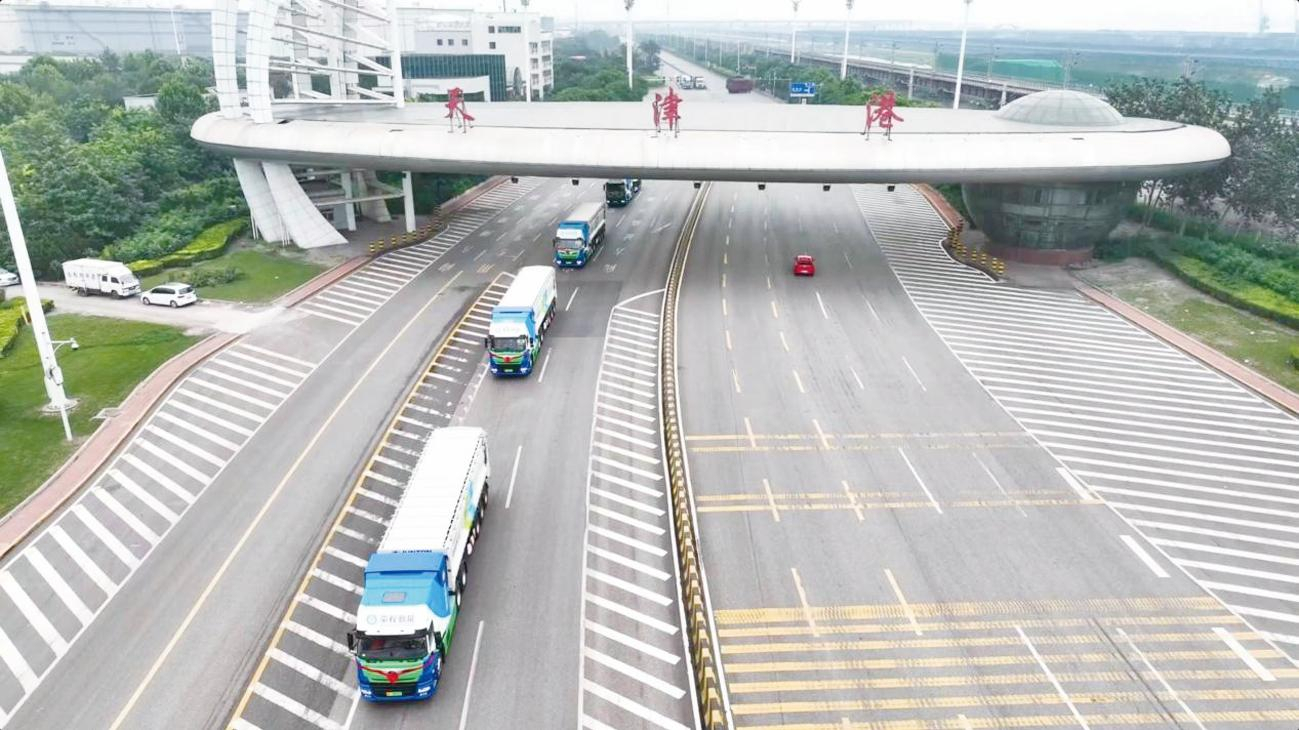
Core Viewpoint - The development of hydrogen energy heavy trucks and zero-carbon transportation corridors is significantly enhancing logistics efficiency and reducing carbon emissions in the steel and construction industries in the Beijing-Tianjin-Hebei region [1][3][4]. Group 1: Hydrogen Energy Transportation Corridors - The "Tianjin Port - Handan Wu'an" hydrogen energy zero-carbon transportation corridor spans approximately 600 kilometers, with 20 hydrogen heavy trucks already in operation, accumulating over 1.2 million kilometers traveled [1]. - Multiple mature hydrogen energy zero-carbon transportation routes have been established, covering regions such as Beijing-Tianjin-Hebei, Shanxi, Inner Mongolia, and Liaoning [3]. - As of May this year, the company has deployed 800 hydrogen fuel cell vehicles and 12 hydrogen refueling stations, transporting 27.38 million tons of goods over 38.9 million kilometers, resulting in a reduction of over 36,000 tons of CO2 emissions [3]. Group 2: Advantages of Hydrogen Energy Heavy Trucks - Hydrogen heavy truck drivers do not face range anxiety, with vehicles capable of a maximum range of 700 kilometers and refueling taking only a few minutes [4]. - The logistics demand in the Beijing-Tianjin-Hebei region is significant, with an annual freight demand accounting for approximately 14% of the national total, necessitating a transition to new energy freight solutions [4]. Group 3: Infrastructure and Policy Support - The Daxing International Hydrogen Energy Demonstration Zone has established a complete industrial chain for hydrogen energy, showing initial effects of industrial agglomeration [5]. - Companies are benefiting from government subsidies for purchasing hydrogen heavy trucks, with additional operational subsidies available, which helps reduce the financial burden on enterprises [7]. - Tangshan, Hebei, is advancing the replacement of diesel trucks with new energy vehicles, achieving over 80% clean transportation in key industries [7].
六五特刊丨示范先行 山河逐绿——我国梯次推进打造美丽中国建设示范样板综述
Zhong Guo Huan Jing Bao· 2025-06-04 23:13
Group 1 - The core idea of the article emphasizes the vibrant and dynamic efforts in building a "Beautiful China," showcasing various ecological restoration projects across different regions [3][7][23] - The construction of Beautiful China pilot areas is highlighted as a crucial strategy for promoting ecological and environmental protection, aiming to create demonstrative models for sustainable development [8][9][23] - The article outlines specific initiatives and achievements in ecological governance, such as the transformation of urban landscapes and the integration of ecological concepts into urban planning [5][6][16] Group 2 - The article discusses the implementation of innovative systems and policies that enhance ecological protection and promote economic benefits, such as the establishment of carbon trading markets and ecological product value realization mechanisms [10][13][14] - It mentions the collaborative efforts among various regions, including the Yangtze River Economic Belt and the Yellow River Basin, to improve water quality and restore ecosystems [16][20][21] - The role of community engagement and volunteerism in environmental protection is emphasized, showcasing how local populations contribute to ecological conservation efforts [18][19]
六五特刊 | 环境日献辞:美丽中国我先行 绿色未来共创造
Zhong Guo Huan Jing Bao· 2025-06-04 23:02
Core Viewpoint - The articles emphasize the importance of ecological civilization and the construction of a "Beautiful China," highlighting the need for coordinated efforts at national, regional, and local levels to achieve environmental sustainability and green transformation. Group 1: National Level Initiatives - The implementation of Xi Jinping's ecological civilization thought provides a guiding framework for advancing the "Beautiful China" initiative, promoting systematic planning and high-level support for demonstration practices across the country [1][2] - The establishment of a comprehensive indicator system for the construction of a "Beautiful China" and the formulation of action plans for specific areas such as beautiful rivers and lakes demonstrate a structured approach to environmental governance [1] Group 2: Regional Strategies - The integration of major regional strategies, such as the Yangtze River Economic Belt, aims to achieve full coverage of ecological environment protection planning, facilitating a comprehensive green transformation of regional economies and societies [2] - Local initiatives like Fujian's "Five Beauties System," Zhejiang's "Ten Thousand Projects," and Jiangsu's "Three Forces" are examples of encouraging innovative policies and pilot programs to create unique models for the "Beautiful China" construction [2] Group 3: Community Engagement and Public Participation - The promotion of volunteer services and public participation in ecological initiatives, such as the "Beautiful China, I Volunteer" program, aims to foster a collective societal effort towards environmental protection [3] - Activities like "Beautiful China, I Am an Actor" and the introduction of environmental education in schools are designed to transform the construction of a "Beautiful China" into a shared responsibility among citizens [3] Group 4: Challenges and Future Directions - Despite progress, there remain gaps and challenges in meeting public expectations and construction goals for a "Beautiful China," necessitating a strategic focus on overcoming obstacles and expanding efforts across broader regions and deeper levels [2] - The shift towards renewable energy sources, such as wind power surpassing thermal power capacity, and the acceleration of green transformation in traditional industries are critical for achieving a low-carbon economy and sustainable development [2]
冲破国际市场碳足迹壁垒,要用好核算这一招
Zhong Guo Huan Jing Bao· 2025-06-04 05:48
Group 1 - The global economy is integrating deeply with a focus on green transformation, creating both opportunities and challenges for companies, particularly with the rise of green trade barriers [1] - Chinese automotive companies face significant challenges in international markets due to carbon emission taxes, highlighting the urgent need for enhanced carbon footprint accounting capabilities [1][2] - The EU's Carbon Border Adjustment Mechanism (CBAM) and Russia's carbon footprint taxation policies indicate that carbon footprint is becoming a critical international trade threshold [1] Group 2 - Many companies still prioritize traditional concerns like cost and efficiency, underestimating the strategic importance of carbon footprint accounting in overcoming green barriers and enhancing brand value [2] - The complexity and technical nature of carbon footprint accounting, along with a lack of professional talent and established technical systems, hinder companies' ability to perform accurate assessments [2] - The absence of unified domestic standards and the diverse international certification systems create confusion for companies in carbon footprint accounting [2] Group 3 - To overcome carbon footprint barriers in international markets, collaboration among companies, government, and industry is essential [3] - Companies should prioritize carbon footprint management in their development strategies and establish comprehensive carbon emission monitoring systems across the entire supply chain [3] - The government should enhance guidance and support by improving regulations and standards related to carbon footprint accounting, offering financial incentives, and creating public service platforms for data sharing and technical consultation [3]
健全横向生态保护补偿机制,促进生态价值有效转化
Zhong Guo Huan Jing Bao· 2025-06-04 02:31
5月23日召开的国务院常务会议研究进一步健全横向生态保护补偿机制有关举措,明确要推动建立覆盖 更加全面、权责更加清晰、方式更加多元、治理更加高效的横向生态保护补偿机制。 作为破解跨区域生态治理难题的关键制度创新,横向生态保护补偿机制通过市场化、法治化手段重构生 态价值分配体系,不仅能矫正生态外部性导致的市场失灵,更能打破行政壁垒、凝聚治理共识,形 成"保护者获利、使用者付费"的格局。 优化协商机制,放大生态价值转化协同效能 进一步健全横向生态保护补偿机制,可以从厘清区域权责、统一补偿标准、完善协商程序方面优化协商 机制。 作,通过园区共建、税收分成等方式实现利益共享;建立生态产品品牌增值机制,将保护区生态优势转 化为特色农产品溢价能力。通过市场化补偿机制,以"保护—增值—反哺"的良性循环激励持续的保护投 入。 健全保障体系,夯实生态价值转化运行基础 进一步健全横向生态保护补偿机制,可以从完善法治保障体系、优化财政保障机制、健全监督问责体系 方面健全保障体系。 规范的协商程序能够确保各方在平等、公正的基础上进行协商,提高协商效率和成果的可执行性。可以 召开协商机制建设推进会,搭建各部门、地方之间信息联通的框架, ...
湖南:高水平保护助力高质量发展
Zhong Guo Huan Jing Bao· 2025-06-04 02:18
Core Viewpoint - Hunan province is leveraging its unique ecological advantages to promote high-quality development through strong ecological protection and green development initiatives [1] Group 1: Ecological Protection and Development Initiatives - Hunan has a total area of 21.18 million square kilometers, which plays a significant role in national ecological civilization construction [1] - The province is implementing a "one-time entry, one check" and "comprehensive check once" system to enhance ecological environmental law enforcement and optimize the business environment [2] - The "Spring Breeze Action" initiated in 2023 aims to assist grassroots and enterprises in addressing challenges in ecological and environmental protection [2] Group 2: Expert Involvement and Communication - The "Hundred Experts Going to the Grassroots" initiative organizes environmental experts to provide on-site support for policy and technical issues [3] - Regular dialogue sessions between the Hunan Provincial Ecological Environment Department and business representatives are established to address real issues faced by enterprises [3] Group 3: Ecological Environment Control - Hunan has introduced 875 ecological environment control units across its territory, serving as a precise "green ruler" to define development space [4] - Specific measures include the removal of 31 polluting enterprises in Xiangtan and the closure of 10 port operating units in Yueyang to promote ecological compliance [4] - The province emphasizes preemptive control measures in environmental protection to avoid the "pollute first, remedy later" approach, integrating ecological standards into investment attraction mechanisms [4]